In today’s saturated e-commerce market, having a great product is only part of the equation. The true differentiator—and the secret to long-term success—is Customer Experience, or CX. A positive CX not only drives revenue but also fosters loyalty, generates referrals, and helps reduce the cost of acquiring new customers.
But how do you measure something as complex as an experience? The answer is to build a complete set of e-commerce CX metrics. In this guide, we’ll walk you through the key metrics and organize them into four broad categories: Satisfaction, Effort, Behavioral, and Post-Purchase. These metrics allow you to put a number on “customer happiness.”
The CX Health Dashboard: Your Operational Nerve Center
Before we get into the details, it’s important to understand what a health dashboard means for CX. Imagine it as a unified, holistic view—that’s real-time and comprehensive, providing insight into how your customers truly feel about your brand. It’s more than a stack of reports; it’s a story about your customers.
A great CX health dashboard links CSAT and NPS to business outcomes (such as repeat business) and correlates to site speed and other operational metrics. It’s the industry-standard tool that gives your data a story—it shows you where you’re killing it and where you can improve.
1. Satisfaction Metrics: Determining Client Emotions
To understand customer feelings about their experience with your brand, satisfaction metrics are the most reliable guide for you. They give you a precise view of the overall health of your brand and the potential for customer loyalty.
NPS, or Net Promoter Score
One telling question will help you measure the level of customer loyalty: “How likely are you to recommend this to a friend or colleague?” They will rate it from 0 to 10, and you will categorize them into three groups:
- Promoters (9-10): Willing to buy again and spread the word.
- Passives (7-8): Satisfied but not passionate enough to recommend it to others. They might stick with the competition.
- Detractors (0-6): Unsatisfied customers who could damage your brand with negative publicity.
Your NPS is the percentage of Promoters minus the percentage of Detractors.
Target benchmark: For e-commerce businesses, an NPS above 50 is a remarkable achievement, indicating a strong foundation of loyal customers. If your NPS is below 30, there is definitely scope for improvement in customer satisfaction.
Customer Satisfaction Score (CSAT)
Customer Satisfaction Score is a transactional measure because it is usually measured after a particular interaction and might be after the consumption of a product. For instance: “How satisfied are you with this service?"
It is often rated on a scale of 1 to 5 (very unsatisfied to very satisfied) or even just with a thumbs up/down.
"Target Benchmark: An average score of over 4.5/5 or 90% satisfaction is the benchmark for CSAT. But unlike the strategic measure of NPS, which gives you the overall picture, the tactical measure of CSAT gives you the specifics of what is and isn’t working. An example of a low score for post-delivery customer support would indicate the need for a change in the logistics/return process."
2. Effort Metrics: Minimizing Friction
In e-commerce, "friction" is the antagonist of conversion. These types of metrics deal with effort, measuring how difficult it is for the customer to get their job done, whether it be searching for a product, completing an order, or resolving an inquiry. The less hassle, the more chances of coming back.
Customer Effort Score (CES)
CES is the direct equivalent of CSAT and is based on ease, not emotion. The question asked is “How easy was it to handle your issue?”
“How easy was it to use our website?"
It is generally scored on the basis of a 1-7 scale, ranging from "Very Difficult" to "Very Easy." High CES, or ease, is strongly linked to low churn and repeated business. The impact of customer effort reduction has been found to be more successful than customer delight.
Resolution Support Time
It is an operational metric with a direct impact on CX, measuring how long it takes for the resolution of a support ticket or issue from the customer's very first contact until the final resolution.
First Response Time is the time it takes for the customer to get their very first reply right after raising a query or ticket. This is a metric that might play a highly critical role in customer experience because a fast initial response does immediately reduce customer anxiety, reassures them their issue is being pursued, and helps set clear expectations about next steps.
AHT is the average sum of time an agent actively works on a customer's ticket to investigate, communicate, and perform internal processing. This metric indicates the degree of operational efficiency as well as the level of complexity of each issue, thereby enabling businesses to determine the workload of agents and optimize support processes in a way that would not put service quality at risk.
Average Resolution Time (ART) measures the entire cycle of time from ticket creation until closure of the ticket. This is an indicator of the efficiency of support, as it measures how quickly and efficiently issues of customers have been resolved from end to end. This has a direct impact on customer satisfaction and trust.
3. Behavioral Metrics: Unlocking the Digital Pathway
Behavioral metrics are passive in nature, providing data based upon customer behavior as they interact with your website, and answering the "why" question regarding your satisfaction and effort scores. Behavioral metrics are essential for optimizing your storefront usability.
Session Duration
The session duration is the amount of time a user spends on your website during one visit.
Longer can be better if the customer is viewing valuable content, such as product reviews, buying guides, or detailed product pages.
Durations that are too long may indicate frustration; for example, they cannot find the "Add to Cart" button, or search results are irrelevant. Analysing this metric in conjunction with "Page Depth" will start to distinguish between engaged browsing and confused searching.
Page Depth
Another term for this is "Pages per Session." It measures the quality and amount of pages viewed before navigating away from your site. A site that has pages with depth usually indicates that it has designed its structure and linking properly, and has pages that are enticing enough for visitors to explore. When pages have shallow depth, it could mean that your site has a lousy landing page or faulty navigation, and sometimes, unwanted traffic.
Exit Pages
"This measure recognizes the final page a visitor accesses before departing a website. Pages with a high exit rate illustrate a problem, such as:
Exit rates on product pages can indicate potential problems such as poor product descriptions, poor quality pictures, and price resistance when consumers encounter unanticipated costs. Looking at it through the lens of the customer experience, it creates uncertainty and trust issues, so consumers become apprehensive about proceeding with the transaction.
When a user abandons on either the shipping page or cart page, friction-related issues, such as unexpected shipping costs, account creation, and total costs, might be involved, thus hindering the checkout flow, which eventually causes cart abandonment and makes users disengage and become frustrated as well.
The regions where the exits happen in the payment confirmation page are of high concern, with most of the exits suggesting possible technology flaws, a slow-loading page, or a questionable confirmation message when the payment process is completed. This is the reason for post-purchase anxiety, which affects brand confidence because of the questionable fulfillment of need.
A critical area of optimization is the exit pages, most importantly the funnel of the checkout pages.
The PushOwl Advantage in Driving Engagement
Where improving CX is concerned, it is not merely about addressing complaints but about making sure to direct the process and avoid moments where there might be frustration. At such points, effective communication tools play an integral role.
PushOwl is an omnichannel marketing platform catering to the e-commerce market on the Shopify platform. The platform utilizes channels such as web push, email, and SMS. Relevant communication sent through the platform affects the post-purchase behavior and sometimes the pre-purchase behavioral actions as well.
For instance, when there is a large number of visitors with a high exit page rate on the cart page, it means there is a large Cart Abandonment Rate. The ready-to-use automation templates offered by PushOwl, such as abandoned cart recovery through web push notifications, work wonders in winning back customers who abandon the cart without making any purchase. Given the popularity of PushOwl as a hassle-free Shopify integration solution with speedy setup, even SMEs can start using professional recovery solutions without making heavy investments like they have to in enterprise solutions. Just by pulling customers back to the funnel through a single click, PushOwl increases the behavioral KPIs and conversion rates directly.
4. Post-Purchase Metrics: Building Loyalty and Retention
The end of the customer experience is not where people purchase; rather, purchase is the point of commencement of customer loyalty. The quality of purchase is measured after purchase in post-purchase metrics.
Review Rate:
Hence The percentage of consumers who review a product or service after the purchase has been made. This indicates a high level of engagement, where consumers fall into either the happy or angry category.
Optimization: A low review rate usually means you’re not asking effectively. Having an efficient, seamless process for requesting reviews is important.
Repeat Purchase Rate (RPR)
RPR stands for the percentage of customers who have made more than one purchase in your store. It is, without doubt, the most important indicator for the profitability of your e-commerce business. It becomes more expensive to acquire new customers than to retain existing ones. It indicates that if:
- High Product Quality: The need was satisfied with the purchase made.
- Effective CX: The shopping, delivery, and service experience was positive.
- Effective Retention Strategy: The marketing campaigns (email, loyalty program, and web push notification) are effectively engaging the second and subsequent order customers.
A low RPR needs to be interpreted differently, and if you have a low score, it is a clear indicator that you have the ability to bring in new customers, but you're not delivering value.
Integrating PushOwl for Post-Purchase CX
Post-purchase communication plays an integral role in improving the Review Rate and the RPR. To ensure proper post-purchase communication, PushOwl provides its users
- Transactional Updates: Web push notifications for “Order Shipped,” “Out for Delivery,” and “Delivered” help alleviate customer anxieties and the consequent need for customer support, thereby lowering the customer effort score.
- Back in Stock Alerts and Price Drop Alerts: For customers who browsed and did not purchase, these automation series encourage customers to come back for a second purchase, hence directly improving Repeat Purchase Rate.
- Cost-Effectiveness: Since PushOwl provides a free plan to start with, the cost of entry for a small business remains very low. They can immediately make use of these retention automation services to build their list and retain their subscribers.
Value Add 1: The Blueprint for the E-commerce CX Health Dashboard
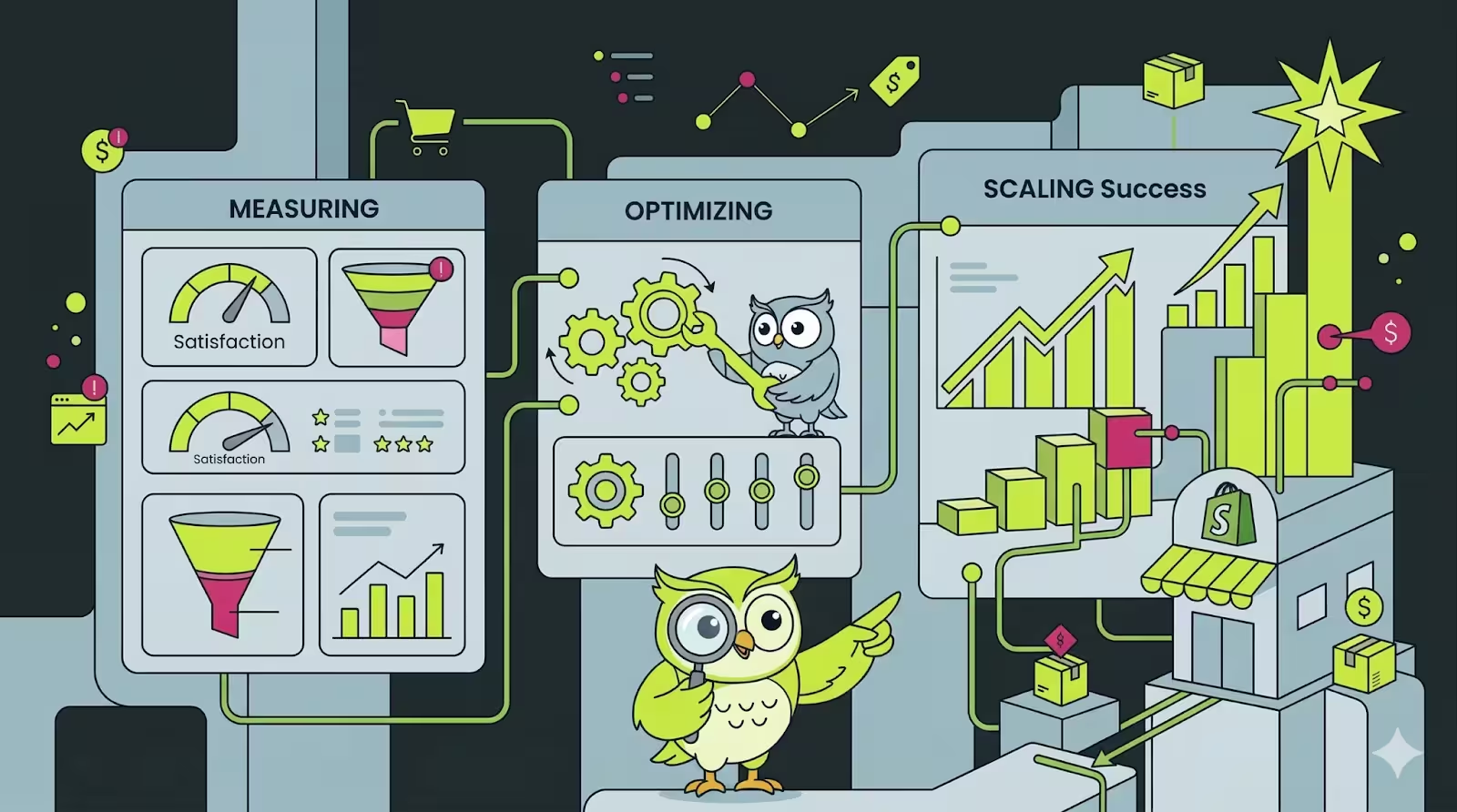
An effective CX Health Dashboard should integrate these four pillars of metrics into one solution. The trick is to understand the relationship between the operational inputs and the customer-centric outputs.
The performance measurement of customer experience is possible through satisfaction, effort, behavioral, and post-purchase metrics, which are triggered by different operational dials. In terms of the level of satisfaction, the indicator to be focused on is the Net Promoter Score, or NPS, and the goal should be to attain more than 50 points, which is dependent on product quality and the clear communication of policies to customers. In combination with the former, the Customer Satisfaction Score, or CSAT, should attain more than 4.5 out of 5 points.
While measuring the ease of doing business with a company, the Customer Effort Score (CES) plays a very important role, and a score of 6 or 7 means the customers find it easy to do the tasks. This gets directly influenced by the efficient checkout process and the provision of self-services such as FAQs. Support resolution time plays a very important role as a Customer Effort measurement, where world-class companies solve the problem within.
For behavioral metrics, it is important to keep the cart abandonment rate at less than 10 percent, which is greatly dependent on optimizing the checkout flow and cart recovery. Page depth is the next behavioral factor, where the objective is to have an average of six pages hit per session through superior internal linking and quality content.
At last, post-purchase metrics measure overall customer value and advocacy. A repeat purchase rate above 25 percent indicates good retention and loyalty, which could result from the effectiveness of email and SMS programs, among others. The review rate also matters, which in most cases exceeds 15 percent, influenced by the post-purchase email flow that encourages the customer to review.
Value Add 2: Shopify Review Integration for Customer Experience Guide
Customer reviews are additionally important concerning trust and transparency for an online e-commerce platform since such reviews affect customer satisfaction indirectly or directly after purchase.
The Role of Reviews in CX
- Reviews are an important aspect
- Trust Signal: Quality reviews minimize the psychological barrier for first-time customers.
- Product Feedback: Reviews provide direct, unfiltered feedback for product development and quality control (enhancing future CSAT).
- SEO & Traffic - Since the content is generated by users, search engines have new text to crawl. This is important as
- Step-by-step guide: integrating reviews smoothly
- This tutorial assumes that you are using a popular Shopify review application such as Stamped, Judge.me, or Loox.
Step 1: Automated Review Request Flow
This is to make sure that your review app is connected with your fulfillment provider. The request should be triggered by delivery confirmation, not purchase date.
- Timing: The request should be made 3 to 5 days after delivery, to enable the customer to use the product.
- Channel Optimization: It is recommended to have multiple channels. It can begin with an email. But if there is no review in five days, it is better to move to a less complicated method like Web Push and/or SMS through omnichannel solutions like PushOwl.
Step 2: Displaying Reviews Prominently
- Product Page: Where on a "product page," you would display stars corresponding to reviews right next to a "product title"
- Collections Page: Include star rating options for products in the collection page cards.
- Page for Testimonial and Photo Reviews: Create and assign a page where testimonials and photo reviews can be collected. This might be named.
Step 3: Closing the Feedback Loop
In this step , the most overlooked aspect of the review process is the response. Responding to reviews, particularly negative ones, is a very important CX moment.
- Acknowledge Negative Feedback: Respond publicly and provide a way for them to contact you privately (e.g., "We're sorry to hear this, Personname. Please contact us at [email protected] so we can resolve this immediately."). This shows that you are committed to resolving the issue and reduces the chances of this person becoming a Detractor.
- Thank Promoters: Thank customers who post 5-star reviews and, if applicable, reward them with a loyalty reward or special discount code for a return purchase, directly benefiting RPR.
Step 4: Leveraging PushOwl to Boost Review Rate
Although the original request for a review might be through an email, PushOwl can be a very important reminder service. If the customer has opened the email but has not left the review in 24 hours, you can send a simple, non-intrusive web push notification that reads: "Did you love your new product, Personname? Leave a quick review and help us out!" Since PushOwl is known for providing cost-effective, beginner-friendly yet very powerful solutions, adding this light touch reminder service is quick and will increase the chances of getting a review without annoying the customer.
Conclusion
Optimizing e-commerce CX is a never-ending journey of measurement and optimization. By keeping your sights on the four pillars of Satisfaction, Effort, Behavioral, and Post-Purchase, and using tools such as PushOwl to automate communications, you can not only measure your own performance but engineer a better customer experience. Don't just look at your metrics as reporting numbers. Listen to them as the voice of your customers, leading you to explosive growth.