Introduction
If you think marketing content for your Shopify store is just blog posts and social media updates, you may be missing out on a major opportunity. Nowadays, most successful brands use very strategic content marketing strategies to help build genuine connections with their target audience and thus drive consistent sales. This approach helps them turn passive audiences into active customers and brand loyal audience. In this blog post, we will check out 21 real-world ecommerce campaigns to show you what works. We will see some practical frameworks for creating engaging content, measuring its impact, and applying these lessons to grow your own business.
21 Viral Ecommerce Content Campaigns Analyzed
What Makes an Ecommerce Campaign Go Viral in Their Campaigns?
In ecommerce, a viral campaign can be measured and identified by the business impact it creates for the brand, not only by its view count. Here, authentic viral success means that marketing content gets a lot of shares and engagement while also improving the brand perception and increasing sales.
The goal for campaigns is mainly to achieve measurable growth, and generally show one or more of four key features:
- they create strong emotional connections,
- demonstrate real brand values,
- offer high utility to the audience,
- or show outstanding creativity that captures attention.
The common outcome of these content campaigns is that the content spreads naturally, extending its reach well beyond paid advertising to the right target audience.
A Categorized Overview of The Different Campaigns
We here have analyzed 21 successful campaigns and grouped them into three primary content strategies, and this list provides a clear overview of the ecommerce examples.
UGC and storytelling campaigns to easily leverage customer voices and brand narratives:
- Patagonia’s "Worn Wear" documentary series
- Gymshark’s athlete ambassador & community UGC
- GoPro’s user-generated adventure videos
- Dove’s "Real Beauty" campaign
- Airbnb’s "Live There" guest stories
- Starbucks’ #RedCupContest
- User-generated unboxing video initiatives
- Strategic customer testimonial series
Interactive content campaigns that require active audience participation:
- Lush’s "What’s Your Self-Care Personality?" quiz
- Glossier’s virtual try-on and AR features
- IKEA Place app for AR furniture placement
- BuzzFeed-style product finder quizzes
- Interactive educational infographics
- "Build Your Own" product configurators
- Pinterest-inspired style quizzes
Localized and niche campaigns that resonate with specific audiences:
- Nike’s regional sports heritage campaigns
- UAE-based fashion influencer collaborations
- Limited-edition cultural product collections
- Event-driven flash mob style launches
- Hyper-local social media challenges
- Community-focused philanthropic initiatives
The framework for analysis- hook > story > value > cta > metric:
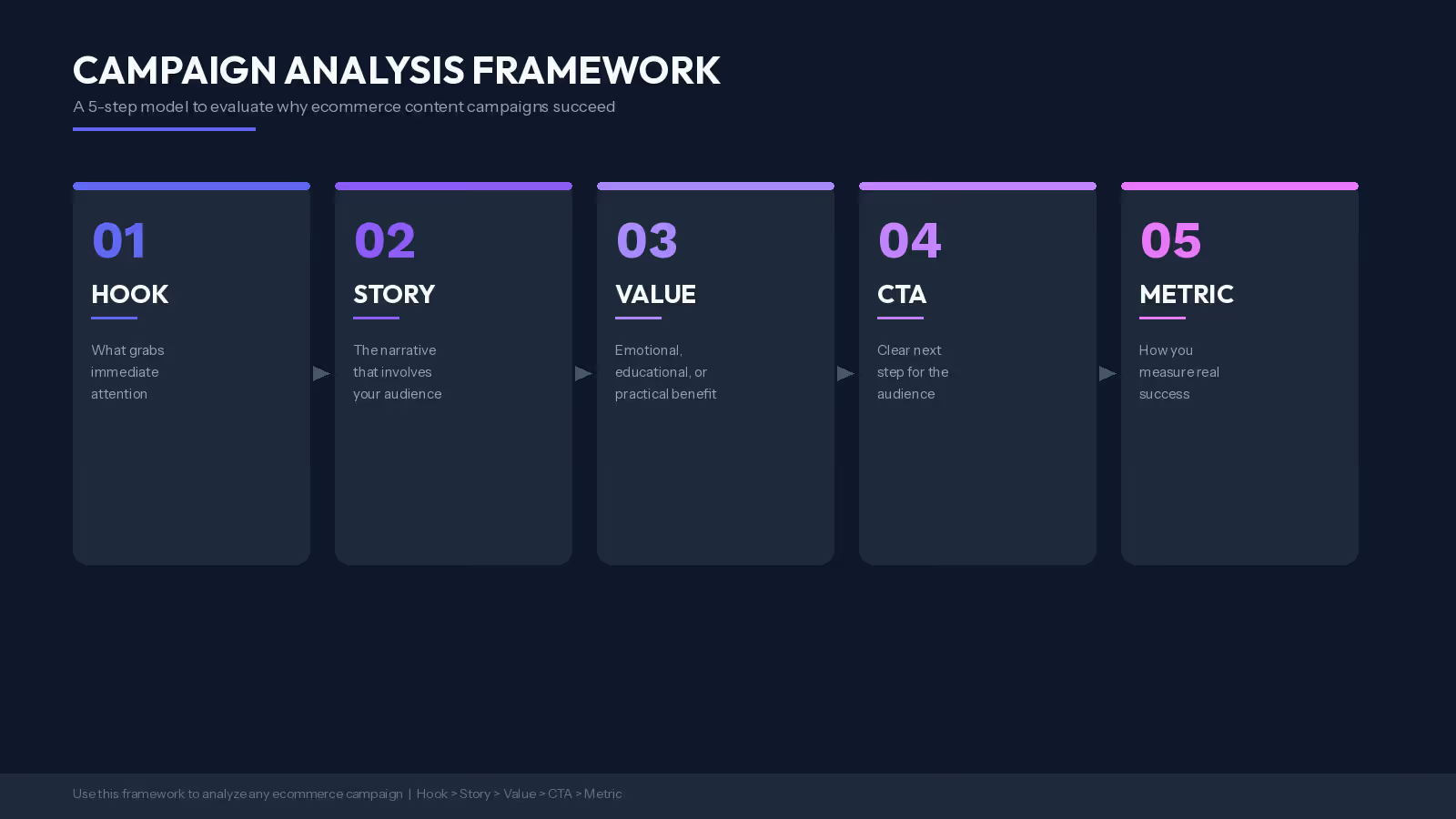
To understand why these campaigns were successful and effective, we will review them using a simple five-part framework.
First, the hook is what attracts immediate attention. Next, the story develops a narrative that involves the right target audience. The campaign must then offer clear value, whether it is emotional, educational, or practical, to the user. Now, a very well-thought-out call-to-action leads the audience on what to do next. Finally, a defined Metric evaluates its success beyond going by its numbers.
The following sections will implement this framework to key campaigns from the list above, and also provide you with a practical model to use and implement these effective strategies for your own Shopify store.
How UGC and Storytelling Build a Loyal Audience

Brands may underestimate it, but user generated content and storytelling are effective marketing strategies. They rely on real customer voices and experiences rather than the conventional, polished ads to reach out to their target audience. This method and strategy help cultivate trust and transform your customers into a community of your brand advocates. We will look at two strong examples and see how you can implement similar video marketing approaches.
Case Study 1: Patagonia’s "Worn Wear" Campaign
The brand Patagonia produced a documentary series named Worn Wear, that mainly highlights used and repaired clothing.
The hook they used: Their campaign began with a daring message saying, Don't buy this jacket, and this anti-consumerist phrase quickly grabbed attention and clearly expressed their brand values.
The story and value: The videos did not aim to sell new products. Instead, they shared stories of adventure, durability, and sustainability from real customers. They mainly stressed promoting a lifestyle of repair and reuse, showing and positioning the brand as a mission-driven leader.
The call to action: Here, the CTAs were implicit, where they encouraged viewers to repair or fix their gear, purchase second-hand items, and support environmental initiatives, including them and inviting them to be part of a larger movement.
The measurable results achieved: For a Shopify brand, important metrics to monitor include brand loyalty signs such as repeat purchase rates and customer lifetime value. You can observe this by dividing customers who buy multiple times using your analytics or a tool like PushOwl. That’s why strong engagement and high interaction with this content often promote long-term customer retention.
Case Study 2: Gymshark’s Community Growth Strategy
This brand, which was practically born on Shopify, grew by leveraging athlete ambassadors and encouraging the brand's fans to share their own content.
The hook they used: They strategically presented many aspirational yet relatable fitness journeys from real athletes and everyday customers, to make their brand goals appear achievable.
The story and value: The story centered on empowering their audience and building a massive community. They turned their customers into brand athletes, developing a strong sense of belonging and shared purpose for them.
The call to action: They did something different and used clear CTAs like the #Gymshark66 challenge, which invited people to join in and share their own progress photos and videos.
The measurable results achieved: For this brand, the success was tracked through social mentions, hashtag activity, community growth, and direct sales monitored through unique ambassador discount codes.
Creating Effective Video Content for Your Store
You can make use of these principles through a video series, and here is a simple example and breakdown for you. Use these five simple video hook formulas.
Problem-agitate-solve: You need to identify a common customer problem, showcase its pain points, and present your product as the solution.
Present to them a day in the life: Show them how a typical customer uses your product in their real routine.
Give them behind-the-scenes insights: It helps to share the process of making your products or running your business to build transparency and make a connection with your audience.
Showcase some unexpected results: You need to proudly share and demonstrate a surprising or exceptional benefit of your product.
Add and showcase customer spotlight: It is a great idea to feature and include a real customer sharing their genuine experience and results.
Use these effective CTAs for your videos:
- Shop the look- for fashion/apparel
- Join the challenge- to build community
- Share your story- to encourage UGC
- Follow for part 2 - to increase ongoing engagement
Ways to measure your video's success:
For this, do not just count views, and focus on these metrics to get an overall idea of the success of your videos.
Engagement rate: Check the likes, comments, and shares relative to views.
Click-through rate: This shows the percentage of viewers who click the link to your product page.
Retargeting your audience: Use the data from your video platforms to know about your specific audience. For example, you can use PushOwl to send web push notifications to users who watched a product video but did not purchase, reminding them with an abandoned cart alert or a back-in-stock message, to help close the loop between content and conversion.
Interactive Content: Engaging Shoppers with Quizzes & AR
When you use interactive content, it encourages your customers to get involved instead of just observing or reading. When you successfully shift a visitor from being a passive consumer to an active participant, it greatly improves their bond with your brand and boosts conversion rates. The two effective examples are personalized quizzes and augmented reality features.
How Brands Use Interactive Content: Lush and Glossier
Understanding Lush's product recommendation quiz: The brand uses a simple quiz titled What's your self-care personality? on its website.
How it works: The customers answer a few fun questions about their preferences and moods, and the quiz then provides a set of personalized product recommendations.
Value provided to the customer: It directly solved the problem of customers having a choice paralysis in a busy or full catalog. Here, the customer is given a curated selection that appears designed for them.
Value for the brand: Each answer from the quiz is an important piece of customer data, where Lush can sort their audience into segments like The Bath Soaker or The Energizer for their specific or targeted marketing campaigns.
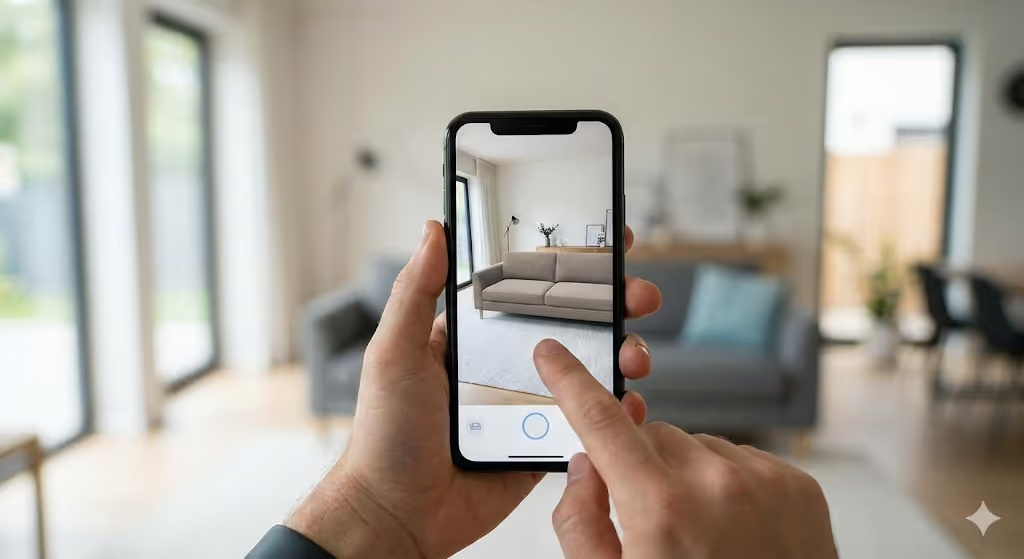
Glossier's virtual try-on experience: The brand incorporates augmented reality technology in its app and website.
How it works: The users can utilize their camera to virtually try on different makeup shades instantly or upload a picture to view how products appear, making it an immersive experience for them.
Value provided to the customer: Using this feature could significantly minimize the uncertainty of buying color cosmetics online, which leads to more confident purchases and fewer returns.
Building trust with their customers: The brand incorporates social proof by displaying photo reviews from actual customers, combining technology with genuine testimonials.
How to Add Interactive Content to Your Shopify Store
You do not need to build this technology yourself. There are many Shopify apps that can help. For quizzes, you can consider apps like Quizify or Jebbit, and for AR product visualization, look for apps that offer 3D modeling and AR viewing that are easy to use.
The Key Strategy for Data and Personalization
The main aim of using interactive content is to gather zero-party data, like the details that customers choose to share. For example, you can use a tool like PushOwl to automatically send a web push notification or a sequence of emails that are customized to a customer's quiz results, such as skincare routine suggestions for their unique profile.
5 Email Templates to Use With Interactive Content
Here are some examples of specific emails you can send based on customer interactions with quizzes or AR.
1. Quiz result delivery
Subject line: Get your personalized (product category) routine here.
Email purpose: You can deliver the quiz results with direct links to the recommended products. This provides immediate value and a clear path to purchase for your customers.
2. Browse abandonment follow-up
Subject line: Still thinking about your perfect match? Get this!
Email purpose: You are targeting users who completed a quiz but did not buy. Remind them of their results and include a gentle incentive, like free shipping, to complete their order of products they left in their cart.
3. Post-purchase ar try-on follow-up
Subject line: How your new product shade looks on you!
Email purpose: For items tried on with AR, this email checks satisfaction after delivery. It encourages the customers to post a review, builds the relationship, and can prompt them to a repeat purchase.
4. Re-engagement for inactive quiz users
Subject line: Has your skin type/preference changed? Retake your quiz!
Email purpose: You can re-engage customers who took a quiz months ago but haven't purchased recently. Inviting them to retake it can update their profile and spark new interest in your products.
5. Cross-sell based on quiz profile
Subject line: Hey, (quiz result name,) you might also love this!
Email purpose: Here, you can use the segmented data, like The Adventurer profile, to suggest complementary products that match their preferences, which can boost the average order value.
Measurement Framework & Scaling Tips for Campaign to Strategy
Though the first step here is to create content, the next but important step is to understand its impact and use that knowledge to grow. This section shows you how to measure what works for your particular brand and build a repeatable, scalable content marketing system that you can use.
Building a Dashboard to Measure Content ROI
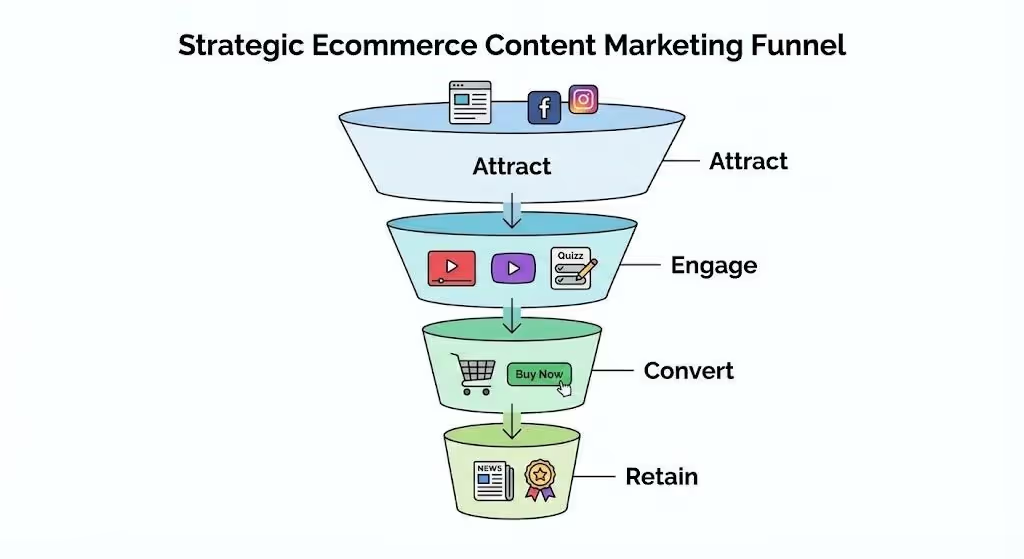
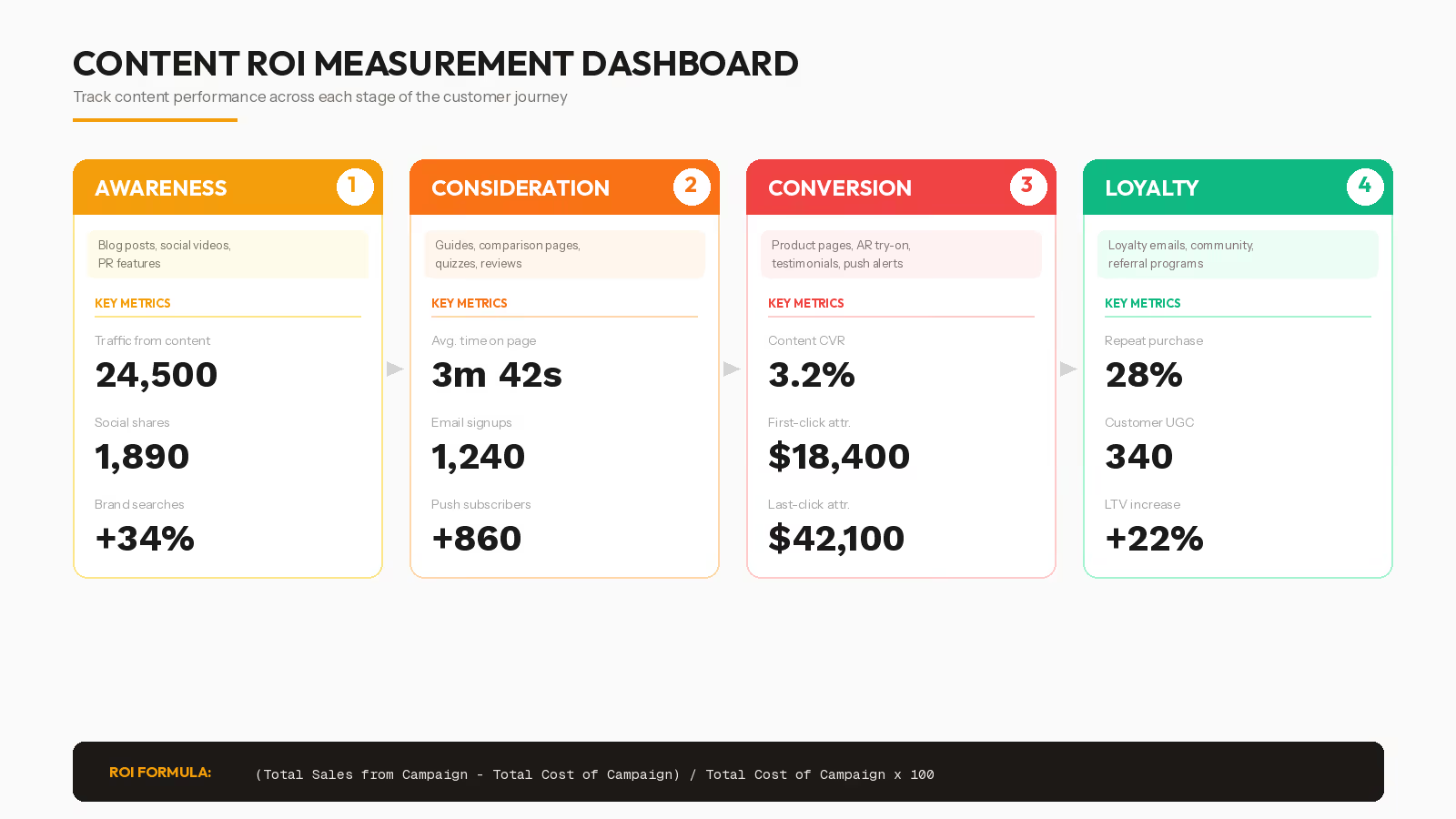
To measure the real success of your content marketing efforts, you need to look beyond just likes and shares. You should connect your content performance to the different stages of the customer journey.
The awareness stage: This content introduces your brand to your target audience, and the key metrics here to look for will be the website traffic from the content, social media shares, and increases in direct brand name searches.
The consideration stage: This content engages the visitors and builds your audience, and the key metrics here to look for will be the average time spent on your blog or video page, email newsletter sign-ups, and new subscriptions to your web push notifications. One of the strong and low-friction metric here are PushOwl subscriptions, as they indicate a user wants ongoing updates.
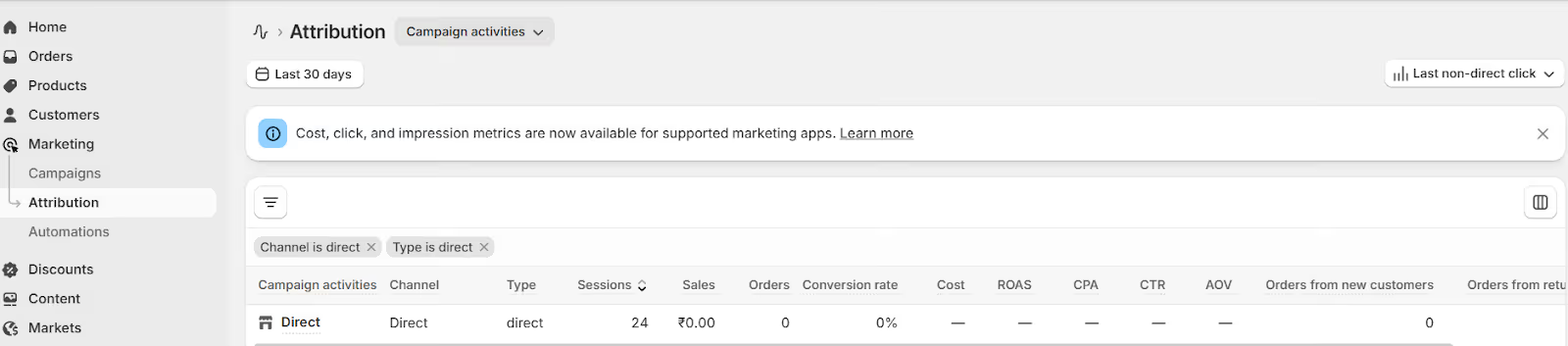
The conversion stage: The content here directly leads to a sale, so the main metrics that matter are the conversion rate of visitors from a specific content piece. Also, look at the attribution in your analytics to see if the content helped you in the sale (first-click) or was responsible for closing the deal (last-click).
The loyalty stage: This content turns buyers into your recurring and repeat customers. The repeat purchase rate and the amount of customer-generated content are to be measured by the reviews or social media posts your brand receives.
Use this simple ROI calculation:
Use this basic formula to calculate a specific campaign's financial return for your brand, which comes out to:
(Total Sales from Campaign - Total Cost of Campaign) / Total Cost of Campaign
You need to multiply the result by 100 to get a percentage. Here, a positive percentage means your campaign generated profit.
Using A/B Tests to Improve Content
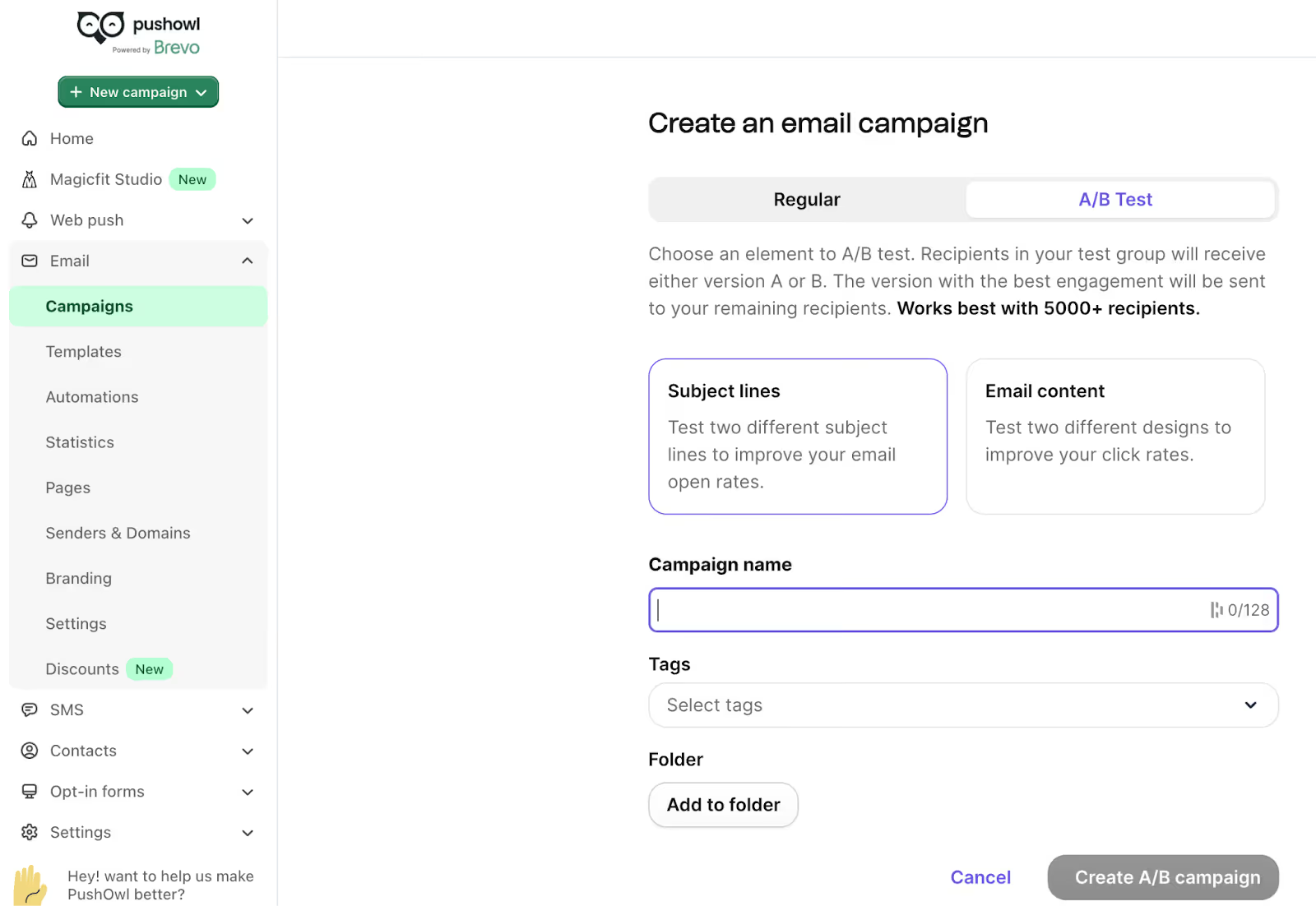
With an A/B test, you can effectively compare the two versions of a single element to see which performs better, which helps you remove any guesswork from optimization.
What you can test: You can see which headlines, featured images, video thumbnail images, call-to-action button wording or placement, and email subject lines are working for your content.
The Testing Process:
- You need to form a hypothesis, for example, a question headline will get more clicks than a statement headline.
- Now, create variations, which means make two versions (A and B) that change only one element.
- Now, split your audience to show each version to a similar, random segment of your audience.
- Measure the results, and use a clear metric, like click-through rate or conversion rate.
- Finally, you can implement the winner and use the better-performing version for your full audience.
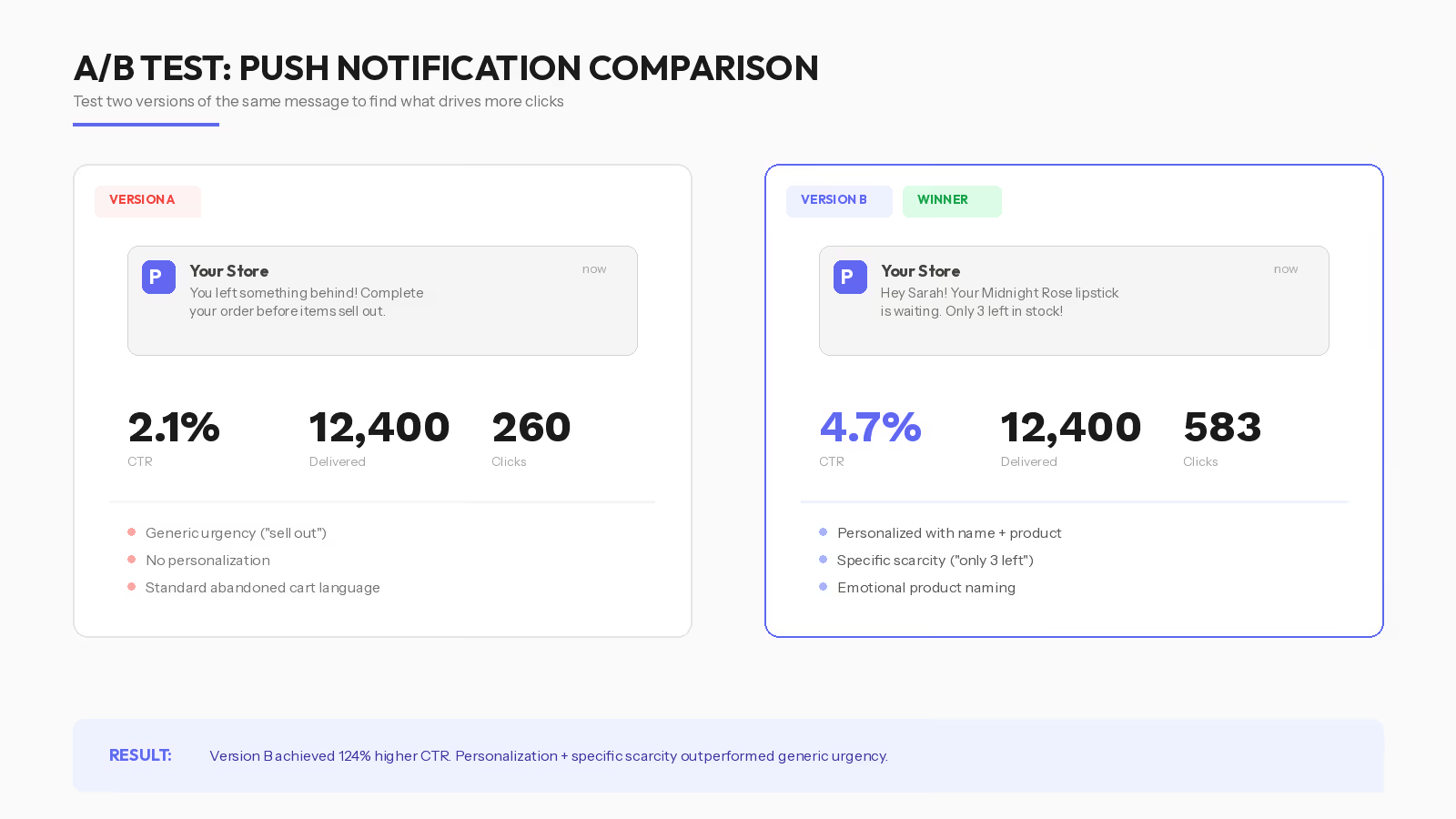
Example with PushOwl: You can perform an A/B test on web push notification messages. Send two different preview texts for the same blog post link to small audience segments. Now, see which version drives more clicks, then use the winning message for your full subscriber list. This directly improves your traffic from notifications.
Scaling Your Content Marketing Efficiently
Once you know what strategy works best for your brand, you can focus on doing more of it without constantly starting from scratch.
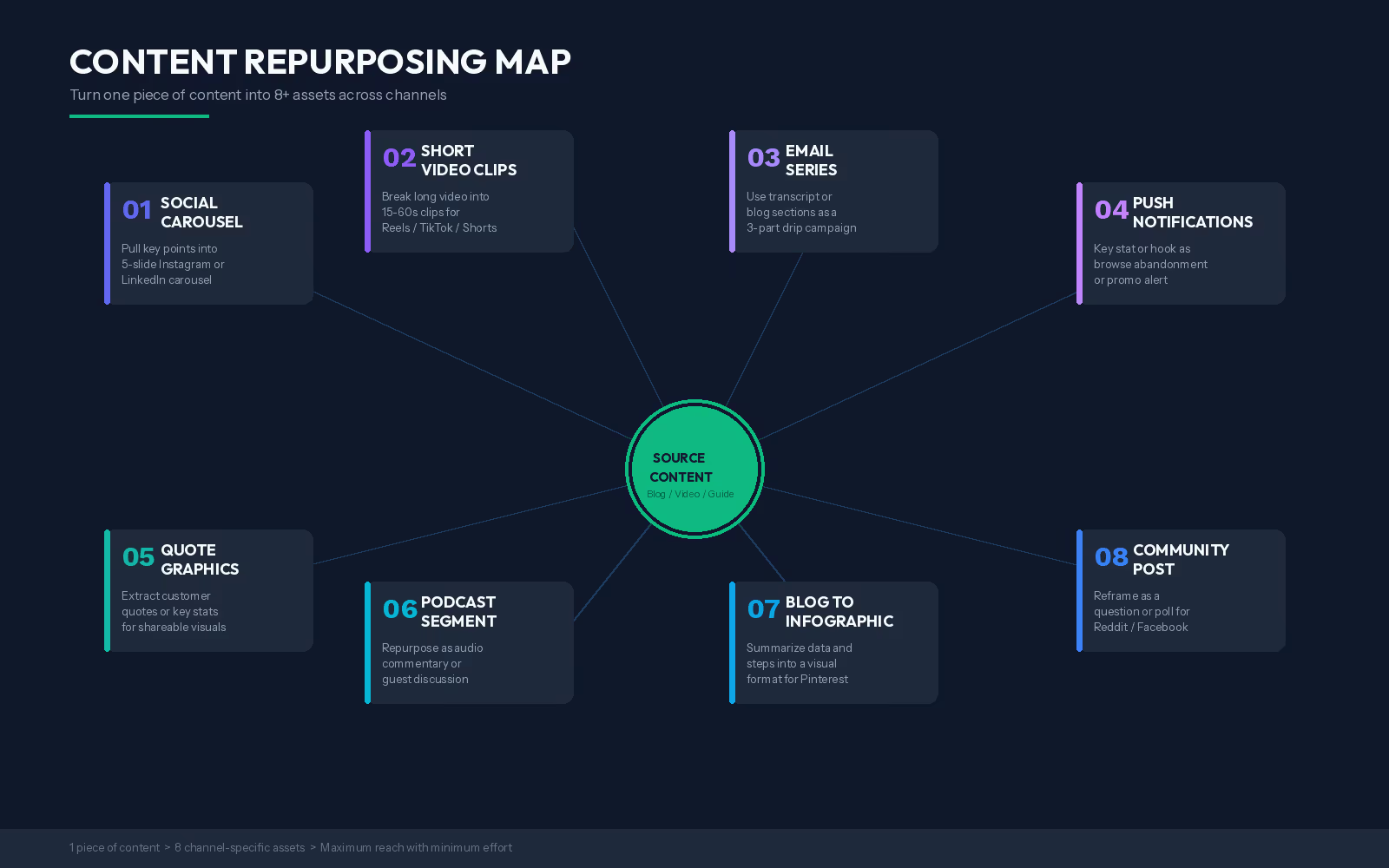
1. Repurpose Your Best Content
- You can maximize the value of every piece of content you create.
- Turn a successful blog post into a social media carousel for Instagram or LinkedIn.
- You can pull key quotes from a video to create engaging graphics.
- It is a creative idea to break a long webinar recording into short clips for TikTok or YouTube Shorts.
- You can choose to use the transcript from a video to create an email series.
2. Work with a Content Calendar
A calendar can easily help you plan and post your content consistently and stay aligned with the business goals of building your brand in front of your audience. This prevents any last-minute creation and ensures a steady flow of material for your socials and website.
- You can always choose to schedule your content around some key dates, like product launches, holiday seasons, and relevant cultural events.
- Plan your thematic content series to build momentum over weeks or months with your audience that likes this type of content.
3. Make good use of Marketing Automation
With the right automation tools, you can execute repetitive tasks, freeing you to focus on strategy. To do that, use social media schedulers to maintain a consistent posting schedule. Then set up automated email or web push campaigns in PushOwl.
For example, you can create a campaign that automatically sends a browse abandonment alert to users who read a specific product review blog post but left without buying. This connects your content directly to your sales funnel.
Localized Success- UAE-Adapted Examples for Fashion & Ecommerce
To effectively market in the Gulf requires you to follow a a tailored approach. Because, here, the success of your campaigns and content depends on understanding cultural values, using preferred platforms like WhatsApp, and aligning with major events such as Dubai Shopping Festival (DSF), Ramadan, and Eid. Let us see some of the localized strategies that work for fashion and ecommerce brands in this region.
Using Cultural Storytelling and UGC
In this market, the most powerful stories often center on family, traditions, and shared celebration, rather than individual achievement.
Using a practical example: A local modest-wear brand could launch a user-generated content campaign named My Eid Story.
How it works: The brand encourages customers to share photos of their family Eid gatherings while wearing the brand's outfits. They can use a specific hashtag for this campaign like #MyEidWith[BrandName].
Why it works: This strategy can shift the focus from a simple product photo to a story of heritage, celebration, and family unity. This creates an emotional connection with the target audience that standard advertising cannot match. The brand can then feature the best stories on its own social channels, building a powerful library of authentic, local social proof.
Interactive Content for High-Value Purchases
When it comes to buying high end products such as jewelry, watches, or designer abayas online, the shoppers may need additional assurance, and using interactive technology can offer this confidence.
Using a practical example: A gold jewelry retailer invests in high-quality 360-degree product views and a virtual try-on feature for their necklaces or rings.
How it works: The customers can first inspect every angle of the product in detail and see how it looks on a model or in a simulated environment before purchasing.
Why it works: This directly helps to deal with the main barrier to online sales for luxury goods, which is the inability to see and feel the product. It reduces hesitation, if any and minimizes product return rates, and improves the brand's perceived value and trustworthiness.
Working with Local Micro-Influencers
The middle eastern communities are well connected, and here, a recommendation from a trusted local voice can be more effective than a global celebrity endorsement.
Using a practical example: You can partner with a well-respected UAE-based fashion influencer for an exclusive collection reveal for your brand.
How it works: The influencer hosts a live stream on Instagram showcasing the new collection, sharing styling tips, and answering questions in real time. They offer a unique promo code for their followers.
Why it works: It can help you tap into the region's VIP culture and the place high trust in niche experts. The live format creates urgency and exclusivity, driving immediate sales for you rbrand during the stream and providing authentic content for the brand to reuse.

Case Studies: Adapting Strategies for Local Brands
1. A Dubai Abaya Brand During Ramadan
Effective and useful strategy: The brand created a Ramadan-themed quiz to Find Your Ideal Iftar Hosting Style. Based on their answers, users were categorized, like for example, The Traditional Host or The Modern Entertainer, etc.
The course of action: They applied this data to create segmented email campaigns with their specially curated product collections for the audience. They also took advantage of PushOwl to issue time-sensitive web push notifications during important times, like pre-iftar or suhoor, to efficiently promote flash sales on suitable items like evening abayas or hostess gifts.
Results achieved: This personalized, culturally-relevant approach led to higher engagement and conversion rates during the holy month for the brand and its marketing efforts.

2. An Electronics Retailer Before Eid
Effective and useful strategy: To reduce post-purchase confusion and returns, the brand created simple, helpful tutorial videos in Arabic titled How to Set Up Your Home Cinema for Eid.
The course of action: They embedded these videos directly on product pages for projectors, sound systems, and TVs for easy accessibility and understanding. To capture lost interest, they used PushOwl to send a browse abandonment alert to users who watched the setup video but did not purchase within two days.
Results achieved: This positioned the brand as a helpful expert, reduced customer service queries, and also helped them recover sales by re-engaging their informed shoppers.
End Note
Making use of effective ecommerce content marketing can help you build genuine connections with your target audience and customers. By learning from proven examples, using interactive tools, and measuring your results, you can create a strategy that drives consistent growth. The important thing to remember here is to move from isolated campaigns to a sustainable system that engages your audience at every stage. A tool like PushOwl helps you complete this system, and allows you to instantly re-engage visitors who interact with your content through web push notifications, turning their interest into loyal repeat purchases and maximizing your marketing effort.