
If you’re searching for the best Shopify Email alternative with push notifications, you’re probably not looking for a giant enterprise migration. You’re looking for the next logical step.
Shopify Email is a solid starting point for new stores. It’s easy to access inside Shopify, simple to launch, and convenient for basic campaigns. But as your store grows, a common problem shows up fast: email alone starts leaving money on the table. You need stronger automations, better recovery flows, more timely customer engagement, and a way to reach shoppers beyond the inbox. Shopify’s own documentation positions Shopify Messaging around creating and managing email and SMS campaigns inside Shopify, which works well for basic use cases but doesn’t solve the broader need for a coordinated email-plus-push retention system. Shopify Help Center, Shopify
That’s where a true alternative to Shopify Email with push becomes important.
Push notifications give ecommerce brands a direct, high-visibility channel that doesn’t depend on whether a subscriber opens an email. According to MDN, the web Push API allows applications to send messages even when the site isn’t currently open in the foreground, making push uniquely suited for real-time reminders and recovery flows. MDN Push API
For stores that are outgrowing Shopify Email, the smartest upgrade is usually not “just another email app.” It’s an omnichannel platform that combines email, push, and optional SMS in one workflow. That’s exactly where Pushowl fits.
Why merchants start looking for a Shopify Email alternative
There’s a predictable point in the retention journey where Shopify Email starts to feel limiting.
At first, simplicity is the advantage. But later, simplicity becomes the bottleneck.
You may be hitting one or more of these issues:
- You can send campaigns, but lifecycle automation feels thin
- You want abandoned cart and browse abandonment recovery beyond email
- You need faster, more visible re-engagement than inbox-only messaging
- You don’t want to bolt together multiple apps just to run basic retention
- You want reporting and customer messaging in one place
- You need an omnichannel app for Shopify Email users rather than a complicated ESP
That last point matters more than most comparison pages admit. The real decision is rarely “Which email platform has the longest feature list?” It’s usually: What is the cleanest upgrade path from Shopify Email without making my stack bloated, expensive, or hard to manage?
If that sounds familiar, this is the key shift: instead of replacing Shopify Email with another inbox-only tool, replace it with a platform that adds push notifications and revenue-driving automations at the same time.
If you want a broader overview of email options available to merchants, see 10 Best Email Marketing Apps for Shopify Stores and Email Marketing for Shopify: The 2026 Platform Comparison Guide.
What Shopify Email does well — and where it stops
To be fair, Shopify Email is useful for:
- simple newsletters
- basic promotional sends
- beginner-friendly campaign creation
- native Shopify familiarity
That’s why many merchants start there.
But once retention becomes a real growth lever, most stores need more than “send email campaign” functionality. They need:
- automated recovery for abandoned carts
- browse abandonment follow-up
- price drop and back-in-stock journeys
- better segmentation
- coordinated messaging across channels
- more ways to re-engage customers who ignore email
This matters because email is powerful, but it is not enough on its own for every shopper journey. Baymard reports that the average documented online cart abandonment rate is about 70%, which means stores need recovery systems built around timing, channel mix, and repeated touchpoints rather than a single reminder email. Baymard Institute
That is the core weakness of sticking with a basic email-only setup: you become overly dependent on one channel in a customer journey that is full of interruptions.
For merchants focused on recovery, these related resources may help:
- 9 Shopify Apps Proven to Reduce Cart Abandonment
- Abandoned Cart Reminder Strategies: Expert Tips to Recover More Sales
Why push notifications change the equation
When merchants evaluate a shopify email and push notifications setup, they’re usually trying to solve one of two problems:
- “My emails aren’t enough.”
- “I need more revenue without adding more complexity.”
Push notifications help on both fronts.
Web push is built for immediacy. According to MDN, notifications can surface outside the web page at the system level, which is exactly why push works well for urgency-based events like cart reminders, restocks, and price drops. MDN Notifications API, MDN Using Notifications API
In practical ecommerce terms, push helps you:
- remind visitors about products they viewed
- recover carts before purchase intent fades
- announce restocks and price drops instantly
- support flash-sale and urgency campaigns
- re-engage customers who didn’t open your email
- create multi-touch automations without adding another full app category
Push is especially valuable in a privacy-conscious landscape where brands want more direct, permission-based channels. Google’s Privacy Sandbox updates have been part of a wider move to reduce cross-site tracking reliance, which makes owned channels like email, SMS, and browser opt-ins increasingly important for retention. Privacy Sandbox, Google
That’s why the best shopify email alternative for growing stores is often not a pure ESP. It’s a platform that combines owned channels in one place.
What to look for in an alternative to Shopify Email with push
If you’re comparing tools, don’t just ask whether the platform “has email.” Ask whether it helps you build a better lifecycle system.
Here’s what actually matters.
1. Email and push in one platform
Managing separate tools for email and push sounds fine until you need shared segments, coordinated automations, and unified reporting. One platform means fewer sync issues, faster setup, and cleaner execution.
PushOwl is built around that model with email, push, and SMS under one roof through its Shopify-focused experience at Turn every store visitor into a customer with Email, Push, & SMS.
2. Better abandoned cart and browse recovery
A serious Shopify Email replacement should not stop at promotional campaigns. It should help recover high-intent shoppers with automated journeys across channels.
This is where push can outperform email alone, especially when speed matters. A cart reminder delivered while the shopper is still browsing elsewhere is fundamentally different from an email buried in a crowded inbox.
If abandoned cart recovery is one of your top priorities, also read 5 Free Shopify Apps That Recover Abandoned Cart Sales and The 8 Best Web Push Apps in 2026 for Shopify.
3. Easy migration from a basic setup
A lot of platforms are powerful but painful. If you are upgrading from Shopify Email, you probably want stronger retention capabilities without weeks of implementation.
The right tool should make it easy to:
- launch quickly
- use existing store data
- build flows without a heavy learning curve
- expand into push and optional SMS only when needed
That’s a major reason merchants look for a purpose-built Shopify platform instead of a general marketing suite.
4. Omnichannel optionality, not forced complexity
Many stores want email and push now, with SMS later. That’s a healthy buying pattern. You shouldn’t have to overbuy to get there.
PushOwl fits that need well because it allows stores to start with the channels they need most and expand into a more complete retention stack over time. If you’re planning budget-conscious growth, Build an Omnichannel Shopify Stack for Under $200/month (Email + SMS + Push + Ads) is a useful next read.
Why Pushowl is the cleanest upgrade path for stores outgrowing Shopify Email
If your store has outgrown Shopify Email, Pushowl stands out because it answers the exact migration question most comparison pages miss:
How do I add push notifications and stronger automations without rebuilding my entire marketing stack?
Pushowl is a strong fit for merchants who want to move from basic email into higher-performing retention without stepping into enterprise complexity.
Here’s why.
Built for Shopify merchants
Pushowl is not a generic ESP trying to adapt to ecommerce. It is Shopify-focused, which matters when your workflows depend on store behavior, automation triggers, and commerce-specific use cases.
Explore the platform here:
Stronger lifecycle messaging without app sprawl
Instead of managing one app for email, another for web push, and maybe a third for SMS, Pushowl helps consolidate retention into one system.
That means you can build:
- welcome flows
- abandoned cart recovery
- browse abandonment journeys
- price drop alerts
- back-in-stock notifications
- cross-channel promotional campaigns
For brands especially interested in commerce-triggered alerts, Turn Price Drops into Sales Instantly shows how timely push-led messaging can turn buyer intent into conversions.
Push as a first-class retention channel
Many email platforms “also support” other channels. Pushowl is different because push is part of the core value proposition, not a side add-on.
That leads to a better answer for merchants searching for shopify email alternative with push notifications. You’re not just swapping one email tool for another. You’re upgrading from inbox-only marketing to a more complete customer communication system.
Flexible growth path
For smaller stores, Pushowl can be the first real retention platform after Shopify Email. For scaling brands, it can become the central layer that connects email, push, and SMS in a more coordinated way.
If SMS is part of your roadmap too, see SMS Marketing for Shopify That Turns Texts Into Transactions and Best Omnichannel Marketing Platforms for Shopify(Email + SMS + Push + Ads Compared).
Shopify Email vs Pushowl: the practical difference
Here’s the simplest way to think about it.
Shopify Email is for sending emails.
Pushowl is for driving retention across email, push, and optional SMS.
That difference affects real outcomes:
That’s why Pushowl works particularly well for merchants searching terms like:
- alternative to shopify email with push
- best shopify email alternative for growing stores
- omnichannel app for shopify email users
These are not top-of-funnel research queries. They signal buying intent. The merchant already knows email matters. They now want a better-performing setup.
Signs you’ve officially outgrown Shopify Email
Still unsure whether now is the time to switch?
You’ve likely outgrown Shopify Email if:
- your email revenue has plateaued
- your cart recovery relies mostly on one or two emails
- you want browse abandonment flows
- you need faster visibility than inbox-only messaging can deliver
- you want promotional campaigns plus automated lifecycle messaging
- you are adding more tools just to cover basic retention gaps
- you want one platform for email, push, and eventually SMS
If several of these apply, staying with a basic setup may actually increase complexity over time because you’ll end up patching the gaps with more apps.
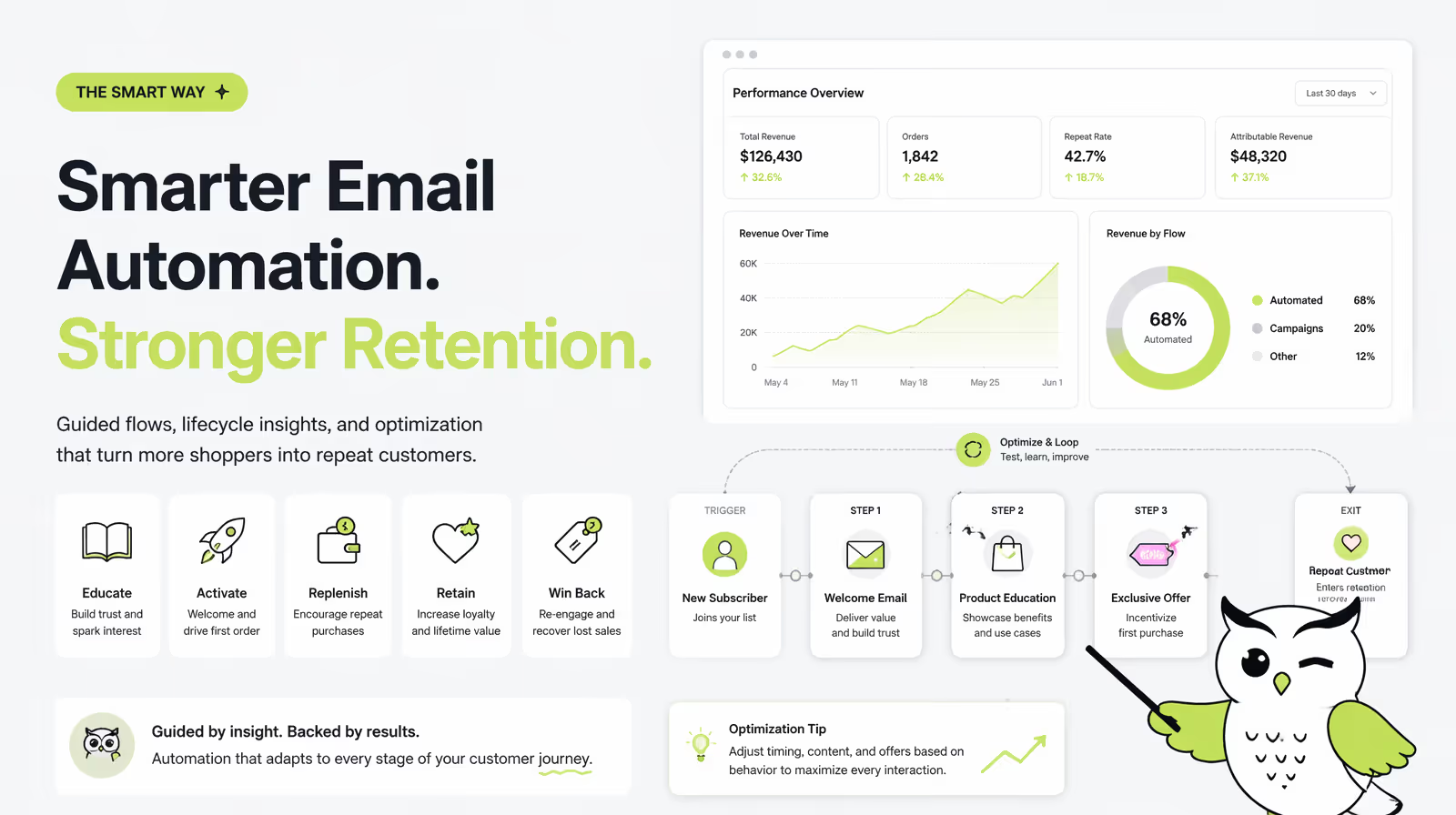
A cleaner solution is moving to a platform built for omnichannel retention from the start. Pushowl’s Shopify Marketing Automation that grows revenue, not just clicks! reflects that shift well.
How to make the switch without overcomplicating your stack
The biggest fear merchants have when replacing Shopify Email is operational friction. The good news is that the right migration doesn’t require a total rebuild.
A simple path usually looks like this:
- Keep your essential campaign calendar running
- Move key automations first, especially welcome and cart recovery
- Add push to your highest-intent journeys
- Expand to browse abandonment, price drop, and re-engagement flows
- Add SMS only if and when it makes economic sense
That sequence matters. It keeps the transition revenue-focused rather than feature-focused.
If you’re comparing low-friction tools for automation, Easiest Shopify Email Automation for Beginners: 6 No-Cost Tools Ranked by Setup Simplicity is a useful supporting read.
Conclusion: the best Shopify Email alternative adds a new channel, not just new templates
If Shopify Email no longer feels sufficient, the answer is not necessarily a more complex email platform.
The better answer is usually a smarter retention platform.
A true Shopify Email alternative with push notifications helps you recover more carts, re-engage more shoppers, and build stronger lifecycle flows without stitching together multiple disconnected tools. It gives you email for planned communication and push for urgency, visibility, and behavior-based recovery.
That’s why Pushowl is such a compelling next step for stores that are outgrowing Shopify Email. It solves the exact problem growth-stage merchants run into: you need more than email, but you do not want more chaos.
If that’s where your store is today, explore PushOwl pricing or start with Turn Browsers into Buyers with Push Notifications for Shopify🚀. The upgrade path is simple: move from email-only marketing to a retention system built to convert.