
There is a leak in your marketing funnel.
It is not your product.
It is not your customer service.
It is your checkout experience: the exact moment when most Shopify abandoned carts happen.
The payment page may be cluttered with too many options.
Maybe unexpected shipping fees scare shoppers away.
Or the customer got distracted and left the site before completing the purchase.
Whatever the reason, cart abandonment is one of the biggest revenue blockers for ecommerce brands.
But here is the upside: an abandoned cart does not equal a lost sale.
With a well-planned abandoned cart recovery (ACR) strategy, you can automatically bring shoppers back, remind them of what they left behind, and recover lost sales through timely ACR emails and push notifications.
If you are looking to reduce cart abandonment and improve conversions, your ACR automation is the place to start.
What is Shopping Cart Abandonment?
Shopping cart abandonment occurs when a customer adds a product to their cart but abandons the checkout process before completing their purchase. Customers may abandon their shopping cart for a variety of reasons during their buying journey.
The shopping cart abandonment rate has risen steadily over the decades, reaching 70.19% in 2025.
To put that into perspective, more than 7 out of 10 customers abandon their shopping cart.
That is 7 out of 10 warm leads gone to waste!
Why Does Shopping Cart Abandonment Occur? (Reasons + How To Fix It)
Shopping cart abandonment does not occur solely because customers do not like your products. It can sometimes happen because something in the buying journey caused friction or hesitation. Here are the most common reasons for shoppers abandoning their carts (which may have nothing to do with your product or website):
The Shoppers Got Distracted
It happens to all of us.
We are about to hit the checkout button on an e-commerce website, and then we realize… our wallet is too far away. Sometimes we get a call and forget about completing the purchase. In this case, the shopper is genuinely interested, but they got distracted by the thousand notifications coming in.
ACR emails help here because a quick nudge every now and then pulls them back to your brand and reminds them to complete their purchase. Make the purchase just one tap away with relevant CTAs.
The Shopper Is Still Deciding
The shopper is comparing products or learning more about how your product can solve their problem.
At this point, they are not at the purchase stage; they are merely discovering options. They might add a product or two to the cart so that they can come back to it later after checking out your competitors.
Your ACR emails will help you push your product to the top of their minds and build confidence in it. Use your ACR sequence to display social proof, so the customer feels your product is the most trusted option.
The Shopper Is Not Convinced
The customer has doubts related to your product. These concerns might be related to sizing, delivery timelines, and so on. They need a little bit of convincing. At this point, they may be adding your products to the cart, but they are not entirely sure.
Your ACR emails should address silent objections and include sizing guides/styling and usage tips (if relevant).
The Shopper Is Waiting for a Better Deal
Some shoppers abandon their carts intentionally in the hope of receiving an email with a discount code. You don’t need to send the “complete your order with this 10% discount” email to each customer who abandons the cart.
Use other smart incentives instead of discount codes for cart abandoners, such as buy now, pay later, free shipping, or loyalty points.
Launch Your ACR Campaign Within Minutes With PushOwl
Your ACR automation should be structured: the first email can be a simple nudge, and if they still don’t convert, follow up with additional perks.
Your third email can include a one-time discount offer to make it feel more intentional rather than a quick win.
Email timing for recovery campaigns becomes crucial here. Sending a discount email straight off would train your customers to expect discount codes the moment they abandon their cart.
How To Design an ACR Ecommerce Email Marketing Automation
Cart abandonment happens more often than most stores realize.
But the shoppers who abandon carts are not lost; in fact, they are more likely to buy from you than purchasers who have never been on your website or inactive customers who may need more than a couple of emails to come back to you.
You can structure your ACR automations using Shopify apps specifically for cart abandonment in the following way:
Each message in the automation is designed to rebuild momentum.
Once you start running this automation, it runs quietly in the background so that you can recover sales with minimal effort. Over time, these emails rebuild intent through gentle reminders.
Let’s see some of these best practices in action:
11+ Abandoned Cart Recovery Email Examples
With these 11+ ACR email examples from popular e-commerce brands, you will get an idea of how to build effective abandoned cart recovery campaigns:
Example 1: Immi (Ramen Brand)
Purpose: Highlight product benefits
Immi’s emails check all the boxes visually; the yellow-and-black color palette is catchy. But here’s what it gets right with its ACR emails:
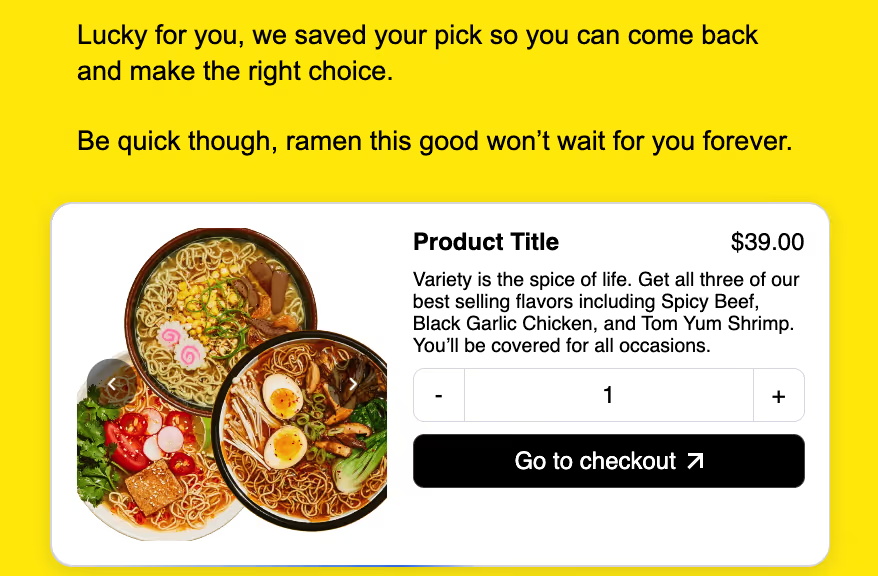
The email copy is conversational and leads to a simple checkout box that displays the product description (including price and image) and allows the customer to change the quantity.
But here’s the essential part of the email:
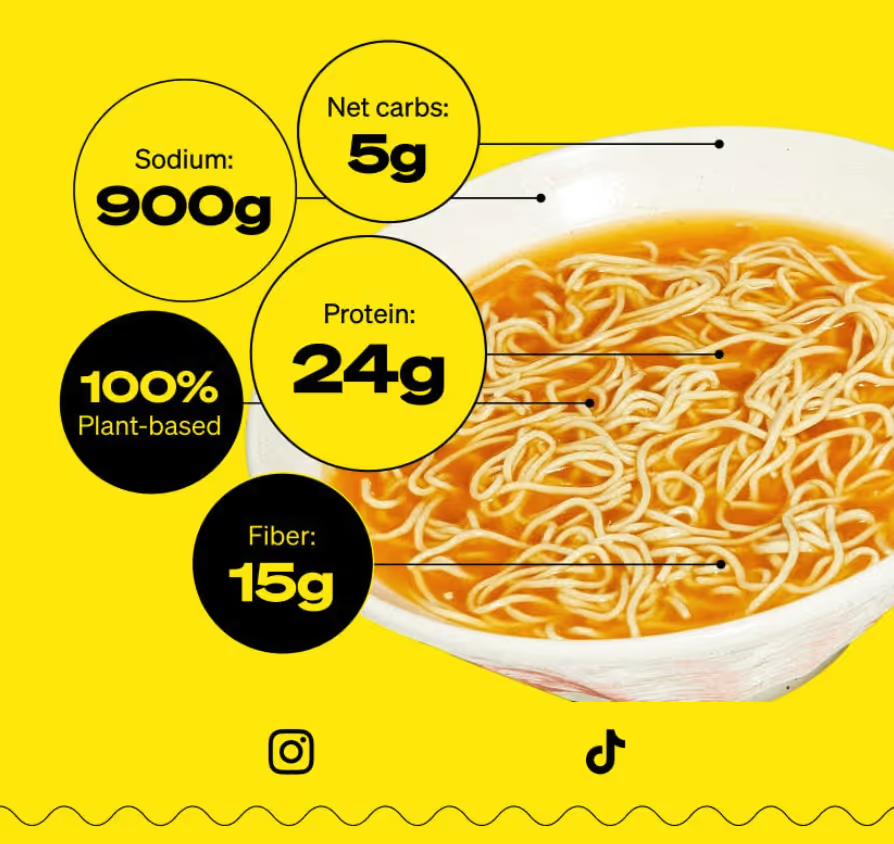
Why it works: This visual reminds the customer of the product’s USP — the high-protein, low-carb, plant-based combo. It’s a significant push for customers on the fence about completing the purchase.
Here’s another brand that uses this technique:
Example 2: Magic Spoon (Cereal Store)
Purpose: Highlight product benefits
Magic Spoon sends two emails if you abandon your cart, each with a different focus. The following email follows a similar formula to Immi, with an emphasis on the product’s main benefits:
Why it works: The “ticking the boxes” visual is effective, and the list of benefits identifies the core customer pains around healthy breakfast options.
For brands in the health space, such reminders in ACR emails are quite impactful.
Example 3: Pawsafe (Dog Accessories)
Purpose: Well-coordinated ACR sequence
Pawsafe sends a set of four emails when you add a product to the cart but do not complete the checkout process. The emails are spaced over three days, each with a different subject line and preview line:
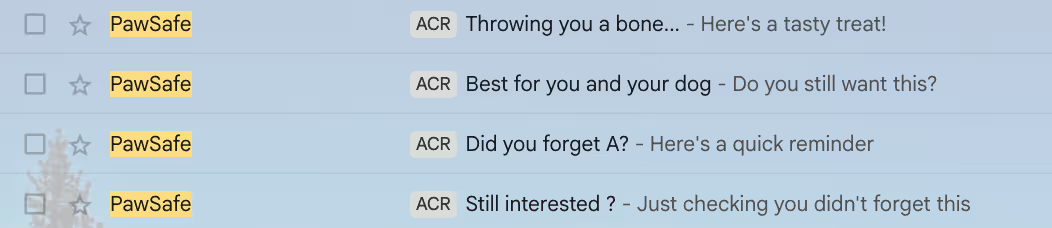
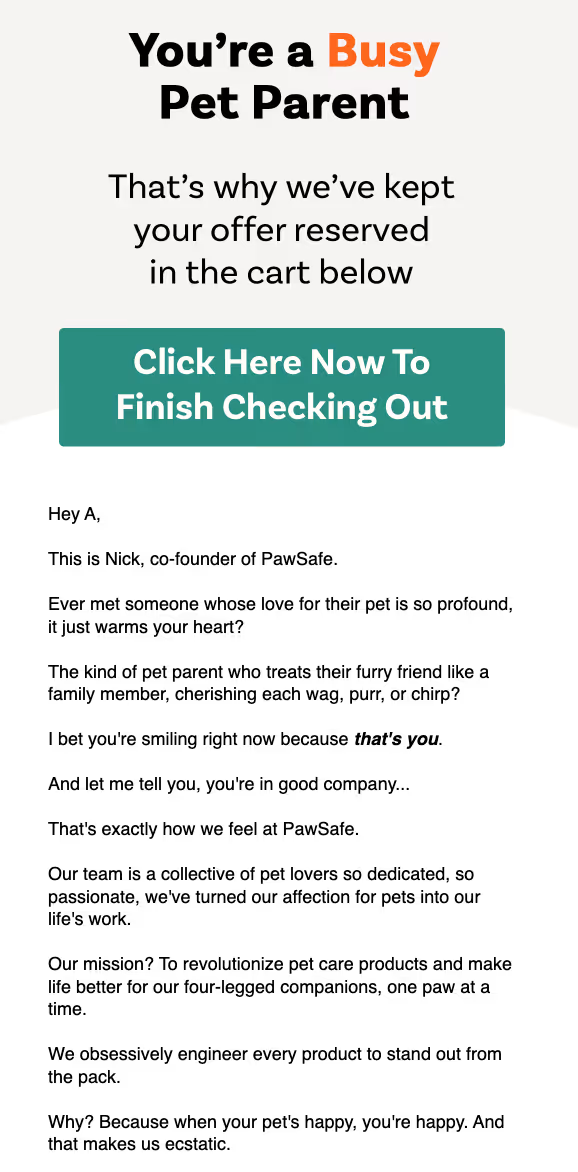
The emails follow a formula: the first email is a simple reminder with a product image. The second email is a founder’s letter (a popular newsletter format) that empathizes with the issues that dog parents face.
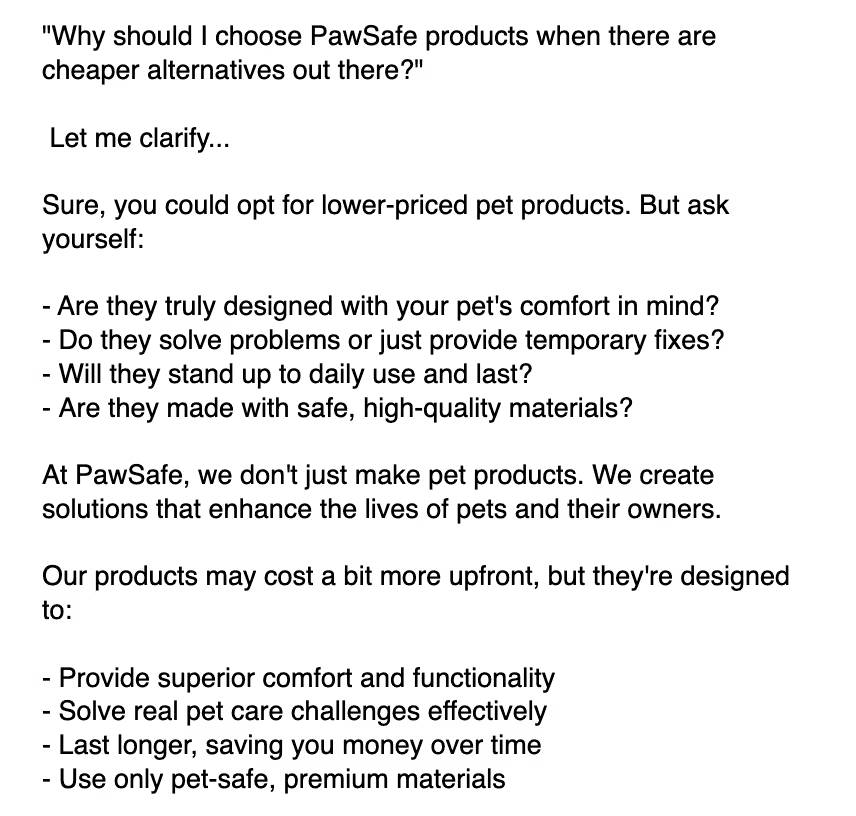
If the customer still does not complete the purchase, the third email addresses common objections, such as “why us vs. competitors,” in another founder letter.
The final email in the ACR campaign offers a discount.
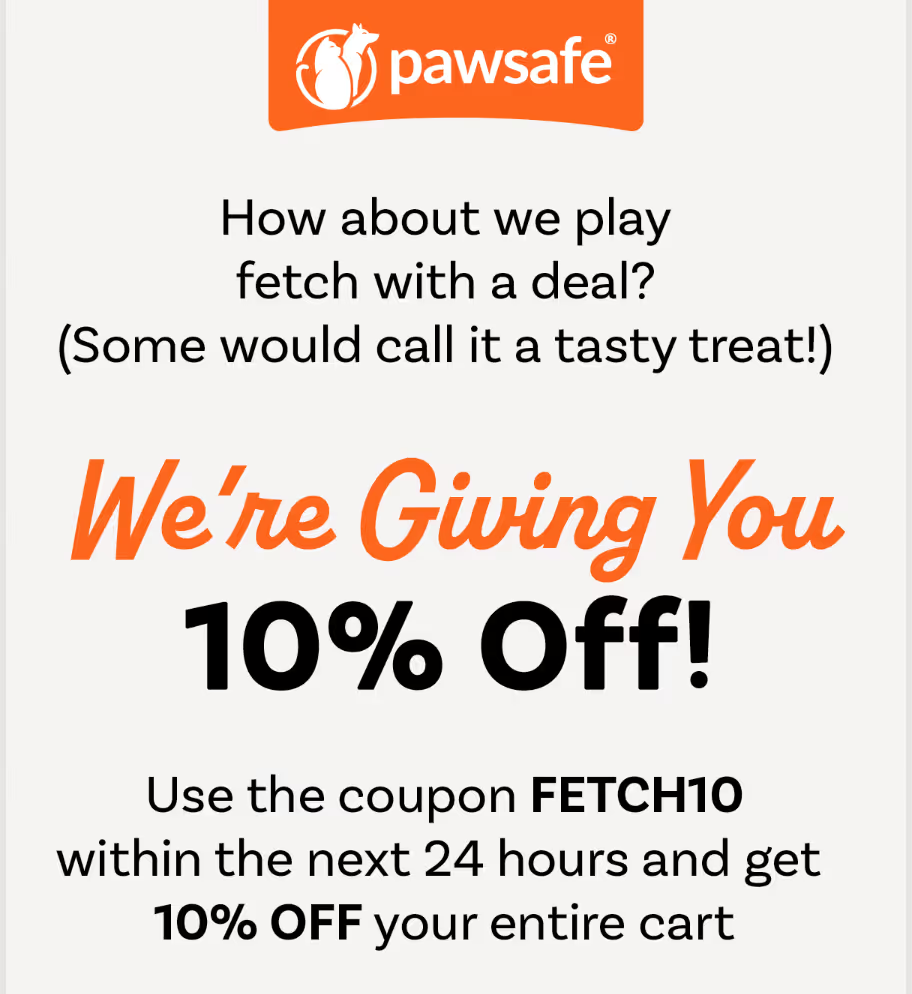
Why it works: The sequence starts with a soft push rather than jumping directly to an incentive. Each email serves a different focus, rather than acting as repetitive/identical reminders.
Your abandoned cart email automation has to have emails with distinct goals.
Example 4: Rothy’s (Sustainably-Made Shoes and Bags)
Purpose: Well-coordinated ACR sequence
Rothy’s takes a different (but equally effective) direction with its ACR sequence.
While Rothy’s also sends three reminder emails, they are concise and snappy. Here are two of the three emails:
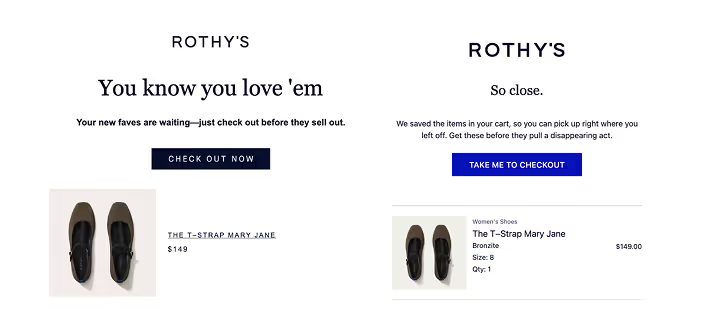
Why it works: The minimalist emails follow a consistent format, with the product image and description at the core, and the CTA button standing out. Each email includes a quantitative reminder of the brand’s sustainability vision.
This gentle reminder can push the customer to feel less guilty about their (often) impulsive purchases.
Example 5: Miss Lola (Women’s Clothing and Accessories)
Purpose: Highlights general perks
As an e-commerce brand in a highly competitive space (women’s clothing), Miss Lola chooses to highlight benefits associated with their store, in addition to including the usual elements of an ACR email.
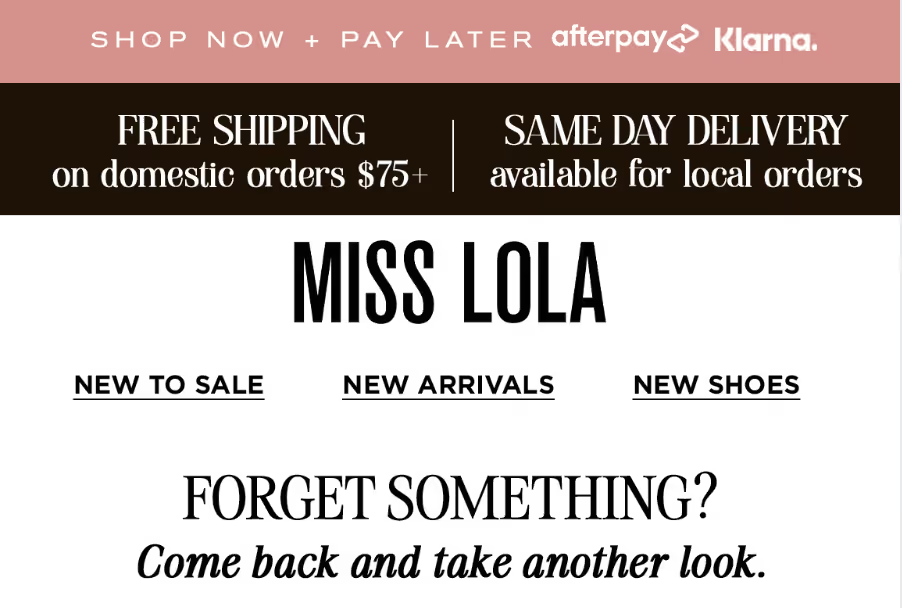
Why it works: The ACR email highlights ‘shop now, pay later’ options, the free shipping threshold, and the same-day-delivery perk in contrasting colors to attract the reader before they read the rest of the email.
Putting these perks at the forefront significantly helps with abandoned cart recovery.
Example 6: Hiya (Children’s Supplements Brand)
Purpose: Trigger emotions
Hiya’s marketing campaigns come with tailored reminders for parents about caring for their children.
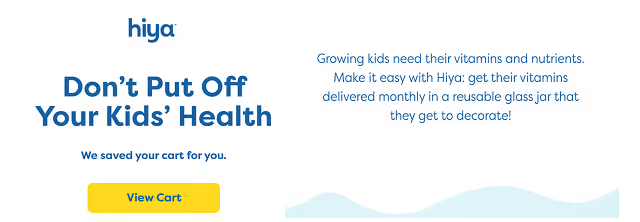
Why it works: The headline is above the description of products left in the cart, and it immediately ropes in the customer by highlighting a parental fail (“ignoring their child’s health”). It doesn’t focus on the product; instead, it forces the parent to reconsider whether they are doing everything for their child (the end user of the product).
The body copy of the email triggers other feelings: saving time (the one thing parents lack) with a subscription model, and a bonus of presenting the jar as a craft project to the child to make the entire experience more palatable.
Example 7: The Beauty Crop (Skincare and Makeup Brand)
Purpose: Social Proof
The Beauty Crop is an e-commerce store operating under the masstige model, which means it has to balance luxury and affordability for its customers. When a customer abandons their shopping cart, the brand’s cart recovery campaigns build social proof that reiterates this balance:
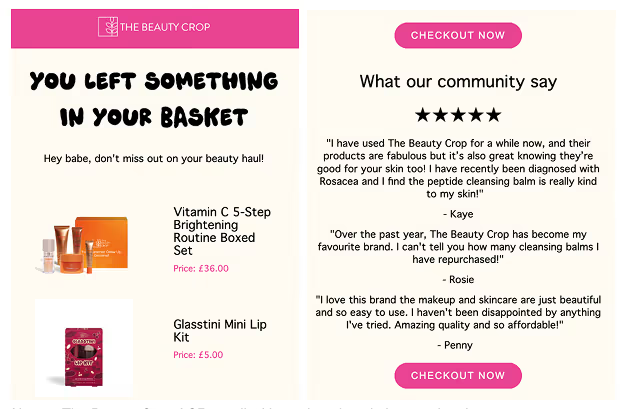
Why it works: The brand features persuasive reviews that highlight specific product benefits, giving first-time buyers or those on the fence the confidence to proceed with the purchase.
If you can make the reviews about the specific products in the cart, then even better!
Example 8: Walkee Paws (Dog Accessories)
Purpose: Social Proof
Walkee Paws sends a single email as part of their ACR campaign. This email not only reminds the customer what is left in the cart, but also includes convincing social proof that isn't in the form of reviews.
The social proof is visual, with multiple logos of authoritative publications and media channels that have featured the brand. The email also contains a photograph of the product being presented at Shark Tank:
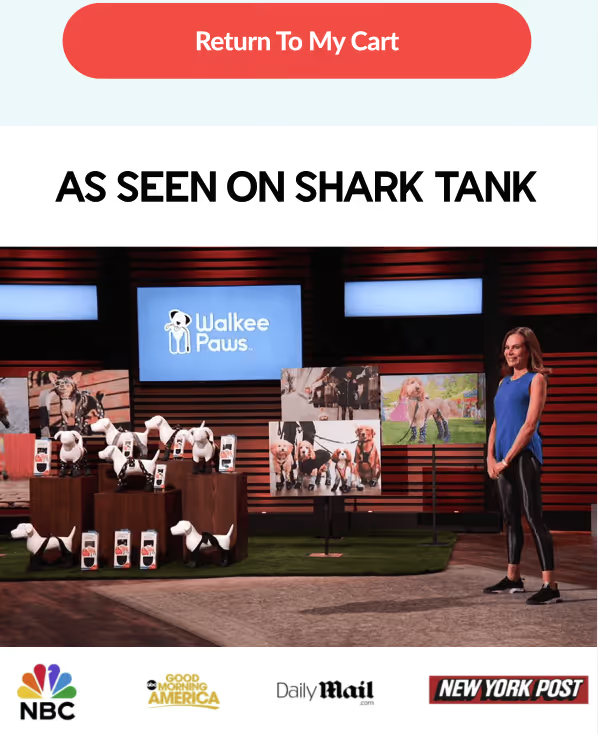
Why it works: The email immediately reminds the customer that the brand is well-established in the industry and has received significant media coverage. This helps build credibility and assuages any doubts about the brand’s reputation and, by extension, its quality.
It’s easier for customers to trust brands that have received positive press.
Example 9: Cheekbone Beauty (Cosmetics Brand)
Purpose: Generate FOMO
Cheekbone Beauty’s tonality screams elegant simplicity across its website and email campaigns.
To attract cart-abandoning customers, the brand sends an email with a subject line highlighting a discount. This ACR email had the subject line: “Here’s a Sweet 35% OFF Just for You”
Simple, short, and effective.
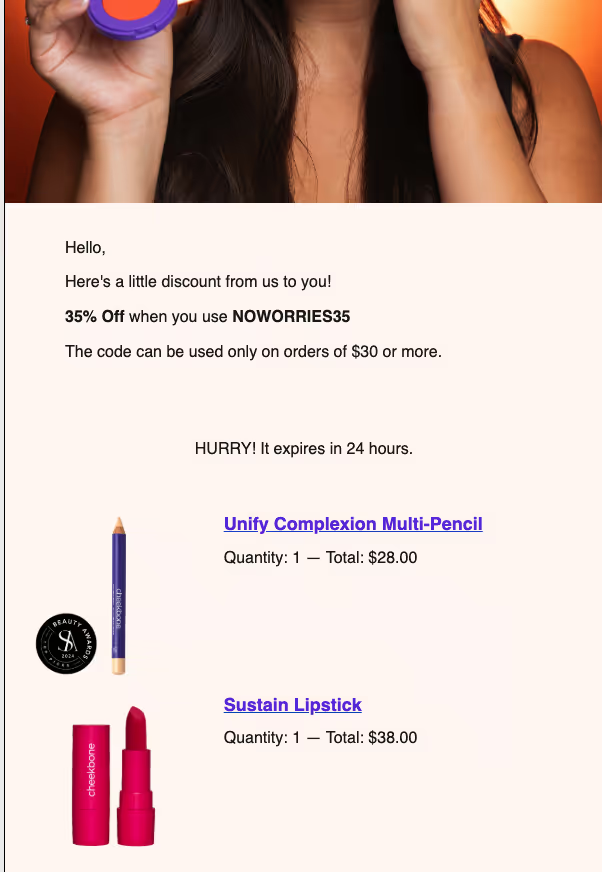
Why it works: The subject line highlights the (significantly high) discount percentage, instantly catching the customer’s eye. The discount is time-sensitive, prompting the customer to check out within 24 hours. The disclaimer about the order limit (which the customer has met) is more like positive reinforcement, signalling that they have unlocked the discount, so they checkout to claim it.
A combination of time-sensitive discounts and FOMO is a powerful strategy for ACR.
Example 10: Lords & Labradors (Luxury Pet Accessories)
Purpose: Redirect the customer if they don’t want their cart products anymore
The goal of an effective ACR strategy is obviously to nudge the customer to complete the purchase. But this brand has carved out one more “mini-win” through its ACR emails: getting its customers to choose other similar products if they are not happy with what they have put in their cart.
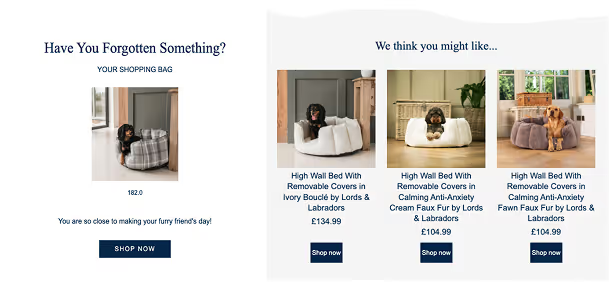
Why it works: The email is not just highlighting the item the customer put in the cart. They also include alternative items in the same category (and at a lower price), so the customer can browse more products and pick something else.
Rather than giving them just two choices (finish the purchase or abandon the cart), the email offers a third option.
Example 11: Sous Chef (Culinary Equipment and Ingredients)
Purpose: Trying to relate to the customer
Sous Chef is a Shopify brand that focuses on building personal connections with customers, as evidenced by the conversational language on its website and in its email campaigns.
Their campaigns for recovering abandoned carts are no different:
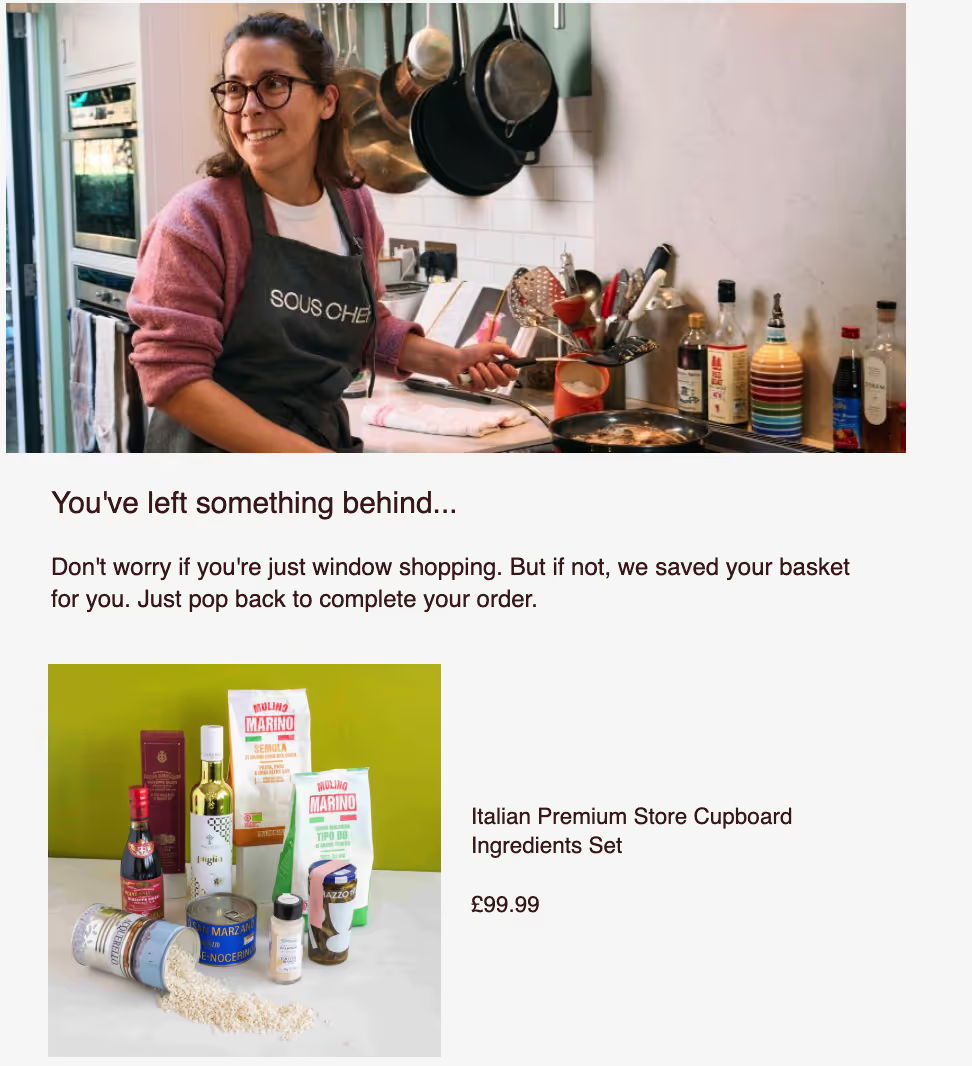
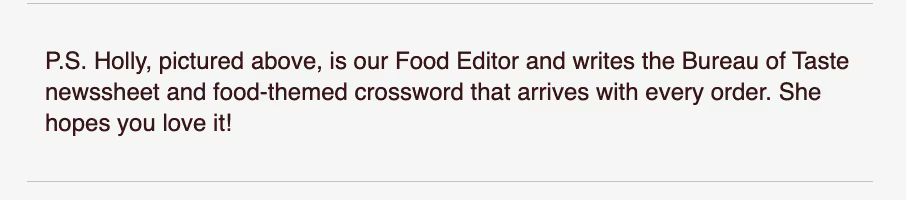
Why it works: The email does not try to incentivize the customer to finish the purchase, or nudge them to checkout with FOMO. It simply acknowledges that the customer may be window shopping (as is the case most of the time) and that the cart is ready in case they are genuinely interested in completing the order.
The post-note about the Food Editor and her smiling photo adds a friendly touch!
Example 12: Glow Recipe (Skincare Brand)
Purpose: Circulate resources to gain customer insight
For skincare brands, especially, the more data they have on their customers, the easier it is to tailor recommendations and even initiate new product formulations.
Basic demographic data is not enough; they need detailed insight into their customers’ skin type, skin concerns, and other targeted issues. An ACR email can plug such a resource well to maximize responses:
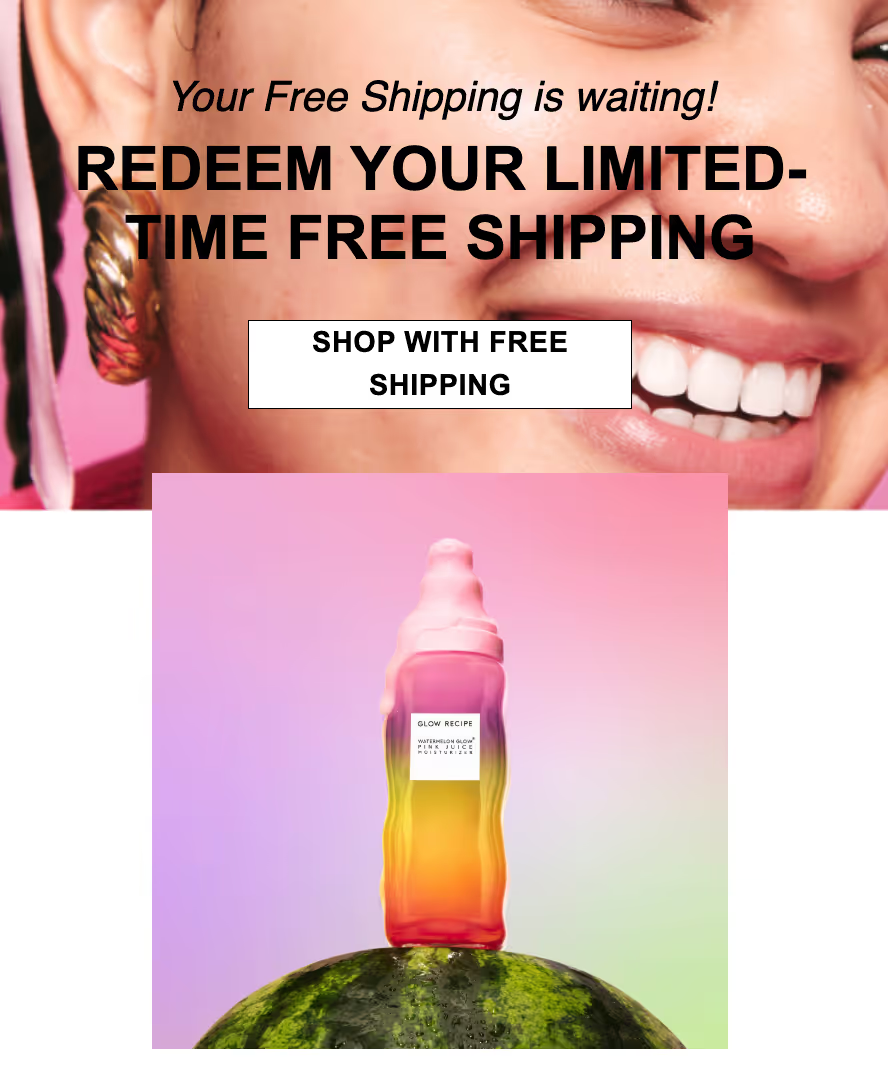
Why it works: Beyond the free shipping perk, the 10% discount on orders is a great value swap in exchange for valuable customer information. Customers tell you more about their needs, and you give them the incentive to complete their purchase.
Win-win.
Example 13: Walkee Paws (Dog Accessories)
Purpose: Highlight the popularity of the product in the abandoned shopping cart
Highlighting figures and quantifiable metrics is a great way to underscore a product's popularity. One of these metrics is identifying the number of products in stock, as Walkee Paws does:
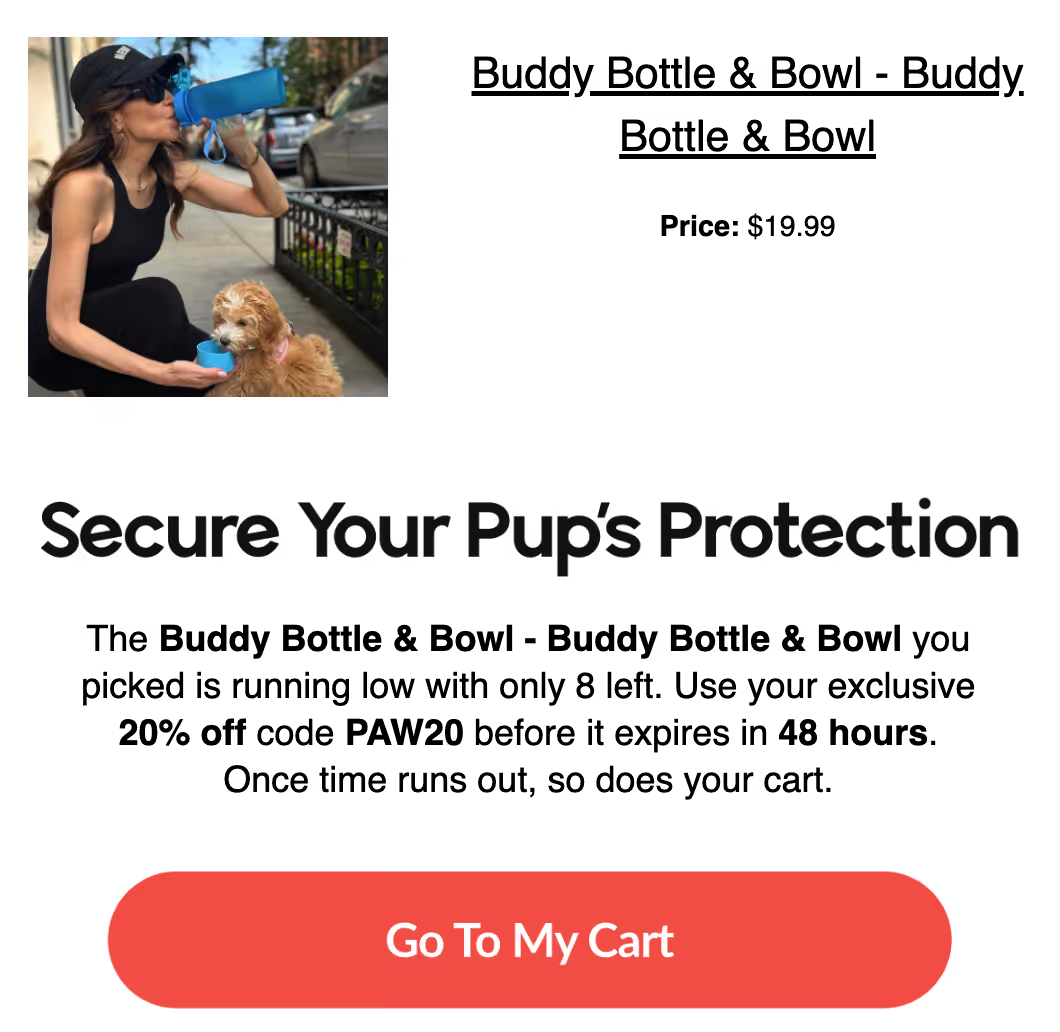
Why it works: In addition to identifying the product and adding an image of the products being used by an adorable puppy and their parent, the ACR email also includes the number of items in stock. By including a 48-hour discount, the email leverages FOMO and product demand to persuade the customer.
There’s another way to highlight product popularity, which we will show you in the following example.
Example 14: Alo Yoga (Athleisure and Yoga Accessories)
Purpose: Highlight the popularity of the product in the abandoned shopping cart
Alo Yoga does precisely this by emphasizing a unique metric that reminds customers that the product in their cart may be worth purchasing:
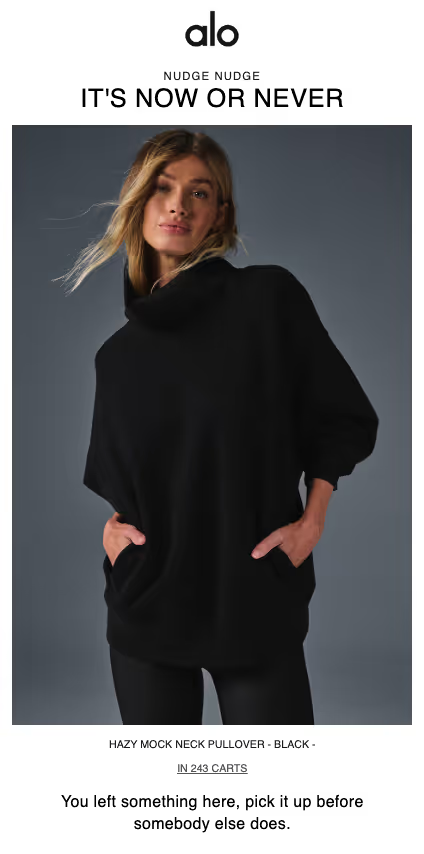
Why it works: When the email points out that the product in the customer’s shopping cart is also in 243 other carts, it hints that the product is in high demand. Therefore, it is worth buying (the product being in a high number of carts also indicates it may go out of stock soon!).
You can build a sense of urgency either using the Alo Yoga path or the Walkee Paws method.
Abandoned Cart Recovery Email Best Practices (Do’s and Don’ts)
Even the best ACR automation can fall flat if you don’t follow some email best practices. Here’s what you can do (and not do) to make your recovering carts more successful.
Don’t:
- Send reminders at the wrong time: If your first recovery email lands hours or days after the shopper left, you have already lost momentum. Timing matters, especially for mobile-first shoppers who browse and abandon within minutes.
- Make the checkout process difficult: A complex login or mandatory account creation can ruin the customer's buying experience. Shoppers expect an easy handoff between email and checkout. Allow customers to register on your website via linked accounts to reduce friction.
- Surprise shoppers with extra costs: Unexpected fees at the final step are among the biggest triggers of cart abandonment. Be upfront about shipping, taxes, and other expenses before checkout. Your ACR emails can also clarify the costs.
Do’s:
- Include product details in every reminder: The product image, price, and name should be in your ACR emails. Visual cues help shoppers recognize what they left behind and rebuild purchase intent. Your abandoned cart reminders need to include every vital detail without overwhelming the customer.
- Send multiple reminders (but not too many): One email isn't enough to bring shoppers back. Usually, 2-3 emails in a recovery campaign perform better. But do not send daily reminders; spamming can backfire.
- Use an omnichannel approach: Integrate SMS with the abandoned cart email flow and layer in web push notifications to achieve faster reach and higher recovery rates. If your email contains a reminder, an SMS sent 24 hours later can include a free shipping offer, and the follow-up web push notification can act as their final reminder to generate FOMO. An omnichannel strategy with these elements will help with customer recovery.
Save Time With PushOwl’s Abandoned Cart Recovery Automations
These abandoned cart recovery examples prove one thing: ACR is about optimizing timing and incentives. Just because abandoned cart automations run in the background, you cannot compromise on personalization if you want to recover sales from abandoned carts.
The easiest sales to win back are the ones that were already close to checkout.Next step? Use our templates to set up your first ACR automation in under 10 minutes with our free plan.