February 14 is one of the Q1’s top converting shopping moments for ecommerce brands. Valentine’s Day spending breaks the $29.1 billion mark every year, according to data from NRF, and online shopping is a huge part of that. Meantime, inbox volume explodes as brands ramp up promotional sends, meaning attention becomes even more of a battlefield, and attention from your customers is a luxury.
This is both an opportunity and a risk for Shopify brands. The solution isn’t to send even more emails, but to send relevant ones. The brands that win aren’t the ones who turn up the volume on discounts or resend “last chance” messages. They take the friction out, make it easy to find gifts, emphasize delivery certainty, and connect every email to buyer intent, whether early planners or last-minute shoppers.
This blog discusses how e-commerce brands are successfully converting for Valentine’s Day with an email marketing strategy and without contributing to inbox fatigue.
1. Begin With What Customers Really Want: Timing and Certainty
Here’s the ugly truth: When most shoppers hesitate, it isn’t because they dislike your product. They hesitate because they’re not sure it will arrive in time. Valentine’s Day is deadline-driven. Emotional purchase is over by February 14. That anxiety slows decisions.
Your emails should quickly dispel that fear. Make it clear what days items will arrive, from delivery cut-off dates to guaranteed arrival timelines, as well as same-day or express shipping options, and digital fallbacks such as e-gift cards. Don’t hide this information down in the footer or inside a small FAQ link. Put it out there and let your customers see that.
Your delivery reassurance should be in your subject line and hero banner, close to your main CTA. For example:
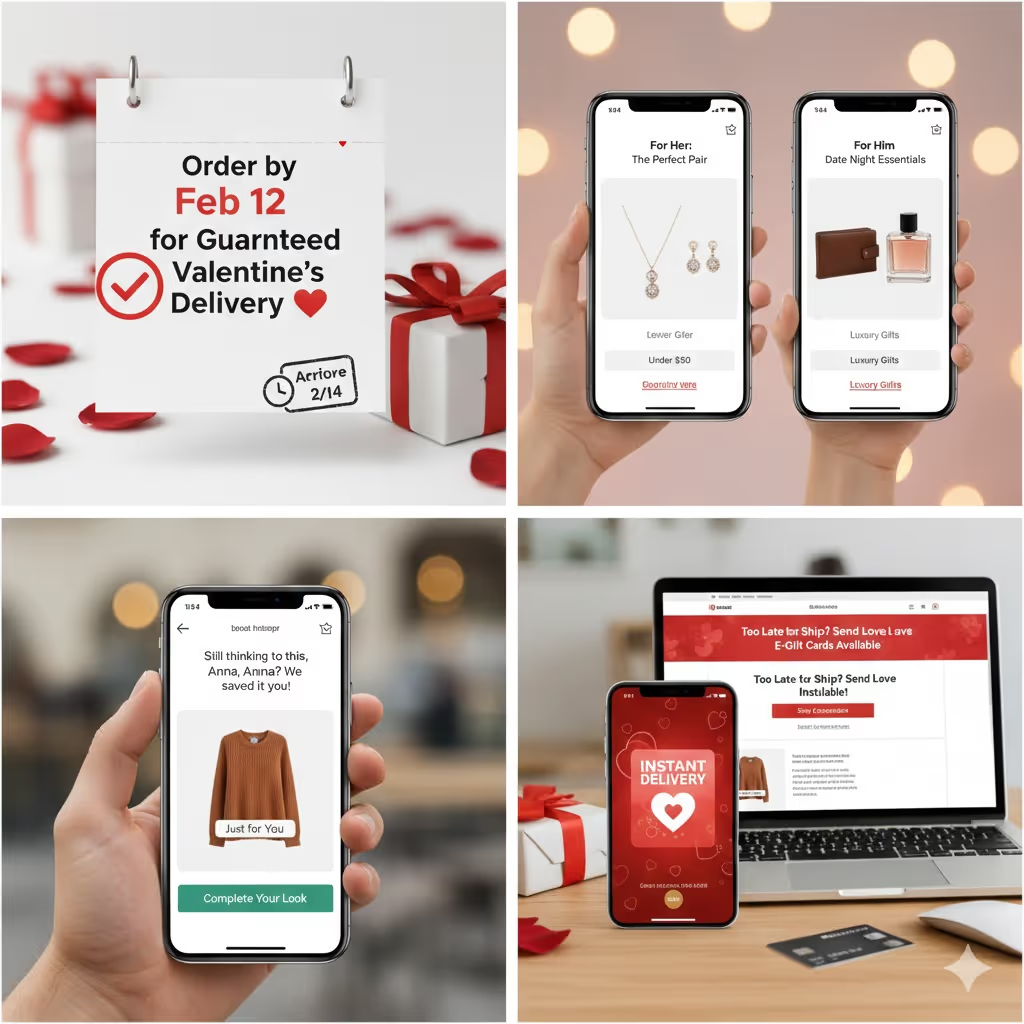
“Order by Feb 12 for Guaranteed Valentine’s Delivery ❤️”
“Still Time: Arrives Before 2/14”
When customers believe your brand, they act more quickly. Clarity reduces friction. Reduced friction increases conversions.
Within PushOwl, Shopify brands could schedule time of deadline campaigns, automatically set up reminder sequences for shipping windows that were closing, and be able to adjust messages on the fly, without having to manually watch cutoffs. That way, your emails grow in urgency as that time draws near, rather than sending the same coupon to everyone.
2. Overcome Decision Fatigue With Gift Guides and Bundles
People who need to shop the day before Valentine’s Day aren’t often doing so for fun. They are shopping with a deadline and an intent. Studies will tell you that seasonal shoppers only browse through 1-3 websites before they make a purchase. As a result, if the email does not make it easier for them to make their decision quickly, they discard it.
Rather than sending out a general grid of products and hoping your customers get it, help them do the work. Sponsored curated gift guides save them mental load. Categories such as “For Him,” “For Her,” “Under ₹2,000” or “Last-Minute Digital Gifts” instantly limit the range of options. The easier the path, the more quickly customers purchase.
Bundles work especially well for Valentine’s Day, as they bring home the emotional association of pairing and gifting. A well-named package, such as “The Perfect Pair” or “Date Night Essentials,” outperforms a generic “Buy Two and Save More.” Framing changes perception. Customers feel as if they are buying a full experience, not just lots of products.
Within PushOwl, brands on Shopify can display best-sellers dynamically, showcase high-converting products automatically, and personalise recommendations based on browsing or cart actions. This reduces friction for browsing and simultaneously increases the average order value. The less thought you require from a customer, the more likely that customer is to purchase.
3. Tailor the Relationship, Not Just the Product
Valentine’s Day is about relationships. Your email approach should follow emotions, not just sales. Rather than hammering everyone with a generic push, seize this as an opportunity to demonstrate that you really do know your customers. A little recognition can go a long way toward improving engagement.
Personalisation doesn’t have to be complex for conversions. Layered contexts help Shopify brands to bring in a personalized email marketing campaign:
- Purchase History: “Your favorite scent returns!”
- Browsing activity: “Still interested in this?
- Level of engagement: “We saved this just for you.”
- Lifecycle stage: Welcome to being a new customer vs VIP early access.
These minor adjustments change the vibe of an email. It goes from being a sales push to a helpful personalized nudge.
Segmented emails always beat mass sends because they eliminate mental friction. When readers feel understood, they pay. When they think they are being blanketed, they ignore.
Through PushOwl, segmentation could be centered around your cart behavior, frequent purchase intent, repeat purchase behaviour, product likeliness, and dormant segments. That means Shopify brands can send fewer generic blasts and more timely, behavior-driven messages.
The more personalized the relationship seems, the less likely your Valentine’s Day email is just another sales promotion.
4. Avoid Going Overboard on Romance: Stick To Your Brand
You don’t have to make a full brand overhaul for Valentine’s campaigns. What's more, a dramatic change in visual identity often leads to underperformance as customers fail to recognize the sender right away. Familiarity drives trust.
Rather than redesigning everything from scratch, allow for calculated seasonal changes:
- Header swaps: A nuanced Valentine’s-themed hero banner.
- Copy adjustments: A card playful about love or connection.
- Product framing: Position products as “perfect pair” or “thoughtful surprise.”
- Color accents: Add a touch of red or pink to colors without overwhelming the design.
The aim is to be contextually relevant, not decoratively overwhelming. A fitness brand should talk about strong hearts, but for a skincare brand, there’s “glow for someone special.” A tech brand can spin products as “your perfect match.”
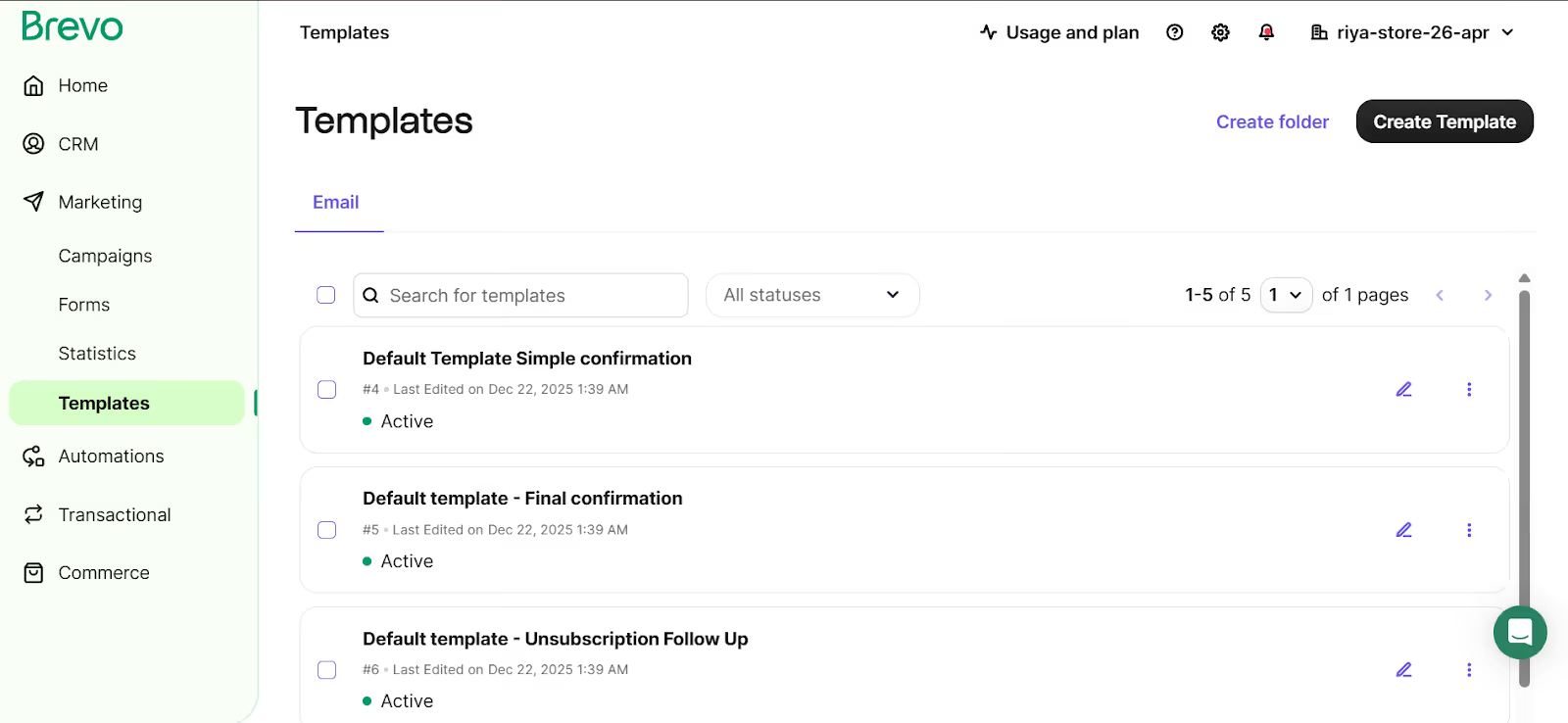
PushOwl’s email builder lets you refresh templates with seasonal differences while maintaining core branding. That consistency shields recognition, and yet the campaign still feels fresh.
And when your brand is still recognizable, seasonal messaging seems relevant rather than forced, and customers respond with more confidence.
5. Use Urgency Without Becoming Noise
Valentine’s Day urgency is real. Shipping deadlines approach. Inventory runs low. The calendar does not move. But when every brand sends out the same “Last chance” message over and over, urgency becomes noise that fades into the background.
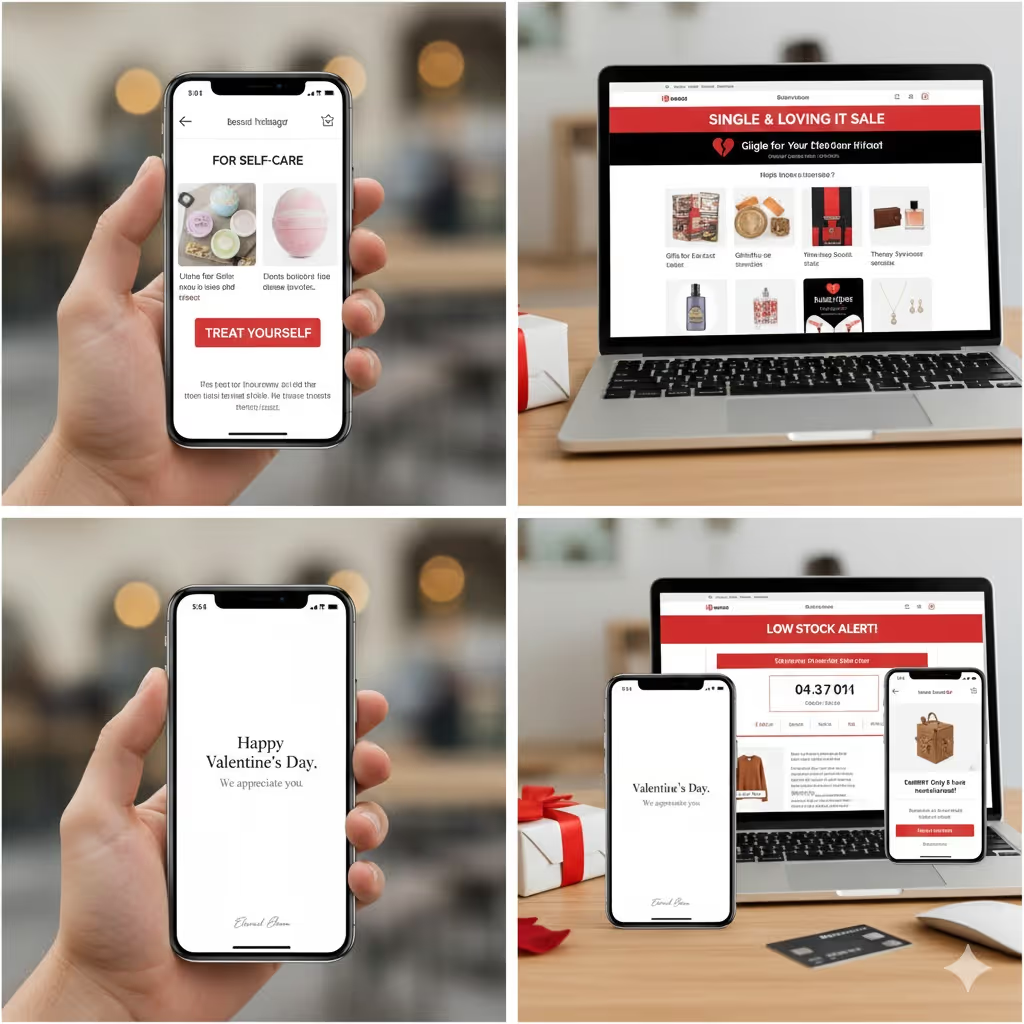
Vary the urgency rather than repeating it. One email can be devoted to deadlines for guaranteed delivery. Another can maybe showcase low stock on best-selling packs. A third can serve as a notice to remind customers that digital gift cards are available long after shipping dates have passed. The urgency is the same each time a message is sent, but its context has changed.
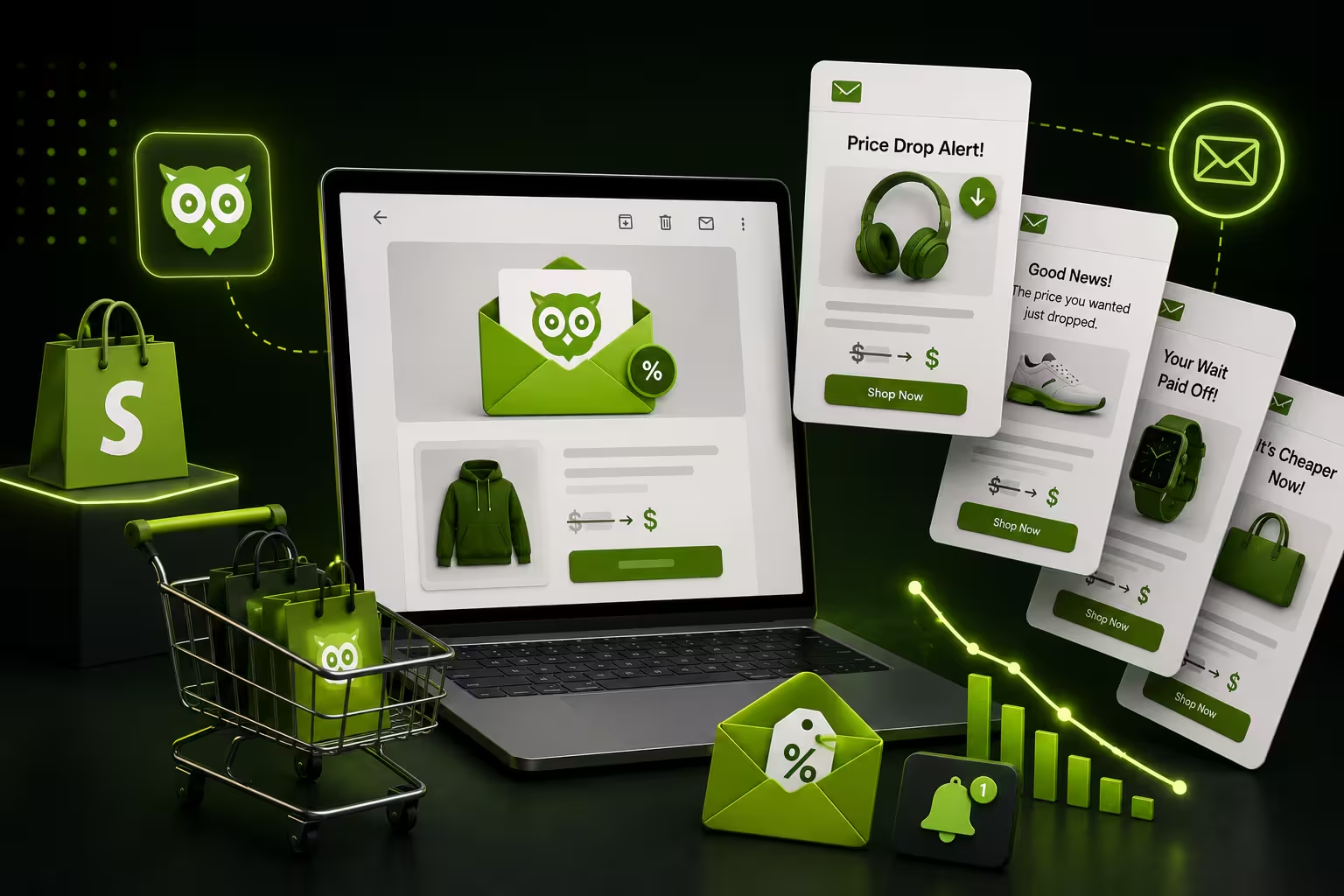
Here, automation is crucial. Abandoned cart reminders, back-in-stock alerts, and price drop notifications have the virtue of feeling timely because they are sent based on behavior. They don't just interrupt suddenly; they are in response to intention. That difference reduces fatigue while maintaining a pressure to act.
PushOwl helps Shopify brands synchronize campaigns and automated flows, so customers aren't overwhelmed with overlapping reminders. Now brands can sequence urgency as Valentine’s Day approaches, rather than just piling on the urgency manually.
When a sense of urgency has merit instead of being repetitive, conversions go up without sending people out from your subscription list.
6. Promote Gift Cards Strategically
Gift cards are typically among the hottest purchases around Valentine’s Day, especially as shipping deadlines get closer. They solve one of the biggest last-minute problems: delivery-induced anxiety. And when shoppers don’t know whether a physical product will arrive in time, digital gift cards eliminate the doubt immediately.
There is a right time and place for using them.
• Highlight gift cards as a fallback early in the season. These should be toward your footer or second section if it is an early campaign for fickle buyers.
• Graduating them to hero status after shipping cutoffs. When guaranteed delivery windows are no longer in place, shift the focus to gift cards as the primary offer.
• Highlight instant delivery clearly. Utilize wording such as “Delivered instantly” or “Arrives in seconds” to help mitigate customer doubt.
• Use urgency-driven subject lines. Example: “Too Late to Ship? Send Love Instantly ❤️”
• Automate the transition. Using PushOwl, Shopify brands can plan out campaign pivots around shipping cut-offs, so communication updates as deadlines change automatically.
Digital gifting consistently ends up being the highest-converting category in the last 48 hours. When they’re implemented thoughtfully, gift cards don’t come across as a fallback. They seem to be the intelligent answer.
7. Consider Sending a Pure Appreciation Email
It doesn’t have to be a sell for every Valentine’s Day message. The simplest long-term tactic? A sweet nothing email with no promotion to it at all on Valentine’s Day.
A message such as “Happy Valentine's Day. We appreciate you.” is striking precisely because it’s not asking for anything. Amid a sea of slashed prices and ticking time clocks, it is refreshing to feel grateful. It deepens the emotional relationship with the customer, but without making anything too heavy or putting pressure on them.
This contributes to brand warmth for loyal customers and serves to strengthen a long-term relationship. For dormant subscribers, it may arouse good feelings. And for all, it implies that your brand cares about relationships more than transactions.
It works particularly well in coordination with data-driven personalization. Referring to how long a customer has been a patron, or thanking him or her for recent purchases, can make the impact stronger.
Stronger trust is generated by brands that only occasionally remove the sales pitch from the campaigns. And trust compounds over time. While the immediate revenue impact is not as high as that of a promotional email, the long-term engagement lift frequently makes it worthwhile. Loyalty is a strategy for growth, not just branding.
8. Don’t Forget the “Non-Romantic” Segment
Not everyone has a partner to celebrate Valentine’s Day with. Brands that go all in on love lose out on profitable segments. By broadening your messaging, you increase your chances of conversion.
Consider different audience groups:
• Self-gifters: Push “Treat Yourself” messaging for people purchasing for themselves.
• Galentine’s shoppers: Give friends a wink with playful, inclusive copy that encourages gifting.
• Humor-driven buyers: Anti-Valentine or cheekier campaigns may appeal to a younger audience as well.
• Loyal customers: Considered your relationship with them as a reason to frame the day.
Segmentation reduces fatigue by making subscribers feel understood rather than stereotyped. Shopify brands can generate audience segments by purchase history, engagement behavior, or product type. PushOwl allows you to create customized campaigns for each segment without having to re-create emails manually.
Relevance keeps engagement high. When the messaging mirrors various customers on February 14, your emails feel relevant, not generic promotions.
9. Design for Scanning, Not Reading
There is a lot of competition in the inbox on Valentine’s Day. People move quickly through emails, especially on mobile. Customers will skip your emails within seconds if your message isn’t crystal clear.
Focus on structural clarity:
• Have one strong hero message: You will see the clear benefit of having one clear statement rather than having a lot of irrelevant text.
• Highlight one primary CTA: Too many buttons muddle the focus and reduce clicks.
• Leave copy short and a generous amount of spacing: Long blocks increase friction.
• Use clear product imagery: Visual clarity speeds decision-making.
• Prioritize mobile design: More than 55 percent of e-commerce emails are opened on mobile.
With PushOwl’s preview tools, Shopify brands can preview layouts across devices before hitting send. This will avoid broken images, awkward CTAs, or too skinny mobile views on your peak campaign days.
Clear design reduces mental effort. And when mental effort is minimal, conversions go up.
10. Automate the Entire Valentine’s Flow
Valentine’s Day revenue doesn’t typically emerge from one email. It’s the product of a process, one that generates momentum, addresses objections, and drives last-minute buyers.
A healthy flow typically entails early teaser marketing campaigns, the launch of curated gift guides, reminders about shipping deadlines, a final push for digital gifts, and post-purchase cross-sells. Each message has a different function. Together, they create momentum.
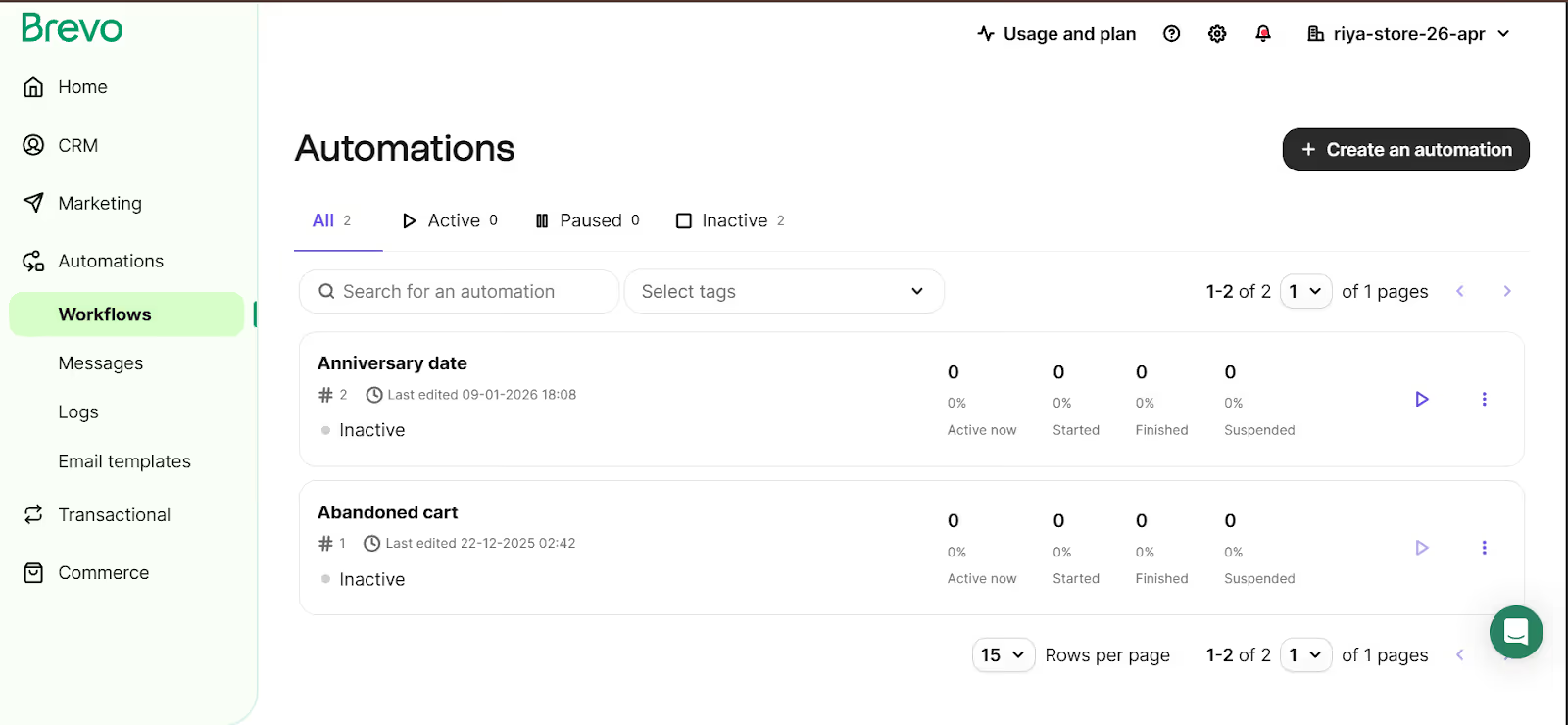
Scheduling manually results in conflict, it’s an inconvenience, or opportunities are missed. Automation does this by having time-based or behaviour-based communications. Pre-holiday awareness emails heat up the list. Deadline reminders intensify urgency. Abandoned cart flows pull in users with high intent. Cross-sell or replenishment flows carry revenue beyond the holiday itself after February 14.
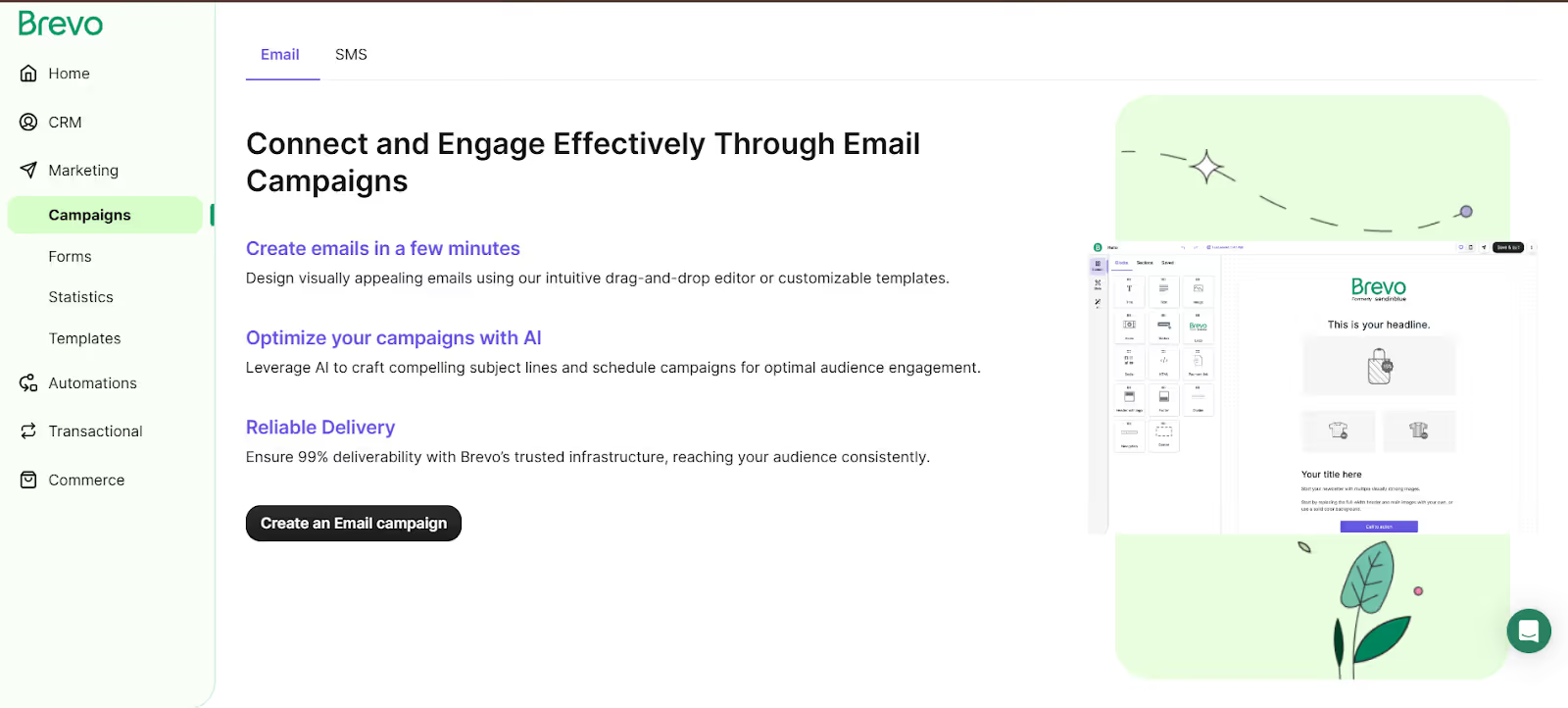
Shopify Brands can build the full Valentine’s automation sequence all in one place with PushOwl. Track revenue attribution by campaign, compare automation vs. manual, and refine segmentation based on actual conversion data.
When you’re able to tie revenue to every email, optimization becomes strategic instead of reactive. Valentine’s Day ceases to be a one-week push and becomes a measurable, repeatable growth engine.
Turn This Valentine’s Day into Your Highest-Ever Converting Campaign
Valentine’s Day is not about sending more emails. It’s all about sending emails at the right time, with the right context.
In Q1, inbox competition spikes. They’re all buzzing about gift guides, flash sales, and “last chance” alerts. The loudest Shopify stores don’t win, but the clearest ones do. They take away friction, eliminate decision fatigue, and enable them to align messaging or product offerings based on how their customers actually shop in the days leading up to February 14.
Shopify brands that make clarity, personalization, and automation do better than those that just raise volume.
PushOwl is especially designed for Shopify brands that are tired of guessing their way to growth.
Inside PushOwl, you can:
- Design mobile-optimized templates for Valentine’s email campaigns that drive conversion.
- Automate abandoned cart, price drop, and back-in-stock flows that feel timely, not spammy.
- Slice and dice your customers by their buying behavior, lifecycle stage, or product preference.
- Revenue attribution tracking that goes back to the campaign and automation.
- Tune send timing by using actual conversion data, not guesswork.
In place of wondering if your “Last Chance” email worked, you can see the revenue beside it. Rather than piling up reminders, you can automate deadline movement as shipping windows expire. Rather than the standard one-size-fits-all blast, you might craft messages for high-intent categories of recipients.
If you are already investing in sending campaigns for Valentine’s Day, remember each send should be strategic.
Don’t just send love. Send relevance.