Automating email marketing is a key growth driver for e-commerce brands in 2026. It cannot be viewed as a support channel or a secondary retention strategy any longer. For a competitive and modern e-commerce brand, automation needs to be seen as a revenue engine which is always running in the background, and is driven by customer behaviors, data and cross channel information sharing.
A top-performing e-commerce brand of today uses AI-enhanced, behaviour-dependent workflows with the help of platforms like Shopify and PushOwl to boost their abandoned revenue by 15-25%, and at the same time smoothly increase their customer lifetime value. It helps shift the focus from mass promotional blasts to prioritized and brand relevant campaigns which are better timed, more relevant and have better intent.
Understanding this shift is increasingly important as the nature of paid acquisitions becomes more expensive and competitive. Automation unlocks potential for e-commerce teams to scale revenue without increasing ad spend, headcount or human effort.
This guide breaks down email marketing automations and how this works in 2026. It covers workflows that matter, AI integration and importance, and building a high-ROI system using Shopify and PushOwl.
Introduction to Email Automation
Email Automation involves sending targeted and personalized emails messages which are triggered by specific customer behaviour, lifecycle stage or data-led predictions. In the early 2020s these automations were run on rule-based systems, but have now evolved to be data-led and adaptive.
In 2026, these automation engines are not just used to respond to actions like a signup or an abandoned cart. They predict and anticipate customer behaviour. AI models analyse a customer's browsing behaviour, purchase behaviour, engagement patterns and overall usage to come up with the best strategy, message and timing for each individual customer. This flow now is not dependent on pre-defined actions but rather actual user behaviour and hence the output for this is greatly improved from traditional email automations.
Email marketing is the foundation of retention marketing since it has consistently outperformed non automated campaigns. Automated flows create 300% more revenue than one-time campaigns. Even the open rates for automated flows tend to be 70% higher, the click through rates more than double, and top e-commerce stores now can attribute almost 30% of their total revenue to automation.
This is also a better scaling strategy, since retention also outperforms acquisitions. In mature e-commerce brands, retention led revenue has outperformed new acquisitions led revenue by four to six times. This is a key driver, especially considering this channel is a lower cost per revenue than a new customer acquisition. So as a brand the focus becomes maximizing customer value rather than chasing new customers, thus building a more loyal customer base.
This is also a great tool for small teams and bootstrapped companies, since it gives them leverage. One optimised Shopify automation workflow can handle thousands of customised messages per day, with no additional effort from the team, making this one of the highest ROI systems than an e-commerce brand can create, whether big or small.
Core Mechanisms Behind Automation
Even with AI, automations are still based around a simple 4-part creation engine.
Triggers - These are actions or behaviors that begin an automation. This is the signal for an automated workflow to start sending messages. Some standard triggers are product browsing, adding to cart, order placing, inactivity, reaching a certain milestone. These are simple behaviours around which we can automate to increase customer engagement and conversion.
Conditions - This is how we filter out the users who should and should not stay in a certain flow. This is how we make the customer journey feel more relevant and less intrusive, for example if a customer has added to cart but not purchased, instead of directly starting the abandoned cart flow, it is better to check if they have already purchased this product, or if they are part of any of our VIP memberships or if we have sent them a similar message previously,etc. The idea is to make sure the flow is personalized based on the customer and not just a standard run of messages going out to everyone.
Actions - This is how we determine the frequency and logical flow. This includes adding delays, tagging users, creating branches based on behaviour, using data from other channels, etc. Timing is a very important part of workflows, and even seemingly smaller changes can have a significant impact on conversion rates.
Messages - Of course the actual content of the emails is very important, and in 2026 static content does not perform as well as dynamic content. Templates are completely customizable and can be used to personalise product images, pricing, recommendations, reviews and message content for each customer in real time.
Shopify’s CRM easily integrates with email automation platforms, and sends real-time customer and order data to the email carrier dashboard. PushOwl extends this functionality but bringing in browsing behaviour, inventory updation, cart activities into the email workflows to create a unified customer experience.
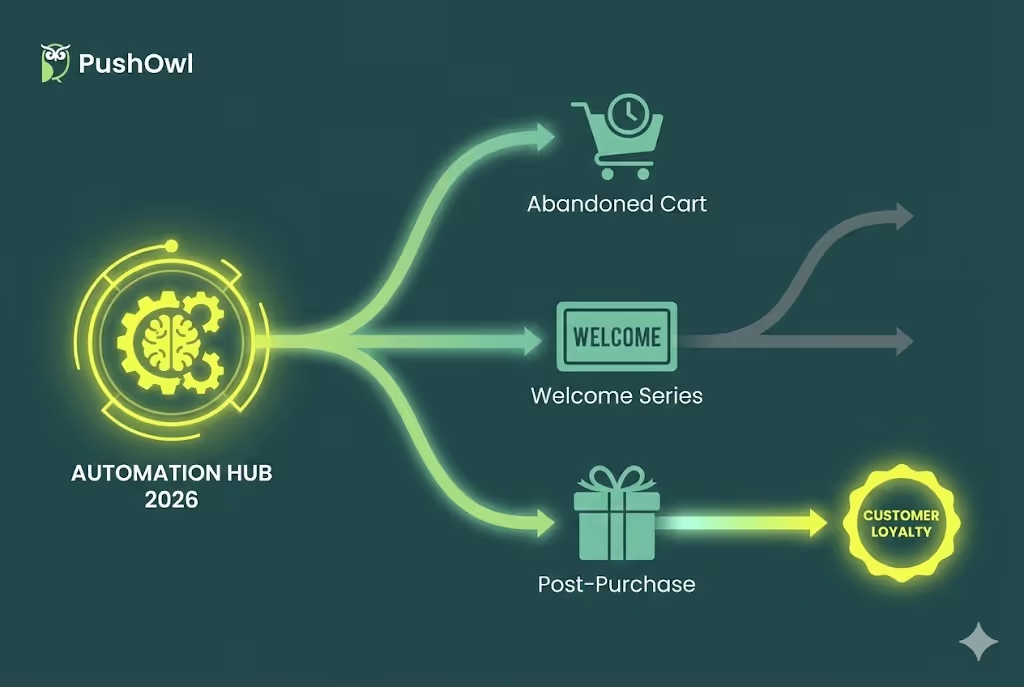
Essential Ecommerce Automation Workflows
There are some industry agnostic automation flows that drive revenue across all e-commerce categories that are useful to know.
Welcome Series
This is often the highest performing automation in any e-commerce automation stack. An effective welcome flow would typically have about 4-6 emails spread over 12-20 days.
Email 1 - This is to introduce the brand and set expectations. The objective is to start building trust rather than selling our product.
Email 2 - This can highlight our stores best selling items or explore the core categories we have. The objective is to help new customers get an understanding of what the brand offers.
Email 3 - This can have an incentive or discount, mostly to push a customer to make their first purchase with our brand. The objective is now to get a customer to try our products.
Email 4 - UGCs, reviews, social proofs. This email should be used to build credibility of our product and create a sort of FOMO. We can also have some bundles or recommendations in this, but the objective should be to make the customer aware of what other customers say about our product.
This sample 4 email flow can deliver almost a four times higher open rate and convert about 10-15% of subscribers into making their first purchases.
Abandoned Cart Automation
This is one of the most direct revenue opportunities in e-commerce, since we already have customer intent.
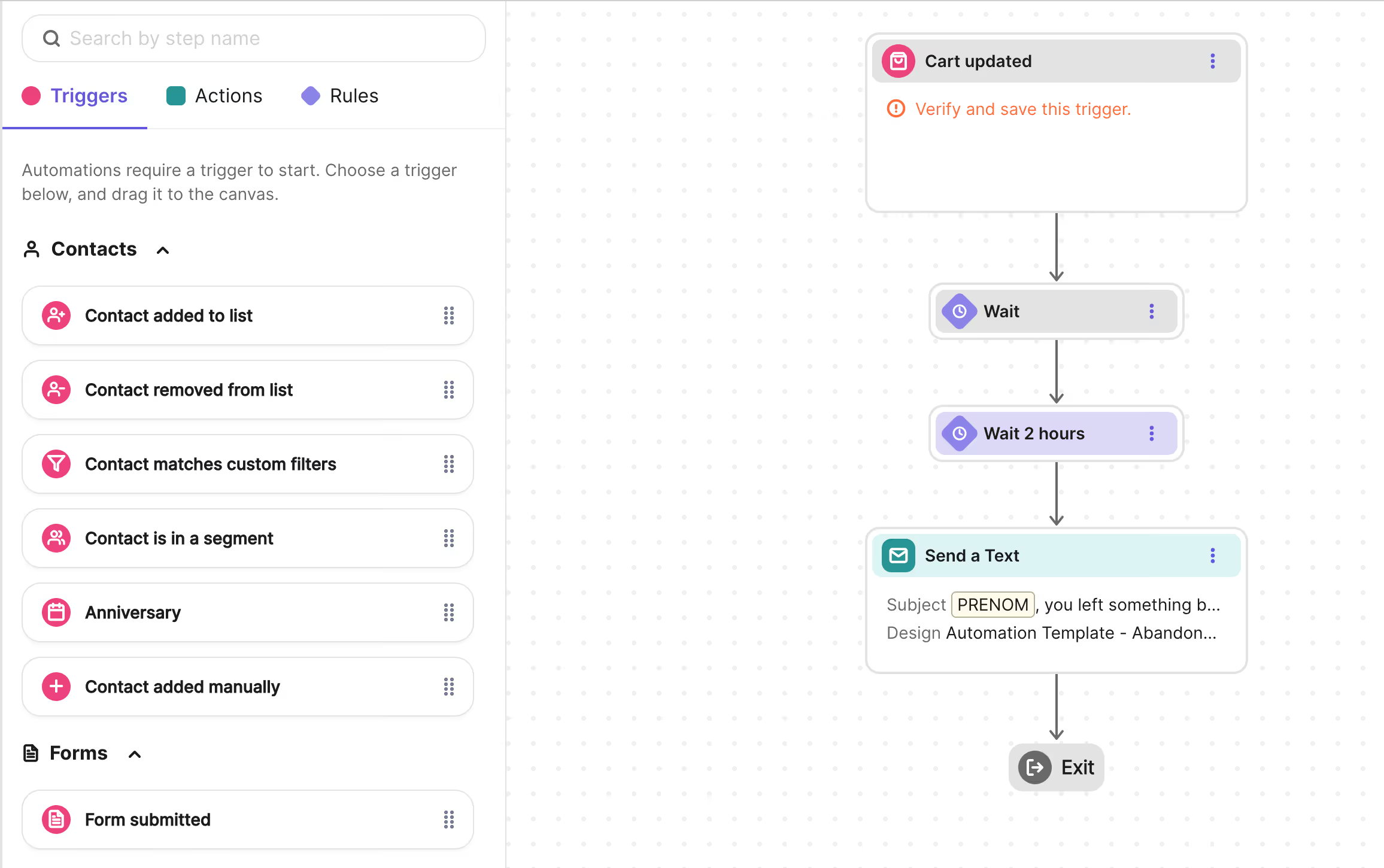
A strong sequence would include a three touch approach. Sending out the first message within 60 minutes to act as a reminder of their pending cart. The second message, sent about a day later, which incentivizes the user with discounts. A third message which is built around urgency, like a limited time drop, low stock availability, limited time discount etc.
A simple flow like this can recover between 12-23% of abandoned carts and can easily help increase store revenues by 10%, if optimised correctly.
Browse Abandonment
This flow can be used to target visitors who viewed product pages but left without adding anything to their cart or making a purchase.
Product views and dwell timings should be tracked, and then based on these brands should trigger a followup message to push this product, answer any FAQs or highlight alternative options. Basically by pushing products on which the customer spent time deliberating, we can increase the chance of conversion. This works better for products which tend to have more time spent per purchase, as the time required to buy is more, it helps to keep being on top of the customers mind.
Post-Purchase Automation
This is more about order confirmations, and making sure the customer is aware of next steps, and other offers, like becoming a member or VIP.
The first message should thank the customer, have order details and set the delivery expectations. Follow up messages can include usage tips, instructions or FAQs. After this the other email can introduce loyalty programs, product suggestions or reorder reminders.
A good post-purchase flow can increase the customer LTV by 15-20% and reduce effort spent on customer support.
Win-Back Campaigns
This is useful for winning back customers, who have not made purchases within a predefined time window.
The first message would be about feedback or a check-in, and then next messages should be targeted incentives or recommendations based on customer purchase history. The main objective is to keep the customer engaged with our brand and product.
Back-in-Stock and Price Drop Alerts
This is a very simple automation, and just lets interested users know when the products they are interested in are back in stock, or are having a sale. This is just a ping that goes out to users, who have shown high intent on a product which falls in either of these buckets.
Birthday, Anniversary, and Milestone Flows
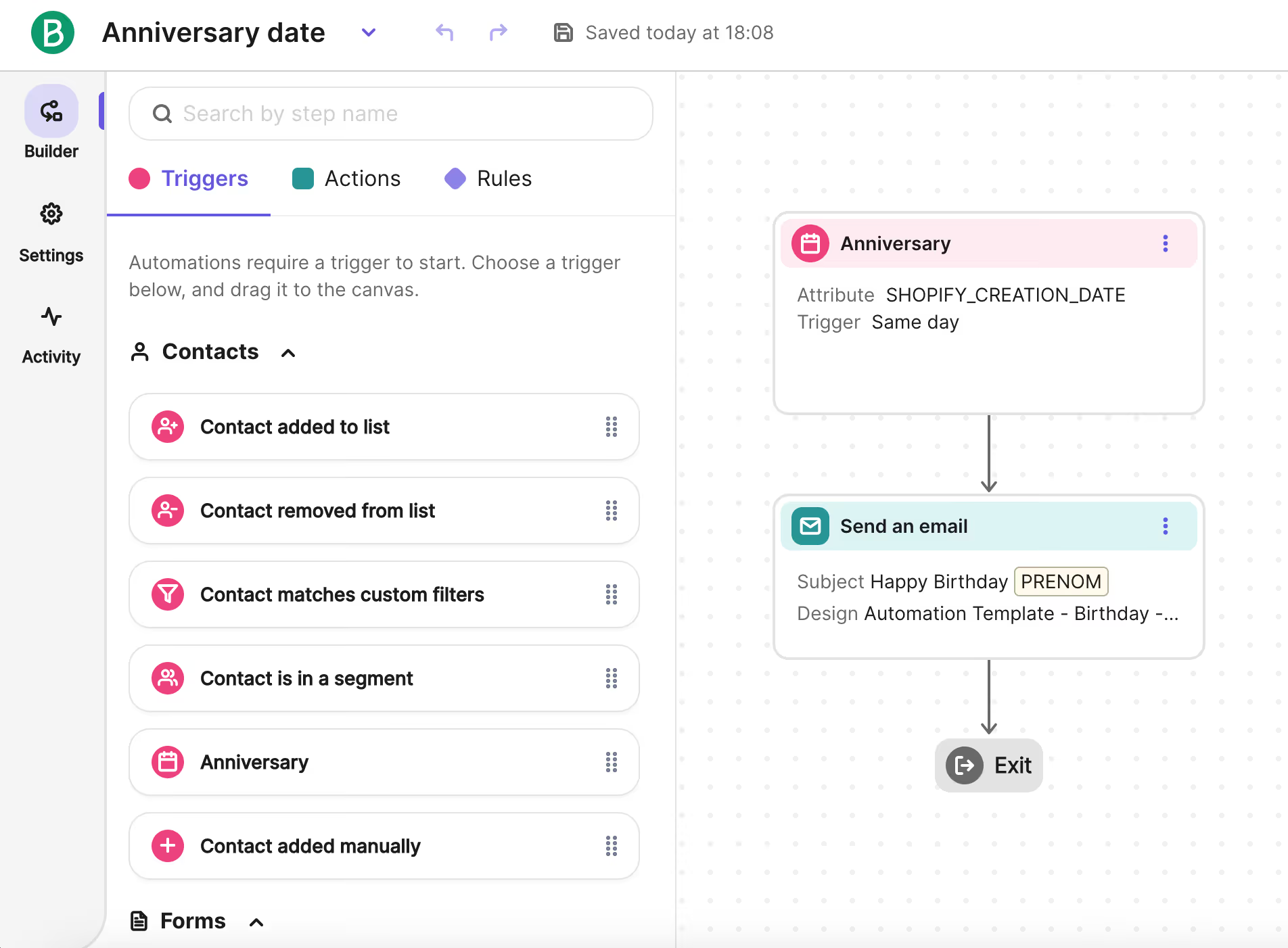
This is a simple flow, in which we can use data already collected from the customer to trigger personalized wishes, discounts, and build a better brand affinity in the mind of our customer by being a part of their important dates.
Loyalty and VIP Automations
High spenders should have certain benefits, and loyalty programs offer just that. Automations built around these should include new launches, early access, exclusive drops, bonus points, and personalised recommendations and discounts. We already know these users purchase often, we just need to make sure they purchase our products.
AI-Powered Automation in 2026
- AI-based flows can optimize send times using historical data based on when a customer is most likely to open, which increases engagement by almost 40%.
- Copywriting has become much simpler, with AI able to tailor messages according to segments, motivations and behaviours. Basically AI can write messages for each individual target.
- AI-based recommendations are also more advanced and personalised, and based on a customer's patterns, rather than segment patterns.
- AI can also predict which users are low-engagement, and thus adjust strategy to change frequency for such users, reducing brand fatigue and helping open rates.
AI has essentially made every automation function possible at a micro level, and fully customized to individual targets.
Key Ecommerce Automation Trends in 2026
- Predictive optimization is now a standard practice, and basing messages on time, content and channel automatically is going to be the new norm
- Cross-channel engagement, so a user can start on push, continue on email, end on SMS, in short let the user drive the channel of engagement.
- Automation privacy will be important, and compliance and consent will be cornerstones of successful automation campaigns long term.
Voice commerce is a future direction that will allow conversational triggers using AI to interpret natural language actions and translating them into automatic events.
Building Automations in Shopify and PushOwl
PushOwl enhances the Shopify email automation set-up by adding real time push and SMS integrations directly into flows and automations. It can also connect directly to Shopify events like views, updates and inventory changes.
Using PushOwl to automate your emails, means building a holistic automation channel that can focus on reaching the customer where they are, rather than getting stuck in one channel. At the same time, a store owner also gets access to pre-made standard automations and data tracking directly within Shopify, meaning no unnecessary integrational challenges.
Common Automation Mistakes
- Triggers should be well thought out, and proper exclusions should be in place to avoid a single user getting multiple automations triggered by their actions, i.e if they spent time on a product page and then added it to cart, it should not have then get both browse as well as abandoned cart messages.
- Segmentation is vital, and not using correct segmentation is an easy way to make campaigns almost redundant and ineffective. Even a simple RFM segmentation can improve results by up to 50%.
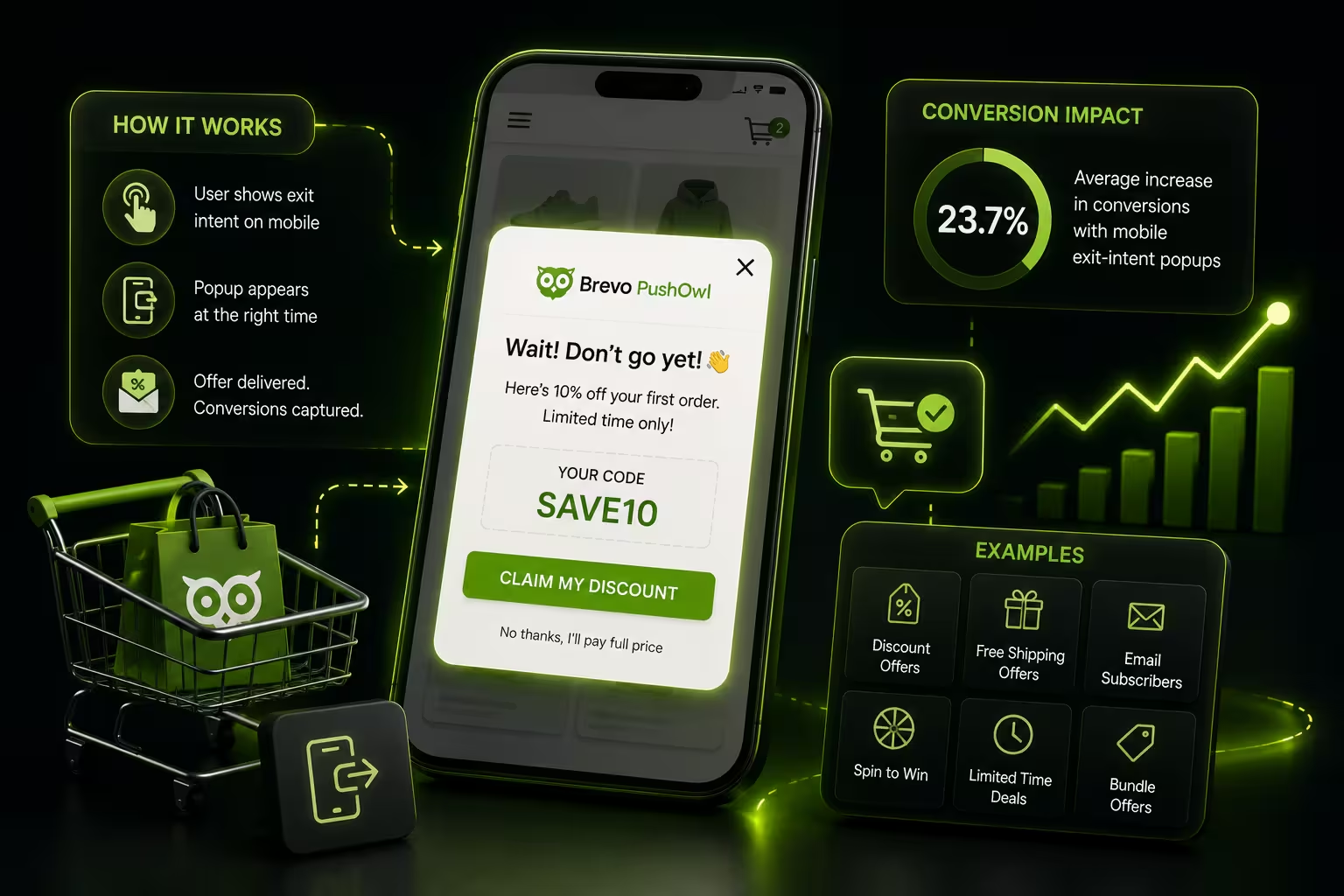
- Mobile optimization should always be done, recent buyers should always be excluded and analytics dashboards should be reviewed consistently to reduce missed revenues.
Conclusion
In 2026, e-commerce growth is highly dependent on AI based intelligent automation. Brand that will look at emails as a dynamic system instead of a messaging channel with unlock recurring and compounding revenue without customer fatigue.
Data is available and AI-powered automations and predictions will become more and more mature with time, so this data should be treated like gold. Start slow with smaller flows to test how your automations are working, before scaling.
Automation is a growth engine, which when done right turns customer data into actual revenue.