
Most Shopify stores recover only 3% to 5% of abandoned carts because of six fixable mistakes. The biggest one is not the recovery email itself; it is a checkout process that pushes shoppers away in the first place.
The 6 abandoned cart recovery mistakes Shopify stores make
- A high-friction checkout. Forced account creation, hidden shipping costs, slow mobile pages, and limited payment options cause shoppers to leave before recovery can save them.
- Wrong email sequence length. One email is often too few; five is often too many. The right number depends on AOV and product type, not a template.
- Single-channel reliance. Shoppers switch devices and ignore inboxes. Email alone misses most of the recovery window. Multichannel sequences (push, email, SMS, WhatsApp) re-enter the shopper's field of view wherever they are.
- Blanket discounts on every cart. Training shoppers to expect a price cut erodes margin and brand value. Segmenting by cart value and customer type lifted one merchant's recovery from 3% to 9%.
- Missing product name and image in the email. Visual recall is faster than cognitive recall. Reminders without the actual item feel anonymous and underperform.
- Generic or bloated subject lines. "You left something behind" gets skipped. Naming the product, the discount, or the urgency drives opens.
Key benchmarks
- Average cart abandonment rate: ~70% (Baymard)
- Healthy recovery rate: 10% to 25%
- Typical underperforming rate: 3% to 5%
- Lift from fixing sequence design alone: ~32% (Rank Secure case study)
- Lift from segmented incentives over blanket discounts: 3x (3% to 9%)
The fix in one line
Audit checkout first, then build a 3-touch multichannel sequence (push within the first hour, email at 4 hours, SMS at 24 hours) with product imagery in every message, segmented incentives by cart value, and subject lines that name the actual product.
What Is Abandoned Cart Recovery?
Browse, add to cart, checkout.
Easy enough?
Not really. With the abandoned cart rate over 70%, shoppers are clearly not reaching the end of the buying journey without friction.
Abandoned cart recovery strategies help you persuade customers to complete their purchase at your Shopify store. How? By addressing the reasons for shopping cart abandonment.
Abandoned shopping carts can be a sign that your customers are not entirely convinced of your product’s quality/price, or that something about the website's buying process has prevented them from checking out.
Or it could simply be that they got distracted while shopping on your e-commerce website, which means your abandoned cart recovery campaign needs to be timely and relevant.
If you are building a bunch of Shopify email templates, an abandoned cart email should be one of them.
How To Calculate Abandoned Cart Rates
Whether you use PushOwl’s analytics or some other platform, you won’t have to manually calculate the rate of abandonment of your shopping cart by customers. But it is important to understand the logic behind the figure so that you can track it effectively and build strategies to reduce it.
CART ABANDONMENT FORMULA = (NUMBER OF ABANDONED CARTS/NUMBER OF TOTAL ACTIVE CARTS) X 100
Let’s say there are 200 active customers on your website who add at least one item to the cart, but only 80 complete the purchase. This means the abandoned cart rate is:
Abandoned cart rate = (200-80)/200 x 100
= (120/200)X100 = 60%
This means 60% of customers abandoned their carts, and these are the ones you need to target with your abandoned cart automation.
6 Mistakes Related to Abandoned Cart Recovery Shopify Stores Commit
Your abandoned cart recovery emails, though automated, cannot be generic or boilerplate. Here are some cart abandonment mistakes you need to avoid as part of your email sales tactics:
Mistake 1: Sending Too Few/Too Many ACR Emails
Abandoned cart recovery needs structure. A fixed sequence of abandoned cart recovery emails helps you control pacing, intent, and tone.
What is the correct number of emails in the ACR automation? It depends. Too many reminders and you annoy the shopper; too few and you lose a sale that could’ve been recovered with one more nudge.
Baruch Labunsky, a Shopify expert and owner of Rank Secure, a Toronto-based digital marketing agency, has helped clients achieve success with the 3-email sequence. For a home fragrance brand, this is what he rolled out:
“The first email was “You left something beautiful behind,” which was accompanied by a postcard-style, minimal, single product image. In the second email, they included an emotionally engaging customer review, and the last email offered a free shipping incentive rather than a discounted rate.
The sequence was cohesive, ‘human’, authentic, and on-brand, and therefore, effective.”
The result? A 32% increase in their cart recovery rate after revising their email sequence.
But three is not necessarily the golden number. In some cases, even one email is enough, as Lou Haverty, an e-commerce business owner, has found success with a single email:
“I introduce myself as the owner of Skid Retailer and offer a 24-hour 5% discount on their first purchase. I also include our store phone and invite the customer to call and ask for me if they have any questions.”
Tweak your cart recovery email sequence till you settle on one that works, and then automate it.
Mistake 2: Not Including ACR in Your Omnichannel Strategy
Most stores treat abandoned cart recovery as a “set it and forget it” email. Shoppers who abandon their carts may not be persuaded by just a few emails. That is just one touchpoint in your customer’s entire buying journey.
If someone drops off at checkout, they might not open an email, but they will see a push notification, a WhatsApp reminder, or a retargeting ad.
That’s how omnichannel strategies succeed.
When you isolate abandoned cart recovery only to email, you assume shoppers behave predictably.
They don’t.
They browse on mobile, research on desktop, switch apps, and forget what they added five minutes ago. Your job is to re-enter their field of vision wherever they currently are.
A layered ACR sequence, with email + push + SMS/WhatsApp, increases both recall and recovery.
Mistake 3: Using Constant/Blanket Discounts As Bait
Discounts should be a tactic, not the foundation of your abandoned cart strategy.
You risk alienating shoppers who dropped off because something in the checkout felt unclear or slow, not because they were waiting for a price cut.
Discounts also quietly eat into margins, especially when many abandonments are simply due to distraction. Labunski, from his experience at Rank Secure, also warns against “training” customers with price cuts:
“When customers start expecting discounts, they will wait until the price is dropped. You lose profit while also damaging the brand value as the customers wait to reap the emotional benefits.”
Himanshu Agarwal, a marketer with over a decade of experience, also recommends against using static discounts. Instead, he suggests creating discounts for recovering carts based on customer value and segmentation based on buyer behavior:
“For instance, a 10% discount for a first-time shopper, free shipping for a return visitor, and a time-sensitive bonus for high-value carts.”
Agarwal’s clients recorded a 9% recovery rate with this discount strategy for cart abandonment, compared to the 3% average they achieved with blanket discounts.
Mistake 4: Not Including the Product Name and Image in the Email Copy
Many abandoned cart emails read like anonymous nudges: “You left something behind… come back!” But shoppers don’t remember product names off the top of their heads, especially after they have been browsing multiple stores.
Visual recall is faster than cognitive recall, which is why your abandoned cart email design must lead with the product image and actual name. This strategy is not just about aesthetics.
When customers see the exact item they picked, such as the shade of lipstick, the sneaker look, or the flavor of ramen, it reactivates desire. That is basic customer psychology.
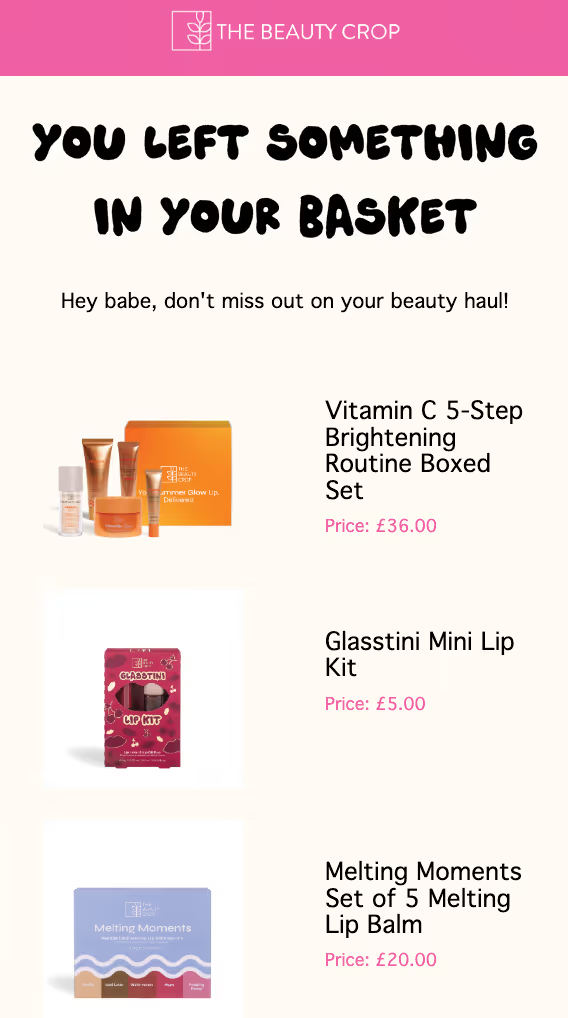
Adding visual cues in the ACR email also reduces decision friction: they do not have to reopen the website just to confirm what was in the cart.
Simply including the product image and description can be the difference between an email that converts immediately and one that gets ignored because it feels too vague to matter.
Mistake 5: Generic/Lengthy Subject Lines
While “you left something behind” can get the job done, it rarely stands out. Shoppers receive a wave of promo emails each day. Generic or wordy subject lines lead to them being marked as spam or your shoppers dropping off your email list.

The job of an abandoned cart subject line is not to be cute or clever. It interrupts the scroll and triggers instant recall of the item the customer wanted.
Lords & Labradors does it well with a single cute emoji (rather than a spam of smileys or fire emojis) and an impactful preview line:

Long, descriptive subject lines also fail because they dilute urgency.
If a shopper has to read a long sentence to understand why you are emailing, you have already lost them. Keep it sharp, specific, and benefit-led.
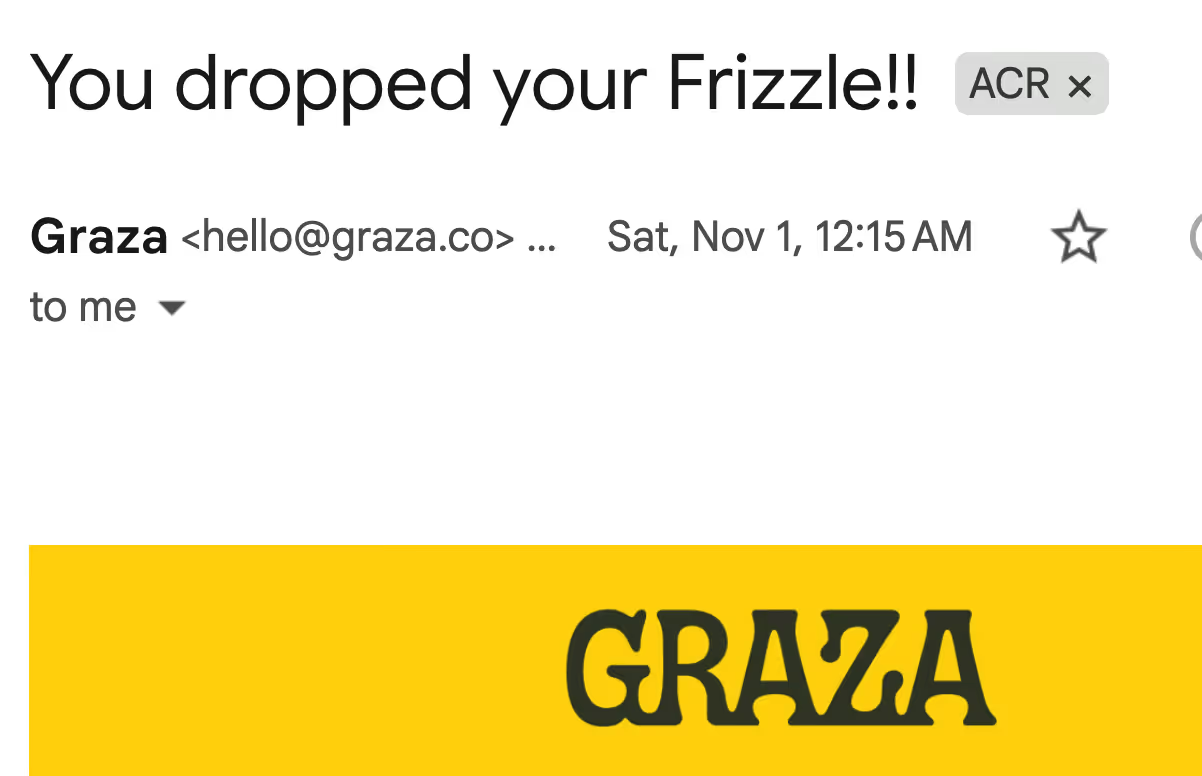
You can call out the product, like Graza, an olive oil brand with a product called Frizzle:
Or hint at urgency, as Walkee Paws did with its preview line (“only 20 left in stock”)

Or highlight value, such as free shipping, which Rothy’s does well with its preview line, with a touch of emojis in the subject line:

But if you do give a discount, mention it in the subject line. Here is an example by Cheekbone Beauty:
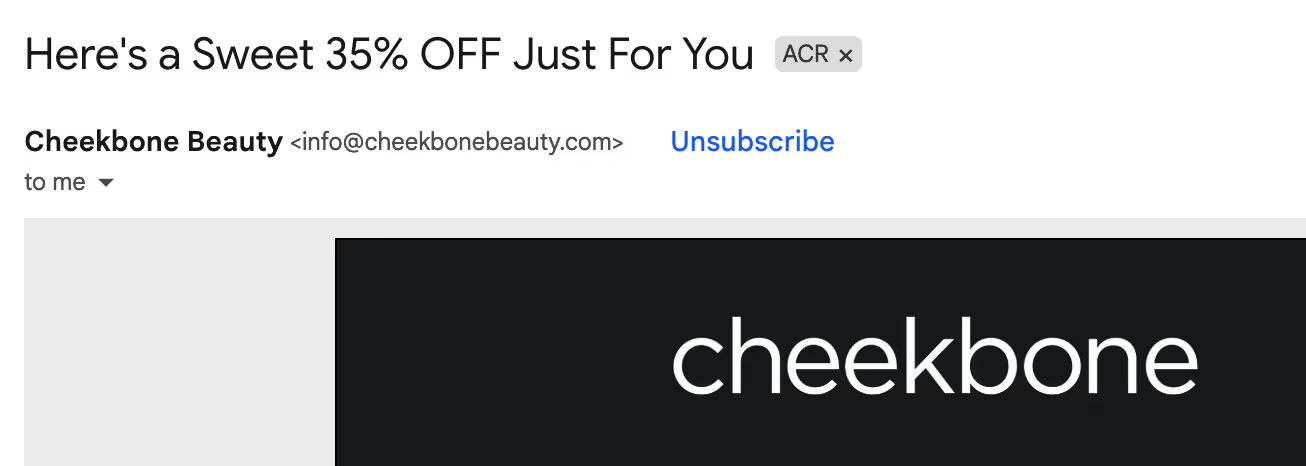
Subject lines are the first point of contact in cart recovery. When they are vague or bloated, even the best abandoned cart recovery email never gets opened.
Mistake 6: Difficult Checkout Process
No abandoned cart strategy can save a broken checkout. If the final steps feel clunky or slow, shoppers drop off. We are not talking about aesthetics here. Your checkout page can be minimalistic. But more than that, it needs to be frictionless.
Think of the journey from “Add to Cart” to “Order Placed” as a glide path.
Too many form fields? The customer doesn't have time.
Forced account creation? The customer remembered another brand that didn't require this.
Limited payment options? Your customer cannot pay.
Slow-loading pages? Absolutely no way they will stick around.
Every interruption increases the mental load and gives shoppers a reason to reconsider the purchase.
Before you obsess over subject lines and recovery sequences, audit the checkout flow itself. Ensure that the:
- Checkout page is mobile-friendly
- Payment is effortless
- Forms autofill everything you can
- Total costs are available upfront
Pro tip: Add a bunch of Buy-Now-Pay-Later-Options and display discount codes
When the checkout feels smooth, your ACR emails don’t have to work overtime.
Build Effective Abandoned Cart Emails With PushOwl
The easiest way to improve your abandoned cart recovery is to stop doing the things that quietly kill conversions: generic subject lines, vague product reminders, inconsistent flows, and a checkout that makes shoppers work too hard. PushOwl helps you flip that script.
With PushOwl’s automation, you can build a clean, well-paced ACR sequence that never feels spammy. Each reminder can include clear messaging that addresses shopper hesitation without overwhelming them. And because PushOwl works across channels, especially through high-visibility push notifications, you are not depending on email alone to save the sale.
Turn ACR into a predictable revenue engine for free.