“When you send the same email to every customer on your email list and treat them the same, it’s the same as not sending anyone an email at all,” is PushOwl and Brevo’s classic advice to Shopify stores.
Without e-commerce email segmentation, you’re shouting into a crowd, hoping the right person happens to hear you. You are sending winter coat promos to customers in California, cat chewable-related offers to shoppers who have only ever bought dog toys, and welcome discounts to people who have been buying from you for three years.
The better you understand who’s on the other end of your message, the better your chances of turning a send into a sale.
With tools like PushOwl, Shopify merchants of any size can segment smarter, personalize faster, and sell more.
In this guide, we look at how Shopify email segmentation is done correctly, what mistakes to avoid, and how to use your segments for your push campaigns. We asked multiple marketing experts for their favorite tips and tricks, and also studied actual emails by Shopify brands to give you some examples of customer segments in action.
Activate dynamic segments with PushOwl and Brevo
What is Email Segmentation?
Email segmentation is the process of breaking down your email list into targeted groups or segments based on pre-defined parameters. These parameters are the commonalities that run through that segment.
Why Is Email Segmentation Important for E-Commerce Stores?
Email segmentation helps Shopify brands send relevant, timely messages instead of one‑size‑fits‑all mass emails. And when paired with push notifications, you can reinforce those timely moments instantly.
By using customer data to build segments and shape your email marketing strategy, you can:
- Achieve higher sales targets, because with email segmentation, you are likely to send the right kind of message to push a subscriber to convert.
- Lower spam rates, since personalized emails based on proper email segments are less likely to trigger spam filters or annoy the recipient.
- Obtain deep customer insights that allow you to hyper-personalize your communication.
- Improve customer experience by not spamming them with generic emails.
- Boost email campaign performance, since segmented emails drive 30% more opens and 50% higher CTRs.
Real‑world example:
UK‑based Great British Chefs boosted open rates from 25% to 35% after switching to Brevo’s dynamic segmentation. By targeting subscribers based on past engagement and membership tier, they cut unsubscribes, improved CTRs, and hit partner campaign goals, all without blasting the whole list.
Result: 10% more opens and a more loyal audience.
Once you have the right segments, you can tailor your flows, offers, and timing for each audience.
Types of Segmentations
Email list segmentation depends on your industry and business goals, but here are some types of segmentations you should consider, whether it’s for your email flows or web push campaigns:
Demographic Segmentation
Demographic segmentation groups subscribers by traits like:
- Age, so that you market differently, say, to Gen Z vs. a baby boomer. For example, if you are selling skincare to a younger person, you may not need to emphasise the anti-aging benefits, which will otherwise become crucial while marketing to someone above 50 years old.

- Gender, if your products are dependent on this factor. For example, if you are sending emails regarding beard oil to a woman on your email list, you may have to reconsider your segmentation efforts.
- Occupation (and title at work), marital status, and cultural background, so that you can send them relevant product recommendations and send them deals during the festival they celebrate.
Here are some other demographic factors you can track through Brevo and PushOwl:

In Brevo and PushOwl, you can capture this at signup (via forms, lead magnets, or surveys) and use it to trigger relevant flows.
Psychographic Segmentation
Customer segmentation analysis based on psychographic features helps you make campaigns resonate on a personal level by tapping into:
- Lifestyle factors (daily habits and routines)
- Likes and dislikes
- Values/ beliefs/opinions
- Personality traits
Say you sell baby clothing and accessories. Psychographic segmentation can help you identify different personas within your email list who are:
- Travel‑heavy parents? Pitch travel‑friendly baby gear (lifestyle segmentation).
- Eco‑minded shoppers? Promote your zero‑waste range (interest-based segmentation).
No matter which product you sell, understanding the various psychological concerns your buyers have will help you target them with marketing content and offers that resonate with them.
With our segmentation filters, you can tag subscribers based on site engagement (e.g., blog topics they click) and send campaigns that match their values.
Geographic Segmentation
Geographic segmentation classifies your contacts based on location so that:
- If you hold an offline event, you only send details to those who live in the vicinity of your event’s location.
- You get customer insight stemming from their location for targeted product recommendations, whether related to climate (for example, floating your new winter collection early only to those who stay in colder areas), culture (sending them discounts on a state-specific holiday), or income level (urban area vs rural areas).
Behavioral Segmentation
Behavioral segmentation refers to creating segments based on actions, i.e., how the email subscriber interacts with your website and emails, so that you can send relevant emails.
Caleb Johnstone, the SEO Director of Paperstack, an Australian digital marketing agency, sees behavioral segmentation as the best strategy for slicing your email lists:
In Brevo, you can build these segments in a few clicks, filtering by browsing history, clicks, or purchase patterns, then trigger emails, push, or SMS that speak directly to what the customer just did.

Here are a few types of behavioral segmentation:
Lifecycle Segmentation
Lifecycle segmentation matches messaging to where the customer is in their journey.
You can define the lifecycle in a couple of different ways, such as:
Awareness (identification of solutions) -> Consideration (assessment of brands) -> Decision (pre-purchase) -> Retention/Loyalty (post-purchase)
For each stage, the messaging will be different, so creating segments this way will ensure you don’t make classic mistakes like sending a loyalty program invite meant for repeat customers to someone who has never purchased from you.
But the above is not the only way of approaching lifecycle segmentation.
Vitalina Husak, the CMO of a software app based in Ukraine that works with travel agencies, suggests the following segmentation based on the user’s lifecycle, which increased push notification CTR by 38%, mainly to focus on inactive subscribers who had engaged in the last 48 hours:
- New users (who have just joined)
- Active (with whom orders are in progress)
- Inactive (cooperation on pause, but its resumption is possible in the future)
- At risk (cooperation may be stopped with a low probability of resumption in the future)
The above segmentations will allow you to contextualize how you interact with your subscribers.
Purchase Behavior Segmentation
Not all customers shop alike. Some are cautious cart‑fillers, others are your “treat yourself” regulars. As part of your behavioral segmentation, you can spot the difference and talk to each group in a way that actually makes them click. Here are some examples:
- High‑value buyers (VIPs), who have bought multiple times and don’t flinch at a higher price tag. Reward them with early access to sales, exclusive drops, or a “thanks for being amazing” push that unlocks a small perk.
- Occasional shoppers are those who like your products but only pop in now and then. Keep them in the loop with gentle nudges about popular items or seasonal promos.
- Bargain shoppers who want a good deal. Tailor your pushes to highlight discounts, bundle offers, or flash sales.
Identify these segments by tracking purchase frequency, average order value, and product types bought.
Another criterion you can look at over time when going over purchase behavior is occasion-based purchases, i.e., buying only during specific festivals, and thus targeting them only in those periods, such as Christmas, Black Friday, etc.
Use our Smart Delivery tool to tailor the send time for each subscriber for maximum open rates.
User Engagement-based Segmentation
Your shoppers are already telling you what they like. Every click, product view, and “just browsing” session is a clue. Turn those clues into perfectly‑timed, product‑specific push notifications:
- Browsed but didn’t buy: They have checked out a product page multiple times but haven’t taken the plunge, so nudge them. Example push: “Still eyeing the ceramic dinner set? Limited stock left. Yours could be gone by tonight.”
- Category fans: Some shoppers gravitate toward one category. Keep them in the loop when there’s something new in their favorite aisle. Example push: “Hydration alert; Try our new moisturiser for dry skin”
- Standby buyers: They were interested before, but the product sold out. Be the ones to tell them it’s back. Example push: “Your favorite vanilla lip balm is back! Don’t let it sell out again.”
Pro-tip: With PushOwl, you just pick the segment template, hit send, and watch your CTR thank you.

There are other kinds of behavior segmentation, too, such as customer segmentation analysis based on signup source (homepage, product page, cart sign-up, pop-ups, etc.), or product benefits (price, quality, color, ingredients, etc.), so that you know which factor to focus on in your marketing campaigns, or device (desktop vs. mobile), so that you can format your marketing communication accordingly.
How To Use Customer Segments for Marketing Campaigns
Once you have your various segments in place, this is how they would translate into targeted email (or push and SMS) campaigns:
Welcome New Sign-ups
Best when you do: Engagement-based or lifecycle segmentation
“Welcome emails set the tone for the entire journey, building trust, driving action, and reinforcing brand values,” explains Whitney Voigt, the Senior VP of Account Services at Moosylvania, an indie ad agency. Sending personalized welcome emails to those who have just started engaging with your brand will give them a chance to move further into the buying process.
Example: Babies in Bloom (baby apparel)
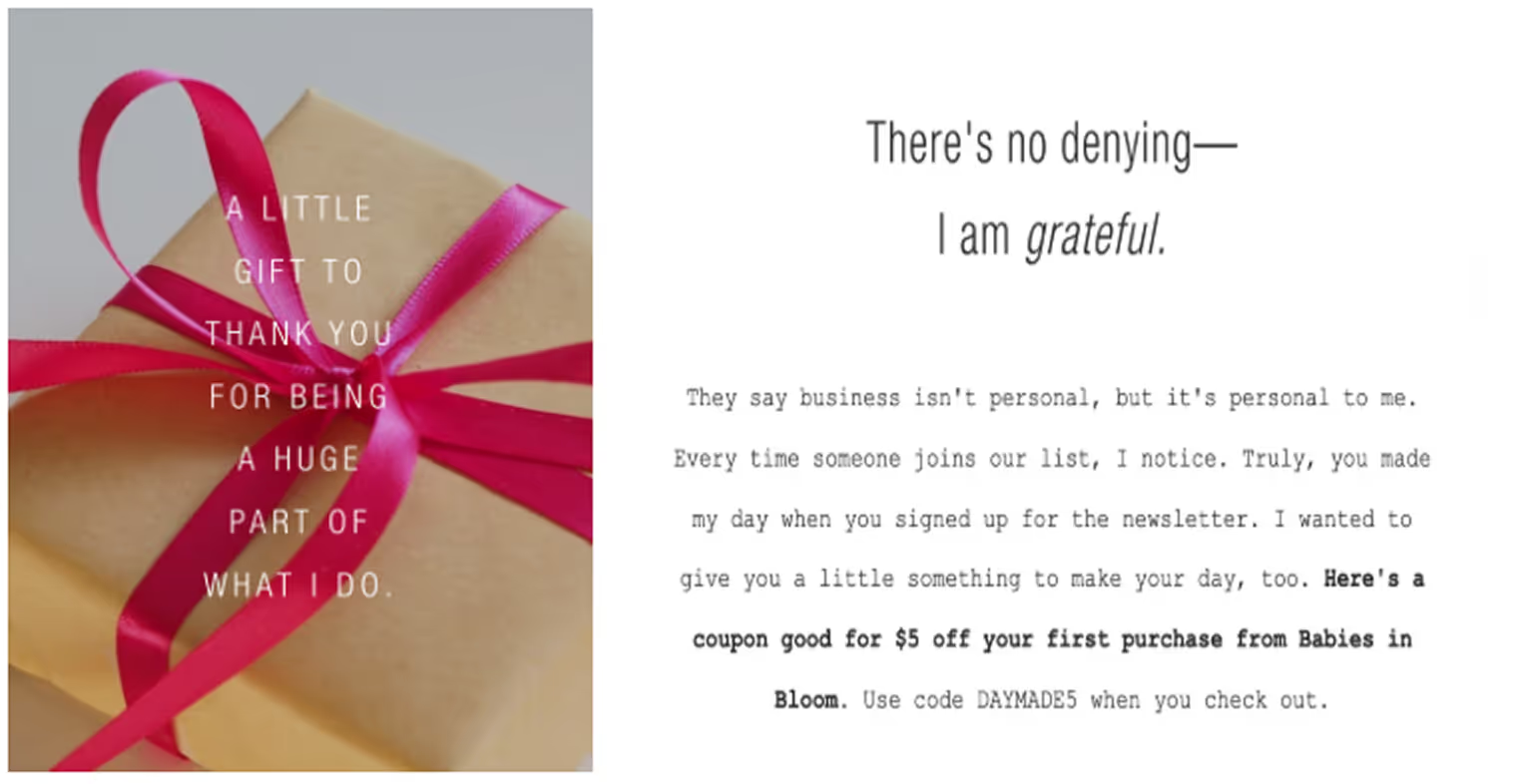
Why it Works: The above welcome email repositions the onboarding message as a genuine thank-you note (subject line: “A gift of thanks”). The first-person language builds connection.
Use Brevo's welcome email template to set this up with zero effort
Sending Cart Abandonment Emails by Cart Value
Best for: User-engagement segmentation
With abandoned cart emails, you can bring back high-intent shoppers who dropped off just before completing their purchase. If the cart value is high, you can give them a discount. If it’s low, you can offer them points for purchase.

Example: Sapling Child (Organic baby clothing brand)

Why it Works: The copy is warm and human, with a personal sign-off. It offers reassurance (“we have your cart saved”) and a meaningful incentive (15% off). The large product image reminds the shopper of what they added to the cart.
Activate your ACR flows with our easy-to-use email templates
Using Past Purchase History To Send Referral Offers or “Restock” Emails
Best for: Purchase history segmentation
Email segments with customers who have continuously bought from you are an excellent target for referral emails because they are likely enjoying your product and would be open to sharing a referral with someone.
Knowing their past purchase history (and the content of their reviews, if they have submitted any) will be vital to identifying who is most likely to share referrals.
Example: Aloha (Protein bar brand)

Why it Works: Aloha’s cozy color palette and punchy CTA (“Give $15, get $15”) make the message clear. The visual of handing over the bar, along with the line “Sweeten Their Day and Yours,” effectively ties in emotion and product benefit.
If you sell items that run out, sending timely restock alerts (perhaps with a discount) will nudge the customer to reorder. The purchase history will become relevant here, so that you don’t send them this restock message too early, when they haven’t run out (it will likely be ignored then).
Example: Sova Health (gut health supplements brand)

Why it works: The WhatsApp SMS is short, which works for this channel, contains a time-sensitive discount code, a subscription option, and a CTA based on urgency.
Pro-tip: PushOwl and Brevo's WhatsApp automation makes it easy to send timed replenishment nudges with embedded checkout links.
Sending Loyalty Program Details to High Spenders
Best for: High AOV + frequency segmentation
Based on average order values (AOV) and purchase frequency, you can identify high spenders and target them with VIP perks to keep them hooked. Such emails may not work on those who have just bought once, or whose AOV is low each time.
Example: Native (Hair care and body care brand)

Why it works: Frames purchases as an “achievement,” then clearly explains the points system for easy action.
Sending Browse Abandonment Emails Based on Last Viewed Products
Best for: Behavioral segmentation
Tracking the subscriber’s actions on the website will help you identify their last-viewed products.

Based on these, you can send them browse abandonment emails and recover sales when they are still showing a high level of interest.
Example: Claire’s (Accessories brand)

Why it Works: The playful copy and vibrant palette mirror the brand’s youthful aesthetic, making the message feel fun rather than pushy. By referencing what the shopper viewed, it reinforces familiarity, and a same‑day pickup perk adds fun and urgency.
Sending Back-in-Stock Emails to Those Who Checked Out an Out-of-Stock Product
Best for: Behavioral segmentation, purchase frequency
Target shoppers who viewed or wish‑listed an out‑of‑stock product.
Example: KOI (Footwear brand)

Why it Works: Matches product vibe with color palette, builds urgency (“Sold out in under a week last time”), without hard‑selling.
Pick one of your high-converting back-in-stock emails
Sending Birthday Messages and Perks Based on Demographic Segmentation
Best for: Demographic segmentation
A vital data point as part of demographic segmentation is the date of birth. It allows you to send birthday discounts or age‑relevant product recs (such as sending anti-ageing skincare product suggestions to those aged 50 and above).
Example: Freeletics (Fitness brand)

Why it Works: This birthday email balances warmth and brand relevance: a fitness-themed wish, a healthy birthday muffin plug (addressing “birthday binge” guilt), and playful touches like “birthday burpees.” The CTA feels tailored, not transactional.
Other ways to use segments include:
- Event promos only to subscribers near the venue (geographic segmentation)
- Upsells for accessories to recent product buyers (purchase history segmentation)
- Influencer collab drops to trend‑focused shoppers (psychographic segmentation)
- Win‑back campaigns to inactive subscribers (lifecycle segmentation)
Best Practices For Email Segmentation
Now that you have your customer segments, here’s how you can use them to build high-performing campaigns:
Adopt an Overall Customer Segmentation Strategy
Johnstone from Paperstack, based on his digital marketing experience, suggests this framework for every campaign:
- Define the goal: sales, engagement, or another measurable outcome.
- Start with behavioral data, then layer in demographic context.
- Factor in engagement frequency, active vs. inactive, and personalize accordingly.
- Compare segment results, then optimize.
Following these steps ensures each campaign is purposeful, data‑driven, and primed to outperform.
Include Layered Segmentation and Dynamic Segmentation
Your email segments do not have to be based on a single segmentation strategy or type. For example, if you have created segments based on demographics, further refine them using behavioral traits of those already in the segment and create micro-segments. Layering your segments this way allows you to hyper-target your email list.
Given that behavioral cues are constantly changing, also remember to rely on dynamic segmentation. Static segments will get you only so far. With PushOwl, you can track activity across channels and make changes to your segments mid-campaign to pivot.
Leverage Predictive AI
Predictive segments based on artificial intelligence models are based on calculations, not just qualitative filters. These calculations tell us how likely it is that a customer or lead will remain inactive, or convert (or perhaps, churn).
With these predictions by your side, you can nudge your customers across different lifecycle stages with more ease.
Marketing Campaign Copy
Brandon Rollins, founder of Pangea Marketing Agency, advises starting with two questions:
- What do I want the user to do?
- What makes them likely to do it?
Once you answer the above, apart from using copywriting best practices, ensure that you:
Are You Making These Email Segmentation Mistakes?
You also need to make sure to avoid these common mistakes related to customer segmentation analysis:
Relying Solely on Open Rates
Open rates are an essential metric when evaluating the effectiveness of your customer segments. But here’s something you need to know:

Therefore, open rates can be misleading. Back them up with click‑through rates and other engagement metrics to confirm actual interest.

Not Segmenting at All
Whether you have 500 or 5,000 subscribers, sending the same email to everyone is a missed opportunity. Even basic segmentation beats a one‑size‑fits‑all blast.
Oversegmenting Your Contact List
Too many segments, especially with a small list, dilute results.
Jamilyn Trainor, a marketing strategist who works with clients in the events space at Müller Expo, explains, “If your list is under 5K and you are running twelve segments, you will underperform.”
The goal is not to make as many segments as possible or segment just because you can; it’s to find a reasonable basis for classification so that you can personalize your messaging.
Fergal Glynn, another marketing expert, suggests you answer the following questions to ensure you don’t oversegment:
Rollins, based on his experience working with small businesses through Pangea, recommends creating lists one at a time to prevent over-segmenting. “This beats creating a dozen micro-lists that you half-understand because you want to use all the features your email marketing platform gives you,” he concludes.
Pro tip: Loris Petro, the marketing manager at Kratom Earth, a brand that sells pain-relieving supplements, recommends using a control group to test and confirm that there is no list overlap and that the messages are not repetitive.
With Brevo and PushOwl, you won’t even need to create email segments from scratch. Just use our pre-made filters!

Undersegmenting Your Contact List
Broad, catch‑all lists lead to generic emails that miss the mark.
As Hone John Tito, an email and web push marketing expert from New Zealand, notes:
“Although [applying a segmentation strategy that is too broad] may sound like an easier option to cast a broader audience, in many cases, this strategy results in fewer interactions.”
When you undersegment, you are likely sending multiple email subscribers with different needs and interests the same email, leading to generic messaging. Which, you guessed it right, will eventually end up in the spam folder and be a hit to your email sender reputation.
Not Updating Your Segments
Shopify email segmentation is not a one-time process; it requires regular segment management and maintenance.

Subscribers leave, or their needs change, so the segments have to keep up. The fix, according to Petro, based on his experience working in the wellness space in Canada, is: A live quarterly data audit.
“Auto-shift people off a segment based on behavior (a cart add, or points redemption, for example),” Petro suggests.
Why? “Health check of segments is a non-negotiable factor- the fresher my information is, the better the impact of my campaigns will be, and more conversions will be made,” he elaborates.
Using this approach, Kratom Earth’s campaigns have seen a drop in unsubscribe rates by 50%, and campaign ROI has improved by 20% while also ensuring high email deliverability through relevant campaigns.
The takeaway: While doing your regular email clean-up, also shuffle your segments based on recent data. Audit (and not just export) your data to create dynamic and smart segments.
Segmenting Based on Demographics Only
Knowing your target customer’s gender, income level, employment title, and so on may be valuable when deciding how to target them, but that should not be the only factor.
As Trainor, based on her lifecycle messaging experience, illustrates, “Just because two leads are both [of the same title], does not mean they are at the same point in their buying journey. Always use static segments with behavioral segmentation.”
Your demographic segmentations can only get you so far.
Tito, based on his experience building gaming platforms, points out that demographic-based data may no longer be required in some cases.
“It’s an old school segmentation method. The current consumers are seeking individualized experiences depending on their interests and behaviors as opposed to age, gender, and location,” he explains.
That makes sense, given that empathy is the core expectation from buyers when it comes to personalized marketing. This empathy cannot stem from just demographic factors, so make sure to layer it with other types of segmentation.
How should E-commerce Stores Use Shopify Segmentation for Push Notifications (vs. Email)
Email isn’t the only channel where segmentation pays off. Brevo’s 2025 Marketing Benchmark Report found that 30% of users return to interact with a brand after receiving a push notification. But email and push aren’t interchangeable; each works best in different contexts.
Keep the Tone and Length Channel-Appropriate
When repurposing marketing communication for email campaigns vs. push notifications, remember that copy-pasting the content might not help. As Trainor explains, “Email and push likely share the same backend list, but the pacing and tone must differ.”
How?
Voigt, based on her experience with ad agency clients, recommends “keeping SMS and push short and focused, driving users to a landing page or specific action. Email allows for more storytelling and brand-building.”
Respect Subscriber’s Time
Push and SMS are also more intrusive; i.e., they pop up right in your customer’s face, often uninvited, in the middle of whatever else they were doing. That’s precisely why they work, but also why they demand extra care.
Segmentation is the difference between annoying spam and a relevant nudge for all marketing channels, but the closer the channel is to your customer’s personal space (their lock screen, their text messages), the more precise and respectful your targeting needs to be.
Match Channel to Urgency
Because SMS and push notifications are more likely to be seen immediately, time-sensitive campaigns should be communicated through these channels. For communication that’s not time-sensitive and long, email is the better option:
- Urgent, time‑sensitive offers: Push or SMS (e.g., flash sales, low‑stock alerts).
- Non‑urgent or longer‑form content: Email (e.g., newsletters, detailed product launches).
Unlock Smart Email Segmentation With Brevo and PushOwl
Email segmentation is about recognising that your customers are people with different needs, moments, and motivations. When your messages reflect that understanding, you stop sounding like “just another brand” in their inbox and start sounding like a helpful, familiar voice they actually want to hear from (and buy from).
Turn your hard-earned customer list into a bunch of smart segments and unlock high ROI with Brevo’s easy-to-use segmentation tools.