Most Shopify popup app roundups are built around one goal: collect more emails and phone numbers. That is useful, but incomplete.
If your store also relies on browser-based re-engagement, you need a very different kind of evaluation. The best Shopify popup app for push subscribers is not just a tool with beautiful templates or basic list growth features. It should help you capture high-intent visitors, support push-friendly opt-in journeys, fit browser and device limitations, and connect smoothly with the rest of your retention stack.
That matters because web push is structurally different from email and SMS. It is permission-based, browser-dependent, and shaped by platform rules from companies like Google and Apple. For example, Safari support for web push on iPhone and iPad depends on specific iOS and browser conditions, which changes how merchants should think about subscriber acquisition and popup UX. Apple’s Web Push documentation and Chrome’s guidance on quieter permission prompts both show why “just add a popup” is not a serious push acquisition strategy.
In this guide, we compare 7 tools with one primary lens: which popup app is best for capturing push subscribers on Shopify?
We will assess them based on:
- Push-specific opt-in experience
- Omnichannel capture across email, SMS, and push
- Native Shopify fit
- Targeting and segmentation
- Consent and browser compatibility
- Reporting and attribution
- Best fit by store size and growth stage
If you are still building your broader retention stack, it helps to understand how push fits into a larger lifecycle strategy. PushOwl has also covered this in its guide to the ultimate Shopify omnichannel marketing strategy and in its comparison of the best omnichannel marketing platforms for Shopify.
Quick answer: which tool is best?
If your priority is specifically capturing web push subscribers on Shopify, PushOwl is the strongest overall choice because push is native to the platform experience rather than added as an afterthought. It also makes more sense for merchants who want email, SMS, and push to work together instead of treating push as a disconnected add-on.
That said, some merchants may prefer a popup-first tool with advanced design control and then connect a separate push platform later. The right choice depends on whether your store values native push acquisition, heavy popup customization, or broader lead capture across multiple channels.
What makes a good Shopify popup app for push subscribers?
Before comparing tools, it is worth defining the criteria. A standard popup app may be excellent for collecting email leads and still be weak for push growth.
Here is what actually matters.
1. Native push support beats workaround-heavy setups
Some tools are popup builders first and support push only through custom scripts, third-party integrations, or handoffs to another app. That usually creates more friction, weaker attribution, and a fragmented user experience.
A stronger shopify popup app for web push should either support push natively or integrate so tightly that the visitor journey still feels seamless.
2. Browser-aware UX is essential
Push permissions do not work identically across Chrome, Safari, Firefox, Android, desktop, and iOS. Merchants need tools that respect those differences rather than blasting every visitor with the same flow. Platform guidance from Apple and Chrome makes this especially important for permission acceptance and long-term prompt performance. Apple Chrome
3. Soft ask first, browser prompt second
The best-performing web push signup popup Shopify flows typically use a “soft ask” before triggering the native browser permission prompt. That gives the shopper context, improves consent quality, and reduces accidental dismissals.
If you want a deeper look at how opt-in design affects signup rates, see PushOwl’s guide to web push notification opt-ins.
4. Omnichannel capture is a major advantage
For most stores, push should not live in isolation. The best popup experience captures the right channel for the right user: email for longer-form lifecycle messaging, SMS for urgent and high-intent moments, and push for fast re-engagement.
This is why many brands increasingly choose platforms that combine channels rather than stitching together multiple disconnected apps. For a broader view, see PushOwl’s guide to email marketing for Shopify and its SMS conversion strategies for Shopify.
The 7 best Shopify popup apps for push subscribers
1. PushOwl
Best overall for Shopify merchants who want native push acquisition plus omnichannel retention
PushOwl stands out because it is not merely a popup tool trying to bolt on push later. Push is central to the product, which makes it the most natural fit for merchants evaluating the best popup app for push notifications Shopify use cases.
Why it ranks highly
- Native focus on web push subscriber growth
- Shopify-first setup and lifecycle automation
- Supports broader retention through email, SMS, and push
- Strong fit for abandoned cart, back-in-stock, price drop, and campaign use cases
- Clean path from subscriber capture to message automation
For stores that want push to drive actual revenue, not just inflate opt-in counts, this matters. PushOwl also supports use cases like price drop alerts, and merchants can extend retention beyond push with its email marketing and SMS marketing capabilities.
Best for
- Stores prioritizing push as a core channel
- Shopify brands building an omnichannel retention stack
- Merchants who want simpler implementation and reporting
Possible limitation
If your team wants a highly experimental, design-heavy popup builder with dozens of on-site campaign formats beyond subscriber capture, a popup-specialist tool may offer more visual flexibility.
2. OptiMonk
Best for advanced onsite personalization and popup experimentation
OptiMonk is known for sophisticated popup targeting, segmentation, and conversion-focused onsite experiences. For merchants who want deep control over when, where, and to whom popups appear, it is a compelling option.
Strengths
- Highly customizable popup campaigns
- Strong targeting rules and personalization
- Good fit for lead capture, offer presentation, and segmentation
- Useful for teams running frequent A/B tests
Push subscriber fit
OptiMonk is stronger as a popup optimization platform than as a native push acquisition engine. That means it can still support a shopify popup capture push subscribers strategy, but often not as directly or as natively as a push-first platform.
Best for
- Mid-market merchants focused on conversion optimization
- Teams that want popup testing depth
- Stores already using a separate push notifications platform
3. Wisepops
Best for polished popup design and marketing team usability
Wisepops is often favored by teams that care about speed of campaign creation and polished design workflows. It is especially useful when popup creation is owned by marketers rather than developers.
Strengths
- Intuitive editor
- Broad range of popup and onsite notification formats
- Good targeting and campaign control
- Often easy for non-technical teams to operate
Push subscriber fit
Wisepops is useful if your main need is flexible lead capture UX, but it is not usually the most direct answer for merchants looking for a popup app with push notifications as the primary requirement. Push generally depends more on integrations than native depth.
Best for
- Design-conscious teams
- Brands prioritizing campaign agility
- Merchants okay with a more modular stack
4. Justuno
Best for enterprise-grade targeting and promotional experiences
Justuno is a long-established name in onsite conversion optimization. It offers robust targeting, audience segmentation, and merchandising-oriented popup campaigns.
Strengths
- Powerful targeting options
- Strong support for promotional onsite experiences
- Better fit for larger catalogs and more complex stores
- Suitable for campaigns tied to product discovery and conversion
Push subscriber fit
Justuno can support broader subscriber acquisition strategies, but if your goal is specifically best Shopify popup app for push subscribers, it is usually better considered a conversion layer than a push-native solution.
Best for
- Larger Shopify stores
- Teams with dedicated ecommerce marketing resources
- Brands wanting advanced promotional targeting
Watchout
Its depth can be more than small stores need, and setup may feel heavier than simpler Shopify-first tools.
5. Privy
Best for small stores focused on email and SMS list growth first
Privy is often a practical choice for smaller merchants who want an accessible way to launch popups, spin-to-win offers, and basic list-building campaigns.
Strengths
- Friendly for beginners
- Strong email and SMS capture orientation
- Useful templates for common ecommerce scenarios
- Often approachable for small budgets
Push subscriber fit
Privy is generally not the first platform merchants choose when searching for a shopify popup app for web push. It is better suited to stores where push is secondary and email or SMS remains the main acquisition focus.
Best for
- Newer Shopify stores
- Small teams with limited technical bandwidth
- Merchants starting with traditional channels first
If that sounds like your stage today, PushOwl’s roundup of must-have Shopify apps for new merchants may also be helpful.
6. Poptin
Best budget-friendly popup builder for simple list growth
Poptin is often chosen by merchants who want a lightweight popup builder without committing to a more expensive conversion suite.
Strengths
- Straightforward setup
- Useful for simple popups, bars, and overlays
- Lower barrier for smaller stores
- Basic targeting and lead generation support
Push subscriber fit
For web push acquisition, Poptin usually works better as the popup presentation layer than as the push system itself. If your goal is tightly integrated push capture, automation, and attribution, you may outgrow it.
Best for
- Budget-conscious merchants
- Simpler onsite list capture use cases
- Stores testing popup marketing before scaling
7. PushEngage
Best for merchants who want a dedicated web push platform
PushEngage is better known as a push notification tool than a complete popup platform. That makes it relevant here because some Shopify brands want a specialized push product and are willing to pair it with another onsite capture solution.
Strengths
- Dedicated focus on push notifications
- Useful push campaign and subscriber management capabilities
- Better fit for merchants who already understand push as a channel
Push subscriber fit
Its push focus is a plus, but depending on your Shopify setup, merchants may still need a more layered approach for onsite popup orchestration and omnichannel list capture. In other words, it can be strong for push operations without necessarily being the most seamless all-in-one Shopify popup answer.
Best for
- Merchants committed to a dedicated push platform
- Stores with an existing popup or lead capture stack
- Teams comfortable managing multiple tools
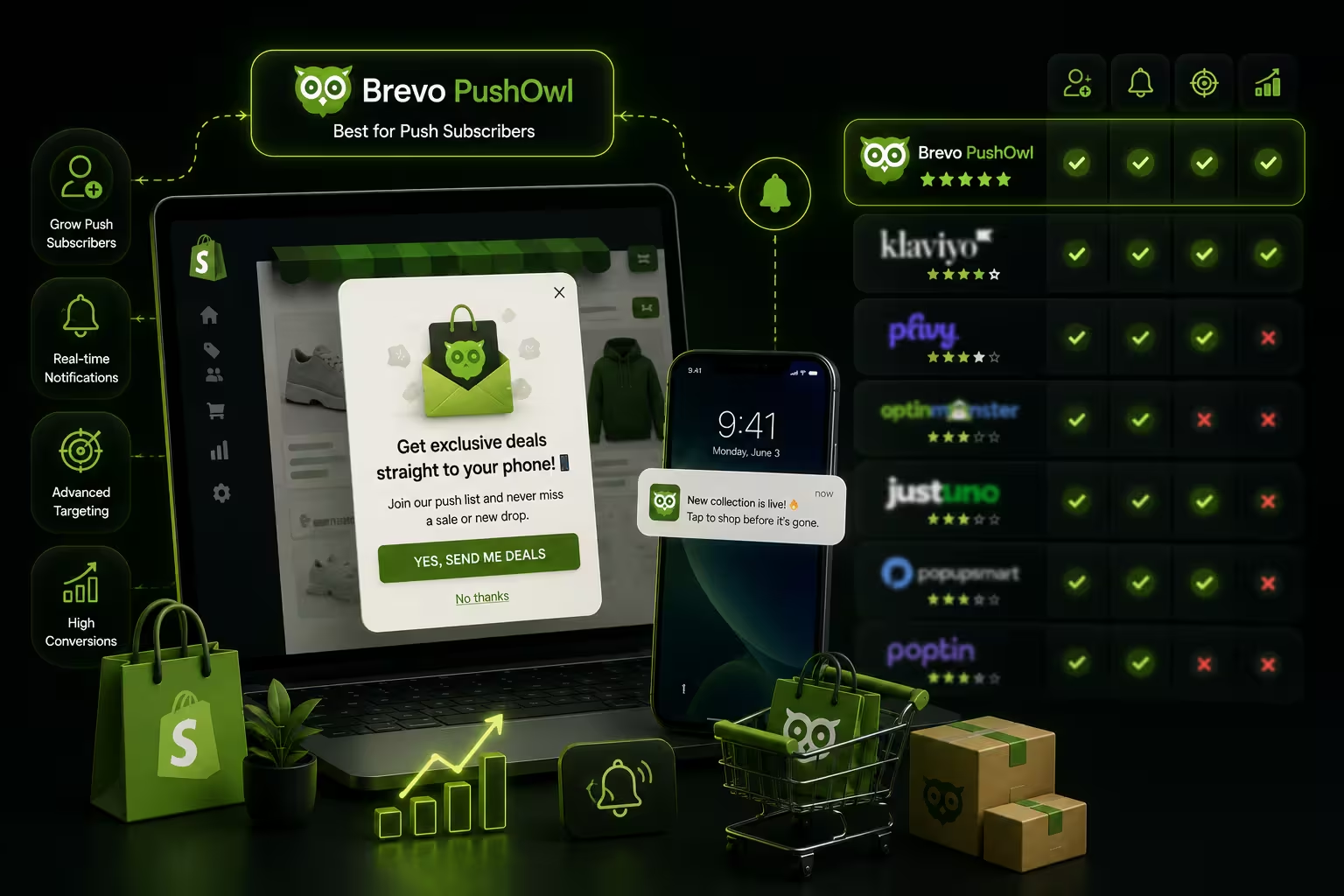
Comparison table: best popup app for push notifications on Shopify
How to choose the right app by use case
Choose PushOwl if…
You want the shortest path from visitor opt-in to revenue-driving push automation. It is the best fit if push is not a side experiment but a real retention channel. It also makes sense if you want one platform that can support push, email, and SMS together from a single Shopify-centered workflow. You can explore that broader approach on the PushOwl homepage or review plans on the pricing page.
Choose OptiMonk or Wisepops if…
Your main differentiator is onsite conversion UX, experimentation, and popup design control. These are strong choices when your team already has a separate messaging stack and wants the popup layer to be highly optimized.
Choose Justuno if…
You run a larger store with more complex targeting needs, promotional overlays, and segmentation requirements.
Choose Privy or Poptin if…
You are early-stage, budget-sensitive, and mostly focused on collecting email and SMS subscribers first.
Choose PushEngage if…
You specifically want a dedicated push product and are willing to manage popup capture and omnichannel orchestration separately.
Key buying questions merchants should ask before installing any popup app
When comparing vendors, ask these practical questions:
- Is push native, or does it rely on another app or custom setup?
- Can the tool support a soft opt-in before the browser permission prompt?
- Does it handle browser and device differences intelligently?
- Can I capture email, SMS, and push in one journey without making the experience messy?
- Will I be able to track which opt-ins become actual revenue?
- Does the app align with Shopify-native workflows and automation?
These questions matter because permission-based channels are sensitive to prompt quality, user context, and relevance. Google’s UX guidance on permissions supports the idea that badly timed prompts can reduce acceptance and train users to dismiss requests. Google Chrome Developers
Final verdict
If you are looking for the best Shopify popup app for push subscribers, the winner is usually the tool that treats push acquisition as a first-class workflow, not a side feature.
That is why PushOwl ranks first in this comparison.
It gives Shopify merchants a more direct route from popup-driven subscriber capture to push-powered retention, while also supporting a wider omnichannel strategy across email and SMS. Many popup tools are good at collecting leads. Fewer are truly good at helping you collect the right type of subscriber, in the right way, for the right follow-up channel.
If push is part of your growth strategy, that distinction matters.
A popup should not just interrupt a visitor. It should open the door to a channel that keeps bringing them back.