
Paid acquisition for apparel is up year over year while AOV is flat. Email and SMS are the only channels where you control the cost. You pay Meta its fee no matter whether the click converts, customers return it, leave your site abandoned, or never click again. The only channels you "own" and control both the audience and cost while having something grow over time are email and SMS. Brands outperforming right now are not spending more on Meta. They are building more around email and SMS automation.
But the approach of fashion emails differs from generic ecommerce. Emails that work for an underwear or home goods brand still need to be reconstructed mostly from scratch for fashion brands. Size is the largest cart-killer. Fake timers are never going to convince you to buy a limited product within a couple of hours. Browse-to-buy happens with 5 or 10 different browser sessions before commitment. Still sending the same email templating your Shopify theme came pre-installed with means you leave the greatest possible amount of revenue uncollected on your platform every single month.
By the end of this article, you will know 9 automated email flows that are currently generating the most recurring automated sales for most fashion brands on Shopify, which channels pair best with each, and exactly what order to start building out these flows.
What is Fashion Email Marketing?
Fashion email marketing entails automated and broadcast email messages to engage customers for a brand focusing on clothing, accessories, and shoes to buy from you more often, buy from you the first time, and continue to be a long-term customer. This contrasts with a generic email marketing platform, where fashion email marketing incorporates:
- The first impressions of visuals with clothes, which you can see in person (especially at large clothing retailers).
- Size anxiety issues, which lead to cart abandonment.
- Urgency creation opportunities through trends or hype-based releases.
- Browsing and purchase habits spanning five or more different browser sessions.
- Seasonal changes (i.e., spring/fall cycles).
- Style identity, driven by personalization over generic discounts, unlike the commodity goods industries that lack any discernible variety, style, or identity differences between the hundreds of millions of products that can be sold through the niche.
Why Fashion Email Marketing Is Different
Before diving into email flows, you should understand how the nature of a fashion brand separates it from any other brand; these differences represent precisely why the normal playbook is so unsuccessful for apparel brands.
• Visual Products Need Visual Emails
The written content that sells a blender does not translate to a dress you buy at ASOS. In the retail space, images do a ton of work to make a purchase happen. The email you sent is the actual purchase, and the body content is just supplementary content to flesh out the sale. Companies who run their emails as a text newsletter consistently fare worse than those who sell emails as a shareable editorial publication.
• Size & Fit Anxiety is the Cart-Killer Nobody Mentions
It is not price-no matter if you paid too much or not that leads to carts abandoned most of the time for clothes. If you do not address the lack of reassurance related to "Will I fit into this? " or "Is the fabric strong? " or "What is a woman of size 12 doing wearing it? ", you leave your most valuable conversion opportunity untouched.
• Trend & Drop Cycles Create Real Urgency
In any other retail category, the urgency you often create is a result of hype generated by you, the retailer. In the retail of fashion, the urgency comes directly from a real-world lack of supply. When limited products sell out and are nowhere to be found anymore, that supply does not get restocked for purchase. As trends rise, the window for purchasing those particular garments narrows. Your program, which leverages true FOMO as opposed to arbitrary countdown timers, leads to higher conversion rates.
• Browse-To-Buy Ratios Are High in Fashion Compared to Many Others
Customers come in on Monday to a product page, visit it again Thursday, take it to a friend's on Saturday, and purchase on Sunday. Over $100 items often have shoppers return to them five or more times before their cart is emptied. Your emails should reflect this entire journey and not solely target customers near the checkout page drop-off.
• Seasonality Resets Inventory Twice Annually
Whether spring/summer or fall/winter, there are changes to stock twice a year, plus any seasonal transitions in clothing that happen mid-year, pop-up shop products, and discount/clearance events. Your email sequences should consider changes in the products available rather than simply responding to customer behaviour alone.
• Style Identity Is More Driven Than Other Functions
When someone purchases items from your workwear collection, they are expressing who they are and do so to reflect their personal brand, not for work-specific convenience. A consumer of your fun summer print dresses is not the same individual. Ensuring correct targeting for customer segmentation is key to brand success in the fashion business, something commodity goods industries are not at risk of failing at or under-performing in at all.
Here is how fashion email compares with generic ecommerce using six dimensions:

The Fashion Flow Stack: A Quick Overview
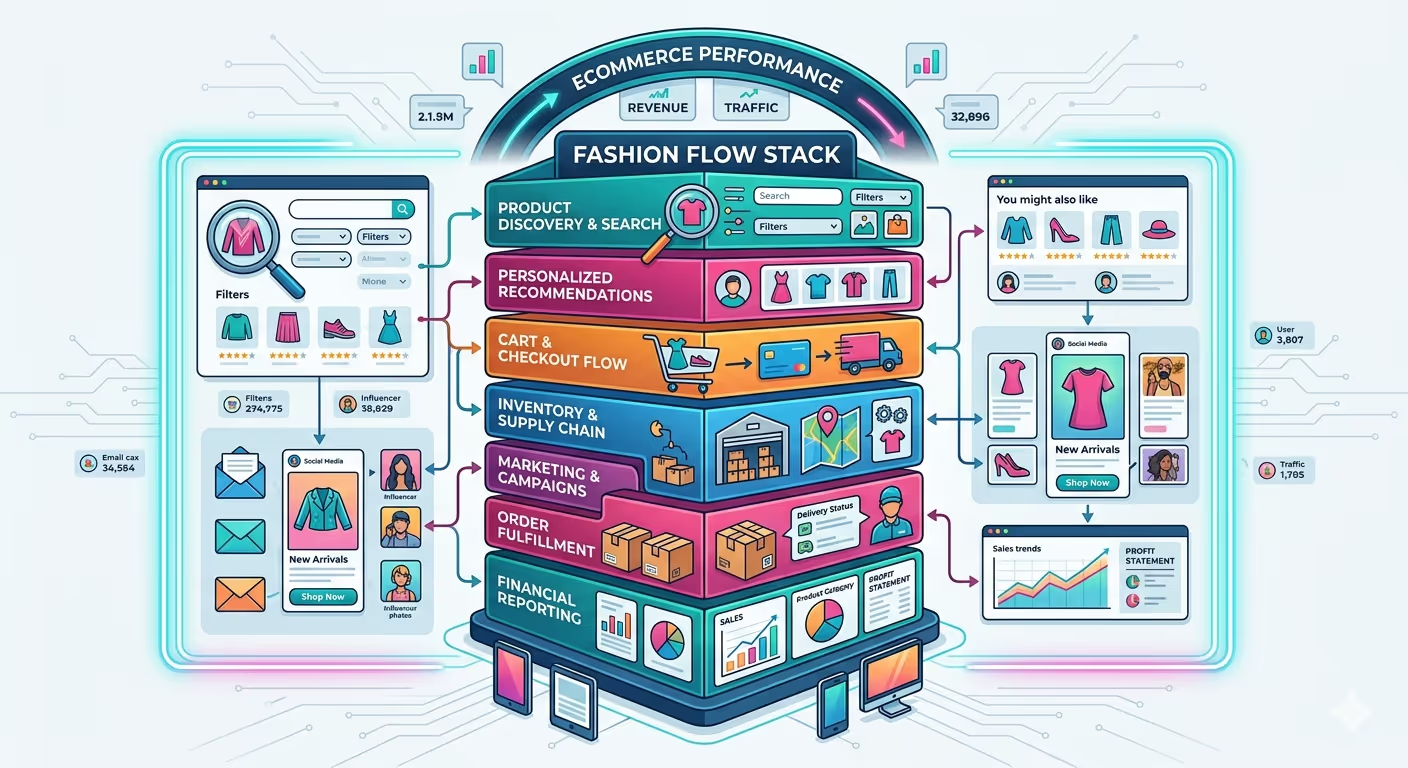
The Fashion Flow Stack is a framework containing nine different flows built exclusively for fashion brands on Shopify. The Fashion Flow Stack offers coverage for all stages of the customer life cycle, from first sign-up all the way through to dormancy.
Each stage is covered by specific flows that take into account the use of email, SMS, and web push channels, which are best optimized at their highest for these specific stages of the customer life cycle. Here are all nine of the flows within The Fashion Flow Stack:
When it comes to email, what is on your must-have list? For fashion brands, the four foundational flows are welcome, abandoned cart, browse abandonment, and back-in-stock.

This is non-negotiable stuff. Why? These flows target the most crucial drop-off points in the fashion shopping journey and typically drive between 60% to 70% of all automated email revenue for apparel companies. Everything you build next depends on getting these right first.
1. The Welcome Series (with a style quiz! )
While most ecommerce brands run a welcome email series, fashion businesses that take it further and use the first engagement to actually learn about what the customer wants boost their bottom line across all other flows for months. A standard three-to-five email sequence hits the basics: introducing the brand, offering a first purchase discount, showcasing best-sellers. However, to elevate this for the fashion industry, it is about correct behaviourial customer segmentation from the very beginning.
Build a style preference quiz into your welcome flow. Make it pop up when users sign up or design your first email with it as the main call-to-action. Four to five questions will suffice. Think: men's, women's, unisex? Casual or dressy? Preferred colors or silhouettes? Typical size range? Aim for two clicks per question maximum. This data segmenting allows you to hyper-target every email that follows your cart reminders, your browse retargeting emails, and your product drop notifications right from the jump.
A solid five-email welcome series could look like this:
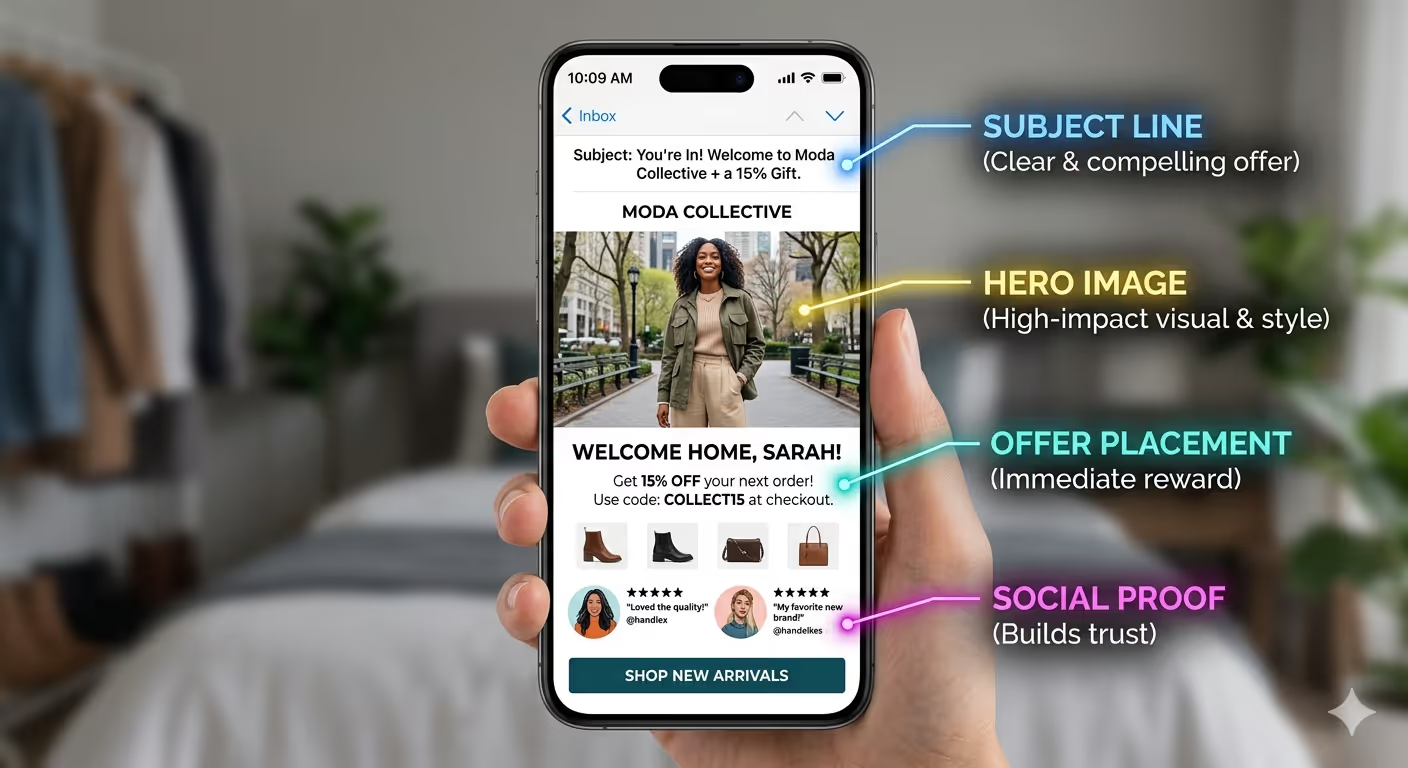
- Email 1 (immediately): Introduce yourself! A warm, brand-focused intro, along with a 10% or 15% first-purchase discount. If the quiz was not integrated during signup, make it an obvious link here.
- Email 2 (day 2): Dive into the brand's story. Who are you? Why do you do what you do? What is the mission? If your brand values sustainability or ethical production, now is the time to share that and begin building trust.
- Email 3 (day 4): Display best-selling products, ideally personalized according to the style profile collected in Email 1. If you do not yet have quiz data from the subscriber, default to showing your highest-performing items across the board.
- Email 4 (day 6): Use user-generated content and social proof. Show real customers wearing your clothes! Include reviews highlighting fit, fabric quality, and any mention of whether items tend to run true to size. Fashion conversions are most often stalled by fit uncertainty, and this email directly tackles that fear.
- Email 5 (day 9): Time for a final offer reminder. Keep this short, sweet, and focused. Single product, single CTA. The only objective is to get them to complete their purchase.
Welcome flows are consistently among the highest revenue-generating automations for apparel brands. The upfront segmentation effort pays off down the line for every subsequent email campaign.
Pro tip: Add a web push opt-in request right after a visitor confirms their email subscription on the confirmation page. You will find a good chunk of your new subscribers will take a while to open the welcome email. Push can grab them before their initial interest wanes.
2. The Abandoned Cart Flow (built for fashion's fickle mind)
In fashion, an abandoned cart is not necessarily a discount negotiation. Do not hit them with a sale in the first email; you are probably solving the wrong problem and subtly training your audience to intentionally ditch their carts to snap up your offer.
Most fashion carts end up deserted due to indecision or distraction, not a disagreement over the price. The customer might be worried the dress will not fit, wants to confirm your return policy, or simply got sidetracked before clicking 'buy'.
A discount does not resolve any of these concerns; a dose of reassurance does. And that is exactly how your fashion abandoned cart sequence should be crafted.

A three-email approach: reminder, reassurance, then the incentive.
- Email 1 (1 hour after abandonment): The visual reminder. Show them the exact item, size, and color they left behind. Skip the discount for now. Use a straightforward subject line like "You left something behind" or, better yet, "You left our [Product Name] behind! " and include a single, clear CTA to get back to their checkout.
- Email 2 (24 hours later): The fit reassurance email. Link directly to your size guide. Highlight two or three glowing reviews, focusing on comments about the fit and fabric quality. Make your returns policy prominent, especially if you offer free returns; lead with that! Most fashion retailers miss this crucial step, and it is where you will find the biggest untapped recovery opportunities.
- Email 3 (48 hours later): The offer. A soft discount of around 10% off, a free shipping incentive, or a complimentary gift works well. Apply this cautiously and only to non-VIP customers or those who are not frequent buyers to protect your profit margins. You want to capture those who genuinely need a push, not those who will buy anyway.
Channel Layering: Consider pairing a push notification or SMS message at the one-hour mark with your first email at the four-hour mark. This multichannel approach usually outperforms sending a single email, especially for the mobile-dominant fashion audience.
3. Browse Abandonment Flow
The browse abandonment flow is the most underbuilt email marketing sequence in fashion and sits atop one of the largest untouched revenue pools in fashion's email marketing program. Most shoppers, who are interested in purchasing on a first visit to a fashion e-commerce site, do not even make it as far as adding items to their cart.
They simply browse the pages, linger over specific products, and abandon. And a standard cart abandonment email flow simply does not reach any of these visitors. The browse abandonment sequence effectively engages the shopper when they are at peak intent to purchase, long before the topic of carting comes into play.

Logic: Set this flow up to be triggered whenever a site visitor views the same product page twice in the same session or whenever a visitor views any product page and leaves without adding to cart. For visitors whose email addresses you have, they will receive the first email four to six hours later. If the visitor is anonymous but has consented to web push notifications, a web push is sent out immediately.
- Email 1 (4 to 6 Hours): "Thinking about this? " displays the primary product page hero. Beneath it, we present three similar products-items with similar silhouettes or colorways, but different price points-helping re-engage the shopper with their originally viewed item while still providing an alternative should the original item not fit what they were seeking. The browse abandonment uplift is often strongest on items purchased at prices exceeding $80.
- Email 2 (24 Hours): Styling approach. This email crafts a mini lookbook based around the product the customer viewed previously. It showcases three full outfits with accompanying shoppable links for each complementary piece. This email captures conversions as it preempts the question the customer has not even had time to finish formulating: "But what would I actually wear this with? "
The Anonymous Browser Problem: For visitors who have not provided an email address, you cannot run a browse abandonment campaign through email. The channel available to reach these individuals is via web push. If a user who previously opted in for web push notifications during a past session arrives on your site, they can receive a browse abandonment notification even if they have never shared their email address with your brand. For businesses that use paid advertising and rely on these channels to bring in traffic, this is a substantial potential loss that email alone cannot possibly recover.
4. Back-in-Stock Alerts
Without any doubt, if you are limited to picking only ONE automated flow to carry out in your first 30 days, it is your back-in-stock alert.

Back-in-stock signups provide a clearer purchase intent signal from a fashion customer than anything short of the act of actually buying. These users discovered a product they desired, but inventory issues prevented them from purchasing. By restocking, you are not coercing them into an impulse buy-you are simply removing the barrier that separated their intention and desire from the actual act of purchasing. That is exactly why back-in-stock alerts yield a conversion rate unmatched by any other automated flow in the fashion sector.
How to Properly Carry It Out: Set up a variant-level signup form. On out-of-stock product detail pages, make sure you have signups configured at the variant level, not at the product level. A customer patiently awaiting the olive linen blazer in a size 8 is utterly unconcerned when a size 14 suddenly returns in stock. It is the level of detail and variant specificity that turns this flow from a simple notification into an actual sales-driving engine.
Once the variant is back in stock within Shopify, promptly start all three channels: send SMS notifications immediately, dispatch web push notifications approximately half an hour later, and deliver email alerts about two hours following the SMS.
The inverted sending cadence is not coincidental-back-in-stock is the sole flow where rapidity is paramount. Limited inventory inherently dictates that the first shopper to receive the notification is the most likely to convert before the item sells out once again.
For limited drops ("back in stock" as a repress/final release), you reframe it as a waitlist signup. This plays up scarcity much better than a standard signup and allows you to accurately measure demand before committing to another production run.
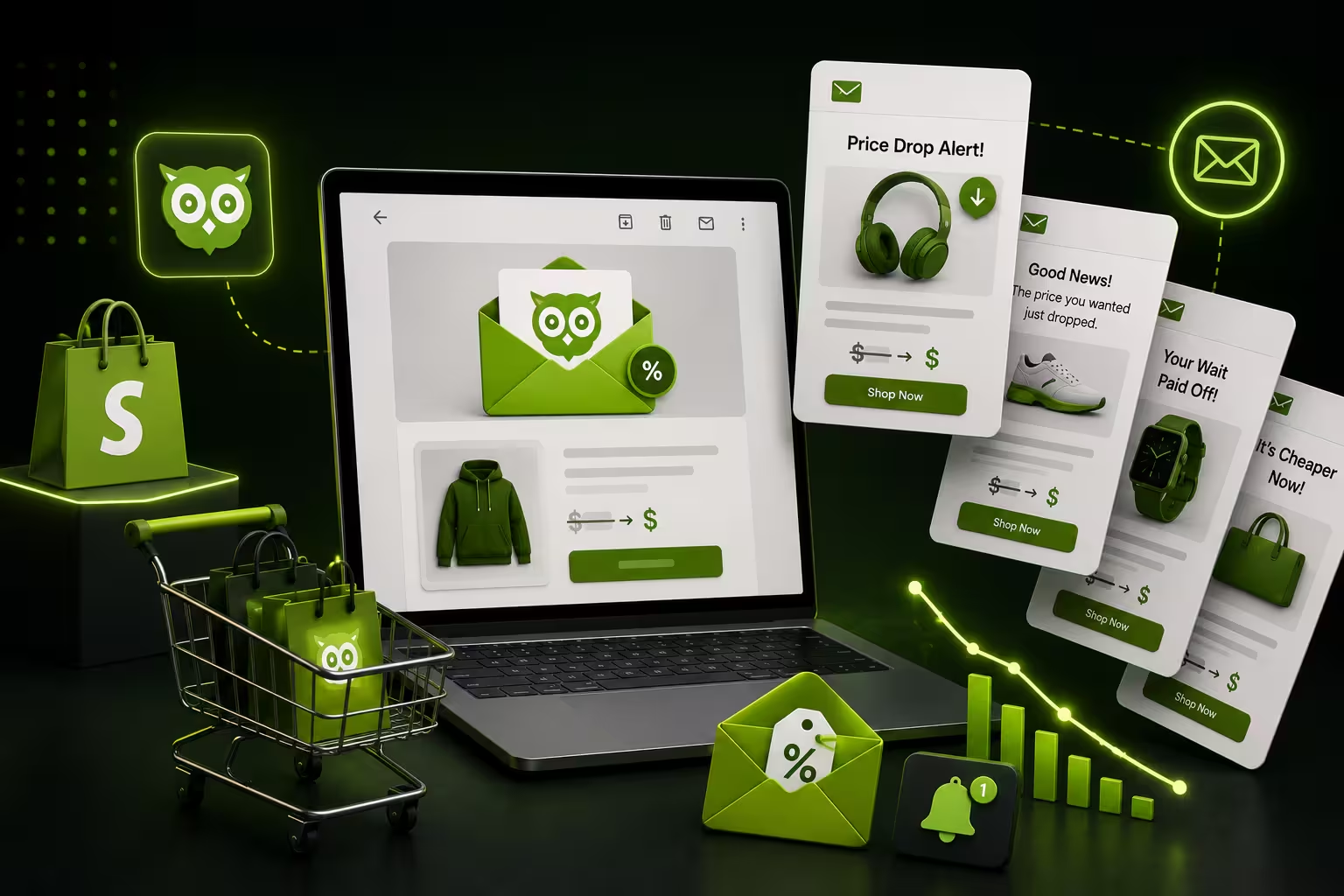
5. Price Drop Alerts (Markdown Marketing on Autopilot)
Fashion operates in seasons, and each season moves through stages of discounting-20% off, then 30%, then maybe 50% at the end. That discounting schedule should already be built into your marketing calendar. Price drop alerts link that to the customers who have already expressed interest.

The trigger is straightforward: a customer views a product detail page (PDP) or wishlists an item. That item is discounted. They receive an alert. The messaging should not be clever; it should be fast and clear: "The jacket you viewed is now 25% off." That is it.
Do not bombard customers with these. If someone is getting an alert for every item they scroll by, they will quickly learn your prices are negotiable and will hold out for discounts. At Cap, we limit these to one per customer per week and trigger them on products they have shown multi-session interest in, rather than on just a single view.
Channel choice matters here more than for almost any other flow. Push and SMS drastically outperform email on this type of message because it has a high degree of urgency and requires a short, punchy communication. A three-paragraph email on a price drop will almost always lose to a two-line push notification. The channel should match the message: use push and SMS for the immediate notification, use email to highlight price changes on full-price-discovery items.
Pro Tip: Capping price drop alerts to one per customer per week protects your margins and ensures you do not train customers to only buy on sale.
6. The Post-Purchase Styling Flow (Where Fashion Beats Other Verticals)
Post-purchase emails are automatically the highest-converting flow in any fashion brand's program. Customers have already invested. They are excited about their purchase, but perhaps a little anxious about their decision.

Within 72 hours of purchase, they are more engaged with your brand than almost any other time in their lifecycle. Most fashion brands squander this valuable opportunity on basic shipping notifications. It is the biggest chance you will have to reduce returns before the order ever ships and encourage repeat purchase with the new item.
- Email 1 (Order Confirmation): Keep this straightforward and standard: Order number, delivery estimate, customer support information. Get this right and then move on.
- Email 2 (Shipping Confirmation): Add a product-specific expectation-setter here. Is the denim likely to require a break-in period? Is the fabric meant to relax in the wash? This message, sent upon shipment, is one of the highest-use strategies to prevent returns on an order that has not even arrived yet.
- Email 3 (One Day After Delivery): "Three ways to style your [Item Name]." A micro lookbook that provides three different outfits built around what they bought, with shoppable links for all recommended items. This is the fashion-specific, high-impact move that really drives add-on revenue when executed consistently.
- Email 4 (Seven Days After Delivery): "Love it? Leave a review and join our rewards program.’ Ask specific questions around fit and fabric-this produces higher-quality, more compelling social proof than general inquiries.
- Email 5 (Fourteen Days After Delivery): Suggest related products based on the original purchase category. Keep this email short, visual, and focused purely on discovery.
Pro Tip: Split channel use within this flow. SMS handles all transactional logistics: shipped, out for delivery, delivered. Email handles editorial, styling, and review content. This division allows each channel to do what it does best, which boosts the performance of the entire flow.
7. The Replenishment Flow (Yes, Fashion Has Replenishables)
When most people hear "replenishment" in marketing, they dismiss it for fashion businesses. They should not. The category of fashion missed by these brands is basics: socks, underwear, basic t-shirts, leggings, activewear. These are all items customers repurchase on a relatively fixed cycle: from 45 days (socks) to 90 days (basic t-shirts or everyday leggings) or every six months for basics like t-shirts and leggings. If you have any of these in your inventory, a replenishment flow is essentially unearned, recurring revenue.
The mechanic here relies on a time-based trigger off a customer's last purchase in a basics category. Email 1 should be light: "Time to refresh your [Category]?" There should be no discount and no urgency, simply a well-timed nudge that lands when the customer has likely already noticed their current basics are wearing out. If you do not get a response from this email, Email 2 should follow up with a small bundled discount to push for conversion.
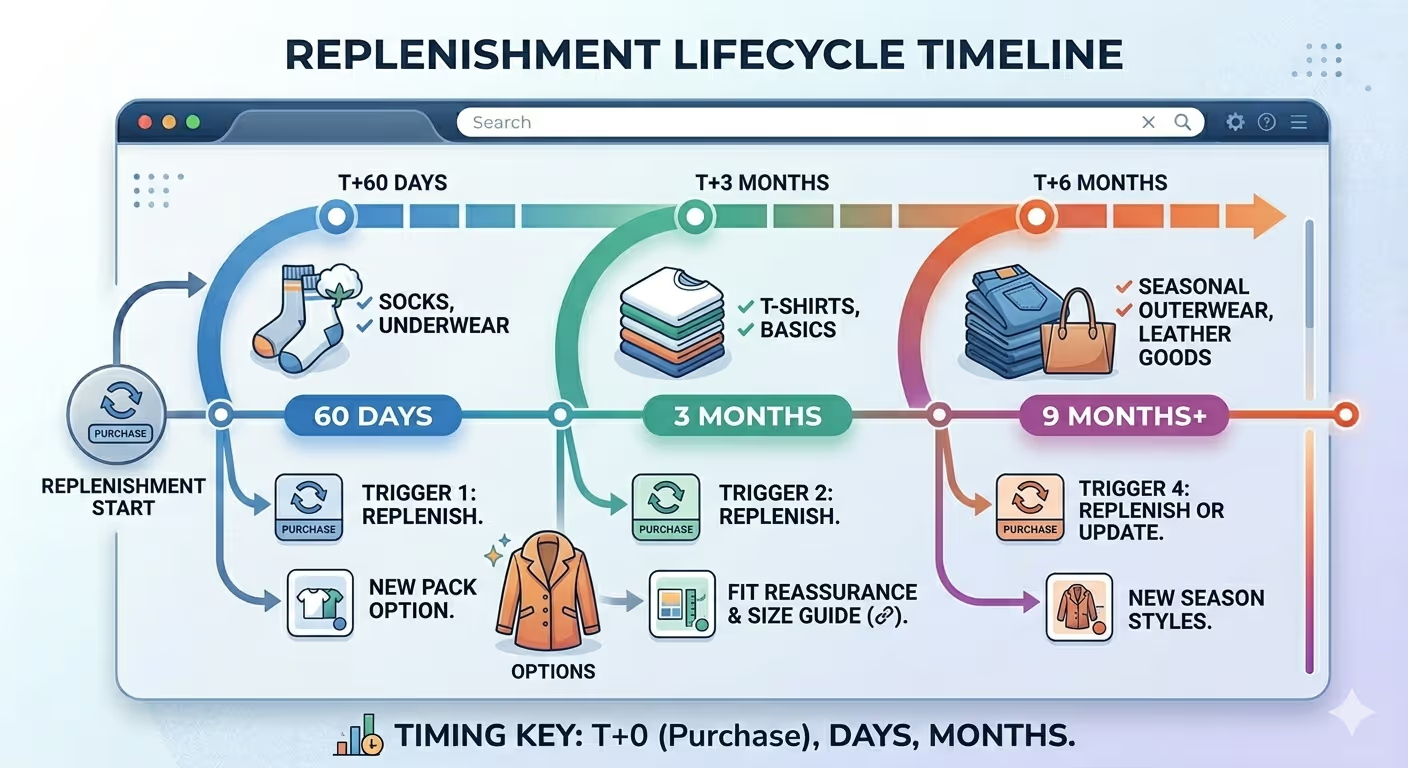
For items that are not replenished like dresses, standout pieces, or occasion wear, the timing logic can remain the same, but the messaging shifts to a "fresh wardrobe" angle. In this scenario, pull new arrivals from the same category the customer last shopped in, say, six months ago.
This uses the same flow structure but different copy, working because the timing is still appropriate for a wardrobe update, even if the original item has not been worn out. Brands built primarily on high-repeat basics heavily use this mechanic. The replenishment flow is one of the least intensive to set up and runs passively in the background, churning out reliable repeat revenue without a single manual outreach.
8. The Win-Back Flow for Lapsed Fashion Customers
Every fashion brand will have a dormant segment of customers who purchased one or twice but then went cold. A win-back flow is your strategy for re-engagement and a way to gauge when to finally give up.
Set the trigger window based on your AOV. For lower AOV brands, start with 60 days of dormancy. For medium to high AOV brands, push to 90 days. These higher-value customers inherently have longer repurchase cycles, so what appears to be churn at 60 days might just be normal behavior for an average order of $200.
Follow this three-email sequence:
- Email 1 (Trigger Day): Start with new arrivals, not a discount. "Here is what has dropped since you last shopped with us." Sending a discount this early encourages customers to intentionally skip engagement periods with you.
- Email 2 (Seven Days Later): Now, introduce an incentive: 10% off or free shipping attached to a specific product recommendation, then a generic code.
- Email 3 (Fourteen Days Later): This is the final, slightly stronger attempt. Offer 15% or 20% off and frame it honestly: "We do not want to continue sending messages if timing is not right, but we wanted to share this first." This style of messaging consistently wins over generic "last chance" subject lines.
After Email 3, if there is still no engagement, place that subscriber in a dormant segment and remove them from your campaign sends. Sunset unengaged subscribers to protect your email deliverability; it is key to maintaining healthy open rates for the customers who are actually engaged.

9. The New Drop / Collection Launch Flow
For drop-culture fashion brands, this is the flow the entire program builds toward. How you communicate a new drop determines whether it sells out in the first few hours or drags across weeks of markdown emails and margin erosion.

The drop launch flow has three phases: teaser, drop, and follow-up. Each has a distinct job.
- Teaser (T minus 7 days): Build anticipation before inventory goes live. A visual teaser email with selective product imagery, enough to create desire, not enough to answer every question. Include an early-access CTA that routes subscribers to a pre-launch waitlist. Everyone who signs up is a declared buyer and gets access before the public announcement fires.
- Drop (24 hours early for VIP, T-zero for everyone else): Your VIP segment, highest AOV customers, most frequent buyers, loyalty members, gets the drop link 24 hours before the public. This protects your best customers from missing drops due to timing and rewards loyalty with something that actually feels valuable.
- For the public launch, reverse the standard channel order: SMS first, web push 30 minutes later, email one to two hours after that. The conversion penalty for being late to a genuine sell-out is larger than any channel preference, and SMS reaches people faster than email does in the hours immediately after launch.
- Follow-up (T plus 3 to 7 days): A restock email if more inventory arrives. An "as-seen-on" email if the drop earned UGC or press. A "last sizes" email when specific variants start running low. Most brands skip this phase entirely and leave a meaningful share of drop revenue on the table.
Pro tip: For drops with genuine sell-out risk, send SMS first, then push, then email in five-minute intervals. The conversion penalty for being late to a sell-out is bigger than the channel cost.
How Many of These Flows Should You Build First?
Build order matters as much as build quality. Three flows live and optimised are worth more than nine flows half-configured and barely triggered.

For a new Shopify fashion brand:
- Month 1: Welcome series, abandoned cart, back-in-stock
- Month 2: Browse abandonment, post-purchase styling
- Month 3: Win-back, new drop launch sequence
- Month 4 onward: Price drop alerts, replenishment
This order prioritises high revenue impact against low build complexity. Welcome, abandoned cart and back-in-stock are all low-effort builds addressing the three biggest drop-off points in the new-customer journey. Getting all three live before adding anything else is consistently the right call for a brand under 12 months old.
For an established brand that already has email basics running: Start with the flows that add channel depth, then more email sends. The biggest gap in most established programs is the back-in-stock SMS channel, the fastest-converting touchpoint in the whole stack. Follow that with the drop pre-launch sequence, post-purchase styling, then browse abandonment for anonymous visitors via web push.
The 80/20 in fashion email marketing is clear: welcome, abandoned cart, back-in-stock, and post-purchase generate the majority of automated email revenue in apparel. Everything else builds on that base, but building on a weak foundation is how programs get complicated without getting profitable.
How PushOwl Helps Fashion Brands Run All 9 Flows From One App
The fashion email problem is also a channel problem. Each of the nine flows above performs better when paired with SMS or push, but running three separate apps creates attribution chaos, fragments the customer profile, and breaks flow logic across platforms.
PushOwl unifies email, web push and SMS in one Shopify app, so all nine flows run cross-channel from the same customer profile, with attribution that holds up.

Pre-built automation templates for the highest-priority fashion flows: welcome, abandoned cart, browse abandonment, back-in-stock, win-back, post-purchase and new drop. You are not building from scratch; you are configuring templates built for the specific triggers and timing that apparel brands need.

Web push for anonymous browsers to bridge the gap email-only tools cannot fill. A visitor who has never given you their email address is invisible to your cart and browse abandonment flows. Web push captures opt-ins from those visitors and gives you a live channel to re-engage them on the flows that would otherwise be out of reach entirely.
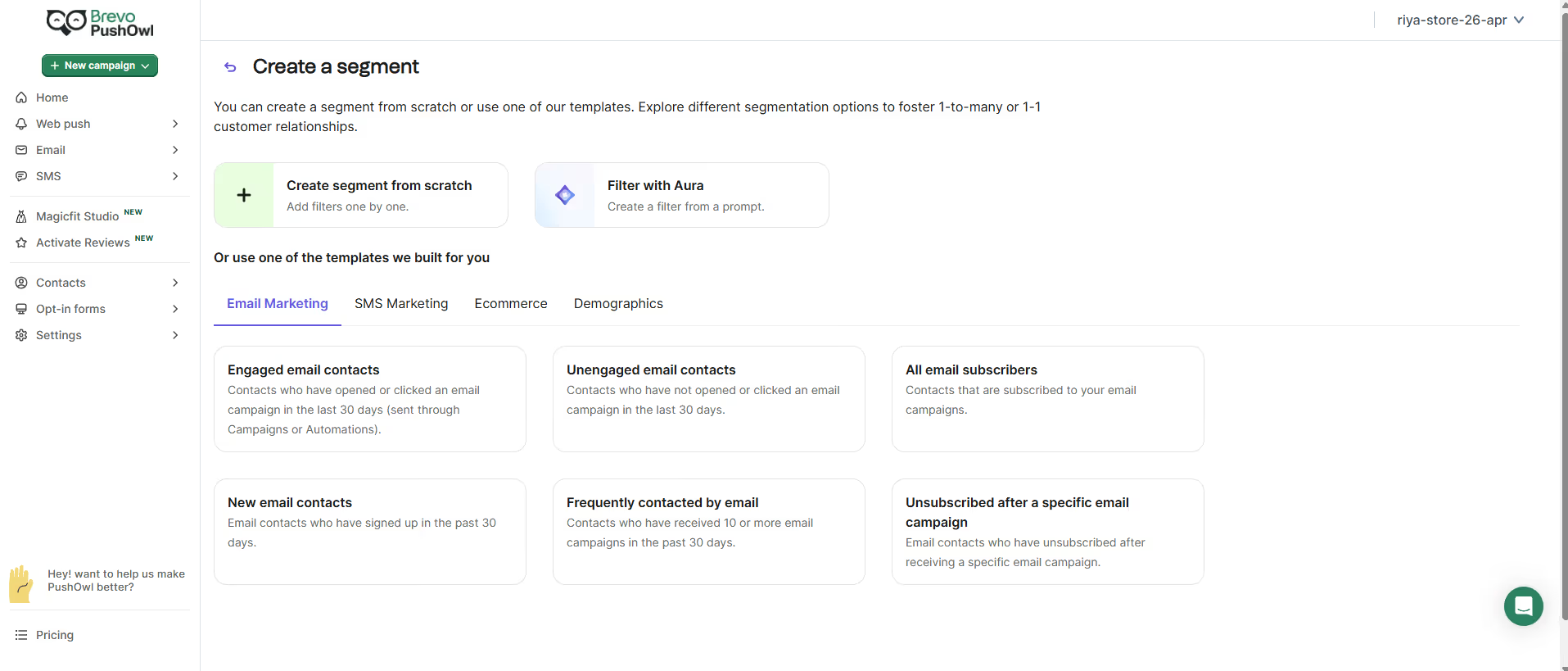
Behavioral segmentation by browsing history, purchase history, and AOV based on style-profile personalization and VIP-tier logic described throughout this post requires segmentation that lives inside one platform, not cobbled together across imports and exports every time a campaign fires.

Pay-per-send pricing to keep control of the spend. Fashion brands have inherently lumpy sends: high volumes during drop launches and peak season, relatively quiet between cycles. A per-subscriber model charges you for list size even when most of your list is dormant. Pay-per-send maps to how fashion programs actually operate.

Cross-channel revenue attribution in one dashboard to ensure that data analytics is present properly. When an abandoned cart customer receives a push at hour one, an email at hour four, and an SMS at hour 24, and converts after the email, you need to see that clearly. Attribution across three tools is an estimate. Attribution inside one platform is a number you can act on.
Getting your first fashion flow live takes under 30 minutes. Install PushOwl free and start building your Fashion Flow Stack today.
What Most Fashion Brands Get Wrong
A few patterns appear consistently in fashion email programs that are technically running but leaving revenue on the table.

- Sending the same email to a size 2 and a size 22 customer. Not because segmentation is hard, but because no one captured size data at signup. The fix is a single quiz step in the welcome flow, which most brands never build.
- Discounting too early in the abandoned cart sequence. Every customer who sees a discount in email one learns to abandon on purpose. Move the offer to email three, conditional on non-VIP segments, and first-email recovery rates go up while discount redemption costs come down.
- Ignoring web push, which leaves anonymous browsers unrecovered. For any brand investing in paid traffic, anonymous browsers are a real percentage of site visitors that email cannot touch. Push can.
- Treating SMS as a discount channel only. SMS should be your drop alert and back-in-stock channel first. Using it primarily for weekend flash sales trains customers to ignore it the rest of the time, and you lose the channel's biggest advantage, which is speed.
- Sending one back-in-stock email and calling the flow complete. Back-in-stock is the highest-converting flow in fashion. Running it on email alone, when SMS and push are both faster, is choosing the slowest channel for your most time-sensitive trigger.
- Over-relying on email for drop launches. SMS opens in seconds. Email opens in hours. For a drop where inventory can clear in under an hour, channel order is a margin decision.
Start Building Your Fashion Flow Stack
The 9 flows discussed previously are the backbone of a fashion email marketing program that continues to operate in the background, recovering carts, re-engaging browsers, selling off inventory quicker, and getting inactive customers back in the fold. The fashion brands that are crushing email are not the ones with pretty emails or frequent promotions.
Instead, they are the ones who show up at the right moment, in the right channel, with an email that is really relevant for the specific customer receiving that email. That is what the Fashion Flow Stack is designed to deliver.
Set up welcome emails, Abandoned cart flows, and back-in-stock emails this month. The following month, add the post-purchase flows and browse abandonment flows. Within a month or two, once all 9 flows have gone live, the email program you will have built will be providing performance that cannot be matched by any single paid channel at a price that makes the economics of fashion ecommerce actually feasible.