Transactional emails do some of the most important work in ecommerce.
They confirm orders, calm anxious customers, reduce support tickets, reinforce trust, and create one of the few post-purchase touchpoints with exceptionally high open rates. Yet for many Shopify merchants, these emails remain underused. They’re functional, but not branded. They’re informative, but not revenue-generating. They arrive, but they don’t always feel like an extension of your store experience.
If you’re looking for the best branded transactional email apps for Shopify, this guide is built for you.
Instead of reviewing broad email marketing platforms in general, this article focuses specifically on apps and solutions that help merchants improve Shopify branded order confirmation emails, shipping notifications, delivery updates, refund emails, and other transaction-heavy customer messages. We’ll compare them on the things that actually matter for post-purchase communication:
- Branding and design flexibility
- Coverage of Shopify notification types
- Localization and multi-currency readiness
- Product recommendations and post-purchase upsells
- Ease of setup for lean ecommerce teams
- Deliverability and operational reliability
This is especially relevant if you’ve already outgrown Shopify’s default notification styling and want a more polished, more profitable post-purchase experience.
For merchants building a broader retention engine, transactional email should not live in isolation. It should connect with your email, SMS, and push strategy. If you’re working toward that full-funnel setup, see PushOwl’s guide to Shopify omnichannel marketing strategy and its Shopify marketing automation solutions.
What are branded transactional email apps for Shopify?
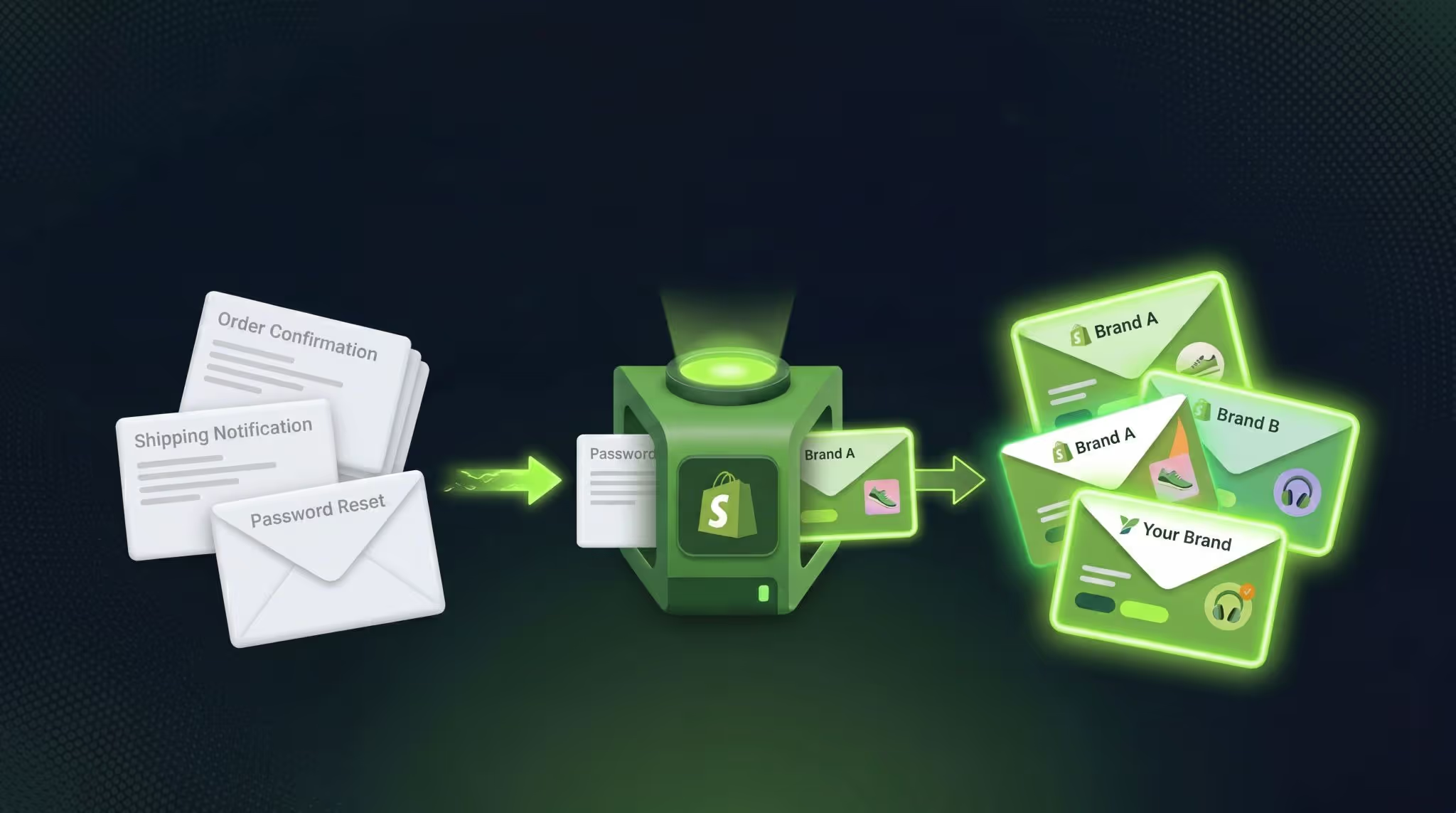
Branded transactional email apps for Shopify are tools that help merchants customize system-triggered emails like:
- Order confirmations
- Shipping confirmations
- Out-for-delivery updates
- Delivered notifications
- Refund notices
- Return updates
- Customer account messages
Unlike standard campaign tools, these apps focus on operational emails triggered by real buyer actions. The best ones let you add branding, improve layout, support multiple languages or currencies, and in some cases include conversion elements like cross-sells, discount codes, or reorder prompts.
In other words, they turn routine updates into better customer experiences.
This matters because customers pay close attention to transactional messages. If those emails look generic, confusing, or inconsistent with your storefront, they weaken trust. If they are well-designed and useful, they improve satisfaction and can even drive repeat purchases.
What to look for in the best Shopify apps for transactional emails
Before choosing a tool, evaluate it against these criteria:
1. Native Shopify notification coverage
Some apps only improve order confirmation emails. Others cover the full notification ecosystem, including shipping, delivery, cancellations, refunds, and more. The broader the coverage, the more consistent your customer experience becomes.
2. Branding control
Look for visual customization options beyond logo upload. Strong tools offer:
- Brand colors
- Typography settings
- Custom blocks
- Dynamic product sections
- Social and support links
- Branded headers and footers
3. Localization and global selling support
If you sell internationally, transactional emails should support:
- Multi-language content
- Currency display
- Region-aware templates
- Country-specific support instructions
This is critical for global stores where one-size-fits-all notifications can create confusion.
4. Post-purchase monetization features
Not every merchant wants to sell inside transactional emails, but many do. Useful features include:
- Product recommendations
- Related items
- Time-sensitive offers
- Referral incentives
- Reorder prompts
If increasing repeat purchase rate is a goal, this becomes a major differentiator.
5. Ease of implementation
Small teams need practical tools. Apps that require custom code, constant maintenance, or ESP-level technical knowledge can create more friction than value.
6. Deliverability safeguards
Beautiful templates are pointless if mails land in spam or promotions tabs unnecessarily. Deliverability should always be part of your evaluation. PushOwl’s post on whether your Shopify marketing emails are going to spam is useful context here.
6 best branded transactional email apps for Shopify
Below are the top categories and contenders merchants typically evaluate when looking for custom transactional email Shopify solutions.
1. OrderlyEmails
OrderlyEmails is one of the most well-known options for merchants who want to improve the visual quality of Shopify notifications without turning transactional email into a complex technical project.
Best for
Stores that want polished, branded transactional templates fast.
Strengths
- Large template library focused on Shopify notifications
- Easy branding for logos, colors, and layout consistency
- Supports order confirmations, shipping updates, refunds, and more
- Beginner-friendly setup
- Strong fit for merchants who want design improvements without advanced automation work
Limitations
- More template-first than strategy-first
- Monetization features may be lighter than merchants wanting heavy post-purchase merchandising
- Advanced segmentation and cross-channel follow-up are not its main focus
Why it stands out
For stores prioritizing clean Shopify order email branding, this is often one of the simplest paths. It solves the “default emails look generic” problem quickly.
If your current post-purchase stack is still taking shape, you may also want to compare simpler retention tools in PushOwl’s list of must-have Shopify apps for new merchants.
2. UpOrder
UpOrder is often mentioned by Shopify merchants who want more than a prettier confirmation email. It’s especially relevant for stores trying to make post-purchase communication feel more intentional and conversion-aware.
Best for
Brands that want transactional emails to support repeat purchases and stronger post-order engagement.
Strengths
- Built with post-purchase experience in mind
- Branded email improvements for key Shopify notifications
- Can include product suggestions and promotional elements
- Useful for extending the value of high-open transactional messages
Limitations
- Not always the best fit if you only want lightweight visual customization
- Some merchants may find monetization-focused features unnecessary for purely operational emails
- Feature depth can vary based on exact use case and Shopify setup
Why it stands out
UpOrder usually appeals to merchants who see order confirmations as a retention asset, not just a receipt. If you’re exploring transactional email as part of a larger revenue strategy, this is a meaningful distinction.
That same mindset carries into broader retention planning. PushOwl’s breakdown of how to measure ROI of Shopify omnichannel campaigns can help you evaluate whether post-purchase enhancements are actually paying off.
3. Klaviyo
Klaviyo is not a transactional-email-only app, but it enters this conversation because many Shopify merchants already use it for campaigns, flows, and customer segmentation. For some businesses, centralizing branded messaging in one ecosystem is the real advantage.
Best for
Growth-focused stores already using Klaviyo for lifecycle marketing.
Strengths
- Strong customer data and segmentation capabilities
- Can support branded transactional messaging in a broader retention stack
- Useful if you want post-purchase emails to connect with downstream automations
- Good fit for stores building sophisticated customer journeys
Limitations
- May be more platform than you need if your only goal is better order confirmation templates
- Cost and complexity can rise as you scale
- Transactional email use cases may require more implementation effort than dedicated template apps
Why it stands out
Klaviyo is most compelling when transactional email is just one part of a larger retention machine. If you want to trigger email, SMS, and other flows from customer behavior, the ecosystem matters.
For merchants comparing options, PushOwl has a detailed PushOwl vs. Klaviyo page and a roundup of best Klaviyo alternatives for Shopify.
4. Shopify Email plus notification customization workflows
This is not a single dedicated transactional app in the way OrderlyEmails or UpOrder are, but some merchants want to keep costs low and work within Shopify’s native environment as long as possible.
Best for
Budget-conscious stores that need basic branding improvements and want to avoid app sprawl.
Strengths
- Native ecosystem familiarity
- Lower complexity for simple use cases
- Can work for merchants with minimal design and localization needs
- Good starting point for stores early in their lifecycle
Limitations
- Less specialized for deep transactional email customization
- Fewer post-purchase merchandising features
- May not be ideal for multilingual, multi-market, or highly branded stores
- Can become limiting as retention strategy matures
Why it stands out
Sometimes the right answer is not “more tools,” especially for newer stores. But merchants should be realistic: if you want premium shopify branded order confirmation emails, native functionality can hit a ceiling quickly.
If affordability is a major factor, PushOwl’s resources on free email marketing for Shopify, best free email app for Shopify, and free email automation for Shopify are worth reading.
5. Omnisend
Like Klaviyo, Omnisend is broader than a pure transactional email app. Still, merchants evaluating shopify transactional email apps often consider it because they want email, SMS, and automation under one roof.
Best for
Stores looking for a multichannel retention platform with email customization potential.
Strengths
- Combines campaign and automation capabilities
- Better fit for merchants wanting channels to work together
- Useful for post-purchase sequences that continue beyond the first confirmation
- Can support stronger lifecycle marketing than standalone template tools
Limitations
- Not as lean for merchants only wanting branded transactional notifications
- May involve more setup than a dedicated transactional email design app
- Pricing and plan constraints can influence fit for smaller stores
Why it stands out
Omnisend becomes more attractive when your question shifts from “How do I improve order confirmation emails?” to “How do I improve the entire post-purchase journey?”
If that’s your direction, compare PushOwl’s PushOwl vs. Omnisend, best Omnisend alternatives, and best omnichannel marketing platforms for Shopify.
6. PushOwl for post-purchase retention beyond the inbox
PushOwl is not positioned as a transactional-email-template-only app, but it deserves a place in this discussion because branded transactional messaging should not be viewed in isolation anymore.
Best for
Shopify stores that want to complement transactional email with push, email, and SMS in one retention strategy.
Strengths
- Supports a broader post-purchase and retention approach
- Helps merchants reinforce order-related communication across channels
- Strong fit for abandoned cart recovery, automation, and customer re-engagement
- Useful when transactional email alone is not enough to drive repeat revenue
Limitations
- Not a template-gallery-style transactional email design app first
- Merchants looking only for cosmetic order confirmation upgrades may want a narrower tool
- Best value comes when used as part of a wider retention framework
Why it stands out
A customer who ignores email might still respond to push. A customer who reads an order confirmation may convert later from a restock alert, browse abandonment reminder, or price-drop notification. That’s why the best long-term strategy is usually coordinated communication, not channel silos.
Explore PushOwl’s email marketing, SMS marketing, push notifications for Shopify, and price drop alerts to see how post-purchase retention can extend far beyond one email.
Which app is best for your Shopify store?
There’s no universal winner. The right app depends on what problem you’re actually solving.
Choose a dedicated transactional email design app if:
- You mainly want better-looking notifications
- Your biggest issue is generic branding
- You want fast implementation
- Your team is small and non-technical
Choose a broader lifecycle platform if:
- You want transactional messages connected to campaigns and flows
- You care about segmentation and downstream automation
- You want email, SMS, and push to work together
- You need more than notification templates
Choose a lean native approach if:
- Budget is your top priority
- Your store is early-stage
- Your branding needs are minimal
- You’re okay with limited flexibility for now
How to evaluate apps without getting distracted by template galleries
Many comparison pages overemphasize screenshots. But a polished template gallery doesn’t tell you whether an app will work well for your business.
Ask these practical questions instead:
Does it cover all the notifications I care about?
Some merchants only fix order confirmations and forget shipping, delay, cancellation, or refund messages. Customers notice the inconsistency.
Can I localize the experience?
If you sell globally, make sure your email experience matches your storefront’s regional sophistication.
Will this help or hurt operational clarity?
Transactional emails must first answer customer questions quickly. If branding or upsells clutter the message, support volume can increase.
Can I monetize without making the email feel promotional?
The best product recommendations feel helpful, not pushy.
Will this stack with the rest of my retention channels?
Your custom transactional email Shopify strategy should support the broader customer journey, not become an isolated tool nobody revisits.
Best use cases for branded transactional emails on Shopify
The strongest use cases go beyond aesthetics.
1. Building trust after purchase
A clean, branded order confirmation reassures customers immediately and reduces uncertainty.
2. Reducing support tickets
Shipping timelines, support information, and policy links can proactively answer questions.
3. Driving second purchases
Strategic product recommendations or bounce-back offers can turn transactional opens into revenue opportunities.
4. Supporting global buyers
Localized templates improve clarity and customer comfort across markets.
5. Making your brand feel premium
Even small details in transactional communication influence how professional your store feels.
For more ideas on lifecycle messaging and revenue-driving content, see PushOwl’s guides to welcome email examples, Shopify email templates every brand must use, and customer segmentation for Shopify.
Our take: transactional emails should do more than confirm a purchase
The best shopify transactional email apps do not just make receipts prettier. They help merchants create a smoother, more branded, more profitable post-purchase experience.
If your store simply needs polished notifications, a dedicated template-focused app may be enough.
If your business is scaling, however, it makes more sense to think bigger: branded confirmations, timely shipping updates, personalized follow-up, better segmentation, and cross-channel retention working together.
That’s where Shopify brands often see the real lift.
PushOwl’s platform is built for merchants who want that broader outcome: not just messages sent, but customer relationships strengthened across email, push, and SMS. You can explore the full platform on the homepage or review plans on the pricing page.