Are you relying on scattered hacks, cart reminders here, a pop-up there, to grow your Shopify store? Those quick fixes might deliver small wins, but without a clear ecommerce marketing strategy, they won’t scale.
This guide breaks down what an ecommerce strategy actually is (and what it isn’t), shows you how leading brands design theirs, and gives you step-by-step tactics, templates, and examples to plug into your own store. By the end, you will know precisely how to layer hacks and best practices into a larger strategy that drives sustainable sales and repeat customers.
What Is an Ecommerce Marketing Strategy (and What It’s Not)
No hack, shortcut, or quick tip can replace a well‑designed, scalable strategy. You might find clever ways to segment customers, best practices for cleaning your email list, or templates for your marketing automations.
But none of those will actually work unless you have a clear marketing blueprint in place.
Here’s how to tell a credible marketing strategy from a tactic, hack, or tip:
If it guides your overall approach and shapes every campaign, it’s a strategy. If it improves or optimizes one part of that approach, it’s a tactic, tip, or best practice.
Pro tip: Use hacks, tips, and best practices only after you have defined your core marketing strategy. Without the strategy, they will give you quick wins at best, but no long‑term growth.
How To Design Your Ecommerce Marketing Strategy
Steal this step-by-step guide for creating an ecommerce marketing strategy (remember, this is a strategy, not a set of tips and hacks):
Step 1: Define Your Ecommerce Goals and KPIs
Start by writing down what you want to achieve:
Match each goal to a metric. For example, to focus on retention, you will have to track the repeat purchase rate. For upselling, looking at average order value (AOV) will be key.
One mistake to avoid: “Many Shopify stores focus all their efforts on ensuring traffic generation by using ads and promotions and fail to maintain the connections they have already established with their customers.” - Caleb Johnstone, SEO Director of Paperstack, a digital marketing agency in Australia
Tack on a target for these metrics so that you know what your KPI is in relation to your goal.
Step 2: Track What Your Competitors Are Doing
Figure out what your direct competitors are doing based on their website and social media activity. Classify their content into buckets and identify the channels they use. Use this foundational understanding of their ecommerce strategy to gauge what works and what they are doing wrong.
Step 3: Identify Your Audience and Analyze User Behavior
Your analytics dashboard and customer data will come in handy here. Segment shoppers into groups such as first-time buyers, high-value repeat customers, or discount-driven buyers. These segments will help you tailor campaigns for different buyers rather than sending mass emails with generic messages to everyone.
In relation to audience behavior, Simon Reynolds, a marketing expert who has worked with job marketplaces like Airtasker in Australia, sees a common mistake in how Shopify brands execute their marketing strategy:
“Businesses are not double-tapping on the WHY users are not converting into buyers; they are getting hooked on lower funnel performance marketing. Companies should go deeper, and talk to potential customers who came to a category page, or a homepage, and did not purchase, and understand what they can do differently in the messaging.”
Step 4: Choose a Mix of Marketing Channels
Decide which channels fit your goals. A little experimentation and A/B testing will come in handy here, but generally, you can slot your campaigns according to the following parameters:
- Email: Detailed campaigns like welcome automations, cart abandonment sequences, or product education
- SMS: Quick reminders and time-sensitive offers
- Web push notifications: Instant nudges for carts, restocks, etc.
PushOwl lets you manage all three under one roof, so campaigns stay coordinated instead of siloed, thus ensuring an omnichannel approach to marketing.
Pro tip: Start with one channel at a time. Once you have your primary channel running (usually email), layer the others one by one. Doing so allows you to figure out what your customers are responsive to. You will be surprised that your initial assumptions about your customers may be incorrect.
Step 5: Map the Customer Journey
With the marketing channels set up in the previous step, you can outline how customers move from discovery to loyalty.
- Does the customer discover products on social media or through your website listings?
- Do they read product details through emails?
- Does a push notification get a customer to complete checkout or an email?
Remember that a buyer’s journey is not linear, so you will not be able to find a fixed path. Your customers will bounce between online reviews, social media posts, and website exploration, among other channels.
Step 6: Build a Content Calendar
You do not have to plan campaigns for the entire year. A 30-day plan or quarterly content calendars are sufficient. Include product launches, sales, seasonal (high-traffic) moments like Black Friday, and ongoing automations. A calendar keeps your messaging balanced.
PushOwl’s dashboard makes it easy to schedule campaigns ahead of time, so you’re not rushing at the last minute.
Step 7: Test, Optimize, and Repeat
Run small experiments: A/B test subject lines, try different SMS lengths, or adjust the timing of push notifications. Keep experimenting and tracking where your strategy is falling short so that you can pivot in real time.
Automation features, such as smart send times, make scaling this easier.
Personalize send times for each customer with our Smart Delivery tool
Johnstone from Paperstack also reminds us that often, it’s not a matter of adding more strategies. Rather, the focus should be on refinement.
How Marketing Strategy Changes Based on Context
No ecommerce store exists in a vacuum. A skincare brand in Italy does not market the same way as an athleisure store in LA. Here are the variables to consider while fleshing out your ecommerce marketing strategy:
Your Shopify Store’s Niche Dynamics
Not all ecommerce strategies are built equal. The industry your store operates in will decide some aspects of your marketing. For example:
- Fashion/Beauty Shopify brands will experience a high frequency of drops and will have to focus on strong storytelling to differentiate their products from competitors. Strategy leans on email lookbooks, web push for launches, and influencer-driven social posts.
- Shopify stores selling electronics, home decor, and other long-term products will have longer purchase cycles and high consideration. Content marketing will need to focus on educational content through email newsletters, along with consistent retargeting efforts.
- For Shopify brands in the food and beverage space, repeat orders matter more than first purchases. This means that replenishment reminders, subscription offers, and loyalty programs can be prioritized.
Geolocation
In the US and Europe, subscription commerce is almost second nature. Meal kits, coffee refills, and pet subscription boxes are popular among customers who are happy to put purchases on autopilot.
But in India, the same playbook struggles. Cash-on-delivery habits and a hesitation toward auto-debit mean subscriptions are more challenging to scale.
What performs instead? One-off promotions, bulk-order discounts, and retargeting campaigns that create a sense of urgency.
Even channel preference shifts by region. In inbox-heavy cultures like the US, email dominates retention. In emerging markets, push notifications and SMS often cut through faster because they meet customers where they already are: on their phones.
Target Audience
When mapping your target audience, you have to consider various kinds of segmentations.
A Gen Z shopper scrolling TikTok doesn’t want a 500-word email. They want quick, punchy content. Short pushes, meme-driven lo-fi creatives, and UGC-style videos create instant credibility.
Compare that with professionals who are inclined towards sustainability. They are more likely to open an in-depth email that talks about craftsmanship, sustainability, or exclusivity.
Not just demographics, but psychographics and other forms of segmentation will matter too. But layer this study of your audience with actual behavioral cues.
Price Sensitivity
And now for some simple economics.
What works with low-ticket products? Urgency-driven pushes, bundle deals, upsells.
And with expensive products? Longer nurture automations, trust-building emails, educational guides, and buy-now-pay-later options.
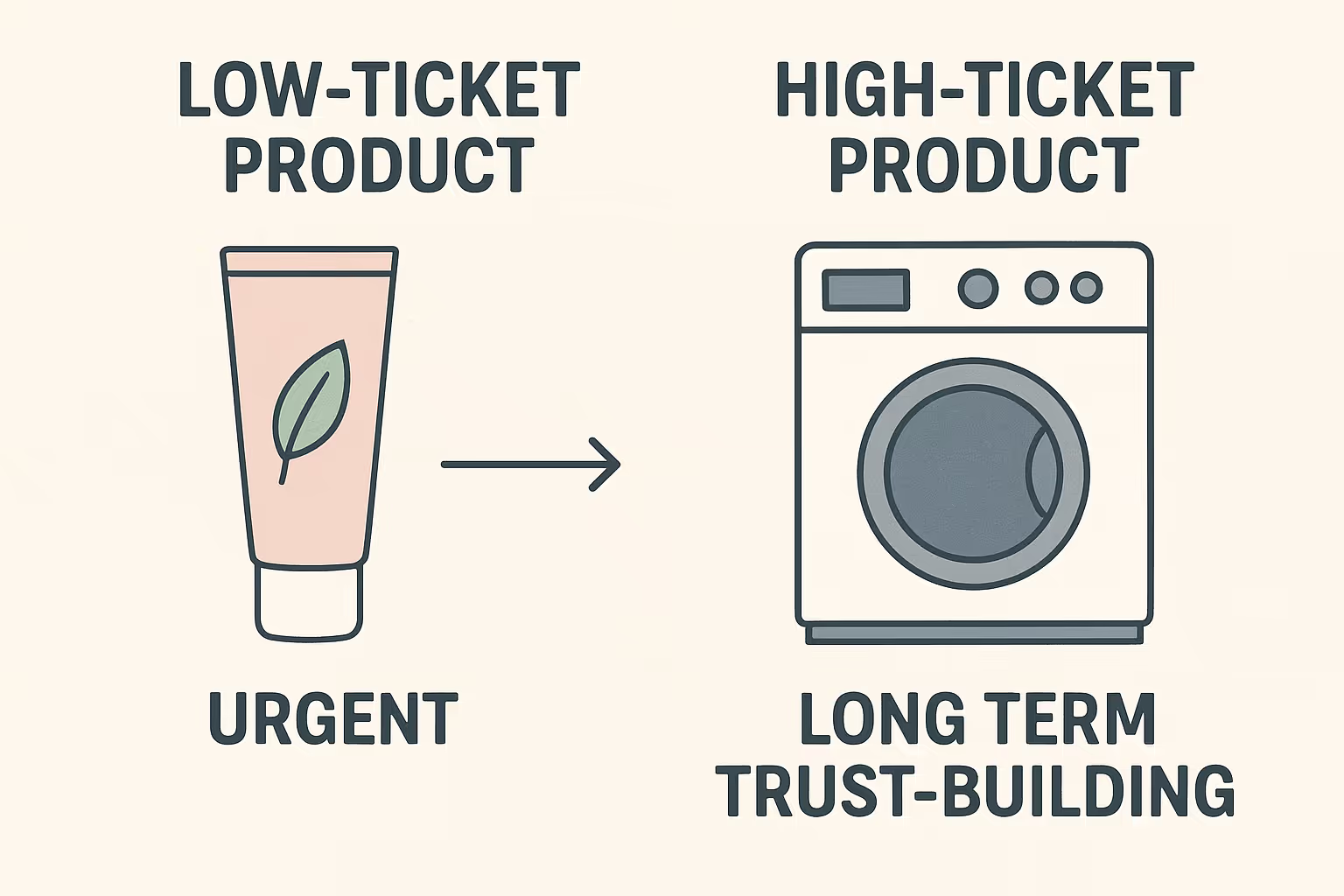
For example, a $20 skincare product benefits from flash-sale SMS and abandoned cart push nudges. A $600 electronics item requires comparison guides, testimonials, and post-purchase support emails to reduce churn.
Top Ecommerce Marketing Strategies To Use
Focus on incorporating tried-and-tested ecommerce marketing strategies first. Why?
“The boring fundamental stuff wins long term.” - Danyon Togia, Founder of Expert SEO
With that in mind, here are your channel-wise ecommerce marketing strategies:
Email Marketing Strategies for Shopify Stores
Here are two email strategies tied to goals:
Strategy 1 Goal: Build and Nurture Your Audience
Why it works: Email is the most cost-effective way to own your audience. Instead of relying on paid ads, you are creating a direct line to customers that you control. The first step? Grow your email list by capturing more email subscribers. How do you do that?
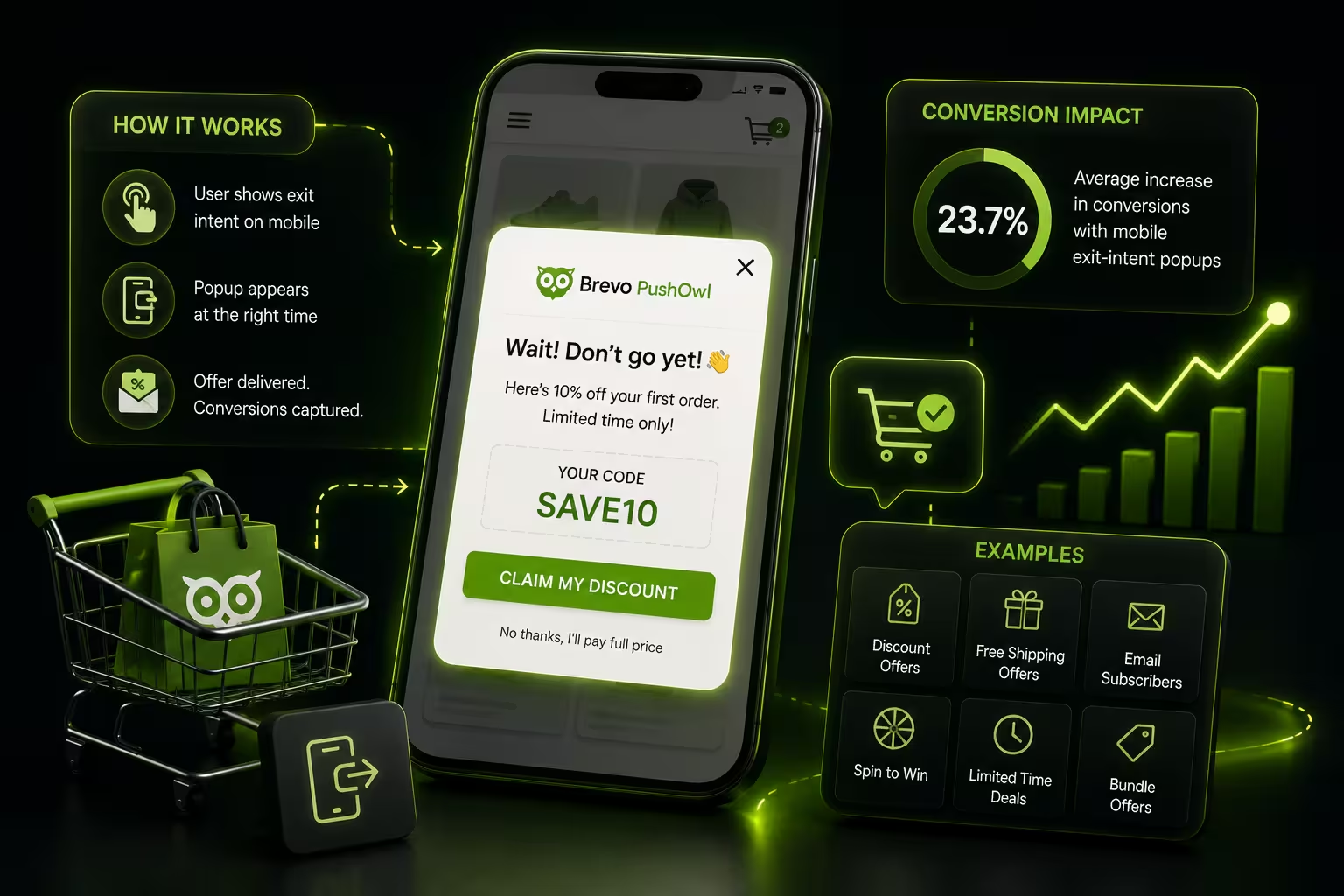
Pop-ups and forms are one hack for this strategy. Place smart, branded pop-ups on high-intent pages (like product or checkout) to collect emails without annoying shoppers. Offer a discount, free shipping, or early access to new drops as an incentive.
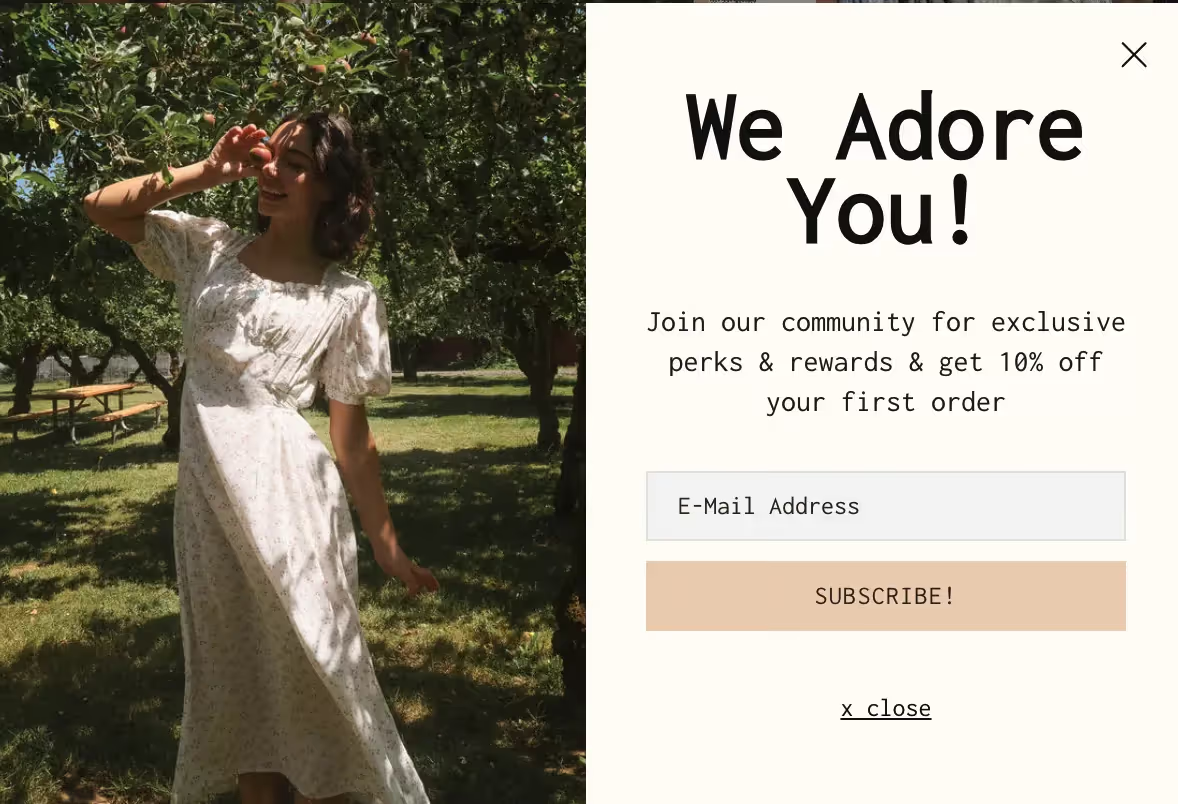
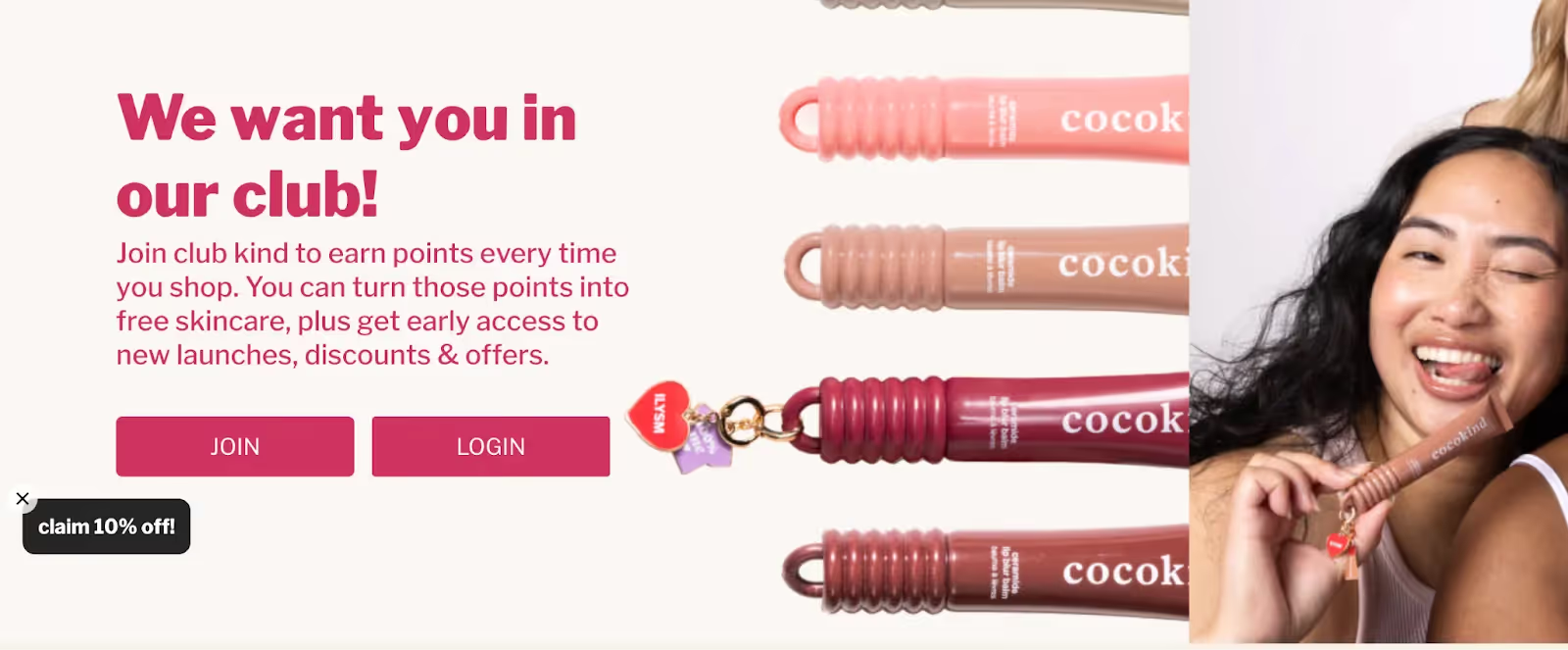
Another way to build your audience is through loyalty programs. Regular points or tiered rewards via email build anticipation and repeat purchases.
Strategy 2 Goal: Drive Conversions Through Automations
Why it works: Automations run 24/7 in the background, turning missed opportunities into revenue.
Use the following:
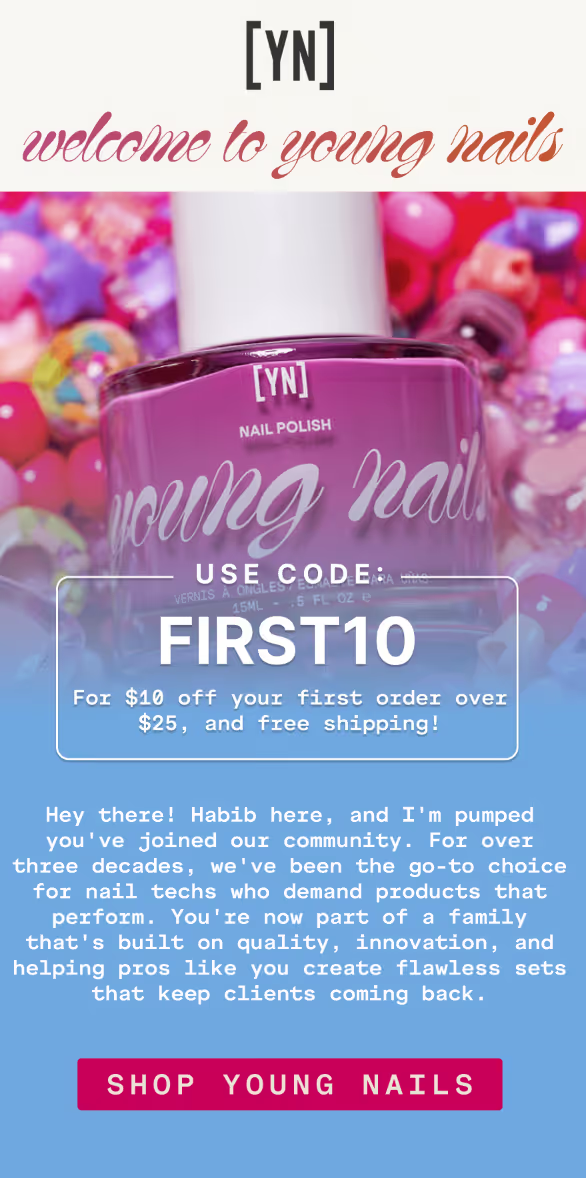
- Welcome automations: A well-timed welcome email will instantly trigger a relationship with a new customer. Throw in a personal anecdote, founder story, and an incentive, and you will jumpstart the customer’s purchase journey.
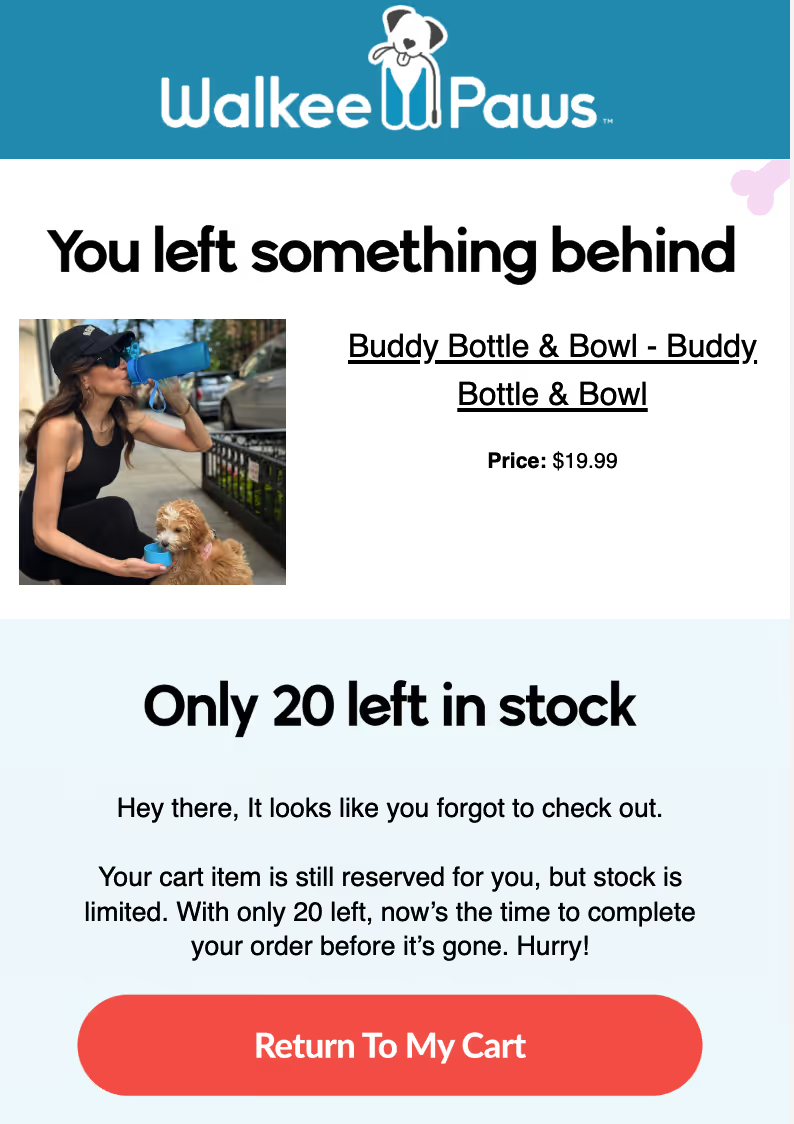
- Abandoned Cart Recovery: Abandoned carts are inevitable, but recovery emails can win back up to 20% of them. Use a sequence: a reminder, a discount nudge, and a scarcity-driven last call. The following ACR email creates FOMO with the message, “Only 20 left in stock.”
- Cross-sell: Automated product recommendations increase average order value without extra ad spend.
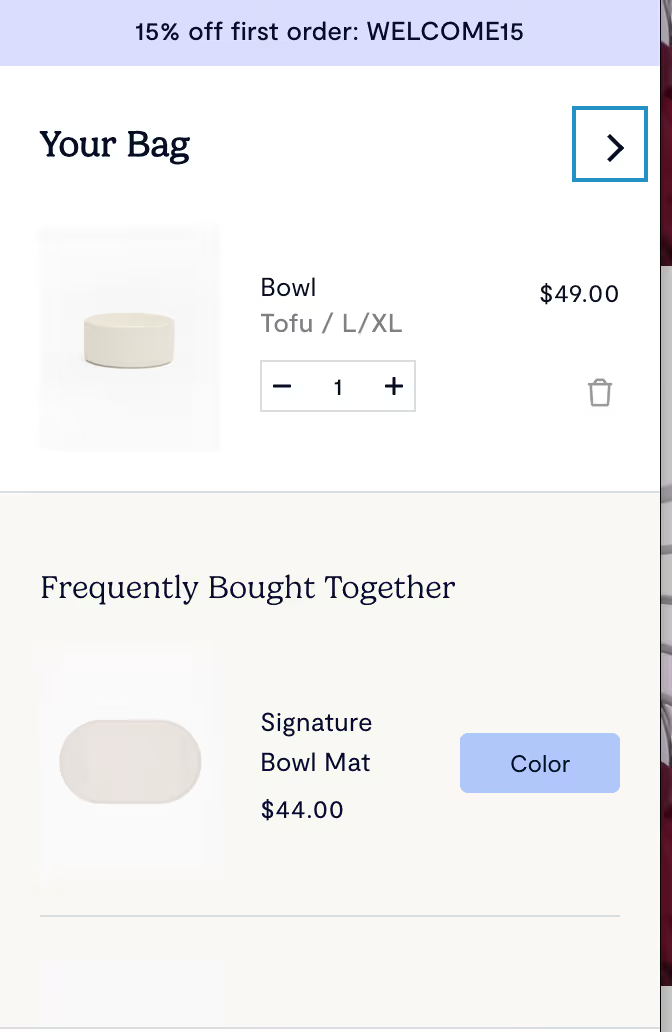
You can also use post-purchase automations to keep customers in the loop and target them with a review and referral right after they have used the product.
Email automations (for which we provide free templates!) save time and make sure no customer slips through the cracks.
SMS Marketing Strategies for Shopify Brands
Why it works: SMS lands where people actually pay attention - on their phones. Messages are opened almost instantly, making it the best tool for urgency, personalization, and high-intent moments.
- Abandoned cart reminders: A short, urgent SMS (“Your items are almost gone; checkout now”) often converts faster than email because of its immediacy.
Steal this template: “Hey [First Name], you left [Product] in your cart. Grab it now before it sells out! Checkout here: [Link]”
- Flash sales and promotions: Time-bound offers work best via SMS since people read texts within minutes. Perfect for holiday drops or limited stock alerts.
- Behavior-based personalization: Segment your SMS list by purchase history. A repeat buyer might get early access to a launch, while a dormant subscriber gets a comeback offer.
Your SMS and WhatsApp channels are ideal for time-sensitive communication.
Push Notification Marketing Strategies
Why it works: Push is instant, visual, and tap-friendly. Unlike email (which competes with crowded inboxes), push cuts through the noise and nudges shoppers when they are most likely to act.
Here’s how to layer push notifications on top of email and SMS:
Nudges for Abandoned Cart Recovery
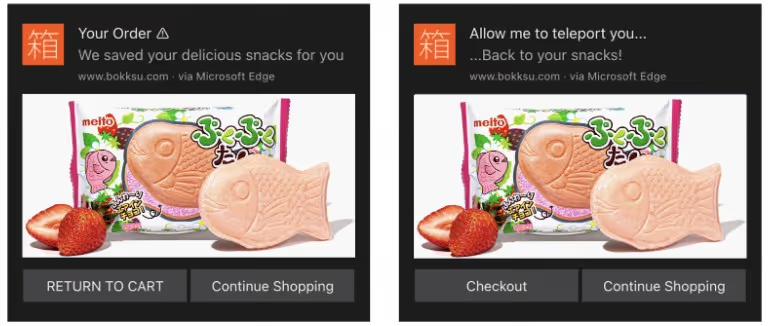
A gentle ACR reminder, such as “Still thinking it over? Your cart is waiting,” can bring shoppers back with just one tap.
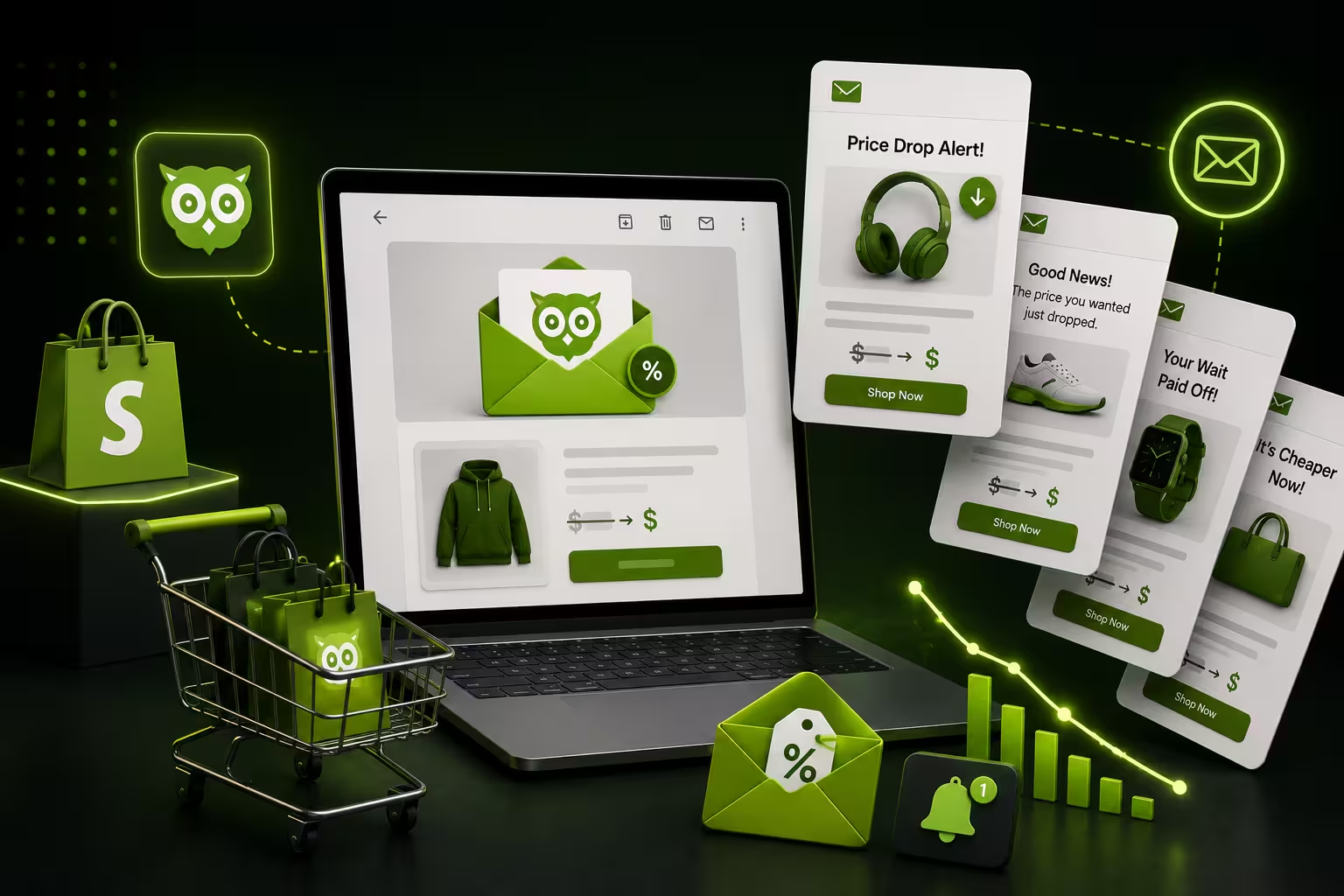
Price Drop and Back-in-Stock Alerts
Shoppers who have shown intent (visited a page, wishlisted, or carted an item) are more likely to return when notified of better timing. Here is a template: “[Product Name] is finally back! Don’t wait; it won’t stay on shelves for long. Shop now -> [Link]”
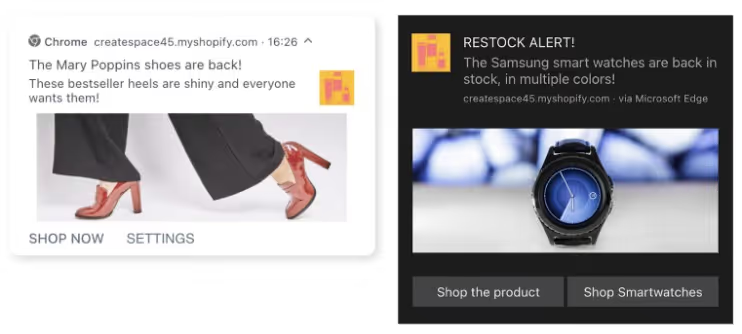
With push notifications, the ultimate goal is to re-engage with instant actions and shorter alerts.
The PushOwl sales team recommends Shopify clients to pick a channel based on intent:
“Web push works really well for commercial and transactional intent (back-in-stock, price drops, cart recovery), but not so well for informational or navigational intent. In general, anything that is not information-heavy (crisp) with a clear CTA can work well.”
Tested Shopify Marketing Strategies
With your channel-agnostic goals, focus on the following:
Strategy 1: Optimize Your Store Website and Customer Journey
Why it works: Driving traffic is wasted if your store does not convert.
Ecommerce CRO
Test product page layouts, CTA buttons, and checkout processes. Optimizing the on-site experience, especially the checkout process, reduces shopping friction.
Personalized Shopping
Use browsing and purchase data to change homepage banners or recommend relevant products. This reduces overwhelm and makes shoppers feel seen.
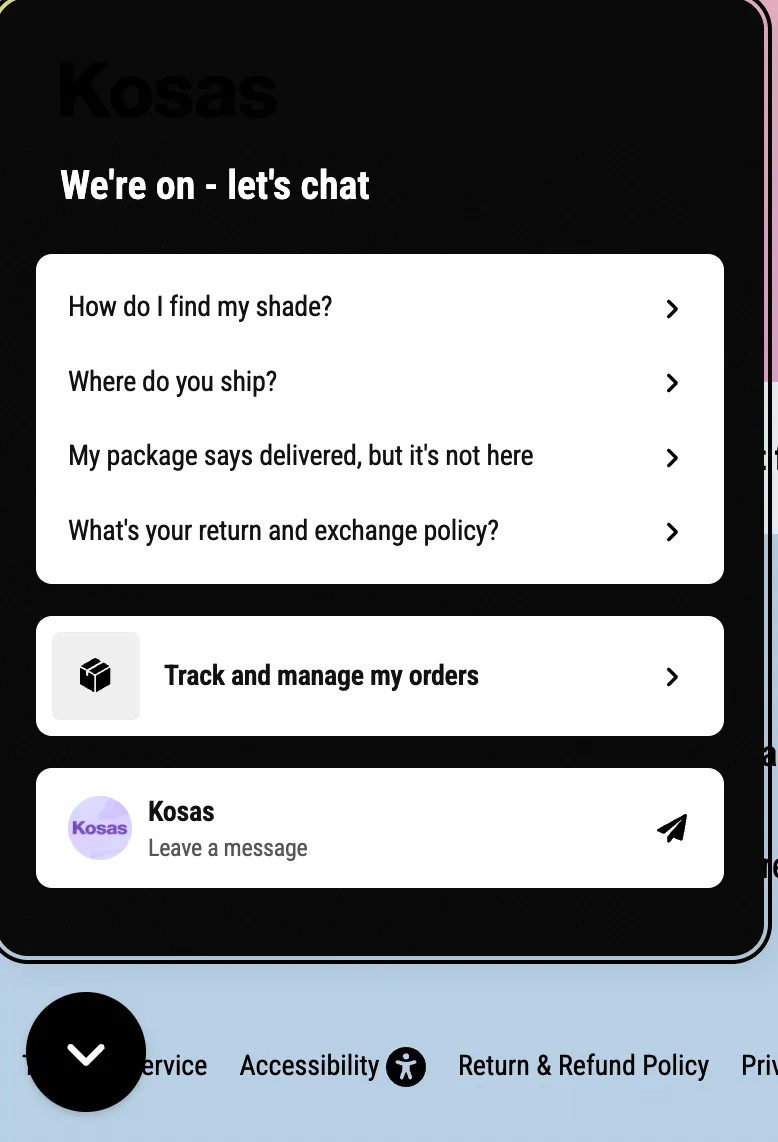
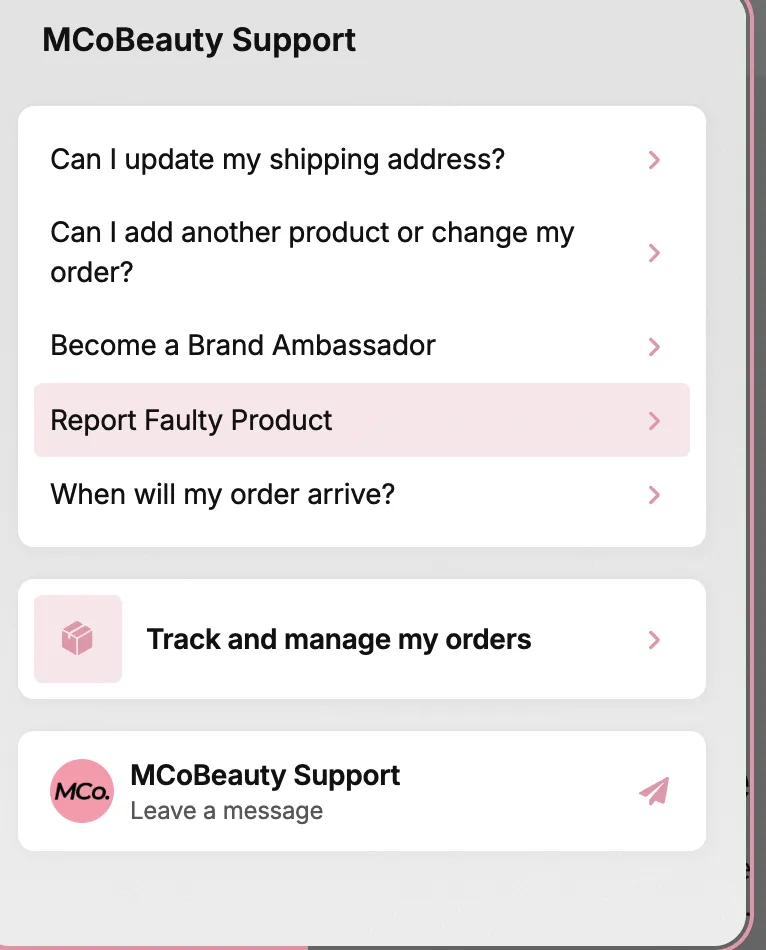
Live Chat or Chatbots
Real-time support reduces drop-offs, especially for high-ticket items, where customers want reassurance before making a purchase.
Strategy 2: Attract New Customers and Build Brand Awareness
Why it works: You build long-term brand visibility while reducing reliance on one channel.
SEO for Shopify Stores
Optimize product titles, product pages, and descriptions, and alt text so shoppers searching for “vegan leather handbags Shopify” actually find you.
Use the language your buyer uses instead of jargon, so that your product information and messaging resonate with your customers. Check out free keyword tools to identify long-tail keywords and big money keywords to incorporate.
Content Marketing
Use your blog to answer buyer questions (“Best gifts under $50”) and capture organic traffic. This content also fuels email and push campaigns.
Offer your audience your expertise for free (they shouldn’t have to buy your product to know how to use it) to increase trust.
Stores
Optimize product titles, product pages, and descriptions, and alt text so shoppers searching for “vegan leather handbags Shopify” actually find you.
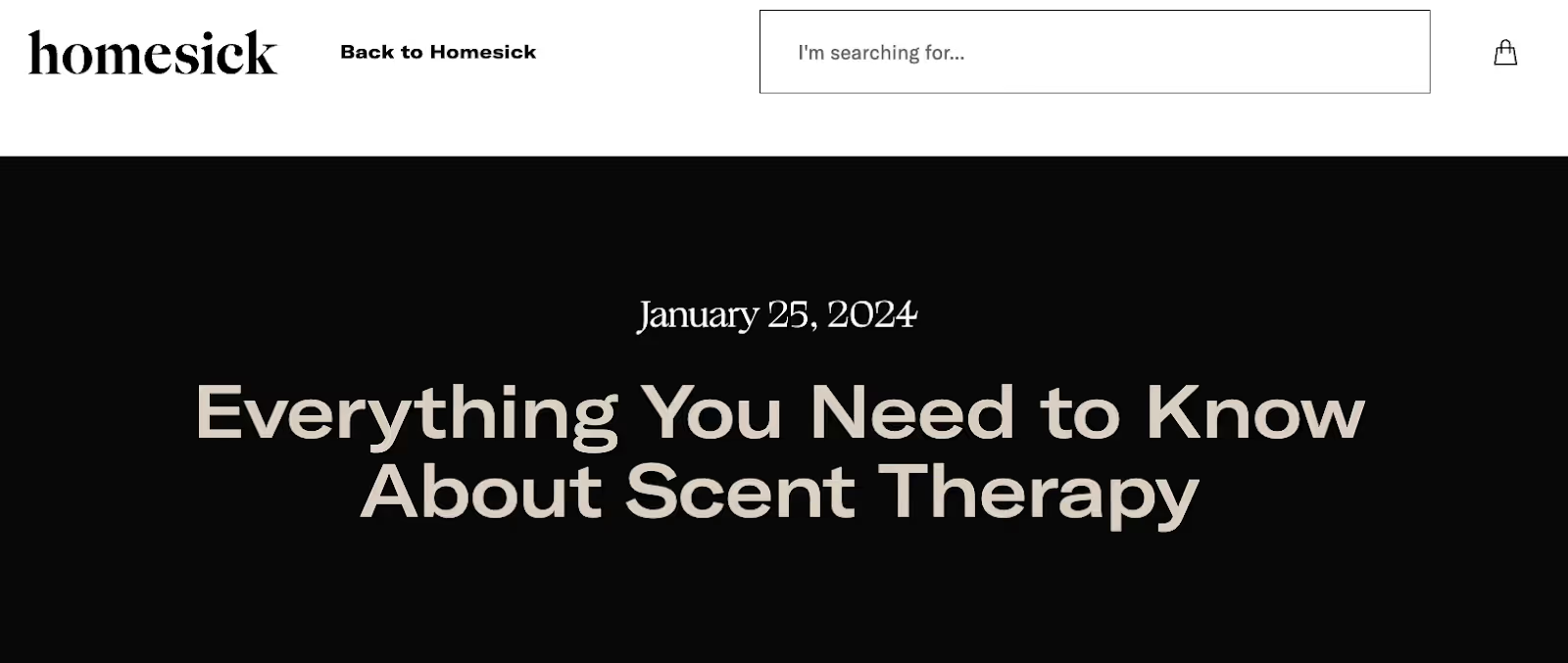
For example, if you run a candle business, a blog on “How to Make Your Candles Last Longer” and other candle-related articles will be beneficial and will encourage website visitors to buy. Your keyword data will also benefit you at this stage.
With time, customers will recall your brand and trust it (and therefore buy your products!)
Affiliates and Referral Programs
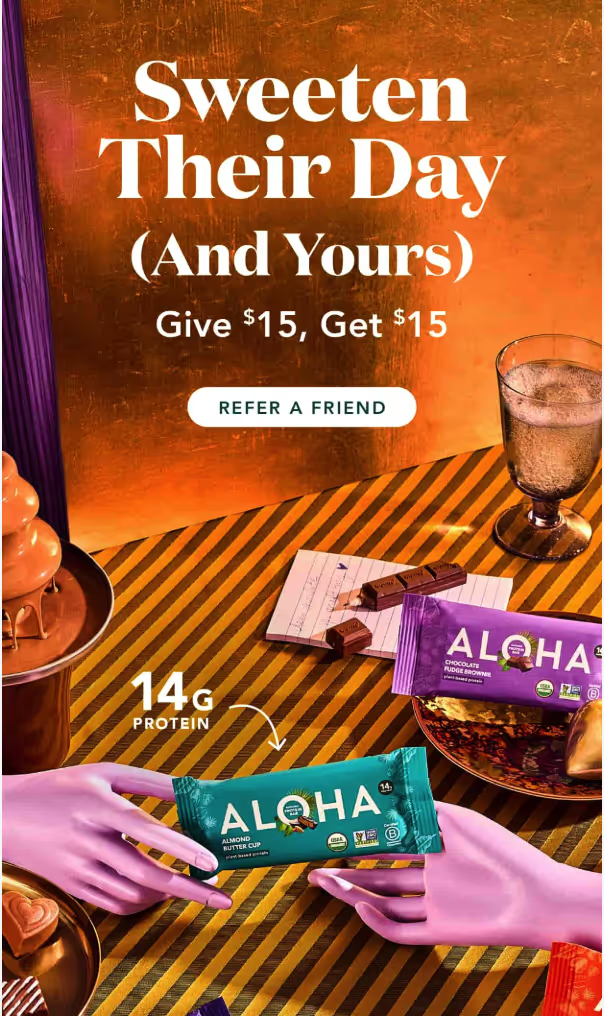
Incentivize your customers to talk about your brand through referral programs and affiliate links.
Social Media Plans
Go beyond polished posts. Social media is where you can be vulnerable. Behind the scenes, the founder struggles, and built-in public content allows you to show up as an authentic founder rather than a rigid brand.
With Facebook and Instagram, depending on where your customers spend their time, you can utilize their targeting options. These allow you to specify age, location, interests, and so on to create cohorts for targeting. They are also ideal for A/B testing different visuals and copy to nail down your brand aesthetic and tonality.
But as Reynolds, based on his 10+ years of experience working in the marketing space, points out:
“A misconception is that you can turn on Facebook Ads, and your marketing is complete.”
Your social media ads are just one piece of the larger puzzle that is your marketing strategy.
Influencer Partnerships
Micro-influencers work on barter, which means if you offer them free products, they will create content about them on social media platforms. With more established influencers, you can pay them to advertise to their million-plus followers.

These organic posts work better than paid ads.
Highlight UGC or Do Video Marketing
Incentivize your customer to create a video showcasing your product, which adds another layer of retention, while also building trust with other customers. This dog accessories brand adds UGC videos under the “Add to Cart” button to drive trust:
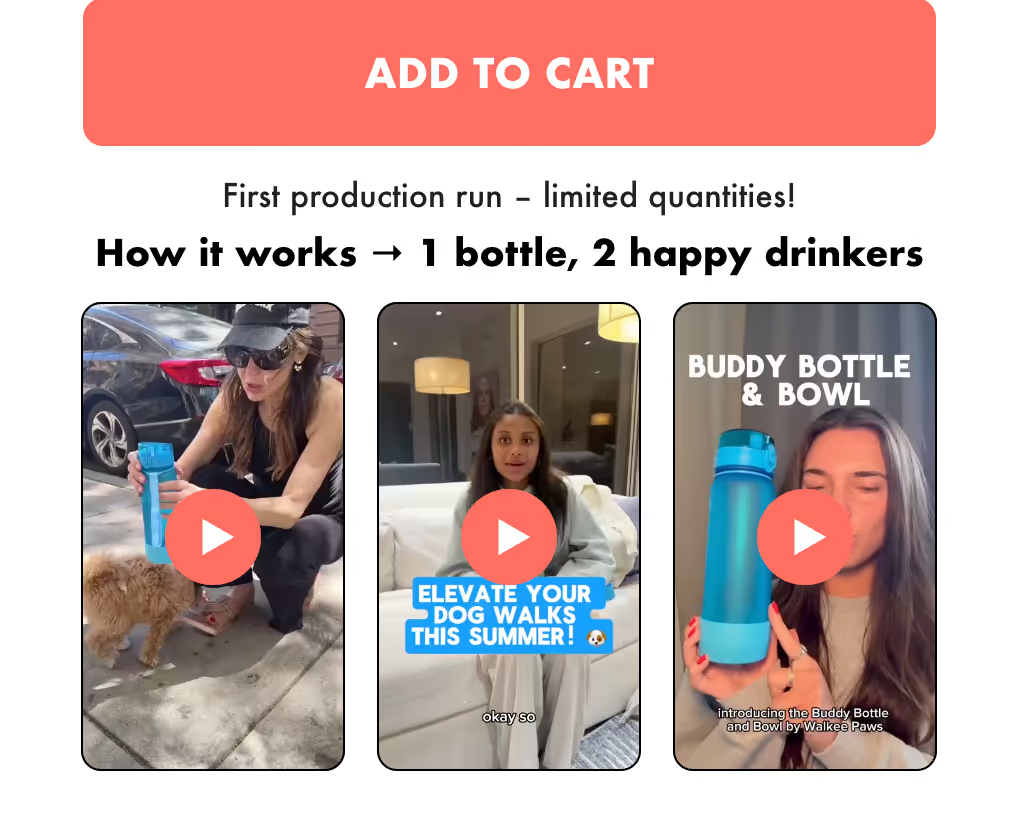
You can repurpose the UGC content for social media, and even plug the videos into emails.
Takeaway: Email, SMS, push, and your on-site experience do not work in silos. They work best when they reinforce each other. PushOwl helps Shopify merchants connect these dots so when an abandoned cart flow starts with an email, gets a follow-up SMS, and ends with a push nudge, the customer doesn’t just buy, they remember your brand.
Data: The Main Ingredient of Your Marketing Strategy
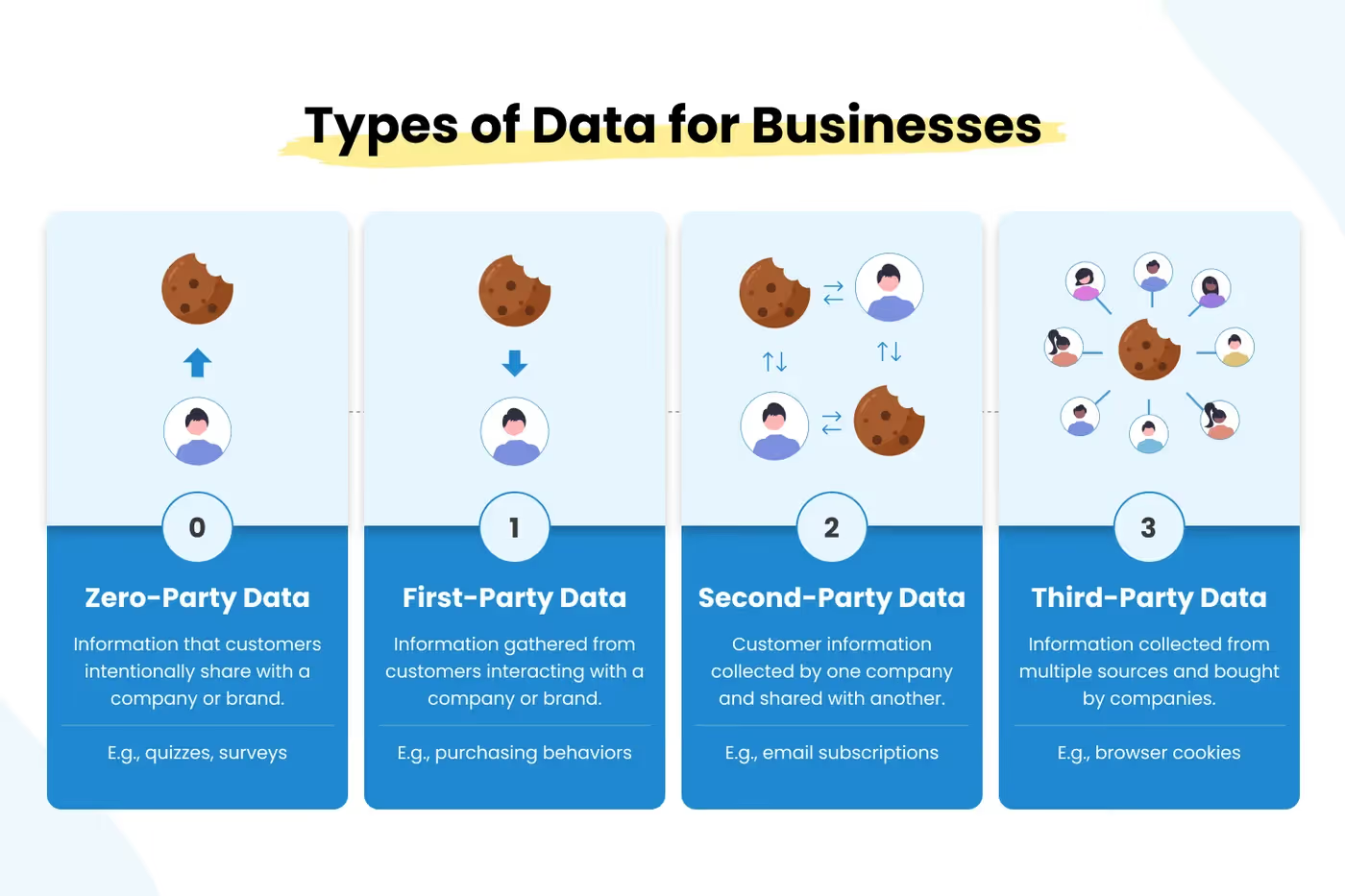
Before you can use AI to drive your marketing, you need to understand the types of customer data you’re working with. Here are the four main types of data:
Zero-Party Data
This is data that your customers willingly share with you, such as preferences, interests, and feedback obtained through surveys, quizzes, and review requests. Zero-party data is highly reliable because it comes directly from the customer. You can use it to personalize emails, product recommendations, and push notifications.
For example, when a DTC beauty brand asks users for their age, gender, and skin type during sign-up, it uses this information to create personalized email sequences. Customers will appreciate the relevance of the email communication and will be more likely to engage.
First-Party Data
First-party data you collect from your own channels, like website interactions, purchase history, and email engagement. For example, tracking which products a customer is looking at (but not adding to their cart) to trigger an automated browser abandonment email.
Second-Party Data
Second-party data is essentially someone else’s first-party data that you have permission to use, usually through a partnership or data-sharing agreement. When a Shopify store collaborates with a complementary brand for a giveaway, both stores can gain access to aggregated audience insights for co-marketing campaigns, which include data from the other brand.
Third-Party Data
This data comes from external aggregators who collect it from various sources and sell it to advertisers. It is not the most reliable, and handling compliance becomes tough, so it should not be your primary source of data.
Using AI in Your Marketing Strategy
Here are three ways PushOwl helps Shopify clients use AI:
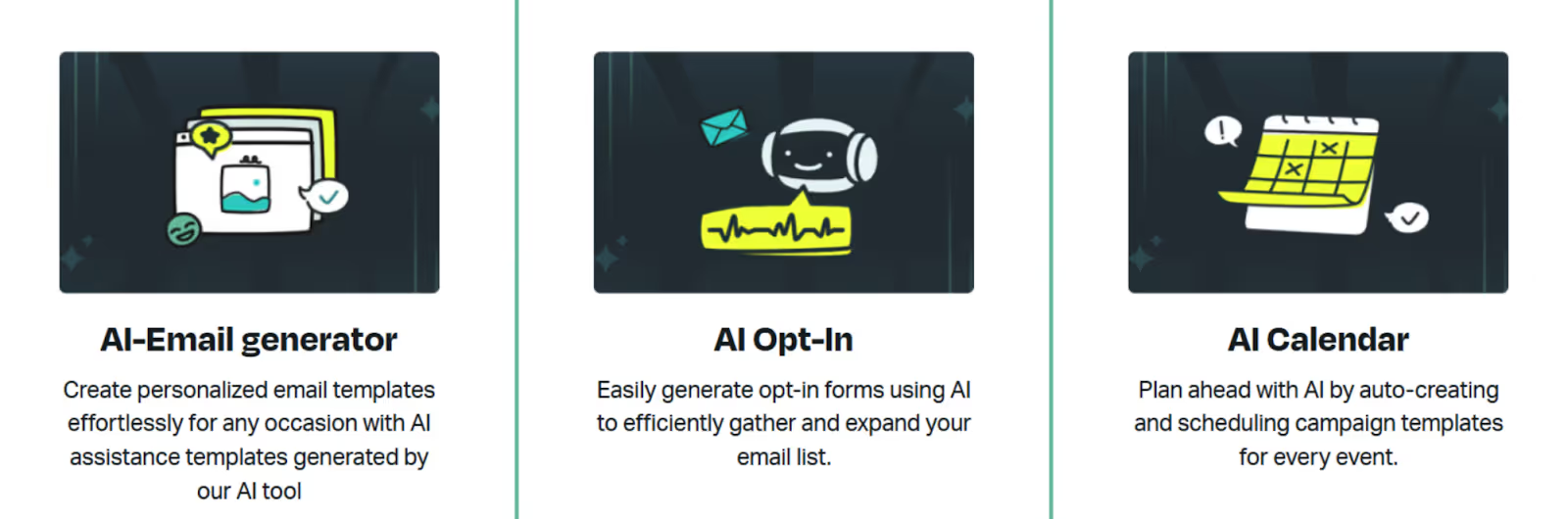
Here are a few more use cases:
Customer Segmentation
When you collect rich customer data from various sources (surveys, lead magnets, customer feedback, and so on), you can feed this data into AI tools to create powerful segments.
Our enterprise clients use Brevo’s AI segmentation tool to map their users for efficient targeting.
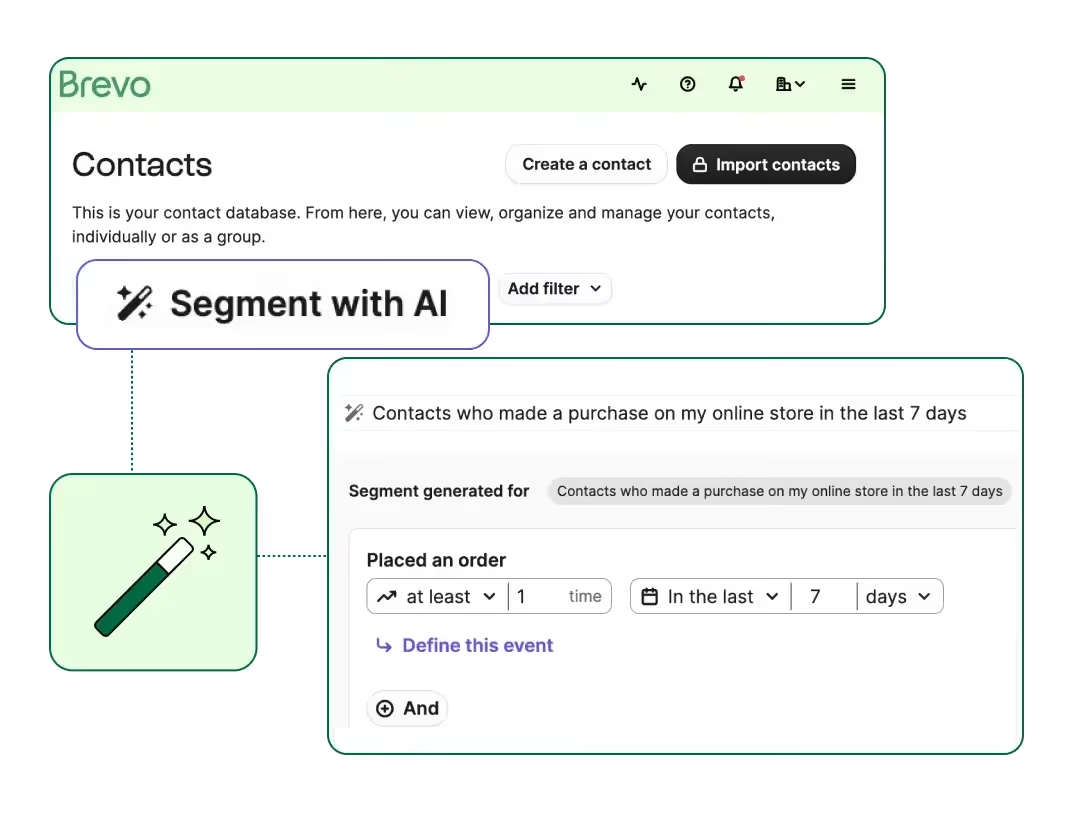
Machine learning is used to sift through customer data and match queries to customers to create customer segments.
AI Chatbots
82% of customers prefer a chatbot over waiting for a customer representative to be available. You have to meet your customers where they are, so use your data to set up chatting channels.
Conversational marketing through chatbots or automated chat across various channels can help you engage with your customers instantly.
When AI chatbots are built well and fed with the right data, they can provide relevant customer support and personalized recommendations. These AI chatbots will learn from these conversations and adapt their responses over time, and provide users with a consistent customer experience.
Put your 24/7 marketing associate to work with Brevo’s chatbot
Data Analysis
AI-powered analytics tools can process massive datasets and spot hidden trends. They can also predict customer behavior. Brevo and PushOwl both provide dashboards enriched with data insights, so you can quickly act on these trends instead of guessing.
For example, AI can identify which products are most likely to be bought together, which helps you plan bundles and upsells.
Hyper-personalization
With AI, you can personalize subject lines, product recommendations, timing, and even entire email automations based on past behavior, demographics, and preferences.
AI predicts what your customer wants before they even search for it. Netflix uses it to keep us on the app with hyper-personalized recommendations. You should, too.
Social listening
Social listening tools that use AI scan millions of conversations across various platforms. They track brand mentions and competitor activity. These tools also gauge customer sentiment in real-time. With social listening, you can adjust your messaging accordingly.
For example, if AI detects a surge in conversations around sustainability, you can launch eco-friendly product campaigns instantly.
Do Not Use AI in Marketing for…
You should not automate high-level marketing tasks with AI. Some examples of these tasks include:
Brand Strategy
No! AI tools can help you analyze trends and suggest ideas, but they shouldn’t define your brand’s voice, values, or positioning. These are core elements of your identity and require human judgment, cultural understanding, and long-term vision...things AI can’t replicate.
Customer Stories
Customer stories are about emotion, authenticity, and actual experiences. Togia, based on his SEO expertise, reminds Shopify clients:
“AI cannot tell you why your audience buys or how to stand out.”
While AI can assist with structuring your draft or summarizing data points, it cannot capture the human nuances that make these stories relatable and persuasive.
Build a Strategy for Your Ecommerce Store Today
With the right marketing strategy, you will attract more customers and retain them through trust and loyalty. By following the ecommerce marketing guide above, your Shopify store is bound to become a favorite among shoppers. Activate PushOwl for free to see your ecommerce strategy in action.