
If social media is where your customers spend their time, email is where they make decisions. An email marketing campaign is one of your brand’s most direct lines to the customer’s attention (and cart).
From welcome sequences to “your order’s on the way” updates, every email is a touchpoint that builds trust, nudges intent, or brings a shopper back. Let’s break down how to make email campaigns worth the effort.
We will also look at some e-commerce email examples and a few mistakes even seasoned marketers still make.
What Is an Email Marketing Campaign?
An email marketing campaign is a coordinated set of scheduled emails that a brand sends to a recipient to fulfill a specific marketing goal. The emails collectively push towards a single call to action, which could be signing up for a loyalty program, purchasing the product, or submitting a review.
For example, an e-commerce home decor brand can run an email marketing campaign to introduce its new festive collection.
The campaign could start with a teaser announcing the launch date. The next email could include a detailed product showcase, followed by a third limited-time discount email, which would encourage shoppers to purchase before the sale ends.
Each email plays a role in guiding the shopper, from awareness to purchase.
Benefits of Email Marketing Campaigns
Email marketing campaigns drive conversions and build customer relationships.
As a standalone marketing channel, email campaigns provide Shopify brands with direct access to their audience’s inboxes. In this owned space, you do not have to compete with algorithms or ad fatigue.
Emails help brands educate shoppers through marketing newsletters, nurture loyalty with exclusive offers, and talk about their products without making them salesy.
Email marketing campaigns help with the following business goals:
- Customer retention: Regular, value-driven emails keep your brand top of mind and encourage repeat purchases.
- Higher conversion rates: With well-timed, personalized offers for each email segment, you can guide subscribers to complete purchases.
- Cost efficiency: Compared to paid aids, emails deliver one of the highest ROIs.
- Better customer insights: Every open, click, and unsubscribe tells you something about your audience, thus helping the brand refine future campaigns.
- Measurable impact: Every campaign can be tracked for opens, clicks, and conversions.
- Scalable through automation: From welcome flows to abandoned cart recovery, automated email campaigns (especially when you use email templates) save time while driving consistent revenue.
Types of Email Marketing Campaigns: E-Commerce Goal Matrix
With every email marketing campaign, your goal should be clear. Is it to rake in traffic? Or to nurture fresh leads? Or to retain existing customers?
Depending on your business goals, you can select the type of email campaign that best suits your needs. Steal this easy reference sheet for email marketing campaign types:
Learn From These Shopify Email Marketing Examples
Want some inspiration for the various kinds of email campaigns mentioned in the previous section? We went through over 100 emails from e-commerce brands across multiple industries. Here are our favorite e-commerce email marketing examples:
Welcome Email Examples
Your welcome series emails need not just be about discounts. Use it as an opportunity to share your journey as a founder (the “why” behind the brand) or to highlight the USP of your products. Chomps, a meat snack brand, picked the latter option:
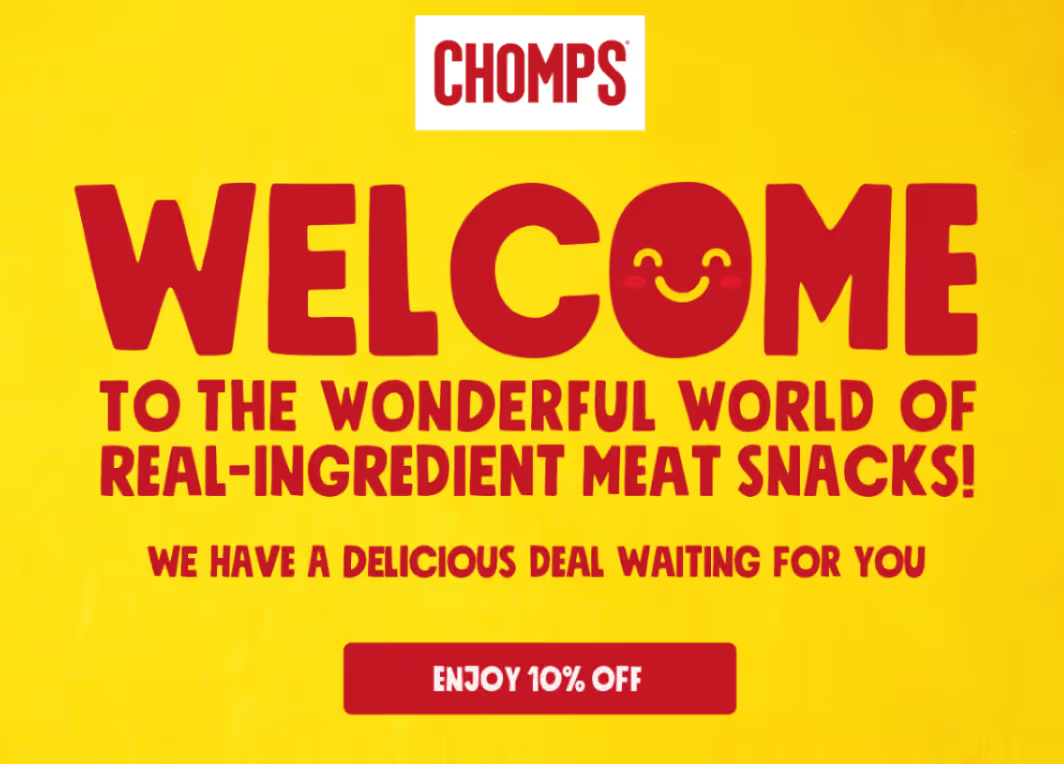
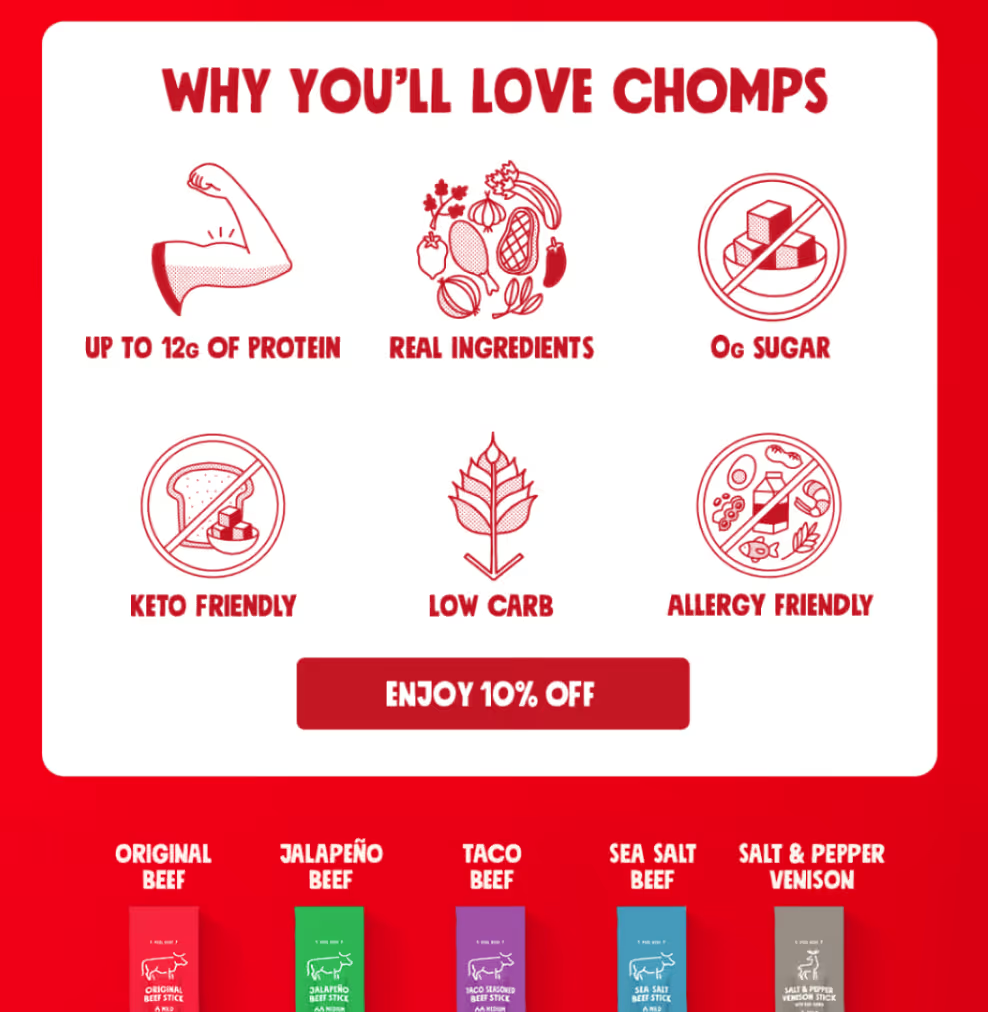
Why it works: The color palette is vibrant, and the font is welcoming. The email highlights 6 reasons why customers will love their brand, and also visually introduces the various product variants. Oh, and the 10% discount CTA is the icing on the cake.
Promotional Email Examples
You can run a 3-4 email campaign related to promos and sales. Taza Chocolates sent 3 emails related to their 1-week-long fall sale. Look at the difference between the first email introducing the sale and the final reminder on the last day of the sale:
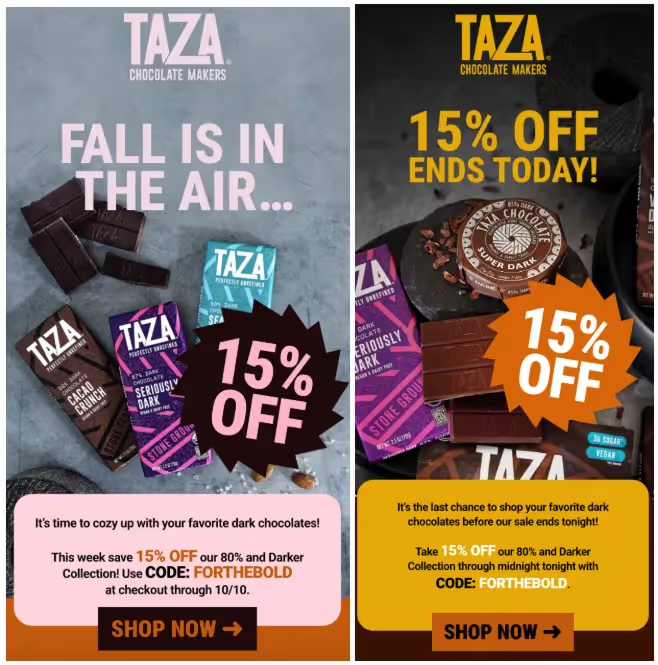
Why it works: The email layouts across the emails are consistent, making it easier for the customer to identify them as part of the same campaign. The email copy is brief, with key information clearly highlighted. The brand didn’t send an email every day of the sale, thus avoiding an overtly promotional tone.
Product Launch Email Examples
Kosas, a popular e-commerce makeup brand, gets it right with its vibrant product announcement emails:
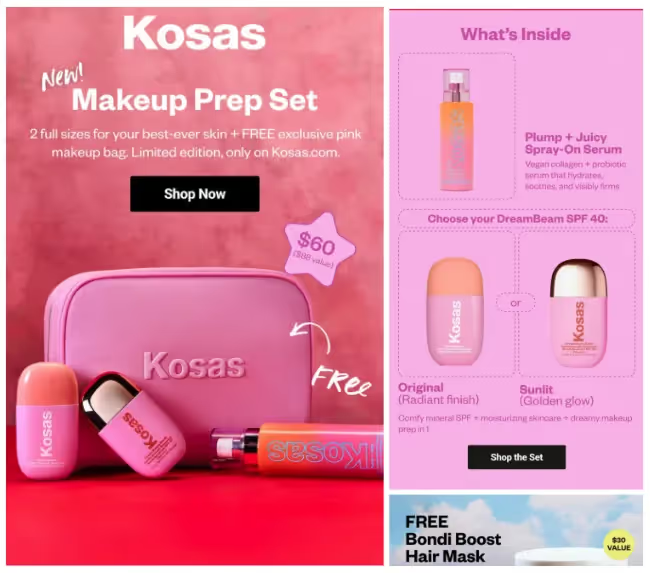
Why it works: The product bundle announcement comes with freebies (makeup bag + hair mask) and clearly describes each of the new products and their benefits. The “Limited edition” adds a soft touch of FOMO.
Abandoned Cart Email Examples
Walkee Paws, a dog accessories brand, sends ACR (abandoned cart recovery) emails at fixed intervals, with progressive incentives across the emails:
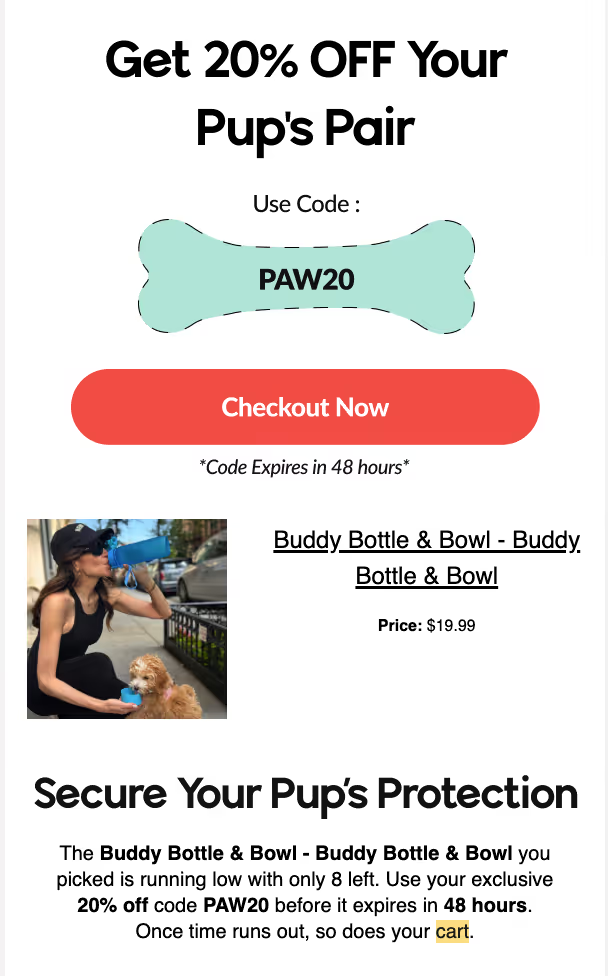
Why it works: The discount code + 48-hour deadline + limited stock reminder constitute the perfect trifecta to push a customer to checkout. “Secure your pup’s protection” adds an emotional touch, and the product image acts as a visual reminder of what the shopper had added to their cart.
Re-Engagement Email Campaigns
Young Goose, an online skincare brand, tries to win back its customers without pushing too much with such emails:
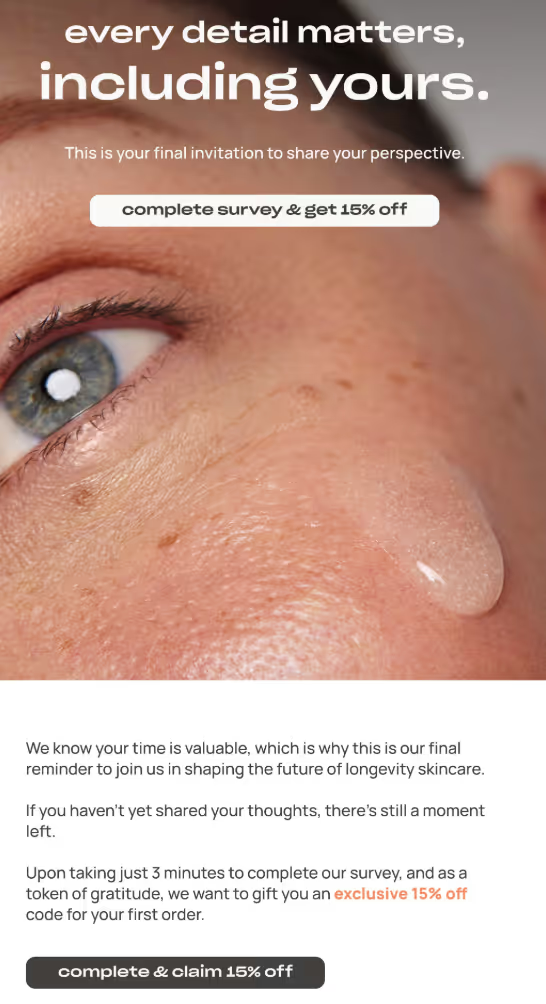
Why it works: The email acknowledges the value of their customers’ time, identifies how long the survey will take to complete, and assures them that they will not be bombarded with additional reminders. Customers appreciate this. The discount code is a great incentive to bring dormant customers back into the fold.
Loyalty Email Campaigns
Milani Cosmetics ensures that members of its loyalty program (Club Milani) receive benefits that make the membership worth it:
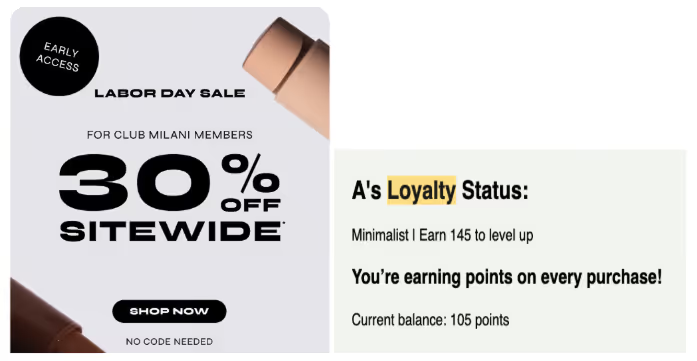
Why it works: Early access to a holiday sale, combined with a 30% discount, is a significant incentive for shoppers to avoid slow websites during high traffic periods. Removing the need for a discount code further reduces friction in the buying journey. The email also highlights the customer’s loyalty status, thus ensuring complete transparency.
Educational Email Campaigns
Sleep Doctor, a Shopify brand that provides solutions related to sleep issues, sends a weekly email newsletter called “The Sunday Sleeper” to its subscribers:
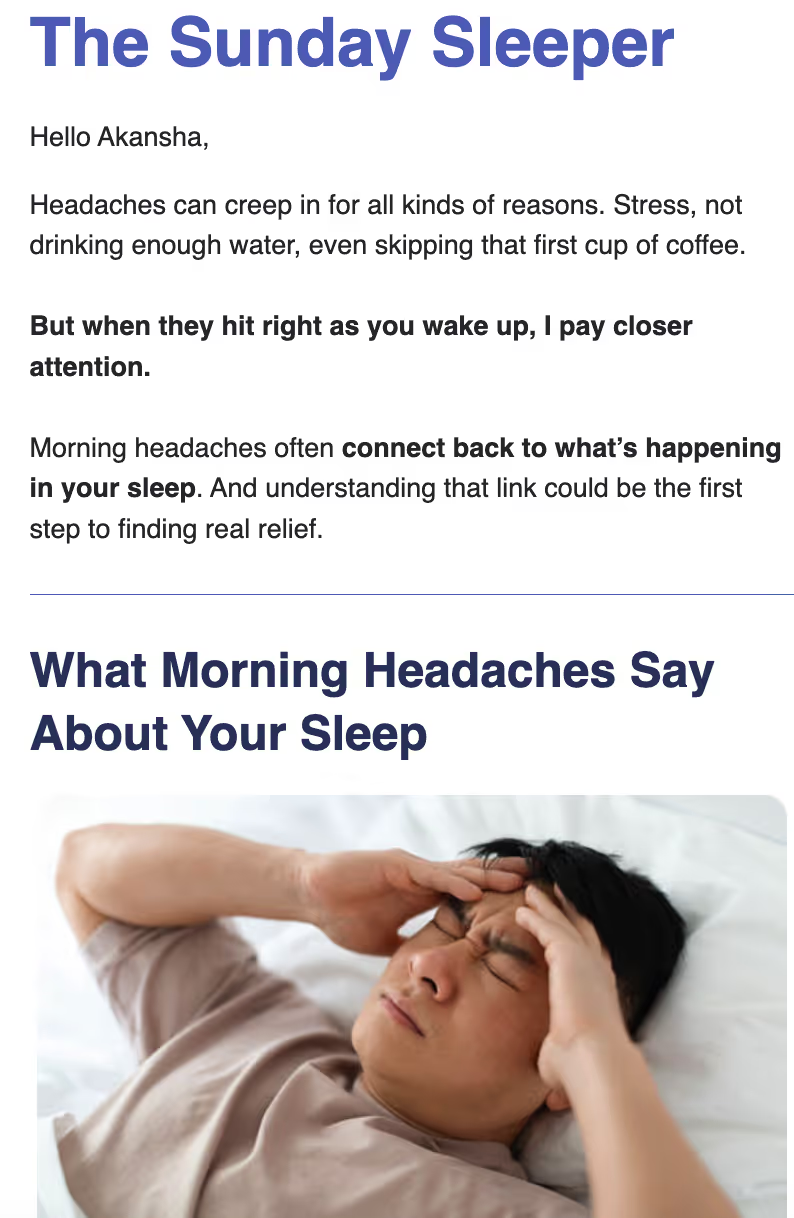
Why it works: The newsletter doesn’t try to sell a product. Instead, it serves as a knowledge resource, providing a preview of the featured blog article and links to other relevant articles. True value over salesy product plugs always wins.
Holiday Email Campaigns
Black Friday and Cyber Monday, Christmas, Thanksgiving, and other festivals present perfect opportunities for brands to announce sales. Here’s how MISS LOLA, a women’s clothing and accessories brand, does it:
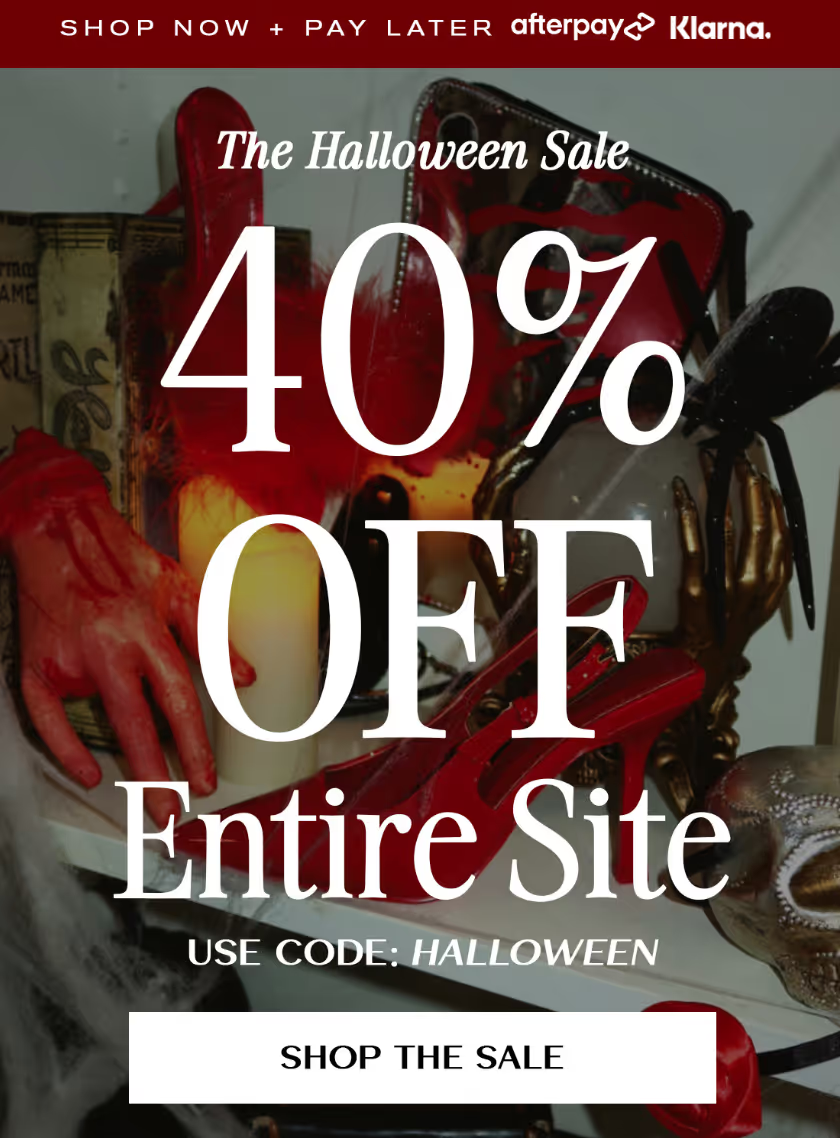
Why it works: The benefit (40% off) and the “Shop now, pay later” option are instantly clear, rather than being buried under a lot of email copy. The discount code is tied to the holiday and is easy to recall. The subject line of the email (“🎃 40% OFF? That’s a Frighteningly Good Deal 👀”) is snappy, cleverly worded, and relevant to the festival. The use of emojis is also impactful.
8 Steps To Set Up an Email Marketing Campaign
Your email marketing campaign is a series of emails, so you cannot treat it like a one-time task. Each email should serve a purpose and make sense in relation to the other emails (or text alerts and push notifications) that are part of the campaign.
The goal is to build curiosity and nudge buying decisions across the emails rather than trying to hit all the right notes in a single email.
Step 1: Growing Your Email List
Before rolling out campaigns, you need people to email.
Utilize pop-ups, embedded signup forms, and checkout opt-ins to grow your email list.
How? Add a small incentive, such as a checklist, early access to launches, or a discount, in exchange for the customer’s email address or phone number.
Step 2: Segmenting Your Email List
Once you have a sizable email list, start segmenting based on the parameters available to you. Initially, behavioral segmentation may not be feasible. Till your customers have engaged with your Shopify website and marketing content, you can focus on demographic segmentation.
Email segmentation helps reduce unsubscribes because it allows you to send your customers relevant e-commerce email campaigns.
Step 3: Linking Email Campaigns to User Actions
Your Shopify email campaigns should not be sent into the online abyss without any context. Once your customers are skimming through your website, you will pick up behavioral cues to base your campaigns on.
Paul DeMott, CTO of Helium SEO, recommends that brands pay attention to the connection between the tracking of behavior and the timing of the message:
“Brands take weeks to perfect copy and graphics, but most of them opt to send emails on unchanging timetables.”
He recommends behavior-based email campaigns, such as sending cart abandonment emails within 45 minutes of a customer adding a product to a cart. Or triggering a browser abandonment sequence within minutes of a customer viewing a product page.
Automate Your Email Campaigns
Having these core automations in place for welcome campaigns, ACR, and re-engagement emails (such as those sent within 30 days of no interaction) is easy to manage with campaign tools.
Step 4: Creating Persuasive Email Copy
Well-timed emails are important, but email copy that hooks the reader is key.
“Most brands make the mistake of writing like they’re sending a press release: overly polished, stiff, and formal. You want to write like you’re talking to a friend over coffee; human, conversational, short and snappy.” - Danyon Togia, Founder of Expert SEO
Your subject line should capture the reader's attention, your CTA should prompt the click, and the copy in between should resonate with the email subscriber.
Step 5: Ensuring Mobile Optimization
Stick to a single-column layout, use clear CTAs, and maintain sufficient white space for your message to breathe. Ensuring your Shopify email marketing campaigns are mobile-compatible is crucial, as 81% of emails are now opened on mobile devices rather than desktops.
If you use our templates by Brevo, you won’t have to worry about the email getting distorted on smaller screens.
Send your first email within minutes
Step 6: Sending Test Emails
Before sending emails, test with a smaller group of people. Before you test:
Send yourself a test version and preview it across devices.
Run A/B tests on subject lines, send times, and CTAs. Small experiments across various parameters can teach you what your audience actually likes.
Step 7: Scheduling Emails
Timing is everything.
You can use data from previous campaigns to determine the optimal send times.
Or, you can use our Smart Deliver option, which tailors the send time for individual email subscribers.
Send Emails At The Right Time
If Lucy, your 21-year-old customer, is more likely to read your marketing emails during her commute to college in the morning, that’s when she will receive your marketing emails. Jane, your 32-year-old mom customer, on the other hand, is more likely to read the email midday during the kids’ naptime, which is when she will receive it.
Step 8: Prioritizing Deliverability and Compliance Across Campaigns
Respect the inbox.
Always follow email marketing regulations, such as GDPR and CAN-SPAM. Get permission before sending, include an easy-to-use unsubscribe link, and maintain a clean sender reputation.
A well-built email list is what keeps your emails from reaching disinterested or accidental subscribers. And subject lines and email copy that do not feel overtly salesy and spammy are what keep your emails from being marked for spam.
Email Marketing: 3 Mistakes To Avoid
You need to ensure you follow some email campaign best practices to avoid the following:
Ignoring an Omnichannel Approach
Relying on email means you are leaving money on the table. If you do not expect a business to run with just one salesperson, your marketing machinery should not be running with only one channel either.
Pair your email campaigns with push notifications, SMS marketing, and WhatsApp to stay visible across customer touchpoints. For example, after sending a flash sale email, follow it up with a push notification closer to the flash sale date as a reminder. You can also send a discount code over WhatsApp!
Treating email campaigns as a silo can lead to inconsistency in your marketing message.
“An email notification with a product discount push will conflict with a search ad or Instagram advertisement that has a different price. That inconsistency kills trust and is a weakness to performance in all channels.” - Paul DeMott, CTO of Helium SEO
Use our cohesive omnichannel marketing guide to ensure that all your channels work together, not against each other.
Sending Generic Offers
Blasting a “Hi there, here is 10% off” is helping no one: not your sales numbers, and definitely not your customers.
“Subscribers do not want junk in their personal inbox; they want customized and specific content.” - Whitney Duenas Richardson, omnichannel marketing expert and owner of Global Sprouts
And it’s your job to provide this through your email marketing campaigns.
Your emails should feel like you are talking to one customer, not an entire email list. This means personalizing your content by:
- Using customer data smartly based on behavioral triggers
- Recommending relevant products and not just sending product guides
- Leveraging factors like seasonality and high-traffic holiday seasons
- Acknowledging not just the name of the customer, but also celebrating customer milestones, such as birthdays and sign-up anniversaries, with personalized offers.
Sending Spammy Subject Lines
The first impression of any email you send to customers is through the subject line.
“The right words or phrasing in your subject line can determine whether your email will even be opened, let alone read and acted on.” - Robin Dimond, email marketing expert and CEO & Founder of Fifth & Cor
Avoid clickbaity or long subject lines that get truncated on mobile devices. Subject lines packed with all-caps, emojis, or too many exclamation marks are more likely to get flagged by spam filters (or just plain ignored).
An effective subject line triggers emotions (such as FOMO, intrigue, warmth, and excitement) while maintaining clarity. Something like “Psst… your cart misses you, so we added a freebie” or “A new drop just for you, Chris” feels personal and natural without triggering filters.
Smartly Designing Email Campaigns With PushOwl
Email marketing campaigns remain one of the most effective ways to build customer relationships and grow your Shopify store. Whether you are sending welcome emails, product recommendations, discounts, or re-engagement campaigns, the base should be
Conversation beyond selling.
Consistency over spamming.
PushOwl helps shape email campaigns that work well with other marketing channels, all with minimal setup. Let email automations and personalized campaigns be your superpower for the rest of 2025 and beyond.