If you’re searching for a Justuno alternative for Shopify, you’re probably not just looking for another popup builder.
You’re looking for a tool that helps you capture more leads, recover more carts, and launch campaigns faster, without adding a heavy learning curve or another disconnected app to manage.
That’s the key difference in the PushOwl vs Justuno conversation.
Justuno is well-known for advanced popup targeting, promotions, and on-site conversion experiences for Shopify stores. Its Shopify App Store listing highlights popups, quizzes, surveys, A/B testing, segmentation, and integrations with tools like Klaviyo and Mailchimp. Pricing is also traffic-based, with listed plans starting at $59/month for up to 10,000 monthly unique visitors. Shopify App Store.
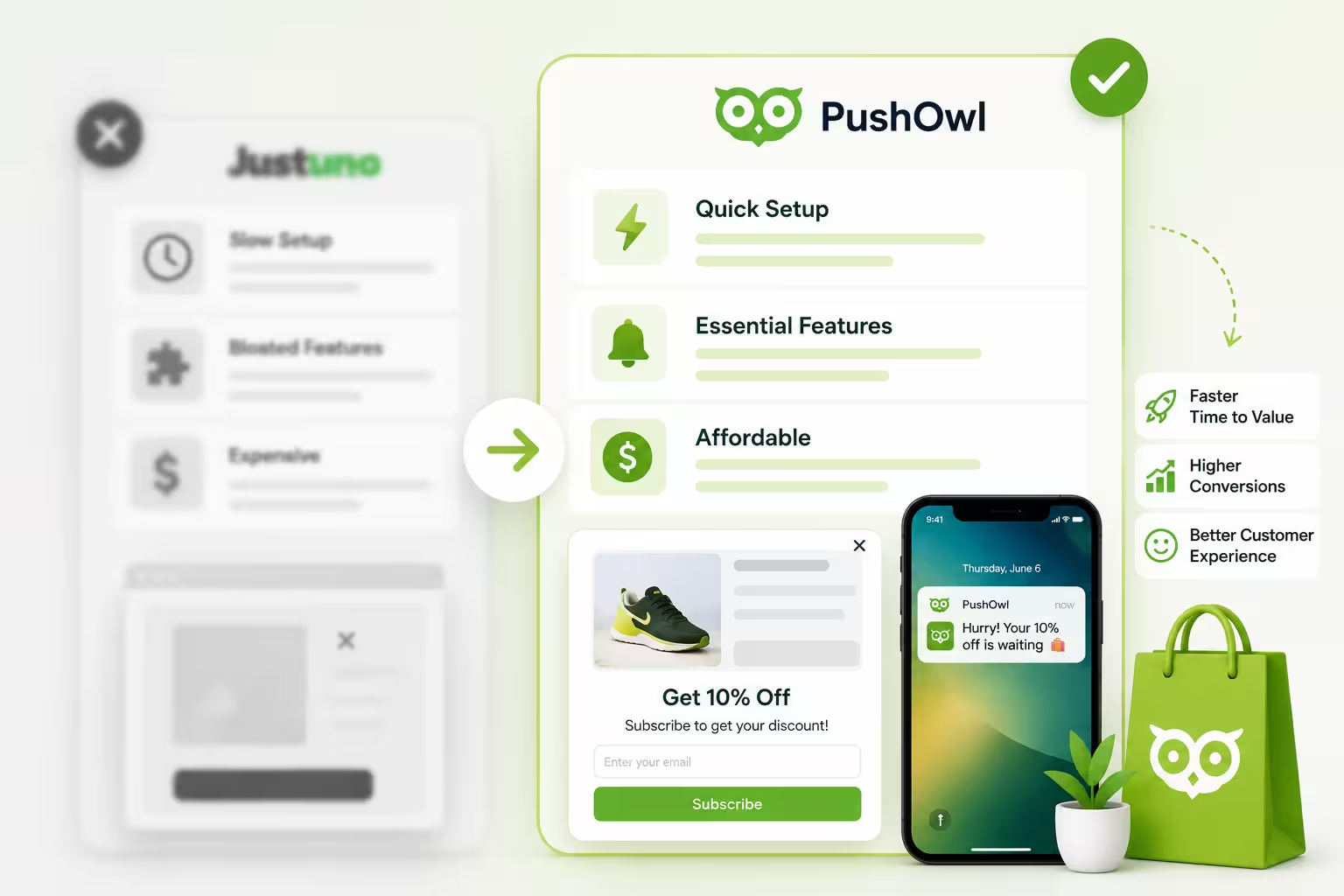
PushOwl takes a different route. Instead of centering everything around a complex popup suite, it gives Shopify brands a simpler way to turn traffic into revenue across popups, email, web push, and SMS from one retention stack. For merchants who want faster setup and clearer ROI, that difference matters.
In other words: if Justuno feels powerful but heavier than you need, PushOwl is often the better shopify popup app alternative to justuno.
Who should consider a Justuno replacement for Shopify?
A Justuno competitor for Shopify becomes relevant when your current setup creates more friction than lift.
That usually happens in one of these situations:
- You only use a fraction of Justuno’s advanced targeting and personalization features
- Your team wants to move faster without relying on specialists
- You need more than popups alone, especially email, SMS, and push working together
- You want simpler pricing logic and less tool sprawl
- You care about retention revenue, not just list growth
For many Shopify brands, popup capture is only the start. The real value comes from what happens next: welcome journeys, browse-abandon reminders, cart recovery, price-drop alerts, back-in-stock nudges, and win-back campaigns. With average cart abandonment still hovering around 70%, recovering lost buyers requires more than just a modal on the homepage. Baymard Institute
If your current popup software helps collect emails but leaves the rest of the retention journey fragmented, it may be time to evaluate a broader stack. That’s exactly where PushOwl’s Shopify marketing platform starts to make more sense.
PushOwl vs Justuno: the core difference
At a high level, Justuno vs PushOwl is a question of focus:
- Justuno = popup-first, onsite conversion optimization, advanced targeting
- PushOwl = retention-first, multi-channel lifecycle marketing for Shopify
That distinction matters because most small to mid-sized Shopify brands do not need an enterprise-style CRO project every time they want to collect subscribers or launch an offer. They need a system they can actually use every week.
If your goal is to build sophisticated onsite experiences with layered rules, questionnaires, and design controls, Justuno can be attractive. Shopify’s own app ecosystem also includes forms-based tools for popup and inline lead generation, reinforcing that popups remain an important top-of-funnel capture mechanism. Shopify Help Center
But if your goal is to convert more of that captured traffic into paying customers using follow-up across channels, PushOwl is often the stronger fit. That’s especially true for brands that want a leaner stack with built-in retention motions rather than multiple disconnected apps.
For a broader view of how multi-channel retention platforms compare, see Best Omnichannel Marketing Platforms for Shopify(Email + SMS + Push + Ads Compared).
Why PushOwl fits faster for Shopify merchants
1. Faster time to value
One of the biggest reasons merchants look for the best alternatives to Justuno is not that Justuno lacks features. It’s that many stores don’t need all of them.
Advanced tools can be excellent, but they often demand more setup, more testing, and more internal bandwidth. If your team is small, that can slow execution.
PushOwl is easier to understand because the value proposition is direct: capture visitors, automate follow-up, and recover revenue across push, email, and SMS. Instead of buying one app for popups, another for web push, and another for email automation, you can consolidate more of that workflow.
If you’re focused on speed, this matters more than feature count.
A good Shopify marketing stack should help you launch quickly, not create a queue of campaigns waiting for technical cleanup. That’s also why merchants comparing low-friction tools often read resources like 10 Must-Have Shopify Apps for New Merchants and Simple Shopify Email Tools: 8 Easiest Picks for Small Stores.
2. Popups are only useful if the next step is already connected
This is where PushOwl becomes more compelling than a standard Justuno replacement for Shopify.
A popup that captures an email address is useful. A popup that instantly feeds a welcome flow, triggers a push subscriber path, segments users, and supports future SMS follow-up is much more valuable.
PushOwl is better understood as a retention engine with popup capture built into a broader customer journey. That’s a major distinction from popup-only or popup-first tools.
For Shopify brands, this connected approach typically improves execution in three ways:
- Fewer handoffs between apps
- Less risk of subscriber data sitting idle
- Faster deployment of revenue-driving automations
If you’re already thinking in journeys rather than isolated campaigns, PushOwl aligns better with that model. You can explore that strategy further in The Ultimate Shopify Omnichannel Marketing Strategy Guide and Shopify Marketing Automation that grows revenue, not just clicks!.
3. Native strength in web push is a real differentiator
Most popup tools focus primarily on email and SMS capture. PushOwl stands out because web push is not an add-on afterthought. It is one of the core reasons merchants use the platform.
That matters because push notifications can re-engage anonymous or non-email visitors in a way email alone cannot. For stores with meaningful repeat browsing behavior, that can create an additional owned channel without relying entirely on inbox performance.
If that channel matters to your store, PushOwl is not just a shopify popup app alternative to justuno. It is a wider re-engagement layer.
To understand where push fits in the stack, see The 8 Best Web Push Apps in 2026 for Shopify, Web Push Opt-Ins Explained: Types & Best Practices for Higher Sign-Ups, and Turn Browsers into Buyers with Push Notifications for Shopify🚀.
4. Better fit for merchants who care about total cost of ownership
When comparing PushOwl vs Justuno, list price is only part of the story.
The deeper question is: how many tools do you need to get the result you want?
If Justuno handles popup capture but you still need separate tools for push notifications, email automation, and SMS journeys, your real cost is the combined stack, plus the time required to manage integrations and reporting.
PushOwl’s value is often strongest here. It reduces the complexity of stitching channels together and can lower operational drag for Shopify teams that want one coordinated retention system instead of a popup layer plus multiple follow-up apps.
That issue comes up often in budgeting decisions for growing stores. If your team is cost-conscious, these guides help frame the bigger picture: Build an Omnichannel Shopify Stack for Under $200/month and How to Measure ROI of Your Shopify Omnichannel Campaigns
Where Justuno may still be the better choice
A balanced comparison matters.
Justuno may still fit better if your team specifically needs:
- Deep onsite targeting scenarios
- Advanced promotional experiences
- Quiz-heavy lead capture flows
- Fine-grained design control over popup behavior
- A CRO-focused platform as a primary priority
Its Shopify App Store listing emphasizes broad campaign types, including banners, surveys, quizzes, cart popups, spin-to-win experiences, and detailed triggering rules. It also carries a 4.6 rating across hundreds of Shopify reviews, suggesting many merchants do find it effective. Shopify App Store, Shopify Reviews
So this isn’t about claiming Justuno is weak. It’s about fit.
If your store actively leverages very advanced promotional logic, Justuno may remain a strong option. But if your team is spending for that breadth and only using basic list-growth features, PushOwl is probably the smarter move.
Where PushOwl is the better fit
PushOwl tends to win for Shopify merchants who want:
- Faster implementation
- Lower learning curve
- Popup capture plus follow-up in one place
- Strong web push capabilities
- Better alignment with lifecycle retention
- A more practical setup for lean ecommerce teams
That’s why it works especially well for small to mid-sized Shopify brands, DTC stores, and teams that want action over admin.
It’s also a stronger fit when abandoned cart recovery, browse recovery, back-in-stock, price-drop, and repeat purchase flows matter more than endlessly refining popup targeting rules.
Related reading that supports this retention-led approach includes 9 Shopify Apps Proven to Reduce Cart Abandonment, Top Web-Push Campaign Types to Drive Conversions, and Turn Price Drops into Sales Instantly.
Migration friction: an underrated buying decision
One thing many comparison pages ignore is migration friction.
Switching from Justuno to another popup builder can still leave you with the same structural problem: you’re replacing one popup tool with another popup tool, while your follow-up stack stays fragmented.
That’s why PushOwl is a more meaningful alternative. The decision is not simply “which popup performs better?” It’s “which platform gives my Shopify store a simpler path from visitor capture to repeat revenue?”
If you’re moving anyway, it makes sense to evaluate whether the new stack should solve more than one problem.
This is also increasingly important for deliverability and segmentation. Lead capture is only useful when subscriber quality, onboarding, messaging cadence, and lifecycle triggers are connected. For deeper retention strategy, you may also want to review Shopify Customer Segmentation Guide, Email Marketing Automations for Ecommerce in 2026, and Shopify Email Personalization: Strategies (+ Mistakes to Avoid).
PushOwl vs Justuno: quick decision framework
Choose Justuno if:
- You want a sophisticated popup and onsite promotion engine
- Your team has time for advanced setup and optimization
- You prioritize CRO experimentation over channel consolidation
- You need extensive rule-based experiences and quizzes
Choose PushOwl if:
- You want a faster Justuno alternative for Shopify
- You care about retention more than popup complexity
- You want popups, email, push, and SMS working together
- You prefer a simpler stack with less setup overhead
- You want to launch revenue-generating automations quickly
If your store is evaluating providers side by side, PushOwl also offers adjacent comparisons that can help frame positioning against broader retention tools, such as PushOwl vs. Klaviyo and PushOwl vs. Omnisend.
Final verdict: is PushOwl the best Justuno alternative for Shopify?
For most Shopify merchants, the answer is yes, if your goal is not just to build popups, but to grow revenue faster from the traffic you already have.
Justuno is a capable and respected platform. But its real strength is depth in popup-led onsite optimization. If that’s not your main need, it can be more platform than you want to manage.
PushOwl is the better justuno competitor shopify brands should consider when they want:
- simpler setup,
- stronger cross-channel retention,
- native web push advantages,
- and a more efficient path from subscriber capture to repeat purchases.
That’s why PushOwl fits faster.
Instead of replacing one complex popup suite with another, you can move to a Shopify-focused retention platform built to convert browsers into buyers across the channels that actually drive follow-up.
If that sounds closer to what your store needs, start with Why PushOwl?, explore Pricing, or go straight to Pop Ups That Turn Lost Clicks into Loyal Customers.