Choosing between Klaviyo vs Brevo for Shopify is really about choosing the kind of growth system your store needs.
If you want deep ecommerce targeting, advanced segmentation, and highly customizable lifecycle automation, Klaviyo is often the benchmark. If you want a broader marketing stack with more cost control as your list grows, Brevo is a serious contender. The tricky part is that most comparisons stop at feature checklists. Shopify merchants need a more practical answer: which platform fits your store stage, team size, sending volume, and channel mix?
That is exactly where this guide focuses.
We’ll compare Brevo vs Klaviyo for Shopify across ecommerce depth, automation, deliverability, pricing logic, SMS, and omnichannel fit. We’ll also cover the question many merchants are quietly asking in 2026: if email and SMS costs keep rising, does it make more sense to pair email with push rather than keep paying more for every message?
Email is still one of the highest-leverage owned channels for retention and repeat purchases, and industry benchmarking continues to show its importance in the customer relationship mix (DMA). At the same time, marketers are increasingly investing in automation, personalization, and channel coordination, not just batch sends (Litmus). For Shopify brands, that means your platform choice has a direct effect on both performance and margin.
TL;DR: Klaviyo vs Brevo for Shopify
If you want the short version:
- Choose Klaviyo if your Shopify store depends on advanced ecommerce segmentation, deep customer data, and sophisticated lifecycle flows.
- Choose Brevo if you want a more budget-conscious option, especially when you have a large contact list but moderate email volume.
- Choose an omnichannel stack if you do not want to rely on email and SMS alone. For many stores, pairing email with push creates better retention economics than scaling costlier channels on their own.
For stores comparing multi-channel options, this broader guide to best omnichannel marketing platforms for Shopify is a useful companion.
Why this comparison matters specifically for Shopify merchants
A generic ESP comparison misses what matters on Shopify:
- How deeply the platform uses Shopify data
- How quickly you can launch revenue-driving automations
- How pricing changes as your list and send frequency grow
- Whether the platform supports your actual retention mix: email, SMS, push, and automation
Both platforms integrate with Shopify, but they approach ecommerce marketing differently.
Klaviyo’s Shopify integration is built around syncing customer profiles, order data, and behavioral events, with Shopify-specific flows and segmentation at the center of the product (Klaviyo Help Center). Brevo also positions its Shopify integration around customer, purchase, and order sync plus automation capabilities for merchants (Brevo Shopify integration). The difference is not whether they “work” with Shopify. The difference is how far each one goes for a retention-focused brand.
Klaviyo: where it stands out for Shopify
Klaviyo has earned its reputation because it is designed for ecommerce-first marketers.
Its Shopify setup supports syncing store data, customer events, and subscription data, making it easier to build automations around real buyer behavior instead of just email engagement (Klaviyo Help Center). For brands that want to trigger campaigns from product views, added-to-cart events, checkout behavior, and purchase history, that level of integration matters.
Where Klaviyo is strongest
1. Advanced segmentation
Klaviyo is usually the stronger option when your retention strategy depends on highly specific customer groups. Think:
- repeat buyers of a certain category
- high-AOV customers who have not purchased in 45 days
- recent browsers who viewed but did not buy
- customers by market, product affinity, or predicted behavior
If sophisticated targeting is central to your strategy, Klaviyo remains one of the easiest tools for Shopify teams to operationalize.
2. Ecommerce automation depth
Klaviyo is often the better choice for stores running mature lifecycle programs such as:
- welcome series
- browse abandonment
- abandoned cart
- post-purchase cross-sell
- win-back
- VIP journeys
- back-in-stock and replenishment-style messaging
If automation depth is your deciding factor, you may also want to review this broader look at email marketing automations for ecommerce.
3. Shopify-native feel for growth teams
Klaviyo tends to make the most sense when email is not “just another channel” but a serious revenue engine. The platform is built for marketers who want granular control, testing, and layered journeys.
Where Klaviyo can become expensive
Klaviyo’s depth is real, but so is the cost curve.
As your list grows and your send volume increases, pricing can climb fast. This becomes more noticeable for stores with large audiences that email only selectively, or merchants who want to keep inactive contacts for segmentation without paying heavily for them.
There is also SMS pricing complexity to factor in. Klaviyo uses a mobile credit model, and actual SMS cost can vary based on country, message type, and number of segments (Klaviyo SMS credits). That does not make it bad, but it does mean merchants should model total ownership cost, not just entry pricing.
If you are exploring lower-cost alternatives in the same category, these comparisons can help: PushOwl vs. Klaviyo and best Klaviyo alternatives for Shopify.
Brevo: where it fits better for Shopify stores
Brevo appeals to a different kind of merchant.
It is often attractive for teams that want email, automation, and broader communications capabilities without taking on premium ecommerce-platform pricing from day one. Brevo’s Shopify integration emphasizes customer and order sync, automation, and easy setup for merchants (Brevo Shopify integration).
Where Brevo is strongest
1. Better fit for low-send, large-list businesses
This is one of the biggest practical reasons stores consider a Klaviyo alternative Brevo Shopify setup.
If your store has:
- a relatively large list
- moderate sending frequency
- a lean team
- simpler lifecycle needs
Brevo can be more economical than an ecommerce-first platform that gets expensive as your audience expands.
2. Simpler path for smaller teams
Not every merchant needs enterprise-style segmentation logic. Some stores mainly need:
- newsletters
- welcome automation
- abandoned cart messages
- occasional SMS
- basic customer grouping
Brevo can feel more approachable for teams that care more about efficiency and cost control than advanced retention architecture.
3. Good option when email is part of a wider communications stack
Brevo has long positioned itself as more than just an email platform. For stores that want a tool spanning multiple message types without overcomplicating setup, that can be appealing.
Where Brevo may fall short versus Klaviyo
The key question is not whether Brevo has automation. It does. The question is whether it matches Klaviyo’s ecommerce depth for Shopify brands that rely heavily on behavioral targeting and retention optimization.
For stores with complex flows, deeper customer segmentation, and more aggressive lifecycle experimentation, Brevo may feel less purpose-built than Klaviyo. That gap matters most once your store starts scaling and retention becomes a major profit lever.
Brevo vs Klaviyo for Shopify: side-by-side by use case
1. Best for advanced ecommerce automation: Klaviyo
If your team wants to build sophisticated journeys from Shopify events and customer history, Klaviyo is the stronger choice.
It is especially good for:
- high-growth DTC stores
- brands with large SKU catalogs
- stores using segmented promotions
- merchants managing multiple lifecycle tracks
2. Best for cost-controlled growth: Brevo
If your primary concern is keeping software costs manageable while still running solid email automation, Brevo can win.
It is especially good for:
- newer stores with budget constraints
- businesses with larger lists but lighter send frequency
- lean teams needing ease over complexity
3. Best for omnichannel retention beyond email: neither on its own
This is the part many comparison posts ignore.
If your real challenge is retention across email + SMS + push, the right answer may not be “Klaviyo or Brevo only.” It may be building a more efficient channel mix.
Push can help merchants recover carts, announce back-in-stock alerts, support flash sales, and re-engage non-openers without paying for another email send. For Shopify stores trying to balance cost and performance, that matters. Push is particularly useful when you want to reach shoppers quickly without relying entirely on inbox competition.
If that model sounds closer to what you need, look at Push Notifications for Shopify and this guide on web push opt-ins.
Is Brevo better than Klaviyo?
Sometimes. But only for the right store.
Brevo is better than Klaviyo if:
- your budget is tight
- your lifecycle setup is relatively simple
- your list is big but your send volume is not
- you value operational simplicity over advanced ecommerce granularity
Klaviyo is better than Brevo if:
- retention is a major revenue driver
- you need advanced customer segmentation
- you want deeper Shopify event-based automation
- your team actively tests and optimizes flows
So the better question is not “is Brevo better than Klaviyo?” It is:
Which one helps your store grow profitably at your current stage?
Pricing logic: what merchants often overlook
When evaluating a Shopify email platform comparison, merchants often compare headline plan prices. That is rarely enough.
You should look at:
- how pricing changes as contacts increase
- whether inactive profiles still affect cost
- how often you plan to campaign
- SMS billing structure
- whether you need another tool for push notifications
- what it costs to reach the same customer across multiple channels
This is where total cost matters more than platform branding.
For example, if you use Klaviyo but also need efficient push and budget-friendly retention coverage, expanding your stack could make more sense than increasing email/SMS reliance alone. If you use Brevo but eventually outgrow simpler automation, migrating later may create hidden operational costs too.
For merchants building with tighter budgets, this guide on how to build an omnichannel Shopify stack for under $200/month is especially relevant.
Deliverability: software matters, but strategy matters more
Most merchants ask which platform has “better deliverability,” but that is not a simple one-word verdict.
Deliverability depends on:
- list quality
- consent practices
- send frequency
- segmentation
- content relevance
- authentication and domain setup
A great platform cannot save poor email hygiene. A simpler platform can still perform well with disciplined practices.
That said, platforms designed for segmentation and behavior-based targeting can indirectly improve deliverability because they make it easier to send relevant emails to engaged audiences. Klaviyo often has an edge here for advanced teams. But Brevo can still be effective for merchants with strong list management and sensible cadence.
If inbox placement is a major concern, this explainer on Shopify email deliverability mistakes is worth reviewing.
What happens when you also need SMS and push?
This is where the conversation becomes more strategic.
Many Shopify brands start by asking which email platform is better. A few months later, they are actually solving for:
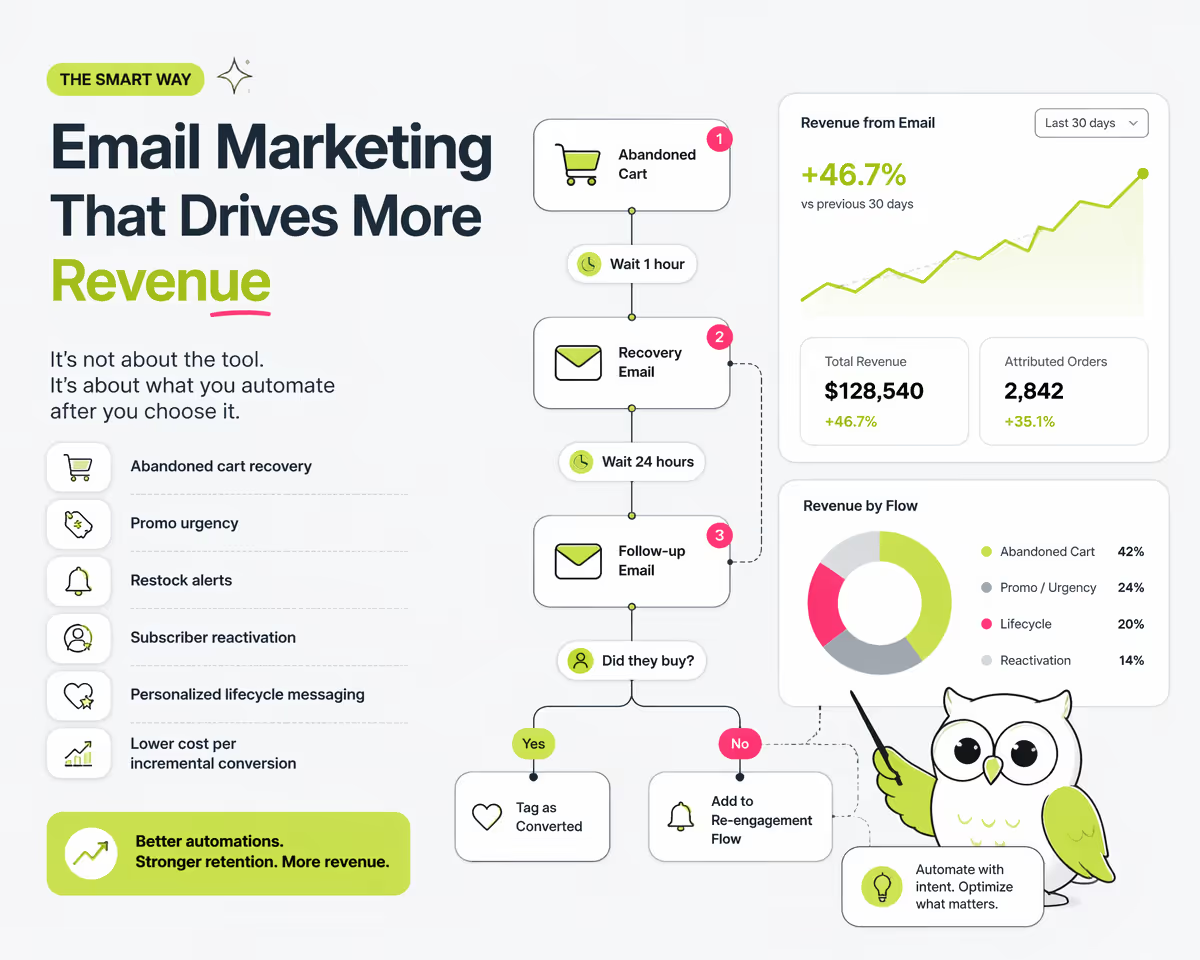
- abandoned cart recovery
- promo urgency
- restock alerts
- subscriber reactivation
- personalized lifecycle messaging
- lower cost per incremental conversion
Email alone does not solve all of that efficiently. SMS is powerful, but expensive if overused. Push is fast, low-friction, and highly effective for certain use cases, especially when paired with email rather than treated as a separate afterthought.
That is why many merchants should not think in terms of Brevo for Shopify ecommerce versus Klaviyo as isolated systems. They should think in terms of which platform combination gives them the best margin-adjusted retention engine.
PushOwl was built for exactly that kind of setup. The platform brings together email, push, SMS, and automation for Shopify merchants who want revenue growth without unnecessary stack sprawl. You can see how that works on the Email, Push & SMS platform page or explore Shopify marketing automation.
Best-fit recommendations by store type
Here is the clearest way to decide.
Choose Klaviyo if you are:
- a scaling Shopify brand
- investing heavily in retention marketing
- managing multiple segments and customer journeys
- willing to pay more for ecommerce depth
Choose Brevo if you are:
- a smaller or leaner Shopify brand
- more price-sensitive
- running moderate automation rather than complex lifecycle architecture
- looking for practical value over maximum sophistication
Choose PushOwl-powered omnichannel if you are:
- trying to improve retention without overpaying for email/SMS growth
- looking for Shopify-native revenue use cases like cart recovery, price-drop alerts, and push-based re-engagement
- wanting one stack for email, SMS, push, and automation instead of disconnected tools
For merchants specifically trying to compare broader options before switching, this guide to email marketing platform comparisons for Shopify can help frame the shortlist.
Final verdict: Klaviyo vs Brevo for Shopify
In a pure head-to-head, Klaviyo wins on ecommerce depth.
It is the better platform for serious lifecycle marketing, advanced segmentation, and high-performance Shopify retention programs.
But Brevo can absolutely be the smarter choice on cost, especially for merchants who want strong fundamentals, manageable complexity, and better economics for low-send or lean-team operations.
So who wins?
- Klaviyo wins for advanced Shopify retention
- Brevo wins for cost-conscious simplicity
- An omnichannel setup wins when your real goal is efficient lifecycle revenue across email, SMS, and push
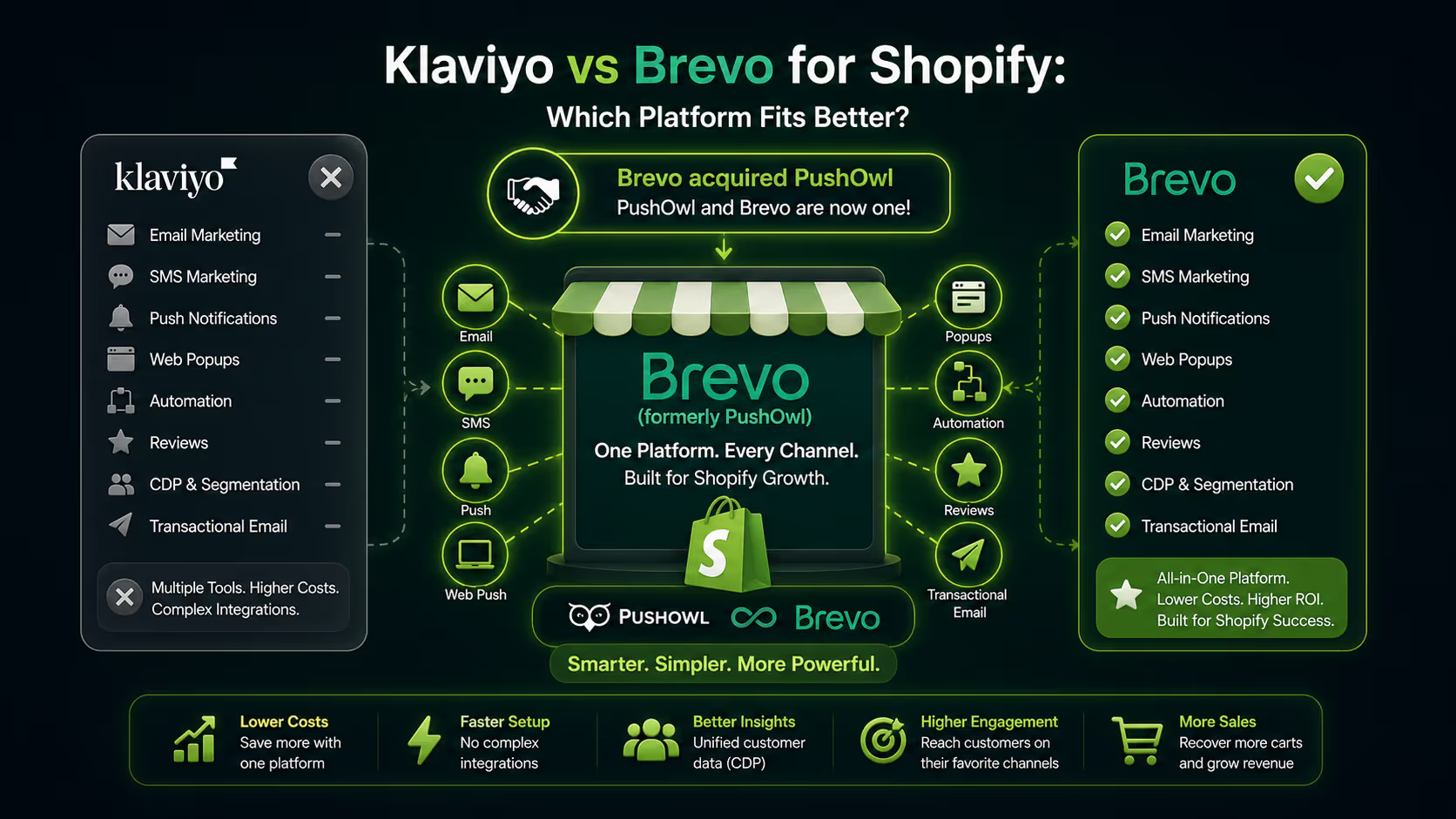
If your store is growing and you are starting to feel trapped between rising email costs and channel limitations, the most profitable next step may not be choosing the most famous ESP. It may be choosing the system that lets you reach shoppers in the right channel at the right cost.
That is the real answer behind klaviyo vs brevo shopify.