If you’re researching Postscript alternatives for Shopify, you’re probably trying to answer one practical question: should you stick with an SMS-first tool, or move to a broader retention stack that includes email, SMS, and push?
That decision matters more than ever. SMS remains a high-intent channel, but it’s also one of the most expensive. As subscriber lists grow, every additional campaign can increase costs quickly. At the same time, Shopify brands are under pressure to improve efficiency, recover carts faster, and drive more repeat purchases without stacking too many disconnected apps.
For some stores, the best Postscript alternative is another SMS specialist. For others, the smarter move is an omnichannel alternative to Postscript that lets you shift some campaigns from paid SMS to lower-cost channels like email and web push, while keeping SMS for the moments where urgency matters most.
That’s the lens this guide uses.
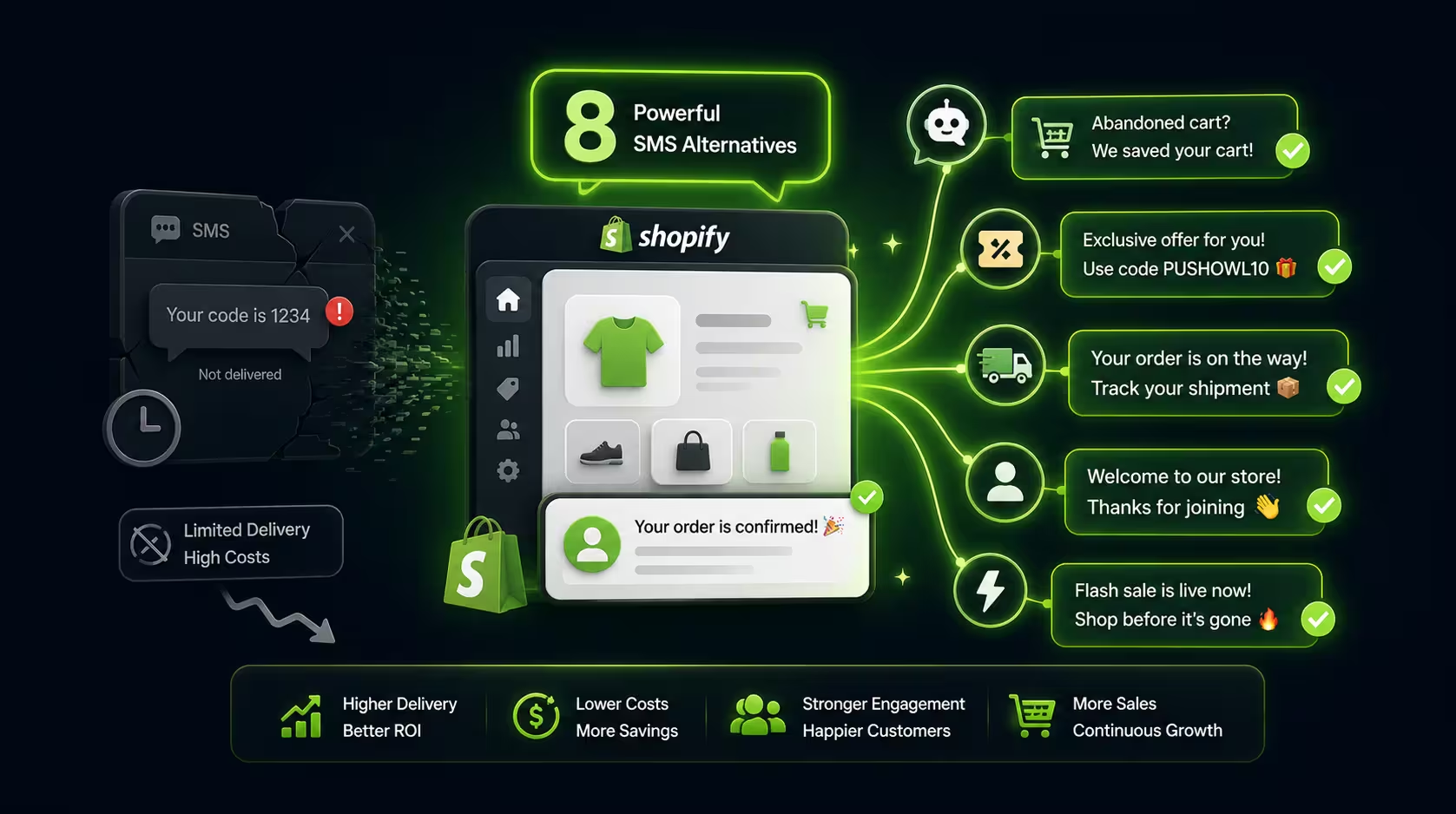
We’ll compare eight strong options for merchants looking for:
- a best Postscript alternative for Shopify
- Shopify SMS apps after Postscript pricing changes or rising message costs
- a Postscript alternative for Shopify SMS
- an SMS app like Postscript for Shopify
- a broader platform that combines email + SMS + push
If you’re still evaluating the broader market, it also helps to review PushOwl’s guides to the best SMS platform for Shopify and best omnichannel marketing platforms for Shopify.
Why Shopify merchants start looking for Postscript alternatives
Postscript is well-known in the Shopify ecosystem, but merchants usually start exploring alternatives for one of four reasons:
1. SMS costs add up fast
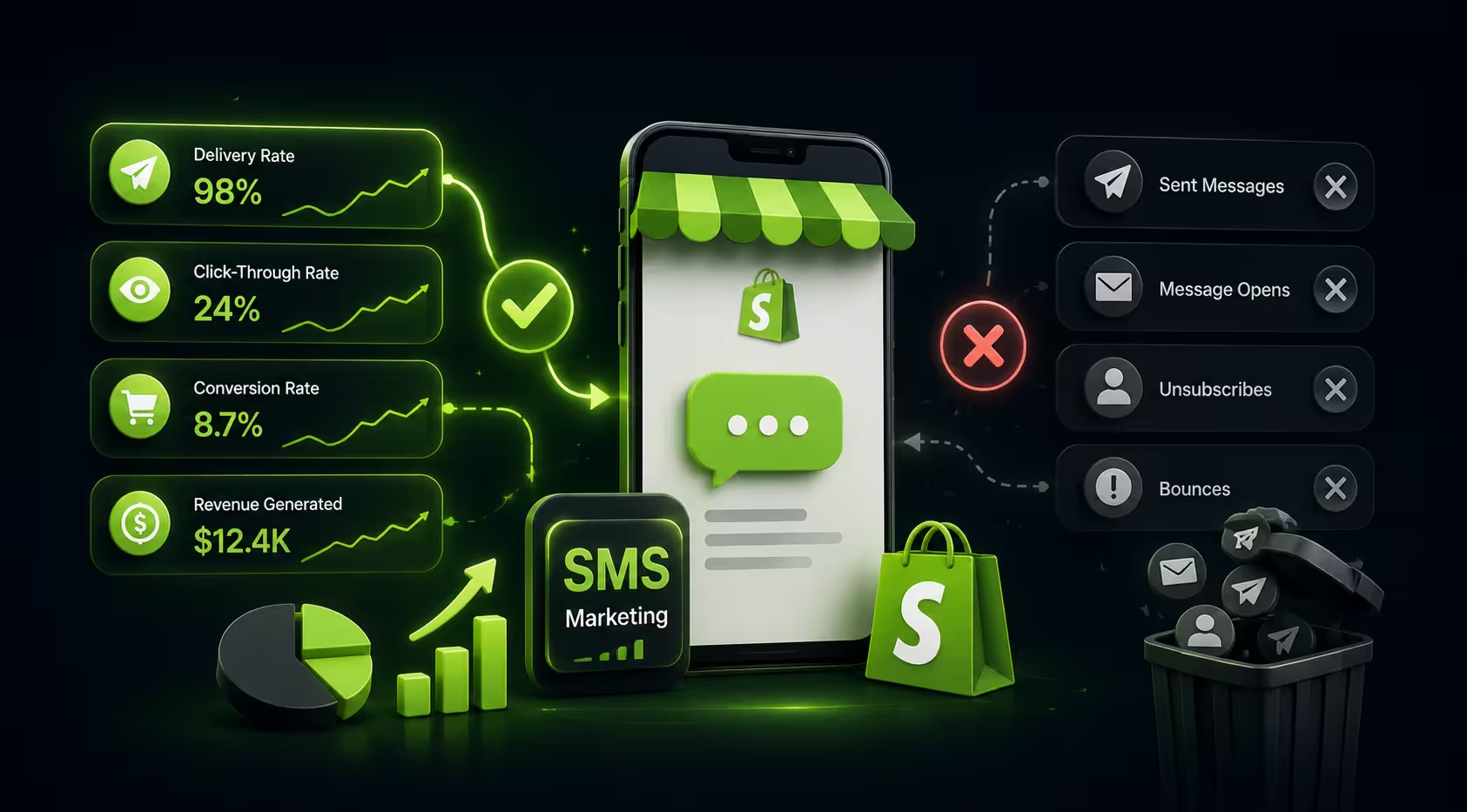
SMS can produce strong click-through and conversion rates, but it’s not cheap. Depending on geography, carrier routing, and campaign volume, costs can become hard to justify for lower-intent sends. The CTIA messaging principles and carrier compliance requirements also add operational complexity for brands sending at scale.
2. SMS-only tools can create channel silos
Many brands don’t just need texts. They need coordinated flows across browse abandonment, cart recovery, post-purchase, win-back, and promotional campaigns. That often works better in a connected system, not across separate apps. Shopify itself increasingly emphasizes connected app workflows and automation inside its ecosystem through tools like Shopify Flow.
3. Push can replace some paid SMS sends
Not every reminder needs to be sent via text. For many campaigns, web push notifications can handle urgency-driven nudges at a lower marginal cost, especially for browse abandonment, price drop alerts, and cart reminders. If that use case is new to you, see PushOwl’s guide on web push opt-ins and its breakdown of the best web push apps in 2026 for Shopify.
4. Merchants want better total ROI, not just SMS ROI
The real question is not “which tool sends the best text?” It’s “which platform gives me the best return across retention channels?” That often means comparing software cost, message cost, automation depth, segmentation, and how easily teams can measure blended returns across channels. For a framework on that, PushOwl’s guide on how to measure omnichannel ROI is useful.
How to choose the right Postscript alternative
Before jumping into the list, classify your store into one of these buckets:
Choose an SMS-first tool if:
- SMS is your top-performing retention channel
- you already use a separate email platform you like
- your team wants deep SMS workflows and keyword campaigns
- you don’t mind managing multiple apps
Choose an omnichannel platform if:
- you want to reduce dependence on paid SMS sends
- you need email, SMS, and push in one place
- you want unified customer journeys and reporting
- your store is scaling and app sprawl is becoming expensive
That distinction is what separates a decent replacement from the best Postscript alternative for Shopify for your actual business model.
8 Postscript alternatives worth considering
1. PushOwl
Best for: Shopify brands that want an omnichannel alternative to Postscript with email, SMS, and push in one platform.
PushOwl stands out because it solves a problem many merchants discover only after scaling SMS: some campaigns simply shouldn’t be sent as texts if a lower-cost channel can do the job just as well.
Instead of forcing every recovery and promotional message through SMS, PushOwl helps brands balance communications across channels. That means using push for instant browser-based nudges, email for richer lifecycle content, and SMS for high-urgency, high-value moments.
This is particularly useful for:
- cart abandonment programs
- browse abandonment reminders
- price drop alerts
- back-in-stock notifications
- promotional campaigns segmented by buyer intent
For brands concerned about rising text costs, this can materially improve efficiency. You preserve SMS where it matters, while shifting volume to channels that reduce total cost per recovered order.
PushOwl is especially compelling for merchants that have outgrown single-channel tools and want a more connected retention setup. You can explore the platform’s email, SMS, and push capabilities here, and if push-led recovery is a priority, the dedicated Push Notifications for Shopify page gives a clearer view of that workflow. For merchants building a leaner retention stack, this also aligns well with PushOwl’s guide to an omnichannel Shopify stack under $200/month.
Why it’s a strong Postscript alternative:
- broader than SMS-only platforms
- helps reduce unnecessary SMS volume
- strong fit for Shopify-native retention workflows
- better for brands thinking in revenue efficiency, not just channel usage
Potential drawback:
If you want an extremely SMS-specialized tool and already have no interest in email or push, you may prefer a narrower platform.
2. Attentive
Best for: larger brands that want a premium SMS-first experience with enterprise-grade support.
Attentive is often shortlisted by merchants looking for a more advanced SMS program with strong personalization, list growth tooling, and enterprise capabilities. It’s frequently considered by brands with larger audiences, higher order volume, and more mature retention teams.
The tradeoff is usually cost and complexity. If you’re leaving Postscript because SMS economics already feel heavy, Attentive may not solve that problem. But if your goal is greater sophistication in SMS execution, it remains a serious option.
Why it’s a strong Postscript alternative:
- mature SMS feature set
- strong list-growth and personalization capabilities
- a fit for larger teams and complex programs
Potential drawback:
Not always ideal for smaller Shopify brands prioritizing affordability or channel consolidation.
3. Klaviyo
Best for: merchants who want email and SMS together, with deep segmentation and analytics.
Klaviyo is one of the most recognized retention platforms in ecommerce. For brands replacing Postscript, its main advantage is straightforward: instead of running SMS separately from email, you can manage both in a single customer data-driven environment.
That can be powerful for segmentation and lifecycle orchestration. It also makes Klaviyo a common option for merchants seeking a broader platform after relying on an SMS-first app.
However, it may not be the best fit for every team. Some smaller merchants find it more complex or costly as they grow. If you’re comparing platform tradeoffs closely, see PushOwl’s PushOwl vs. Klaviyo comparison and the broader guide to best Klaviyo alternatives for Shopify.
Why it’s a strong Postscript alternative:
- combines email and SMS
- powerful segmentation capabilities
- strong ecosystem familiarity among Shopify brands
Potential drawback:
For cost-sensitive stores, overall platform spend can rise with scale.
4. Omnisend
Best for: merchants who want an accessible omnichannel platform with email and SMS, especially small to midsize Shopify brands.
Omnisend is often viewed as a practical middle ground: broader than an SMS-only tool, but often easier for growing teams to adopt than more enterprise-oriented platforms.
It’s a logical option for merchants asking for an omnichannel alternative to Postscript without taking on unnecessary complexity. Email and SMS work together well, and the platform has strong relevance for brands prioritizing automation and conversion-oriented campaigns.
If you’re comparing it against other retention platforms, PushOwl’s PushOwl vs. Omnisend page and its deeper comparison of Omnisend Free vs Shopify Email vs PushOwl provide useful context.
Why it’s a strong Postscript alternative:
- broader than pure SMS apps
- approachable for growing teams
- solid lifecycle automation use cases
Potential drawback:
Brands wanting push as a first-class owned channel may want a more complete email + SMS + push setup.
5. Yotpo SMS & Email
Best for: brands already invested in the Yotpo ecosystem.
Yotpo’s value is strongest when merchants are already using other Yotpo products and want a more unified stack. In those cases, SMS and email can fit into a larger retention and customer experience strategy.
That said, merchants evaluating alternatives should compare total fit, not just ecosystem convenience. A platform can be “convenient” while still being less flexible or less cost-efficient than an alternative that matches your channel mix better.
If Yotpo is on your shortlist, PushOwl has a relevant guide to best Yotpo alternatives for Shopify.
Why it’s a strong Postscript alternative:
- ecosystem fit for existing Yotpo customers
- supports brands looking beyond SMS alone
Potential drawback:
Best value often depends on whether you already use adjacent Yotpo tools.
6. Brevo
Best for: stores that want a budget-conscious platform with SMS plus stronger broader marketing capabilities.
Brevo is often better known for email, but it can be relevant for brands that want SMS as part of a wider communication stack rather than as a standalone specialty tool. For merchants reconsidering Shopify SMS apps after Postscript pricing, this matters: the cheapest path is not always switching to another SMS-first provider. Sometimes it’s using SMS more selectively inside a broader marketing system.
Brevo can be attractive for teams that prioritize cost control and cross-channel marketing. It may be less Shopify-specialized than some alternatives, but it deserves consideration for merchants focused on total spend.
Why it’s a strong Postscript alternative:
- broader than SMS-only software
- can support cost-conscious channel planning
- useful for merchants seeking flexibility
Potential drawback:
May not feel as Shopify-native or SMS-specialized as some pure-play alternatives.
7. SMSBump
Best for: Shopify stores that want a familiar SMS-focused setup with ecommerce use cases.
SMSBump has long been part of the Shopify retention conversation and remains relevant for merchants looking for an SMS app like Postscript for Shopify. It appeals to brands that still want SMS to play a leading role, but may want a different pricing, workflow, or app experience.
The right fit depends on your priorities. If your goal is simply replacing one text message platform with another, SMSBump is easy to include on a shortlist. If the bigger issue is overreliance on SMS itself, then a broader platform may be the better answer.
PushOwl also has a tactical guide on using SMSBump + PushOwl as a dual-channel Shopify strategy, which is helpful for brands not ready to go all-in on one omnichannel platform yet.
Why it’s a strong Postscript alternative:
- strong relevance for SMS-led Shopify programs
- useful for merchants wanting a familiar use-case set
- works for stores still committed to text-heavy retention
Potential drawback:
Doesn’t fully solve the “SMS costs too much” issue if channel strategy remains unchanged.
8. Shopify Email + supplemental channels
Best for: early-stage stores reassessing whether they need a premium SMS-first tool at all.
This isn’t a one-to-one Postscript replacement, but it’s still a valid strategic alternative for some brands. If your store is small, traffic is still growing, and retention maturity is low, moving to a lighter stack can be smarter than replacing one advanced SMS tool with another.
Some merchants can get better results by building around email first, then adding push and selective SMS later. If that sounds closer to your stage, PushOwl’s resources on free email marketing for Shopify, free email automation for Shopify, and apps for merchants just getting started are relevant starting points.
Why it’s a strong Postscript alternative:
- can significantly reduce software and message costs
- better aligned with early-stage stores
- avoids paying for complexity you do not yet need
Potential drawback:
Not ideal if SMS is already a major revenue channel for your store.
SMS-first vs omnichannel: which switch makes more sense?
If you’re comparing Postscript alternatives for Shopify, here’s the clearest way to decide:
Choose another SMS-first platform if:
- SMS is already your highest-ROI owned channel
- you have the margins to support frequent sends
- you want keyword programs, subscriber growth tools, and deep text-centric workflows
- you already like your email stack
Choose an omnichannel alternative if:
- you’re worried about rising text costs
- you want to reduce paid sends without losing revenue
- you want to unify email, SMS, and push
- you care about lifecycle orchestration across channels
- you want to improve retention efficiency, not just replace one app with another
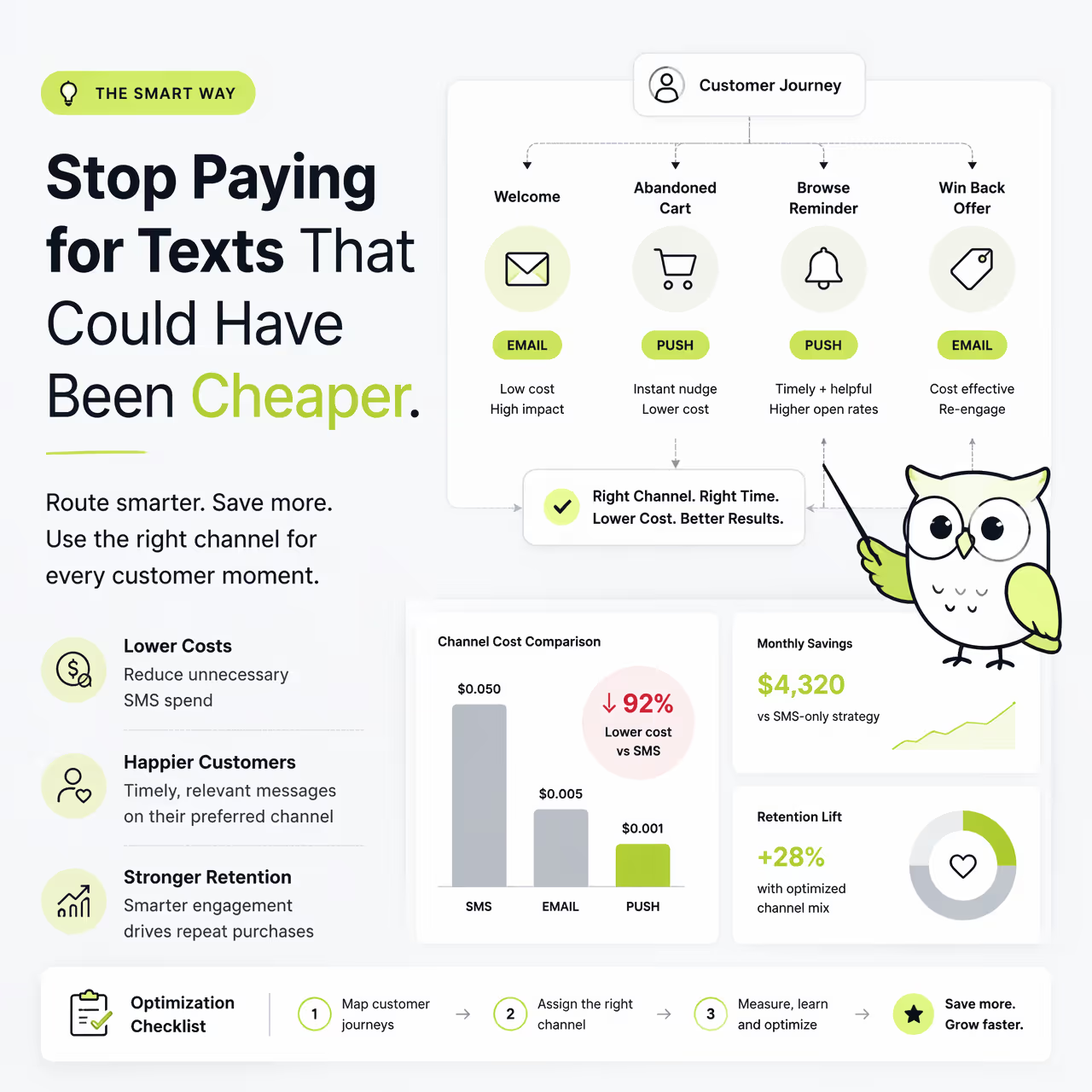
This is where web push deserves more attention than it usually gets. Browser notifications can support high-intent journeys like abandoned cart, browse recovery, back-in-stock, and price drop alerts without incurring the same per-send costs as SMS. That’s one reason many Shopify brands are moving toward a more balanced retention mix instead of leaning harder into text alone. For example, push is particularly effective for price drop alerts and can complement automated campaigns built through Shopify marketing automation.
A simple switching framework for Shopify brands
Use this framework if you’re actively evaluating a migration:
Switch to another SMS specialist when:
- your team is SMS-native
- your existing email tool already performs well
- you want feature continuity, not strategic change
Switch to an omnichannel platform when:
- your total retention spend is climbing
- SMS volume is increasing faster than attributable profit
- your customer journeys are fragmented across multiple apps
- your team wants cleaner reporting and automation logic
Add push if:
- you run frequent reminder campaigns
- you want lower-cost urgency messaging
- your store gets enough browser traffic to build a meaningful opt-in base
For many stores, the biggest opportunity is not “find a cheaper text platform.” It’s stop paying for texts that could have been handled by push or email.
Final verdict: what is the best Postscript alternative for Shopify?
The best Postscript alternative depends on what you’re actually trying to fix.
- If you want a premium SMS-first replacement, Attentive and SMSBump belong on your shortlist.
- If you want email and SMS together, Klaviyo and Omnisend are strong options.
- If you want to rethink your retention stack and reduce overdependence on paid SMS, PushOwl is one of the most practical choices because it brings email, SMS, and push together in a Shopify-focused setup.
That last point is what matters most for brands reassessing Shopify SMS apps after Postscript pricing concerns. If costs are the issue, switching to another text-heavy tool may not fully solve the problem. But moving to a platform that lets you deploy the right channel for the right moment often does.
If your goal is better retention efficiency, not just a lateral replacement, an omnichannel setup is usually the smarter move.