Dropshipping moves fast, margins are tight, and customer patience is limited. That changes what “good” email software looks like.
A typical Shopify brand might prioritize deep segmentation, complex lifecycle journeys, and enterprise reporting. A dropshipping store usually needs a different mix: fast setup, low-cost scaling, dependable automations, branded order communication, and ways to handle the awkward realities of supplier delays, split shipments, and longer delivery windows.
That is why this guide focuses specifically on shopify dropshipping email apps rather than generic Shopify email tools.
If you are comparing the best email app for Shopify dropshipping, the right choice usually comes down to five things:
- How quickly you can launch
- Whether pre-built automations cover the basics
- How affordable the free or entry plan is
- Whether the tool supports transactional or operational messaging needs
- How well it fits a lean, low-margin business model
Shopify itself supports email and marketing automations through Shopify Messaging and pre-built automation templates, which makes fast deployment possible even for smaller merchants starting from scratch (Shopify, Shopify). Google and Yahoo have also tightened sender requirements in recent years, making deliverability, authentication, and list quality more important when choosing any email platform (Google, Yahoo).
In this roundup, we compare eight strong options for shopify email apps for dropshippers, with special attention to:
- supplier-delay workflows
- branded shipping updates
- setup speed
- free-plan practicality
- automation depth
- deliverability readiness
If you are still mapping your broader retention stack, this guide pairs well with PushOwl’s breakdown of the best email marketing apps for Shopify stores and its guide to building an omnichannel Shopify stack for under $200/month.
What dropshippers should look for in an email app
Before we get into the list, it helps to define what makes a great dropshipping email marketing app Shopify merchants can actually use profitably.
1. Fast setup matters more than feature depth
Many dropshipping stores test products quickly. You do not want to spend two weeks building flows before validating demand. Pre-built welcome, abandoned cart, browse abandonment, and post-purchase journeys are usually more valuable than highly customizable enterprise automation on day one.
If setup simplicity is your top concern, PushOwl has also covered the easiest Shopify email automation tools for beginners.
2. Operational messaging is part of the customer experience
For dropshipping, order communication is not just “support.” It is retention.
Customers want:
- confirmation that the order went through
- reassurance that shipping is progressing
- updates when fulfillment takes longer than expected
- clear next steps if an item is delayed
That means the best tools for dropshipping do more than send promotions. They help you reduce “Where is my order?” anxiety.
3. Low-cost scaling is essential
Email remains a cost-efficient channel for ecommerce, especially when budgets are constrained and paid acquisition is volatile. Industry benchmark research continues to show that email remains a major, growing channel for customer communication, even as inbox competition rises (DMA, DMA). For dropshippers, that makes pricing structure especially important: free plans, send-based pricing, and automation access matter more than flashy extras.
4. Deliverability is not optional
Since Gmail and Yahoo’s bulk sender requirements tightened, apps that make domain authentication and compliant sending easier have a practical advantage (Google, Yahoo). If your emails miss the inbox, the rest of the feature set does not matter.
For a deeper look at inbox placement issues, see PushOwl’s article on Shopify email deliverability mistakes.
How we evaluated these Shopify dropshipping email apps
To keep this list useful for actual dropshipping stores, we weighted each platform against dropshipping-specific criteria:
- Setup speed: How quickly can a new merchant launch core flows?
- Automation depth: Does it support essential lifecycle automations?
- Operational fit: Can it support delay notices, shipping updates, and customer reassurance?
- Free-plan practicality: Is the entry tier useful for lean stores?
- Scaling value: Does pricing stay reasonable as orders grow?
- Best for: Which type of dropshipper gets the most value?
1. PushOwl
Best for: Dropshippers who want one practical retention platform for email, push, and SMS without overcomplicating setup.
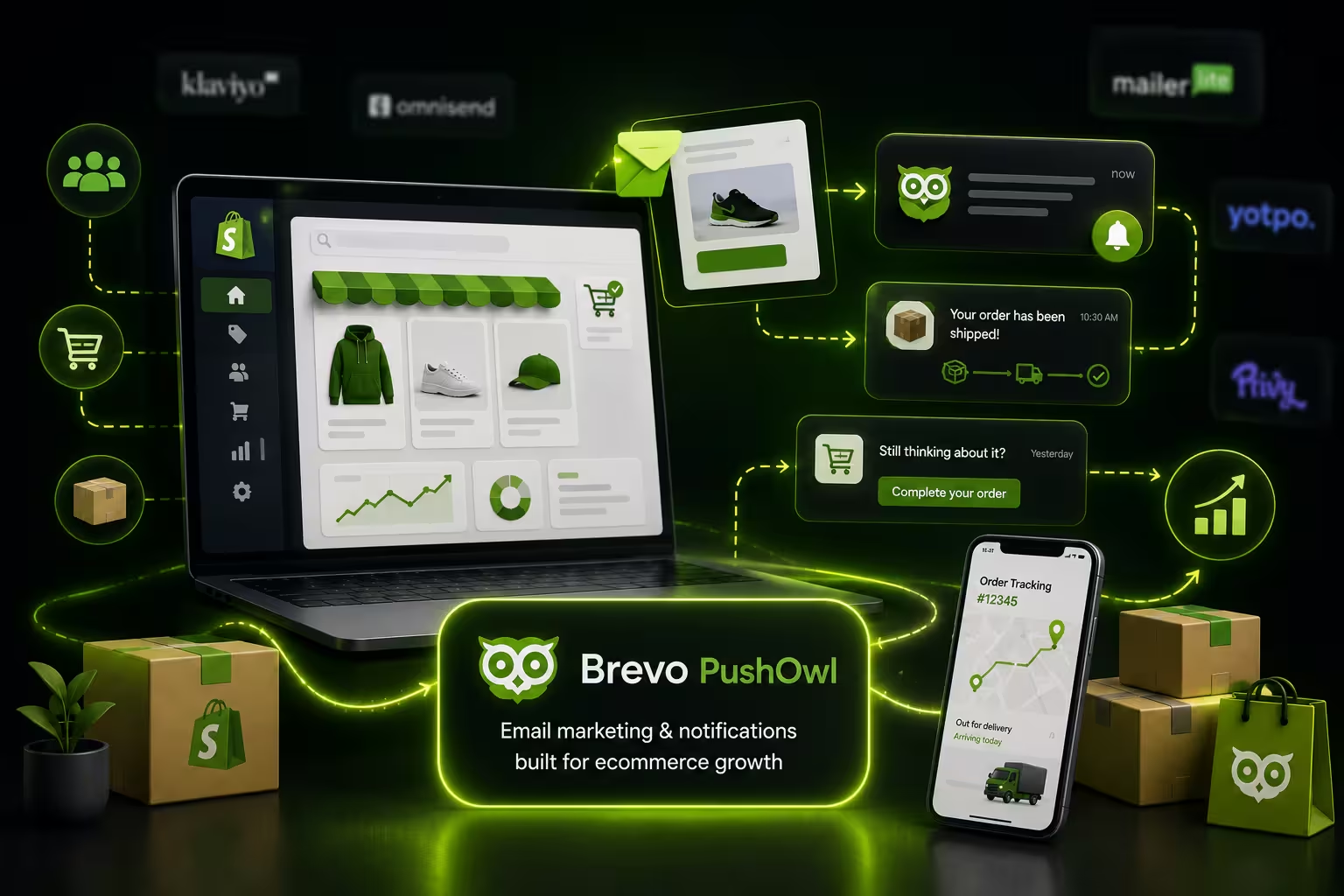
PushOwl is a strong fit for dropshipping because it aligns with the operating reality of lean teams: fewer tools, faster launch, and more revenue coverage across channels. Instead of forcing merchants to stitch together separate systems early, PushOwl combines email, web push, and SMS in one Shopify-focused platform.
For dropshippers, that matters in two ways.
First, you can launch revenue-generating automations quickly. Second, you can support operational communication across channels when timing matters, like back-in-stock nudges, cart recovery, shipping reassurance, or price-drop alerts. Push notifications can be especially useful for low-friction re-engagement, and PushOwl has documented several web push campaign types that drive conversions.
Why it stands out for dropshipping:
- Strong Shopify focus
- Omnichannel options without enterprise complexity
- Useful for abandoned cart and repeat purchase flows
- Practical for stores that want to start with email and later expand into push or SMS
- Good fit for merchants thinking beyond one channel from the beginning
If you want a broader view of PushOwl’s positioning, see Why PushOwl or explore the email, push, and SMS platform page.
2. Shopify Email
Best for: New dropshippers who want the simplest native starting point.
Shopify Email is attractive because it sits close to the Shopify admin and supports templates plus marketing automations through Shopify Messaging (Shopify, Shopify). For a new store with limited budget and limited time, that native experience is a real advantage.
It is especially useful if your immediate goal is to launch:
- a welcome flow
- an abandoned checkout flow
- product or promotion broadcasts
- simple post-purchase communication
The main tradeoff is that many dropshipping stores outgrow native tools when they need more segmentation, more advanced automation branches, or more detailed lifecycle reporting.
Still, for speed, simplicity, and starting cost, Shopify Email remains one of the best starting points in this category.
If you are comparing free options specifically, PushOwl’s guides on free email marketing for Shopify and the best free email app for Shopify are worth reading next.
3. Brevo
Best for: Budget-conscious dropshippers who care about transactional messaging and operational communication.
Brevo earns a place on this list because dropshippers often need more than campaign email. They also need dependable order-related communication and flexibility around transactional sends. That makes Brevo particularly relevant for stores dealing with order confirmations, shipping updates, and supplier-related messaging needs.
Its strength is not just newsletter sending. It is the broader communication stack.
That can be valuable if your customer experience depends on clear communication across pre-purchase and post-purchase stages. A dropshipping store that occasionally needs to explain delays or set expectations may benefit from a system built with transactional communications in mind.
PushOwl’s comparison of Klaviyo vs Brevo for Shopify provides more context on where Brevo fits.
4. Klaviyo
Best for: Scaling dropshipping stores that want advanced segmentation and deeper lifecycle automation.
Klaviyo remains one of the most recognized ecommerce email platforms because it offers sophisticated segmentation, strong reporting, and flexible automation logic. If your dropshipping store has already found product-market fit and is generating meaningful customer data, that power can be useful.
It is a strong choice for merchants who want to build:
- win-back flows
- product-specific journeys
- repeat customer segments
- high-intent browsing sequences
- layered post-purchase campaigns
The downside is familiar: complexity and cost can rise quickly, especially for smaller stores with thin margins. For many new dropshippers, Klaviyo is more than they need at the start.
If you are evaluating alternatives before committing, see PushOwl’s best Klaviyo alternatives for Shopify and PushOwl vs. Klaviyo.
5. Omnisend
Best for: Dropshippers who want multichannel automation with a familiar ecommerce workflow.
Omnisend is often a middle-ground option between native Shopify simplicity and more advanced lifecycle platforms. For dropshippers, its appeal is straightforward: email plus SMS options, ecommerce-friendly automation patterns, and relatively accessible setup.
This makes it useful for stores that want more than basic email but are not ready for a highly technical system.
It can work well for:
- abandoned cart recovery
- welcome and nurture flows
- promotional campaign coordination
- early multichannel testing
That said, free-plan details and scaling economics should be reviewed carefully, especially for stores trying to keep software costs tight. For a closer comparison, see PushOwl’s analysis of Omnisend Free vs Shopify Email vs PushOwl.
6. Mailchimp
Best for: Merchants who already know the platform and want general-purpose email familiarity.
Mailchimp remains a recognizable option for small businesses, and some Shopify dropshippers will consider it simply because they have used it before. Its interface is familiar, and it can cover basic campaigns and automations reasonably well.
But for dropshipping-specific Shopify use cases, it is not always the most specialized fit. The platform is broader than ecommerce, which can mean less native feeling than tools built specifically around Shopify retention workflows.
Mailchimp makes the most sense when:
- the merchant already has experience with it
- needs are still fairly simple
- advanced Shopify-specific flows are not yet a priority
For pure Shopify dropshipping performance, more commerce-native tools often feel more focused.
7. ActiveCampaign
Best for: Dropshippers who want CRM-style automation and are willing to trade simplicity for control.
ActiveCampaign is a more automation-heavy option. It can be powerful for merchants who like detailed workflows, conditional branching, and broader customer lifecycle design. If your dropshipping business includes stronger lead nurturing, subscription logic, or complex customer journeys, that flexibility may appeal.
However, for many early-stage dropshippers, it may be more tool than necessary.
Its ideal user is not the merchant who needs to launch tonight. It is the one who wants to engineer a more customized retention machine and has the time to manage it.
8. Drip
Best for: DTC-style dropshipping brands focusing on retention and repeat purchase growth.
Drip fits best when a dropshipping store is evolving into a stronger brand rather than operating as a pure product-test machine. It is useful for retention-focused teams that want solid ecommerce journeys without necessarily going all the way to enterprise complexity.
It tends to work best for:
- established stores with a clearer brand identity
- higher AOV or repeat purchase potential
- merchants investing more seriously in lifecycle marketing
For pure beginner-friendly setup and low-cost practicality, other tools on this list may be easier. But for branding-focused dropshipping businesses, Drip can be a smart next-stage platform.
Quick comparison: best Shopify email apps for dropshippers
Which app is best for your dropshipping stage?
Choose Shopify Email if...
You are launching your first store, want the lowest-friction setup, and only need core flows plus campaigns.
Choose PushOwl if...
You want a Shopify-focused platform that can support email automation for Shopify dropshipping while also giving you push and SMS expansion paths without adding tool sprawl. If you are building toward omnichannel retention, start with PushOwl’s Shopify omnichannel marketing strategy guide.
Choose Brevo if...
Your biggest concern is reliable communication around orders, updates, and transactional messaging.
Choose Klaviyo if...
You already have traction, enough customer data to segment meaningfully, and the budget to support more advanced automation.
Choose Omnisend if...
You want a middle-ground platform with ecommerce-friendly multichannel capability and accessible setup.
A note on supplier-delay and shipping update emails
Many generic “best Shopify email apps” lists miss this completely, but dropshipping stores should think carefully about supplier-delay workflows.
Your email app should help you send:
- proactive delay notices
- revised delivery expectation updates
- reassurance emails after long fulfillment windows
- discount or support follow-ups when the experience slips
These are not “nice to have” messages. They are often what prevent refunds, chargebacks, and negative reviews.
If cart recovery is also a priority, check PushOwl’s guides on Shopify apps that reduce cart abandonment and free abandoned cart email apps for Shopify.
Final verdict
The best shopify dropshipping email apps are not always the most advanced. They are the ones that help you launch fast, communicate clearly, recover revenue automatically, and stay affordable as you grow.
For most new and lean dropshipping stores:
- Shopify Email is the easiest native starting point
- PushOwl is the strongest choice if you want practical omnichannel growth without stacking multiple tools too early
- Brevo is especially useful when transactional and operational messaging matter
- Klaviyo is best reserved for stores that have already scaled enough to use its depth well
The core rule is simple: choose the app that fits your current operating model, not the app with the longest feature page.
A dropshipping store wins with speed, clarity, and automation that actually gets used.