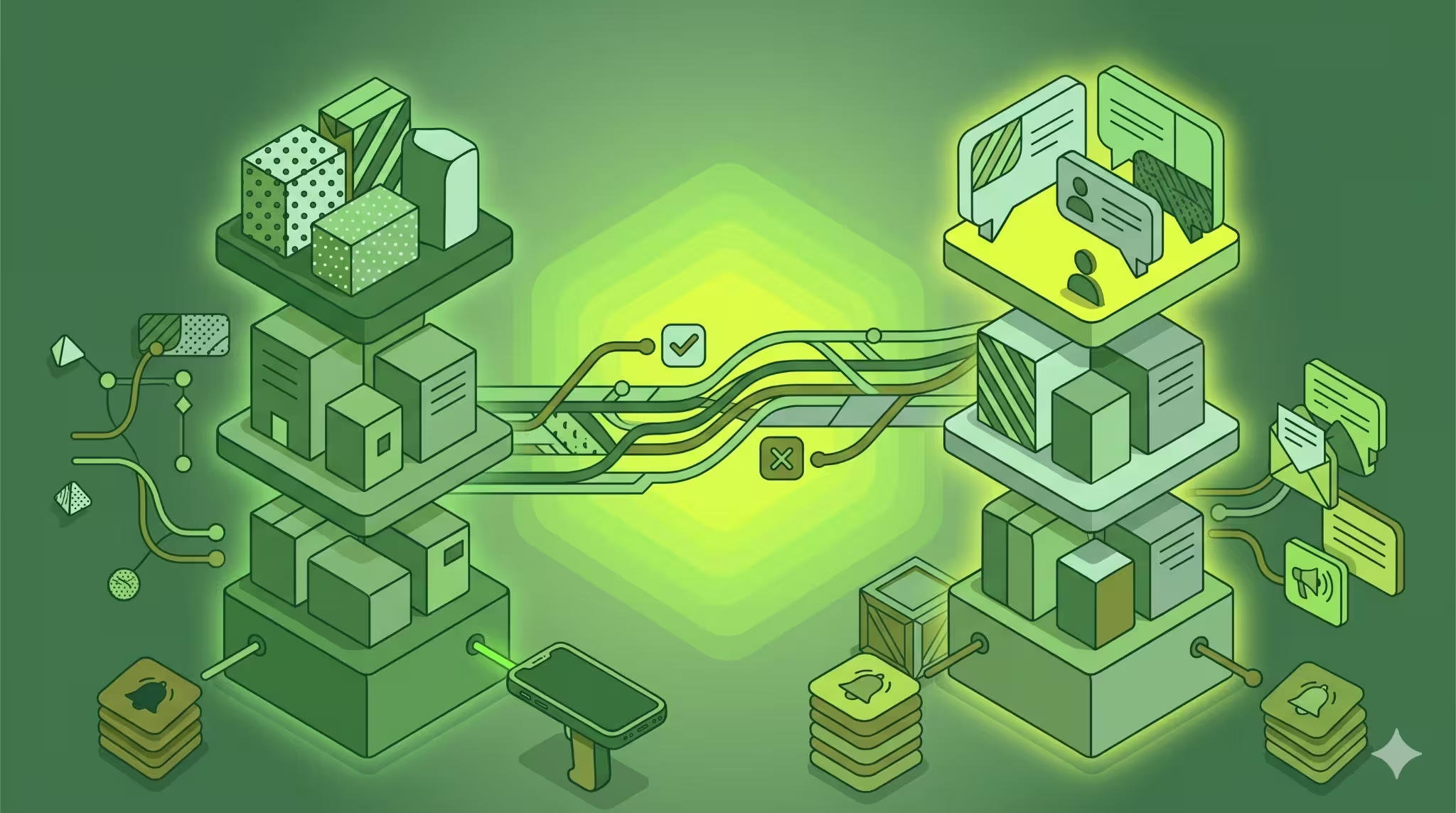
Merchants comparing Shopify Flow vs Klaviyo are often comparing two tools that solve different problems.
That’s the source of most confusion.
Shopify Flow is primarily a store automation engine. It helps automate backend actions, operational workflows, tagging, internal logic, and app-to-app processes inside your Shopify ecosystem.
Klaviyo is primarily a customer marketing automation platform. It helps automate customer messaging across email and SMS using behavioral data, segmentation, and revenue-focused flows.
So if you’re asking, “Should I use Shopify Flow or Klaviyo?”, the better question is usually:
- Do I need store operations automation?
- Do I need marketing automation?
- Or do I need both working together?
This guide breaks down Klaviyo vs Shopify Flow in the way merchants actually need: by role, trigger depth, audience targeting, omnichannel potential, pricing logic, and real use cases. We’ll also show where a combined stack can outperform either tool alone—especially if you want email, SMS, and push notifications working from the same customer journey.
If you're evaluating broader lifecycle marketing beyond just Flow and Klaviyo, start with Email Marketing for Shopify That Grows Revenue, Not Bills and Turn every store visitor into a customer with Email, Push, & SMS.
Shopify Flow vs Klaviyo at a glance
Here’s the short version.
Choose Shopify Flow if you need:
- Internal automation inside Shopify
- Order, inventory, fraud, tagging, and operations workflows
- App integration logic
- Rule-based automations not centered on messaging
- A lightweight way to reduce manual work
Choose Klaviyo if you need:
- Email and SMS automation
- Advanced customer segmentation
- Revenue-focused lifecycle journeys
- Campaign orchestration by customer behavior
- Marketing analytics tied to conversion
Use both if you need:
- Store logic from Shopify Flow
- Customer messaging from a marketing platform
- A connected automation stack
- More advanced omnichannel execution
And if your goal is not just email or SMS in isolation, but a unified lifecycle setup, it’s worth looking at Shopify Marketing Automation that grows revenue, not just clicks! and Best Omnichannel Marketing Platforms for Shopify.
What Shopify Flow actually does
Shopify Flow is designed to automate actions inside your Shopify environment.
Think of it as the logic layer for your store.
It works on a simple structure:
- Trigger
- Condition
- Action
For example:
- When an order is created
- If order value is above $200
- Then tag the customer as VIP
That sounds simple, but it’s useful across a wide range of operational tasks.
Common Shopify Flow use cases
- Tagging high-value customers
- Flagging risky orders
- Routing orders with special conditions
- Alerting teams when inventory drops
- Assigning customer tags based on product purchase
- Triggering app-based actions from store events
- Creating workflows for support, fulfillment, and merchandising
This makes Flow highly valuable for ecommerce teams that want to reduce manual actions and improve consistency.
But here’s the key limitation in the shopify automation vs klaviyo debate:
Shopify Flow is not a full customer messaging platform.
It can trigger logic and connect with apps, but it is not built to replace dedicated lifecycle email and SMS automation. If you want abandoned cart campaigns, welcome sequences, browse abandonment emails, win-back flows, or post-purchase journeys with deep reporting, Flow alone is usually not enough.
For merchants just starting to map the automation basics, 10 Must-Have Shopify Apps for New Merchants offers a helpful broader stack view.
What Klaviyo actually does
Klaviyo is built for customer lifecycle marketing.
Its core strength is turning customer data and behavior into automated communications that drive revenue.
That includes:
- Welcome series
- Abandoned cart emails and SMS
- Browse abandonment flows
- Back-in-stock alerts
- Post-purchase sequences
- Cross-sell and upsell flows
- Win-back campaigns
- Birthday and anniversary automations
- Segmented campaigns based on engagement and purchase history
This is where Klaviyo shines. It’s more than a sending tool; it’s a marketing engine designed around customer behavior and segmentation.
Common Klaviyo strengths
- Deep audience segmentation
- Visual flow builder for lifecycle marketing
- Email and SMS automation
- Triggering based on user behavior
- Engagement-based branching
- Revenue attribution and campaign analytics
If your primary goal is growth through lifecycle messaging, Klaviyo is operating in a different category from Flow.
That’s why a direct shopify flow email automation comparison can be misleading unless you understand the layers involved: one tool automates store logic, the other automates customer communications.
If you’re comparing email-first tools more broadly, these guides may help:
- Email Marketing for Shopify: The 2026 Platform Comparison Guide
- Best Klaviyo Alternatives For Shopify in 2025
- PushOwl vs. Klaviyo
Shopify Flow vs Klaviyo: the biggest difference
The fastest way to understand shopify flow vs klaviyo is this:
- Shopify Flow automates store events and internal workflows
- Klaviyo automates customer messaging and marketing journeys
That difference affects everything else.
1. Automation layer
Shopify Flow works at the platform layer.
It handles store-side operations, rules, tags, internal notifications, and app handoffs.
Klaviyo works at the channel layer.
It handles communication with customers across email and SMS based on lifecycle behavior.
2. Type of outcomes
Shopify Flow outcomes are usually:
- Tags
- Alerts
- app actions
- internal process changes
- workflow efficiencies
Klaviyo outcomes are usually:
- Email sends
- SMS sends
- customer movement between segments
- conversion-oriented journeys
- revenue generation
3. Main users
Shopify Flow is often used by:
- ecommerce managers
- operations teams
- merchandising teams
- technical marketers
- Shopify admins
Klaviyo is often used by:
- retention marketers
- CRM teams
- email marketers
- performance marketers
- founders focused on lifecycle growth
So if your problem is “my team is doing too much manually in Shopify,” Flow is usually relevant.
If your problem is “we’re not converting enough subscribers after signup, cart abandonment, or purchase,” Klaviyo is usually the more direct fit.
Shopify Flow email automation comparison: where Flow stops
Some merchants assume Shopify Flow can replace an email automation platform because it can trigger actions from store events.
In practice, that’s only partially true.
Flow can help initiate processes that influence messaging, but it does not naturally offer the same customer journey management as a lifecycle platform.
Where Shopify Flow is useful for messaging
- Add tags that later drive marketing segmentation
- Trigger app events
- Coordinate store-side actions before a message is sent
- Support back-in-stock or inventory logic in connected apps
Where Shopify Flow falls short for email automation
- Building complete lifecycle journeys
- Managing complex branching based on opens, clicks, or purchase behavior
- Orchestrating email and SMS together at scale
- Advanced deliverability tooling
- Campaign reporting tied tightly to marketing performance
- Rich template, testing, and marketing workflow capabilities
If your main evaluation is around lifecycle messaging, review Free Email Automation for Shopify: What’s Actually Possible & Real Conversion Numbers, Easiest Shopify Email Automation for Beginners, and How To Write an Email Newsletter for Your Shopify Store in 2025.
Klaviyo vs Shopify Flow on segmentation and trigger logic
Segmentation is another major divide.
Shopify Flow segmentation logic
Flow can apply logic based on store data and events, such as:
- order value
- SKU purchased
- location
- inventory status
- risk indicators
- customer tags
That’s useful, but it’s often operational rather than campaign-centric.
Klaviyo segmentation logic
Klaviyo is designed to turn behavioral and transactional data into live marketing audiences. For example:
- customers who viewed a product but didn’t buy
- shoppers who purchased category A but not category B
- subscribers who clicked a sale email in the last 14 days
- VIPs with declining purchase frequency
- lapsed customers likely to respond to a win-back offer
This is what makes Klaviyo stronger for lifecycle personalization.
For merchants trying to build a more robust segmentation strategy overall, Shopify Customer Segmentation Guide and Shopify SMS Segmentation: Rules, Segments, Metrics, and More are useful next reads.
Shopify Flow Klaviyo integration: do they work together?
Yes—and for many merchants, that’s the smarter setup.
The value of a shopify flow klaviyo integration is not that one replaces the other. It’s that they can each do what they’re best at.
Example: VIP customer automation
- Shopify Flow detects a customer has crossed a lifetime spend threshold
- Flow adds a VIP tag
- Klaviyo uses that tag to enter the customer into a VIP welcome or loyalty flow
Example: inventory-based messaging
- Shopify Flow detects inventory changes or product state changes
- Connected logic passes the event into the marketing layer
- Klaviyo handles the customer-facing email sequence
Example: post-purchase branching
- Flow tags customers based on order type or product purchased
- Klaviyo uses those tags to send tailored education, upsell, or replenishment emails
This combined approach is strongest when your store needs both:
- reliable operational rules, and
- personalized lifecycle messaging
But there’s also a third route merchants increasingly prefer: using an omnichannel platform that reduces the handoff friction between channels.
That’s where PushOwl fits better for many Shopify brands—especially those wanting email, SMS, and push notifications inside one more unified retention stack. Explore Turn every store visitor into a customer with Email, Push, & SMS, SMS Marketing for Shopify That Turns Texts Into Transactions, and Turn Browsers into Buyers with Push Notifications for Shopify.
Pricing and efficiency: where merchants often misjudge the decision
When merchants compare should I use Shopify Flow or Klaviyo, they often frame it as a cost decision.
That’s understandable—but incomplete.
Shopify Flow cost logic
Flow can be efficient if your pain point is manual admin work. The ROI comes from:
- saving team time
- reducing errors
- improving process consistency
- creating scalable store operations
Klaviyo cost logic
Klaviyo’s value comes from:
- increasing subscriber-to-customer conversion
- recovering carts
- improving repeat purchase rate
- driving lifecycle revenue
So the “better” tool depends on the return you’re trying to produce.
If your problem is operational inefficiency, a messaging platform won’t solve that well.
If your problem is underperforming retention revenue, store automation alone won’t solve that either.
For merchants evaluating budget-conscious lifecycle strategies, see:
- Best Free Email App for Shopify
- Build an Omnichannel Shopify Stack for Under $200/month
- Start free, upgrade anytime
When to use Shopify Flow alone
Use Shopify Flow alone when your main goals are operational.
It’s a strong fit if you want to:
- automate admin tasks
- reduce repetitive manual work
- create internal store logic
- coordinate app-based workflows
- handle tagging and rule-based actions inside Shopify
Best-fit merchant profile for Flow alone
- You already have basic marketing covered elsewhere
- Your immediate bottleneck is operations, not retention
- You need process automation more than customer journey automation
- Your team is comfortable working inside Shopify workflows
When to use Klaviyo alone
Use Klaviyo alone when your main need is lifecycle messaging and retention growth.
It’s a strong fit if you want to:
- launch email and SMS automations quickly
- segment audiences by behavior
- run revenue-focused customer journeys
- optimize lifecycle conversion across signup, browse, cart, and post-purchase stages
Best-fit merchant profile for Klaviyo alone
- You’re focused on retention marketing
- Your biggest growth opportunities are in email and SMS
- You need rich flow logic tied to customer engagement
- You care deeply about campaign attribution and optimization
When to use both Shopify Flow and Klaviyo
For many growing brands, this is the right answer.
Use both when:
- store operations and lifecycle marketing are both getting more complex
- you need backend logic plus front-end messaging
- customer tagging and order logic should influence campaigns
- your team has enough maturity to manage a connected stack
This is especially true for stores with larger catalogs, more segments, more products, and more nuanced customer journeys.
A smarter alternative for omnichannel merchants
If your comparison started because you want “better automation,” not just “more tools,” it may be worth stepping back.
Most Shopify merchants don’t simply need emails or store rules in isolation. They need coordinated customer journeys across:
- SMS
- web push
- segmentation
- automation
- revenue reporting
That’s why many brands move toward an omnichannel setup rather than stitching together multiple point solutions.
PushOwl is built around that outcome. Instead of treating push as an afterthought, it lets brands activate browser subscribers, recover carts, send campaigns, and combine channels from a single retention mindset. For stores that want to lower tool sprawl while keeping lifecycle marketing strong, that can be a more practical path than choosing a narrowly framed Klaviyo vs Shopify Flow winner.
To see how that broader strategy works, read:
- The Ultimate Shopify Omnichannel Marketing Strategy Guide
- How to Measure ROI of Your Shopify Omnichannel Campaigns
- 10 Omnichannel Personalization Examples from Shopify Brands
- Drive Revenue with SMSBump + PushOwl: Dual-Channel Shopify Strategy
Final verdict: Shopify Flow vs Klaviyo
Here’s the honest answer.
Shopify Flow vs Klaviyo is not a true one-to-one comparison.
They operate at different layers of your stack.
- Choose Shopify Flow for store automation and internal workflow logic.
- Choose Klaviyo for lifecycle email and SMS automation.
- Choose both if you need operational logic and advanced customer messaging.
- Consider PushOwl if you want a more unified retention approach across email, SMS, and push without overcomplicating your stack.
If you came here asking “should I use Shopify Flow or Klaviyo?”, the right answer depends on whether your bottleneck is operations, messaging, or omnichannel coordination.
The best stack is the one that matches the real job to be done.
And for most Shopify brands, the winning setup is the one that turns customer behavior into revenue—without forcing your team to juggle more complexity than necessary.