Email might feel old-school, but in 2026, it will still be one of the most profitable channels for Shopify brands. The catch? Getting people actually to open your emails.
This guide breaks down what email open rates really mean, why they drop, and the exact steps you can take to improve them. You will find answers (and a few underrated strategies competitors don’t talk about) right here.
What Is Email Open Rate?
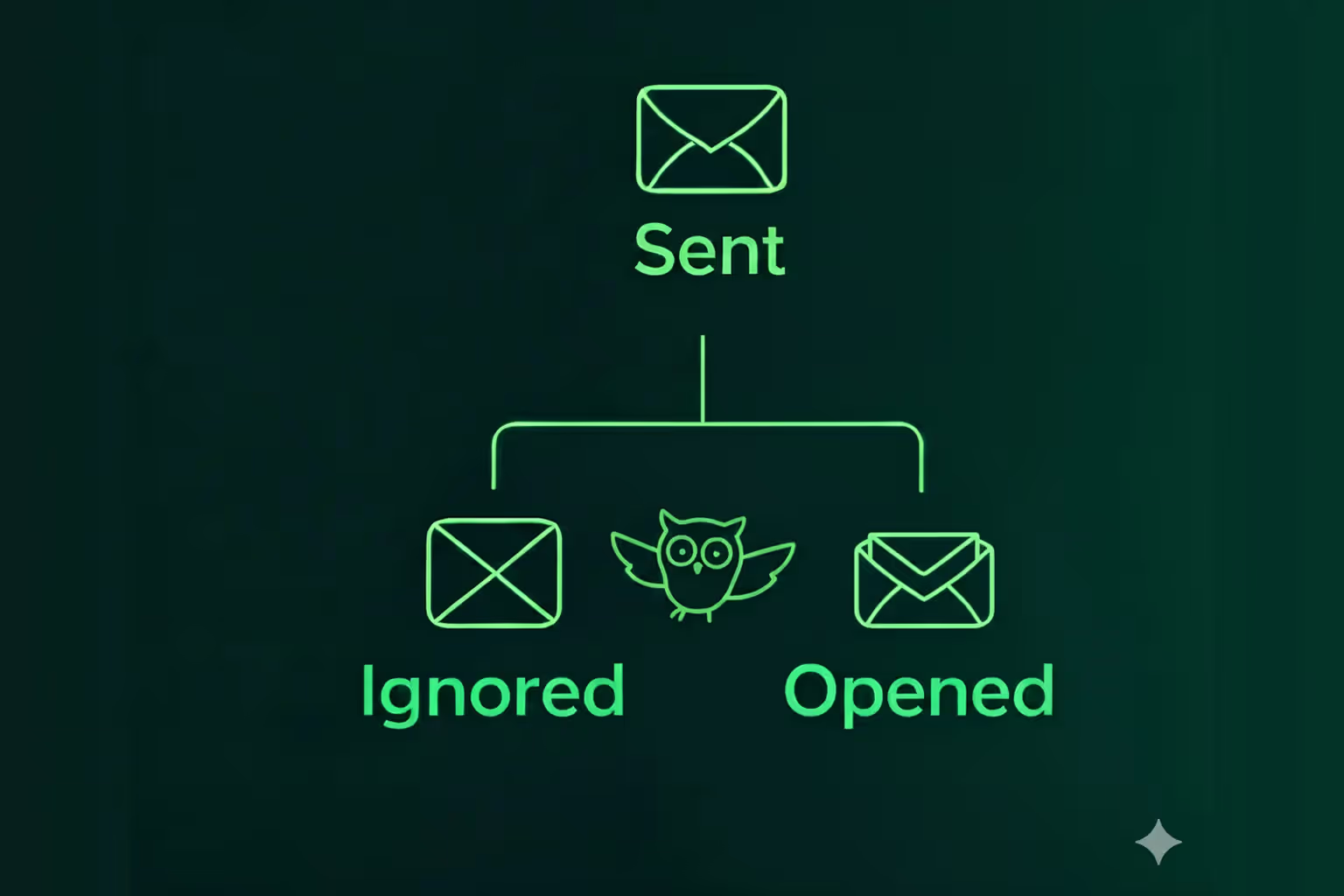
Email open rate is the percentage of email subscribers who opened your marketing email out of the total number of emails sent.
Email open rates are a key marketing metric. You can take advantage of the following benefits when you track email open rates:
- Audience interest level: Are people curious enough to even open your messages?
- Subject line effectiveness: Which phrasing, tone, or personalization grabs attention?
- Brand trust and recognition: Do subscribers trust your sender name enough to click?
- List quality: Low opens may indicate stale, unengaged, or poorly targeted subscribers.
- Timing alignment: High opens at certain hours or days reveal when your audience is most active
When tracked consistently, it gives you directional insight into how subscribers engage with your brand.
How To Calculate Email Open Rate?
Calculate your Shopify store’s email open rate using the following formula:
Opens = Unique subscribers who opened the email (This is to be differentiated from total opens, since one person can open the same email multiple times)
So, for instance, if you send 10,000 emails a month and 8000 emails are delivered, out of which 2000 subscribers opened the email, then your email open rate is
(2000/8000) X 100 = 25% open rate
Always use delivered emails as the base, not the total number of emails sent; otherwise, you will get skewed results.
In the above case, if we looked at just the total emails sent and ignored how many were delivered, the email open rate would be 20%.
Is My Email Open Rate Low?
With an average open rate of 31.22% (almost seven out of ten emails never get touched) across the industry (based on our 2025 Marketing Benchmark study), email remains a key marketing channel for e-commerce brands.

So if you are below that rate, you might feel like your emails are vanishing into the void. But here is the thing: open rates are not one-size-fits-all. What’s “low” for a fashion brand that thrives on seasonal drops might be perfectly normal for a brand selling industrial tools.
Other than the industry benchmark, you also have to look at other factors to understand whether your email open rate is worrying:
List Quality
A list padded with inactive subscribers, old leads, or contest sign-ups who never intended to buy will always drag down performance. A clean, engaged list will lift your open rates naturally.
If 20-30% of your subscribers have not opened your email in six months, it is time to clean house.
Send Frequency
How often you hit “send” makes a big difference. Emailing every other day? You risk fatigue (and unsubscribes). Emailing once every two months? People might forget who you are. The sweet spot is finding a rhythm where your brand feels present but not spammy.
Here’s a blueprint based on what all the email marketing experts shared with us:
To find out whether you are sending too many emails, Paul DeMott, CTO of Helium SEO, recommends tracking the unsubscribe rate and complaint rates. “If you are sending three emails per week to each customer on your email list, then an unsubscribe rate of above 1% means you are sending too much.”
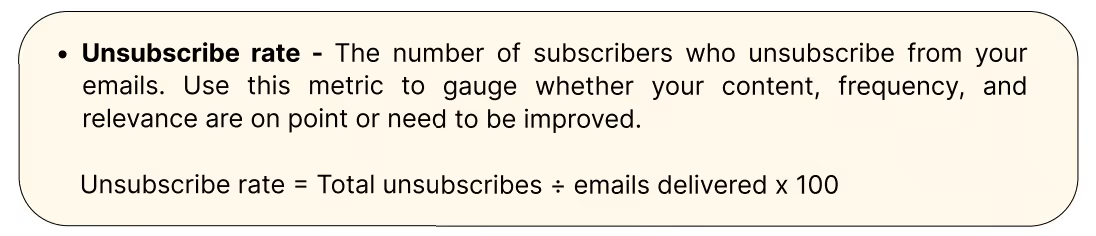
Caspar Matthews, the Director of an electrical services firm in Melbourne, says, “If weekly emails have a lower than 0.5% unsubscribe rate, then the cadence is healthy. Test in 4-week cycles to find the right balance.”
This is what Gor Gasparyan, co-founder and CEO of Passionate Design Agency, suggests:
“Begin with a bi-weekly frequency and refine it according to the response and relevant metrics like engagement rates, CTRs, and open rates.”
“As long as you inform your subscribers on why to subscribe and how often you send the emails, they will know what to expect,” Andrew Dyuzhov, the Marketing Director of an email marketing platform, concludes.
Does Your Target Audience Read Emails?
Not every demographic checks email the same way. Gen Z might prioritize push notifications and TikTok DMs, while Millennials and Gen X still treat their inbox as a daily hub. If you are targeting an audience that doesn’t “live” in email, open rates will naturally be lower, and that's not okay. The real question is, "Am I reaching my audience where they hang out?
Pro-tip: Instead of stressing over whether you are above or below “the average,” the smarter move is to benchmark against your own performance and your specific niche. A steady climb of even 2-3% over a quarter is a healthier sign than trying to chase a universal number you saw in an online report.
Why Was My Email Open Rate So Low in 2025?
We will go over the common reasons, like emails going to spam and wrong send times, but also some under-the-radar obstacles to high email open rates:
Spam Filters Ate Your Email
If your emails are not even reaching the inbox, open rates do not stand a chance. Gmail and Outlook have tightened their filters, and even minor mistakes, such as including too many images, using spammy trigger words, or failing to authenticate your domain, can result in your campaign being sent to spam.
Set up SPF, DKIM, and DMARC records, avoid spammy words (“FREE $$$”), and maintain healthy list hygiene.
Your Audience Has Channel Fatigue
In 2025, inboxes were busier than ever. Between promotional blasts, receipts, and newsletters, people are overwhelmed. If your audience feels bombarded, they’ll tune out your brand’s emails even if they don’t unsubscribe.
Don’t put all your eggs in email. Layer in push notifications and SMS so you are not leaning on just one channel. With an omnichannel marketing strategy, if someone skips your inbox, they can still catch up with you elsewhere.
Wrong Send Times
Sometimes it’s not what you say, but when you say it. Send an email at 2 a.m., and half your subscribers will never even see it by the time they check their inbox. Send at peak inbox hours, and you are buried under dozens of competing campaigns.
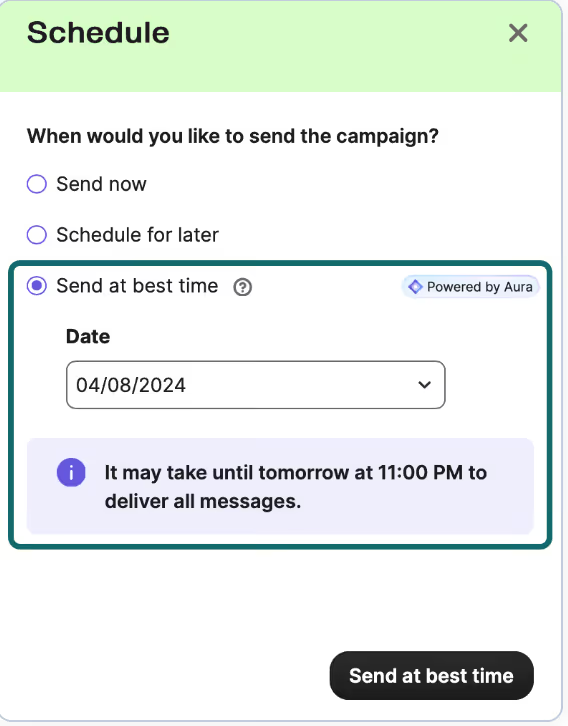
That’s why Shopify brands lean on PushOwl’s Smart Send tool. It analyzes subscriber activity and automatically delivers campaigns at the individual time a subscriber is most likely to engage.
Instead of guessing whether 10 a.m. or 8 p.m. works better, smart send studies the time at which a specific customer engages the most, and makes sure your email lands right then.
Does Algorithmic Inbox Placement Matter?
The Promotion Tab is not out there to get you. Gmail and Outlook now personalize inbox placement based on user engagement. Even if you do not hit “spam,” you might land in Promotions or Updates.
A lot of marketers still treat the Promotions tab as a graveyard, but research shows users do check it regularly.
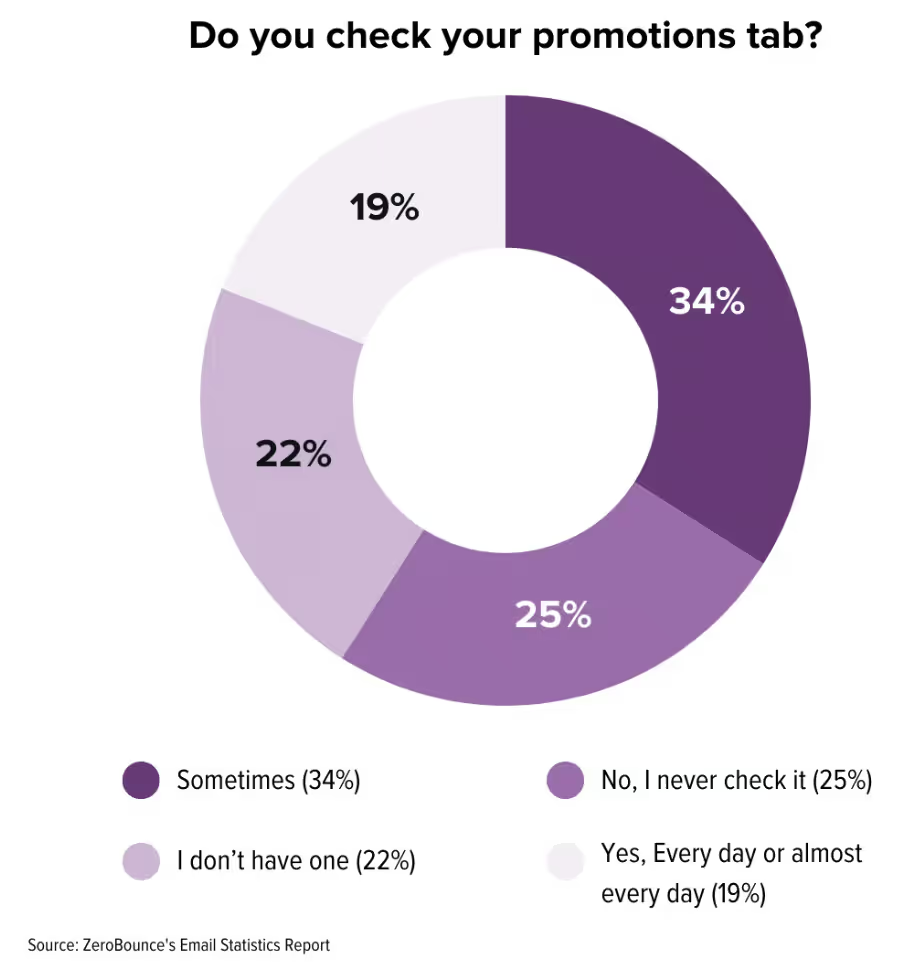
Your customers are not necessarily pushing your emails to the Promotions tab so that they can ignore you. It is probably to keep their inbox more organized so that they don’t miss a life-changing email because of a flood of flash sale emails across every brand they subscribed to.
In a LinkedIn post about the Promotions tab, Filip Pintaric, an e-commerce email marketer, points out: “People who open the promotions tab aren’t looking for a message from their accountant. They are looking for something to buy.”
He further explains:
“Landing in the promotions tab isn’t the issue. Sending boring, irrelevant, or low-value content is the issue.”
Creating valuable and engaging content for your emails is what you should be focusing on, not whether it’s in the primary inbox or the promotional one.
Email Subject Line Hacks for High Email Open Rates
“People are seeing my subject lines but not clicking.”
The subject line is your email’s handshake. If it does not generate curiosity or urgency, subscribers will scroll right past. Shoppers are savvier now, and inboxes are noisier than ever.
A/B test subject lines and personalize them (use name, location, or behavior)
Dyuzhov suggests “a mix of short (40-60 characters) and shorter (around 30 characters) to match all devices.”
Avoid the following:
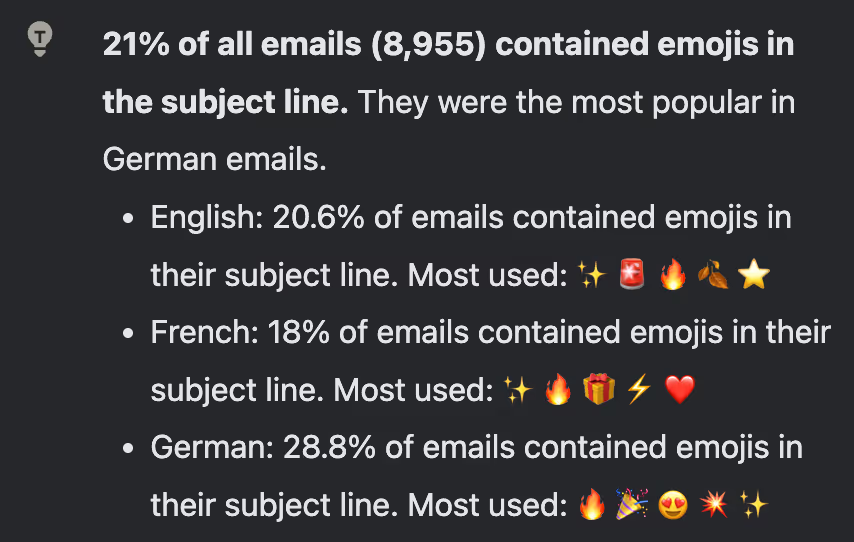
Customers do not appreciate excessive emojis in the subject line either. So be careful with sprinkling the firebolts and party hats all over your subject lines.
Nicola Leiper, the Director and Head of Project Management at Espresso Translations, looks for the following while assessing a subject line: Does the subject line clearly convey to the recipient what is in the email and why they should care about it?
Following this rule of thumb has ensured Leiper’s competitors lag by 20% in open rates.
Best Practices: What Can I Do To Improve My Email Open Rate?
To improve email open rates in 2026, focus on the small practices that make your messages easier to find, trust, and open.
Content Accessibility
Fonts too small, poor contrast, and image-heavy emails without alt text = emails get ignored. Accessibility is often not framed as a key issue, but if subscribers find your emails difficult to read, they will stop opening them.
Inconsistent Sender Address
Brand trust in the sender is huge for open rates. If your “from name” appears differently every time (sometimes as a brand name, sometimes as a CEO's name, and sometimes as a generic “no-reply”), subscribers may not recognize you and will not view you as a reliable brand.
Subscriber Expectation Gaps
If someone signs up for “exclusive deals” but only receives generic newsletters, they will likely disengage. A misaligned promise at signup leads to lower opens later.
Sending Visually Heavy Emails
If your email is overloaded with images, GIFs, or fancy templates, it can take longer to load on mobile (and lose the reader’s attention), trigger spam filters, and hide the actual value if someone has images disabled.
Not only are there too many images, but an excessive number of links and CTA buttons also make the email clunky. The ratio of email text to other visual elements has to be balanced.
Following the above best practices will ensure that you create email campaigns that do not negatively impact your sender reputation.
Balance Risk Factors
Your open rate doesn’t tank because of one mistake. It is usually a mix of small risks stacking up.
Dyuzhov points out that if your email has more than one potential risk factor, it’s likely to end up in spam. “For example, if you created a fancy but image-only email design, sending it with a subject like [An irresistible offer expires now] will increase the risk. But if you send the same email with an appropriate subject line, you are still at risk, but a lower one.”
Do not only assess your email's components individually. Check whether these elements, when combined, signal “spammy” to both inbox providers and subscribers.
Is Email Open Rate a Key Metric in 2026?
Apple’s Mail Privacy Protection blocks tracking pixels, inflating “opens.” Your email open rates are skewed because of this. This is why they should not be trusted as the sole metric in 2026.
So what else should you track? Here’s a standard list:
Other than the above, look at social sharing metrics. Are your subscribers referring your brand? Are they forwarding your emails? Those signals will tell you that they are actually reading your email.
Leiper, based on her experience with translation clients, also throws in conversation triggers into the mix. In relation to conversation triggers, she explains:
“When clients mention email content during sales calls, which her brand finds is the case at least twice every week, it is a more intrinsic indicator of real business, rather than open rates and other superficial metrics.”
Hot take: Not just open rates, but also the total volume of emails sent and the number of subscribers on your list are not reliable metrics, especially when used in isolation.
Think about it. You can…
Have 100,000 subscribers, but if only 5% ever open, what is the point?
Send three campaigns a week, but if they are all ignored, you are just spamming inboxes.
Celebrate a 40% open rate, but if none of those opens lead to clicks or sales, it is just vanity.
Mistakes That Affect Email Open Rates
The following blunders make your email strategy less effective:
Buying Lists/Sending Unsolicited Emails
It might look like a quick growth hack: buy a big email list, upload it, and start blasting. But you will hit some obstacles. Once inbox providers flag you, even your real subscribers may stop seeing your emails.
Dyuzhov also warns against not taking customers’ consent. “Most of these emails will never reach the inbox because spam filters will block them. Unsolicited messages don’t bring meaningful conversions.”
Also, privacy laws like GDPR and CAN-SPAM are not suggestions. Sending to people who never opted in can land you in expensive trouble.
Ignoring Personalization
Shoppers expect the inbox to work like Netflix: tailored to their taste, not a rerun they’ve seen a hundred times. When you skip personalization, your subject lines flop and people ghost you.
Start small to layer personalization in your emails.
Add names in subject lines.
Segment by behavior (first-time shoppers are not the same as VIP loyalists)
Match content to intent (abandoned cart vs. post-purchase love.
Leiper tackles the “how do I personalize my emails?” giant by asking herself: Would I text this to a co-worker?
Take this advice and run to erase drafts that sound robotic (“Exclusive Updates from [Brand]”...we are looking at you).
Overselling in Your Emails
Your audience will stop believing you if you send them “Biggest Sale Ever!!!” repeatedly.
Krystle Church, Founder Copywriter and Business Educator at Krystle Church Studio, uses a simple rule for her clients: “Build a story you are narrating to your audience or initiate a two-way conversation, and do not treat your email like an ad you are pushing.”
For Gasparyan and his design agency, that means focusing on building curiosity and relevancy of the material, especially in the subject line. “Simple subject lines like [15 percent off your next purchase - Limited Time Only] are concise and appear real.”
So brands that approve “15% OFF FOR JUST A LIMITED TIME!!!!!” should know they are inviting spam filters.
Sending Mass Emails
When every subscriber gets the same subject line, duplicate content, and the same offer, half of them tune out because it does not apply to them.
“Businesses ruin their deliverability by hammering the same messages to everyone,” Leiper notes. The solution is intelligent customer segmentation based on behavior and needs of those you want to target.

Send different campaigns to cart abandoners, first-time buyers, and VIPs. You do not need 50 micro-segments to start; even two or three simple splits make your emails feel tailored instead of templated.
PushOwl Helps You Do More Than Chase Open Rates
Open rates look shiny on a dashboard, but let’s be real, they don’t pay Shopify rent. A 40% open rate with no sales? Useless. A smaller open rate that drives conversions? That is money in the bank.
This is why PushOwl is built to track what actually matters. With Smart Send, you are not just chasing opens. You are catching subscribers at the exact moment they are ready to click, buy, and come back for more.