The difference between a successful ecommerce business and a struggling one is a well-optimized shopify marketing funnel. Getting your funnel right will help you generate profitability and differentiate your products from the rest in the market.
Global ecommerce revenue is expected to grow at a steady CAGR of 14.4% to $5.5 trillion by 2027.
When you read online about marketing funnels, you'll find plenty of examples. But they are not specifically written for ecommerce. HubSpot is a prominent example. But ecommerce brands don’t need to create e-books or case studies to sell their products.
In this article, we will look into e-commerce-only funnel examples. But let us first understand the different stages of an ecommerce marketing funnel.
The 4 stages of an Shopify marketing funnel
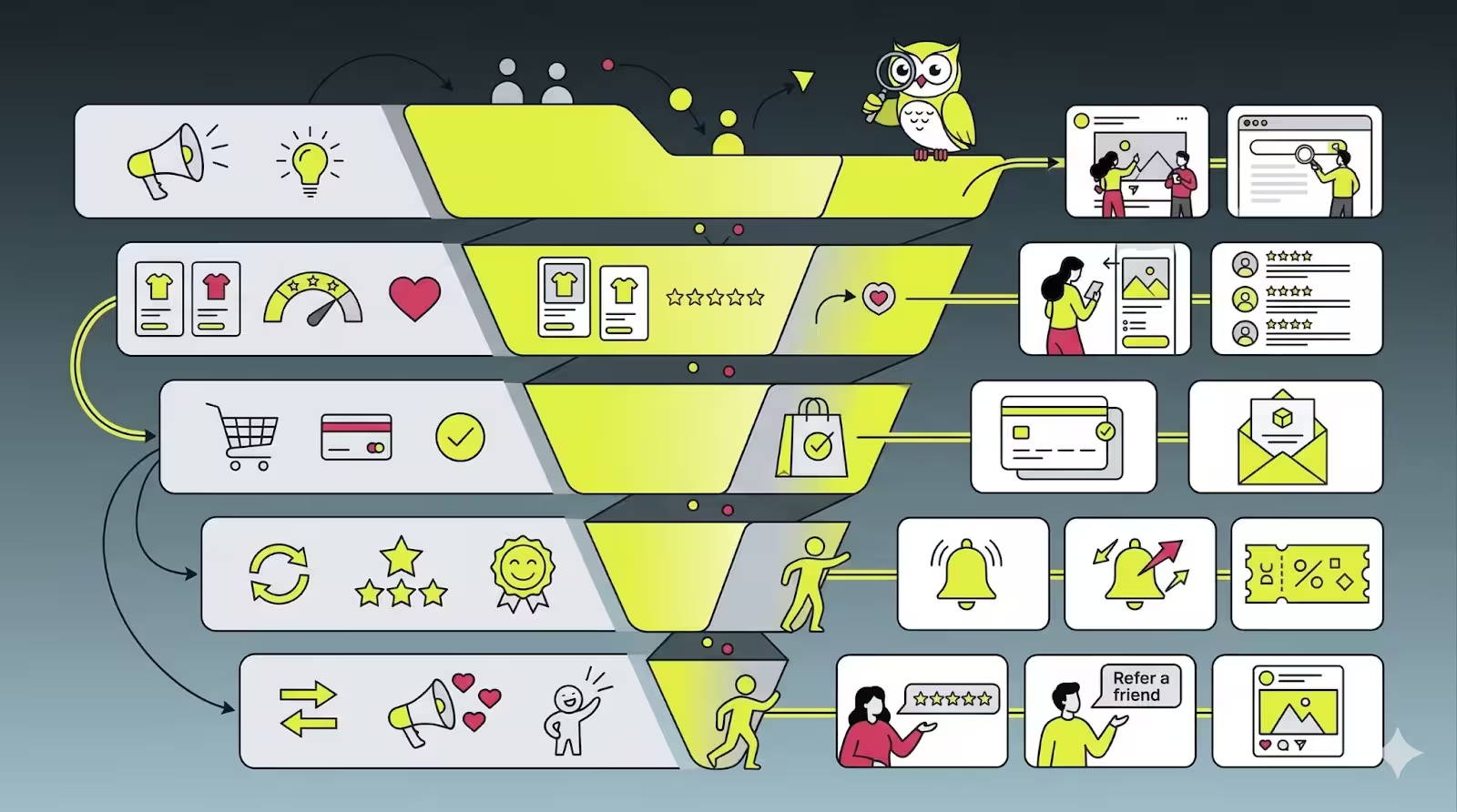
The ecommerce marketing funnel has 4 stages, with each stage representing a portion of your buyer’s journey. Here’s a closer look at all the 4 stages of the ecommerce marketing funnel and the strategies you can use in each one.
Awareness
This is the stage where people discover your brand. The goal of this stage is to convert visitors who don’t recognize your brand into those who do.
It is important to get this stage right because you will be raising awareness among a specific audience. The cost of this stage will help your product become profitable.
So, adopt the strategies that get your product in front of the right audience. The more precise your audience targeting is, the less you will lose on brand promotion.
Ecommerce brands usually start with paid marketing at the awareness stage. This is because paid social media marketing offers granular targeting, detailed reporting, and greater control over your campaigns. Here are the top marketing strategies for ecommerce brands at the awareness stage:
- Building organic following on social media
- Social, display, and search advertising
- Partner with influencers who have a similar target audience to your own
- Referral programs and affiliate marketing
- Using Search Engine Optimization (SEO) to show up on Google’s organic search results when people search for your product
- Ads on traditional media such as billboards, TV, and radio
- Ads on digital media like YouTube videos, podcasts, or newsletters
Consideration
This is the stage when people become aware of your brand and are considering making a purchase. The goal is to convince them to buy from you.
While the first stage focuses on determining whether the product is the right fit, the second stage is deciding if your brand is the right one.
If you sell products in established ecommerce categories, like soap or t-shirts, you will spend less time on the initial question and more time convincing people to choose your brand.
New ecommerce categories need to invest time and money in showing their target audience why they need their product. This is done by highlighting how your product helps people avoid common pain points and achieve their goals.
To create a successful consideration stage, you must understand how people decide to buy your products. You can then provide them with the relevant information to help them make a choice. Marketing for this stage can take place on both third-party channels and your own channels.
Top marketing strategies in the owned channels are:
- Create product-specific landing pages with benefits
- Promote your social proof, like testimonials and reviews
- Use pop-ups to convert your website visitors into email subscribers
- Use web push notifications to bring visitors back to product pages they viewed
- Use offers, discounts, and bundles to make your deal more attractive to the buyers
- Send email newsletters promoting your products
- Create urgency by offering limited-time offers
Marketing strategies in the third-party channels include:
- Create social media posts highlighting your product
- Retarget website visitors with display or social ads
- Collecting reviews on third-party platforms like Amazon
Conversion
This is the stage when your target audience decides to hit the purchase button.
The main goal is to simplify the buying process, creating as few obstacles as possible. You need to give people their desired payments and shipping options, and no technical bugs should happen during the buying process
Apart from creating a smooth checkout process, you also need to take steps to increase the likelihood of conversion and maximize the amount that paying customers spend at checkout.
The marketing strategies for this stage are:
- Set up abandoned cart emails to bring back those who didn’t complete the checkout process
- Add urgency through alerts that remind them when stocks are low
- Provide the ability to buy now and pay later, or even split up their payments
- Upsell and cross-sell customers to other products
- Include social proof through star ratings or reviews
- Cross-sell relevant products
- Send cart recovery push notifications when shoppers leave without completing checkout
- Send price-drop or low-stock alerts for products in the cart
Loyalty
All post-sales activities are included in this stage. There are mainly 2 goals of this stage: the first is to encourage your buyers to share about your online store with others, and the second is to get them to buy from you again.
The key to building loyalty is to repeatedly contact your customers throughout the buying process. This happens through email, SMS, and social media marketing.
Firstly, you need to get permission to contact your buyers again. Then, you can create post-purchase sequences to either encourage more purchases or ask for reviews or referrals.
Repeat buys are the most profitable for ecommerce brand. You have already paid to reach this audience. Retention-focused channels, such as organic social or email marketing, are cheaper to run.
Also, if you can leverage your existing customers to promote your brand through referrals, you can lower your overall customer acquisition cost.
The top marketing strategies for this stage are:
- Fulfill the purchase successfully
- Ask your existing customers to refer or review your product
- Promote your products on your social channels
- Promote products in your email newsletter
- Send offers and discounts via SMS
- Loyalty programs to encourage repeat buys
- Promotional content so people can make repeat buys
Ecommerce marketing funnel examples
Here are two ecommerce marketing funnel examples for inspiration:
Example 1: Electrolux washing machine
Awareness
Electrolux, a global leader in home and kitchen appliances, raises awareness of its washing machine range through display ads. These ads highlight what makes the product great, thereby sparking interest.
Consideration
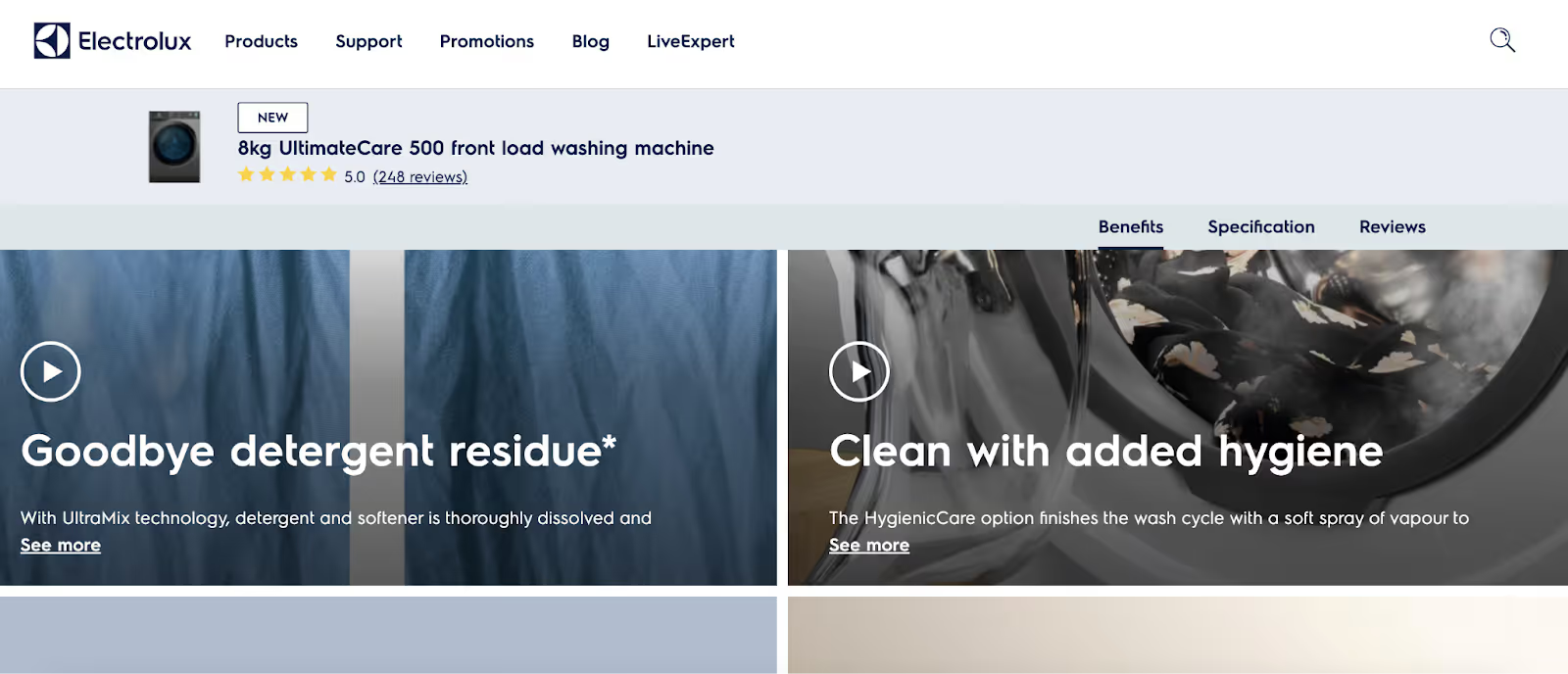
Once you get to the product page on the website, there’s plenty of information about the product's benefits.
Conversion
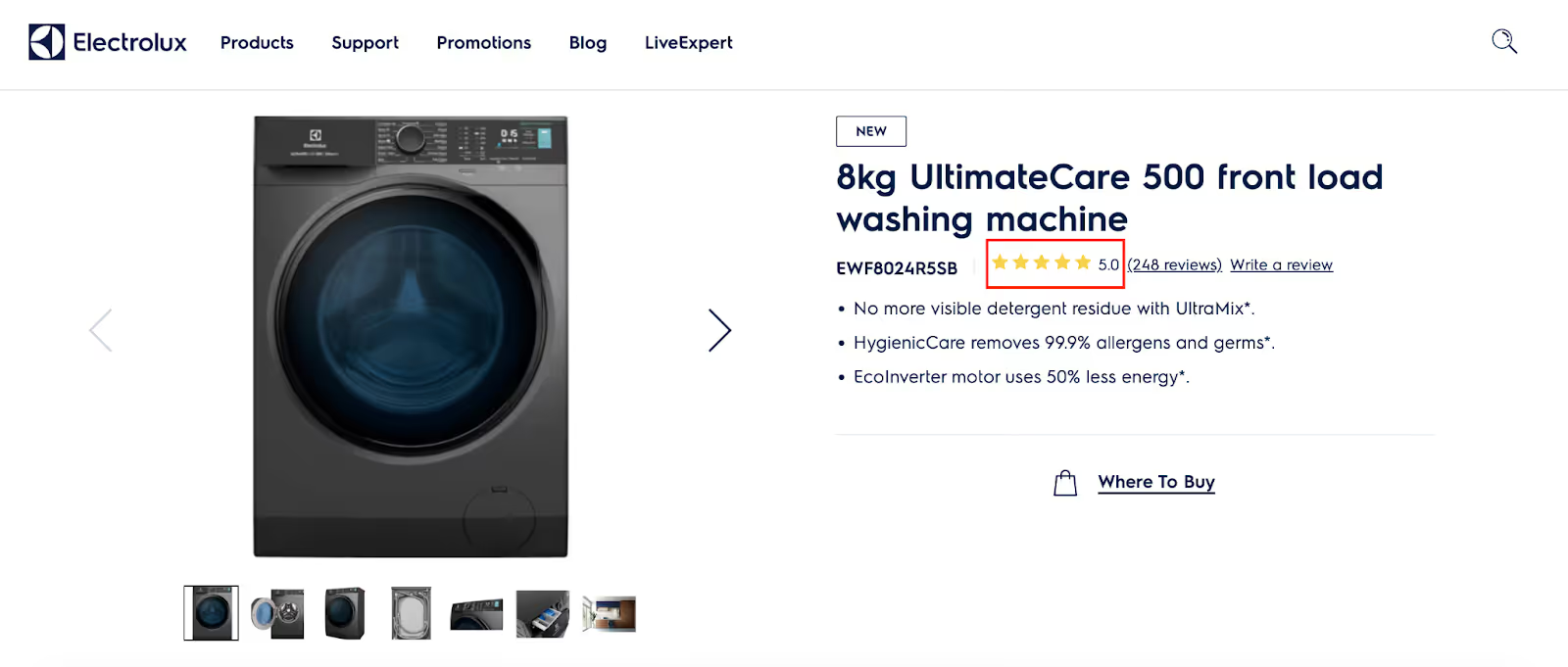
As part of the conversion process, Electrolux’s product page includes a discount, warranty information, a stock warning, and a star rating. The purchase page also includes several upsells and cross-sell options to increase the average order value.
Loyalty
People are unlikely to buy multiple washing machines. Hence, Electrolux boosts customer retention by promoting add-on services or other home products through an email newsletter, where it also asks for ratings and reviews.
Example 2: HVMN supplements
Awareness
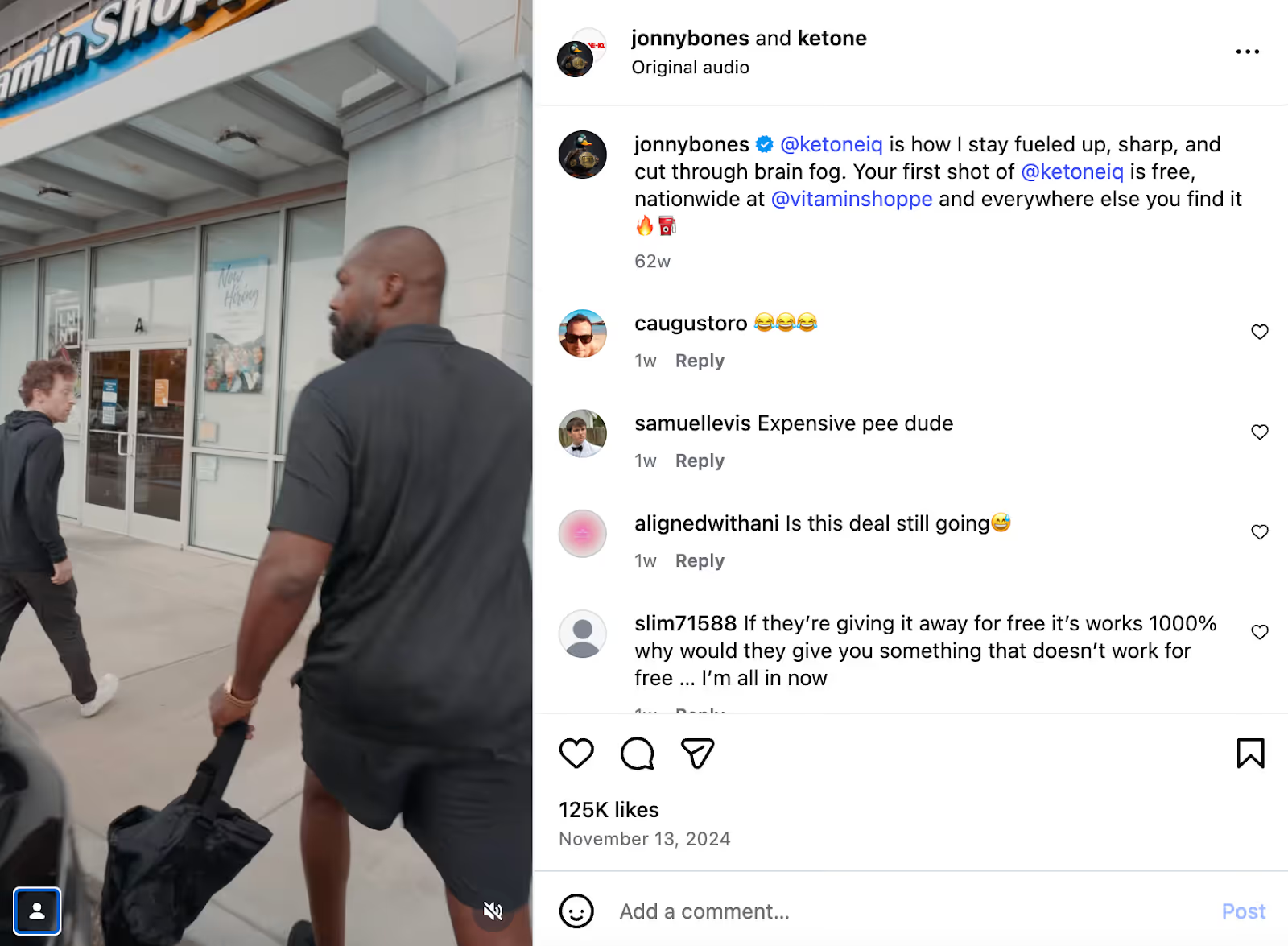
HVMN partners with popular influencers to generate awareness about its supplements. With this approach, they are able to reach a highly targeted set of audience interested in supplements.
Consideration
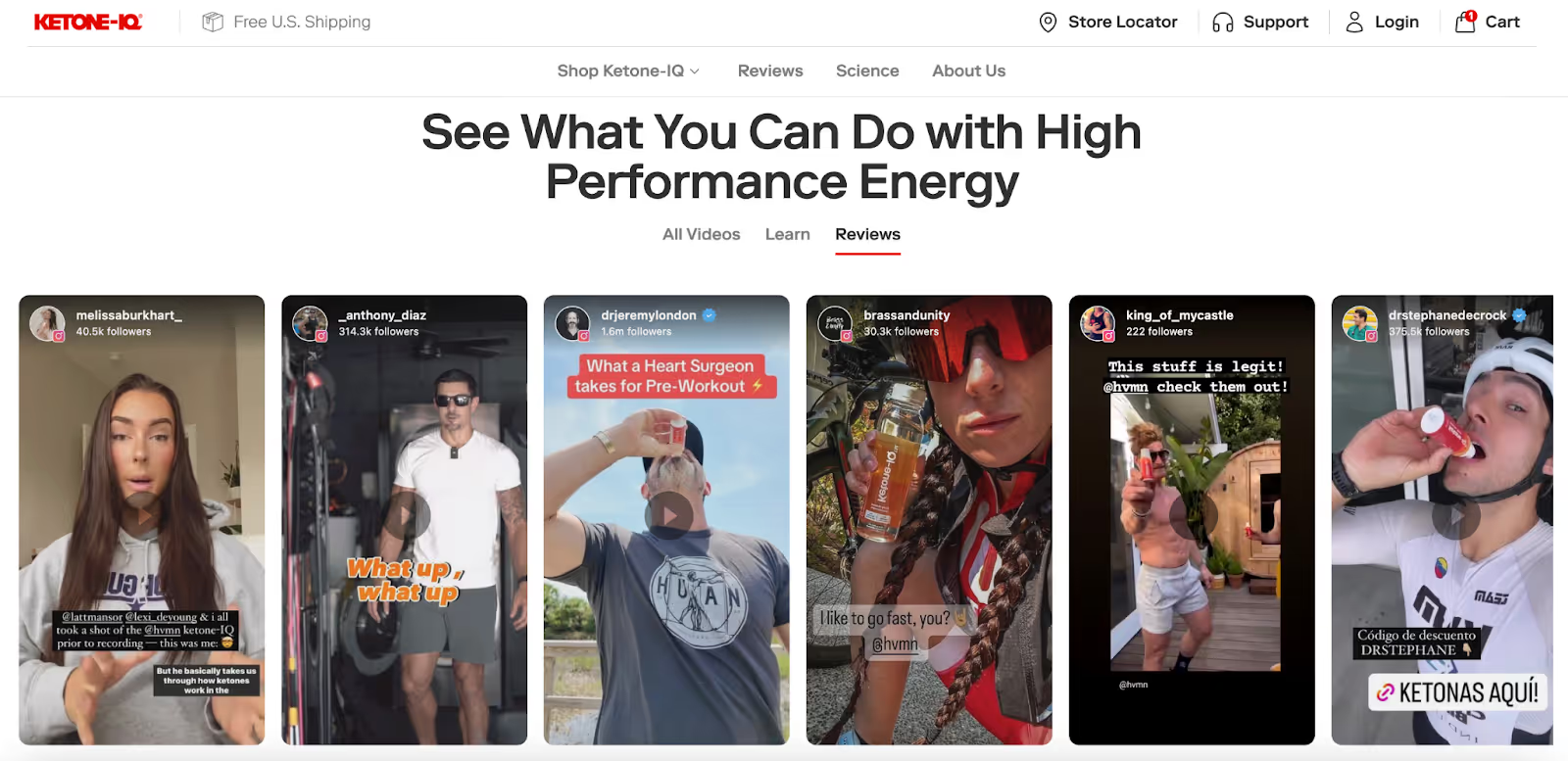
HVMN generates interest through sponsored content by highlighting the supplements’ benefits. They have built a landing page featuring customer testimonials, additional benefits, and reviews.
Conversion
HVMN optimizes conversion with user reviews, star ratings, product images, a bonus welcome kit, a promise of cancellation at any time, and multiple easy payment options.
Loyalty
HVMN lets buyers upgrade to a subscription, thus starting the loyalty-building process before the sale. They boost loyalty by including discounts for longer-term purchases or sending promotional emails after the initial sale.
How to measure your ecommerce marketing funnel?
You can’t avoid people from dropping off at each stage of your marketing funnel. But you can optimize each stage to increase the likelihood that people move from one to the next. Here is the data you should measure at each stage of your marketing funnel to understand its impact.
Awareness
Track the number of people who saw your ad content and clicked on it to visit your ecommerce site. Metrics to track include:
- Reach of your influencer partnerships or social posts
- Number of people who clicked on your ads. In other words, the cost per click (CPC) or impressions of your ads.
- Number of affiliate recommendations or referrals in a given time period
Consideration
Track the number of people who interacted with your consideration-focused content and initiated the buying process.
- Number of form conversions or email pop-ups
- Clicks from your consideration-focused landing pages on your website
- Number of clicks on the email campaign
- Clicks on retargeting ads
Conversion
Measure how your conversion-focused landing pages lead to sales. Your CMS can provide this data. You can also set up conversions on your website analytics platform.
You can also get more data by using a heat-mapping tool like Hotjar to see exactly which elements visitors click.
Loyalty
Measure how your loyalty campaigns result in recommendations or repeat purchases. Metrics to track are:
- Orders generated from email campaigns
- Number of successful referrals
- Number of reviews generated
- Sales generated by the coupon
Best Practices for Optimizing Your Ecommerce Marketing Funnel
Let’s end this guide with a learning about the best practices for optimizing your funnel so that you can easily maximize conversions on your site:
- Make your website navigation easy to follow: Create menus that are easy to use and guide customers to where they want to go. Make it easy for visitors to find the products they are looking for on your website by optimizing your site search.
- Make buying easy for your customers: Simplify your checkout process. Remove all unexpected expenses from checkout. Even offer multiple payment options to your consumers, such as PayPal, Apple Pay, Klarna, and card options.
- Remove hesitation: Erase as many purchase barriers as possible. Offer free returns and free shipping. Answer presale questions via a chatbot and display security badges prominently on your website.
It’s time to set up your ecommerce marketing funnel
An ecommerce marketing funnel is very easy to understand. You inform as many people as possible about your product. Then, you get them interested, convince them it’s worth buying, and keep loyal customers coming back for more.
The hard part is putting the strategies in place to make it work. But you have it all now with the strategies and examples given in this article.
To start, we recommend choosing 1 or 2 strategies from each stage and using them to build your basic funnel. You can then keep optimizing the funnel by sticking with strategies that work or choosing different ones when you aren’t seeing the results you expected.
Web push notifications are useful across multiple stages of the ecommerce funnel, especially for product reminders, cart recovery, and repeat purchases. PushOwl makes it easy to reach shoppers who have already shown interest in your products. You can follow up with timely messages that match where they are in the buying journey.