Your customer bought from you once.
And then never again.
-A two-line horror story for every Shopify store
This Shopify win-back campaign guide will help you avoid this situation. We go over how to automate win-back strategies and how top ecommerce brands re-engage lapsed customers without relying only on discounts.
You will be armed with all the win-back campaign tips and tricks we have discovered while studying over 150+ marketing emails from various Shopify brands.
Get inspired for your next win-back campaign and know what mistakes to avoid when trying to win over that lapsed customer who forgot about your brand after a single purchase.
What Is a Win-Back Campaign?
A win-back campaign is a series of emails, texts, or push notifications that collectively encourage a past purchaser to re-engage with your brand and buy again!) after a significant amount of time has passed since the last purchase (turning them into a lapsed customer).
What counts as “significant time?” We will cover that in later sections, but the main goal of an email automation for lapsed customers is to reactive them and improve repeat purchase rates.
Why Every Shopify Brand Must Have a Win-Back Campaign
Why focus on past dormant customers when you can invest in customer acquisition? Repeat customers spend 67% more than new customers, so you might as well target them. Further, targeting lost customers costs less than acquiring new ones.
It is not just less expensive and more profitable; it is also easier to recover dormant customers as opposed to acquiring new ones.
- Since they already have an existing relationship with your brand, you already have some basic data about them, which can help you target them in a more focused manner.
- The customer already has a basic understanding of your products, so you can focus on why they became inactive rather than onboarding them from scratch.
- Customers who have purchased your products are more likely to fill out the feedback forms you send them than cold leads who have heard nothing about your brand.
When brands have a win-back campaign in place, they can squeeze more out of their marketing budget.
Win-back Campaigns vs Regular Marketing Promotions vs Re-engagement Campaign
The main difference between a win-back campaign and a regular marketing promotion? Win-back campaigns are about reopening a conversation rather than pushing a sale.
Regular marketing promotions will drive immediate sales, whereas win-back campaigns will help bring former customers back into your regular marketing efforts.
And the main difference between a win-back campaign and a re-engagement campaign is that the latter targets subscribers who may not have purchased but are still opening your emails and engaging in other ways.
Knowing which to send is vital. Here is a handy table to understand the difference:
Elements of Successful Win-Back Campaigns
To execute a win-back campaign, ensure that the following components are present:
Lapsed Customer
You won’t need a win-back campaign if you do not have a lapsed customer.
A lapsed customer, or a dormant buyer, is someone who has not bought from you for a specific period of time.
You get to decide how many days have passed since the last order before triggering a win-back automation or a win-back campaign.
Win-Back Campaign Triggers
Triggers define when a customer enters the win-back automation. The most common behavioral trigger is the number of days since the last order. Depending on the type of product you sell and the typical purchase frequency, you can set it to 60-180 days.
Triggering too early risks cannibalizing regular repeat purchases. And triggering too late reduces relevance.
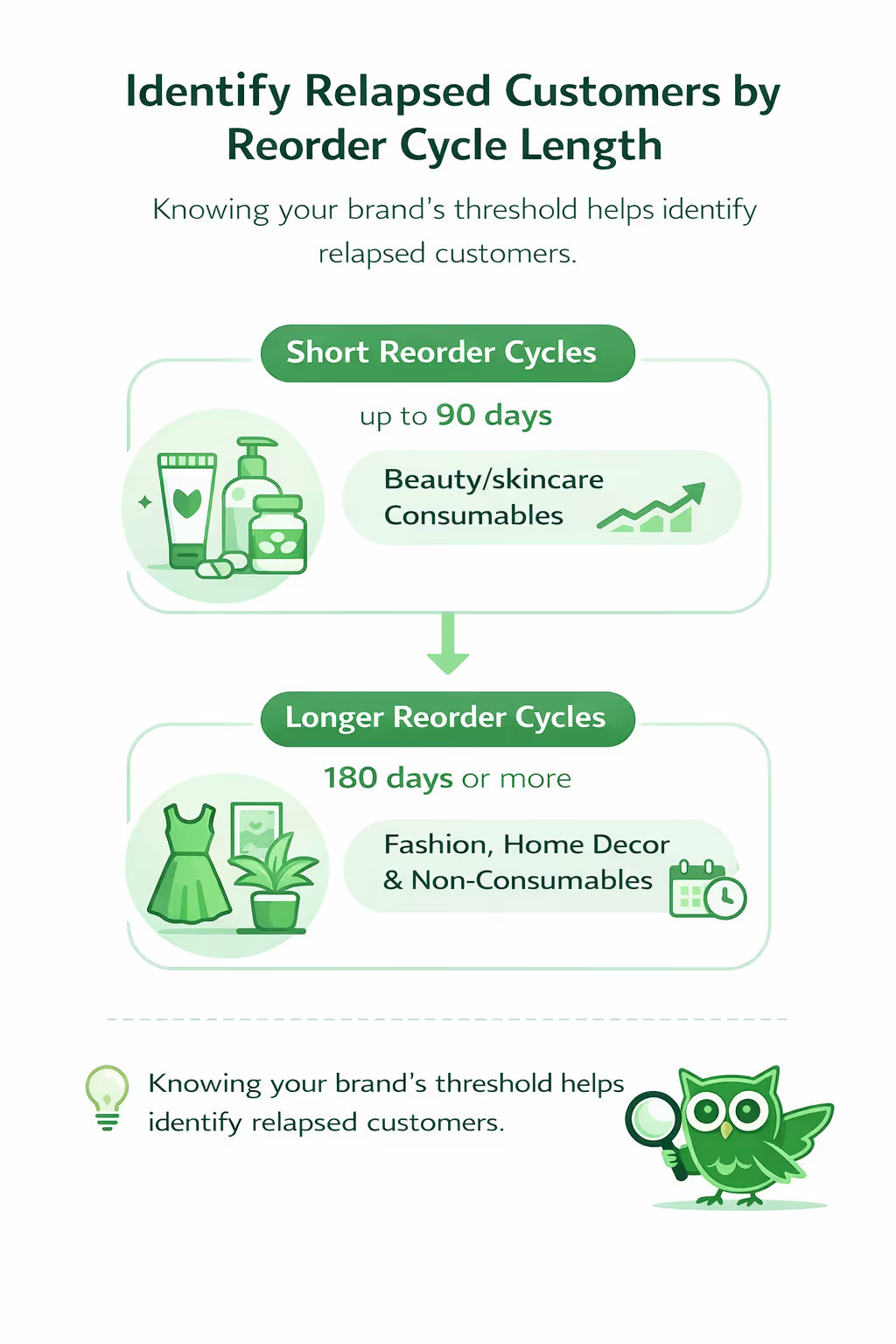
For some stores, win-back campaigns will not make sense for a year or more. If you run a furniture or mattress business, it does not make sense to mark a customer as “lapsed” since the furniture/mattress can last for years.
Segmentation Filters For Win-Back Emails
Not all lapsed customers need to be targeted with a win-back campaign. You can apply the following filters to determine which of the lapsed customers are likely to respond to a win-back campaign or even how to target them:
- Customer status: Did the customer cancel or ask for a refund? Then they are likely not to respond to a win-back campaign.
- Lifetime value (LTV): Setting an LTV threshold lets you deprioritize low-value customers. Customers with low average purchase value or a purchase history consisting of a one-time discount item are often low-intent and will not respond to a win-back campaign.
Engagement levels: Customers who still engage on your social media posts or respond to emails/surveys even though they are not purchasing can be targeted differently (incentives related to what kind of product posts/emails they engage with)
Pro tip: When applying filters, ensure you set narrow criteria. A common mistake brands make is including active customers in their win-back campaigns because their win-back filters are vague or lack exclusion criteria.
Knowing who to exclude is as important as knowing who to include as targets of your win-back campaigns.
Length of Win-Back Automation
Win-back campaigns have to feel like soft nudges, not a barrage of salesy emails.
A/B test messaging sent across a period of 2-3 weeks. Adopt an omnichannel retention approach (more on this later) so you are not spamming the lapsed customer on a single platform.
Incentives
You can adopt the same approach as with cart abandonment recovey automations. Offer reminders first, in the form of product recommendations or brand updates that the customer may have missed.
Follow it up with free shipping incentives.
If that doesn’t work, discount incentives can be the final push. If discounts do not work either, and you do not know the reason for customer churn, you can remove the customer from your email list.
This final step is essential to maintain a healthy list of engaged subscribers.
Time-Based Suppression Rules
Suppression rules let you exclude specific customers or segments from receiving marketing communications.
Reasons for excluding them could range from the relevance of the communication and recipient preferences to legal regulations. When you have the right suppression rules in place, the likelihood of your emails being marked as spam decreases, thereby improving email deliverability.
Once you send your email win-back campaign to lapsed customers, your post-automation suppression can include:
- Excluding customers for 30-90 days from receiving further emails after you are done executing the win-back campaign
- Removing customers who purchase mid-automation (that means your win-back campaign worked, so you can shift them to the segment that receives regular promotional emails)
- Preventing overlap with ongoing promotional campaigns that are not relevant
Without suppression rules in place, you risk sending win-back campaigns to the wrong people.
Identifying the Right Segments for Win-Back Campaigns
We spoke about filters and criteria for lapsed customers, but how does that logic convert to customer segments for win-back campaigns?
To achieve high engagement with your win-back campaigns, you need to create targeted segments and tailor your messaging to each one. Here are some segments you can create based on Shopify metrics, order history, email engagement data, and other cues:
Customer Value Tier
Purpose: Segmenting by value ensures you are not training all lapsed customers to receive discounts, and your incentives are proportionate to the ROI you can expect to receive.
LTV (life-time value) is a great filter to distinguish between high-value vs low-value customers:
Purchase History Segmentation
Purpose: Targeting based on the depth of the customer relationship ensures you hit the right balance in your marketing copy
Order history gives multiple clues for win-back campaign’s customer segmentation if you know how to analyze the data:
Price Sensitive Customer Signals
Purpose: Helps identify what kind of incentive is requiredPrice-sensitive segments can be of various types:
The above segments add context to your win-back segments so they land in the right customer’s inbox.
Types of Win-Back Emails
Your Shopify win-back email automation should include at least one of each of the following types of email templates (of course, if a customer purchases before the end of the campaign, do not let any of the subsequent emails slip through to them):
Win-Back Email Type 1: “We Miss You” Check In
Levi's captures lapsed customers with this fun text conversation-style email:
Why it works: The email copy is fun and friendly with a denim chat background, which helps with visual recall. The email does not put pressure on the customer to buy anything and actually acknowledges that they might have too much on their plate.
The option to unsubscribe is clearly presented with no hard feelings, making it more likely that a customer will not opt in.
Win-Back Email Example 2: Value Reminder + Social Proof
A lapsed customer does not need your entire product catalogue to re-engage. Instead, spotlight your best products and feature persuasive reviews to remind them about the value your brand brings to the table.
Fable, a dog accessories brand, reminds its lapsed customers of its best-sellers and why customers like them:
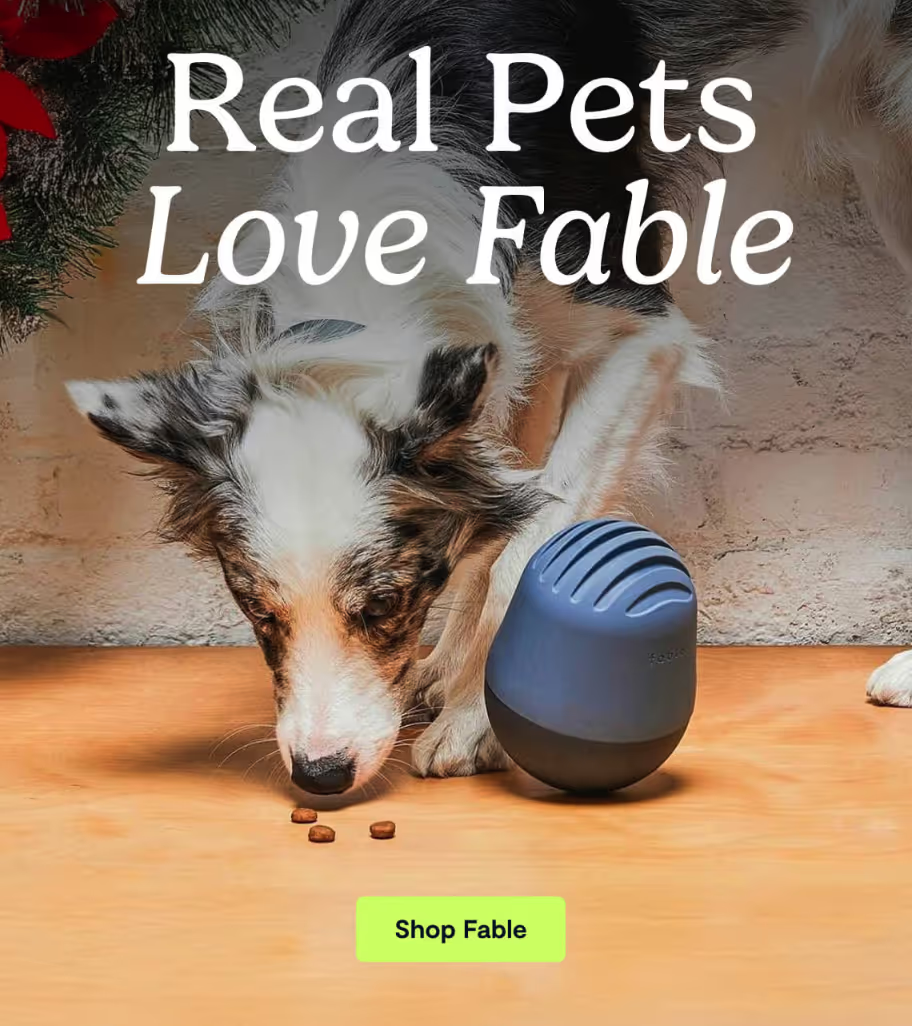
The email features crisp reviews and vibrant product images to “soft-sell” their products:
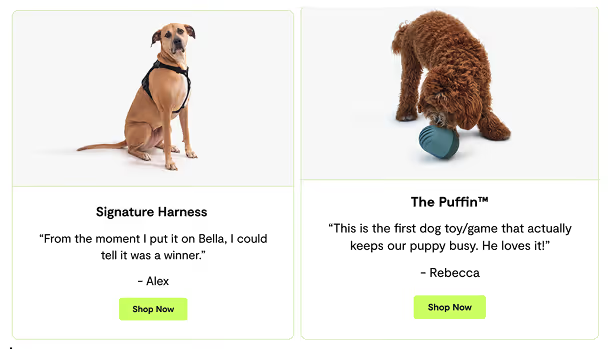
Why it works: The email does not directly push the customer to buy. Instead, it features powerful social proof (the adorable dogs posing with the products help too!)
Win-Back Email Example 3: Incentive-Driven Offers
If soft nudges aren't helping with jumpstarting abandoned customer journeys, it is time to offer tangible value. Discounts, free shipping, loyalty points; regardless of which incentive you pick, remember to make it time-sensitive to create urgency.
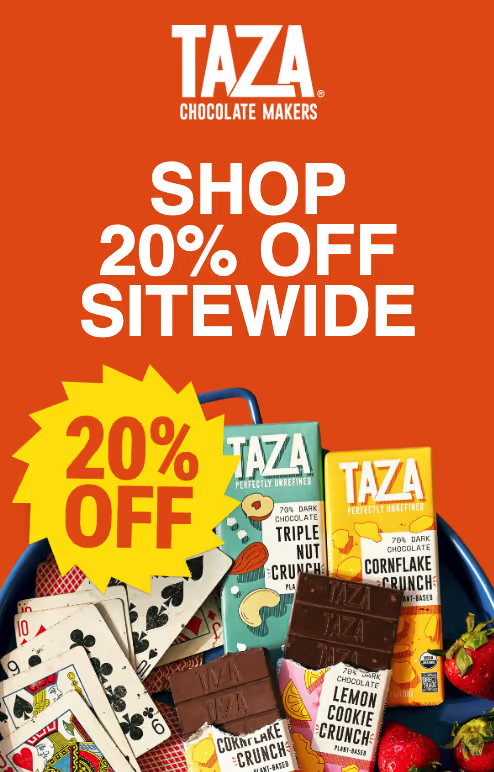
Taza Chocolates includes incentives in its win-back campaign with vibrant imagery:
…and a friendly note:
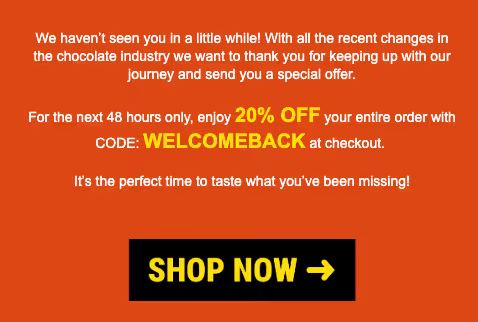
Why it works: It acknowledges that the customer hasn't shopped with them recently and thanks them for sticking around, rather than guilt-tripping them. The time-sensitive discount and easy-to-recall discount code will incentivize any customer considering a repeat purchase.
Win-Back Email Example 4: Last Chance
If the customer does not come back despite a discount, pricing objections are not the issue.
It’s best to simply ask the customer whether they want to be removed from the email list. While doing so, offer them a path to explain why they have not repurchased from you. This two-way conversation can help you better target the customer.
Doppler, a SaaS brand, simply asks with this clean and aesthetic email:
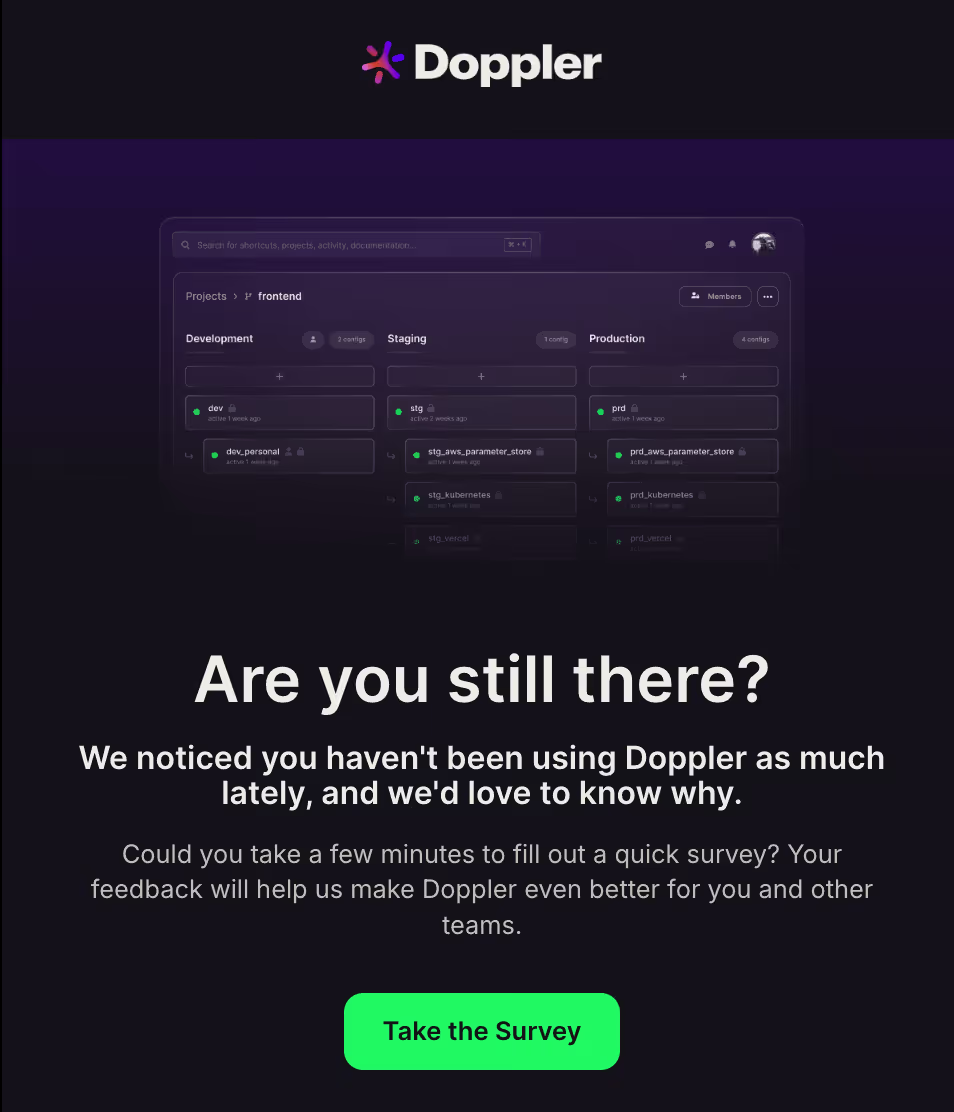
Why it works: The “are you still there?” is bold, and the email copy stands out against the dark background. The CTA button also pops out and encourages the customer to give feedback.
Win-Back Email Example 5: Sunset Email
If you receive no response to a survey or any additional feedback, you can assume the customer wants to be taken off your email list. You can send a final farewell email to clearly communicate to the customer that they will not be receiving any further marketing emails from your brand.
Keep the tone balanced, like this email by the Conscious Creator Academy does:
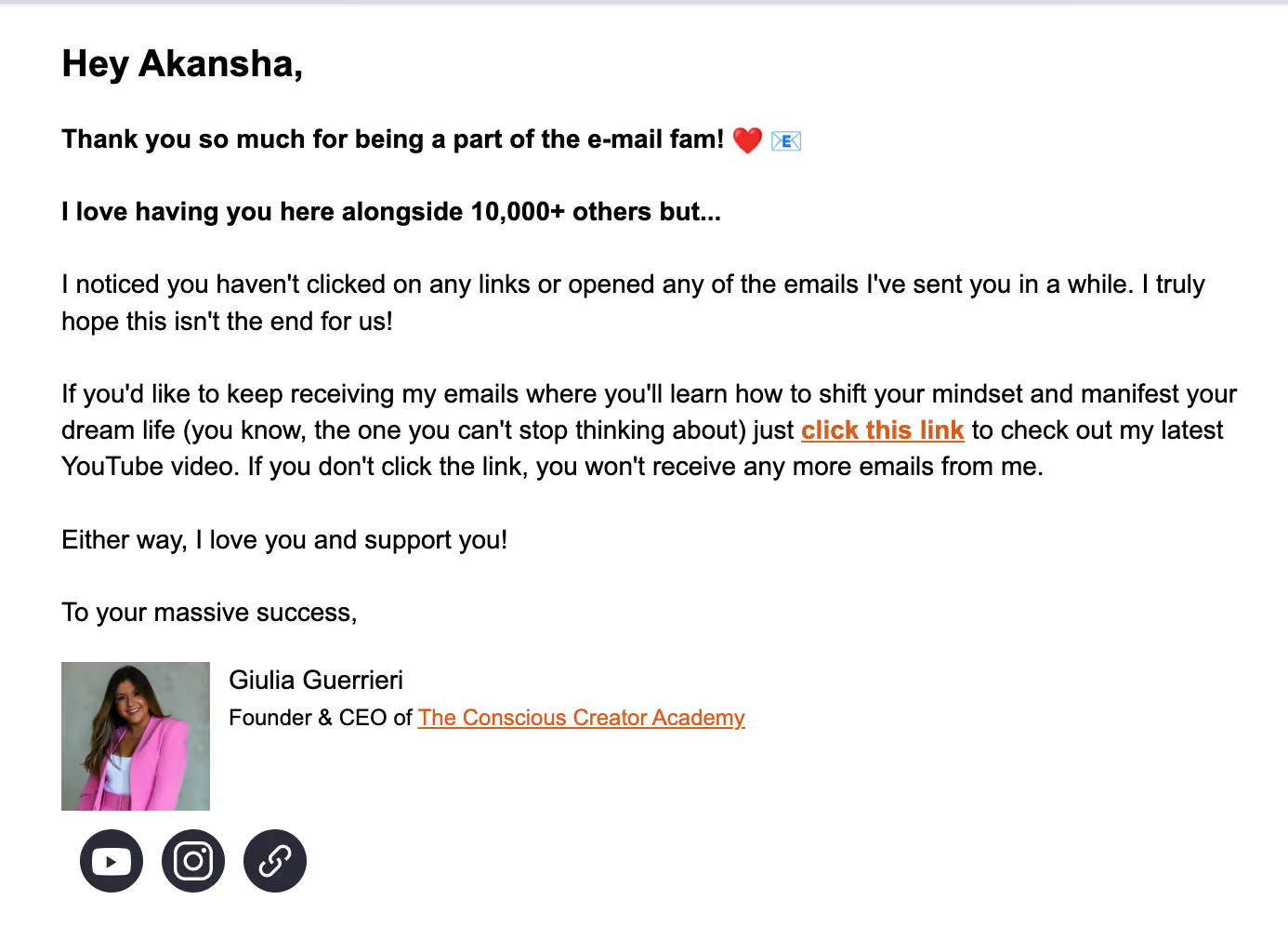
Why it works: The email copy expresses gratitude, highlights the size of the subscriber base, and explains why the brand will not be sending further emails. It presents an opt-in link, rather than an opt-out/unsubscribe link, thus encouraging explicit action rather than passive withdrawal from communication.
How to Execute Powerful Win-Back Campaigns
Shopify’s native automation tools and email features can be used for barebones win-back campaigns, even without a dedicated retention platform.
While native automations support basic win-back use cases, they often require more manual segmentation and maintenance as complexity increases. especially when layering incentives and exclusions. And they are often not suitable for omnichannel strategies.
Most win-back automation setups rely on:
- Customer segments built around order history and inactivity
- Time-based delays to simulate lapsed behavior
- Conditional logic to exit customers who repurchase mid-automation
A typical step-by-step e-commerce win-back automation looks like:
For more advanced Shopify win-back strategies, brands typically turn to automation platforms that offer deeper automation controls and cross-channel coordination.
Non-Discount Strategies To Include in Win-Back Campaigns
Discounts should not be your default win-back strategy. They will work, but they will also train your customers to disappear just so that they can receive discounts.
Moreover, price objections are not the only reason customers become dormant. It could be due to relevance, attention, or quality issues. Caleb Johnstone, SEO Director of Paperstack, puts it succinctly:
“Customers are more responsive to meaningful benefits than to standard discounts.”
Non-discount strategies focus on product-led retention. They open the conversation to feedback that you can address, rather than spamming the customer with discount codes they may not need:
Product-Led Reminders
Win back customers by anchoring messages to what they actually bought or browsed, such as:
- “Back in stock” nudges for previously purchased items
- Usage or replenishment reminders tied to past orders
- New product announcements or improved formulations
Forged Flare, a brand that sells handcrafted ornaments, sends back-in-stock emails to deactivated customers. It’s not focusing on the fact that the customer has not bought from them in a long time. It simply reminds the customer that one of their out-of-stock products is back:
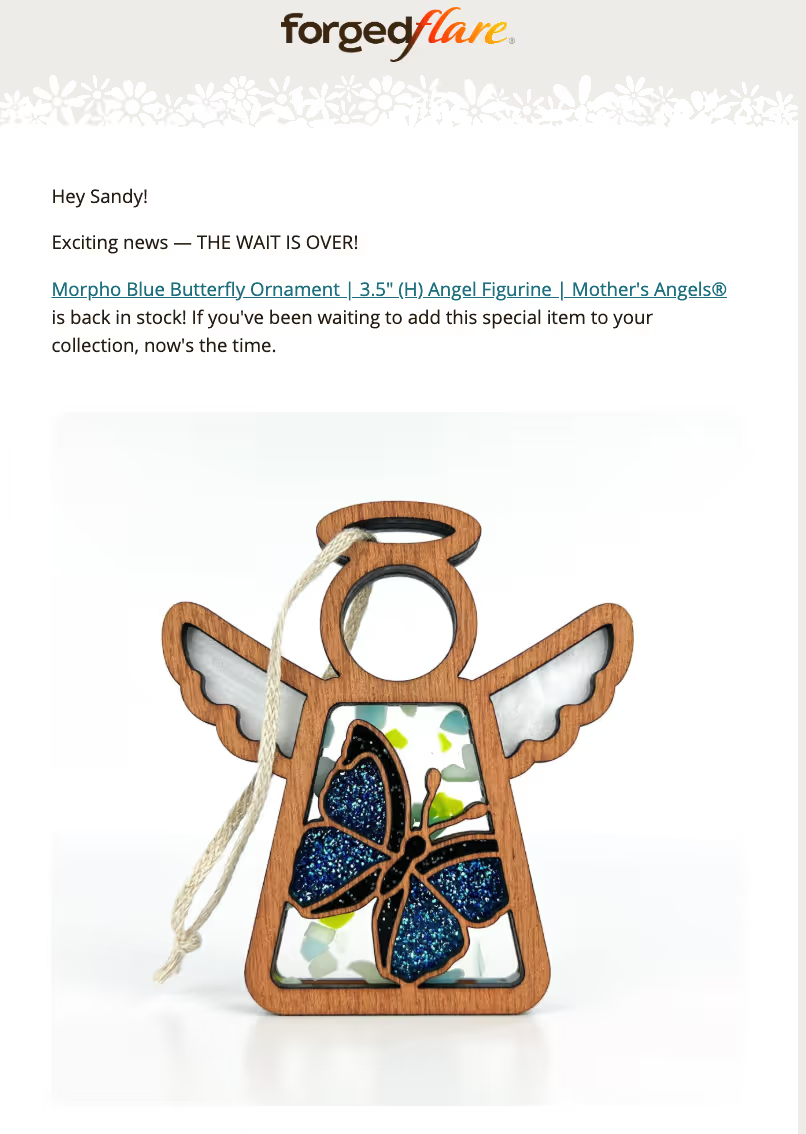
The subject line “Psst… It’s back on our website” piques curiosity.
Newness and Discovery
Some customers buy once from your brand, perhaps a last-minute gift for a friend, or an office Secret Santa party, and then forget about your store altogether. They have no fixed repurchase cycle in your system. Urgency will not work on them, but what can be effective is: Novelty.
Include the following ways to win them back:
- Highlight new arrivals in a category the customer has shown interest in
- Showcase curated collections rather than single products
- Introduce limited-run drops without time pressure
Immi, the popular ramen brand, tries to win back customers by cheekily acknowledging that they may have ignored previous emails about a new product:
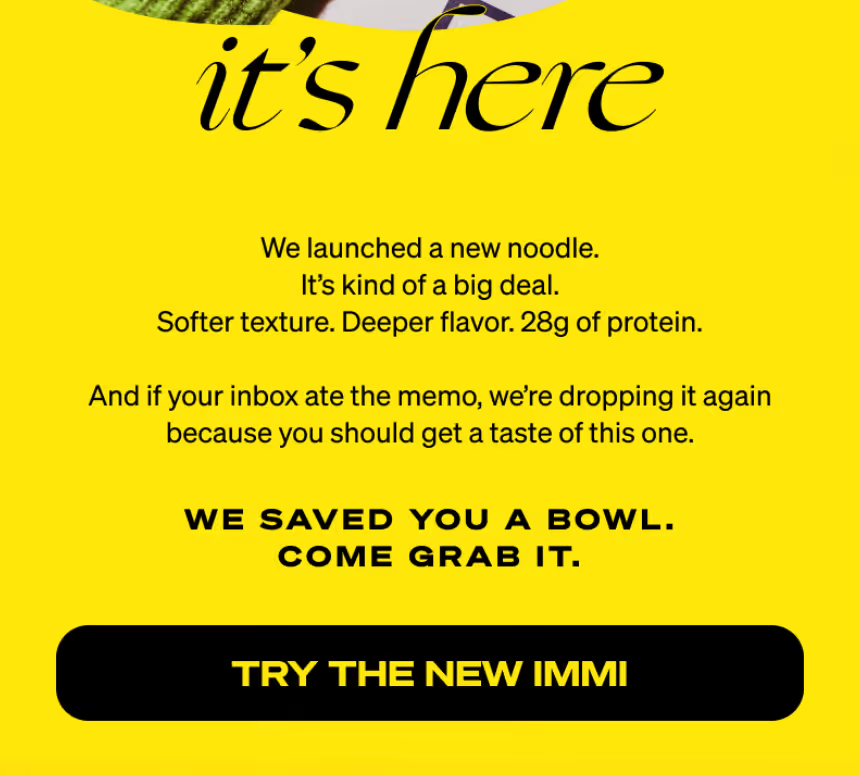
“And if your inbox ate the memo, we are dropping it again…” is genius. The subject line for this email is simple: “ICYMI: the new immi is live!” which further drives home the point.
Customer Education Series and Use-Case Framing
Want to target customers who didn't understand how to care for or use your product and therefore never fully got on board with your brand? Try these win-back strategies rather than a discount:
- How-to content or setup guidance
- Use-case reminders tied to real scenarios
- Product pairings or routine suggestions
This is what Graza, a gourmet olive oil brand, sends customers who have not engaged with the brand for a while:
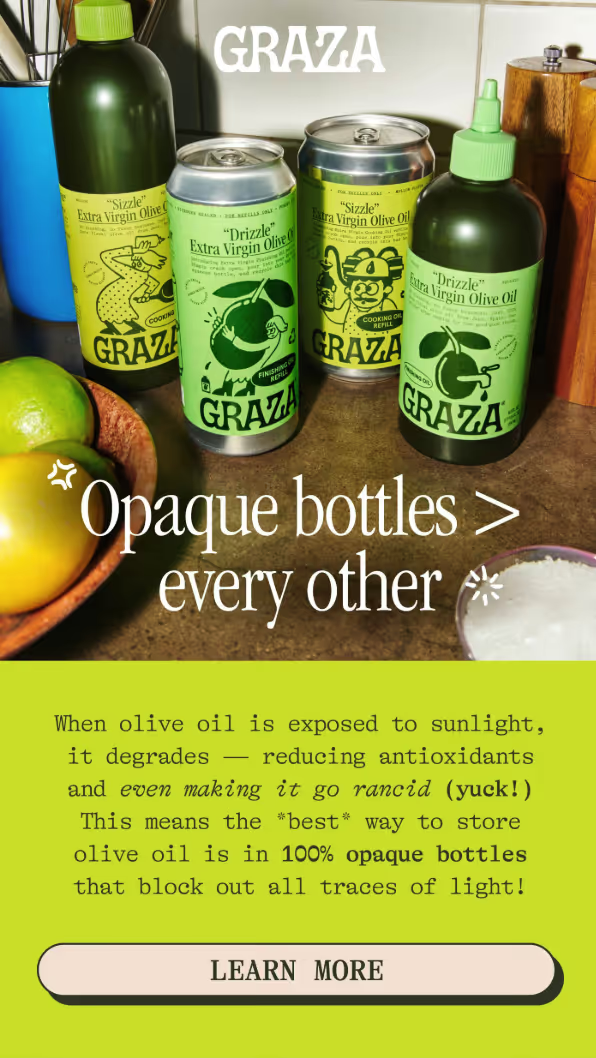
This email targets customers who might realize that they did not like the product only because they stored it incorrectly. The email copy is thus indirectly nudging them to give the product another chance. For customers on the fence, such emails may be the final push.
Preference-Based Email Marketing
Some customers lapse because brand communication no longer matches their needs. A non-discount win-back marketing strategy is to:
- Invite customers to reset preferences (frequency, categories, channels)
- Let them opt into fewer messages rather than none
- Reframe the win-back as control
This marketing strategy works well for customers with a solid purchase history but low engagement. They are showing signs of fatigue, not churn, so that you can have an honest conversation about their needs.
Non-Discount Incentives
If no win-back strategy has worked, try the following before rolling out a discount code:
- Fixed credit
- Free shipping
- Gifts with purchase over a certain threshold
- Loyalty points reactivation
- Early access to product drops or sales
Subject Lines For Win-Back Emails Customers Won’t Scroll Past
Subject lines and preview text decide whether a win-back email earns attention or gets ignored. For lapsed customers, this moment matters even more since interest is fragile.
Below are high-converting subject line blueprints you can adapt based on customer context and stage in the win-back flow.
Early Win-Back Touches (Reminder & Relevance)
Use these when the goal is to re-enter the conversation without putting pressure :
Why these work: They assume goodwill and familiarity.
Mid-Stage Win-Back Touches (Relevance + Momentum)
Use these once the customer has seen you again:
Why these work: Urgency and curiosity-driven subject lines will push a customer to engage.
Late Win-Back Touches (Decision Trigger)
Use sparingly, and only after relevance-led attempts:
Why these work: At this stage, clarity and finality make an impact with emotional triggers in the subject lines.
Best Practices for Win-Back Campaigns
We have given you all the email inspiration for Shopify win-back campaigns, so here are some best practices to ensure you do not forget the classic rules for marketing communication:
Urgency and Scarcity Tactics
We do not mean peppering the email copy with flashy sale signs in capital letters or dollar emojis. Nor do we mean discounts.
Instead, you can include countdowns, point out that stock is limited, and offer other time-sensitive perks to drive customer action.
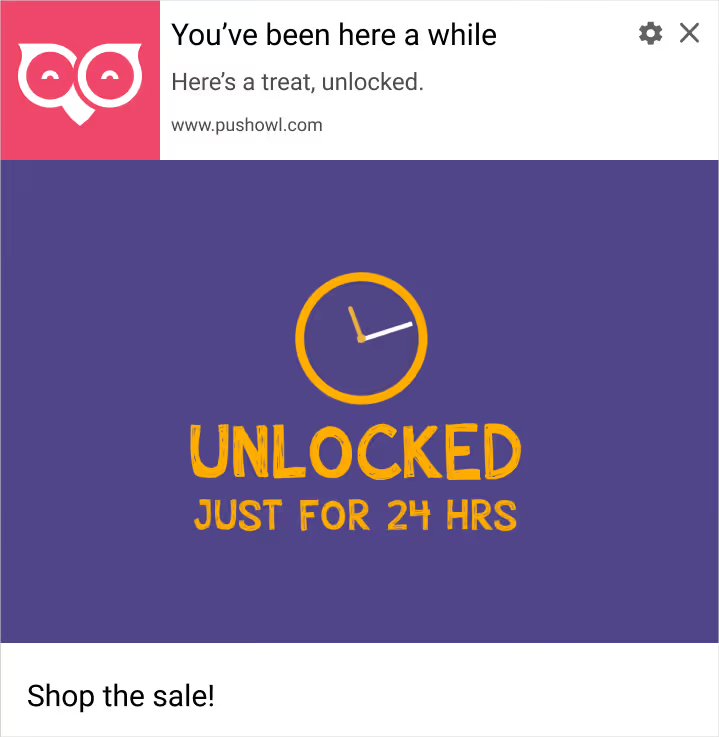
Gamifying your copy is a great way to reignite interest in your brand and products.
Maintain Balanced Brand Tonality
All the Shopify brand emails we shared have one thing in common: their email copy is neither pushy nor desperate. Win-back emails work best when they acknowledge the customer’s absence without over-explaining.
When you approach the lapsed customer with curiosity about why they haven’t engaged, you avoid sounding transactional. Maintain consistent brand voice in your win-back emails for cohesiveness and approach with empathy.
Email Personalization Techniques Always Win
Even small cues that indicate familiarity can reset brand perception in the customer’s mind.
Here is a quick personalization checklist for your emails:
Win-back emails that do the above are less likely to lead your customer to the ‘unsubscribe’ button.
Use Email Headers and Footers
Dynamic recommendation blocks, whether as headers or near the email footer, are the best real estate for new arrivals, cross-sells, and other product recommendations.
They not only provide easily skimmable visual breaks but also serve as gentle nudges to explore products.
Mistakes To Avoid While Executing Win-Back Campaigns
Win-back campaign emails can have the most persuasive copy and product images, but if the campaign suffers from fundamental flaws, you will not win back customers; instead, you will push them further away.
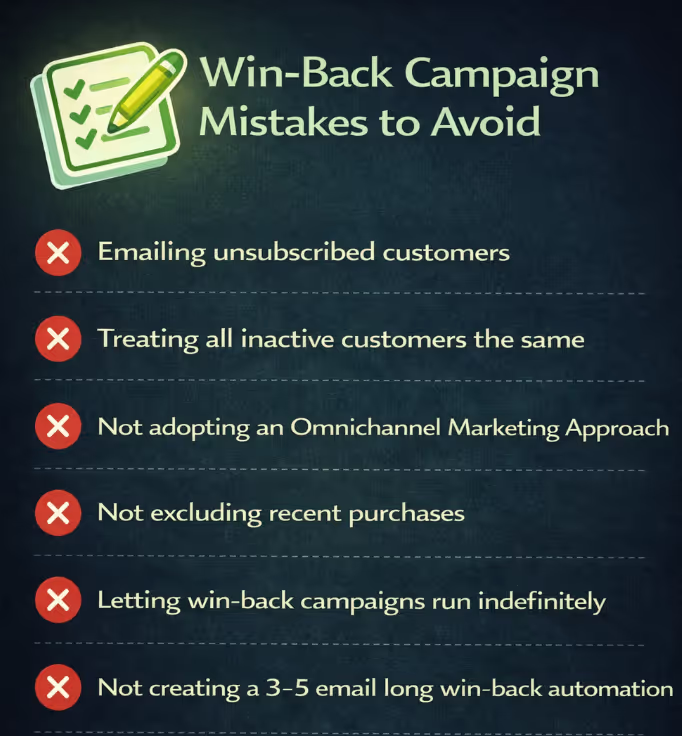
Some common win-back campaign mistakes to steer clear of:
- Emailing customers who have taken the time to opt out: You erode deliverability, but also risk ruining brand perception.
- Treating all inactive customers the same: Win-back requires segmentation; there is no way around it.
Expert e-commerce marketers also avoid the following mistakes while rolling out reactivation automations:
Not Adopting an Omnichannel Marketing Approach
Email inboxes are crowded with all kinds of promos. Relying purely on email campaigns in 2026 is not a good strategy. Distribute your win-back campaign across channels so that no channel bears the entire burden, and the channels don't operate in silos.
For example, the first “we miss you” email can be followed by a push notification about a new arrival, followed by an SMS a few days later offering a gift on repurchase.
Not Excluding Recent Purchases
Your win-back campaigns must have clear re-entry and exit points. Even a single purchase in the middle of the automation is a clear sign to end the automation.
Failing to remove customers who purchase mid-flow creates a poor experience and can actively hurt customer retention rates. So do not forget post-purchase suppression windows and immediate exit on purchase.
Letting Win-Back Campaigns Run Indefinitely
Every win-back automation should have a defined end, a post-flow cooldown period, and clear re-entry rules, so you cannot let your win-back campaigns run endlessly. Putting your customers through endless cycles to win them back will likely lead to angry reviews.
Not Creating a 3-5 Email Long Win-Back Automation
And the other end of the spectrum is faulty too.
Running one “we miss you” email and calling it a win-back campaign will not help capture lapsed customers. Win-backs work best as short, sequenced automations that give customers multiple chances to re-engage over time, with various kinds of incentives and bids for connection.
Win Back Your Customers in 2026 With PushOwl
Want to build winback campaigns that bring back lapsed customers using Shopify data without constant manual work? PushOwl makes it easier to turn these frameworks into automations across email, SMS, and web push notifications.
Multiple chances to re-enter the conversation.
Without relying on discounts as the first move.
Try PushOwl for free, and watch your customers flock back with repurchases.