If your birth year starts with “19…”, you do not want to be reminded of your birthday.
Unless it comes with a gift or something fun.
Right?
Your customers feel the same.
Why not turn their birthday months into an opportunity to connect beyond welcome emails and ACR emails and build genuine customer loyalty?
In this article, we cover the often-ignored art of sending birthday email campaigns that convert and do more than just sound like every other generic birthday wish.
We spoke to e-commerce marketers about how they have helped Shopify stores build goodwill (and conversions!) with this annual birthday email marketing campaign.
What Are Birthday Email Campaigns?
Birthday email campaigns for Shopify stores help connect with customers during their birthday month through automated emails, SMS alerts, and push notifications. These emails are crafted specifically to acknowledge the customer’s birthday with a bright, celebratory tone.
Set up your fully automated birthday campaigns with PushOwl in under minutes
Celebratory campaigns such as birthday emails are not the same as generic promotional blasts:
Birthday email campaigns for Shopify stores cannot replace general promotions, but they have lots of benefits:
Why Do Birthday Emails Outperform Regular Campaigns?
According to Drip’s 2024 Marketing Automation Report, the highest open rates came from birthday and anniversary campaigns, with 24.43% of customers opening these emails. And CTR? 15.86%.
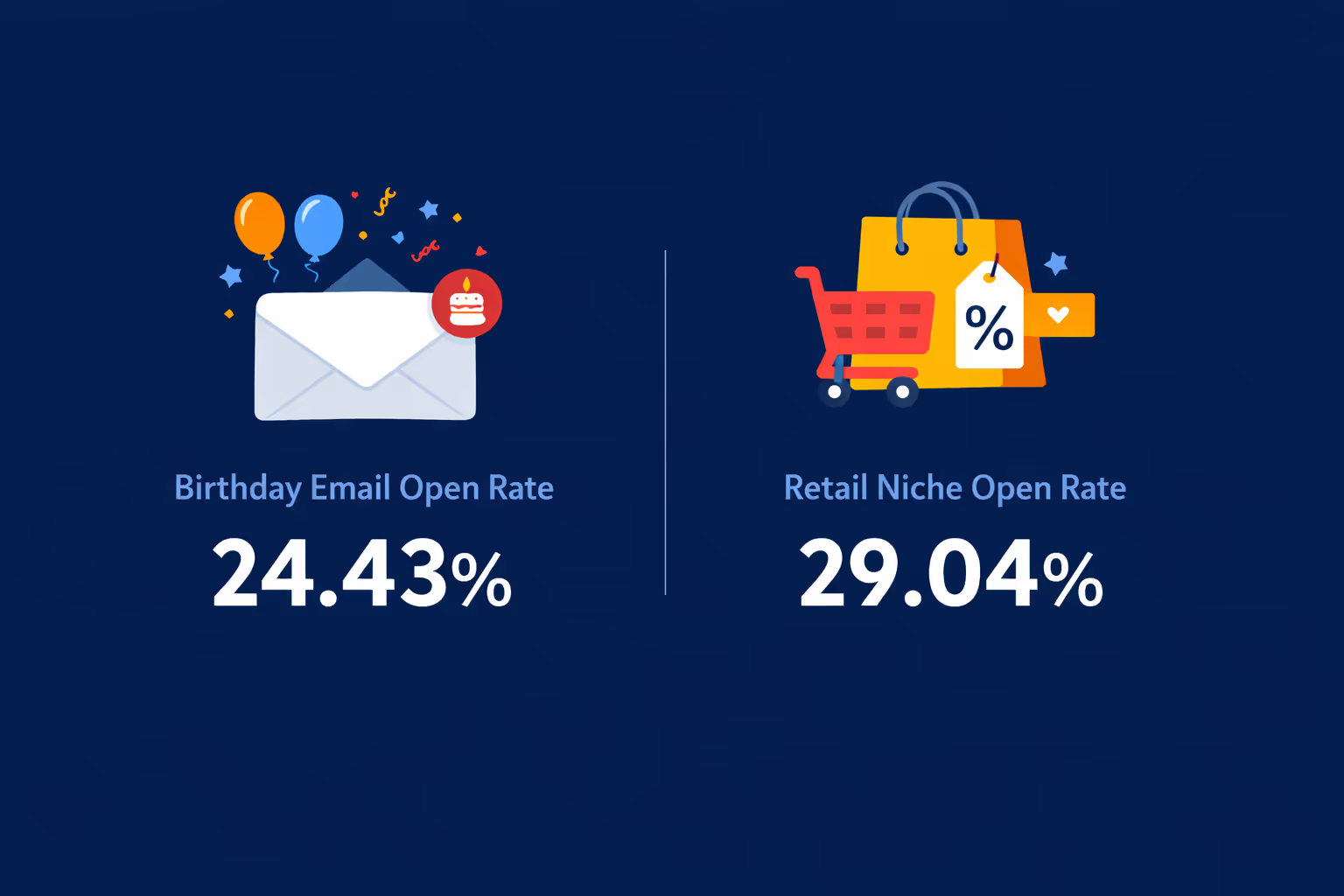
Those numbers are impressive, given that the average open rate in the retail niche is 29.04%.
(Source: Brevo’s Marketing Benchmark 2025).
The reason for this is that with Shopify birthday emails, the surprise element is high.
A customer will not necessarily notice if a brand does not send them a birthday email. But if the brand sends one and is intentional about it, it will stand out in the customer’s mind.
45% of customers will shop during their birthday month if they receive a birthday email, so you should put your hat in the ring with a birthday email automation.
But the main reason why birthday campaigns perform better than regular promotions is the level of personalization you can inject.
How do you do that?
Himanshu Agarwal, a marketing expert and co-founder of Zenius, with over a decade of experience, suggests the following:
When your customers’ birthday emails are not generic promos, they will outperform your regular campaigns.
How To Collect Customers’ Birthdays Without Annoying Them
While customers like birthday treats, privacy concerns keep them from openly sharing personal data. This is where you have to show you are an ethical brand that will not misuse the data you collect.
When asking for a customer’s birth date, ensure you are establishing the following:
The above are some of the many GDPR rules you must follow when collecting customers’ birth dates.
Now that you have the compliance bit sorted, here are the stages of the customer journey during which you can ask for birth dates:
At Checkout
The checkout page is a high-intent moment for the shopper. You can ask them to input their birthday while they fill out their purchase details. Remind them of what they will receive as a birthday perk.
Here is how Sephora prompts a customer to create an account while checking out:
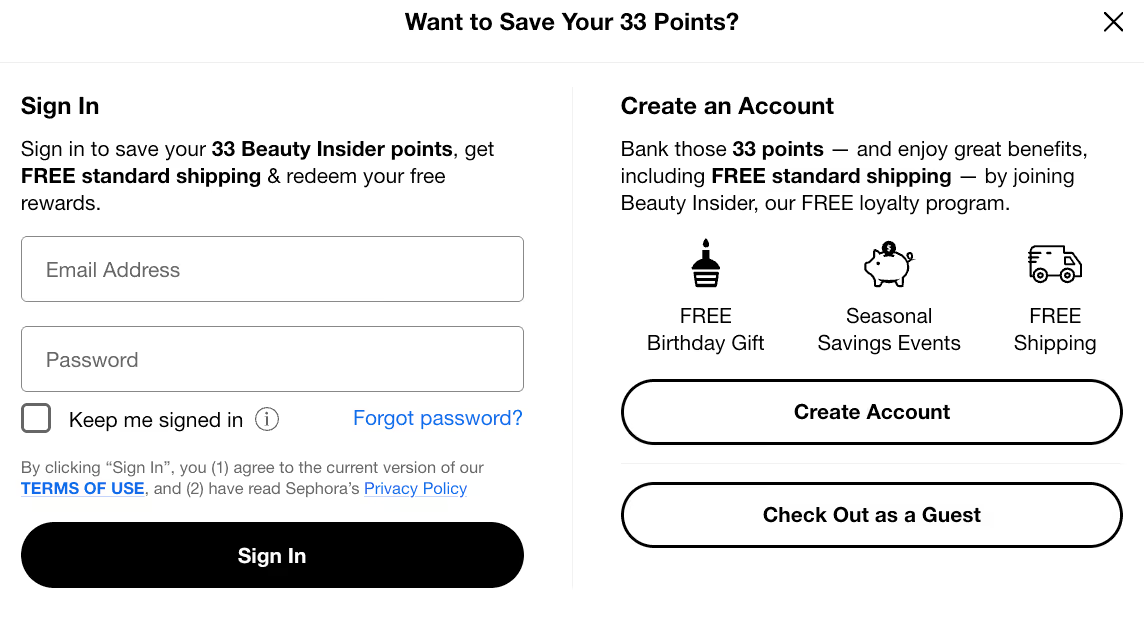
It bundles the birthday benefits (a free birthday gift) with other perks of account creation. By tying it to the purchase they are about to make, the customer is more likely to fill out the form.
H3: During Account Creation
Do not forget to add an option to enter birth dates during account creation. Customers create an account for many reasons, not just to make a purchase. It could be to unlock a discount code or access a freebie.
Since they are looking forward to receiving something, they will be more inclined to fill in the information. The Body Shop asks for five data points during account creation, and date of birth is one of them:
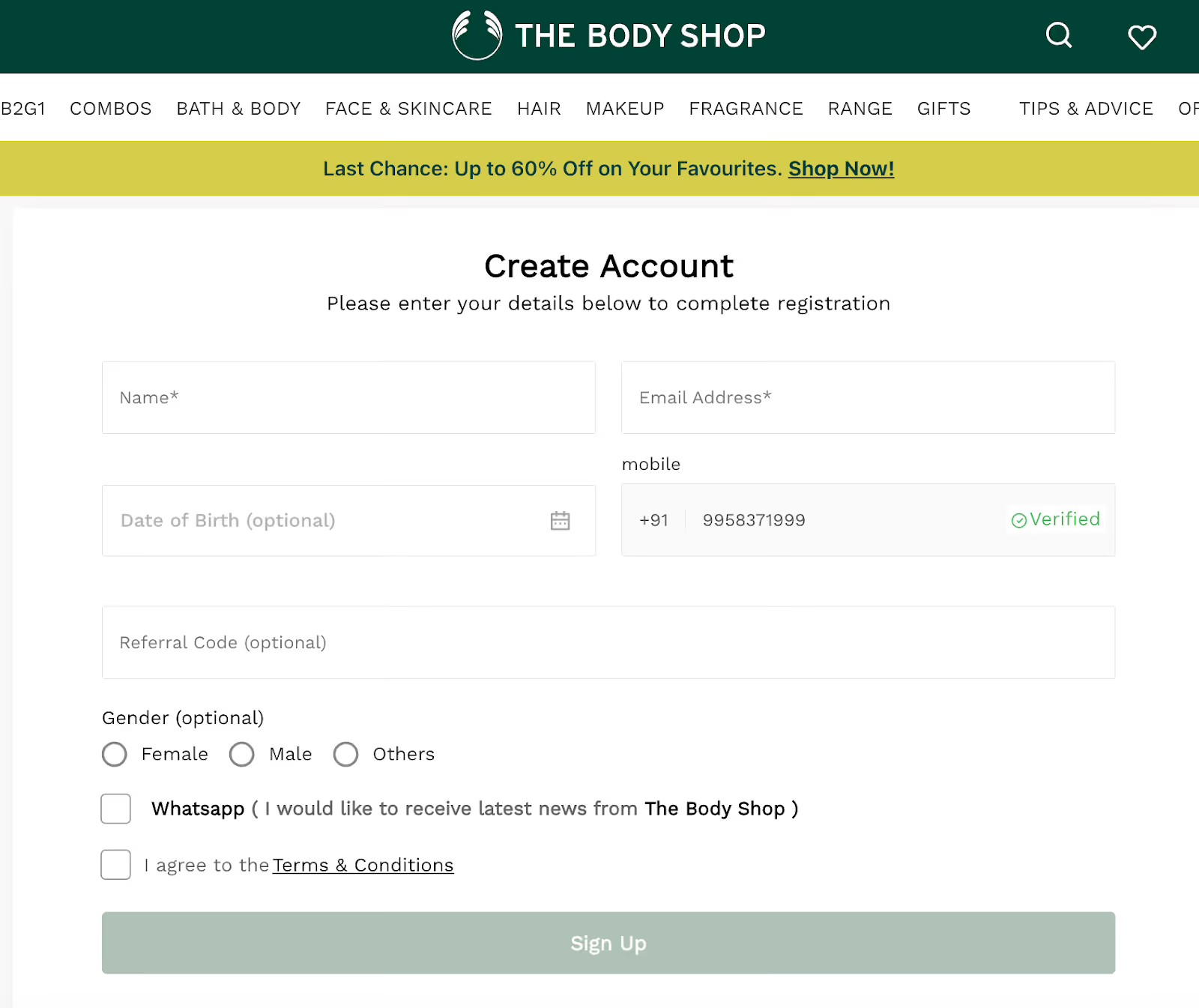
Note how the field mentions the term “optional.” It is key to communicate to the customer that they can create their account even without providing their date of birth. Giving that option ensures you do not get fake data from customers who feel forced to provide it.
Post-Purchase Communication
Post-purchase emails are among the most natural moments to request additional customer information. At this stage, the transaction is complete, and if they had a positive product experience, trust will be high, making them more inclined to share information.
If your customers are abandoning their carts at checkout, you can test whether requesting their date of birth while providing shipping updates helps reduce abandonment.
While Introducing a Loyalty Program
When it’s time to tell your subscribers about a customer loyalty program, you can ask them to provide their date of birth as a requirement to enroll.
Customers who choose to join a loyalty program are signaling interest in a longer-term relationship with the brand, making them more open to sharing additional information.
For brands building retention programs, tying birth date collection to loyalty benefits is an easy way to ensure repeat purchases.
Glow Recipe does use an on-brand infographic to communicate perks while asking for the customer’s birthday:
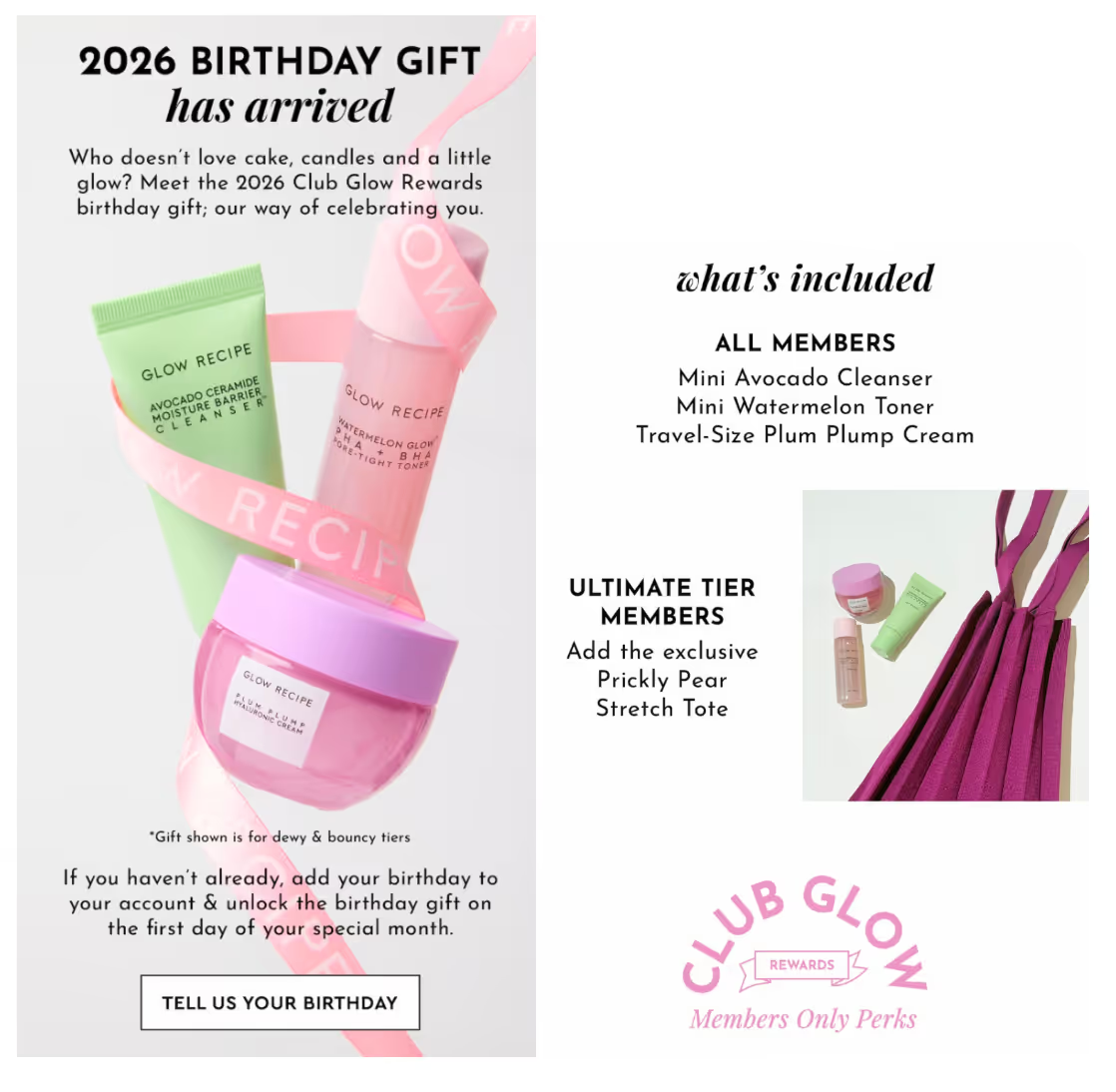
The email distinguishes between the perks for different tiers of the loyalty program tiers and explains when they can unlock their gift.
Simply Just Asking Over Email
Sometimes, the most effective approach is to be direct. If you are an SMB that sends personalized letter-style emails, a simple standalone email asking customers to share their birth date can work.
Save time on building birthday push notifications with PushOwl’s library
Regardless of which option you choose, explain why you are requesting the customer’s birthday details and explicitly tie your request to the benefits and perks they will receive.
Make it easy for them to enter their birthday, whether by filling out a form, using a short dialog box, or replying to an email.
The email should clearly explain how the birth date will be used, typically for birthday rewards or personalized communication, and reassure recipients that sharing the information is optional.
Here is an example by Fatemah Mirza, the founder of a career coaching service:
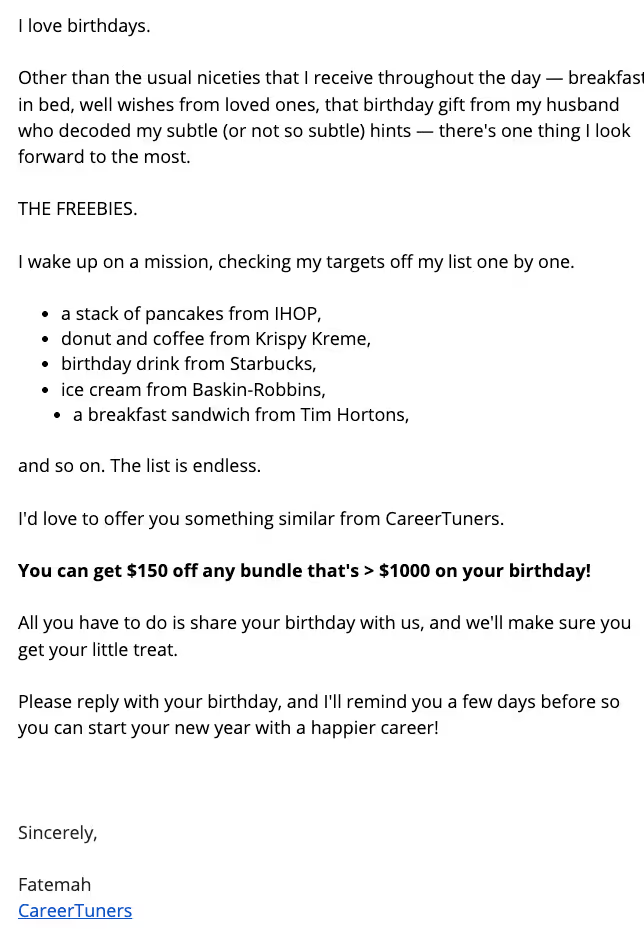
The email adopts an anecdotal tone, thus making it sound less salesy. The email clearly highlights the benefit of providing the date of birth, and customers do not have to fill out a form; they simply need to reply.
Customer Segmentation For Shopify Birthday Emails
Your customers’ birthday emails only work when the underlying data is structured and segmented correctly.
In Shopify, birth dates are typically stored in one of three places: customer profiles, tags, or metafields. Metafields allow you to store birth dates in a consistent format and use the data across email and automation tools. Tags can still work for simpler setups.
Pro tip: “I prefer splitting birthday emails by purchase recency to improve the campaign performance. My clients' customers are split into active, lapsed, and never purchased categories.” - Himanshu Agarwal (Zenius)
Once birth dates are stored correctly, the next step is to create dynamic birthday segments. Instead of building static lists, brands should rely on rolling segments, i.e., customers whose birthday falls “today,” “this week,” or “this month.”
This ensures that the segment updates automatically without manual intervention and supports always-on birthday email automations rather than one-off campaigns.
Take advantage of PushOwl’s dynamic segmentation tool
Another way to segment your customers is by their spending preferences. You can delineate customers across “bargain hunters,” “loyalists,” and “high average order value (AOV)” customers.
Having these segments handy will help you decide which incentive to include in the birthday email to maximize engagement.
Do Not Give Discounts As Birthday Gifts if…
…everyone is receiving one.
You should not offer the same birthday offer to your entire customer base.
Some customers will not respond to discounts because they value their loyalty tier more than saving a few dollars. Some customers may buy only during festival sales, while others may restock monthly.
For each of these situations and other customer segments identified in the previous section, you need to carefully select the right birthday offer. But with discounts specifically, you need to exercise caution because:
Discounts Can Be Generic
A flat % off is the most common birthday reward, and that’s a problem.
“Emails that just say, ‘Happy Birthday, Here is 10% off’ are not likely to be either impactful or profitable. Birthday emails will often perform better if they are more personalized and focused rather than creating a primary purpose as a discount offer.” - Baruch Labunski, an expert in SEO from Rank Secure, an agency that offers local SEO services
Slapping on “happy birthday” to a general discount promo is not sufficient.
You need to personalize the email further to make it about the birthday rather than a discount that would be offered at any other time.
Discounts Set Bad Precedents
Repeated discounts shape customer expectations. Customers should not associate rewards or perks with price cuts. Richie David, an experienced digital strategist who also runs a furniture brand, confirms:
“When heavy cuts are used, the brand loyalty usually tends to be low due to the fact that the consumer base that only comes in during the heavy promotion period is attracted. This cycle basically conditions the most lucrative portions of an inventory not to spend until their birthday month, which poses needless strain on annual revenues.”
Birthday campaigns should not be about price anchors. The customer should not remember that they got a birthday discount from you. Rather, they should find the birthday wish itself memorable.
Margins Will Not Support Long-Term Discounting
If a meaningful share of your customers purchase at full price, a birthday discount can be counterproductive.
You are effectively giving margin away to customers who didn’t need an incentive to convert in the first place.
Not every business has the margin flexibility to offer percentage-off incentives regularly.
For brands with tight margins, handmade products, high fulfillment costs, or products that sell seasonally, even a small discount applied at scale can add up quickly.
Anatomy of an E-Commerce Birthday Email Automation
Your Shopify birthday automation should not be a single message or a spam of alerts. You can start with this 3-message automation:
Pre-Birthday Reminder
A short pre-birthday email, typically sent a few days before the actual date or birthday month, sets context. This is where brands can create hype for an upcoming birthday perk. It works best as a soft nudge.
Day of the Birthday
This is the core of the Shopify birthday automation.
Pro tip: You do not have to send it right at midnight. To ensure the email does not get missed, personalize the send time for each customer using our Smart Send option.
The message should land on the customer’s birthday and focus on acknowledgment first and incentive second.
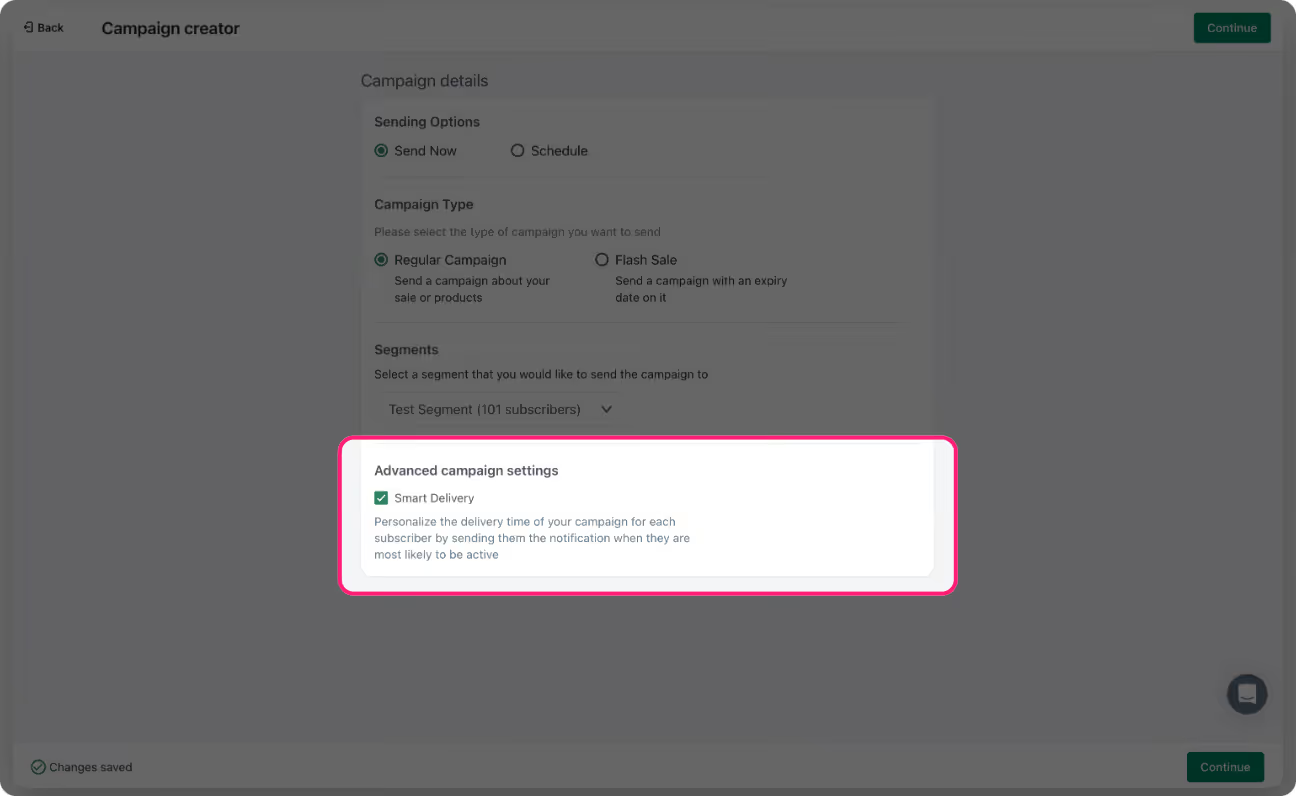
Do not sacrifice your brand voice, but ensure that the email copy adopts a celebratory tone. If the perk is eligible for the entire birthday month, make it clear in the email.
Optional Post-Birthday Follow-Up
A follow-up email can be helpful when the birthday benefit has an expiry window. This message works as a reminder rather than a second celebration and should be spaced far enough from the birthday itself to avoid spamming.
Writing Persuasive Birthday Email Subject Lines
Classic subject line rules apply, which means:
- No forced urgency
- No misleading information
- No excessive emojis or capitalization that comes across as screaming
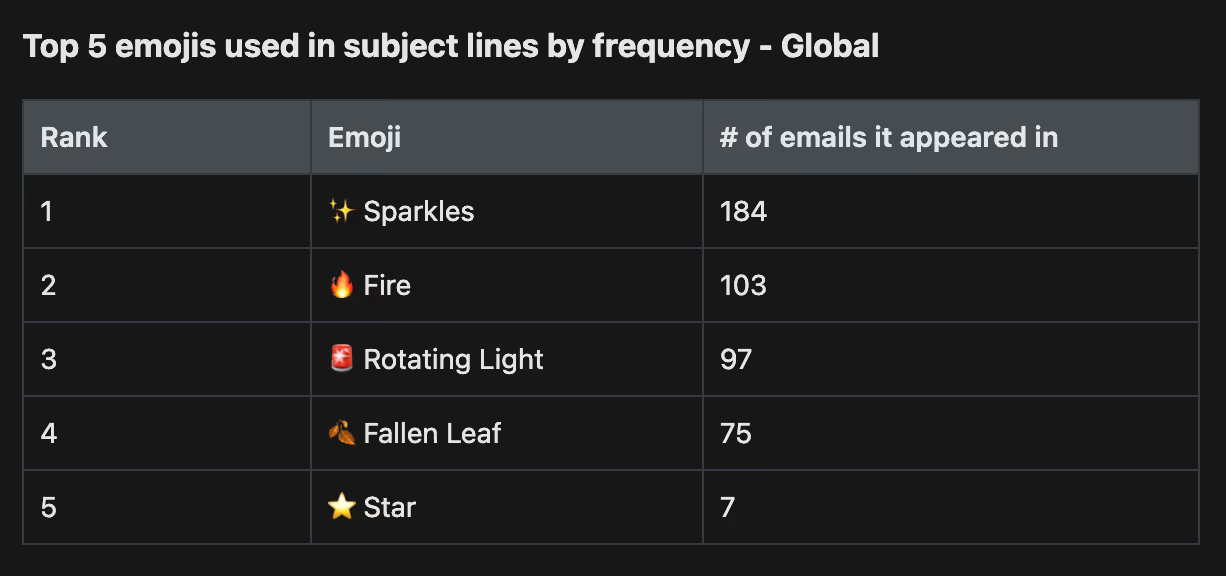
From a UX perspective, ensure that the birthday subject line does not get cut off in the preview.

Here are some birthday-related subject line frameworks you can use to communicate a wish and an incentive while ensuring your email doesn’t go to spam:
You can also incorporate brand-specific wordplay. This is Drunk Elephant’s subject line, which is a play on the brand name:
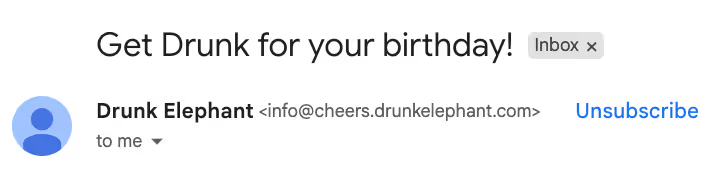
And this is how they ask for their customers’ date of birth while sticking to their chirpy brand vibe:
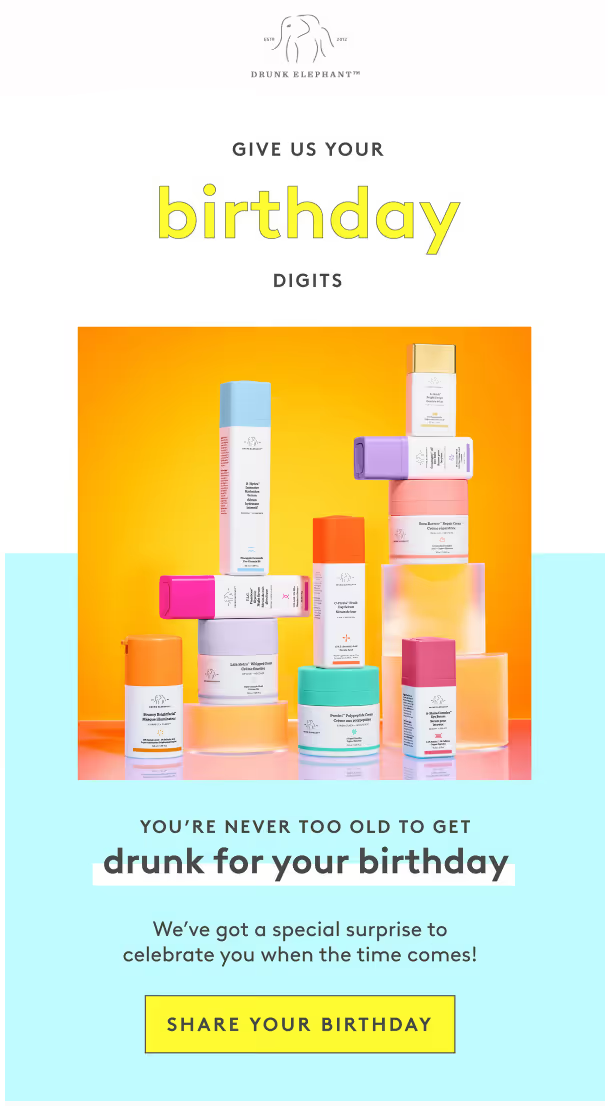
The headline “You are never too old to get drunk for your birthday” aligns with their target audience, and the colorful palette is on-brand.
5 Birthday Email Examples From E-Commerce Stores
See all the above birthday email campaign strategies in action with these 5 examples from e-commerce brands:
Example 1: Birthday Discount Incentive
The most common birthday wish automation includes a discount incentive. It could be in the form of a certain amount off or a percentage discount.
As explained in the previous section, brands need to learn how to use discounts judiciously.
Fastic, a fitness app, sends birthday wishes with a discount on its premium subscription plans:
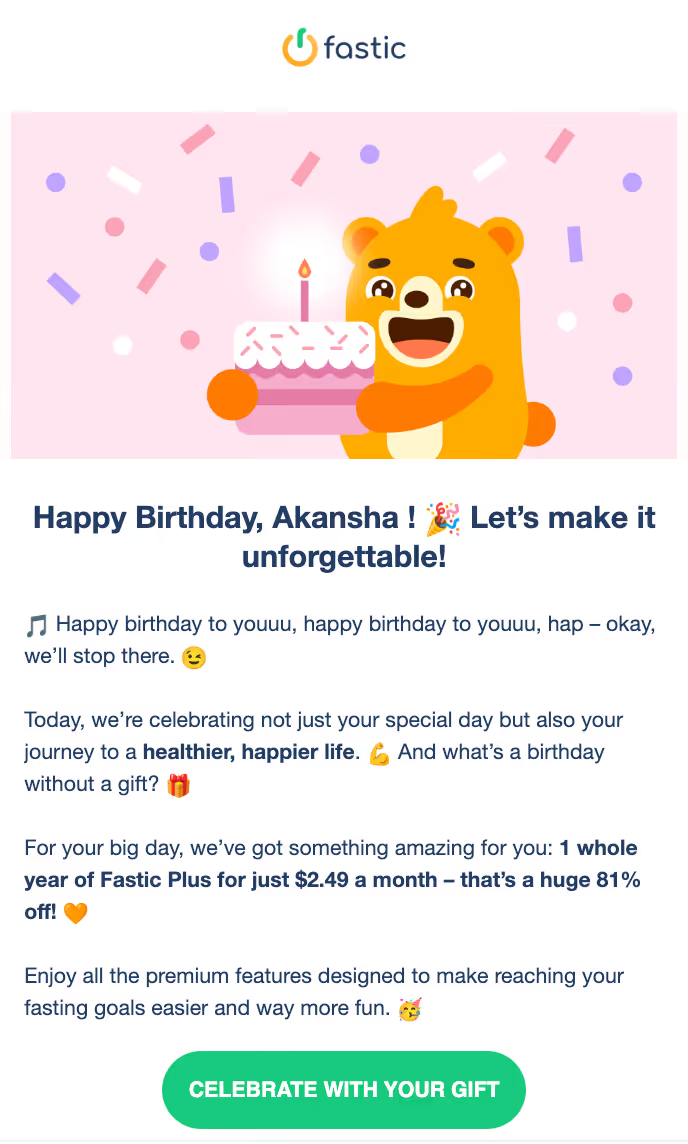
Why it works: The birthday wish leads the message, with the incentive positioned as a follow-on rather than the main hook. This sequencing is important. It frames the email as a celebration first and an offer second, preventing it from reading like a repurposed promotion.
The copy stays light and congratulatory without leaning on urgency or discount language. Even the CTA reinforces this tone: phrasing like “celebrate with your gift” is more customer-oriented than "buy now."
Example 2: Birthday Gift Incentive
A bonus or gift is another form of a birthday incentive. This could be free samples or products, free shipping, or loyalty points. Sephora offers this birthday perk to those who give their personal details:
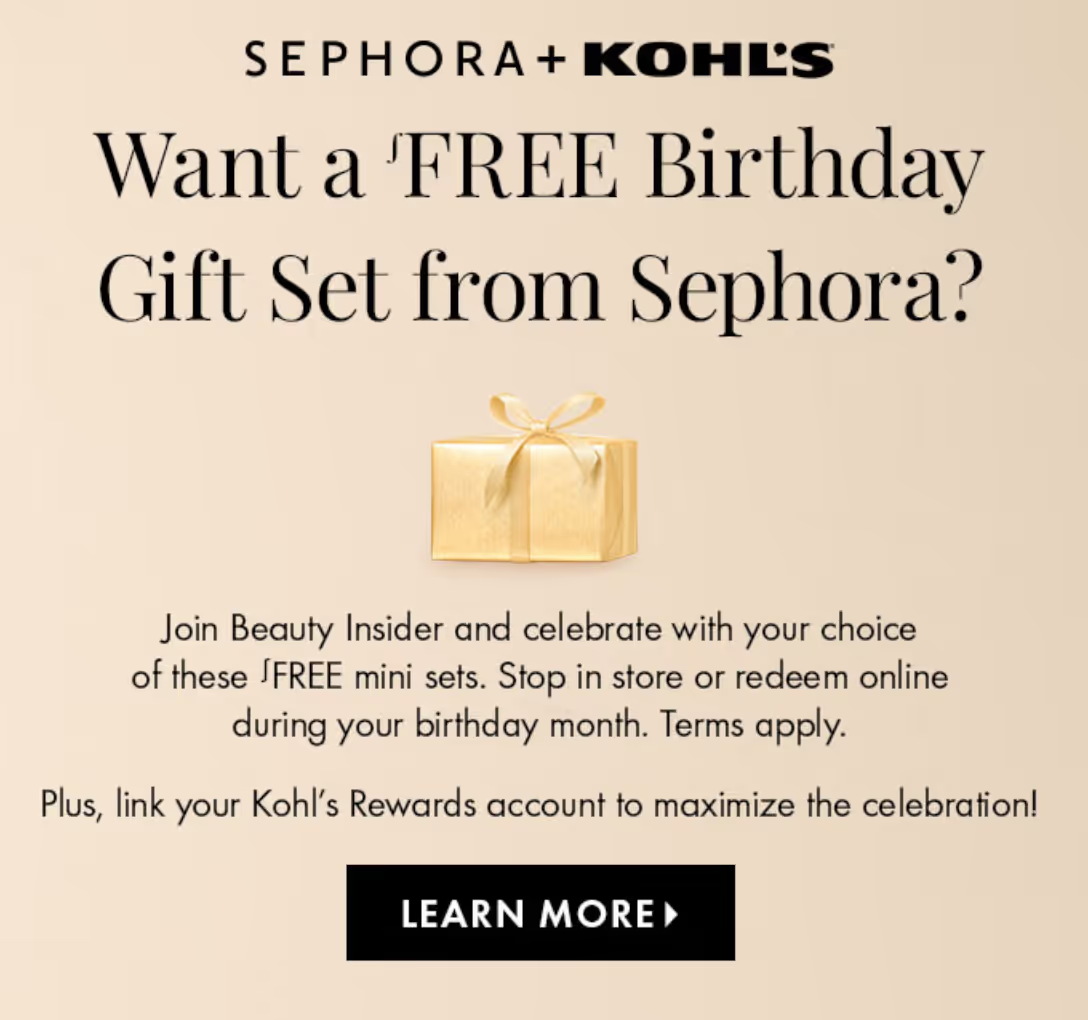
Why it works: The email clearly identifies the gift (free mini sets) and removes friction by offering multiple redemption options, both online and in-store.
This flexibility respects different shopping preferences and makes the reward feel genuinely accessible. The subject line, “[Name], new birthday gifts are here. Break out your candles! 🎁” balances personalization with excitement.
Example 3: Birthday Early Access
Gifts and discounts are not the only birthday incentives worth exploring. If you own a fashion, apparel, or clothing brand that has regular product launches, consider giving early access to customers during their birthday months.
In practice, this can be implemented as a time-bound early access window, typically 24 to 48 hours, during the customer’s birthday month.
The limited duration keeps the incentive special without requiring heavy discounting.
Of course, not every brand launches new products every month. In those cases, early access can still be applied selectively, such as to upcoming restocks or seasonal drops, so the birthday benefit remains experiential.
Example 4: Birthday Achievement
Unable to offer a birthday incentive?
Emphasize positive customer behaviors that will make them feel celebrated. If your brand sells sustainable clothing, for example, you can explicitly mention the environmental impact (trees planted, items recycled) the customer has had.
Cronometer, a nutrition tracking app, lauds the customer for any fitness streaks they have achieved:
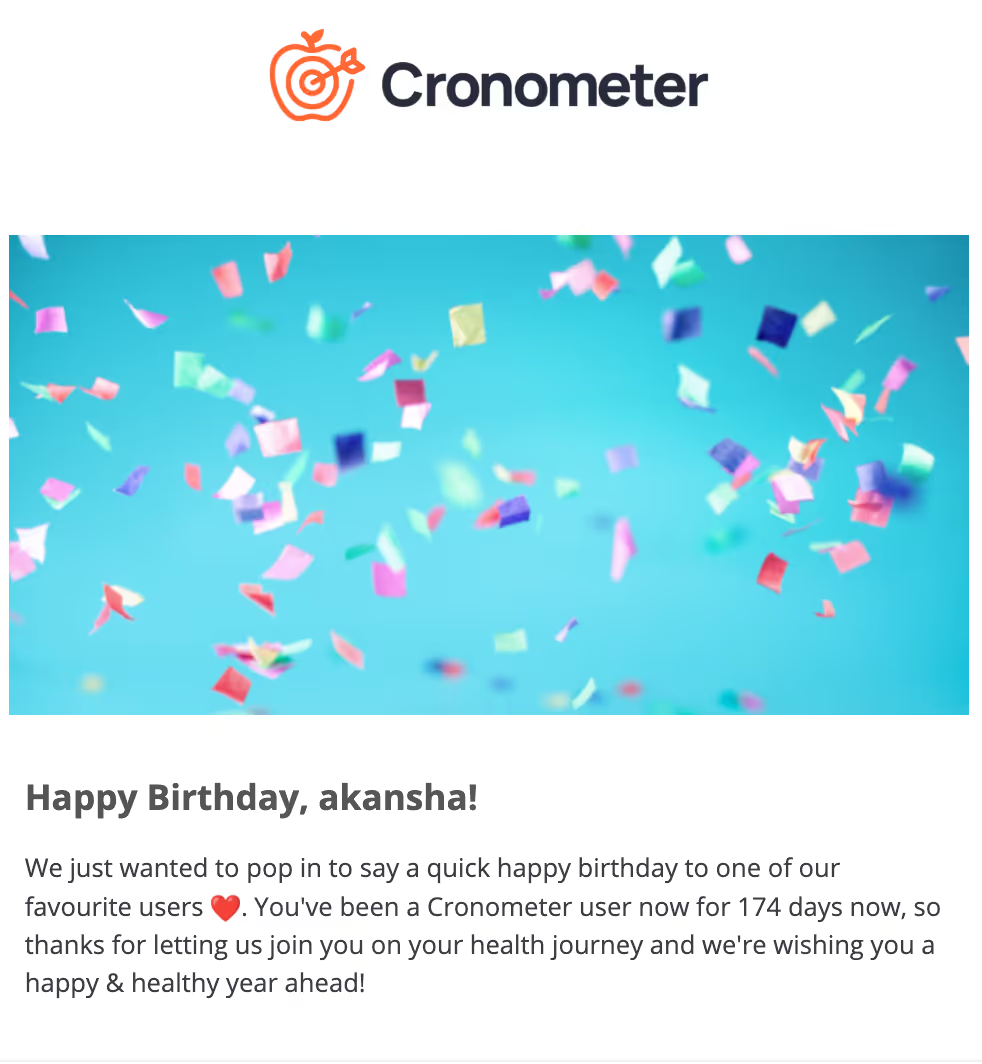
Why it works: The email goes beyond a simple birthday wish and acknowledges the customer’s consistency in their fitness journey. It shows the brand is paying attention to the customer’s behavior, not just the date.
This kind of message can reinforce positive momentum, reminding users of their progress and encouraging continued use of the app.
Example 5: Birthday Points
Awarding loyalty program points as a birthday gift serves to celebrate the person and boost customer retention for e-commerce stores. Here is what Nintendo’s birthday email looks like:
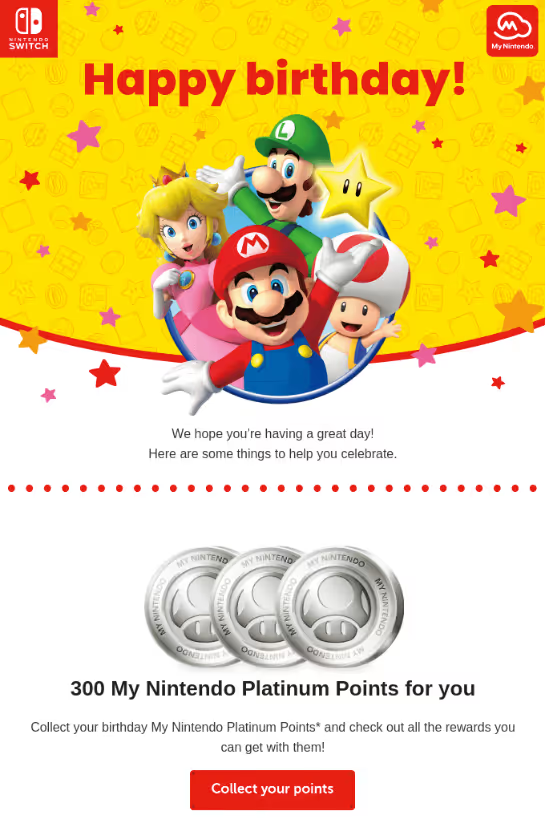
Why it works: By choosing Mario colors, the palette feels nostalgic, and the “Happy Birthday” stands out. The reward is visually clear (300 Platinum Points), illustrated through three huge platinum coins, and the overall email aesthetic gives an old-school vibe.
Make Your Customers’ Birthday Emails Special With PushOwl
For an email campaign that runs only once per customer per year, birthday-related communication carries significant weight. With PushOwl and Brevo, you can automate the entire process and even use our birthday template library for inspiration. Try it for free today.