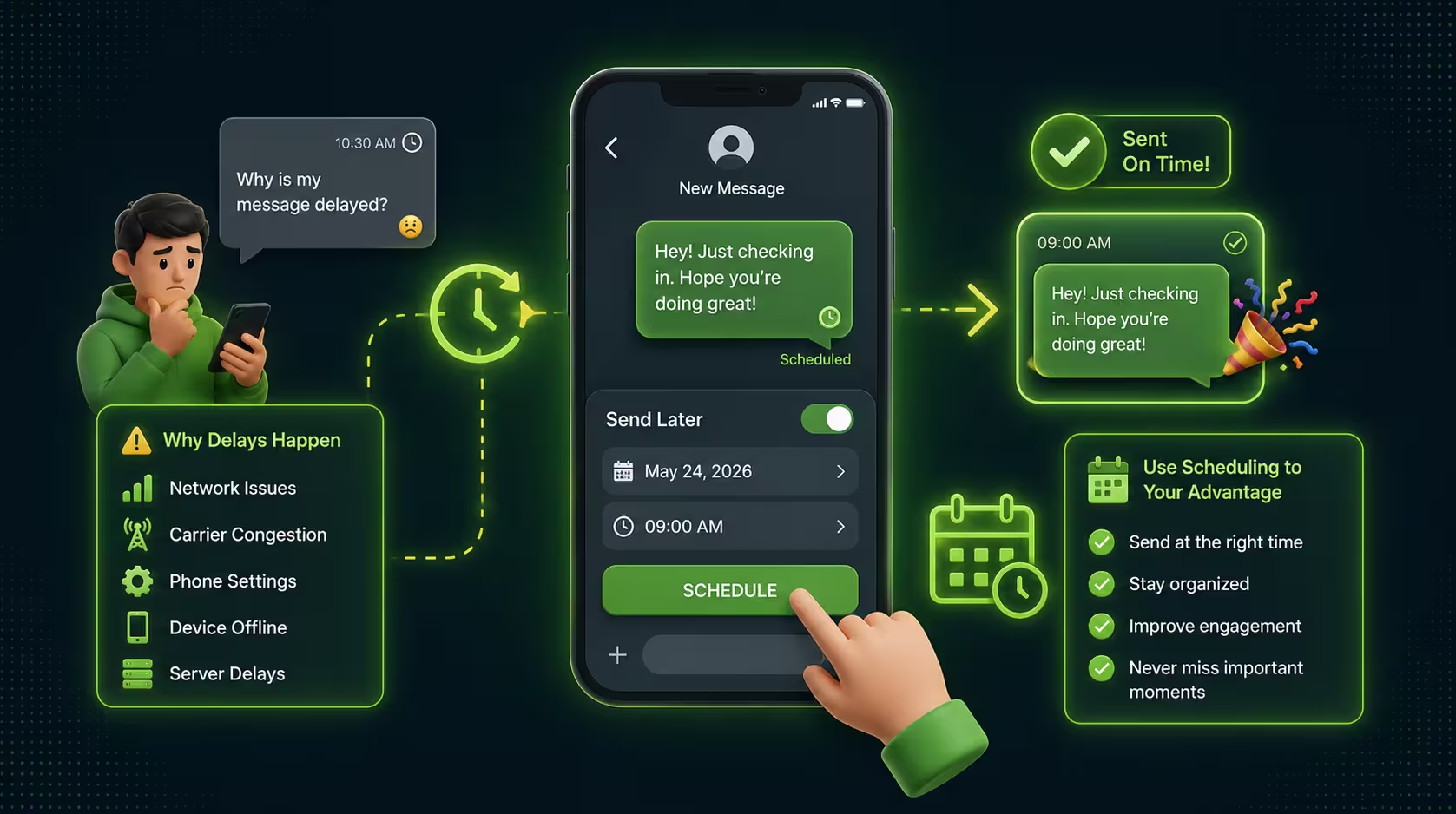
There are two varieties of delayed text messages. One is considered a problem. The other one is a strategy.
The first type is that text message from your customer that was delayed for three hours in a network outage, difficult to interpret, annoying, and completely outside of your control. The second type is the abandoned cart SMS you purposely fire 45 minutes after somebody left and, unsurprisingly, at a time they will be back by their phone once again and actually think about buying your product.
Both involve delays. One erodes trust. The other builds revenue.
As of now, SMS marketing is one of the highest engagement channels available on Shopify. Open rates spike an average of 98 percent compared to a mere 0.97percent for generic broadcast campaigns, and click-to-conversion rates for well-timed automated messages averaged about at 3.81% in 2025. It's not the message between those numbers. It's the timing.
This is the story from both sides of the delayed text message. We start with the seven most common reasons SMS messages get held up unknowingly, and precisely what you can do to fix each one. Next is the strategic rationale for intentional timing delays, exposing more winning send windows that lead across abandoned cart, post-purchase, and win-back flows. For any Shopify merchant who uses SMS or plans to launch, this is the timing foundation your campaigns should come from.
Why Text Messages Get Delayed (Unintentionally)
SMS delays are not always random. While they have distinct causes, the majority of them can be diagnosed and fixed properly. The seven reasons outlined below tackle almost all eventual real-life delay scenarios, whether it concerns a consumer message that came in late or a marketing campaign underperforming on an account due to bad timing.
Reason 1: Network Carrier Congestion
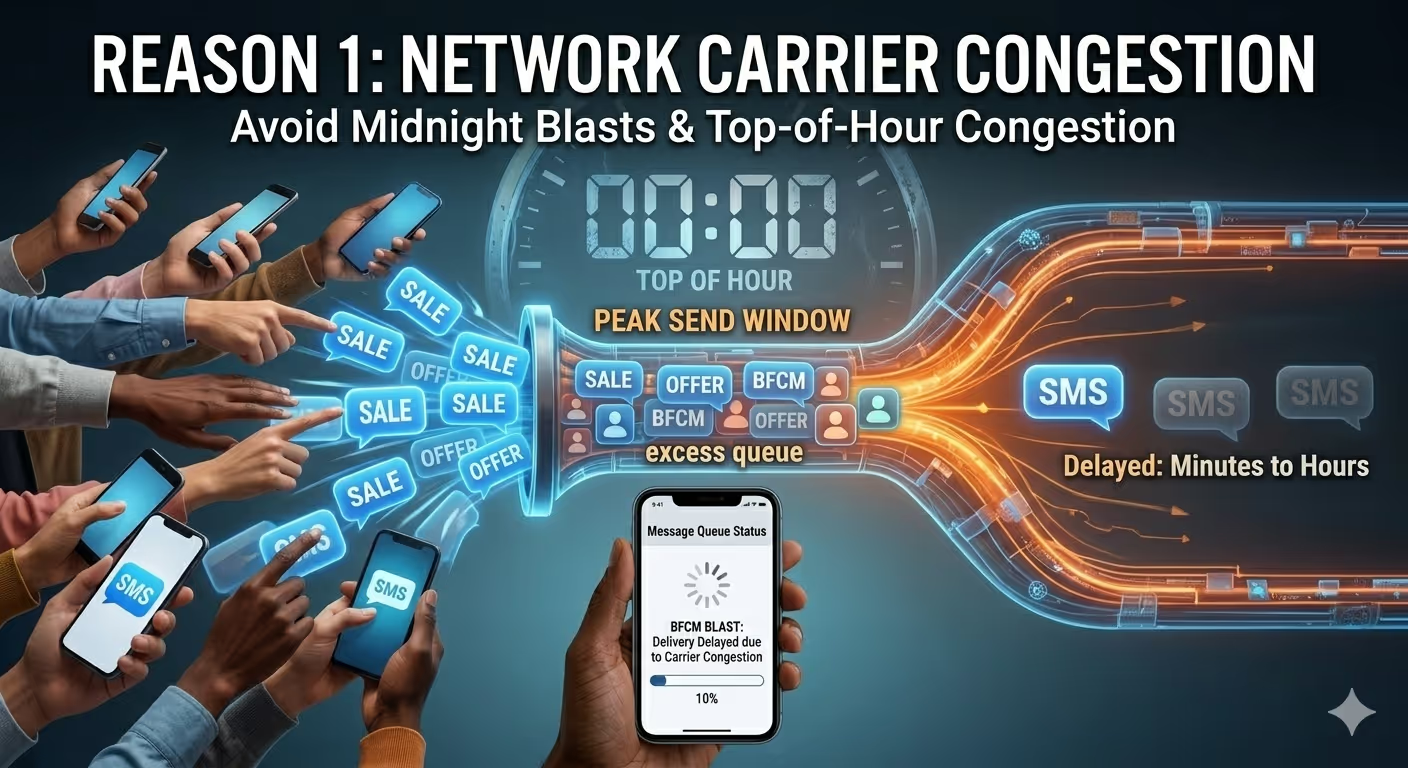
When there is an excess queue in the network, i.e., too many messages traveling drastically through the same network carrier simultaneously, then some of these messages get processed with a delay ranging from minutes to hours.
This isn't a rare edge case. It blows up on days with a high volume of texts, like Christmas Day, New Year's Eve, major sports events, and holidays when millions of sellers are texting at the same time.
This creates a specific, avoidable risk for marketers: if you schedule your Black Friday SMS blast to go out at exactly midnight with every other brand, it is almost guaranteed that your message will be in the delivery queue behind thousands of others.
What to do about it:
- Try not to send at midnight, noon, or the top of the hour on a busy day.
- Delay your campaign by 15-30 minutes and avoid the most common send window
- For BFCM specifically, consider sending your launch SMS the evening before rather than competing with every other store's midnight blast
Reason 2: Carrier Filtering and Spam Detection
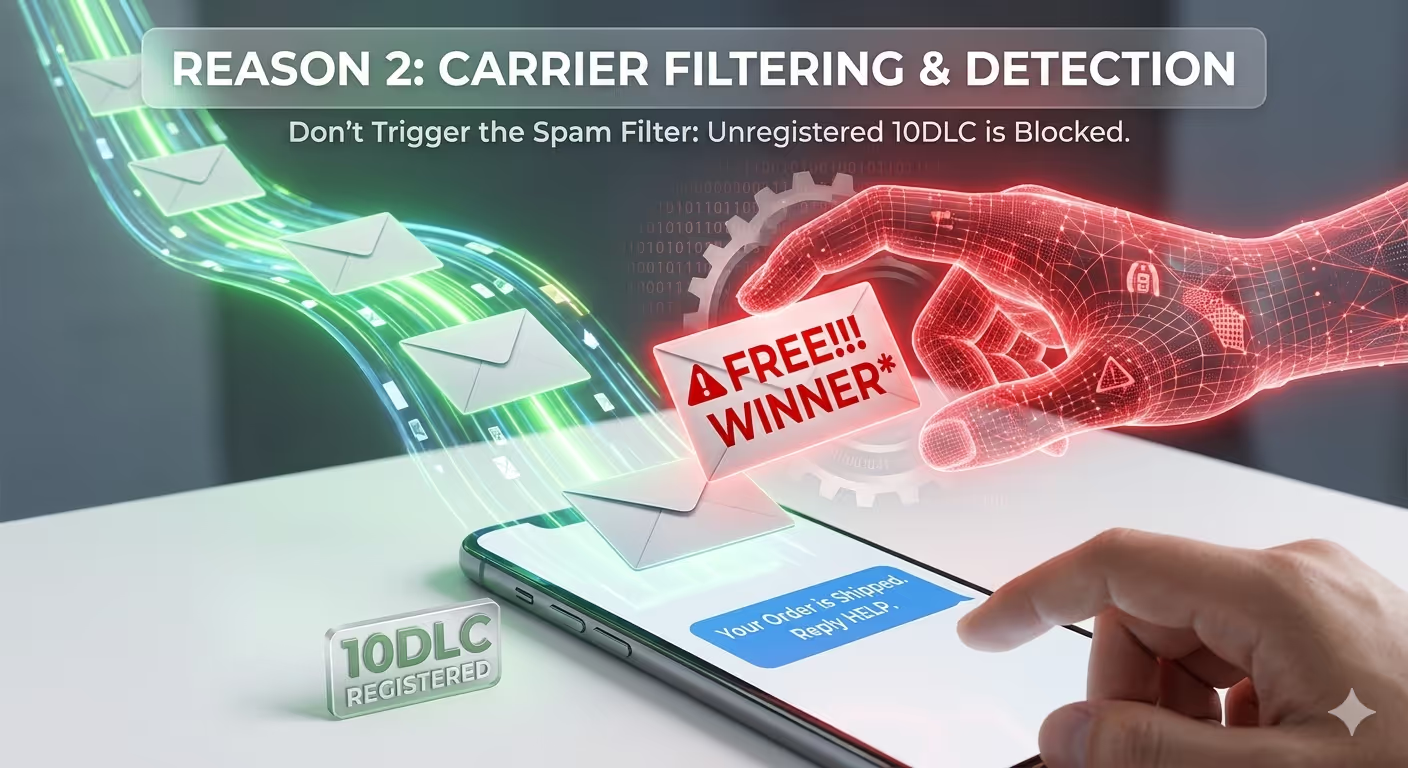
Mobile carriers operate aggressive filtering systems that identify and mark SMS content that appears to be spam before it is delivered to a recipient. Messages triggering these filters can get delayed for hours, throttled, or outright rejected, and you generally receive no notice that this has happened.
Spam triggers include: sending from an unregistered number, using promotional language without an uncontested STOP or opt-out, high send volumes from the same number within a short time frame, all-caps subject lines, and too many special characters or emojis.
The top prerequisite for reducing carrier filtering risk (for all ecommerce stores in the United States) is 10DLC registration (10-digit long code). The leading cause of SMS being blocked instead of delivered is an unregistered 10DLC number sending bulk promotion messages.
What to do about it:
- If you are sending in the US, register your sender number with 10DLC
- Include STOP or opt-out instructions in every promotional message
- New numbers should be carefully ramped up, and do not blast 10,000 messages from a number that sent 0 SMS the previous day.
- Do not use all caps, excessive punctuation, and flagged words like "FREE!!! " or "WINNER."
Reason 3: Message Routing Between Networks
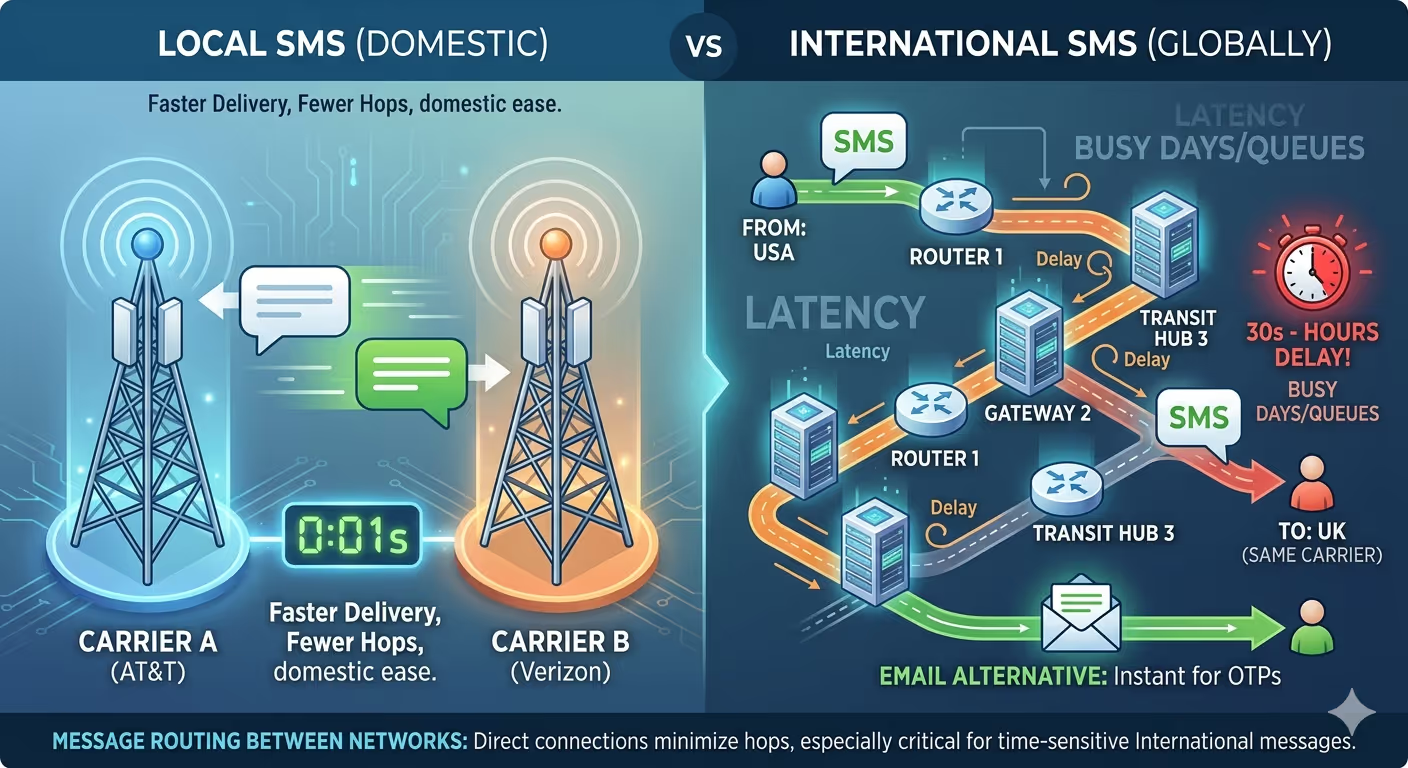
If an SMS is traveling from carrier to carrier, for example, AT&T to Verizon, there is more routing infrastructure between the sender and the recipient. Each message routing loop adds latency. It is usually invisible for domestic messages. The routing layers become important when it comes to International SMS.
An international transmission from a US number to one on the same mobile network in the UK takes around 30 seconds at best when the queue is normal, but the same can take up to hours if the days are busy. These delays render these messages, flash sale alerts, OTPs, and delivery notifications useless by the time they reach their destination.
What to do about it:
- By utilizing an SMS provider with direct carrier relationships in every area you are sending messages to (for fewer hops to route, and faster delivery!)
- Select a platform with local sender infrastructure for International stores, like Brevo, which powers PushOwl's SMS, and is covered in 180+ countries with globally compliant delivery required.
- Don't just use SMS. Have an email alternative for time-sensitive OTPs / access codes.
- Before running campaigns, A/B test the speed of delivery to your key international markets.
Reason 4: Device-Side Issues
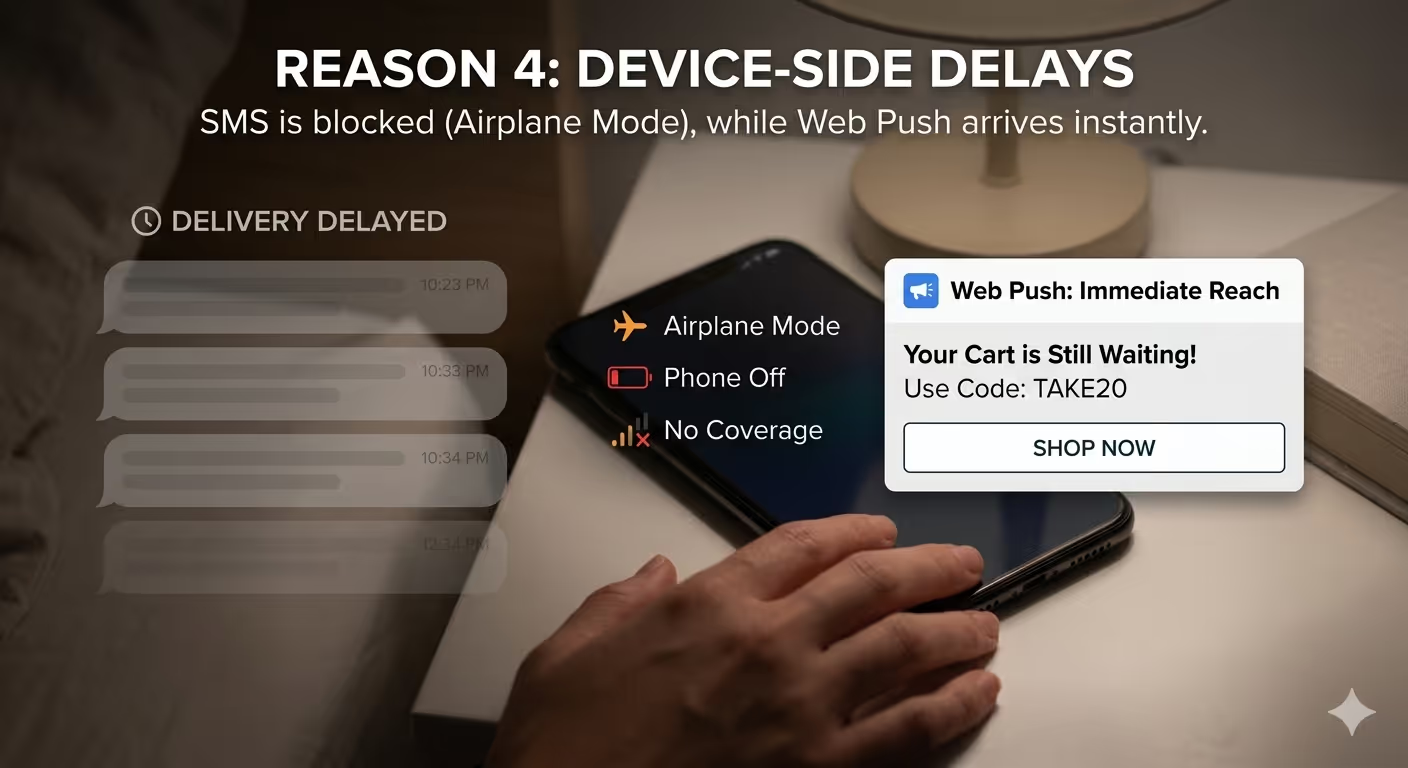
Sometimes the delay has no relationship with the network. Incoming messages are queued at the carrier level until the recipient turns their phone back on, takes it out of airplane mode, regains coverage, or clears some storage space, then it all arrives in a rush.
With regards to SMS marketing, there is a portion of your list that will continuously face delivery delay just because of their device state when the message is sent. The irony is that it isn't a bug, and it can't be fixed on your side.
However, if you send a single SMS campaign without any follow-up, it spreads its effective reach over fewer recipients; some subscribers simply won't receive your first message until the moment has passed.
What to do about it:
- Build a multi-touch sequence instead of depending on one SMS send for the significant campaigns
- For your abandoned cart flows, define a follow-up window of 24-48 hours to catch deliveries that were delayed.
- You have to treat SMS with web push notifications as a separate channel, because push is not dependent on routing via carrier anymore. Push notifications reach your subscribers no matter which device they are on, and what is the state of their local carrier.
Reason 5: Platform or Software bugs.
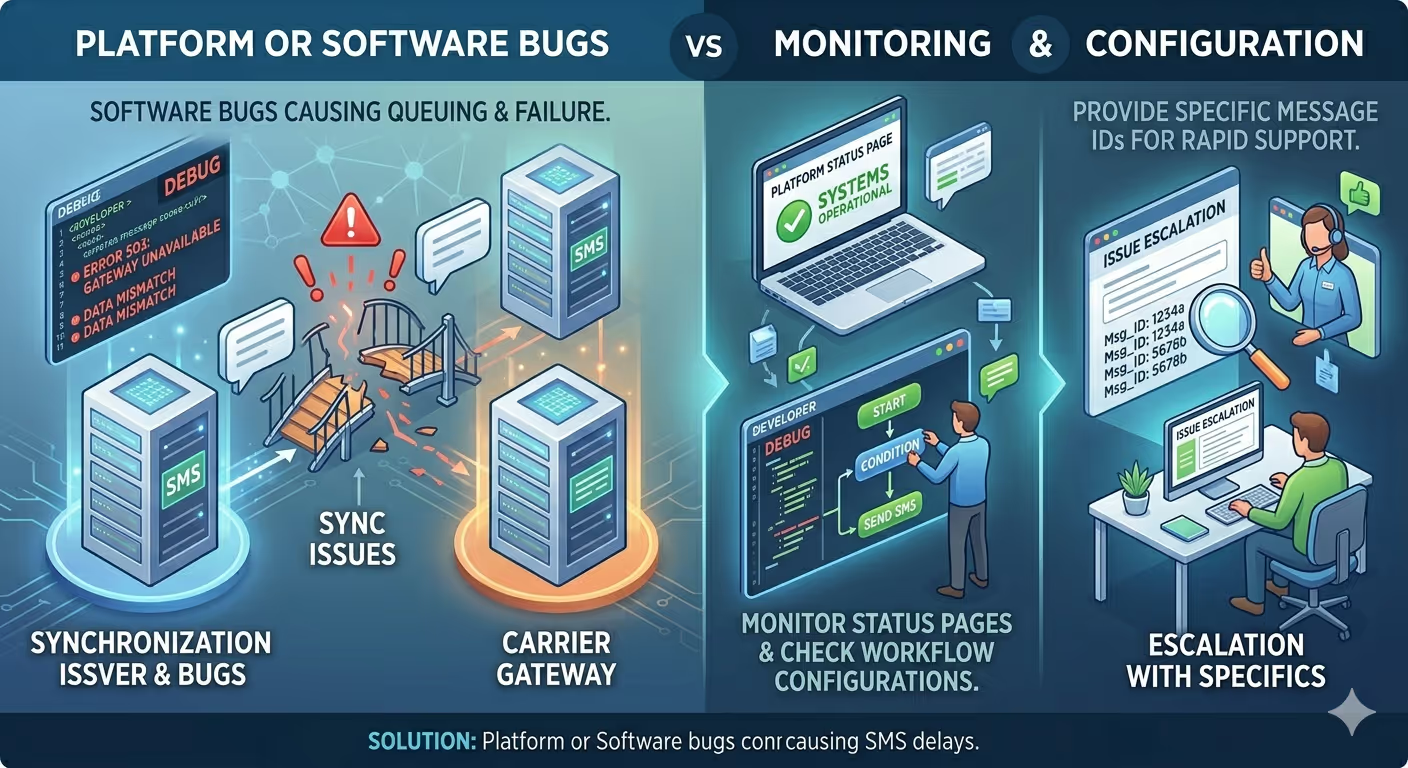
There are software bugs in most of the SMS platforms. Message queuing and failure to send in the first place could be due to synchronization issues between your SMS provider server and carrier gateway, platform downtime, or even a configuration issue within automation workflows.
This is not a common cause, but worth noticing, when the messages are arriving late without any of the above-stated issues.
What to do about it:
- Do keep an eye on the status page of your provider when a campaign is in action. Most enterprise SMS platforms publish real-time status.
- If the delays come from either one campaign or automation, but not all, check the workflow configuration first before considering a platform bug.
- When escalating, reach out to your SMS provider's support team with specific message IDs, rather than generic "messages are delayed" reports, which take the longest to resolve compared to these examples.
Reason 6: Message Size and How to Split Messages
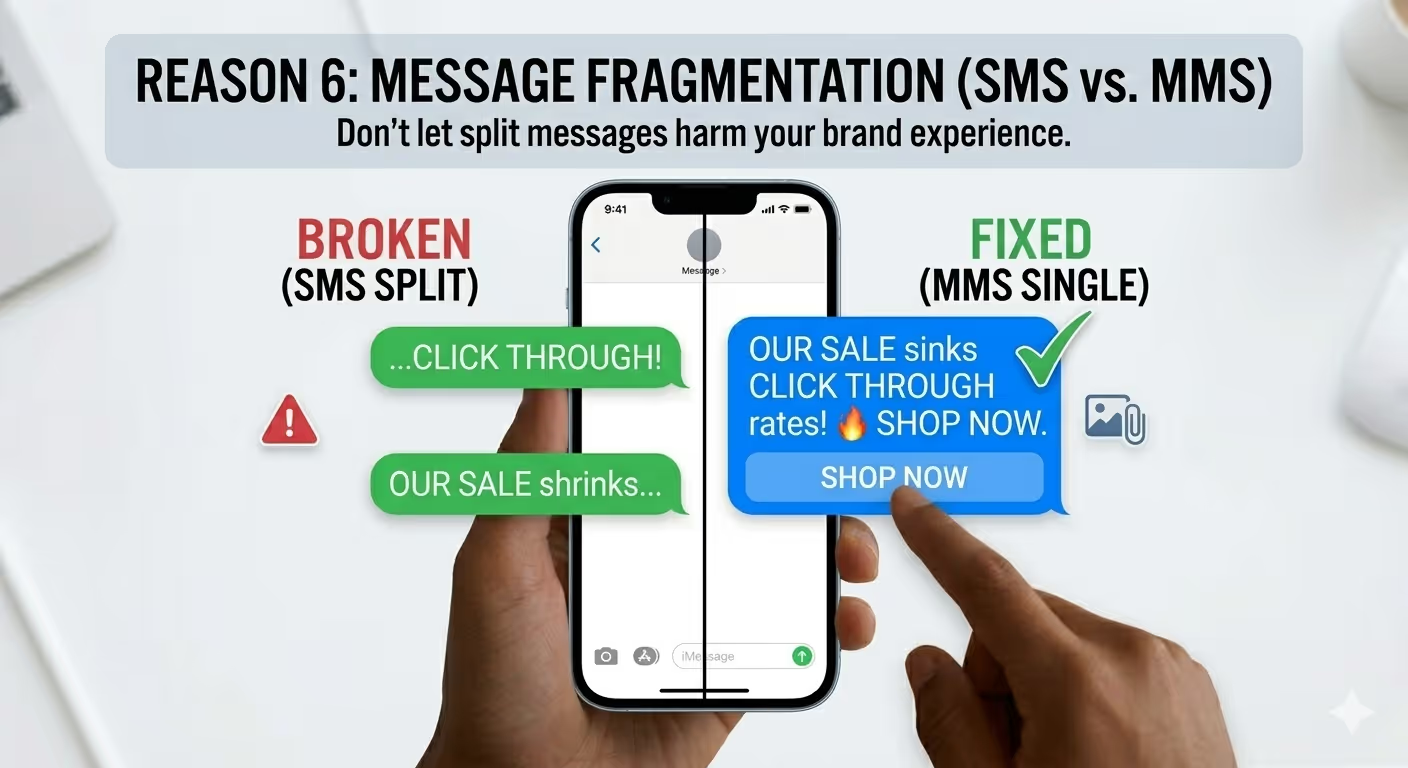
An SMS uses up to 160 characters. Somebody add an emoji or a special character, and nd that limit drops to 70 characters because the encoding switches from GSM-7 to Unicode.
Messages over the character limit are sent in multiple parts as a concatenated SMS, and are more expensive per send, and arrive out of order on some devices.
With marketing SMS, it can arrive as two parts of a sentence that should read as a compelling hook; the second before the first, or with too much space between them. The net result is a poor reader experience that shrinks click-through and harms the brand.
What to do about it:
- Max 160 characters for promotions SMS (Check the character counter before scheduling)
- If you have to use emoji (which tends to increase engagement), plan for the 70-character limit
- If you're really trying to say something in more than 160 characters, use MMS instead. It's built for longer texts (and images) without the splitting issue.
- See how they look on your platform first, before sending, to make sure they're rendered in one message.
Reason 7: Shipping Outside of Carrier-Approved Time Windows
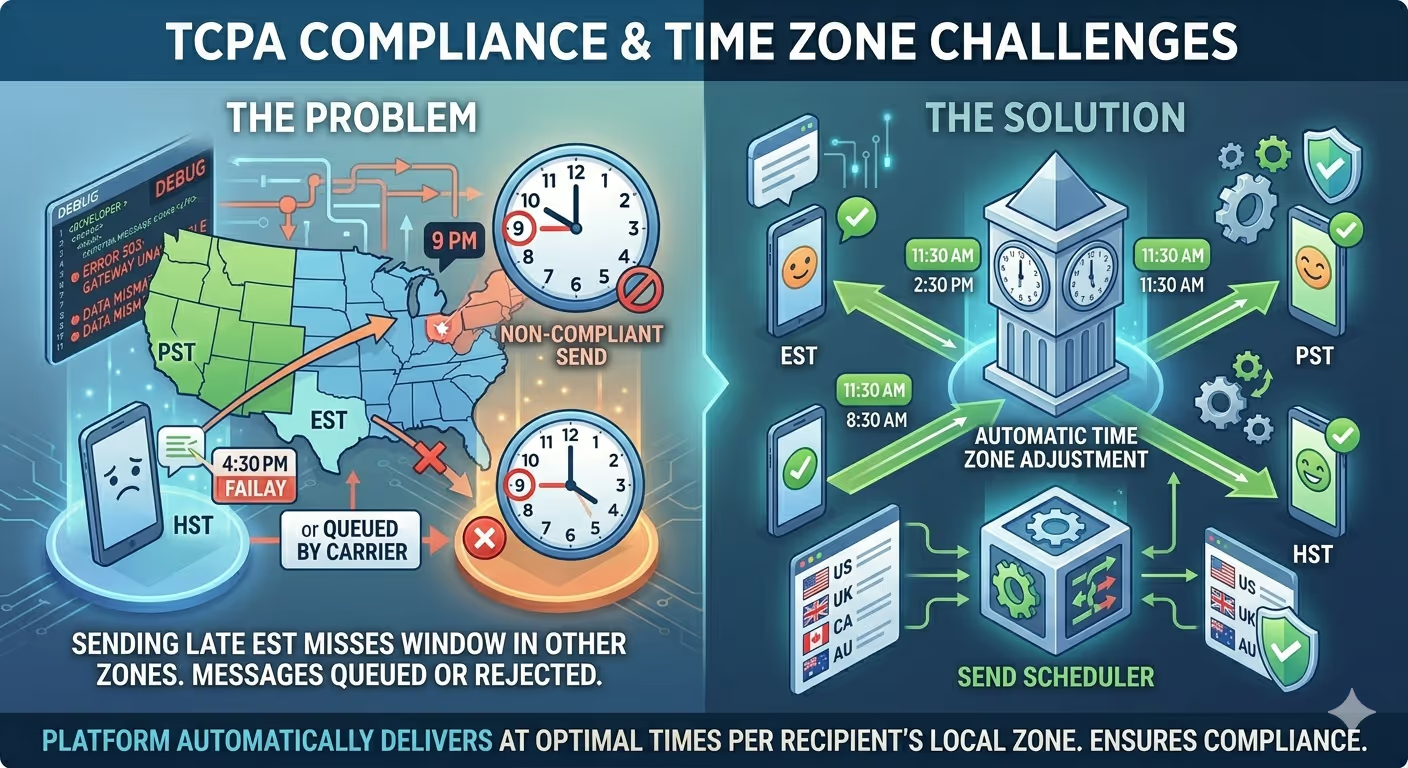
Carrier systems can either queue messages or outrightly reject them if they are delivered outside the window. For example, according to TCPA (Telephone Consumer Protection Act) regulations in the United States, prohibit business text messages before 8 AM or after 9 PM (local time of the recipient).
This is not a technical bungled operation. This is designed as a compliance mechanism, and your SMS marketing send window has to work according to the plan.
However, it poses a real-life issue for marketers who just schedule their campaigns in their time zone without taking into consideration the recipient being in another time zone. A 7 PM EST send lands at 4 PM PST, compliant, and everything is working fine. It also looks good when the same sends hits Hawaii at 1 PM. However, a 9 PM PT send goes through the compliance window and automatically fails it for you, right at the edge of the compliance window, and at 7 PM Hawaii time, well within it.
What to do about it:
Do not ever schedule marketing SMS sends for before 8 AM or after 9 PM in any time zone your list covers
Choose a platform that accounts for the time zones of your recipients. Automatic time zone adjustment is common among enterprise SMS tools and a must-have for national stores.
If your store has international subscribers, check your platforms’ timezone handling to include all critical markets.
Four Questions to Eliminate 90% of Unintentional Delay Causes
Run through this checklist before you call your SMS provider:
- Is your number 10DLC registered? If not, then the most likely reason for your delays is carrier filtering.
- Are you sending it from 8 am to 9 pm in the local timezone? If you are not, compliance queuing is the reason.
- Wording of the message is less than 160 characters (in case with emojis, it is 70). If no, message splitting might be causing a fragmentation delivery issue.
- Does your message have an opt-out action? If no, spam filtering is all but guaranteed to be a major contributor.
With four yes answers, you have ruled out the principal causes and are left with network congestion, or an issue that originates on the router or platform side.
Intentional Delayed Texts: How Smart Timing Drives More Sales
Now, for the type of text that will go out at a delay due to your own marketing strategy:
Timing is the keyword for SMS marketing and arguably one of the most underused levers. Most Shopify sellers with good conversions know its importance. A 0.97% click-to-conversion rate versus a 3.81% isn't a better subject line, either. It is delivering the right message when someone is most expected to take an action. This timing can be different for different sellers.
Consumers want messages when they are relevant, not when you find it convenient to send them. That abandoned cart message delivered right after they abandon a cart won’t convert, as there are a lot of tabs open for a customer, and he would surely miss it. A message sent 45 minutes later, when they're on the sofa, reminiscing about what they left behind while holding their phone in their hand, will likely convert.
No change in the offer, just the timing of it. It alters the context in which the offer lands, and context drives conversions. Similarly, broadcast campaigns are not always as good as automated, trigger-based SMS. The trigger creates the relevance; the delay creates the timing.
Why Intentional Timing Wins
- Behavior-driven, tailored messages always outperform generic batch sends
- In 2025, the average click-to-conversion rate for automated SMS was 3.81% compared to 0.97% for manual sends
- Timing impacts context, and context changes when you read a message at 8 AM and another at 7 PM
- Turning customer behav (abandonment, purchase, inactivity) into an exact send trigger with intentional delay
- Once configured, timing automation applies to every qualifying customer without further management
When to Send, and When to Avoid Sending
The best promotional SMS timing windows are 10 AM to 12 PM and 6 PM to 8 PM in the recipient's local timezone. These windows catch people during the natural transition moments, like mid-morning break, post-work wind-down, or when they're on their phone and not in the middle of a deep focus activity.
The windows to avoid:
- Before 8 AM: Messages feel intrusive before the day starts and can cause high irritation and compliance risk
- After 9 PM: TCPA compliance line in the US, and recipients who receive a promotional text while trying to sleep don't convert, they unsubscribe
- Sunday mornings: The least-engaged hour of promotional content, as the customers are more engaged in their personal lives.
- Friday night: Customers are generally offline and will not engage until the weekend is through
- Midnight on peak retail days: Carrier congestion is at its worst here, and every other brand launching for BFCM gets to compete with your message
Important timezone tip: a 10 AM send in EST lands on the West Coast at 7 AM, a complete hour earlier than most people are getting alerted to engage with promotional material! The timezone-aware delivery capability must be enabled at the platform level and for any store with subscribers located across many US time zones. Also, this is not an additional feature. This is the difference between a pleasant and top-performing campaign, and one that annoys half your list before breakfast.
Shopify SMS Marketing Intentional Delay Scenarios
Timed decisions aren’t mistakes in how to use a platform like Shopify SMS marketing, but intentionally delaying reaching out to customers when they’re most likely to act. If done correctly, a delayed message is less like an annoying little nudge and more like perfection.
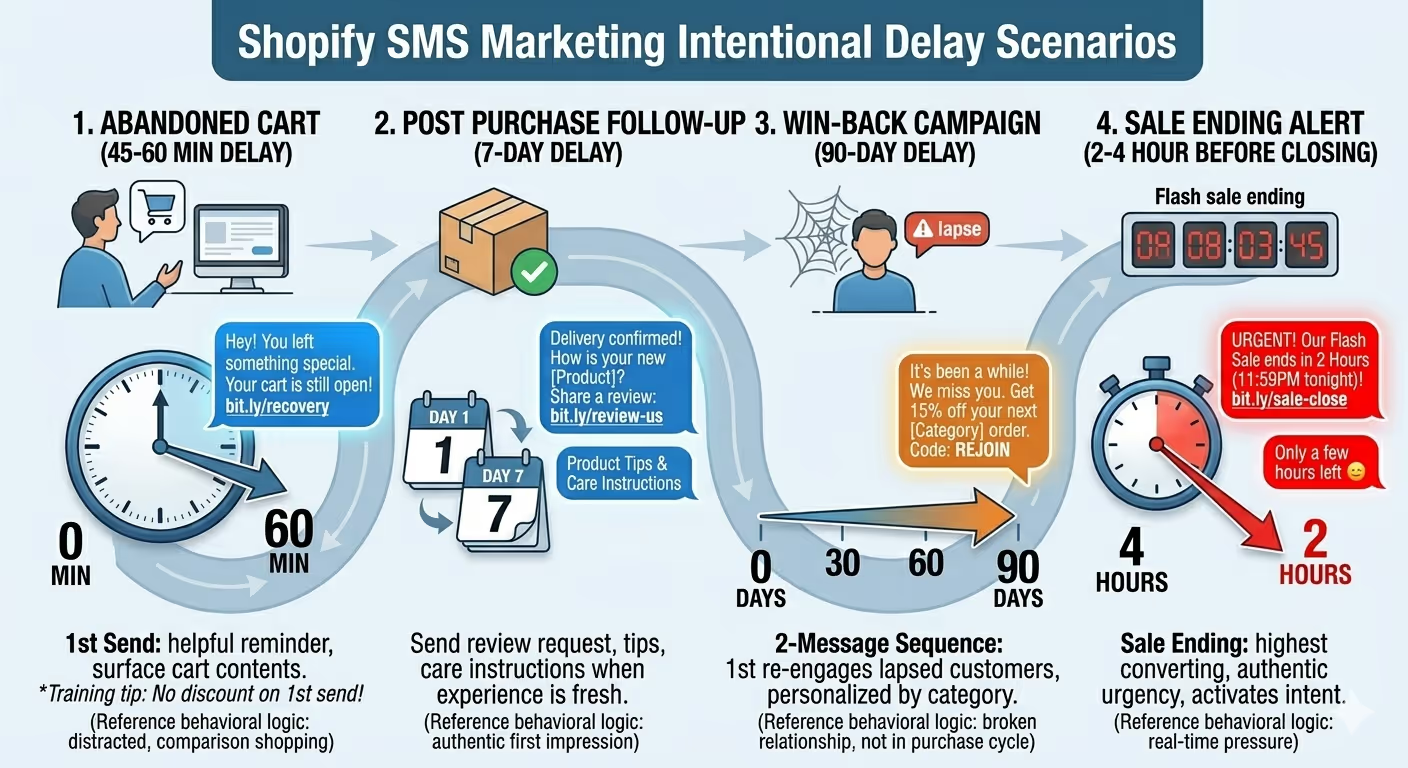
1. Abandoned Cart: 45-60 Minute Delay
Send the 1st abandoned cart SMS one hour after completion of the cart creation without purchase.
The rationale for the lag is largely behavioral in that most customers in the first 10-15 minutes after dropping off are still window shopping. They haven't opted out of purchasing, they got distracted, they're comparison shopping, or they nabbed a few other things and then left for a bit.
A message coming through at that moment seems like spying, not service. 45 Mins is the usual end of a browsing session. Your audience is in a new place. Pre-text cart reminder paired with a solid call to action comes across as helpful, not pushy.
What to keep in mind:
- Sending immediately seems invasive; too long a delay (3 hours) kills the momentum completely. 45-60 mins is the sweet spot.
- The first option is to surface the cart contents and not just "you left something behind”.
- SMS 2 should be 24 hours later (offering a discount or not), and catching delayed deliveries and customers who ignored SMS 1.
- Do not throw a discount on the first send, as it trains customers to abandon to get a discount. Save for the second SMS.
- Combine with a web push notification 15 minutes after abandonment for a two-channel approach that increases the total recovery rate.
2. Post Purchase Follow-Up: 7-Day Delay
7 Days After Confirmed Delivery, send a review request, product tips SMS & care instructions message.
Asking for a review on the day of delivery is too early, and the customer has not used the product, so it is difficult to write anything valuable.
7 days is enough for the majority of customers to form an authentic first impression. The message comes while the product is fresh and the experience still salient, resulting in higher-quality responses and better review content.
What to keep in mind:
- Use the trigger for post purchase follow as the confirmed delivery date, not the order date, because the order date can cause issues due to shipping delays
- Make sure your review request is brief and to the point; include a direct link to the review site
- Include product tips and care content with the review request, which makes it engaging and less transactional
- 7-day delay as the norm for most goods, 14 days for replenishment messaging about consumables
- A 7-day window is the perfect opportunity for a cross-sell or "customers who bought this also liked" recommendation
3. Win-Back Campaign: 90-Day Delay
Let the SMS win-back sequence follow up with customers who have not purchased in 90 days.
You have a three-month window, which gives you the line of demarcation between customers that are truly lapsed and those that are just in-between purchase cycles.
Sending automatic triggers after 30 or 60 days for win-back flows creates a false sense of urgency for customers who aren't really lapsed; they simply do not require a repeat purchase.
Data for 90 days consistently supports that something has broken the relationship, and a message asking to re-engage directly should be sent.
What to keep in mind:
- Instead, the win-back SMS is personalized according to the last purchase category of the customer, and not with their name
- Use a re-engagement incentive, like win-back, without an offer, converts at 64% of the rate of one with a nominal offer
- A two-message win-back sequence, by definition, is better than a single send: the first message does the re-engagement, while the second establishes urgency if there is no response.
- Those who are silent to two win-back messages should be kept from receiving future marketing messages, as almost nobody is going to wake up after 180+ days of silence and consent to continued sending, and doing so only harms your sender reputation.
- At 180 days of inactivity, move the win-back budget to acquisition. The math is better to acquire new customers than to reactivate cold ones.
4. Sale Ending Alert: 2-4 Hours Before Closing
Send SMS to close sales. Schedule the sale ending SMS to be delivered 2 to 4 Hours before the promo comes to an end.
This will always be the highest converting SMS send type in e-commerce. By the time someone sees a sale ending alert, they've already had that sale potential exposed to them.
You knew what the launch email looked like, maybe you even checked out the site they'd considered buying, but they did not hit that button yet.
This sale-ending message does not provide new information; it activates an intent that exists and adds real-time pressure to it.
What to keep in mind:
- The purpose of this type of urgency is authenticity, and the most urgent messages are real ones: "Only a few hours left".
- Do it 2-4 hours before closing the sale, in place of 30 minutes, as people need more time to make a purchase
- Add a specific end time to copy: "Sale ends tonight at 11:59 PM" is better than "Sale ending soon."
- This is great for flash or holiday promotions or limited-inventory launches
- This is your most important send for 24-hour flash sales: the launch SMS gives people the heads up, but it’s that sale-ending SMS that builds urgency and makes the purchases
Time Zone Handling for Shopify Stores with Global Customers
If a Shopify store selects one timezone to send SMS campaigns, but the subscribers are based in different US time zones, that creates an actual operational challenge. A send at 7 PM EST lands it at 4 PM PST, which is fine. Now, flip that around, and a send time optimized for the Pacific hits East coast subscribers after 10 PM, which causes compliance issues.
The solution is timezone-aware delivery at the platform level, not manual list segmentation by time zone, which is technically possible but operationally unsustainable. PushOwl and other platforms automatically take care of the subscriber time zones and customize SMS delivery so every subscriber gets the SMS at a suitable window in their local time zone.
This is not a nice-to-have for national stores that have subscribers in all four US time zones, or for international brands with customers spread across the world: it means the difference between being compliant and non-compliant, and running a campaign that lands well and one that annoys half of the list.
A promotional SMS sent at 10 AM while your audience is on the road or in a meeting scores a poor reply and click rate compared to an evening wind-down 6 PM send. Transactional SMS delayed after 5 minutes, i.e., an OTP that has missed its window, a delivery status, or even a verification code for your bank or UPI app, is virtually worthless.
In SMS, timing is not optional; you can't just pick up the internet. SMS requires a sequence. It is the primary variable.
The Multi-Channel Fallback Strategy
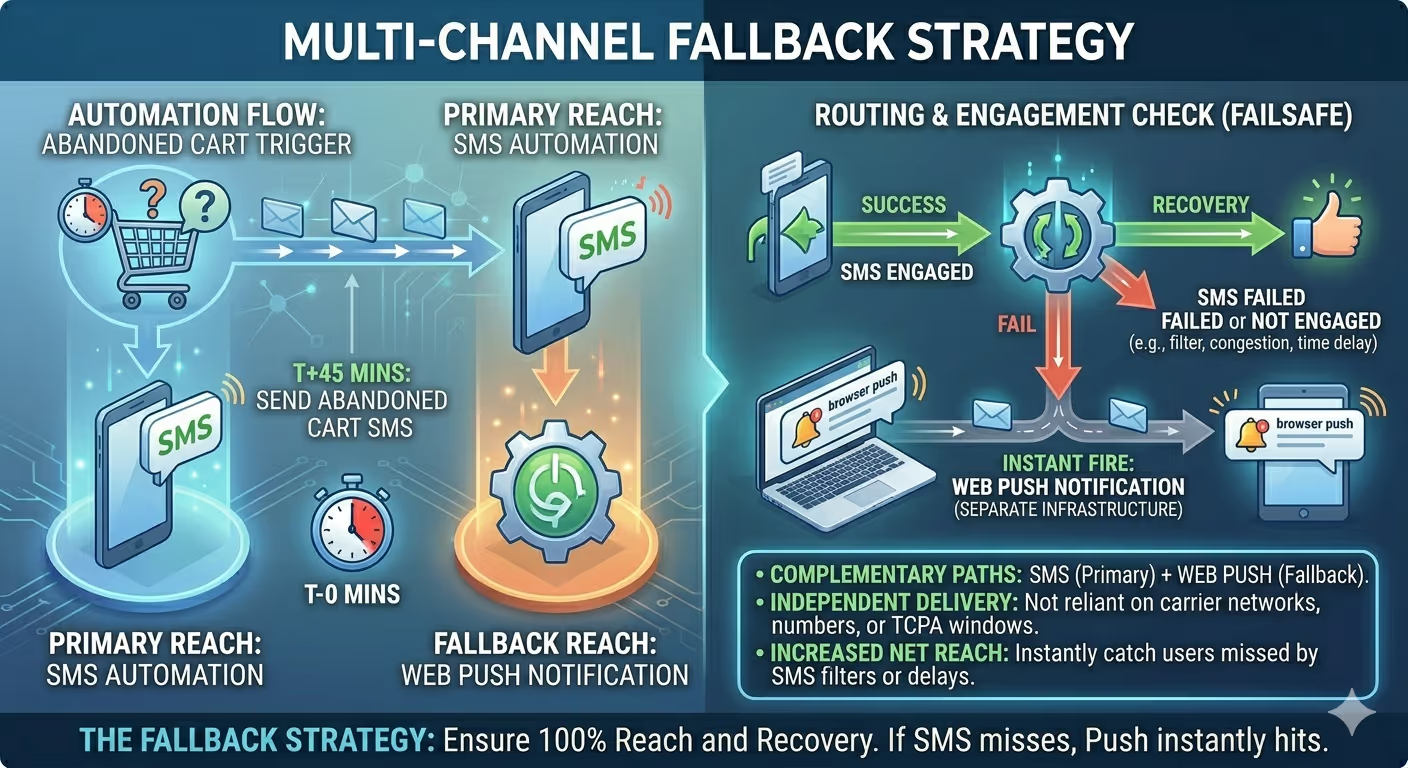
SMS delivery is not 100% under every condition, and no SMS provider will guarantee it. That creates a real-world need for Shopify merchants to have a fallback channel that is not reliant on carrier routing.
For exactly this reason, SMS is a natural counterpart to web push notifications. Because push notifications come straight to the subscriber's browser or device through an entirely separate infrastructure. They don't go over carrier networks, don't need a registered sender number, and aren't subject to TCPA timing windows. It's easier for brands to reach consumers via this channel. If there is a delay on an SMS or if the SMS was filtered, a push notification hits through that same automation sequence, reaching the subscriber instantly, over an entirely different delivery channel.
You can also easily build multi-channel logic based on real-time events or data updates using the automation builder in PushOwl. An example of that is you can set up an abandoned cart flow, and send an SMS at 45 mins, paired with a use case where if the user does not engage with the SMS within a defined window, it will automatically fire a web push notification. These two channels complement each other instead of competing, and the net reach is significantly greater than either channel separately.
The Takeaway
A delayed text message is two completely separate beasts, and needs to be taken each on its own terms.
For unintentional delays, the basics will almost always be one of seven diagnosable causes: carrier congestion, spam filtering, routing overhead, device-side issues, platform bugs, message length, or compliance timing violations. They are all preventable with a proper setup, like 10DLC registration, opt-out language, character discipline, and timezone-aware scheduling.
In case of purposeful delays, the space is significant and chronically underrated. Merchants receiving 3.81% click-to-conversion rates from SMS are not sending better copy. They are pitching at the moment when a customer is most likely to act, like 45 minutes after cart abandonment, 4h before the sale closing, 90 days after the last purchase. The timing is the strategy.
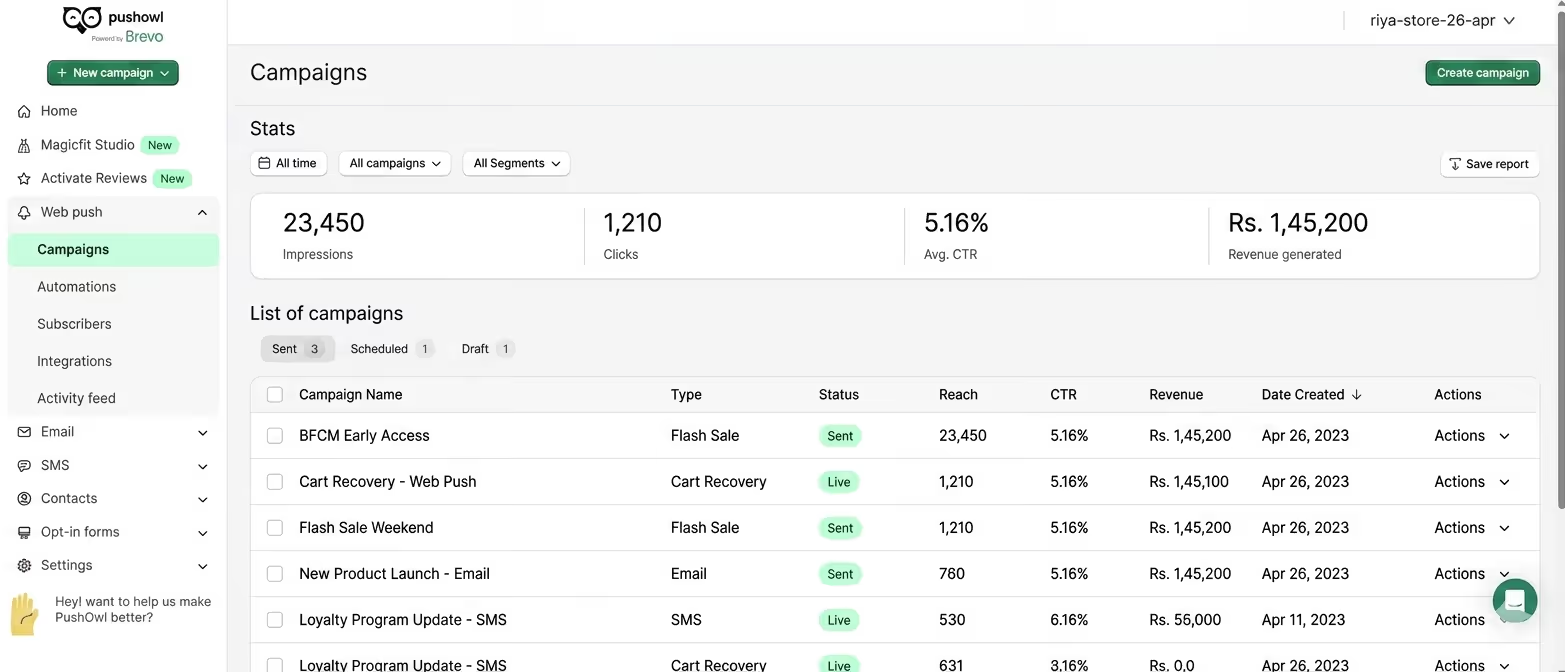
After building these automations and setting the delays correctly, your SMS timing will continue to run on autopilot from there. Every new subscriber that does not complete a purchase, completes a purchase, or goes silent is naturally threaded into the same process alongside the same ideal timing, without any manual effort.
Smart SMS timing in action. And it all begins with knowing what type of latency you are going to be dealing with.
PushOwl SMS automation builder will let you specify precise timing delays and new smart timezone delivery so each one arrives when your subscriber is more likely to engage.