
Opening an internet store was once about renting warehouse space, shopping for to-scale inventory, and anticipating your product forecasts correctly. In case you get it wrong, you are left with thousands of dollars of unsold stock, with no idea when it might move. That was the old model, but now, no longer the only model.
In this blog, we will discuss one of the biggest secrets behind how some of the fastest-growing ecommerce brands today have zero inventory. Not because they don’t sell anything, but rather, they’ve constructed businesses where fulfillment models take the physical aspect of the business off their hands. They specialize in marketing, consumer experience, and brand development. Someone else handles the warehouse.

This is the guide you’ve been waiting for if you want to start an online store, but you’re short on capital for inventory, don’t have space to stock goods, or simply don’t want that kind of burden. We’ll explore eight real, actionable ways to sell online without holding any inventory, how much it costs to start each one, and leave you with something that can grow into a full-blown business rather than just an initial setup.
Why Selling Without Inventory Makes Sense Right Now
Earlier, the barriers to launching a product business were purely physical. You need to have products, a space for them, and a way to ship. The total cost of these three things turned many people away before they even started.
What’s changed is infrastructure. By Oct 2023, we already know that 3PL networks can be vast and mighty, from print-on-demand facilities and whole bulk marketplaces to drop ship supplier networks. With the Shopify app, now you can do what previously needed a warehouse and a team, with the right relationship with the supplier.
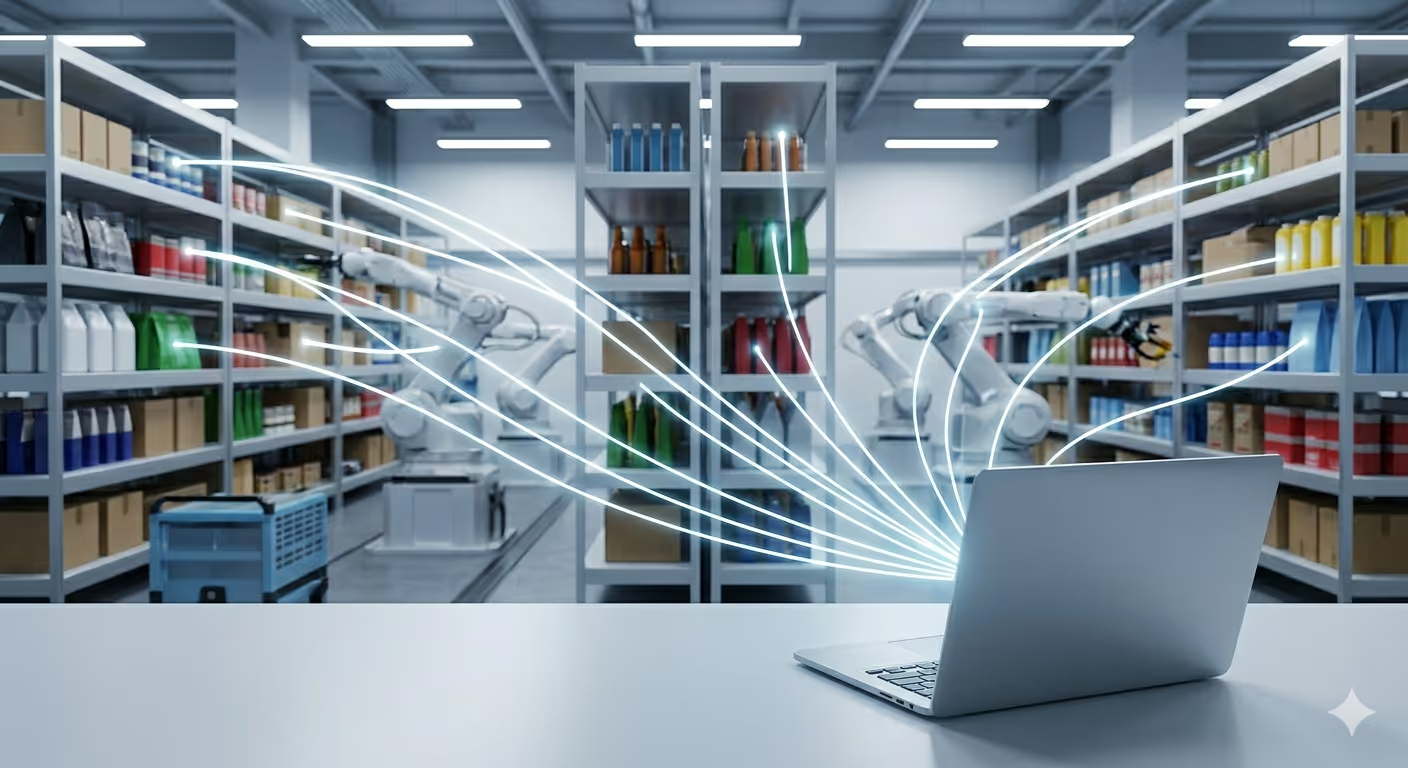
The second thing that is changing is consumer behavior. Consumers have more access time than ever, in more verticals from brands they never knew existed. Combined with tracked shipping, easy returns, and a responsive support process, this creates an experience that is simply far more reliable, keeping the trust threshold lower and leaving what almost every niche wide open for new competition.
The two biggest risks in e-commerce are capital risk (if you don’t sell anything, you have nothing to lose) and demand risk (you don’t want a bunch of unsold product taking up space). And for that reduction of risk, you give up some margin: a trade every early-stage entrepreneur should make.
8 Proven Ways to Sell Online Without Inventory
Selling without stock is not a hack, but more like a successful business model that some of the fastest-growing ecommerce companies are already using today.
Configured correctly, it will enable you to concentrate on marketing, branding, and customer experience while your partners handle fulfillment.
Below you will find eight of the best ideas to easily and effectively start an online business without ever having to lay a hand on stock in your life.
1. Dropshipping
Dropshipping is a no-inventory selling model that's gaining momentum. The model is very basic: someone orders a product from your store, you place the order to the supplier you collaborate with, and they send it directly to the buyer.
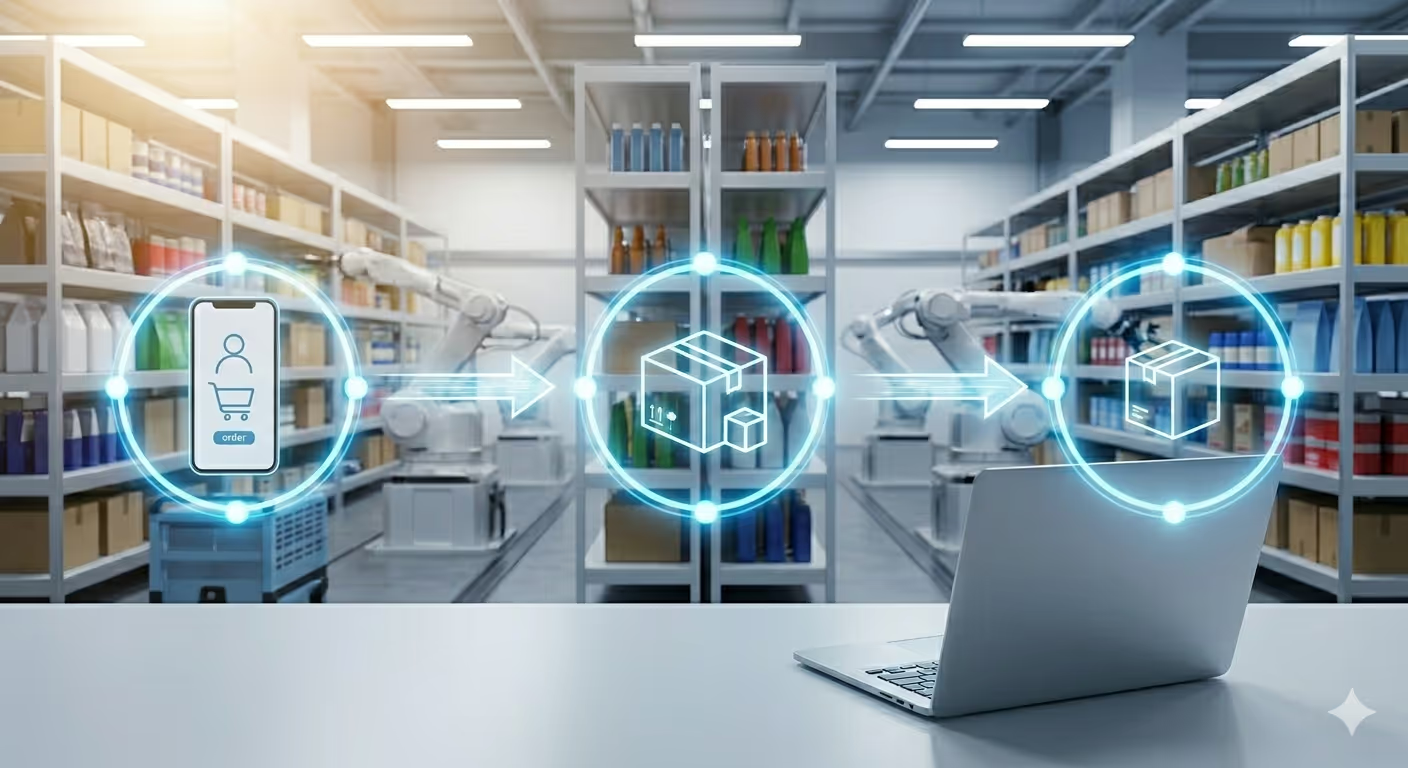
You never touch the product. You get the order from your customer, you take the difference of what they pay you (retail cost) and what you paid your supplier (wholesale cost), and it starts again.
Why It Works
The benefit right here is: no upfront inventory, no storage costs, and, in theory, unlimited SKU breadth since you have no physical limits. There are loads of pre-purchasing that you can do without purchasing any one item.
Something is not selling, you throw it away, and move on to the next one. If something takes off, you scale spending increases, and your fulfillment capacity gears up for more orders.
The model has matured significantly. These systems can have full integration with your shop; a sale in your store will convert directly into an order on the supplier side, and you'll not need to forward anything manually (some of the platforms are already fully integrated with Shopify: DSers, Spocket, Zendrop).
What the Reality Looks Like
Across all categories, dropshipping is extremely competitive. With the dropshipping model, selling items like phone cases or generic tech products in 2025 is really only a marketing budget game, because hundreds of other stores are running the same model with even more suppliers. Winning stores are currently pouring money into their brand, customer experience, and their niche (the market they're serving), but not in product access that nobody else can touch.
Quality dropshipping businesses are niche-focused. Exercise goods, trail runner workout equipment. Not pet supplies products for senior dog owners
In building a brand, creating content, and developing customer loyalty that brings customers back to buy from you again, you have to be specific. At generic stores, margins are racing to the bottom on price. Niche brands build loyalty.
Startup Cost
Low. For starters, less than $100 per month, combining your Shopify plan, along with domain and supplier integration. In contrast to that, some may think, the absolute (and in nature larger variable) is marketing spend (especially on Meta or TikTok ads).
The only way to scale relatively fast as a dropshipper is to throw big ad money, which is why most successful 0-1 stage dropshippers will stick with organic content and influencers first for product validation before scaling any paid channels.
2. Print-on-Demand (POD)
Print-on-demand (t-shirts, hoodies, mugs, phone cases, tote bags, etc.) is selling your design ideas without the need to hold stock.
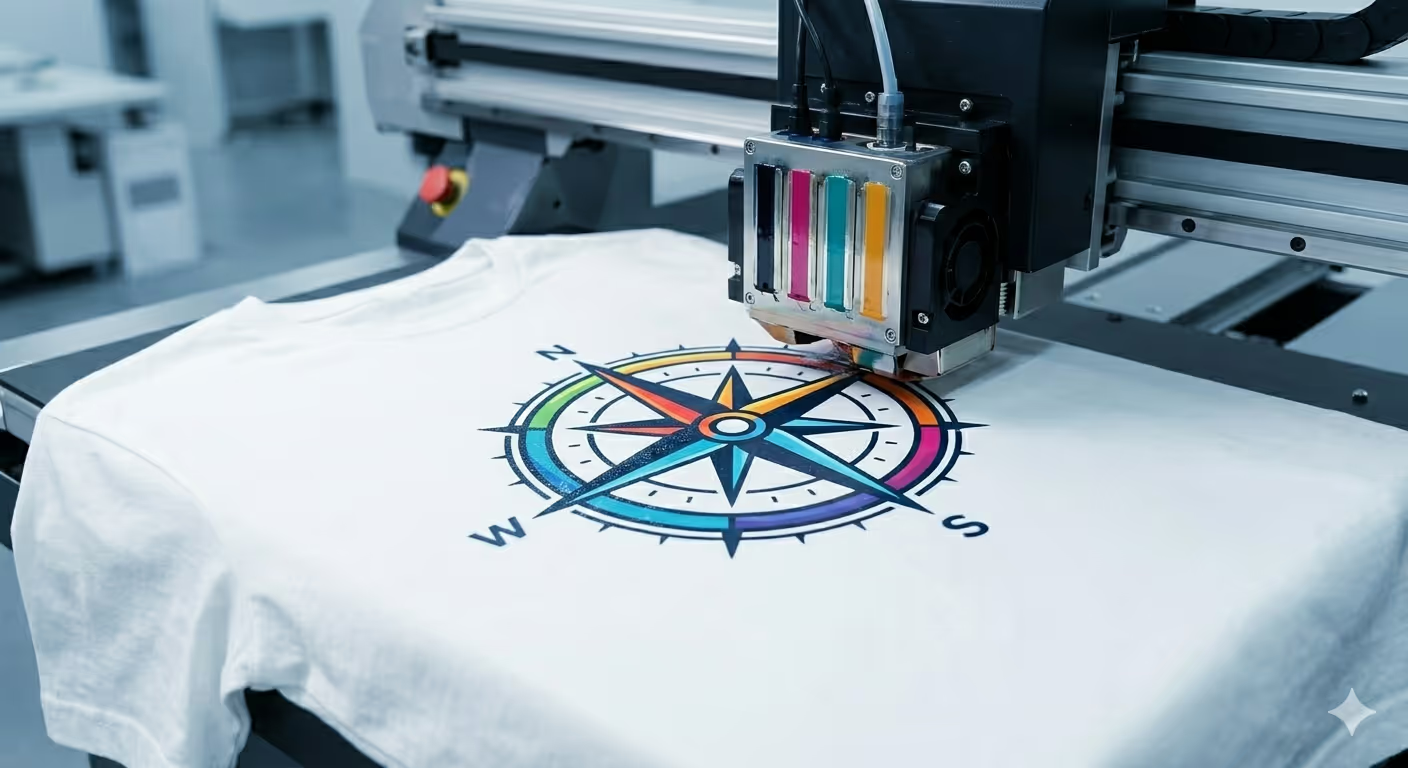
You create the products, upload them to one of the many print-on-demand services such as Printful, Printify, or Gelato, and connect them with your store. When you place an order, it prints the purchased item and ships it manually to the buyer.
Why It Works
This is the primary reason POD has so much leverage, particularly for creative types and artists or other people who might have an opinion worth printing on a product. If you have an audience, newsletter, social following, YouTube channel, or community already, then POD allows you to quickly monetize your brand with actual products in a way that doesn't require traditional product development.
This also works wonders for micro-niche stores. This means you can carry an entire catalogue of designs, across multiple product types, on demand and with zero inventory risk; for example, a pickleball apparel store, vintage hiking collectors, or goodies for amateur astronomers. To put it another way, the niche is a brand, and designs articulate that brand.
What to Know Before Starting
Print on demand is only a single-unit production and not wholesale; POD margins are tighter than those available in bulk.
A $30 t-shirt has a base price of approximately $12-$15, and it will give you a margin of $15 to $18 (gross). But paid acquisition will also take up some of your margin. The typical playbook for successful POD brands is to create an authentic and organic audience first, often in a high-value niche market.
Production and shipping times are longer when compared to quick-delivery platforms. Customers want fast delivery, but POD takes longer. If you set expectations clearly on product pages and checkout, customers may be less likely to complain about delivery timelines.
Startup Cost
Very low. A POD platform typically has no membership fee, but you pay for each order. Your primary expenses are a Shopify subscription, a domain name, and design work, which can all be done relatively inexpensively with tools like Canva.
3. Digital Products
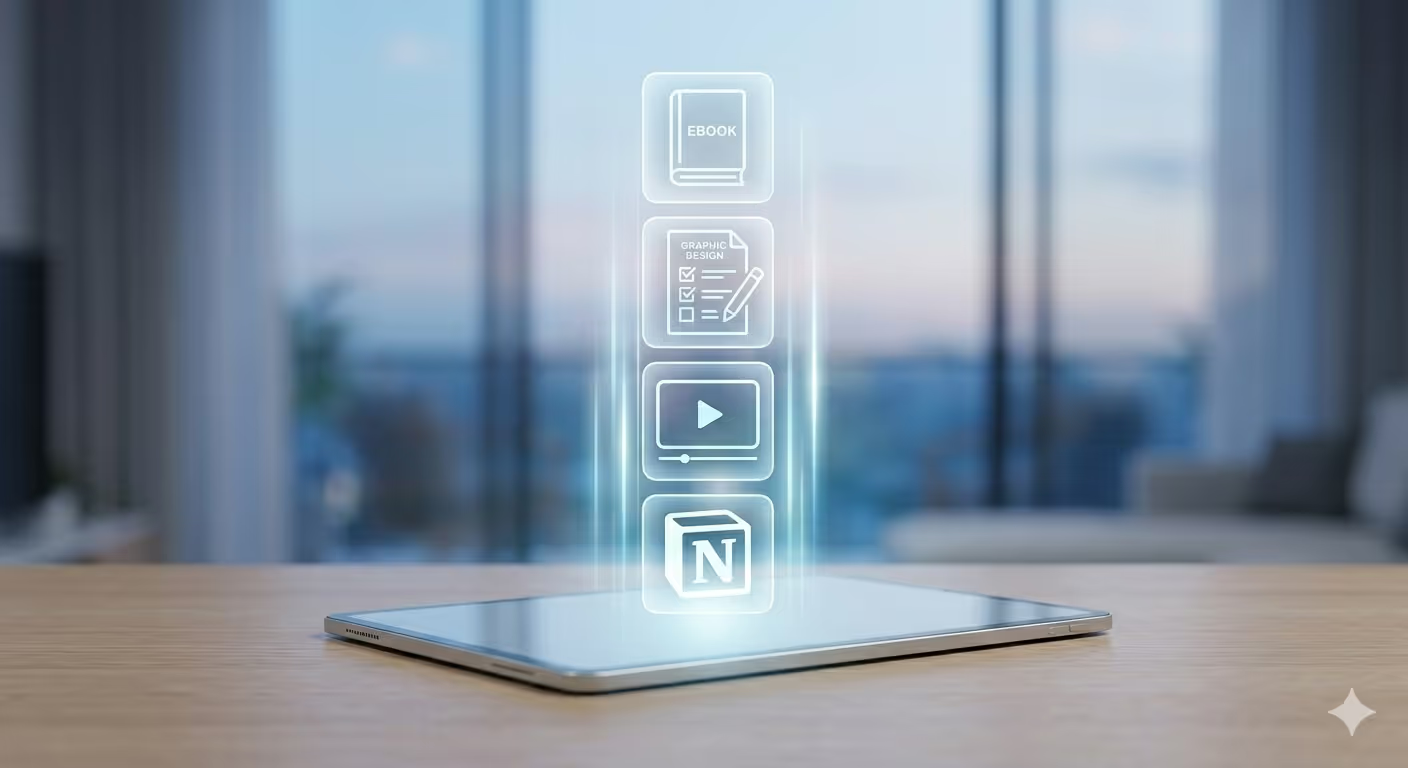
Digital products are files, content, or access that your clients download or make use of online. These are generally ebooks, templates, preset packs, online courses, stock photos, Notion templates, Figma kits, spreadsheets, or some pattern file. A digital product is anything delivered to a customer via a file rather than as a physical product.
Why It Works
The margin story is exceptional. It also mentions that once you have a digital product, the marginal cost of producing more is close to zero. No printing, no shipping, no restocking. An example would be something like a Lightroom preset pack, which can produce huge amounts of revenue at almost 100% gross margin. The business model is based not on inventory, but on audience and creativity.
Another big thing is that digital products scale in a completely different way than physical ones do. There is no requirement for fulfilment, no bottleneck of a supplier, nor any delay in shipping. When created, a digital product on Gumroad, SendOwl, or Shopify apps can run almost completely automatically.
Where Most People Get Stuck
It is not difficult to deliver: the platforms already know how to do that. The challenge is distribution. An invisible digital product doesn't sell anything. The hard work is establishing presence via SEO, social content, email marketing, or community building. Typically, it takes successful creators 6 to 12 months of audience building before launching, and when they launch, the product sells because there is an existing demand.
Startup Cost
Minimal. Since tools like Canva, Notion, or screen-recorders make it fast and cheap to create most digital products. There is an investment of time, not capital, in this business model.
4. Affiliate Marketing
With affiliate marketing, you direct customers to an external brand and receive a commission per sale. You don’t sell anything directly. You produce content, which can be blog posts, product comparisons, YouTube reviews, and a social post that encourages the sale of your products. When a visitor comes to your blog and purchases through your referral link, you get paid a percentage from the vendor for the sale.
Why It Works
You have no inventory, no fulfillment, and no customer service. You write articles, get traffic, and charge a commission when someone buys that product via your referral. The top affiliate networks share thousands of brands across every category, with affiliate networks like ShareASale, Impact, Commission Junction, and Amazon Associates.
The model scales with traffic. A low-maintenance evergreen product review page that is ranking-focused, or a highly engaging YouTube channel, can make your sales passively for years after the original content is created.
What It Takes to Succeed
Traffic and trust. Content businesses take a really long time, and affiliate marketing is one of those. In fact, starting a blog site won't land you on the first page of Google immediately. A brand new existence on YouTube is not going to be bombarded with a crowd in months from now. Keep in mind that the prize is quality content, genuine authority in your specific niche, and a reader able to take action on your recommendations.
The affiliates trying to promote everything to everyone fail miserably. The ones who succeed go deep on a specific niche, like beginner wildlife photography for DSLR cameras, sous vide tools for home cooks, and standing desks for remote workers, and become the voice in your niche to grow well in this model.
Startup Cost
Domain, hosting, and your time. Under $100 to start.
5. Selling on Marketplaces
You can make real sales on Etsy, Amazon, eBay, and Poshmark without the traditional headaches of inventory. POD can be used to fulfill and sell through marketplace distribution like Etsy and Amazon Handmade.
Merch by Amazon lets you upload designs that will be produced and shipped by Amazon, while you earn a commission. Across platforms like Poshmark, the model is thrifted or curated reselling, which involves sourcing but not bulk inventory purchases.
Why It Works
Marketplaces come with built-in traffic. A Shopify store on its own means you have to work for every single visitor, but a good Etsy or Amazon listing can achieve organic discovery without spending on acquisition. This takes off a lot of the marketing load for early-stage sellers validating product-market fit.
Being on marketplaces along with your own store has proven to be a strong scaling strategy. Use marketplaces to test your demand and get some initial feedback, then shift those customers into your own for better margins.
The Limitation
On a marketplace, you do not get the complete ownership of the customer relationship. Platforms dictate how businesses communicate, set marketing rules, and determine dispute outcomes. It's a mistake to be totally dependent on a platform you don't have control over. Acquire channels through marketplaces, but quickly build out your email and push subscriber list.
6. Bin-Style Subscription Boxes (Ambient, Do Not Hold On Them)
A subscription box is a package containing a representative sample of products, delivered at regular intervals. The no-inventory model is sourcing products from brands that want to give samples or pay for placement. In plenty of situations, the box is being sponsored by brands to get their product seen by your subscribers, like an advertisement.
Why It Works
It creates a predictable recurring revenue, built-in interaction, backed by a supplier. Product discovery is particularly valuable for a lot of consumer brands. Even a little exposure for their product can make it worth their participation. You enable that discovery and build up a base of high lifetime value subscribers.
This model suits specialized pitches such as sustainable beauty, regional food, outdoor gear, indie stationery, or specialty coffee. That is the curation value, not the product itself.
The Difficult Part
Churn management and retention determine success. If the experience falls short of always providing value, subscribers will cancel. Curation, quality control, and new product discovery have to be an ongoing practice.
Startup Cost
Moderate. Offered with packaging, a subscription platform like Cratejoy or Recharge, and time to nurture the suppliers. Use pre-sold subscriptions to pay for your first shipment.
7. On-Demand Ordering and Wholesale Offering (White Labeling)
Just like dropshipping, you only place an order from a bulk supplier after a customer has already ordered through your store, but it also does not fulfill directly to the consumer. They are shipped to you, and then you bundle them and sent to the customer.

White labeling goes further. You take another product from a manufacturer, brand it with your name, and sell it. Several supplies, similar to supplements, skincare, and food industries, have minimal white-label availability.
Why It Works
When using white labels, you can create a brand, which is yours, your name, your box or bag, even the logo, without having to invent anything. You are using well-established products and are now working on branding and marketing.
We call this ownership, and it builds brand equity. Comparatively, white labeling is the creation of an asset that can be scaled, sold, or expanded upon as opposed to dropshipping, which is you selling a store for someone else's brand.
The Tradeoff
Minimum order quantities and upfront costs are higher than dropshipping but lower than traditional wholesale. You are not sitting on a huge stockpile, but you will need to make small production runs. These requirements become more manageable as volume grows.
8. Service Firms (Productized Services)
A productized service wraps a service into a predictable, fixed-scope, fixed-price business. Essentially, it is a service that you sell as though it were a product! For example, a designer says “3 logo concepts in 72 hours” for $299; a copywriter sells an email sequence for $499; or a consultant offers to audit your Shopify site for $199.
Why It Works
You don't have an inventory because there is no product. You are packaging your knowledge in an offer that is easily purchasable. That takes away the friction associated with traditional service sales and enables customers to purchase without negotiating, hence giving a better conversion rate.
Also great for skilled persons without much money. You get to start generating revenue instantly without any suppliers, inventory, or ad spend.
The Limit
Since you are selling your own capacity, even though productized services can scale with hiring, they do not scale as fast as digital products or ecommerce models. That being said, the model is a great way to generate the first cash flow, which can be used in other models as well.
How to Choose the Right Model for Your Situation
Reading about these models is one case, but most people get stuck in deciding which works for their particular case. Here’s a simple decision framework:
- For design skills without capital: print-on-demand or digital products. Your creative input is your output. Do one, and use the revenue to move into the other.
- If you have an audience already: digital products or POD merch. Distribution is the hardest part of any of these models. If you already have people willing to listen to you, you can sell directly to them, and that is the fastest path to revenue.
- If you have no audience, no skills, and low money: dropshipping around a niche that you actually understand. Your advantage is knowing the customer, not the product. Then create content and community before paying for ads.
- If you want a real brand: white label or curated subscription. With these models, you build something unique to your company, something customers associate with you, not a vendor.
- The lowest risk test: affiliate marketing or marketplace selling. You have zero inventory risk, low initial investment, and real market validation before you spend anything building your own product.
The Key to Growth for Every Inventory-Free Business
Your chosen fulfillment model deals with the logistical side. Regardless of what you choose, the growth part, i.e., getting customers in your business, keeping them coming back, and increasing spend per customer, is all on you. That’s the real reality of the challenge.
1. Method of Customer Acquisition
Just because you have a store does not imply that you will receive traffic. It is gained through a steady stream of content, paid advertisements, social proof, referral programs, SEO efforts, community, and good reviews.
Focus on one category and specialize in that to expand. A lot of stores (needless to say) die trying to split themselves between TikTok, Instagram, paid search, influencers, and SEO initiatives, while running operations.
Long-term organic search represents the highest return on investment. A blog post that ends up on page one of Google can get traffic for free for years. It takes time to build out, but it compounds in ways paid ads never will. For SaaS, especially, SEO in the early days pays huge dividends down the road.
2. Transforming Buyers into Repeat Shoppers
The expensive customer is the one who buys once and leaves. In inventory-less businesses, the marginal difference between a one-time buyer and a repeat customer will set you up well for sustainable longevity in tight-margin territories.
Communication after purchase is the responsibility of your marketing team, with significant portions going out in forms such as an optimized email flow (for low inventory that could lead to lost customers), push notifications for replenishment reminders, or a loyalty incentive with a just-in-time message post-first order.
It depends on intention. When configured, it runs every day for every new customer.
3. Social Proof Built Systematically
Buyers trust what others' feedback when they purchase from an already unfamiliar brand. Early-stage businesses rely on reviews, user-generated content, and social proof instead of brand equity.
You need a system to create reviews in your post-purchase flow. It is a foundation of trust on which a brand is built. Such a product will convert huge as compared to the same product without any reviews. Automating review requests drives conversion without changing anything in the product itself.
Critical Mistakes That Destroy Inventory-Less Businesses
Most inventory-less business failures have nothing to do with the model being wrong. The idea did not fail; it is the company that failed due to its poor execution patterns.
- Selecting a niche before conducting market research: Passion for a topic is completely different from demand for the products within that space. Make sure that the niche is not dead, and there are real people buying products. You can use Google Keyword Planner, Amazon BSR, Etsy volume, or social listening tools that give you real data. Before investing your time and money, use this.
- Competing on price for commoditized categories: The no-differentiation aspect of dropshipping generic products means going head-to-head against stores with scale. You will lose that battle. Not by being $2 cheaper, but on brand, or quality of writing, service, or niche specificity.
- Underestimating supplier reliability: In dropshipping and print-on-demand business models, the supplier is your fulfillment team. In fact, suppliers who ship late or package poorly cause customer problems, and this becomes your brand problem. Always vet suppliers, request test products, and have backup suppliers for bestselling items.
- Create a store that nobody knows: If your Shopify store has a nice design but no visitors your are not building a business, you are building a hobby. Traffic generation should not take a back seat until your store is “perfect”; it should be one of the very first things you tackle. The store is never perfect. Start driving traffic immediately.
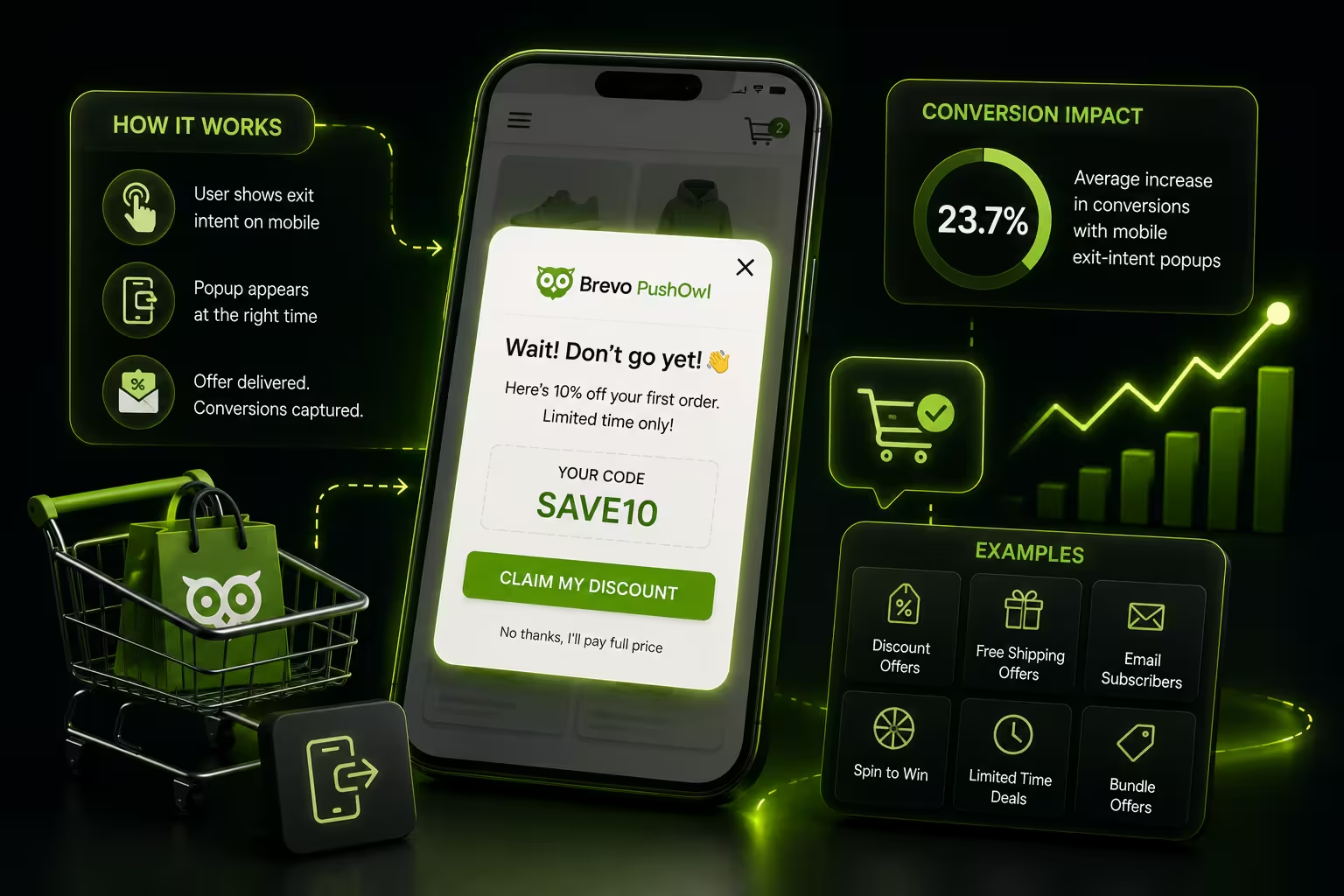
- To fail to gain subscribers early on: Any visitor who leaves without subscribing is gone for good. You warmed them up through ads, content, or social, and failed to convert enough of those warm leads into sales. Run an email capture pop-up and push notification opt-in from day 1.
How to Sell Internationally the Smart Way without Inventory
A major strength of an inventory-free model for international expansion is that most constraints, storage, customs issues, and import duties are handled by your fulfillment partner.
Until recently, dropshipping suppliers were mainly international, leading to 2-4 week delivery times. Now, suppliers operate regional warehouses, reducing delivery times significantly. Platforms like Gelato offer print-on-demand with local production across 32 countries. Digital goods have zero geographic friction.

If you are targeting customers in specific markets, your pricing should be in local currency, shipping expectations must align with that region, and customer service should handle queries across time zones. Trust signals, local payment methods, familiar checkout flows, and clear delivery windows are just as important internationally as they are domestically.
The Bottom Line
The biggest reason people do not start is that they think it is more complex than it actually is. You do not need a warehouse, inventory, or a fulfillment team. The infrastructure already exists. You only need a laptop and a clear idea.
What you do need is a plan to acquire customers, retain them, and build a communication channel that allows you to reach them without paying every time. This is where casual stores and real businesses separate.
Start building your subscriber base from day one. Your list, email, push, or otherwise, is your business. It gives you control over distribution and helps build long-term brand equity. Everything else is infrastructure.
Choose a model based on your current situation, not what sounds attractive in theory. Start simple. Validate before scaling. Treat customer relationships with the same importance as acquisition. No matter which inventory-free model you choose, this is the playbook that works.