Without a delivery strategy, a sales promotion is nothing but a discount you missed leaving on the table.
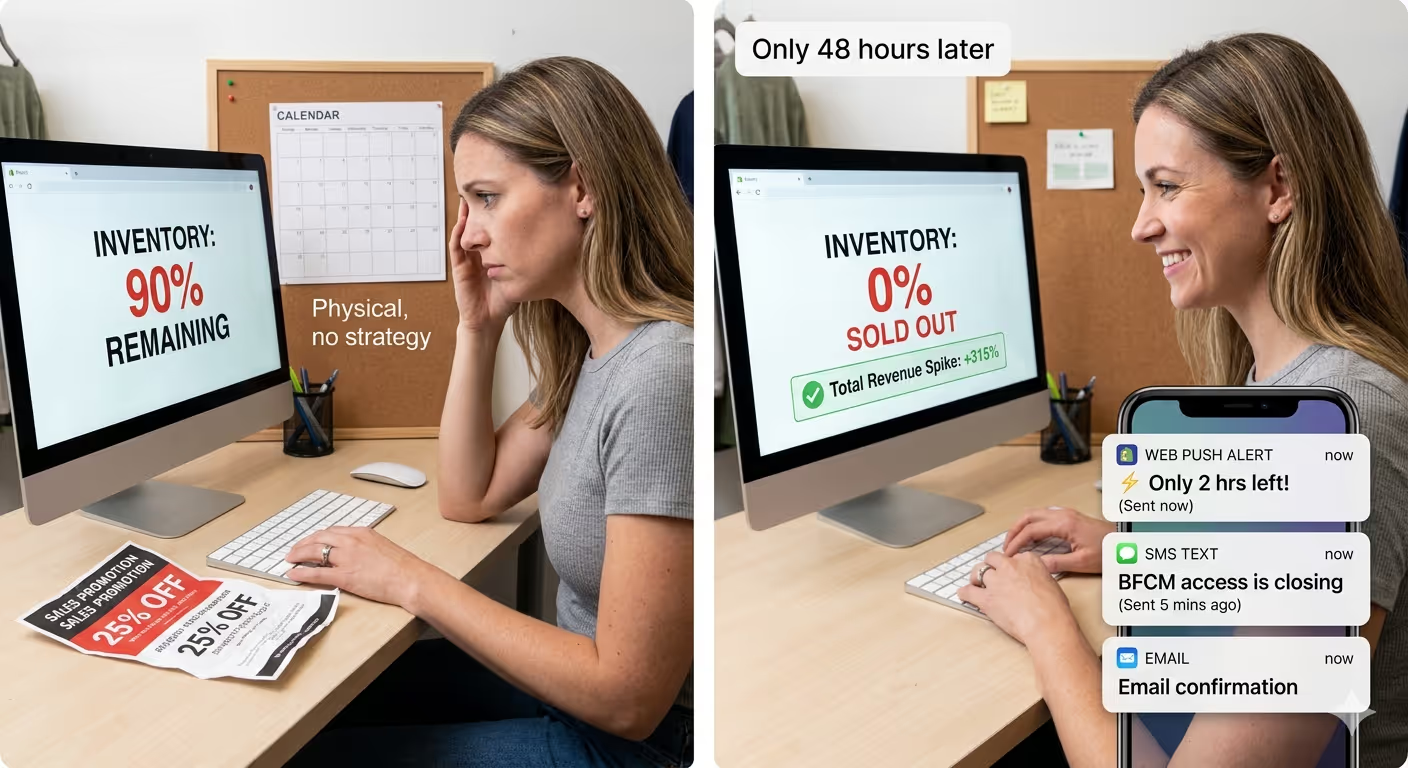
What separates the promotion that sells through inventory in 48 hours from the one that quietly, subconsciously (and perhaps forever) trains your customers to wait for the next sale is not the offer itself; it is timing, urgency, and channel.
The very same offer could be massively successful when presented at exactly the right moment to people who were ready to take action, rather than as a lead-up to a more exciting opportunity.
At any given send, Shopify merchants using email alone only reach about 20-30% of their subscriber list. If you layer in web push and SMS, you hit 60-80% of users across touchpoints, normally within minutes after a campaign goes live. The promotion mechanics matter. But how many customers are seeing it, and in time to act? Well, that counts for a lot more.
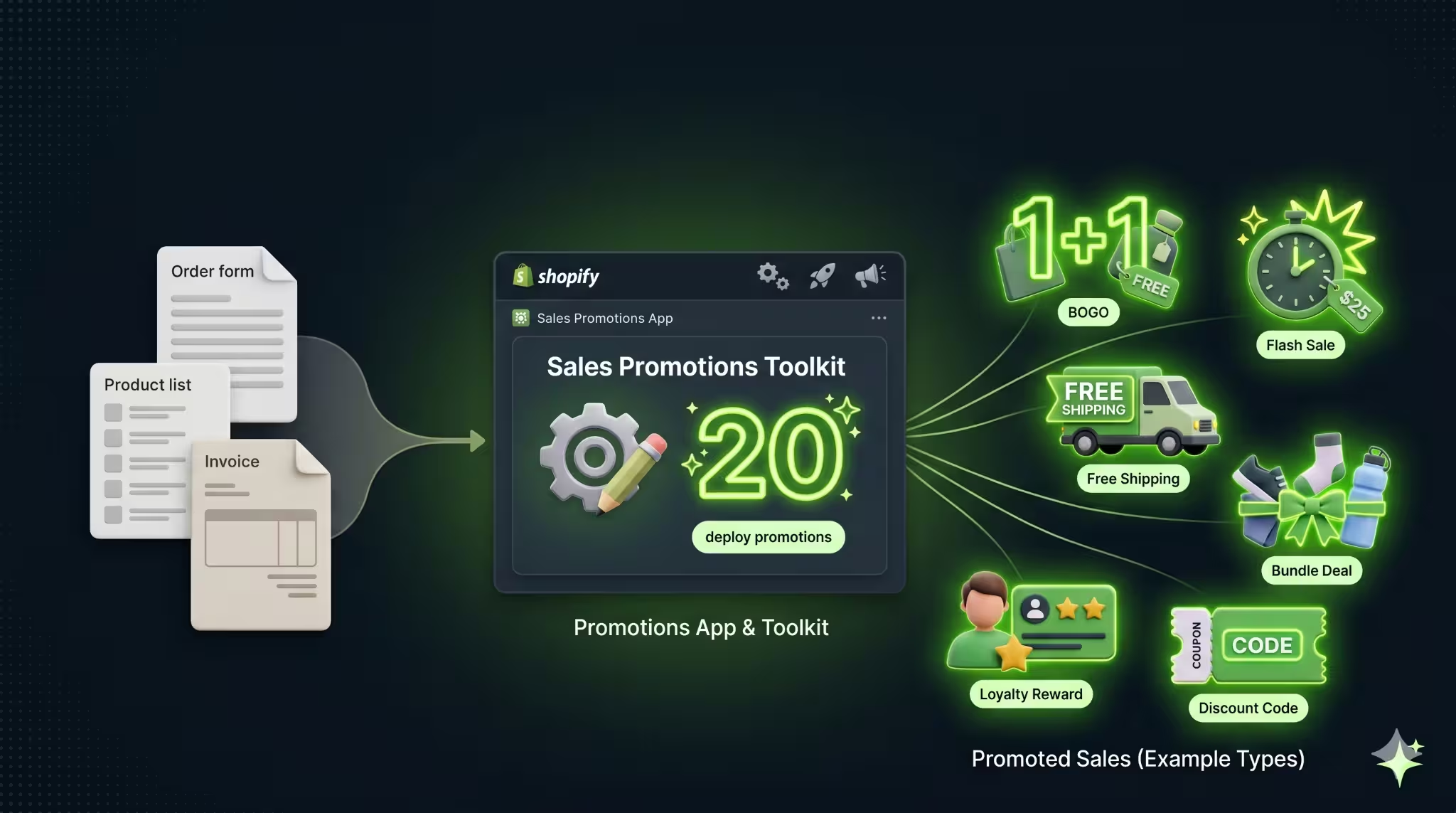
In this post, we will talk about real examples of 20 sales promotion types, the recommended timing for each, relevant copy frameworks you can use, and what delivery channels convert best for each. This provides helpful nudges you can use the next time you're rolling out your first flash sale or fixing a loyalty program that has stopped converting, with every entry listed.
What Is a Sales Promotion? (And What Separates One That Works from One That Doesn't)
A sales promotion consists of a marketing offer involving direct (but short-term) incentives with the intention of encouraging immediate purchase, excess inventory clearance, new customer acquisition, or old buyer reinstatement. The key distinguishing factor that differentiates a sales promotion from an everyday price is that the former has a specified time, an associated trigger or event, and is intentionally crafted as a reason to buy immediately.
In that definition, "short-term" is doing a lot of heavy lifting. A six-week wonder of a promotion is not a promotion; it is a new price point. And within every 2-week promotion, its urgency is lost, as the minute consumers discover that there will always be another promotional sale. Promotion mechanics, urgency, scarcity, and exclusivity only work if they are real.
Three things consistently separate promotions that drive real revenue from those that erode margin without proportionate return:
- Definite urgency: A deadline that the consumer genuinely acknowledges as over for good. Not "for a limited time" but "ends midnight Sunday."
- Right channel delivery: The promotion is delivered in front of the customer through the channel, on which they are most likely to act on during that available window. An email of the two-hour lightning deal campaign will hit most of your list after the sale has closed.
- Audience fit: Strongest promotions have a distinct connection to some segment with a single reason that buyers purchase today. A win-back offer to lapsed buyers at 15% off will outperform a sitewide offer sent to everybody. This is because the lapsed buyer has specific reasons to need the nudge, an active customer does not need.
20 Sales Promotion Examples for Shopify Stores
Urgency and Time-Sensitive Promotions
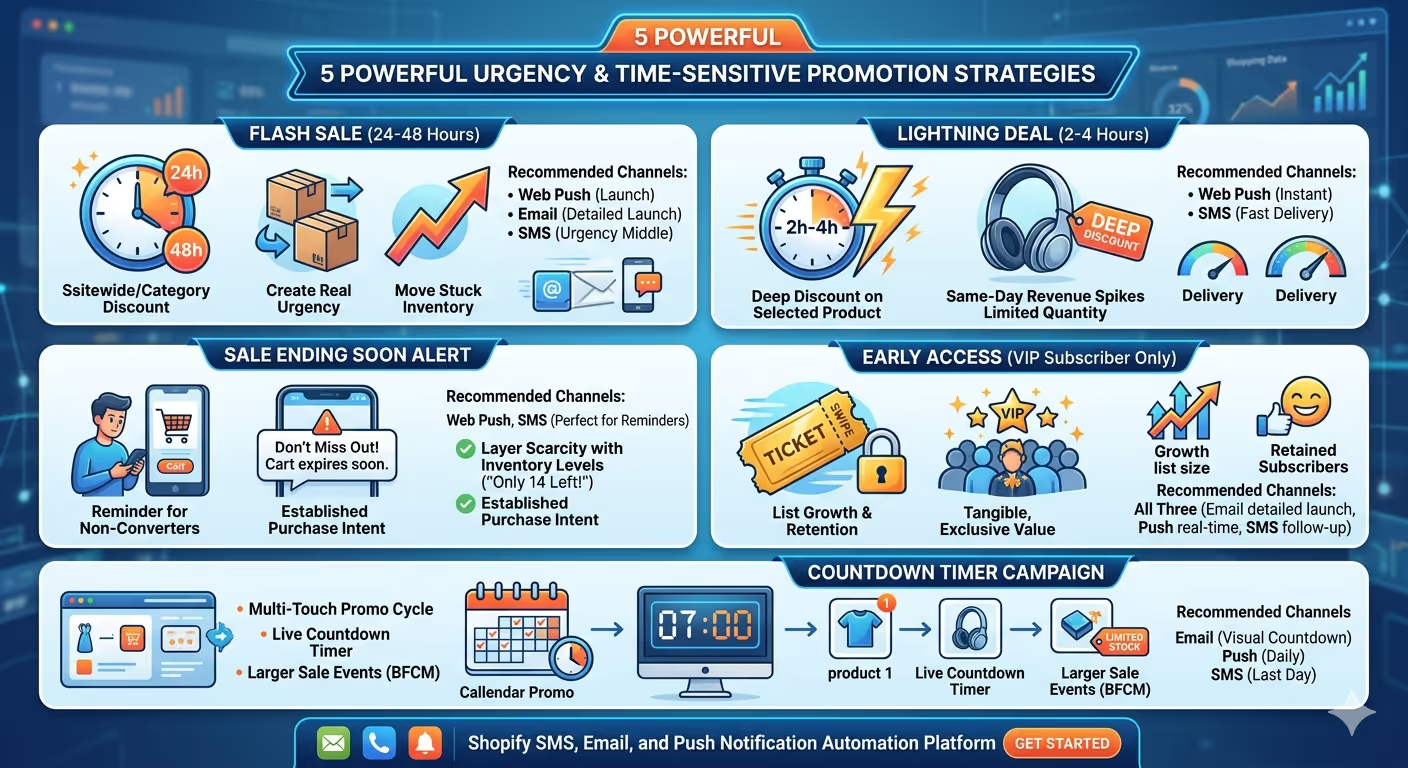
1. Flash Sale (24-48 Hours)
What it is: An effective sitewide or category-level discount with a strict end time of 24-48 hours to create real urgency
Ideal for: Moving stuck inventory, landing a monthly revenue target, or reigniting a warm but dormant part of your list
Recommendation: Web push to announce the launch (it arrives with a few seconds for subscribers), SMS for urgency in the middle of the campaign after 12 hours, email to send detailed launch with product pictures and copy
For example (web push): "Flash sale has just dropped. 30% Off Everything for the next 24 hours. Ends midnight."
Pro tip: Send a general web push one hour before going live, make sure it makes people hungry without killing the urgency! But pre-announcing three days ahead of time permits customers to plan a purchase, and certainly enough time to forget about it altogether.
2. Lightning Deal (2-4 Hours)
What It Is: An offer set for 2-4 hours at a deep discount on a selected product or category.
Ideal for: High-demand hero items or more limited-quantity bundled or same-day revenue spikes
Recommendation: Web push and SMS are the best channels. Email is too slow for a two-hour window. By the time the campaign goes through and gets read, the sale might be done
Delivery reality: Under two seconds is the delivery speed average for web push notifications, meaning they are the only channel that can always hit subscribers fast enough to make a sale within four hours.
Bonus Tip: Stick to one product per lightning deal event. Urgency signal = the more specific your offer → the better.
3. Sale Ending Soon Alert
How it works: The audience for this is what you would call a reminder campaign.
Ideal for: Subscribers who opened but did not convert on first touch (sent the launch email or push)
Learn More: The best push notification & SMS channels convert the best throughout the entire promotional calendar simply because purchase intent is already established, and they just need that little reminder.
Segment: Send the sale-ending alert only to subscribers who received the launch campaign but did not purchase. Sending to the customers who purchased from the sale will piss them off.
Tip: Combine the urgent alert with an inventory level notification ("Only 14 left at this price"), layering scarcity on top of time pressure.
4. Early Access (VIP Subscriber Only)
What it is: Providing email, SMS, and push subscribers with access to a sale, 12-24 hours before opening the sale to the public.
Best for: List growth, subscriber retention, and reminding subscribers of the tangible value of remaining opted in
Winner: All three (email for detailed early access announcement, push for real-time launch alert, SMS if the subscriber has not clicked after six hours)
Why it works structurally: Early access promotions drive opt-in because you are offering subscribers a specific, exclusive benefit. Generic newsletters alone cannot do the same job. The advantage is concrete and scalable.
Pro tip: Say this exclusivity in the subject + push copy. Instead, you get a high-performing CTA like "You're in. 24 hr early access to shop" over the underperforming message of "Subscriber-only sale."
5. Countdown Timer Campaign
What it is: A multi-touch promo cycle where each send contains a live or static countdown to the sale end date, building cumulative urgency across the campaign window.
Best For: These are best suited for larger sale events like BFCM, anniversary sales, and seasonal clearances, where your list is likely too big for a single launch outreach email to hit everyone.
Ideal channel: Email for visual countdown (embedded countdown timers in email boosts click rates by as much as 9%), push for daily to remind, SMS the last day only
Pro Tip: Space out the countdown sends so that each one brings something new, such as a featured product, a stock update, or another element of social proof, instead of sending "sale ends soon" with every send.
Discount and Incentive Promotions
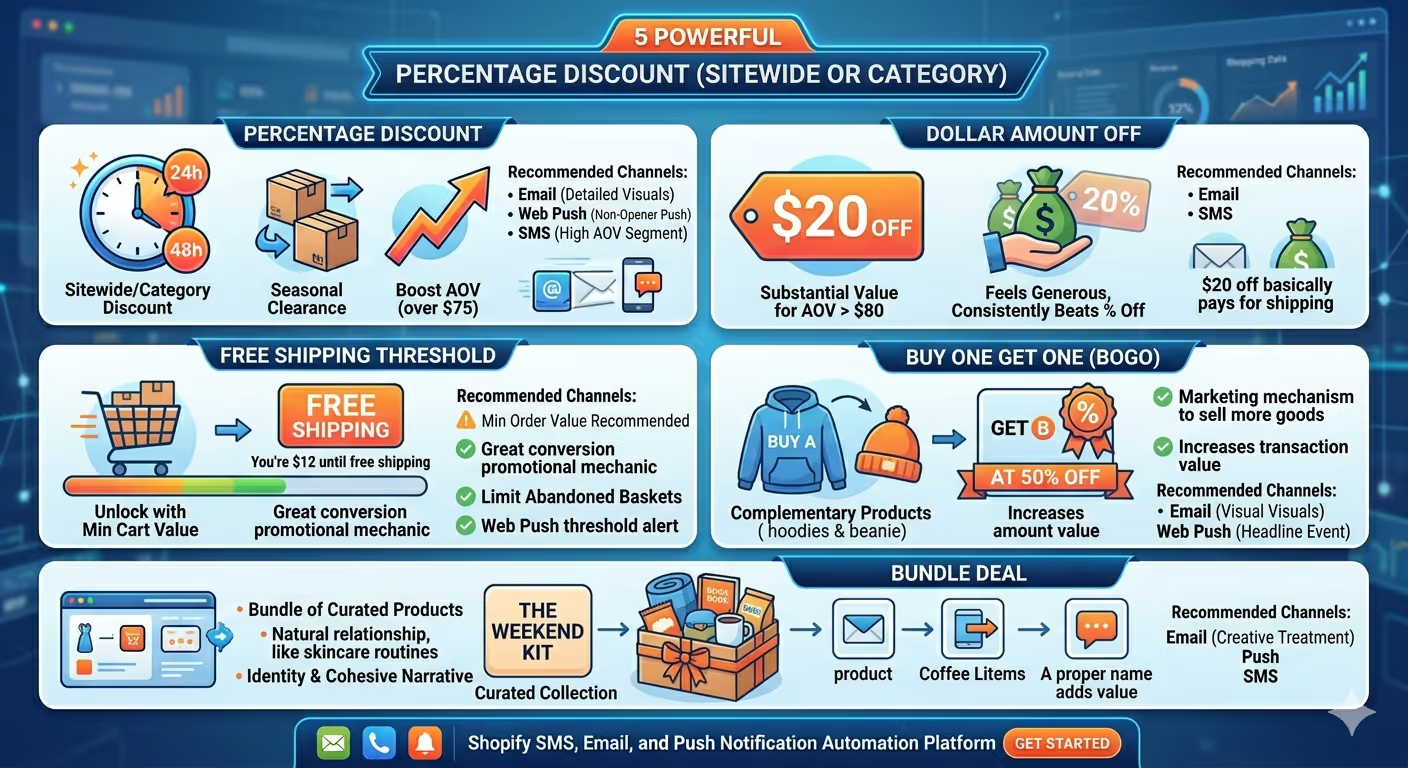
6. Percentage Discount (Sitewide or Category)
What it is: A discount that applies at a percentage of full price, versus X% off selected items.
Ideal for: BFCM, sales occurring at the anniversary of a brand or new collection launch, seasonal clearance efforts with more focus on broader reach than margin
Best channel: Email for reaching people with a visual launch announcement, push for delivering to non-opening email recipients in real-time, SMS to reach your very highest AOV buyer segment
Caution: Do not run flat (sitewide) percentage discounts without a minimum order value. Eg, "25% off all orders" is always gonna underperform against "25% off orders over $75" because it will increase your AOV but sacrificially experiment and encourage shopper behaviour on the lower expenditure end of your catalogue
Keep in mind: Sitewide percentage discounts should be at most four to six times a year. Above that frequency, customers begin to treat the reduced price as your actual price.
7. Dollar Amount Off
What it is: A fixed dollar amount offer rather than a percentage discount.
Ideal for: Stores with an AOV over $80-$100, where the dollar amount feels more substantial and is therefore more generous than the equivalent percentage
"$20 off" feels like receiving money. "20% off" feels like doing math. In A/B tests across Shopify categories, dollar-off promotions are proven to consistently beat percentage discounts by a wide margin for purchases over $100.
Best channel: Email and SMS, where the copy can afford to make that dollar amount feel like a lot.
Pro Tip: Quantify in terms of what it buys, "$20 off, and that basically pays for your shipping."
8. Free Shipping Threshold
What it is: Free shipping is unlocked when an order reaches a minimum cart value.
Ideal for: Great for boosting average cart size, limiting abandoned baskets, and encouraging add-to-cart behaviour on products. The free shipping is the greatest-conversion promotional mechanic in Shopify-based ecommerce by volume, not because it is the best offer, but simply because the shipping cost is the single most cited reason for cart abandonment.
Best channel: When subscribers' cart approaches the threshold ("You're $12 until free shipping") as a web push; one of the level 95+ highest-ROI automations any Shopify store can run
Pro Tip: Show free shipping threshold in the cart drawer in real time, not solely based on a promo banner. The nearer a customer is to the threshold, the more willing they are to snap up one last item.
9. Buy One Get One (BOGO)
What it is: A marketing mechanism to sell more goods, in which one (often paid) item qualifies you for a free or deeply discounted second item.
Works well for: Clearing slow-moving inventory together with a hero product already selling, increasing units per sale, and introducing customers to a second/third category of products. “Buy A hoodie, and get a beanie at 50% off," paired with complementary products, increases transaction value and exposes customers to new product sections they need (not already in their cart)
Ideal channel: Email (two products look great together as visual in a rich template), push (headline event at launch)
Pro tip: Schedule BOGO promotions according to gifting occasions (e.g., holidays, back-to-school time, Valentine's Day) when the second item has an obvious recipient.
10. Bundle Deal
What it is: A bundle of curated products sold at a discounted rate compared to purchasing each product separately.
Best for: Shops that serve products with a natural relationship, like skincare routines, outfit collections, home goods combinations, or recipe kits, where the bundle creates a cohesive narrative around multiple products. Bundles change the customer angle from "How much am I saving?" to "What am I getting?" It is not the discount, but rather the complete set that is of value
Ideal channel: Email for the creative treatment that resonates with lifestyle, push for launch alert, SMS to your highest AOV segment
Pro tip: Name the bundle. Bundle of 3 items: save 20% will perform worse when compared to names like The Weekend Kit or The Starter Set because giving the bundle a proper name provides it with identity, while the former makes it feel like something you find in a discount bin.
Loyalty and Retention Promotions
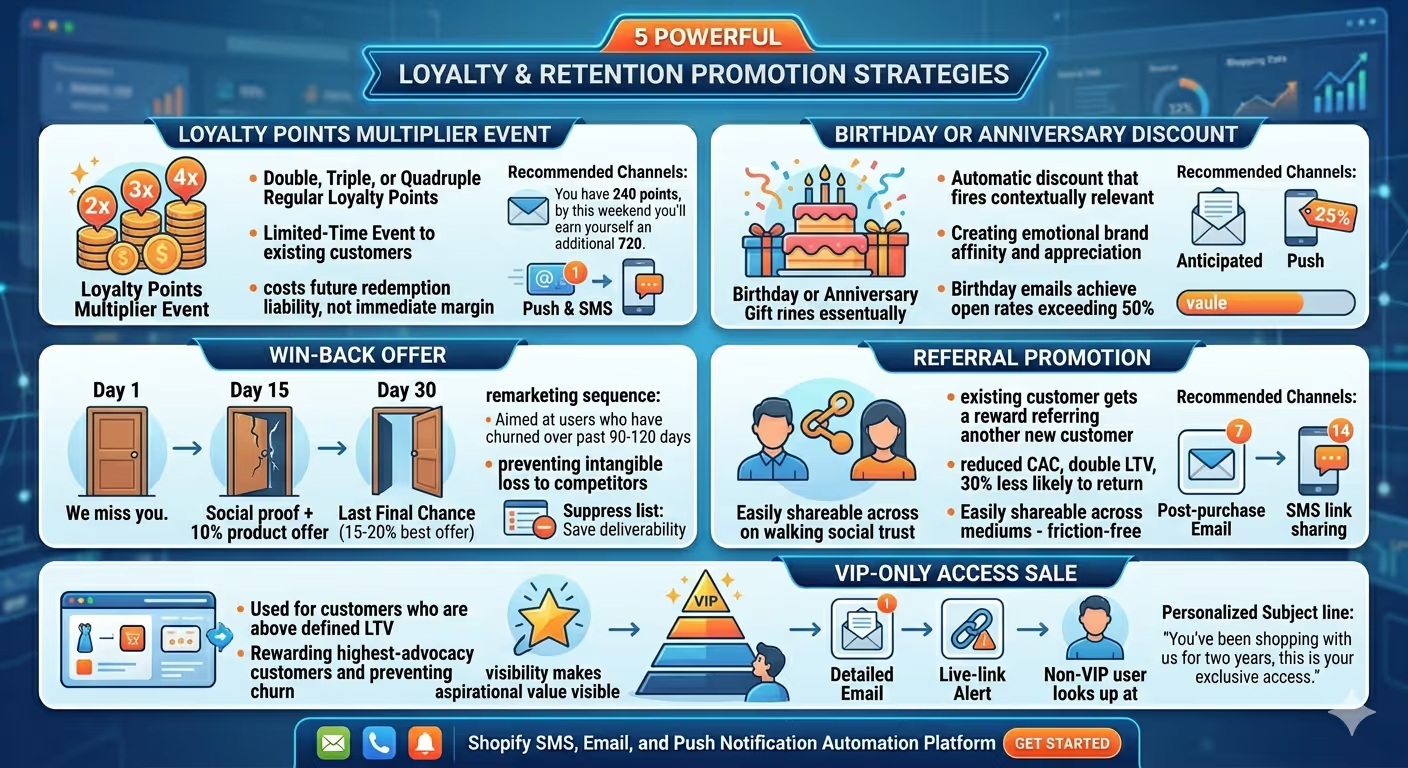
11. Loyalty Points Multiplier Event
What it is: A limited-time event that allows customers to earn double, triple, or quadruple their regular loyalty points on purchases.
Optimizes for: Increase purchase volume within your existing customers without a visible price shave that erodes full-price positioning. A points multiplier costs you future redemption liability, not immediate margin. The cost of a multiplier event is much lower than an equivalent price discount for stores where redemption rates are less than 60%.
Best channel: Email (breakdown of the points value and what the multiplied earn unlocks), push (event reminder and live countdown), SMS (last-day urgency send)
Pro tip: Offer the customer their current points balance alongside the multiplier in this email. Generic multiplier announcements are unlikely to improve much if at all, while personalization ("You have 240 points, by this weekend you'll earn yourself an additional 720") often proves to be a game-changer.
12. Birthday or Anniversary Discount
What is it: An automatic discount that fires on the customer's birthday or the first anniversary of their first order.
Ideal for: Creating emotional brand affinity, getting a purchase when customer lifecycle states "not ready," and showing the individual customer that your brand knows them and appreciates them. Birthday emails routinely achieve open rates exceeding 50% and conversion rates 3–5x higher than standard promotional campaigns, because the email is anticipated, contextually relevant, and arrives at a time of positive association
Your message copy is visually appealing, and the tone is warm. Somehow, birthdays are mostly promotional messages coming from the email channel. If the subscriber has not yet redeemed, then follow with a push on the end date of the offer.
Pro tip: Make the birthday discount actually valuable, like something like 20–25% off, not 10%. A birthday discount that only just moved the needle is not a gesture: it shows us the brand is going through the emotions.
13. Win-Back Offer
What is it: A remarketing campaign delivered via a series of push notifications aimed at users who have churned over the past 90-120 days to nudge them into taking action before they become an intangible loss to competitors.
Best for: Reactivating high-LTV customers who have gone dormant, preventing unsubscribe churn, and deciding which non-responders are truly non-recoverable before you suppress them to save deliverability
Best channel: 3 email sequence over 30 days → Email 1 - reminder, no discount; Email 2 - social proof + small offer; Email 3 - final send with best offer and real urgency, SMS nudge on Day 30 for opens (but not converts)
Sequence structure:
Day 1: We miss you: no discount, only a reminder of what they loved
Day 15: 'This Is New': social proof + 10% product offer with a 7-day expiry
Day 30: Last Final Chance to Come Back, Send the best offer you can (15–20%), SMS follow up the same day
Pro tip: Remove subscribers who do not engage (open) with any of the three emails from your main promote list. Sending to confirmed non-engagers continues to damage your sender reputation and cost.
14. Referral Promotion
What it is: A two-sided incentive where an existing customer gets a reward when they refer another new customer for their first purchase.
Ideal for: Deepening your reach with walk-in social trust (reducing CAC on a cost per acquisition basis); also identifying your highest-advocacy customers
The structural benefit: A referred customer has a higher first-order conversion rate, more than double the LTV over 12 months, and is consequently up to 30% less likely to return than an acquired customer through paid advertising
Best channel: Post purchase email (set off at 7 days after confirmed delivery because satisfaction is highest and the probability of recommending the product), SMS with the referral link to be shared on day 14, push soft reminders on the 30th day.
Pro Tip: Any referral program that involves copying a link, opening another app, or manually pasting into a message will leave them lost at each one of those friction points. So, ensure that it is easily shareable across mediums.
15. VIP-Only Access Sale
The exclusive sale is only used for specific customers who above defined LTV or purchase frequency
Ideal for: Rewarding your highest-value customers, preventing churn at the top of your customer pyramid, and making aspirational value visible in the loyalty tier above for customers nearing the threshold.
Visibility of the exclusivity: It shouldn't be possible for non-VIP customers just not to notice that something is going on, a teaser on site, a push notification stating they are "close" to getting VIP access, etc., so that the upper tier feels real and attainable rather than invisible.
Channel to use: Email for the in-depth VIP announcement (a moment that calls for creative spend), push for the live-link alert, SMS for any VIP not on-site within 24 hours
Tip of the day: Make their VIP email special by adding products they bought in the past. Replace the simple "VIP sale" subject line by hitting the inbox with "You've been shopping with us for two years, this is your exclusive access."
New Customer and Acquisition Promotions
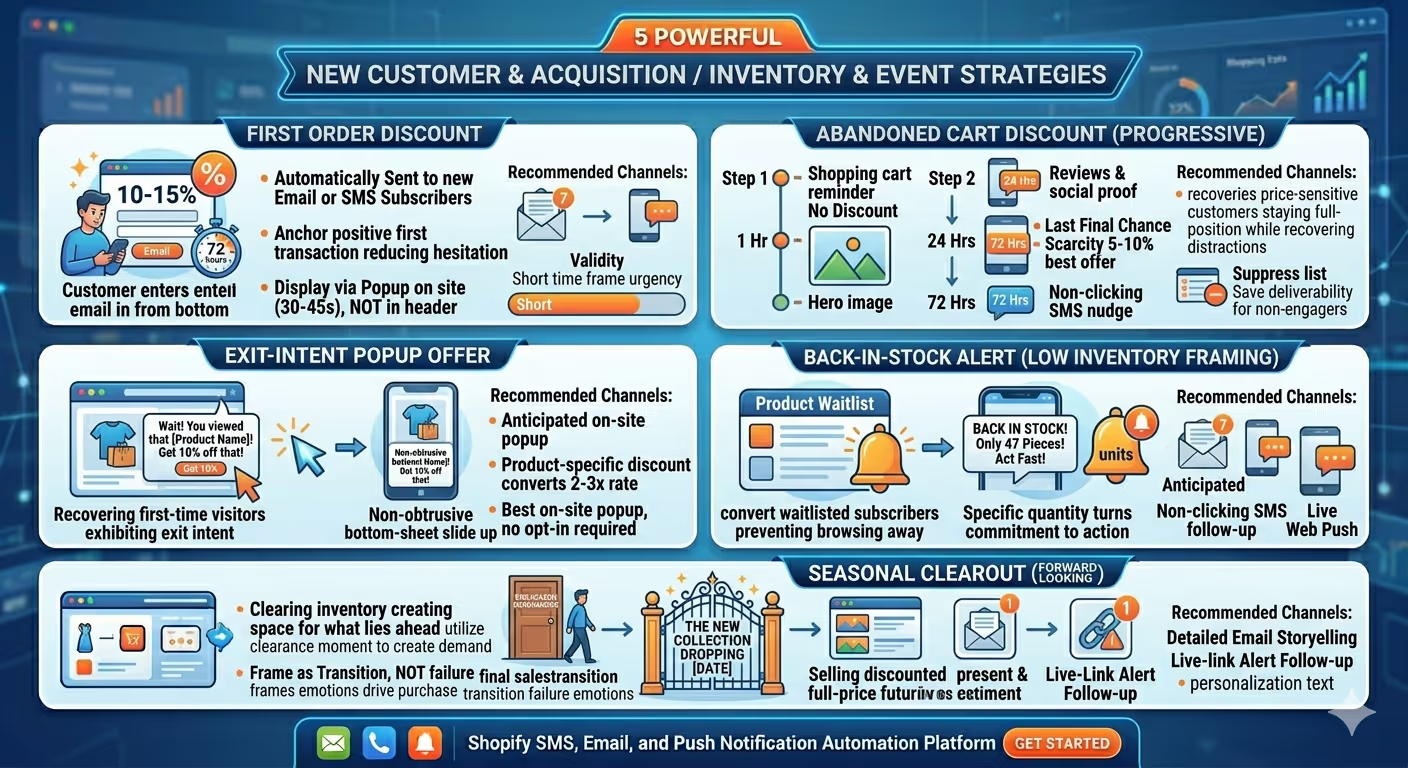
16. First Order Discount
What it is: These are usually 10-15% discount that get automatically sent out to any new email or SMS subscribers with their first order.
Best For: Converting first-time site visitors into buyers, reducing the hesitation of a first-purchase decision, and anchoring the new customer relationship with a positive first transaction
Deliver it correctly: Display the first-order discount via an email pop-up after 30-45 seconds on site or on exit intent, not in the site header. Every visitor who encounters a discount in the header is trained to wait for that offer before making a purchase, ruining your full-price conversion rate across all products, site-wide.
Best Channels: Email pop-up capture, automated Welcome email delivered immediately
Pro tip: Give the welcome message 72 hours to expire. A welcome offer with unlimited validity becomes a no-brainer only hours after delivery; a short time frame creates urgency and drives the first purchase while product interest is still high.
17. Abandoned Cart Discount (Progressive)
How it works: A three-stage abandoned cart sequence where the discount is only shown on the final send, allowing you to stay at full-price position whilst recovering your price-sensitive customers.
Best for: The only solution that efficiently recovers carts that span the full spectrum of abandonment reasons, including distraction, hesitation, and price sensitivity, all without training every cart abandoner to expect a discount
The sequence structure:
Email 1 (1 Hour After Abandonment): The Cart Reminder: No Discount, Date-based creative with a Hero image and Clean CTA.
Email 2 (24hrs): Also, add some social proof: Reviews and a "customers who bought this also loved" section, not discount yet
Email 3 (72 hours): Framed as genuine scarcity: 5-10% discount that is only valid for the next 24-hours.
Best channel: Email for all three sends, push for Email 1 (fire within 15 minutes of abandonment), SMS on Email 3, targeted to high-intent segments who opened but did not convert from the first two emails
Pro tip: Do not provide the discount in the first email. Sending a conversion goal with a discount in an abandonment email 1, you are training a hefty part of your audience to abandon their carts on purpose in order for them (and their friends) to receive it.
18. Exit-Intent Popup Offer
What it is: An overlay that launches when a desktop visitor hovers their mouse over the browser bar or back button, or when a mobile visitor exhibits scroll-back behavior, presenting them one last offer before they leave.
Ideal for: Recovering first and any-time visitors from paid traffic who are about to leave with the exit intent, or increasing product and collection page conversion rates through a lower bounce rate
Be relevant with your cart offer: "Get 10% off that [product name] you just viewed!" beats an all-site percentage every time. Product-specific discount converts at 2-3x at the rate of generic exit offers because they ship an offer that speaks to the actual hesitation rather than broadcasting a generic incentive
Opt-in channel: No push or SMS channel at this stage, the visitor has not yet opted in (Best on-site popup)
Pro-Tip: On mobile, opt for a slide-up bottom-sheet rather than using an overlay that is full-screen. An overlay on mobile that covers the whole screen can cause most visitors to close immediately, but a non-obtrusive slide-up, which allows users to continue viewing content beneath, converts at a much better rate.
Inventory and Event Promotions
19. Back-in-Stock Alert With A Low Inventory Framing
What it is: A restock alert with an additional scarcity element, "Back in stock, only available 42 units," to convert subscribers on the waitlist by preventing them from browsing away again.
Ideal for: High-demand products with limited production runs, seasonal restocks, and any item that generated a waitlist during a sold-out period
Understanding how the quantity signal matters: A back-in-stock alert, with no framing of scarcity, is a product update. Alerting an item back in stock, with only a specific unit number, is an urgency trigger. Customers on a waitlist for a product they are committed to, the quantity signal is what turns commitment into action
Best channel: Web push fires immediately when inventory is replenished (fastest restock alert), email within 1 hr with complete product detail and the count of units, SMS for non-clicking subscribers after 4 hrs
Pro tip: 50 units is a round-marketing-number phrase if I've ever seen one. "47 pieces only" have a taste of real commodity data. Specificity builds trust.
20. Hearing Story With an Eye for Seasonal Clearout
What it is: A seasonal closeout offered not as "we need to sell out our merchandise" but rather "we're creating space for what lies ahead."
Ideal for: Clearing out end-of-season inventory without associating your brand as a discount-first store and utilising the clearance moment to create demand.
The framing shift: "Final sales: getting ready for the new collection dropping [date]", likely outperforms, "Up to 60% off clearance" as it frames the discount as a transition and not a failure of product sales. The customer feels that they get something from last season while also being excited about next season; both emotions drive purchase.
Ideal channel: Email build-up (opportunity for storytelling + preview of collections), push builds towards the launch alert, SMS to segment of repeat buyers who will respond to clearance-level pricing
Pro Tip: At the bottom of every clearance email, put a teaser about what's coming, two to three images, and one headline that grabs attention. You are selling two things at once: the discounted present and the full-price future.
How to Choose the Right Channel for Each Promotion Type
The biggest failure promoting on Shopify is not a bad offer; it is a good offer through an inappropriate channel and at the wrong speed. Below is the de facto channel logic that you will be applying to all 20 promotion types above:
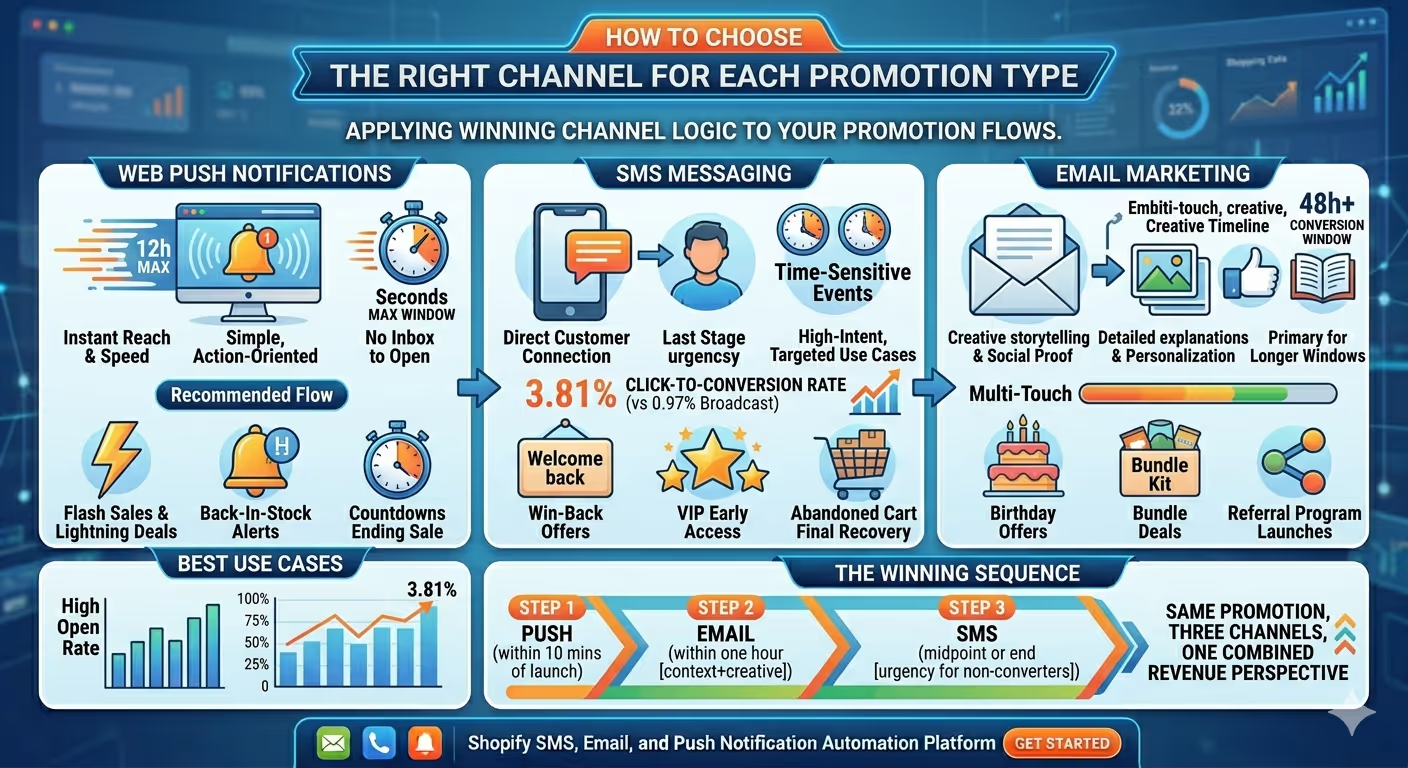
- When to use web push: The promotion window is very short (no longer than 12 hours); the message is simple and action-oriented, and speed of delivery is your most important variable. Push notifications can reach subscribers in seconds, and no inbox needs to be opened, nor does the subscriber have to be actively checking their email(s) or SMS. Use push notifications for flash sales, lightning deals, back-in-stock alerts, and countdowns ending the sale.
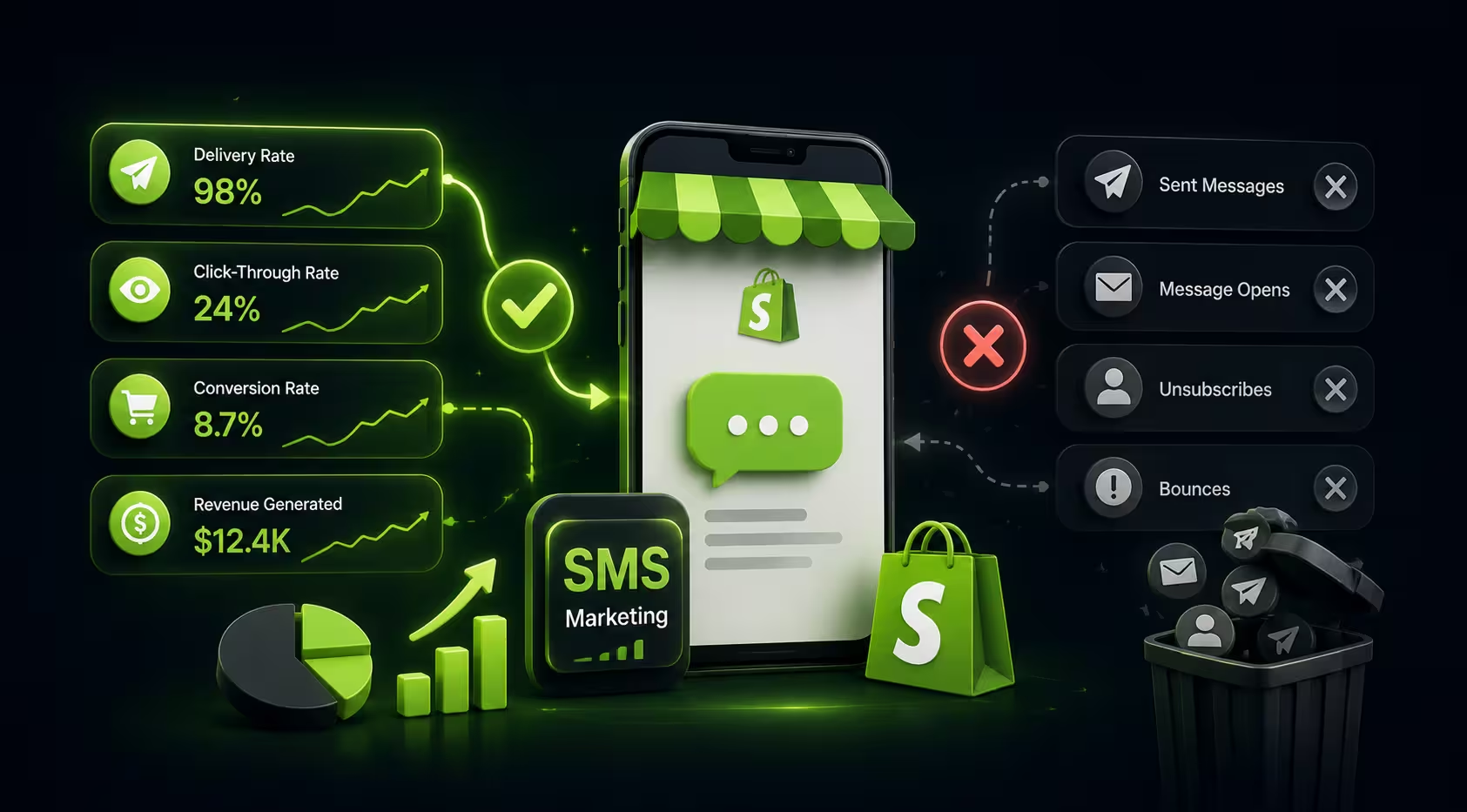
- When to use SMS: The promotion is time sensitive, and the subscriber fits a high-intent, valuable use case. SMS is not a broadcast channel; it is a direct connection to the customers most ready to purchase, but at the last stage. Win-back final sends, BFCM countdowns, VIP early-access launches, and abandoned cart final recovery are just a few examples that must include the SMS channel. Automated SMS campaigns are averaging a 3.81% click to conversion rate, compared to 0.97% for broadcast blasts; this channel rewards targeting, not volume.
- When to use email: The promotion benefits from visual richness, product imagery, social proof, or storytelling. Email is the perfect channel for birthday offers, bundle deals, loyalty multiplier explanations, and seasonal clearance narratives, not to mention referral program launches. Email is also the proper primary channel when the conversion window is 48 hours or longer, as there is plenty of time for the subscriber to arrive, think about it, and come again.
- The winning sequence for most promotions: Push fires first (within about 10 minutes of launch), email follows within one hour [context+creative], SMS closes at the midpoint or end of the window [urgency for non-converters]. Same promotion, three channels, one combined revenue attribution perspective.
How PushOwl Does Every Kind of Promotion Through Email, Push & SMS
Discounting without a delivery strategy is not a promotion; it is margin destruction. You are not employing a strategy by advocating promotions on three channels from three different tools; this is operating three strategies with three separate billing cycles, three separate automation builders, and no shared view of how exactly the conversions happened.
Flash sales need push notifications. Win-back sequences must include email and SMS. Back in stock alerts require automation, which fires instantly when inventory becomes available.
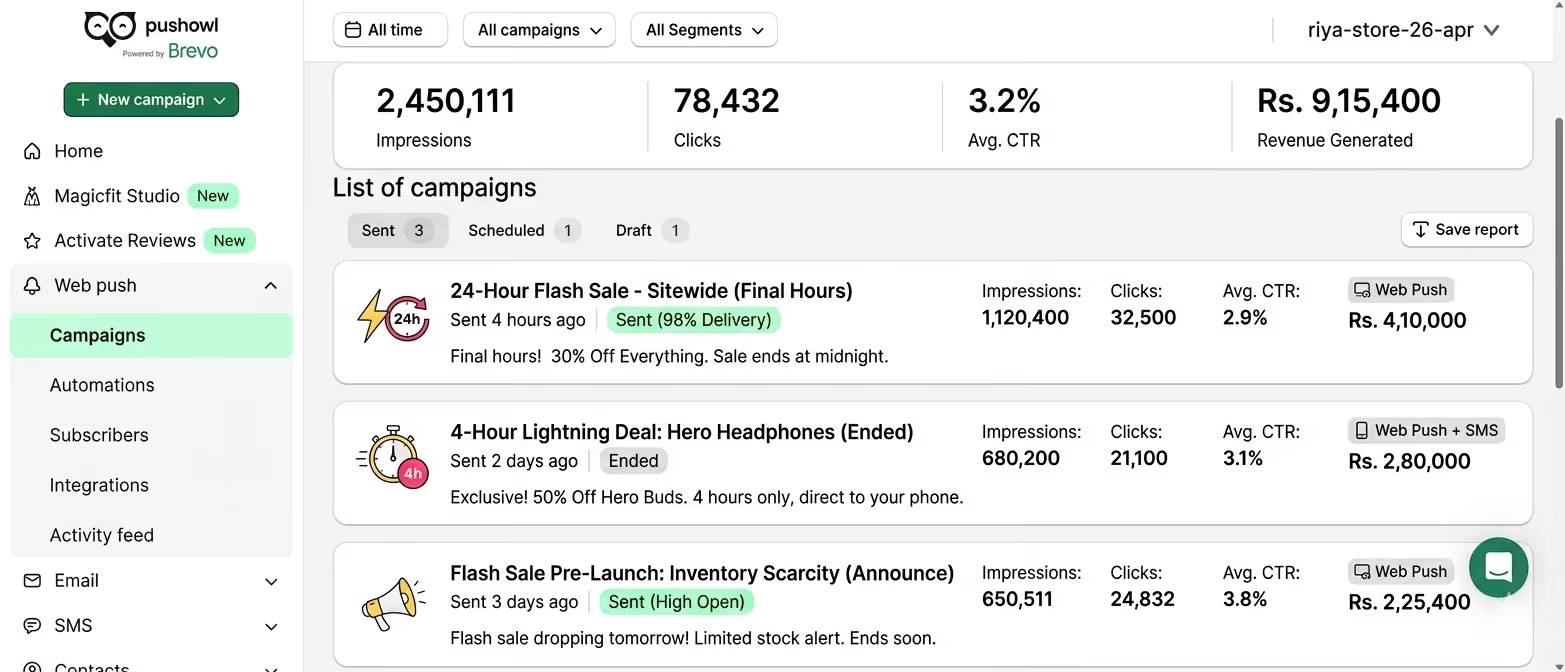
The results are the difference between a promotion calendar and a promotion system: Running all of that from one place with shared segmentation, unified attribution, optimizations that happen seamlessly across channels, rather than relying on tedious manual coordination to stay aligned.
This means that all types of promotions on this list can be built once, sequenced across channels, and attributed in one dashboard as PushOwl unifies Email, Web Push, and SMS in a Shopify-native platform.