
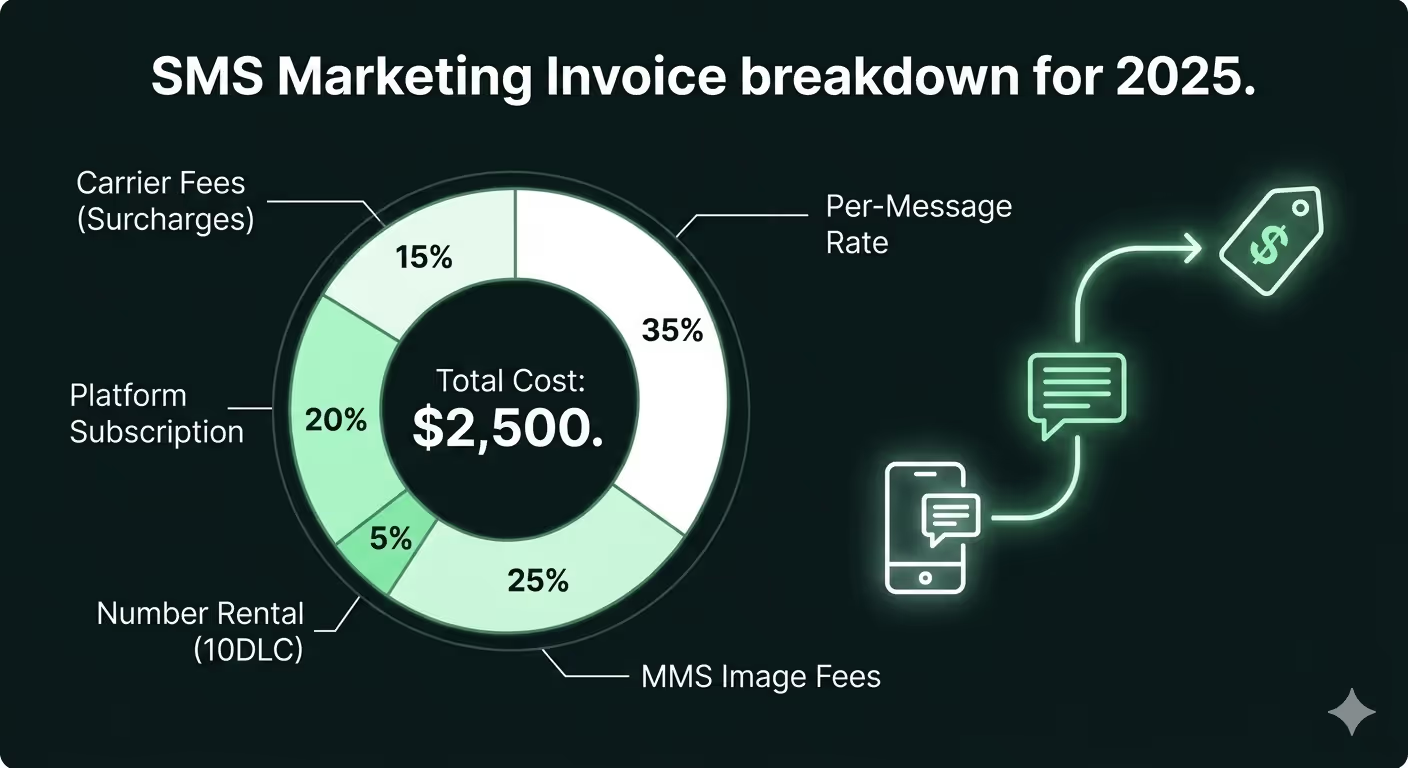
A commercial text message costs one to five cents. This is negligible until the number increases after sending a BFCM campaign to 50,000 subscribers and arriving at $2,500 on its own, before the platform fee, dedicated number rental, or MMS surcharges are calculated separately on every product image you just had to attach.
One of the most misunderstood cost structures in Shopify marketing is SMS marketing. This misunderstanding alone leads merchants to pay more for the wrong plan or underspend and withdraw from a channel that was really resonating with them.
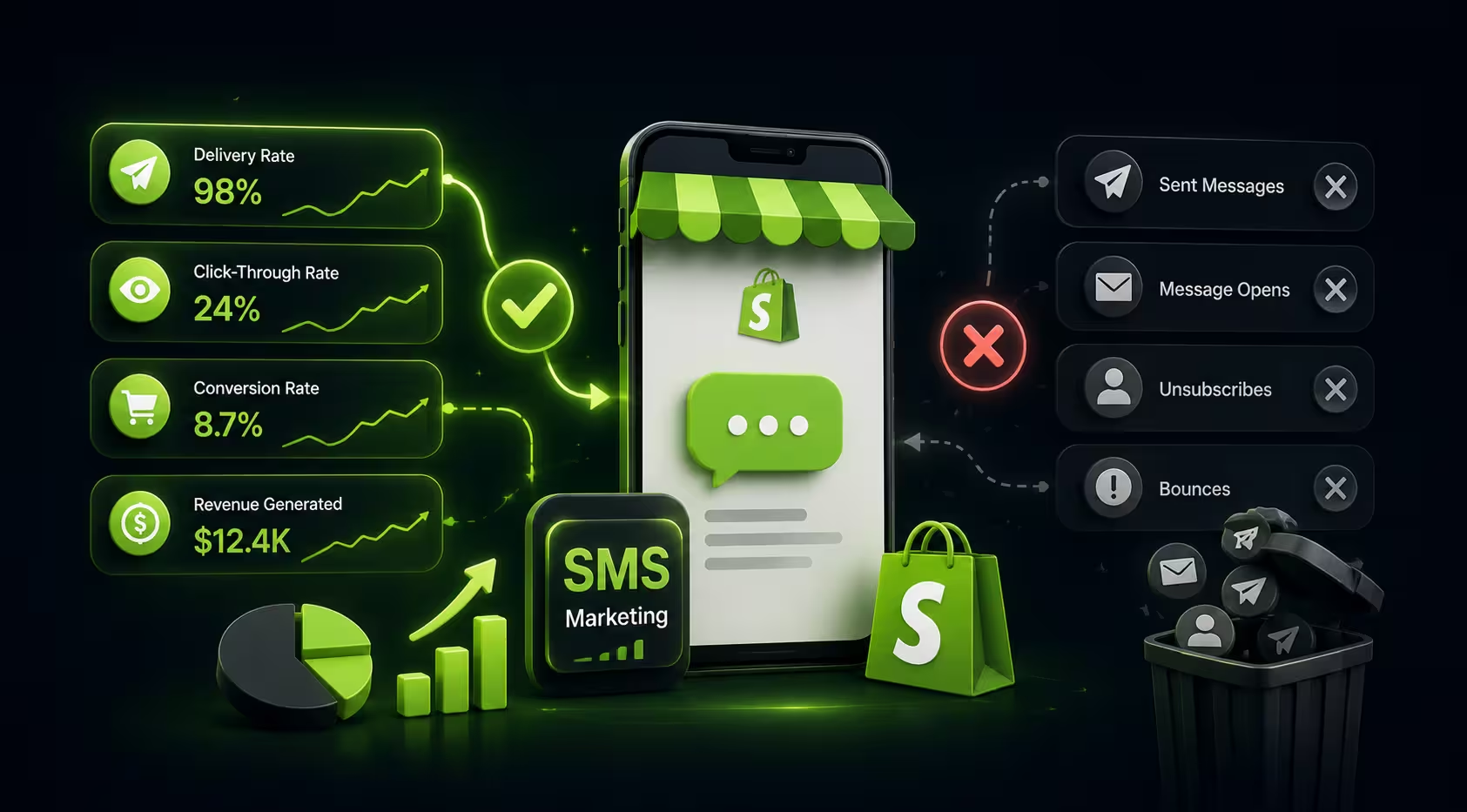
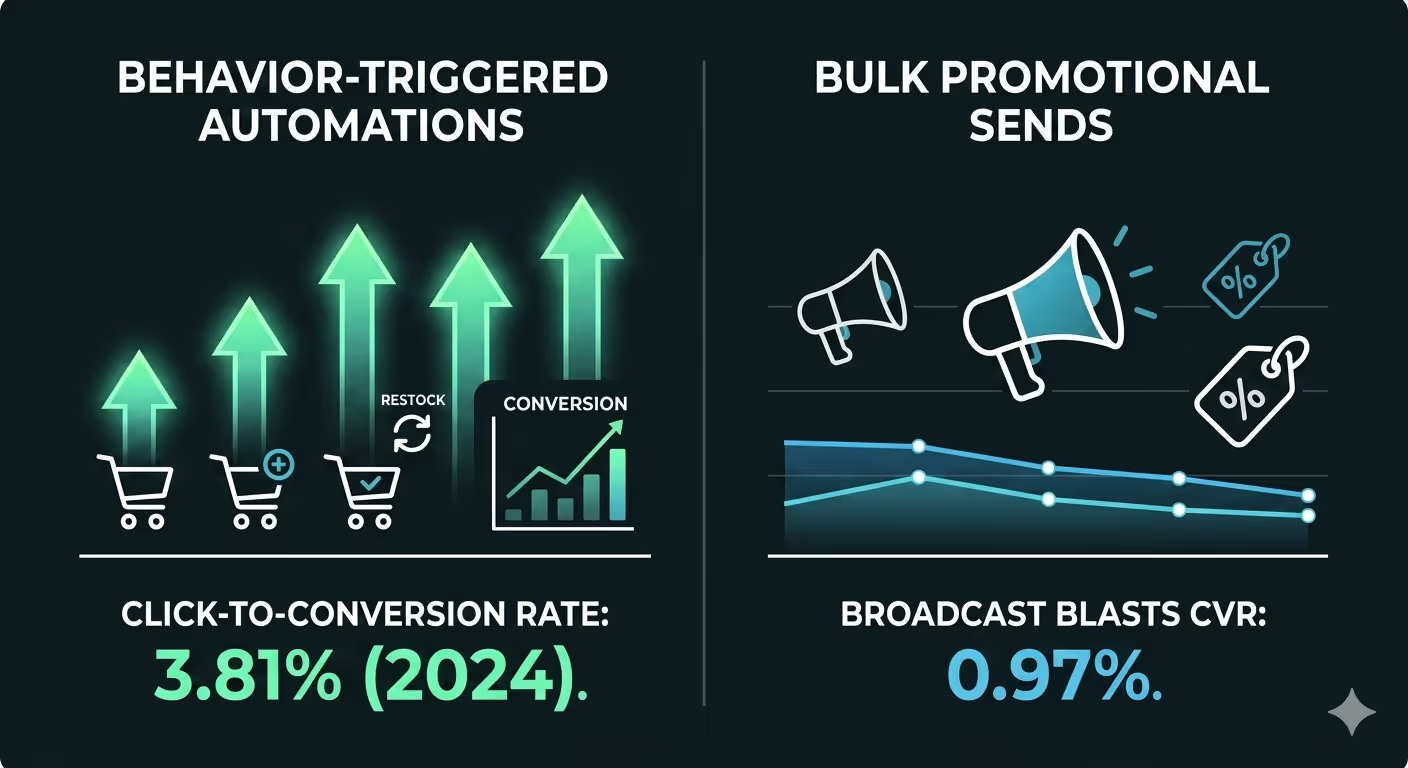
It is not the channel that sellers have a problem with. SMS open rates sit near 98%. Automated SMS campaigns had a click-to-conversion rate of 3.81% in 2024, compared with the broadcast blasts' of 0.97%. The ROI is always strong when you manage your SMS strategy around behavior-triggered automations instead of bulk promotional sends for a Shopify store. And the line separating positive ROI from a mind-boggling monthly statement boils down simply to how SMS marketing pricing functions before you select a platform.
In this post, we estimate all the costs associated with Shopify SMS marketing, message rates, platform fees, and hidden fees, and how pricing models play in your favor or against you, depending on your list size and frequency of sending. In the end, you will see a framework to estimate your own monthly cost and numbers to evaluate whatever SMS tool in an honest light.
What SMS Marketing Actually Costs for a Shopify Store
So, for a Shopify store that sends 5,000 SMS per month to subscribers based in the US, expect total monthly costs to realistically land between $100-$350 per month. It encompasses per-message charges, a platform subscription, and an identifier phone number. This does not capture MMS surcharges nor carrier validation fees, both of which may add up to $50-$200 based on campaign type and list quality.
Before we dive deeper into the mechanics, here is a benchmark by store size at a glance:
The wide range within each tier exists because pricing models change far more dramatically than per-message rates imply. Example: If you are on a contact-based plan of 20,000 subscribers and send a text to only 4,000 contacts, each month that store will be charged for all 20,000 contacts. A store on a pay-per-message plan that has the same 20,000 subscribers pays for only the 4,000 messages sent. And that difference adds up pretty quickly at scale; in fact, it is the most fundamental variable to comprehend when comparing platforms to one another.
5 SMS Marketing Pricing Models You Will Come Across
Now, the first thing you need to know before comparing individual platforms is the five major pricing structures that are widely followed in today’s market. The model that you are onboarded on is much more important than the headline rate relevant to any given platform. In fact, even a $0.01 drop on a contact-based plan can end up costing way more than a $0.04 charge on a pure usage-based plan if your subscriber list is large with an inactive or seasonal segment.
Model 1: Pay-Per-Message (Usage-Based)
You only pay for messages that you actually send. Basically, the platform subscription has no monthly minimum contact fee. Your invoice goes up strictly with send volume, not list size.
Best For: Seasonal businesses, stores with infrequent campaign cadence, and brands whose SMS list is larger than their monthly active send segment.
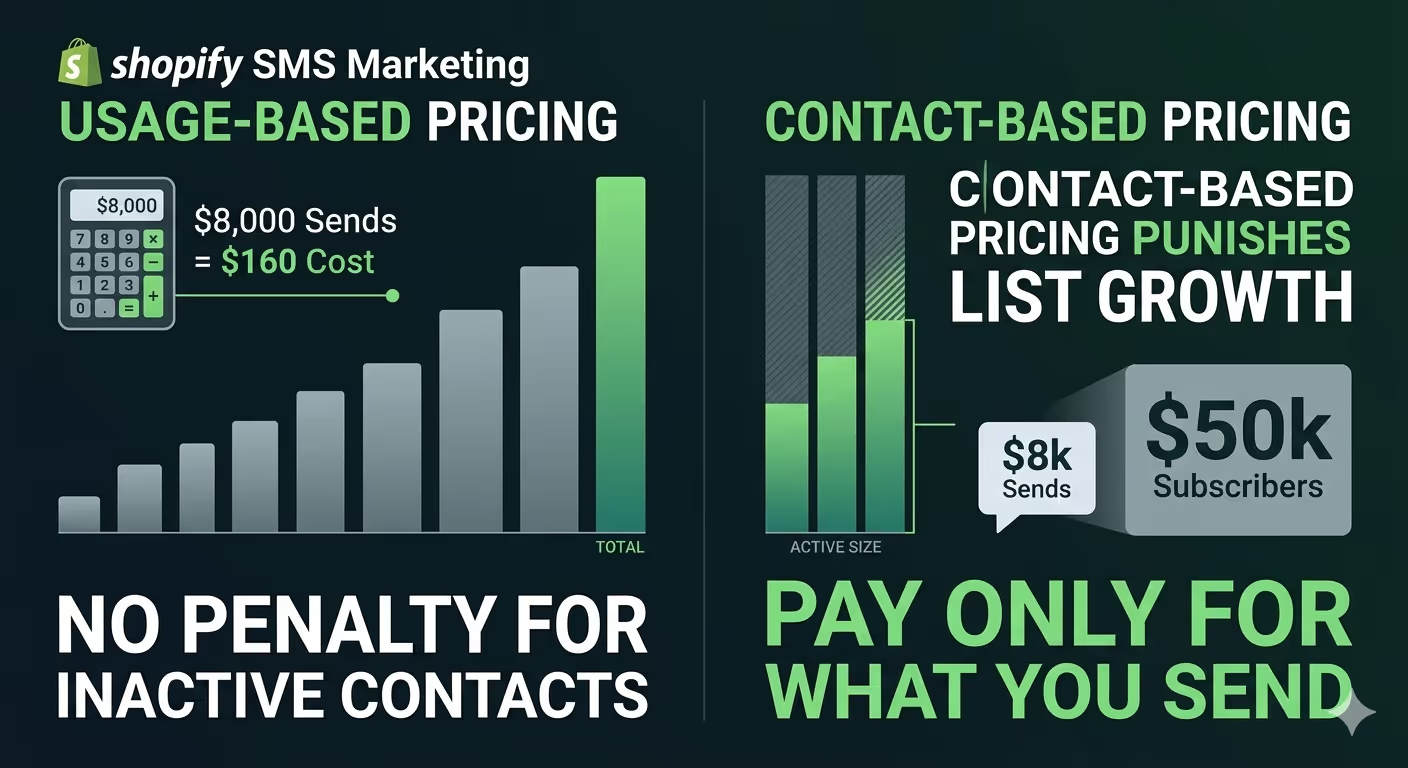
The true benefit: The cost of adding to your list is never a bigger expense. So, a store that creates a 50,000 subscriber list over two years but only actively sends text to 8,000 per month pays for 8,000 sends; the inactive 42,000 are not a cost to hold and nothing to grow.
Beware: Rates per message differ by country. To text US subscribers, it generally costs anywhere from $0.01-$0.05 per message. UK subscribers can cost $0.05-$0.10. Australian and some European markets go much higher. International rate tables are more important than the headline US rate on any platform if your Shopify store sells globally.
Model 2: Credit Bundles
You purchase in advance a chunk of SMS credits at a fixed price per credit. When messages are sent, credits are used, usually on a one-to-one basis with common SMS, three-to-one or five-to-one for MMS, depending on media size.
Best for: Stores with consistent monthly send volumes where pre-purchasing at a slightly lower per-credit rate represents real savings over paying month over month.
What you really like: Some platforms give you a substantive discount per credit if you purchase in bulk. The savings for big buyers are real; 500,000 credits at $0.018 instead of $0.025 on a smaller pack equals decent savings for high-volume stores.
Watch out for: Expiring credits at the end of the billing cycle. If you buy and use only 12,000 of a 20,000 credit bundle, the remaining 8,000 may not roll over, which increases your per-message cost for every month that you do not meet your volume target. In addition, be cautious of platforms that use additional credits for carrier fees on top of your message credit, as a single text can amount to 2 or 3 credits.
Model 3: Monthly Credit Bundles
As part of your monthly platform subscription, you receive a fixed number of SMS credits, effectively including the cost for messaging in your plan fee. For example, a $59 per month plan may offer $59 in SMS credits so that the first tier of SMS use is free to the user as part of their fees and subscription cost.
Ideal For: Shopify merchants who send enough SMS regularly to ensure that the free credits cover the majority of their typical monthly volume.
The actual benefit: Single line item on a single invoice. Separate messaging bill to reconcile at month-end? No thanks! With a bundle model that removes administrative friction for operators, this simplifies the billing cycle.
Be careful with: Overage rates if you exceed the included credits. With many platforms, overage rates are set above standard per-message rates, meaning a high-traffic month receives an invoice that bears little resemblance to an average month. Define your overage rate before the spike, not after.
Model 4: Tiered Pricing Model
The more you send each month, the lower your per-message rate becomes. Lowest per-message costs for high-volume senders, highest for small senders. List size is not a measure for tiers, as tiers are defined in monthly message volume.
Best for: Rapid-growth Shopify stores that expect to scale from a few thousand monthly sends to tens of thousands in the next 12-18 months. Because it is a volume-driven pricing model, improving unit economics as scale increases rewards growth.
The actual benefit: As your SMS program grows, you never need to renegotiate pricing or switch platforms. The rate table automatically favors you.
Warning: Pricing by tier is sometimes not published transparently. Many platforms have mid and upper tiers that are available only through a sales conversation. If you are considering a platform that markets tiered volume pricing, ask before you sign for the entire rate table in writing, not just the base-tier rate shown in marketing materials.
Model 5: Contact-Based Pricing
Your monthly price is based on the total count of SMS subscribers within your list, not by the number of messages sent or how many of those subscribers receive anything in that month.
Ideal for: Shops achieving near-100% monthly active SMS lists that give every subscriber at minimum one message a month. Here, in this limited use case, costs based on contact and usage are aligned.
The real problem: Contact-based pricing for SMS punishes list growth by default. So, a store with 20,000 subscribers but only 4,000 people sending to the store each month is paying for these 16,000 contacts that have not been contacted. This model can effectively double or triple the per-message cost during low-activity periods for Shopify fashion stores with seasonal audiences, who typically acquire subscribers over Q4 and see lower subscriber activity through Q1 and Q2.
For email platforms, where the cost of storage rose alongside list size, contact-based pricing made sense. That is simply not the prevailing market economics; for SMS, where the actual cost is a carrier delivery fee per message sent, it does not represent an accurate reflection of the real underlying cost structure, and merchants absorb that difference.
Platform-by-Platform SMS Pricing Comparison for Shopify
Each major Shopify SMS platform implements a combination of the above different models. Below is an honest, side-by-side cost breakdown of what these platforms actually cost at average Shopify merchant volumes.
1. Finest Overall Value For Shopify: PushOwl (Powered By Brevo Infrastructure)
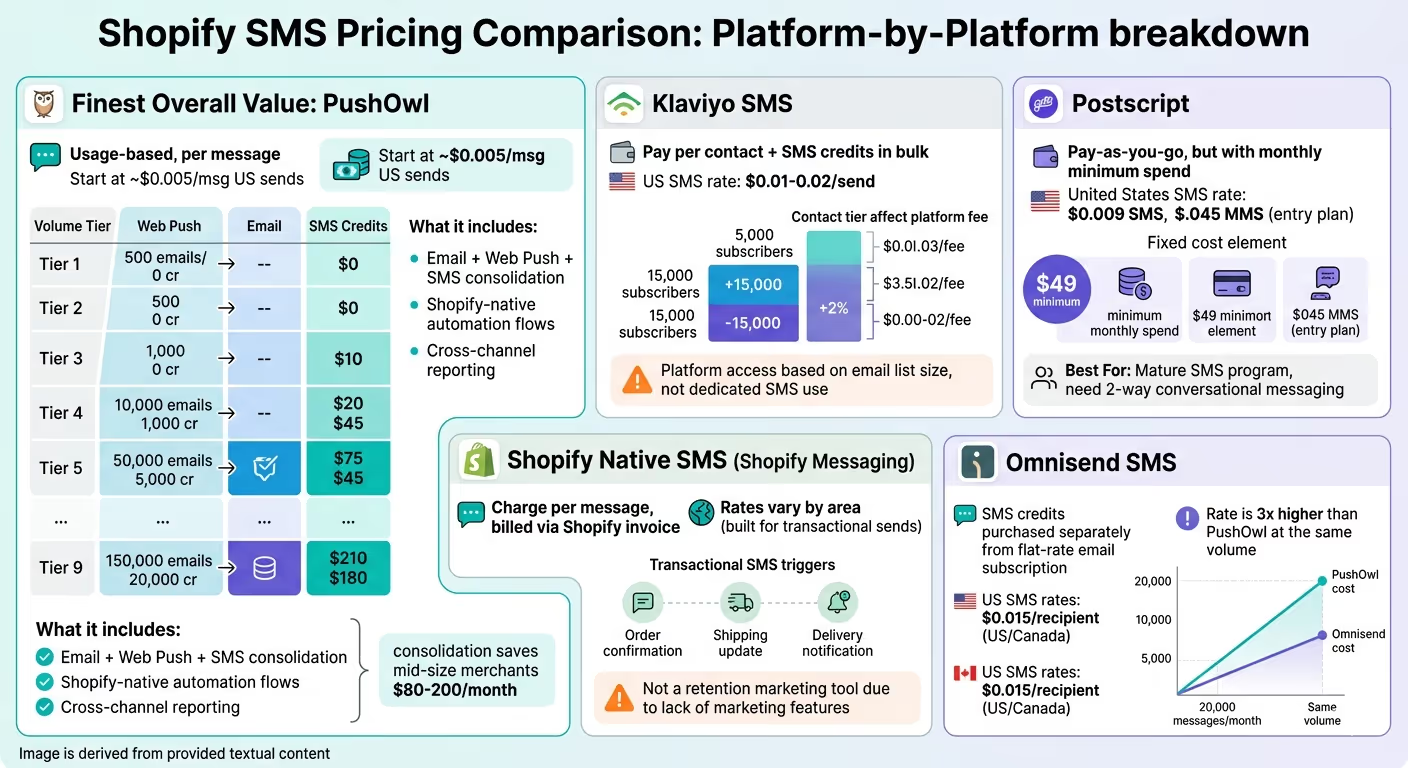
Pricing model: Usage-based. Charge per message sent, not per contact stored. No penalty for list sizes right the way up to your plan limit. Starting at ~$0.005 per message for US sends. PushOwl is one of the lowest-cost SMS solutions available in the market, across any volume tier.
What the platform includes:
- Email + Web Push + SMS in one Shopify-native platform for email marketing and push notifications (no app subscription)
- All-in-one SMS automation flows, from abandoned cart, back-in-stock, win-back to price drop and post-purchase sequences: part of the plan, flat out, and sold as add-ons.
- Worldwide compliant infrastructure in over 180 countries, courtesy of Brevo
- Automation logic with smart send-time optimization built directly under the hood
- Cross-channel reporting on email, push, and SMS in a single dashboard
- Common segmentation across all three channels, a segment created in email is ready to be targeted by SMS, without the need for rebuilding
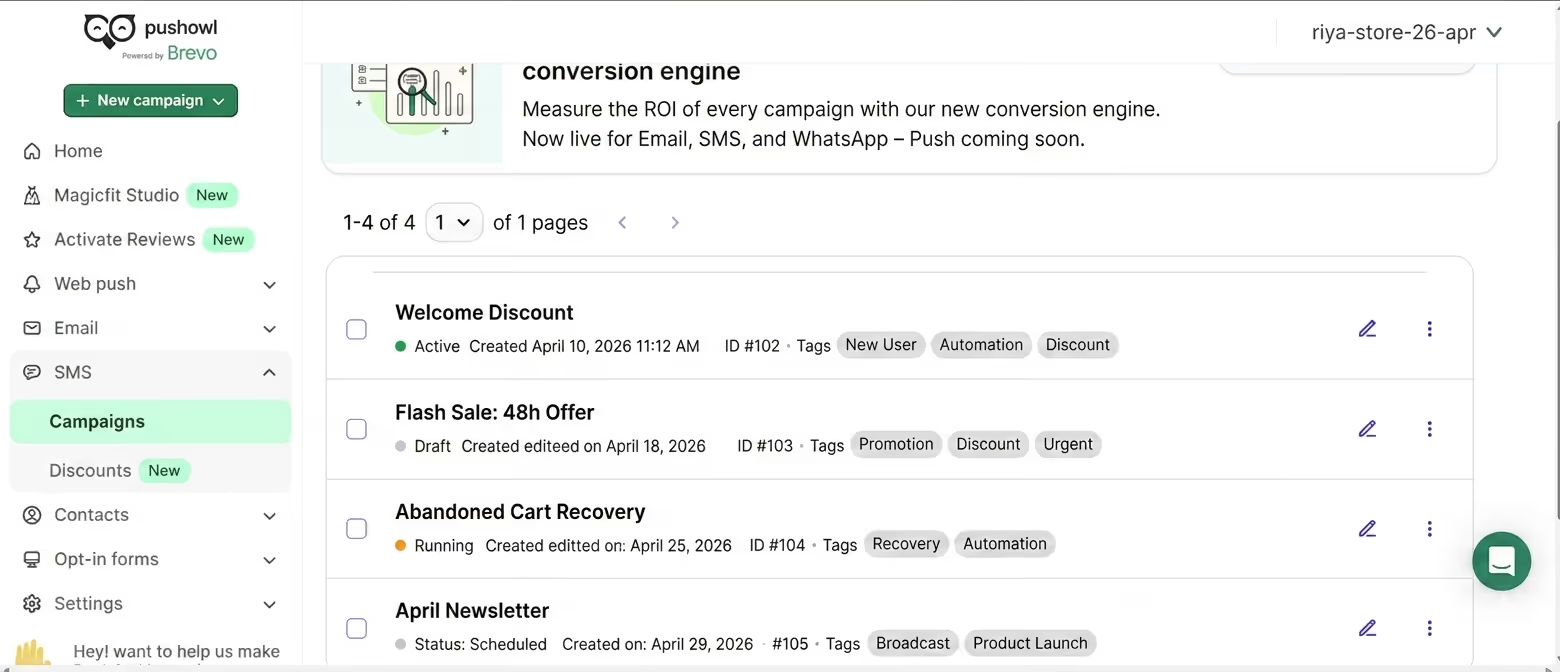
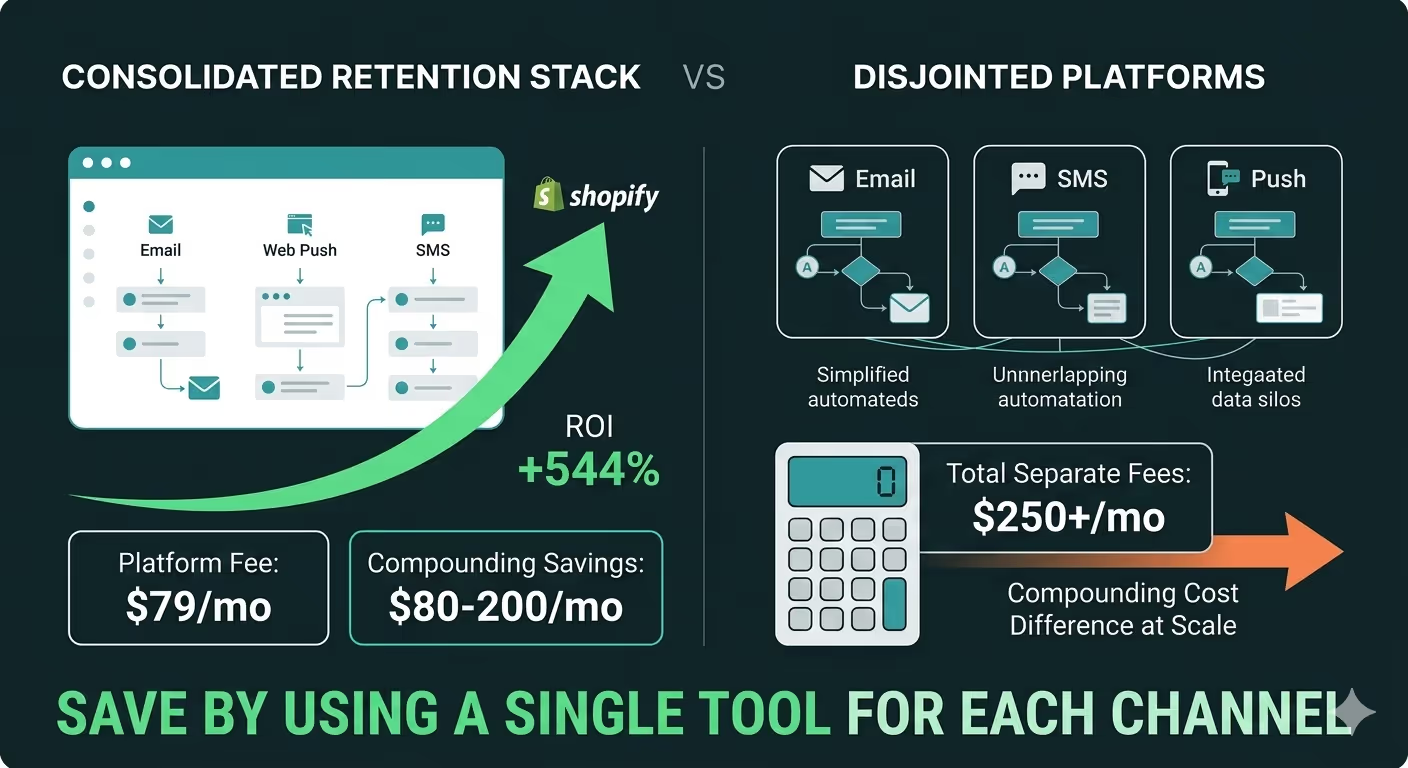
Ideal for: Not just Shopify stores, but businesses of any size that want Email / Web Push / SMS without paying for 3 separate platform subscriptions at the same time from a single dashboard. Just by consolidating channels and using a single tool for each channel saves most mid-size merchants $80-200/month.
Be aware: International rates vary by country of destination. For stores that have a large number of non-US subscribers, calculate international rates and get an accurate monthly cost projection rather than using the US benchmark.
2. Klaviyo SMS
You pay per contact for the platform, and buy SMS credits in bulk.
US SMS rate: about $0.01-0.02 per send. At the lowest level, you have to pay $25 for access to the SMS, and you will start with 1,250 credits.
What the platform includes:
- True integration with Klaviyo email flows and behavioral segmentation, i.e., subscribers, purchase history, and flow triggers, is shared seamlessly across email and SMS channels without reconfiguration.
- Flow builder supports conditional splits, A/B testing, and time-delay logic
Notable features:
- Unlimited phone numbers
- Pre-built automations featuring welcome and browse abandonment messages
- A unified dashboard for email and SMS analytics, all within the larger Klaviyo ecosystem, based on your existing customer segments
- Free pricing tier with a €16 perk contact/month
- Best for stores heavily invested in the Klaviyo ecosystem whose SMS send volume is low enough that pricing is not exorbitant per contact.
- If you have decades worth of email flows in Klaviyo and below a 5,000-subscriber SMS List, migrating pain could quickly outweigh price disadvantages.
Caution: The platform fee for Klaviyo is per contact. If a store has 15,000 email subscribers, then they automatically fall into a higher Klaviyo tier, no matter how small (or large) SMS is to their marketing. For stores with big email lists and smaller SMS programs, you get charged platform access based on the size of the email list, not a dedicated SMS use case. Costs scale with list growth, and the SMS credit bundles sit atop the base contact price.
3. Postscript
Pricing model: Pay-as-you-go, but you have to spend a minimum every month
United States SMS rate: $0.009 per SMS and $.045 per MMS (entry plans). Maintains a minimum criteria spend of $49/month for every tier, regardless of the requirement.
What the platform includes:
- Purchase events trigger native to Shopify, deep with clear event data pulled from their order management system
- Two-way conversational messaging around customer service escalations, as well as your VIP consumers directly reaching you, and that opt-in collection via text
- Behavioral segmentation on Shopify purchase history, usually at a SKU and/or collection-level
Best For:
You have a mature SMS program, consistently over the min spend threshold, and need true 2-way conversational messaging (and more than broadcast automation). Postscript is a brand-race SMS specific tool that found the secret sauce for brands where SMS was already their main revenue channel.
Notice: The $49 minimum spend locks you into a floor of SMS activity month to month, regardless of the season. In seasonally strong finishes such as Q4, followed by weak and slow Q1 and Q2 for stores with high seasonality, the minimum spend generates costs that do not yield proportionate returns in these announcements. Its MMS rate of $0.045 is one of the highest on the market. For clothing brands using product imagery in text campaigns, MMS volume should be calculated separately before assessing the total Postscript cost.
4. Shopify Native SMS (Shopify Messaging)
Pricing model: Charge per message, billed through the monthly invoice sent by Shopify. Rates are country-specific and available in the Shopify Help Center.
US SMS Rate: Varies by area. This is built for transactional sends, not necessarily marketing campaigns.
What the platform includes:
- Steps to configure Shopify transactional notifications with the app, with direct integration with the order management system
- Order confirmation, shipping update, and delivery notification templates
- Basic transactional use with no other app installations during the process
Best for: Merchants only needing transactional SMS notifications with no need for behavioral segmentation, automation flows, or cross-channel coordination. It serves as the most unobtrusive entry into a store that has yet to send an SMS.
Be careful: Shopify is not a retention marketing tool due to the lack of SMS features for abandoned cart recovery, browse abandonment triggers, back-in-stock alerts, and win-back flows or post-purchase nurture sequences. Well, native SMS is really the best "starting point" for any store taking retention seriously, and most merchants boss their way through this phase within their first SMS quarter. Expect a platform migration when your sales and volume grow.
5. Omnisend SMS
Pricing model: SMS credits for each recipient are available separately from the flat-rate email subscription.
US SMS rates: $0.015 for each recipient in the US and Canada. SMS credits for a campaign to 2,000 subscribers can be purchased for around $30 before the subscription fee of the platform.
What the platform includes:
- Be able to manage Email and SMS in the same platform with overlapping automation templates
- Abandoned Cart, Welcome Series, and Order Follow-Up flows are pre-built for e-commerce automation.
- Purchase history, browsing behavior, and engagement levels of subscribers for better segmentation.
Best For: Mid-market Shopify sellers who want email and SMS bundled without a separate platform, where the $0.015 per message rate is an immaterial cost disadvantage (provided you keep your monthly SMS volume relatively modest).
Pricing Overview: Omnisend SMS rate is 3x higher than PushOwl at the same volume. The per message rate difference alone equals $200/month on a store sending 20k messages each month, making it $2,400 per annum! That means at 50,000 monthly sends, that difference shows up as $500 per month. That unified reporting and automation convenience really does exist; these factors need to be weighed with the compounding cost difference at scale.
Full Platform Comparison
The Hidden Costs Most Shopify Merchants Don't Budget For
Merchants look at only the per-message rate when comparing SMS platforms. Seldom does it bring the initial invoice shock. Shopify stores are consistently surprised by these four cost buckets:
1. Dedicated Phone Number Fees
2023 marks the official rollout of A2P 10DLC (Application-to-Person 10-Digit Long Code) registration for commercial SMS in the US, something that has been required for all business text messaging since then. With unregistered A2P traffic, messages that are not sent after registering correctly can be filtered or blocked by carriers, even if your delivery infrastructure is robust and ready to receive completion.
- Toll-free number: $20-$30/month, plus one-time registration cost of $4-$15
- 10DLC local: Monthly cost (after brand registration ($1-$5) + campaign registration ($4-$25))
- Short Code: $500-$1,500 per month (a 4-12 week provisioning time)
The majority of scaling Shopify retailers leverage a toll-free or 10DLC native phone number. Short codes only make an economic case at extremely high monthly volumes, or where the branded short number itself provides brand value.
So budget about $5-$20 a month for the number and $15-$40 for a one-time registration process. While 6-8 weeks is the minimum time we recommend starting the registration process for an SMS launch around BFCM or a major product drop, processing timelines are not guaranteed. Understand that delayed registration means no launch.
2. MMS Surcharges
So if you add an image, GIF, or video to a text message, it becomes an MMS instead of an SMS. That conversion is not treated as such by the subscriber but shows up on your bill. MMS sends are charged on most platforms at 2-5x the standard SMS rate.
For example, with a platform that charges 2 cents for an SMS, each MMS send will be on average between $0.06-$0.10 per message. If a clothing brand sent an SMS and MMS version of the same back-in-stock alert (with product image) to 10,000 subscribers, the potential difference between each campaign for that one-time message is $400-$800. Over the course of a year of image-rich campaigns, that difference adds up to five figures.
This is not always a choice to step around MMS. Example of a fashion brand where product imagery reduces purchase friction and visual context really does drive conversion. This is meant so you plan for the cost, as opposed to finding out only after the campaign has run. Before creating automation flows that place a heavy volume of images, know the MMS rate for your platform.
3. Carrier Validation Fees
A few platforms do need you to validate your phone number to be in a position of trying campaigns. When the number is validated, this confirms that it is indeed an active SIM card, formatted correctly with country codes and routable to its carrier before a message even gets delivered. It protects sender reputation scores and decreases bounce rates.
The standard validation price is approximately $0.004-$0.01 per number. Your message did not even go out, with validation on 10,000 subscribers costing $40-$100. However, not every platform sells validation independently; several bake it into the per-message cost. Make sure that on platforms where validation is an additional price, you are not paying both delivery for the same message and then validation.
4. International SMS Costs
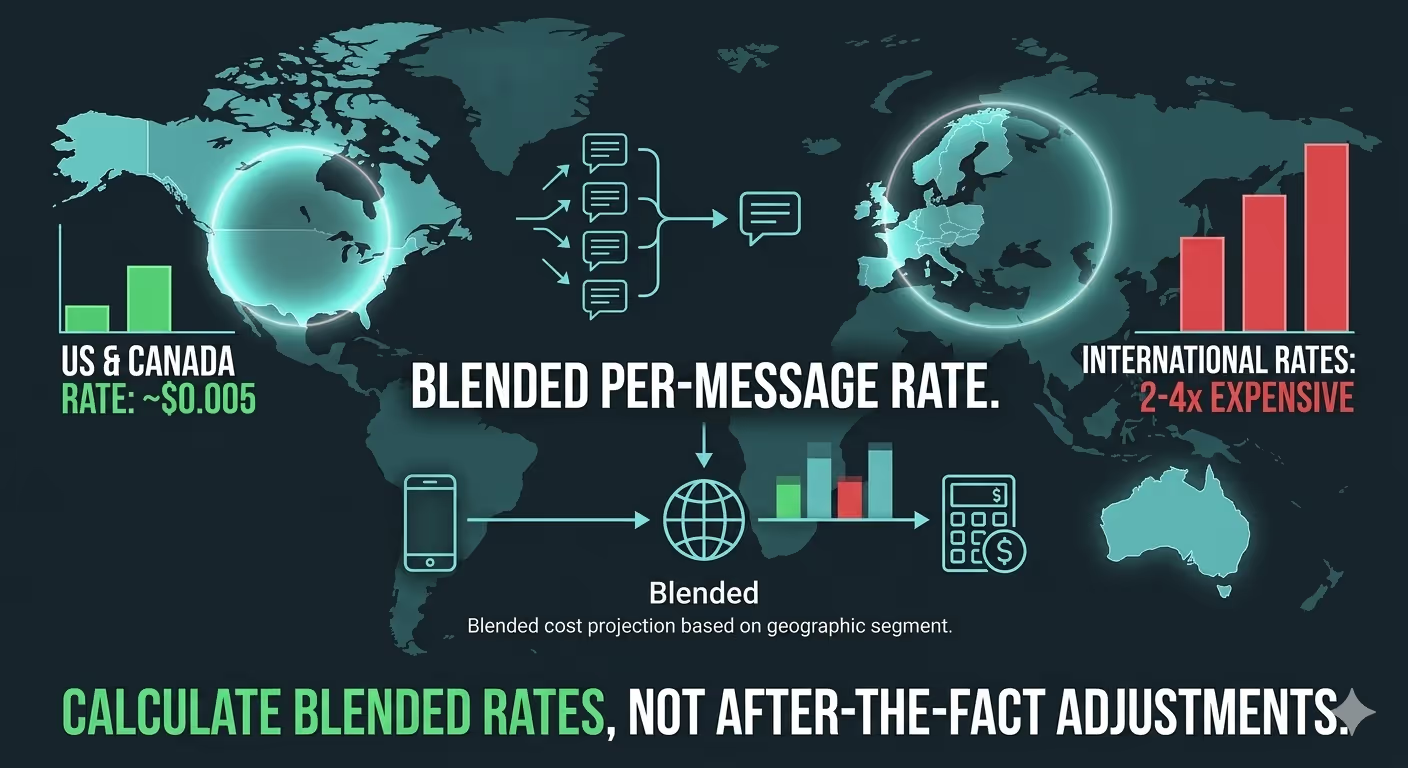
The economies of scale have reached the lowest level internationally when it comes to the US and Canadian SMS rates. The US rate is typically the lowest when compared to Western European, UK, and Australian rates, which are 2-4x more expensive. Other emerging markets go even further.
For a Shopify clothing store with 30% of its SMS subscribers in the UK, France, and Australia, this would push their effective blended per-message rate well above the US headline line. Start with a geographic segment cost projection, not an after-the-fact adjustment post-first international campaign invoice.
Calculating SMS Marketing ROI Before You Sign Up
The above cost sections yield the denominator of your ROI equation. Now for the numerator.
The Simple ROI Formula for Shopify SMS
ROI = (Revenue from SMS ÷ Total SMS Cost) × 100
SMS revenues are purchases from a click on an SMS message within one defined attribution window (24 hours or 5 days for link click and view, respectively). This is not the total revenue from subscribers randomly found in your SMS list.
- Active SMS subscribers: 5,000
- Monthly sends: 3 campaigns + automated flows = approximately 8,000 messages per month
- Average open rate: 38%
- Average click-to-conversion rate: 3.2% (conservative, within automation benchmarks)
- Average order value: $72
- Revenue from SMS: 8,000 × 38% × 3.2% × $72 = $702 per month
Monthly SMS cost with PushOwl at ~$0.005 per message: $40 in message fees + $79 platform fee + $10 number = $129 total
ROI: ($702 ÷ $129) × 100 = 544%
The same store on a platform charging $0.015 per message: $120 in message fees + $79 platform fee + $10 number = $209 total
ROI at $0.015/message: ($702 ÷ $209) × 100 = 336%
Both scenarios are profitable. The per-message rate has no relationship with whether SMS works, but it does determine how much of your SMS revenue makes its way to your bottom line vs. that of your platform.
What Benchmark Numbers to Use
When creating your own projection, take these benchmarks as the starting parameters:
- Automated SMS click-to-conversion rate: 3.81%
- Broadcast SMS click-to-conversion rate: 0.97%
- Average SMS open rate: 35–45%, depending on list quality and send frequency
- Revenue per message sent (automation-focused programs): $5–$15
- Revenue per message sent (broadcast-heavy programs): $1–$4
A gap between an automation-focused program and a broadcast-heavy one is not simply a small difference in execution. It is a structural gap. Automations are triggered when they have the highest intent, such as cart abandons, restocks, price drops, and post-purchase moments. Broadcasts fire at calendar moments. High-intent targeting always achieves 4x more revenue per message than calendar-based blasts, at a quarter of the message volume and cost.
The 4 SMS Automations that Deliver the Highest ROI for Shopify
These four automations need to be built before you run any broadcast campaigns. The monthly SMS revenue they create is enough to fill an entire calendar of promotional sends, with a fraction of message volume.
- Abandoned cart SMS: Send 1-3 hours after cart abandonment and reaches customers at their highest point of repurchase intent
- Back-in-stock SMS: Fire within minutes of inventory replenishment to waitlisted subscribers; converts at high rates as subscribers opted in specifically for this product.
- Re-engagement SMS: Fire 60-90 days after the last purchase, usually with a slight incentive for high-AOV segments
- Post-purchase SMS: Sent 7-14 days after confirmed delivery with a cross-category recommendation or review request to strengthen the brand before the next purchase cycle
These are the 4 automations that you can build once, let run endlessly, and form the core of a profitable Shopify SMS program. You run automations that work together with your campaigns to improve everything from broadcasts, seasonal plays, and flash sale alerts.
The Takeaway
SMS marketing pricing is not simply the cost per message. The true monthly cost will be calculated by looking at your total number after the platform fee, dedicated number registration, MMS surcharges, international rates, and, most importantly, whether your pricing model is charging you for list size or actual sends.
The stores that get the best economics from SMS are those that:
- Selected a usage-based platform
- Designed their program with automations first, broadcasts second
- Integrated their email, push, and SMS stacks instead of paying for three separate platforms
With usage-based SMS pricing, you only pay for what you send with PushOwl, and Email + Web Push is included in the same plan, translating to fewer platforms and lower cost than three separate tools.