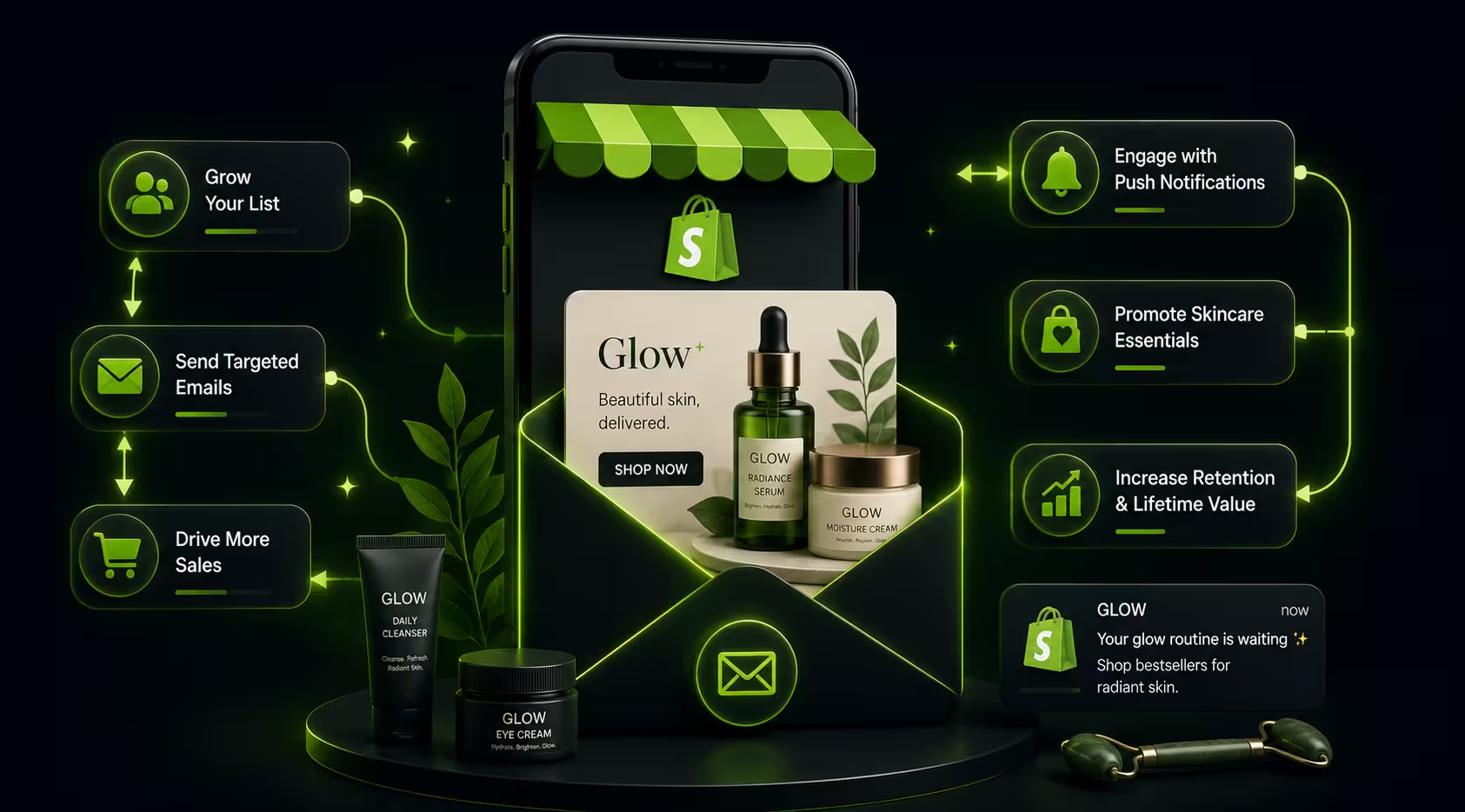
Beauty and skincare marketers use an array of automation tools to create educational content, nurture client relationships, and keep email subscribers engaged with newsletters; conversely, web push notifications are implemented to provide an immediate, attention-grabbing way to drive them back to the store. The two tools work hand-in-hand, recovering far more revenue together than either does independently.
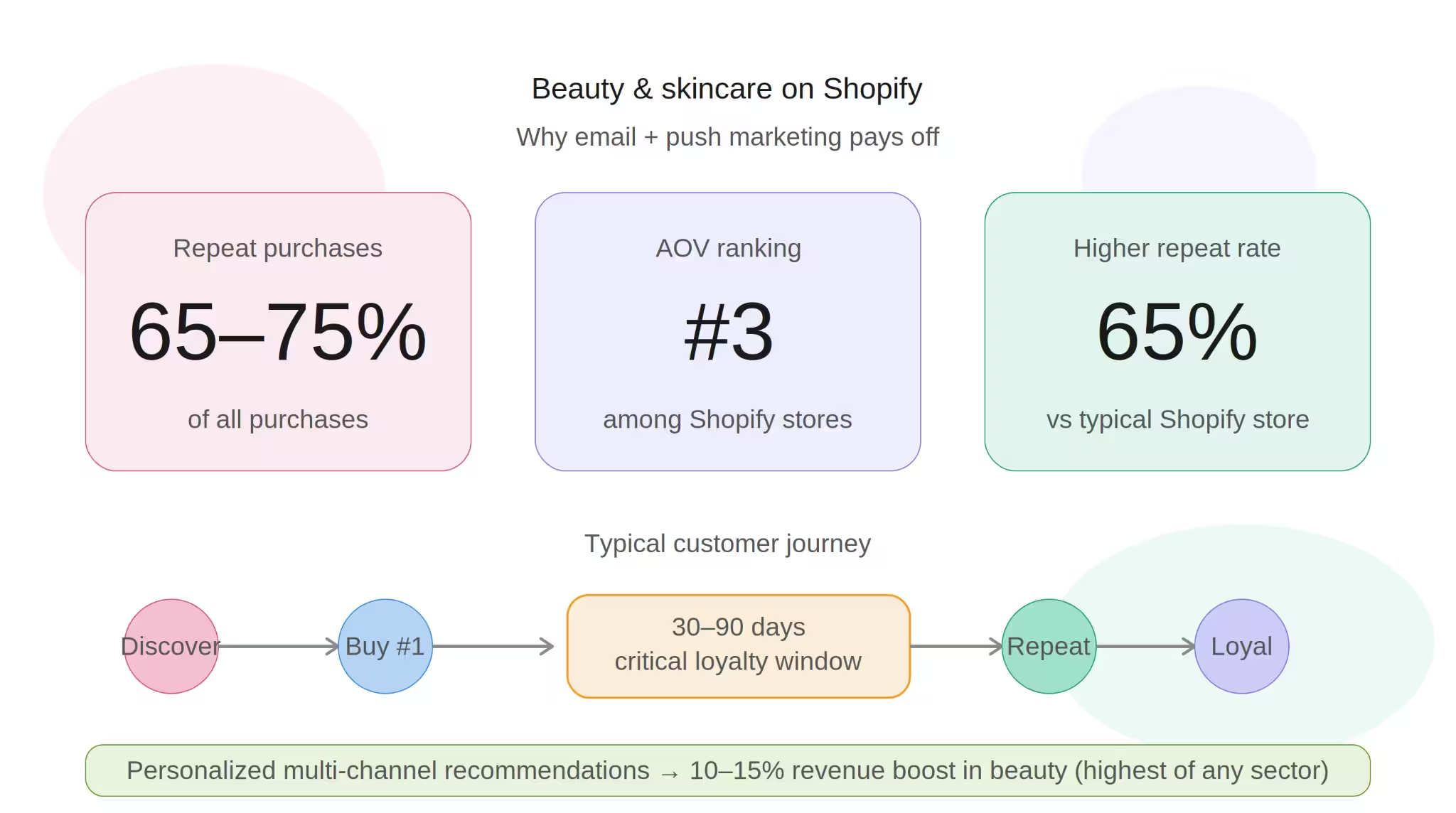
They do so because 65-75 percent of all purchases in beauty and skincare are repeat purchases. Customers try an anti-aging serum and later buy the brand's moisturizers; after finding they love its facial cleanser, they also subscribe to its toner. Among Shopify merchants, beauty is the third most popular category for average order value (AOV), and the repeat purchase rate in the skincare sector is 65% higher than across the typical Shopify store.
What can a beauty and skincare brand do to use and capitalize on repeat purchases? The solution involves emails and push notifications.
This guide is your ultimate resource for the top-performing marketing emails and web push notifications for beauty and skincare brands, along with precise instructions for turning one-time buyers into loyal, enthusiastic clients who return to make purchases approximately every 60-90 days.
How Beauty Customers Actually Buy on Shopify
A customer of a beauty brand will typically discover the brand on social media platforms like Instagram, TikTok, or through a Google search. They will land on a product page, add the item to their cart, and either proceed to check out immediately or abandon their cart.
At this stage, the customer is likely to be making a first purchase of one hero product. If this first-purchase product satisfies their needs and performs as expected, the repeat purchase will usually take place within 30-90 days. This 30-90 day window is perhaps the most crucial time frame for fostering customer loyalty.
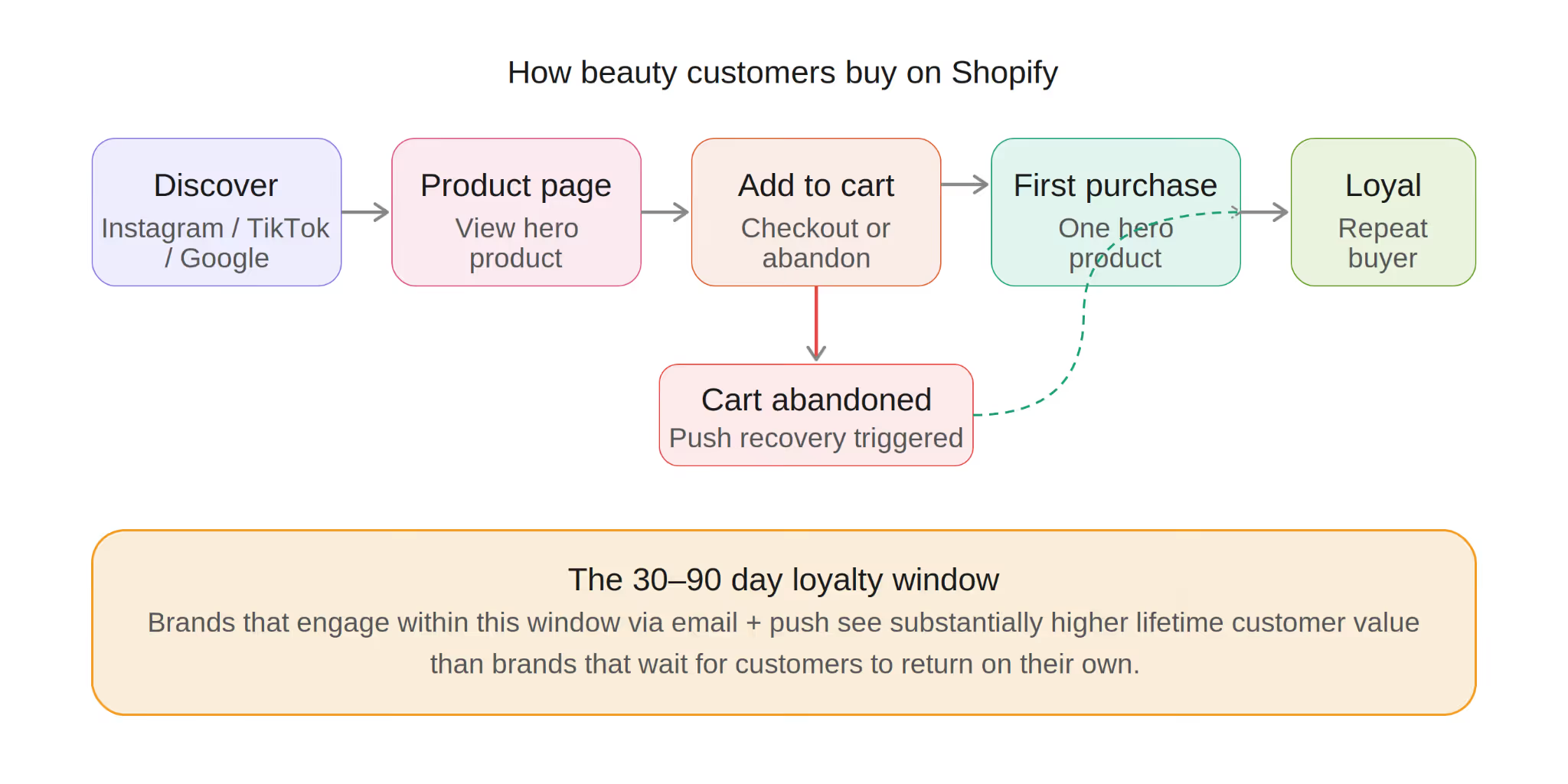
Brands that actively engage with their customers through email and web push within this 30-90 day interval, using targeted messages such as replenishment reminders, complimentary product suggestions, or exclusive loyalty offers, witness a substantial increase in their lifetime customer value. This is higher than those that simply rely on customers to remember and return on their own. Personalized product recommendations, spanning multiple communication channels, have been observed to generate a 10-15% revenue boost within the beauty industry, a rate that exceeds most other sectors.
What Is the Best Email Marketing Strategy for Shopify Beauty Brands?
The best strategy combines five core automated flows, along with two to three monthly campaigns. The five core flows cover welcome, post-purchase education, replenishment, back-in-stock, and win-back, and each is written specifically around the product's benefits and the customer's skin concerns, not generic promotional copy.
Here are five automated email flows every beauty and skincare brand should run on Shopify:
1. Welcome flow (3 emails over 7 days): This flow introduces the brand's story, details the hero ingredient or formulation philosophy, and offers a first-purchase incentive. The first email in this series should be sent within 10 minutes of the customer signing up. After 48 hours, the second email educates subscribers on an ingredient or provides a usage guide for the specific product they viewed. On day 7, the third email reinforces social proof by showcasing before-and-after results or verified customer testimonials.

2. Post-purchase education flow (4 emails over 21 days): Many beauty brands neglect this vital flow, despite it playing a significant role in retention. The first email, sent two days post-purchase, instructs customers on proper product usage. By day 7, the second email sets expectations about when the customer can anticipate seeing results, which is crucial for active ingredients such as retinol or AHAs. On day 14, the third email prompts for customer reviews and suggests suitable complementary products. The fourth email, sent on day 21, serves as a subtle reminder for replenishment.Replenishment flow (2 emails): These emails should be timed to coincide with the predicted usage interval of the purchased product, generally ranging from 45 to 60 days for a 30 ml serum and 30 days for a cleanser. The initial email is a gentle prompt. Seven days later, the second email includes a modest discount or the offer of free shipping. PushOwl Email allows for product-specific sending schedules, making it easy to customize this flow for different SKU categories.

3. Replenishment flow (2 emails): These emails should be timed to coincide with the predicted usage interval of the purchased product, generally ranging from 45 to 60 days for a 30 ml serum and 30 days for a cleanser. The initial email is a gentle prompt. Seven days later, the second email includes a modest discount or the offer of free shipping. PushOwl Email allows for product-specific sending schedules, making it easy to customize this flow for different SKU categories.

4. Back-in-stock alert flow (1 email + 1 web push): When a sold-out product that had waitlist signups becomes available again, an email is sent with the complete product story, followed within two hours by a PushOwl Web Push notification to add urgency: "Your saved product is back and it is selling fast. This combined channel sequence is far more effective than an email-only back-in-stock alert.
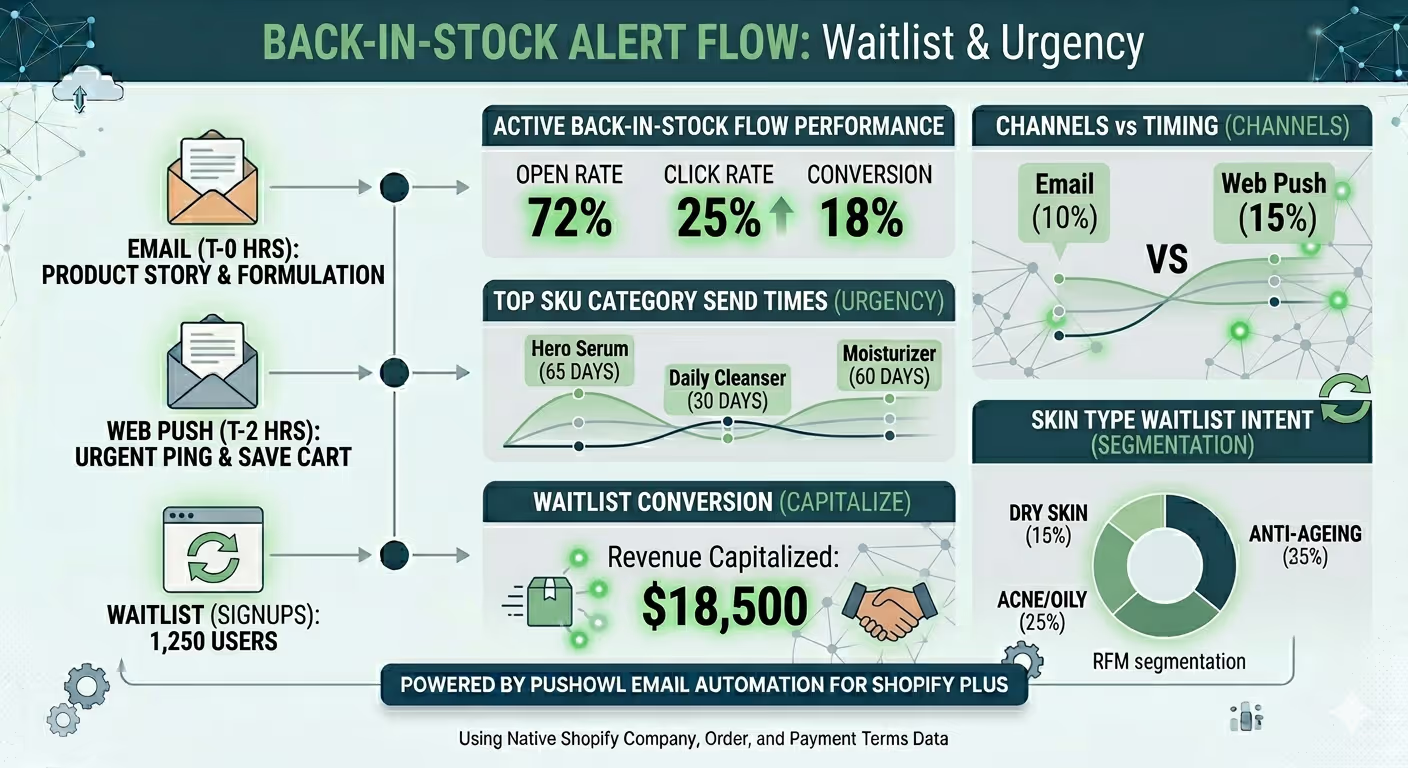
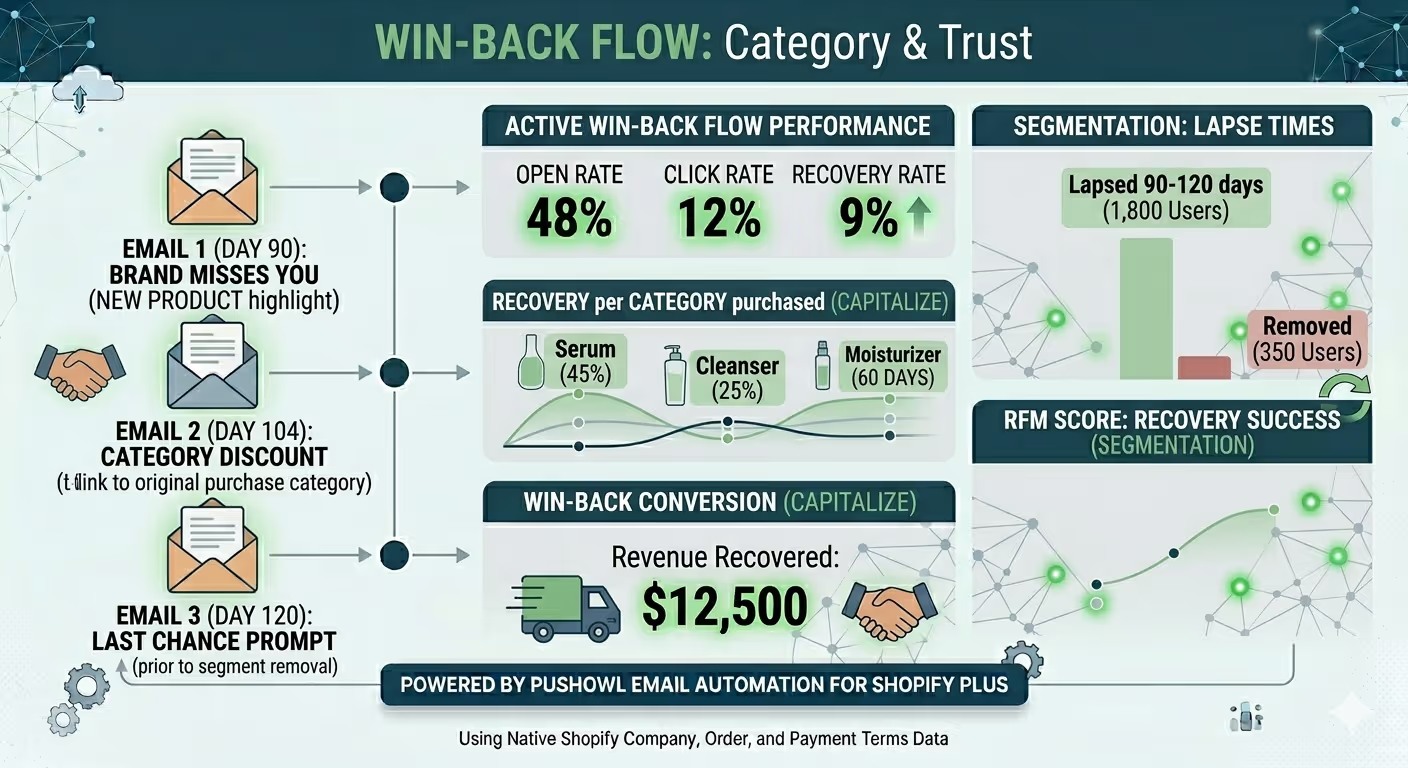
5. Win-back flow (3 emails over 30 days). This flow is activated when a customer has not purchased within 90 to 120 days. The first email expresses the brand misses the customer, featuring a new product highlight. Fourteen days later, the second email provides a discount related to their original purchase category. The final email on day 30 is a last-chance message before removing them from the active segment.
How Does Web Push Marketing Work for Shopify Beauty Brands?
Web push notifications for Shopify beauty brands are short browser messages that trigger and appear on desktop or mobile browsers even when the customer is not on the store's website. A person looking at a retinol serum, abandoning it without buying, and then reading a news story will see PushOwl Web Push notifications pop up in their desktop browser. "Still thinking about it? Your retinol serum is still in stock, 6 bottles left, " it will say. They click. They convert.

Across all Shopify sectors, PushOwl users reported web push open rates of 15 to 25% (vs. 1 to 3% for email based on PushOwl). In beauty, the two main drivers are the brand's visual appearance and the sense of urgency associated with limited stock drops, both of which fall at the higher end of this range. Push delivers at the moment the customer is online, on a device that they are actively using.
What Types of Web Push Campaigns Work Best for Beauty Brands?
These PushOwl Web Push campaigns are among the top performers for Shopify beauty and skincare stores:

- Abandoned Cart Recovery: Sent 1 hour, 6 hours, and 24 hours post-abandonment. The first 1-hour push is a product-specific callout ("Your Niacinamide Serum is waiting"). The 6-hour push adds social proof ("4,200 customers love this"). The 24-hour push introduces urgency ("Low stock, 8 left").
- Flash Sale Launch: These should be sent at the exact moment a flash sale begins, not hours beforehand. A beauty customer seeing an instant 10 AM push alert for a sale that begins at 10 AM converts higher than one that receives an advance email that ends with a timer counting down to the sale. Speed wins in push, whereas content is king in email.
- New Product Launch: Beauty businesses that regularly have limited-stock, seasonal, or new shade and formula drops use PushOwl Web Push because it communicates the information to their opt-ins more quickly than any other method. Push delivers notifications under 5 seconds. Email delivers notifications in 2-8 hours. With regard to a coveted, limited-edition item, the customer who gets the Push message first feels like a VIP. Those who receive an email late feel like they were an afterthought.
- Back-in-Stock Ping: Covered extensively in the email flows section, the most effective way to move stock is to send a back-in-stock email and pair it with a follow-up push message. Email covers the storytelling; push addresses the urgency.
- Loyalty & Tier Upgrade Nudge: If a brand has a customer loyalty program, the PushOwl Web Push that tells the customer, "You are 200 points away from Gold status, " works really well because it is personalized, informative, and action-driven.
- Replenishment Reminder Push: A quick push at Day 45 or Day 55 ("Running low on your Vitamin C Serum? ") along with the one-click reorder link will drive revenue with virtually zero content creation time.
Email vs. Web Push for Shopify Beauty Brands: Which Channel Does What?
Neither email nor push alone can handle the complete customer journey of a beauty brand. Email excels in conveying the brand's narrative and offering value over time, while push provides immediate, context-specific prompts to drive quick action. Each channel has a particular strength and a clear failure mode when used for the wrong task.
The key takeaway here: Email and push are never in competition with each other. They occupy distinct, non-competing parts of the customer journey, offering different types and depths of content. We consistently see that beauty brands use both channels; they outperform those solely reliant on email.
What Are the Top Beauty Email Campaigns That Drive Revenue on Shopify?

Beyond the 5 automated email flows, what should a monthly campaign plan look like? Campaigns tie marketing moments with both brand products and seasonal buyer behaviours and product seasonality. A strong calendar for a skincare brand might look something like this:
- January: New Year Skin Reset. A campaign focusing on anti-ageing or barrier repair products. Use the positioning "New year, new you, new skincare routine. "
- February: Valentine's Day Gifting. Campaigns around gift sets and bundles are crucial revenue drivers. Beauty and personal care are estimated as the second most gifted category for Valentine's Day in the U. S., according to Statista in 2024.
- March/April: Spring Skin Transition. Campaigns focusing on lighter formulations and SPF introductions for the warmer weather. Product rotations in spring will naturally drive brand-to-customer communications without the customer feeling they are being sold to.
- May: Pre-summer SPF & Brightening. An urgent and relevant campaign to gear up customers for summer.
- June-August: Summer Skin Protection. Campaigns on SPF replenishment, controlling oil, and staying hydrated.
- September: Back-to-Routine. Campaigns targeting post-summer skin damage, retinol, and AHA introduction.
- October: Skin Barrier Focus. Focus campaigns around ceramides and hyaluronic acid as temperatures drop.
- November: Black Friday/Cyber Monday. This is the single largest revenue window for beauty brands on Shopify, and Brands that put effort into building their email list and push subscriber base in September and October will always be in a stronger position than Brands starting in the final week of November.
- December: Gift Sets & last-minute urgency. Campaigns geared towards the holidays, gift sets, and any product that has a last-minute deadline or shipping cut-off.
Every one of these campaigns needs to have both an email and an omnichannel web push notification. The email will contain the whole story, educating the brand on products, while the push notification will trigger the urgent call to action.
How Do You Build a High-Converting Email List for a Shopify Beauty Brand?
A beauty brand's email list is only as valuable as the intent level of the subscribers on it. A list of 50,000 people who signed up for a discount code for 10% off and have since disengaged is far less valuable than a list of 8,000 people who subscribed because they want ingredient advice and routine ideas.
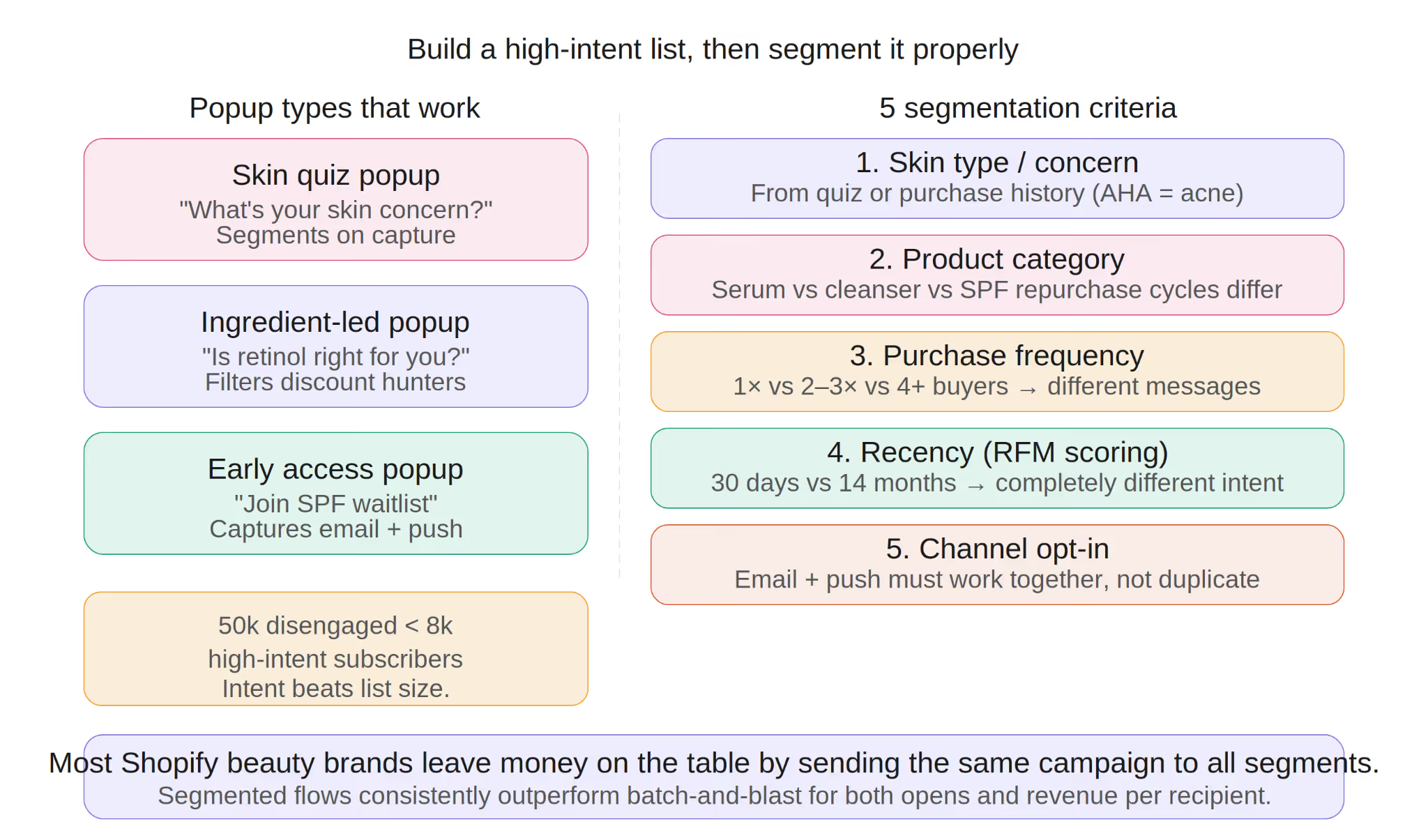
Popups are the fastest route to building a high-intent subscriber list on a Shopify beauty store. The key here is a popup design which qualifies intent at the point of capture. For beauty brands, the most common popups performing are:
- The Skin Quiz Popup: Ask 1 or 2 qualifying questions ("What is your primary skin concern? Dry / Oily / Ageing / Acne") before offering the discount code. This instantly segments the subscriber, and at the same time, it elevates the perceived value for a subscriber as they receive an answer rather than a generic code.
- The Ingredient-Led Popup: Instead of "Get 10% off", the headline should read "Want to know if Retinol is right for your skin?”. This effectively filters out the discount-hungry shoppers and focuses only on those that care about skin education.
- The Early Access Popup: "Join the waitlist for our new SPF" or "Get first notified when our Vitamin C reformulation drops.” These lead to both a Push and Email subscription all at once, and this group will be your most loyal customer segment.
For Push subscriber growth, use the native browser pop-up for omnichannel web push that requires just a one-click opt-in. For brands looking for high conversion, this pop-up should always show in specific contexts. For example, showing a pop-up on a product page that the user has visited at least twice before converts much more readily than the pop-up showing on the landing page upon entry to the website.
How Should Shopify Beauty Brands Segment Their Email List?
It is on segmentation that most Shopify beauty brands leave the most money on the table. When you consider that you are sending the same marketing campaign to a new customer who only bought a cleanser as you are to a repeat customer who bought 6 of your products in three years, that is not an effective marketing strategy but a massive missed opportunity on both sides.

There are 5 segmentation criteria that every beauty brand should be following:
- By skin type or concern.
This data is collected from the pop-up quiz you place at checkout or inferred through purchase history. A customer buying Niacinamide and AHA serums means they probably struggle with oiliness or acne and need to be emailed with products in those ranges.
- By product category purchased.
Cleanser customers will likely repurchase at a different cycle than serum customers or SPF customers, and all of these have differing upsell opportunities.
- By purchase frequency.
Customers who bought only once respond to different messages than customers who have purchased two or three times or repeat customers who have purchased more than 4 times. Loyalty program messaging would feel empty to a one-time customer but would be appropriate for customers who have repurchased at least 4 times.
- By recency.
Someone who purchased just 30 days ago has different engagement than a customer who purchased 14 months ago. RFM (Recency, Frequency, Monetary) segmentation is the most valuable segmentation criterion for beauty brands.
- By channel opt-in.
If they subscribe to email, the brand needs to create a sequence between these two channels instead of sending the same message in parallel. The messages need to work together, not in sync, sending duplicated efforts.
PushOwl Email allows you to use all five of these criteria out of the box, no coding needed.
What is the Right Email Frequency for a Shopify Beauty Brand?
For a general list, the sweet spot is to email 2-4 times per month and use automated flows triggered by customer behavior. This is the range where various reports suggest the highest engagement in health and beauty, without the industry-average rates of unsubscribes.
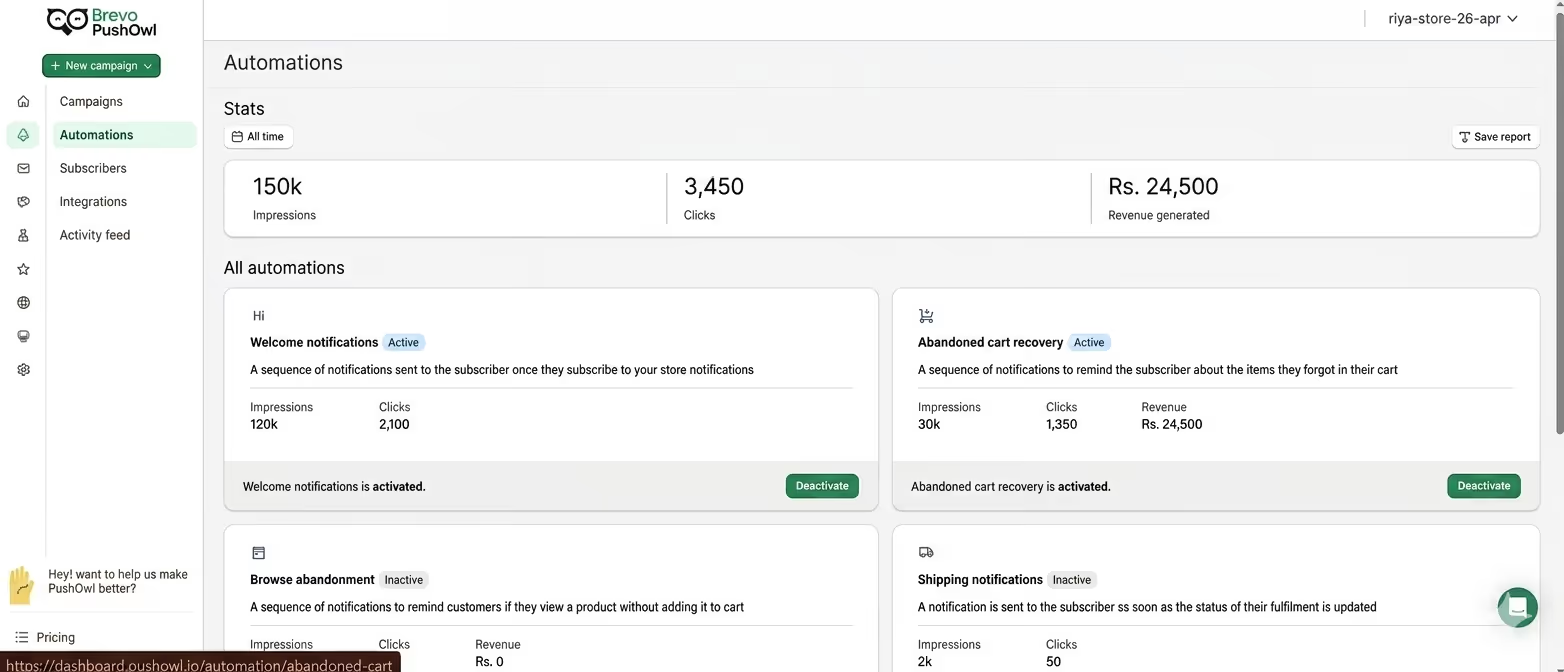
Brands that send more than 6 emails per month will experience meaningful spikes in their unsubscribe rates. Brands emailing below 2 emails per month see opens remain static but will see their revenue per recipient fall off as they are too infrequent for consistent repurchase.
As a simple rule: Each email that leaves your desk should be worth the customer's time to open. If you do not know the value proposition from the customer side before hitting send, do not send it.
Web push has a lower frequency threshold. We have found that the Shopify beauty stores generally get high engagement in the range of 4 to 8 pushes per month because push marketing is lower-commitment; a push notification can be read and dismissed in 2 seconds, whereas an email requires opening, reading, and deciding. The cognitive effort is just too high for a push.
How Does PushOwl Email Work for Shopify Beauty Brands?
PushOwl Email is a native email marketing software in the Shopify platform designed specifically for merchants who want to use powerful automation and deep segmentation at a lower cost and complexity than enterprise platforms.
As for beauty brands, PushOwl handles the 5 automated flows as described above natively, integrates with Shopify's product and customer data to allow for dynamic real-time personalization, and integrates perfectly with PushOwl Web Push to run a coordinated email and push sequence rather than as a stand-alone channel.
As an advantage to beauty brands, PushOwl Email does not need an outside CRM or a developer in place to run. All segmentation-from purchases to pop-up data for skin type to RFM scoring-happens within the same platform where your push subscribers are based.
As a result, beauty brands can set up a "back-in-stock" sequence, followed up by an email within two hours and then PushOwl just 2 hours after, in one flow, without needing to sync two separate systems together.
Shopify merchants can try PushOwl Email for their Shopify beauty stores, launch free, and create their first flow in under 30 minutes.
What Should a Shopify Beauty Brand's First 90 Days of Email and Push Marketing Look Like?
For Shopify beauty brands, the first 90 days of email and PushOwl should be primarily focused on 3 things: building the subscriber list, launching and testing all 5 automated flows, and setting up the foundations for consistent campaign execution. Below, you will find a week-by-week breakdown to ensure your new email and push marketing efforts are on track for success.
- Weeks 1-2: Install PushOwl Email and PushOwl Web Push, configure a 3-email, 7-day welcome flow, install a skin quiz or ingredient-led popup on your product pages, enable the native push opt-in for high-repeat-view products.
- Weeks 3-4: Build a 4-email, 21-day post-purchase education flow, link an abandoned cart Push sequence (1 hour, 6 hours and 24 hours). Send out your first campaign, likely your brand's introduction to its hero ingredient or brand story.
- Weeks 5-8: Build an automated replenishment flow for your top 3 most-purchased SKUs. Set up the back-in-stock alerts (email + push). Send your second monthly campaign targeting a seasonal skin concern.
- Weeks 9-12: Build a customer retention, win-back flow and set up your loyalty program tier upgrade Push sequence (for those with loyalty programs). Review all active flow performance including opens, clicks, and conversion rates. Modify send times and subject lines to fit your performance data.
By Day 90, with this framework in place, a Shopify beauty brand should have all five email flows actively running, a Push subscriber list growing, and two months of campaign performance data on your hand to aid decision-making on campaign copy, send time, and strategy.
The Final Takeaway
Shopify beauty and skincare businesses have an edge over other eCommerce verticals with email & push: customers want to receive messages from them. A shopper loyal to your brand's ingredient philosophy is going to want to see that email you sent them announcing a new ingredient. A loyal shopper in the middle of a daily routine with a serum running low needs a well-timed reminder to replace it.
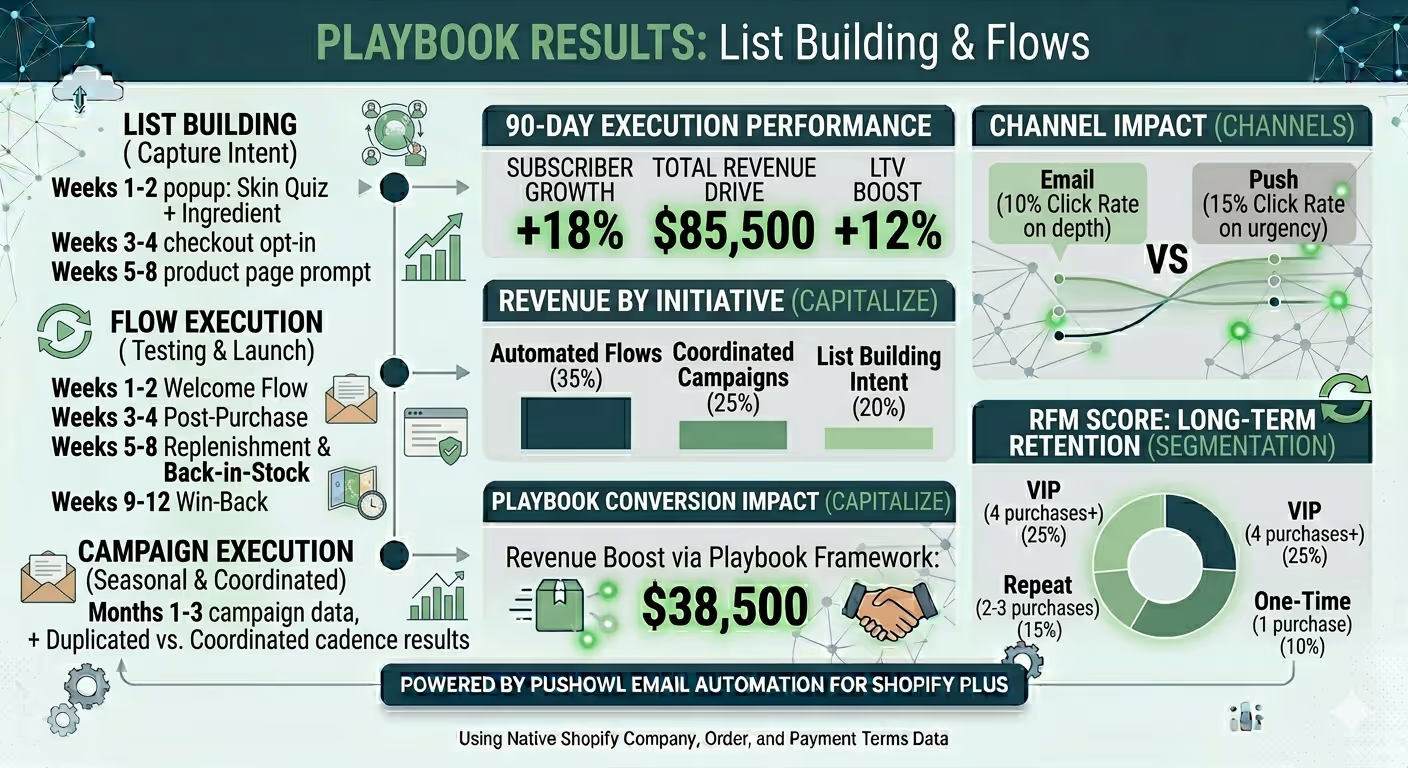
The beauty and skincare brands who capture this edge consistently differentiate themselves by approaching email and push as two parts of the same ecosystem. They prioritize email to educate and deepen the relationship, while PushOwl Web Push is reserved for speed and real-time urgency. Both are executed at the specific cadence that your loyal, returning customers appreciate.
Between PushOwl Email's five essential automated flows and PushOwl Web Push's six valuable campaign types, your beauty brand can seamlessly engage customers throughout their journey, from first purchase to repeat loyalty. Plus, with both integrations working together, you can set up all of these campaigns in under 30 days. This revenue stream will then continue to bring money into your store indefinitely.