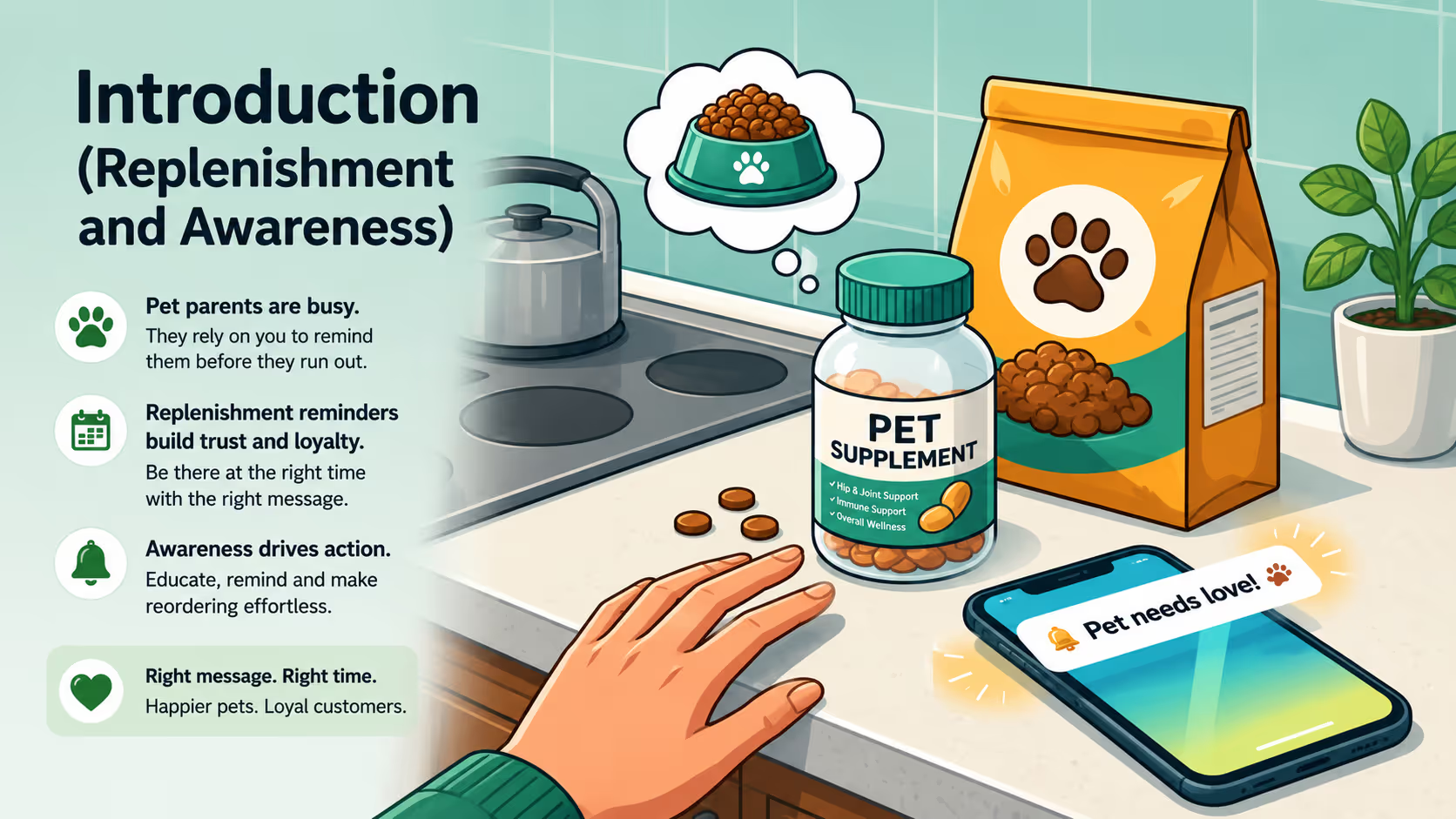
The bag is nearly empty. 4 more capsules remain in the supplement bottle. Yesterday was the day the last flea pill ran out. Right now, as the owner is standing in the kitchen, they will ask themselves if they should reorder the same product again. It might be cheaper and more convenient to pick some up at the local store.
Those 3 days before the product runs out are a make-or-break moment between pet brands, potentially costing them customers forever. Those with proactive, smart email automation at this exact moment win. The brands that stay silent will lose the customer to whoever is closest, as the switching friction is low when a pet owner makes a mental decision to try something else, and one way to minimize the switching friction is to be there right before the product runs out.
Americans spent $147B on pets in 2023, food & treats accounting for $64.4B according to the APPA 2023-2024 National Pet Owners Survey. The pet food industry is expected to grow, with Americans being some of the most loyal consumers in the game. Reorder cycles for pet brands are precise to the week. Shopify pet brands lack the proper email and push notification infrastructure to capture and reorder revenue sitting there waiting.
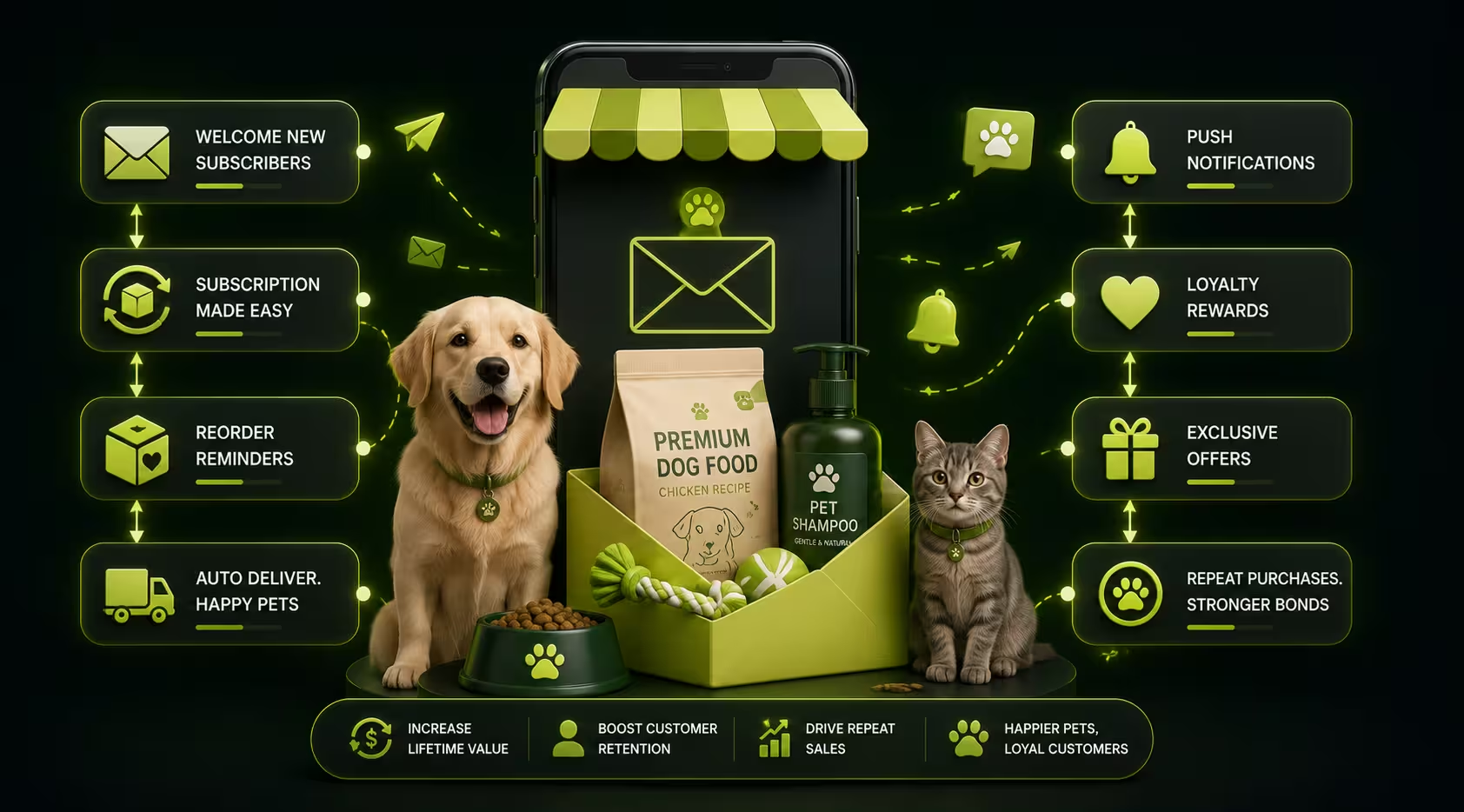
Shopify pet brands scale customer lifetime value (CLTV) by combining the powers of PushOwl Email for post-purchase education, subscription conversion, loyalty flows, with PushOwl Web Push for immediate reorder nudges, back-in-stock reminders, & flash sale announcements.
Pet owners are one of the most loyal groups of customers. Retail brands with the most loyal customers keep those customers around the longest. Those brands happen to show up at the precise right time - just before the pet runs out of food, before a subscription expires, before a competitor takes advantage. Below, we outline exactly how to automate it all.
What Makes Email Marketing for Shopify Pet Brands Different?
The email marketing difference across virtually every Shopify industry is that the person buying is not buying the product for themselves, but for someone they love! Your 8lb dog may get anxious when the food changes, and perhaps your cat has a sensitive stomach or needs the dog in your life to be on the specific supplement protocol needed. Pet-related purchases have much more on the line compared to purchasing any product that is just for oneself.
With an average open rate of 34.8%, which is far above the average e-commerce industry rate, pets and animals rank second among all other industries, only narrowly beating Health & Wellness (34.3%) for second place! The number suggests the depth of attention pet owners place on the content from the brands they trust.
Someone buying a phone case might not open an email about what is included in every bag of food their puppy receives, ingredient sourcing, the science behind a digestive supplement they use, or breed-specific feeding guidelines, yet a dog owner who finally finds a brand of food that both they AND their puppy love will read and trust everything on it.
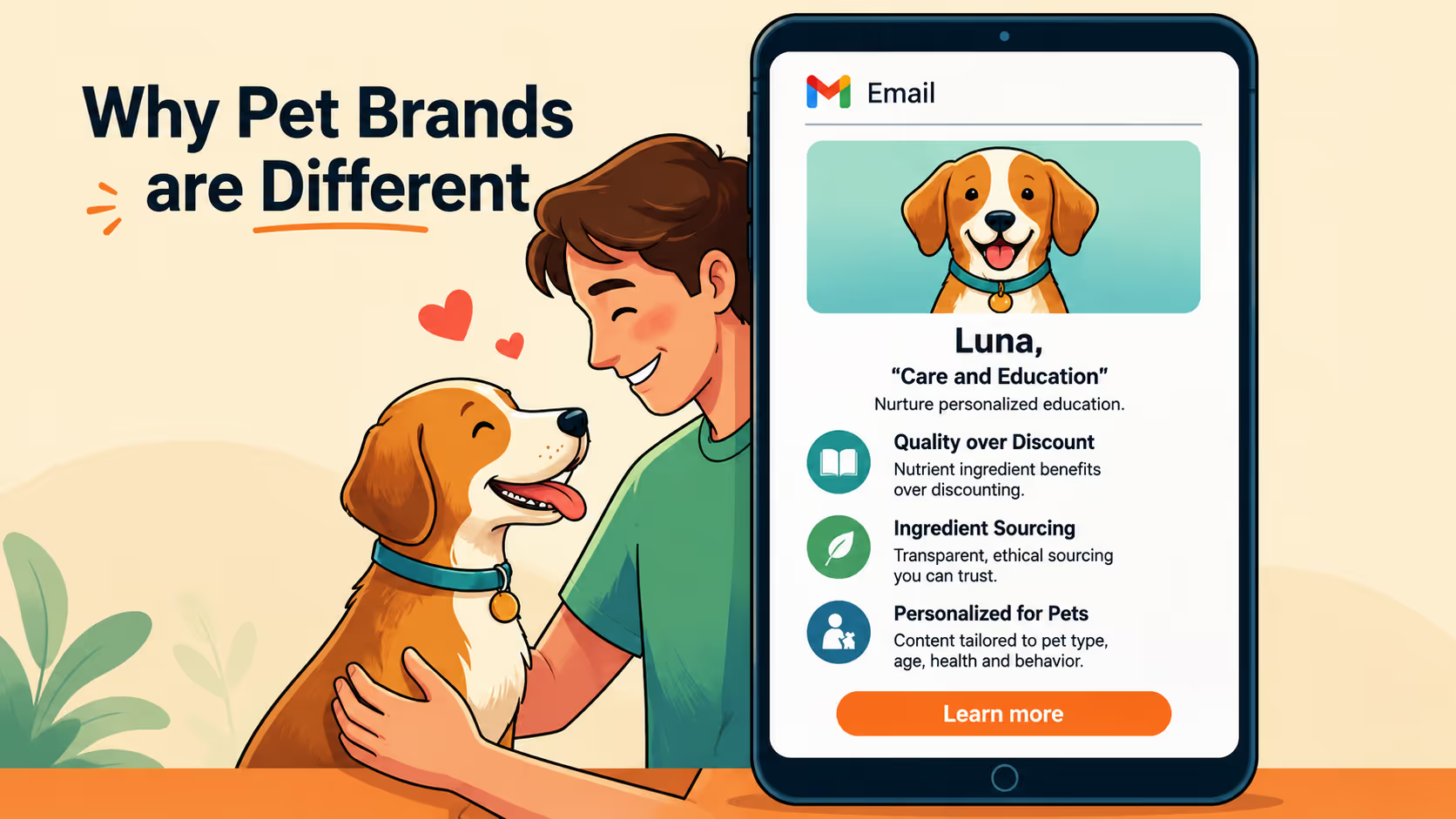
This interest is the top asset for pet brands. But it is also easy to waste. Those brands whose email marketing is utilized just as a discount coupon dispenser see open rates dip in only two to three months. Initially, the customer signed up expecting to learn about pet health needs, yet instead, they were sent discount codes! Now they will no longer open the emails, grow distrustful, or cease buying them altogether.
Pet brands able to sustain those year-high email open rates are those who use emails primarily as an education channel, second, with sales being secondary. Each message teaches a customer something valuable, whether about the nutritional demands of their pets, the science that informs the product they have already bought, or what to anticipate as their pet gets older or health conditions change. This content keeps them subscribed, interested, and reordering.
PushOwl Email provides Shopify pet brands the level of personalization to tailor content filters based on pet type, breed, age, health, and purchase history without any help from developers or separate CRM systems.
Why Replenishment Timing is the Highest-ROI Automation a Pet Brand Can Run?
Pet food, supplements, & consumable pet products feature predictable depletion intervals - unique to most other Shopify industries.
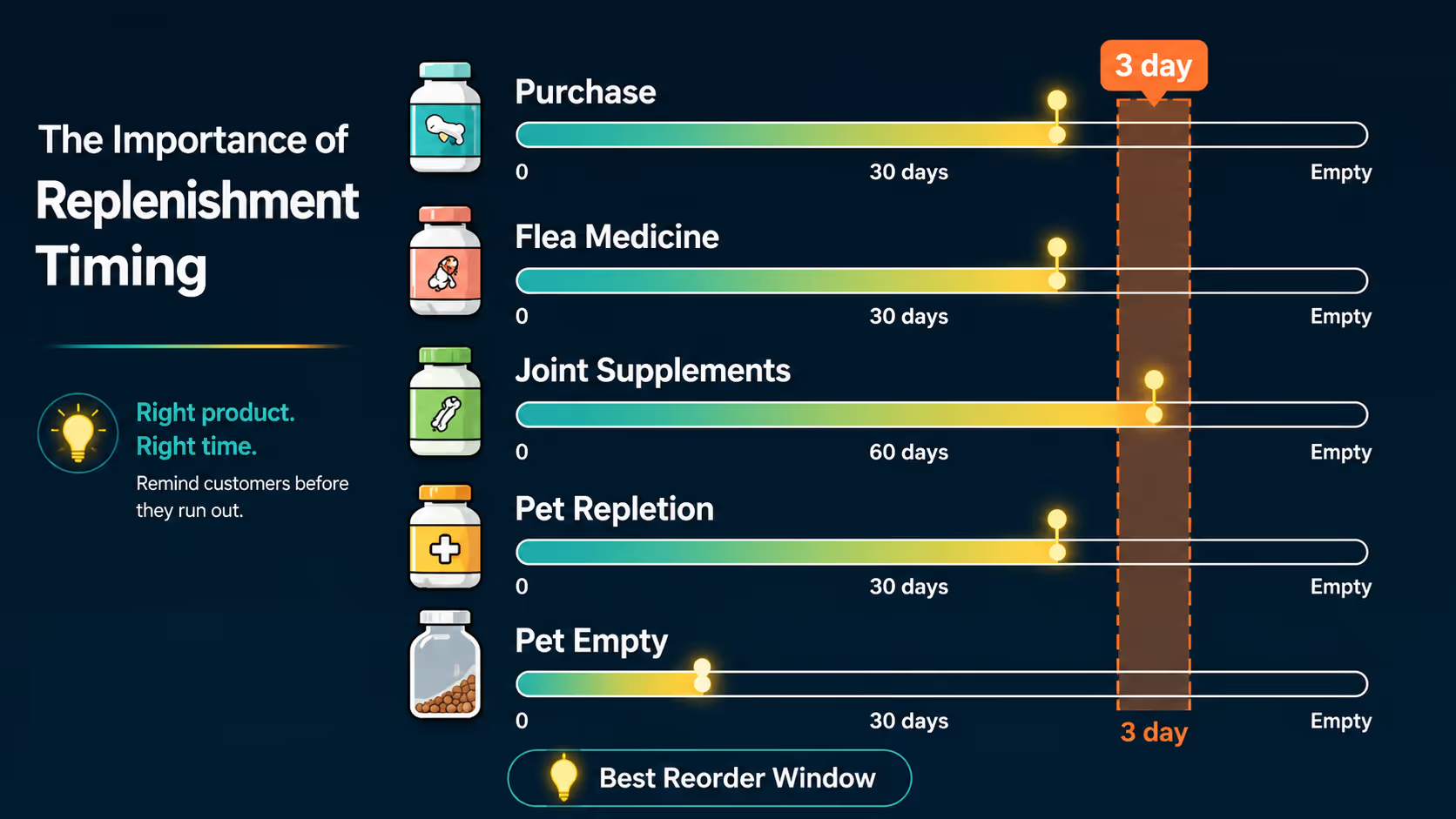
For example: A 25-lb bag of dry kibble a dog owner of a 40lb dog that is fed 2.5 cups of kibble each day can feed for approximately 30 to 35 days. A 30-count pack of monthly flea medicine lasts precisely 30 days. 60 capsules of daily joint supplements last 60 days. And, depending on the number of bowls your pet drinks daily, a 500ml bottle of pet dental water additive can last around 45 to 50 days when one teaspoon is used daily per meal.
A pet brand that can use its purchase dates, product size, and (through an initial onboarding quiz and/or post-purchase form), the pet's approximate weight can figure out the ideal time to reorder with only a 3-day margin. When a replenishment reminder via email and push notifications is received by the customer right when the pet's food bag or other consumable item runs out, it is not a salesy nudge. It is simply a convenient reminder that their favorite dog's food is running out and it should be reordered.
Customers react completely differently to this message than any promotion with a general sale, because one is an offer from a selling brand, whereas the other is a brand watching out for their favorite pet.
According to McKinsey & Company (2023), personalized triggers based on utilization patterns improve repeat purchases by between 10-15% as opposed to fixed and scheduled marketing email announcements for various consumer goods. In pet food, when a product runs out, hungry pets and distraught owners result.
How Do the Top 10 Pet Brands Use Email and Push Marketing?
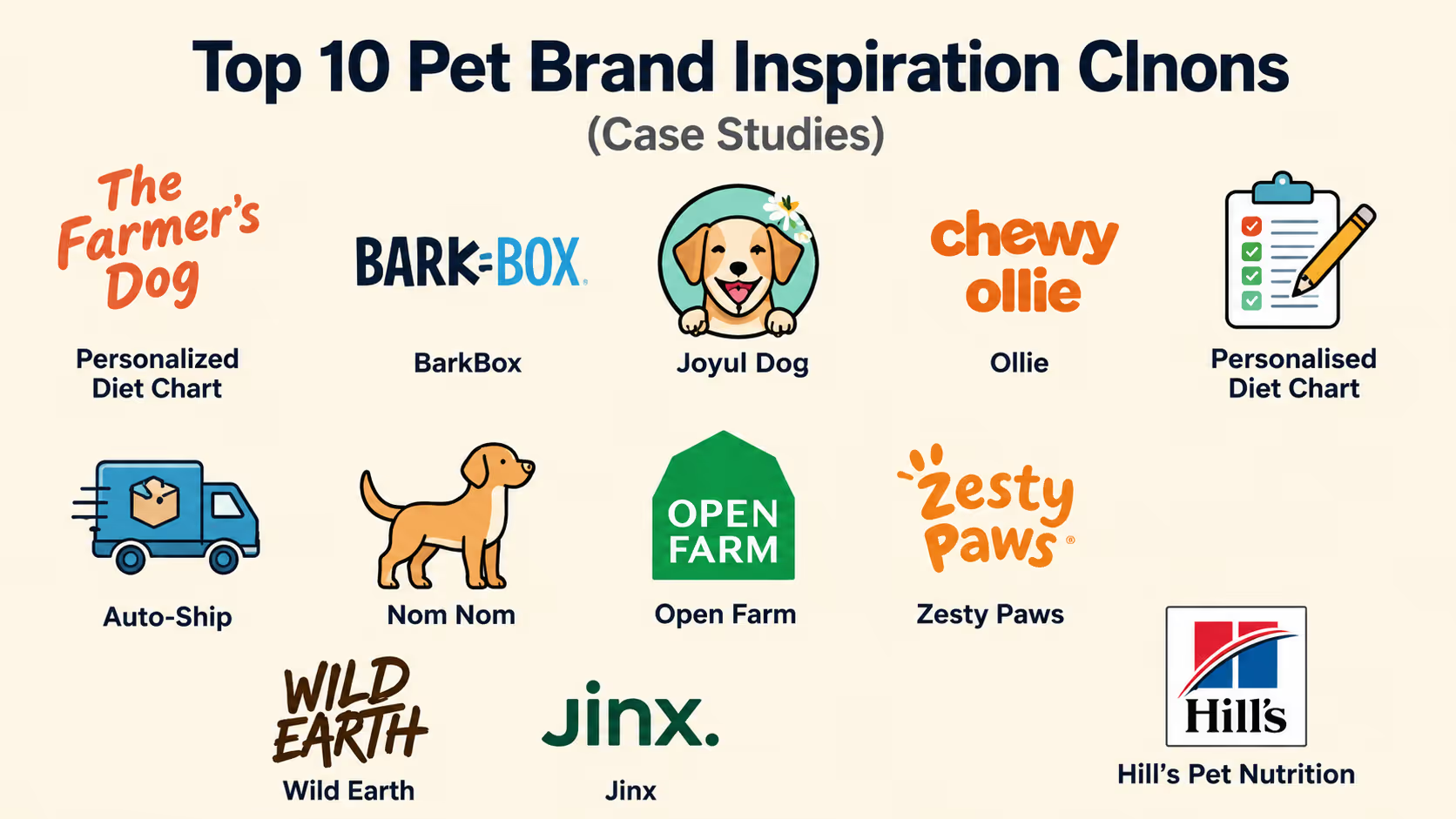
The top direct-to-consumer pet food brands use email and push strategies worth looking into! Here is what the category's leading brands are achieving and what Shopify pet brands can take away from each approach:
1. The Farmer's Dog
This brand operates tailored email communications based on the pet's information. Every message sent to a customer will reference the dog's given name, diet plan, and caloric requirements. Their post-purchase emails lead new pet owners through the transformation of kibble food to freshly made meals for dogs on a day-to-day basis, a process designed to prevent returns and encourage trust. What they do in educating people about every single ingredient they use has proven to be the benchmark.
2. BarkBox
These guys know how to tap into emotions. The emails are always full of warmth, charm, and a personality-focused approach. The product is less important than the pet's distinct character! When their email subjects start with "Your dog is going to lose it, " and "We made this for chaos goblins, " there is a 68% open rate due to the nature of the message seeming authentic, as if coming from someone who is well acquainted with the pet! The brand has an effective subscription renewal system along with its excellent gifting initiatives throughout major holidays!
3. Chewy
Chewy is known to be an aggressive replacer compared to many of its competitors! Their "Auto-Ship" emails are strategically scheduled for when their product is anticipated to deplete, often leading to higher conversion rates than other sale promotion campaigns! Chewy is well-studied in the pet category for its unique email strategy that reattracts lost customers of its Auto-Ship subscriptions.
4. Ollie
Their email program is designed to reinforce the idea that pets are members of a family that deserve to be treated with healthy food that humans eat! Their welcome sequence can be observed as the longest email thread of its kind. The five emails sent touch upon ingredient sourcing, how qualified and reputable veterinary nutritionists are, and Feeding transition practices. Second product choices and the welcome flow are not provided until the fifth email. This is effective in drastically decreasing the churning of early subscribers.
5. Nom Nom
Nom Nom relies heavily on clinical proof! Their emails consistently discuss their personal findings from studies concerning the health of microflora in canines! The research findings are presented so easily that owners can comprehend and act on the study results even if they do not understand medical terms. Nom Nom is presented as a health-focused company that sells pet food instead of a pet food company with healthcare claims!
6. Open Farm
Transparency in the supply chain is used to boost Open Farm's marketing communications. Emails for any type of protein, be it pasture-raised chicken, wild salmon, or even regenerative beef, tell customers exactly where the ingredient came from and the standard of the farm or fish! They further convey why this practice matters for the health of the customer's dog or cat! This transparency is intriguing to consumers of products, ethical as they are about source choices.
7. Zesty Paws
This is the only company that has a well-qualified supplement email series for its pets! The post-purchase for Zesty Paws joint supplements shows owners what is to be expected two weeks in, four weeks in, and eight weeks in, complete with markers to show any improvement. This level of expectation manages customer demand for refunds and increases the odds of the product being reordered on day 60!
8. Wild Earth
Their values in their emails continue to connect their customers to the brand even better than the products do on their own! Emails about sustainable protein sources, environmental sustainability, and the science behind the YEAST-based formulas pull customers with such shared beliefs into brand loyalty for as long as the brand maintains the values they uphold!
9. Jinx
This brand aims directly at millennial dog owners, and the tone of their emails perfectly matches this target market. Campaign emails feel conversationally personal, ironic, and the exact style used by dog owners whose pets are roommates as well as personalities in a household. The welcome email series starts with, "Your dog deserves better than beaks and hooves”. It hits hard, specifically addresses the customer's pet, and is effective to start branding within the first sentence.
10. Hill's Pet Nutrition
Though at a different market scale, these experts use well-researched, vet-endorsed email programs that are built on authority rather than relying on popularity. Their emails post-purchase, for prescribed and therapeutic foods, are focused on owner education and care for their pets. This means assisting owners in understanding why the recommended food by the veterinary professional is the only option and what is to be done if the switch is a rough one. For health or therapeutic-related pet food brands, Hill's approach represents clinical-style communication within its class of pet products.
What Are the 8 Email Flows Every Shopify Pet Brand Should Run?
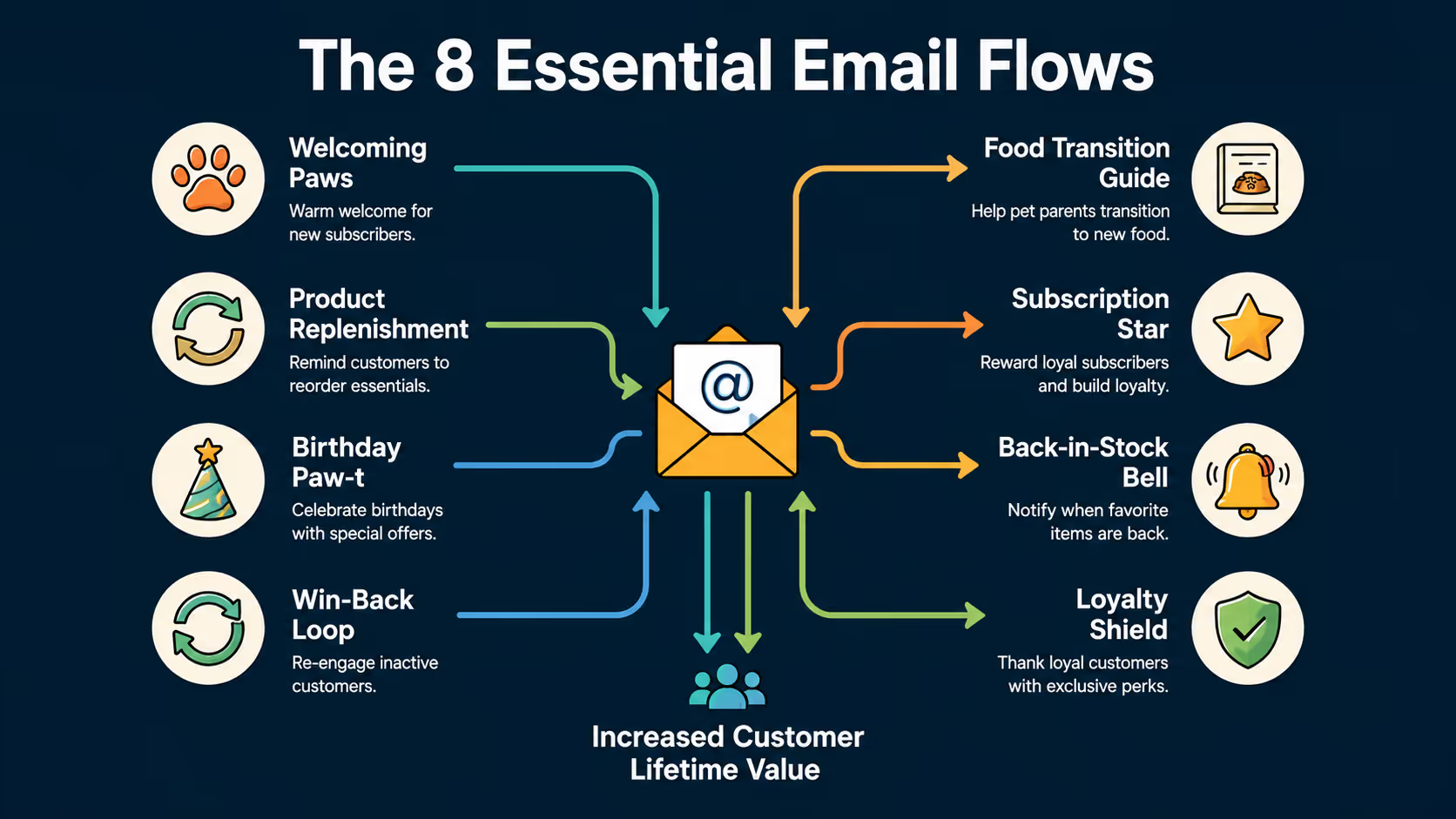
The typical Shopify pet brand relies on a welcome email sequence and maybe an occasional promotion. Meanwhile, the post-purchase education, the right replenishment trigger timing, that subscription conversion, life-cycle updates, or even the birthday customization is up for grabs. That is why these 8 flows you cannot do without:
1. Welcome Flow - 3 emails over 7 days
The welcome email is the brand's first real opportunity to chat with a new subscriber. For pet brands, this chat means establishing credibility before it is trying to sell. Email 1 comes out 10 minutes later and discusses the brand's philosophy about product sourcing, while highlighting the personal story of how the product even came to be-and for pet brands, founder stories usually have animal parents driving them. Email 2, sent at 48 hours, uses uncomplicated language for the product's key ingredients, covering their function and benefits. Email 3, which shows up at day 7, brings in testimonials from verified buyers, vets (if they can provide recommendations), plus things like AAFCO Nutritional Adequacy statements and NASC quality seals.
2. Post-Purchase Education Flow - 5 emails over 30 days
When you think of high-impact, low-churn campaigns in the pet industry, this is it and, ironically, the one least likely to appear in a brand's automation strategy. Email 1 comes out at day 2 and covers the steps for safely transitioning a pet to a new food; this involves a 7 to 10-day blend schedule for preventing digestive issues and the most common reason for returns if poorly articulated. Email 2 arrives at day 7 and provides sensible expectations on time for results; that is, hair growth improvement is normally seen after 3-4 weeks, joint supplement results at 6-8 weeks, and improved digestion after only 2 weeks. Email 3 at day 14 dives a bit more into how the main ingredient actually works. Email 4 sent on day 21 suggests a complementary product closely aligned with the first purchase. Email 5 arrives on day 28 and acts as an early reminder to get more of the product before the supply is expected to run out, roughly two to three days prior.
3. Replenishment Flow - 2 emails plus 1 push
This flow triggers when the predicted delivery date of the product comes around, depending on product weight, the animal's weight, and guidelines provided. Email 1, delivered to subscribers who bought a 1-month supply around days 28-30, gently prompts them to reorder, providing a 1-click link. Email subjects that appeal to the owner's bond with their pet-such as "Bruno's probably running out of food"-tend to do much better than product-specific subjects when it comes to open rates. Email 2 hits day 33 for customers who missed the first call to action, giving them a little perk- free shipping, a handful of loyalty points, or a package deal. The PushOwl Web Push at day 31, on the other hand, helps to keep those two emails from being too far apart with a concise notification: "Do not let [Pet Name] run out- reorder in one tap. "
4. Subscription Conversion Flow - 3 emails over 45 days
Designed specifically for brands selling through subscribe and save, this flow runs to non-subscribing buyers on days 10, 25, and 45. Email 1 informs them of the cost benefits and the ease of not needing to think about whether they will run out of supplies. Email 2 arrives on day 25 to build excitement as the reordering time approaches: "Your next delivery leaves in a week if you are using auto-delivery- make sure you do it before you are out of food." Email 3, scheduled for day 45, is the final invitation to subscribe before they are moved into the standard replenishment cycle.
5. Pet Birthday and Life Stage Milestone Flow - 2 emails
This is actually the highest open-rate flow out there, and the one few brands choose to carry out. Tied to the pet's date of birth, which the brand can get through post-purchase quizzes or pet profile questionnaires, Email 1 gets delivered sometime during the birthday week, featuring a special greeting that includes the pet's first name and a recommendation appropriate for their life stage. Email 2 gets triggered by the pet's movement from one phase of life to the next- for example, a puppy becoming an adult at 12 months old or turning into a senior cat at 7 years for a typical housecat-introducing the shift to a relevant formula. Customers who receive birthday emails for their pet generally tend to be much more loyal than those who do not, simply because it shows they are viewed as a real, individual animal, not just a sale.
6. Back-in-Stock Alert Flow - 1 email plus 1 push
After a popular product is sold out, the email gives customers the entire product story and justifies the wait, all to those who signed up for waitlist alerts. The PushOwl Web Push immediately follows, within about 2 hours, to offer an urgent notice: "Your [Product Name] is back, and it is selling out fast!” Sending through these two channels together boosts conversions, far more so than an email-only notification could, as the push notification reaches customers when they are already online and checking the restock time while the item is at its peak availability.
7. Win-Back Flow - 3 emails over 30 days
This sequence runs when a customer has not placed an order within a 60- to 90-day span. The time period for bringing a customer back is smaller in the pet-related sector than other markets. Since ordering cycles are pretty predictable, a 90-day absence suggests the client has jumped ship to another brand, not that they have simply postponed an order. Email 1 poses an open-ended question: "We noticed Bruno has not been needing deliveries for a bit- is there an issue?" This tactic usually generates higher response rates compared to win-back emails leading with a discount, and it starts a customer service chat that might help fix the situation. Email 2, coming on day 14, highlights a brand new product, flavor, or a modified formula as an incentive to return. Email 3 at day 30 offers a discount before the customer is taken out of the active customer list.
8. Loyalty Milestone and Tier Upgrade Flow
This workflow activates when a customer hits a loyalty level, racks up a certain number of points, or achieves an order milestone like their 5th order or 1st anniversary with the brand. PushOwl Web Push takes care of the real-time notifications about hitting a new tier: "You are only 180 points away from Gold Status; your next order will get you there! "- while PushOwl Email sends out comprehensive information about the benefits tied to that tier and any available reward redemption options. When they work in tandem for loyalty communication, the tier-progression rates climb higher than when either channel operates by itself.
How Does Web Push Marketing Work for Shopify Pet Brands?
Web push notifications are alerts delivered through the browser to subscribed clients on their desktops or mobile phones in real time, even if they are not actively on your site. PushOwl Web Push sends notifications out in just 5 seconds, while email typically takes 2 to 8 hours and SMS is immediate but 4 to 8 times more expensive per message.
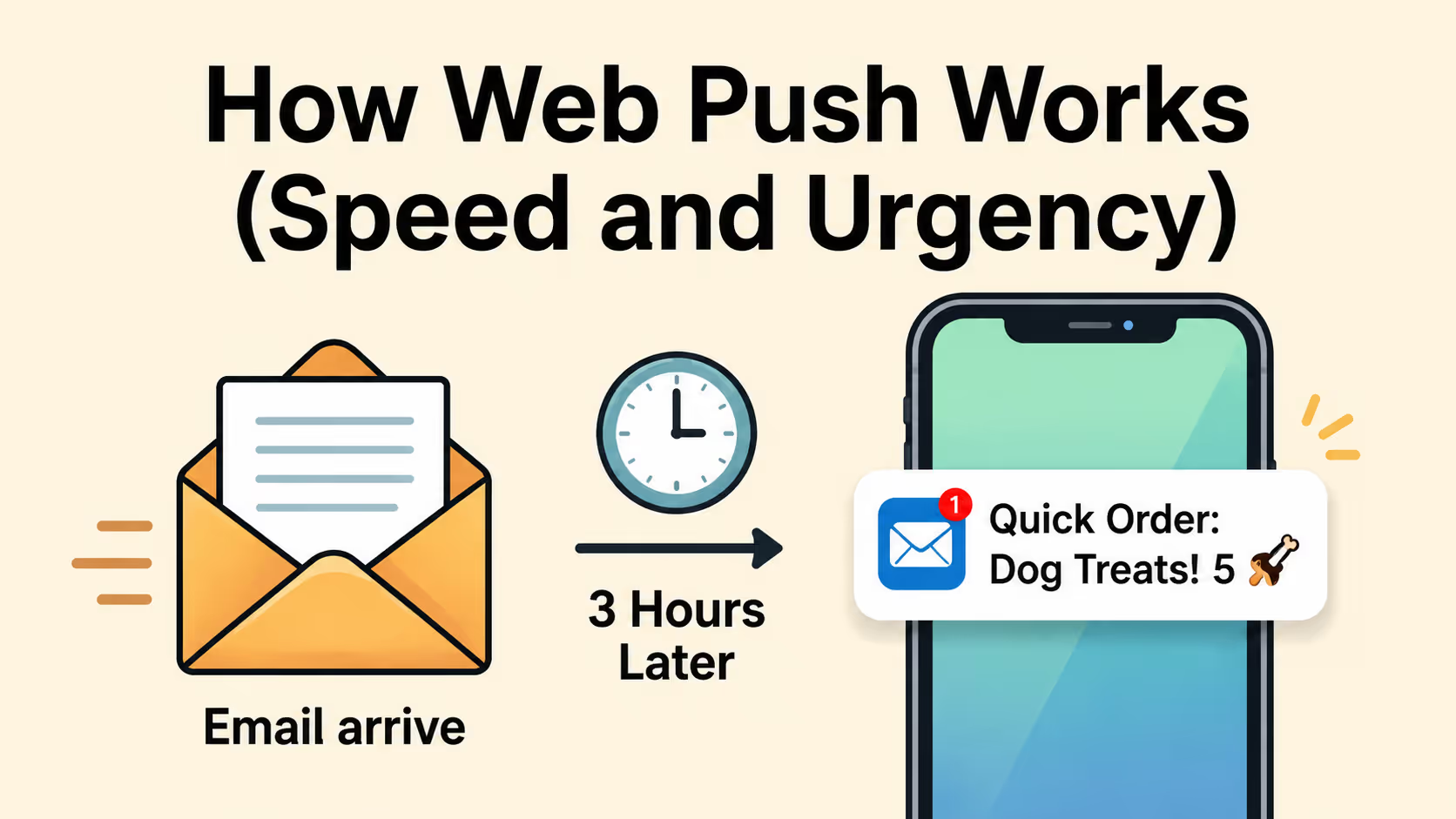
For brands focusing on pets, the advantage in speed from web push is most useful for replenishment reminders and back-in-stock alerts - two moments in the pet purchase cycle that involve the most urgency.
If a dog owner's food bag runs out Monday morning, they need an instantaneous message: "Max's food, reorder now, " with a quick shortcut to the product page. Open rates from PushOwl users around Shopify show 15-25% for web push, versus just 1-3% for emails. Because pet owners usually already know they need more-they are just waiting for the right reminder-open rates translate into more replenishments with minimal content creation effort.
The 6 Web Push Campaigns That Drive the Most Revenue for Pet Brands
The PushOwl Web Push campaigns described below have historically been the ones bringing the highest revenue for Shopify pet brands, and they are crafted for specific interactions with clients; they should not be substituted.
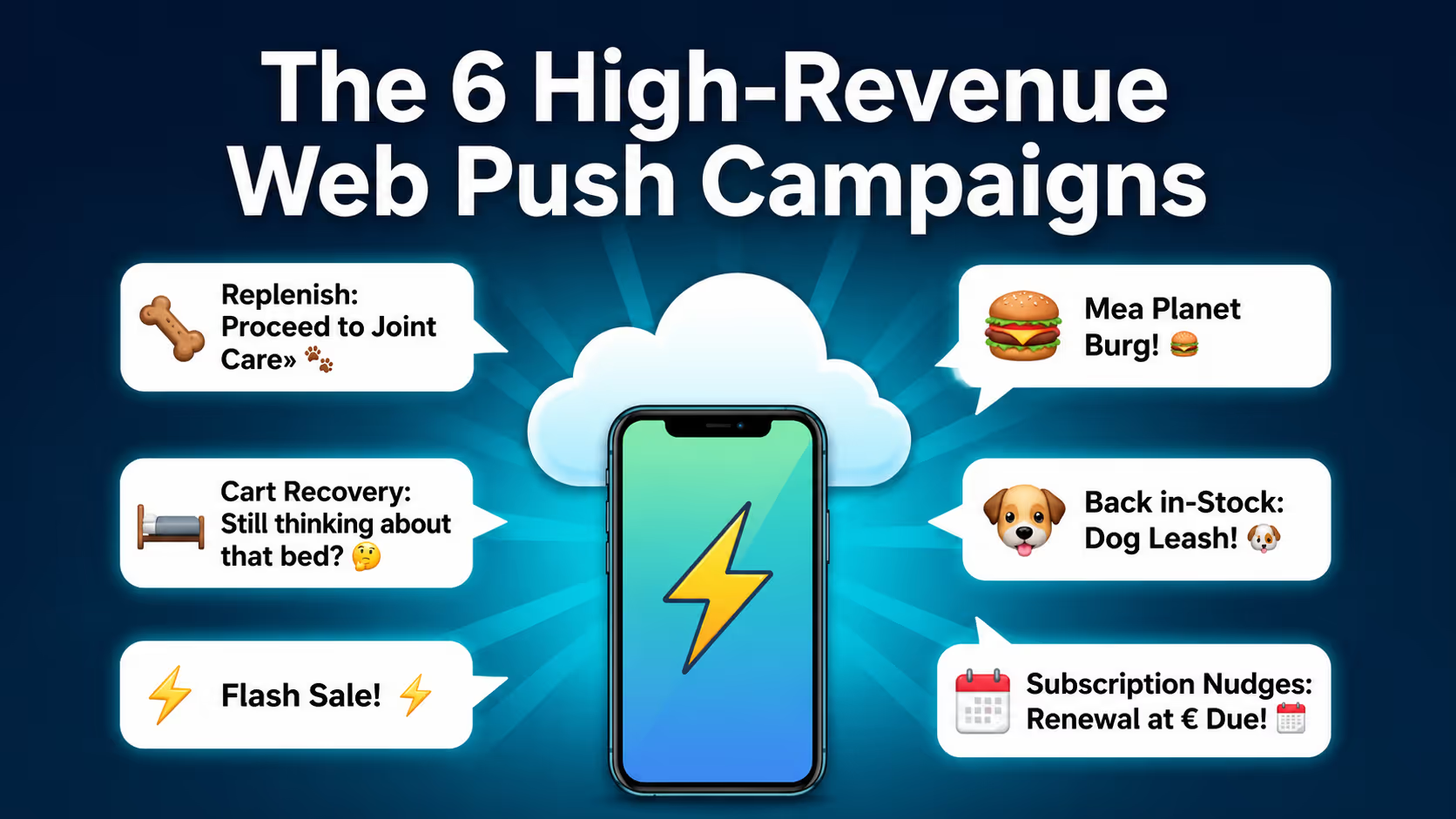
- Replenishment Reminder Push: This push message goes out once the estimated expiration of the purchased product is reached (calculated from product size and your pet's weight). It is short, direct, and personalized towards the animal: "Princess's joint chews will run out soon-reorder one tap away." It comes with a direct link to the product or, for repeat customers, a one-click reorder URL.
- Abandoned Cart Recovery Push: This series of three notifications starts 1 hour after the cart is abandoned, followed by one at 6 hours and another at 24 hours. The initial push highlights the product's name. The next one at 6 hours throws social proof into the mix: "More than 18,000 pet owners trust our formula." At 24 hours, it adds pressure: "There are only 9 left." On average, PushOwl users are able to save 12-18% of the abandoned carts with this sequence.
- Flash Sale or Promotional Launch Push: This is sent exactly when a discount goes live, and Push sends notifications instantly. Email, on the other hand, might take up to 8 hours. In a sale that lasts just 48 hours, a gap of many hours is a significant portion of the sale itself. Pet-friendly brands offering sales on high-demand products see much more significant results from push over email for this campaign type.
- New Product or New Flavor Launch Push: Brands specializing in pet food who frequently switch proteins seasonally or introduce new limited-edition flavors get significant use from the instantaneous nature of push notifications at launch. Limited stock of a new salmon and sweet potato recipe might be gone before the bulk of your customers even see your email newsletter. Push helps capture the pioneering segment, your most loyal customers, at their most receptive moment.
- Back-in-Stock Alert Push: This push comes two hours after your back-in-stock email and includes an urgent message for customers who had signed up for waitlist alerts: "We have got your [Product Name] back in stock-it is flying off the shelves!" The advantage here comes from pairing the informational content of an email with the immediacy of a push, doing much better than either individually for this one specific use.
- Subscription Renewal Nudge Push: Sent five to seven days before a subscription is supposed to be charged, targeting subscribers whose payment details might be out-of-date or just to give them a heads-up. The push message is concise and to-the-point: "Your auto-renewal delivery arrives in five days-update your address or payment details if you need to. " Alone, this push helps decrease churn caused by failed payments and incorrect addresses, which Recharge (2024) identifies as contributing 20-30% of involuntary subscription terminations in the e-commerce industry.
What Does Email vs. Web Push Do Best for Pet Brands?
While neither channel completely handles the lifecycle of a pet brand by itself, each plays a critical role at a distinct point in a relationship with a customer.
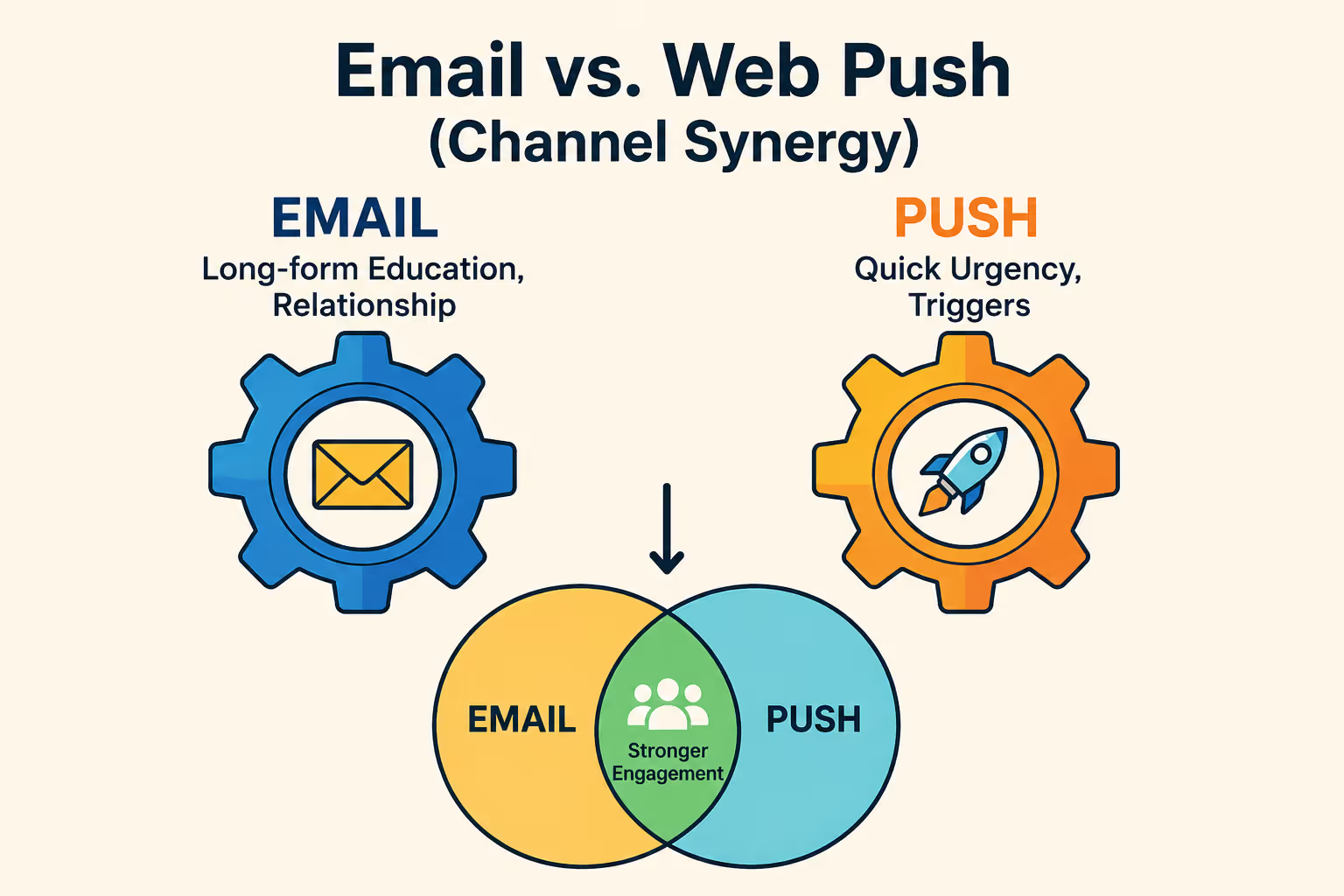
Mixing their roles up-like using push for lengthy information delivery or using email for a quick promotional urgency notice-leads to much less impressive results than what either channel could accomplish on its own.
How Should Shopify Pet Brands Segment Their Email List?
Segmentation in pet brand email marketing is the difference between an email a dog owner opens and forwards to her dog owner friends, versus an email a cat owner does not open, does not forward, but does not unsubscribe to either, just lets it collect in the promotions tab for months. There are no greater natural segmentation signals than the pet category on Shopify. Most of the customers have one pet. That pet is an animal, an animal has an age, an age has a weight, a breed, a health profile. A brand that consistently uses those signals in its emails outperforms the brands that just dump to all users 100% of the time.
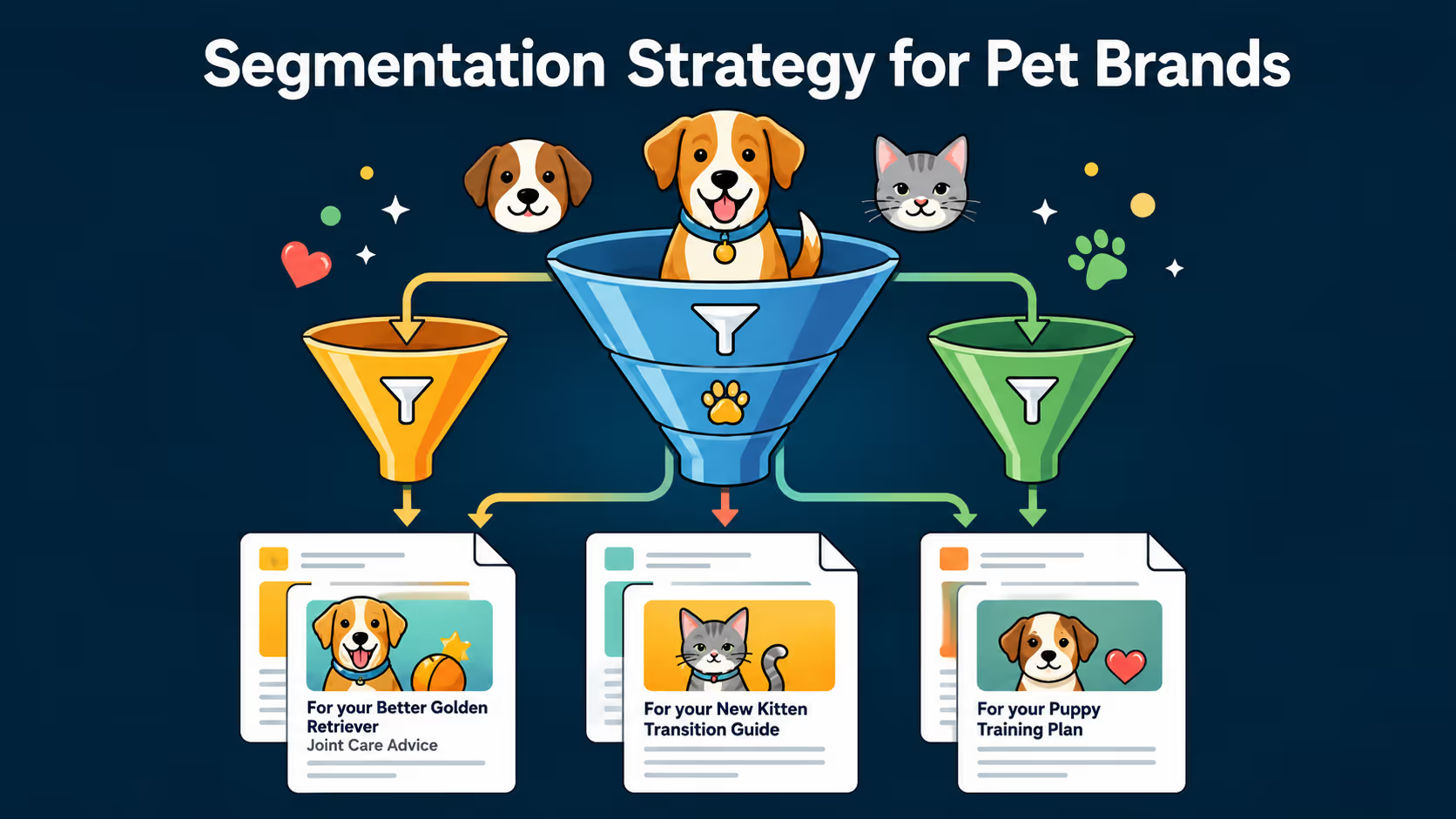
Here are five segments that every Shopify pet brand should maintain:
- By pet type: Dog owners, cat owners, small animal owners, and those lucky enough to own several species will have wildly different interests and product requirements. A cat owner receiving an email on how to properly transition his dog from kibble will generally not unsubscribe, but they will also stop opening emails. Segregating email streams for each of these is the primary segmentation step required.
- By pet age and life stage: As with humans, animals age over time. Puppy or kitten, adult and senior animals have completely different nutritional needs, health concerns, and triggers that cause the owner to make a purchase. For example, a senior Golden Retriever owner will respond well to upsell communications around joint support or cognitive decline products, while a first-time owner looking for a Golden Retriever puppy will need guidance on appropriate food to transition to life stage formulas. Segmenting by life stage is how a pet brand can grow alongside the animal from when they arrive to the day they are too old to go out for walks anymore.
- By product category purchased: Dog or cat food buyers, supplement buyers, and toy/accessory buyers are all in different stages of their relationship with the brand and have varying reorder cadences. Someone who has bought pet food four times will be interested in your best-selling joint supplement or new Dental Health chew product. Someone who bought flea and tick prevention a week ago is far less receptive to a joint supplement upsell at this moment - they want education first.
- By purchase frequency and recency: The one-time buyers, the repeat buyers with two to four purchases, and the fiercely loyal customers who have purchased five or more times all need fundamentally different messaging to stay engaged. Language around loyalty programs and offers specifically aimed at customers who frequent their store should land well with high-frequency purchasers and, without specific filtering, alienate new customers still assessing if the product works. Recency, Frequency, and Monetary segmentation, also known as RFM segmentation, is absolutely the most crucial and impactful framework to employ if a pet brand manages a large list of 10,000-plus subscribers.
- By subscription status: Active subscribers, lapsed subscribers, and customers who were a one-time purchaser only and never went on auto-delivery will require three completely different email flows to avoid the brand damaging the trust relationship with their buyers. Active subscribers do not need to be told when to reorder, as they are on auto-ship. They need an engaged sequence around loyalty benefits, community content, and any new releases. Lapsed subscribers should be entered into win-back sequences to dig into why they canceled. Non-subscribing single purchase owners are generally the most valuable conversion segment to chase for a pet brand trying to maximize recurring revenue growth.
What is the Right Email Frequency for a Shopify Pet Brand?
A general rule of thumb for email frequency in pet brands is anywhere between 2 and 4 emails per month for your general broadcast list, not including behaviour-triggered automated flows. This frequency range produces the highest engagement rates for pets and animal care products without sending rates above the benchmark unsubscribe rate for the category.
Brands sending more than 6 emails per month see a climb in unsubscribe rates in this category, especially among those education-first subscribers who joined for learning purposes and not because they want to be promoted on 5 different days of the month. Brands sending less than 2 per month see strong open rates on emails, which is not bad at all! However, these brands will completely miss out on the opportune replenishment cycles, which represent the absolute most valuable automation opportunity for this particular category of product.
For web push, however, the frequency tolerance is much more lenient. Customers of a pet brand who opted in to PushOwl Web Push respond positively to around 4 to 8 notifications per month. This is due to the nature of push notifications - lower in commitment, requiring a much shorter, quicker scan to comprehend and dismiss than a full email with images, formatting, and a call-to-action. If pet brands are keeping their push notifications specific, on-time, and clearly tied to the customer's pet, then opt-out rates can remain low even with six to eight pushes a month!
The Bottom Line
Shopify pet brands are in a unique and advantageous position about email and push marketing when compared with virtually any other sector available on Shopify. For starters, pet consumption cycles are predictable. Customers are generally invested emotionally in their pet's health and well-being. And the demand for related content, discussing ingredient science, breed-specific advice, what their pet's specific life stage nutrition should be, and general guidance about health problems, is high and consistent over time. Taken together, these three factors create the ideal environment for email and push marketing programs to thrive, constantly improving rather than becoming stale over time.
The e-commerce brands capitalizing the most on these unique benefits - including The Farmer's Dog, Ollie, Chewy, and Zesty Paws are not sending out more email than every other competitor. They are focusing their efforts on sending more relevant, well-timed emails that are customized to their pets' unique consumption patterns, tailored to their animals' specific characteristics, and coordinated across the integrated systems of PushOwl Email and PushOwl Web Push. This ensures that every interaction with the brand delivers precisely what the owner needs at the correct moment, in a relevant format.
The set of 8 email flows and 6 web push campaigns detailed throughout this article effectively cover every stage of a pet owner's relationship with their brand, from the first time they purchase to their lifetime loyalty as a subscription customer. The actual implementation process within PushOwl Email and PushOwl Web Push takes about three to four weeks of dedicated effort. Once launched, however, the subsequent revenue from replenishments, subscription conversion success, and retained customer loyalty will operate on a fully automated basis-enduring for the lifetime of every pet in every customer's household.