
Email personalization starts with “Hey Lucy,” in the greeting line, but that is where many Shopify brands stop. Adding your customer’s name in the subject line and email is the tip of the iceberg for email personalization for Shopify brands.
Product recommendations, timing, offers, and messaging should change based on the customer’s behavior; that’s when you are truly personalizing your marketing campaigns.
But Shopify stores hit a snag when they try to layer in all personalization tactics all at once.
Some Shopify email personalization strategies are foundational, while others can be executed only when you have strong customer data and automation systems.
That is why it helps to think about email personalization in tiers. In this guide, we break down the five tiers of email personalization for Shopify stores and what each stage looks like operationally.
You can use this personalization map to move from basic merge tags to AI-driven personalization without overcomplicating your customer retention strategies.
What Is Email Personalization? (And What It Is Not)
Email personalization is the process of using subscriber data to tailor email content, campaign timings, product recommendations, and other parts of the customer journey.
Email personalization means targeting an individual subscriber based on their purchase history or overall customer behavior, rather than sending the same email to everyone on your email list at the same time.
With email personalization, Shopify stores change the customer experience based on who the customer is, what they have shown interest in, and when, to decide what they are likely to care about next.
Email personalization can fall under the following broad buckets:
- Timing personalization: Targeted send times based on when a subscriber is most likely to open an email or buy a product.
- Content personalization: Tailored email copy, images, and content blocks based on customer interests and demographics.
- Product personalization: Individualized product recommendations based on browsing history, cart activity, and purchase history.
- Offer personalization: Customized discounts, bundles, rewards, and incentives based on buying intent.
- Lifecycle personalization: Messaging based on where someone is in their customer journey (first-time buyer vs repeat customer, discount hunter vs high AOV buyer, etc.).
- Channel personalization: Messaging sent across preferred marketing channels.
E-commerce brands often confuse personalization with email segmentation.
Customer segmentation is the process of deciding who should receive a campaign based on their demographics and buying behavior.
Personalization happens inside the email itself. Two customers can receive the same campaign but see different subject lines and CTAs, varied products, and individualized offers based on their behavior.
In other words, segmentation improves targeting by determining who gets the email.
Personalization improves relevance by deciding what the customer sees in the email and when and where they see it.
Email marketing campaigns that combine both target the right customer at the right time, and on the right channel, in exactly the way the customer wants to be targeted.
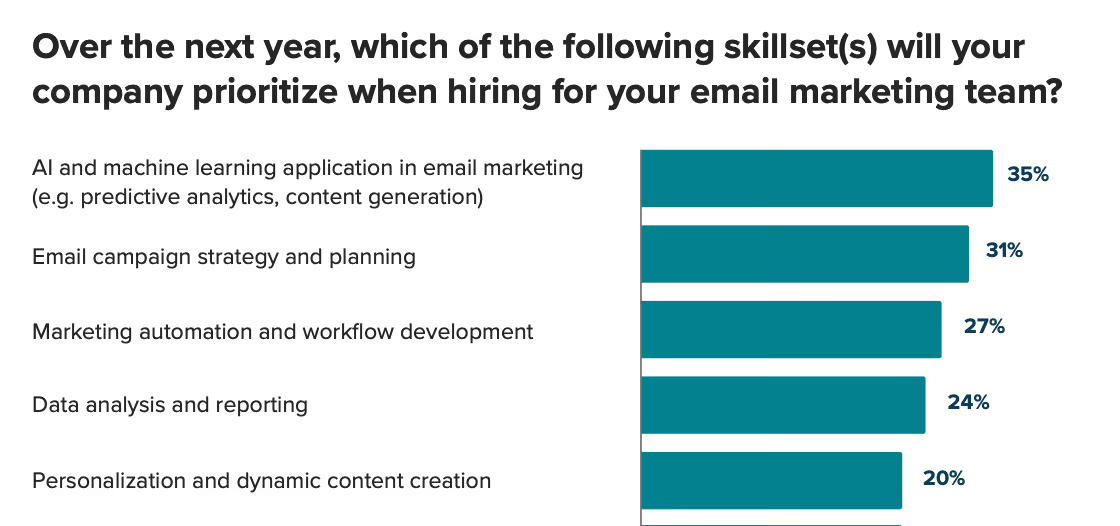
In 2026, email personalization has become integral to running successful campaigns, and it is among the top 5 skills email marketers look for to ensure highly tailored content.
But email personalization is not a one-step process. Here are 5 levels of email personalization you should aim for:
5 Tiers of Email Personalization for Shopify Stores
Shopify stores start with basic customer fields, then gradually move towards behavioral automation and predictive recommendations, and finally top it off with AI-driven optimization to automate manual tasks.
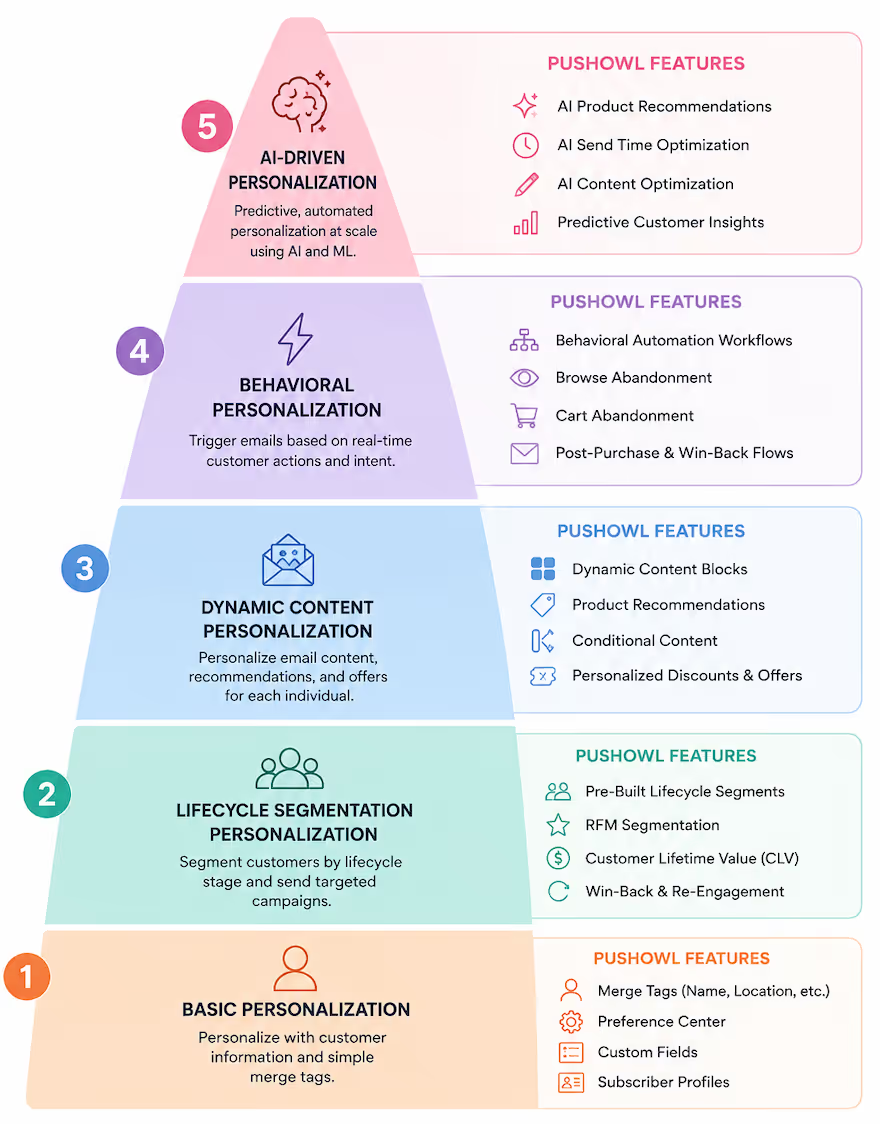
The goal is progression, not jumping straight into advanced tactics.
For example, you cannot jump straight to AI-led personalization (tier 5) if you do not have basic segmentation or a strategy in place. Before you reach that stage, you need to ensure the benchmarks from the previous tier are in place.
Tier 1: Basic Field Personalization
What is it: Tier 1 personalization is where most Shopify email strategies start. At this stage, e-commerce brands use customer fields from Shopify to make emails feel individually addressed rather than mass-sent.
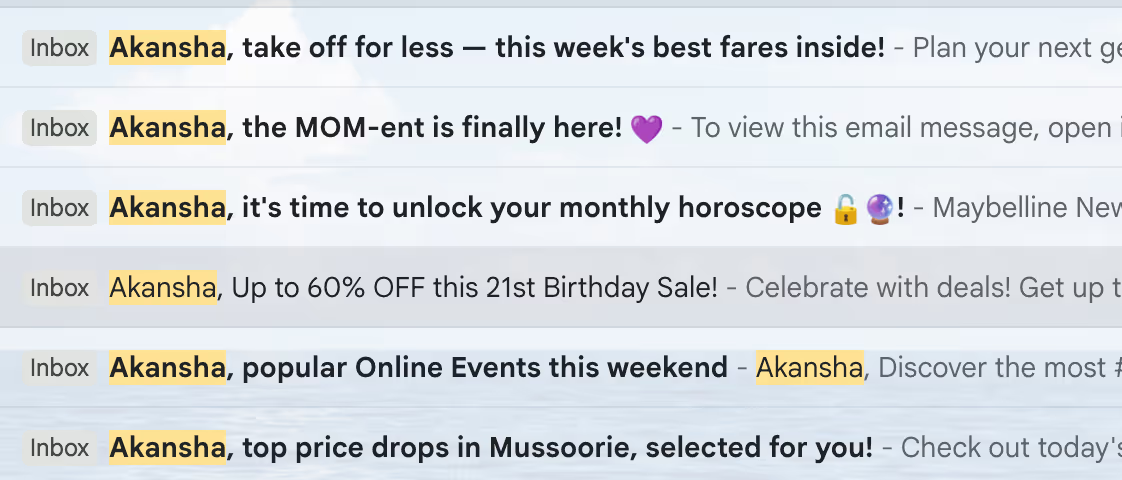
Steps you can take under this tier include:
The personalization is static and field-based, and you can add the following:
- Adding the subscriber’s first name to the subject line
- Mentioning the customer’s name inside the email body
- Referencing order details, locations, or account information
- Dynamically inserting product names into abandoned cart recovery emails or post-purchase emails
The email itself does not change meaningfully between subscribers; only personally identifying variables do.
Revenue impact: Basic field personalization can improve open rates because the email feels slightly more relevant to the recipient, and there is more scope to sound relatable when you pepper these personal details throughout your email.
Adding a first name may help earn the open, but it rarely changes whether they buy based on the email.
Mistakes to avoid in Tier 1:
When to move to Tier 2: Many Shopify brands stop at this stage because merge-tag personalization is easy to implement and immediately visible. When your open rates are healthy, but click-through and conversion rates remain flat, you have likely outgrown Tier 1.
Tier 2: Segment-Based Email Content
What is it: Tier 2 personalization goes beyond basic customer identity to personalize Shopify emails based on customer behavior, including purchase patterns, engagement levels, and lifecycle stages.
Instead of sending the same campaign to an entire subscriber list, you can divide customers into meaningful segments and tailor campaigns to each group.
The messaging changes based on what the customer is likely to care about next, and you can tailor your offers and campaigns based on where they are in the customer journey.
Here is an example by Walkee Paws, which sent this email to those who have shopped high-AOV items (or left them in the cart):
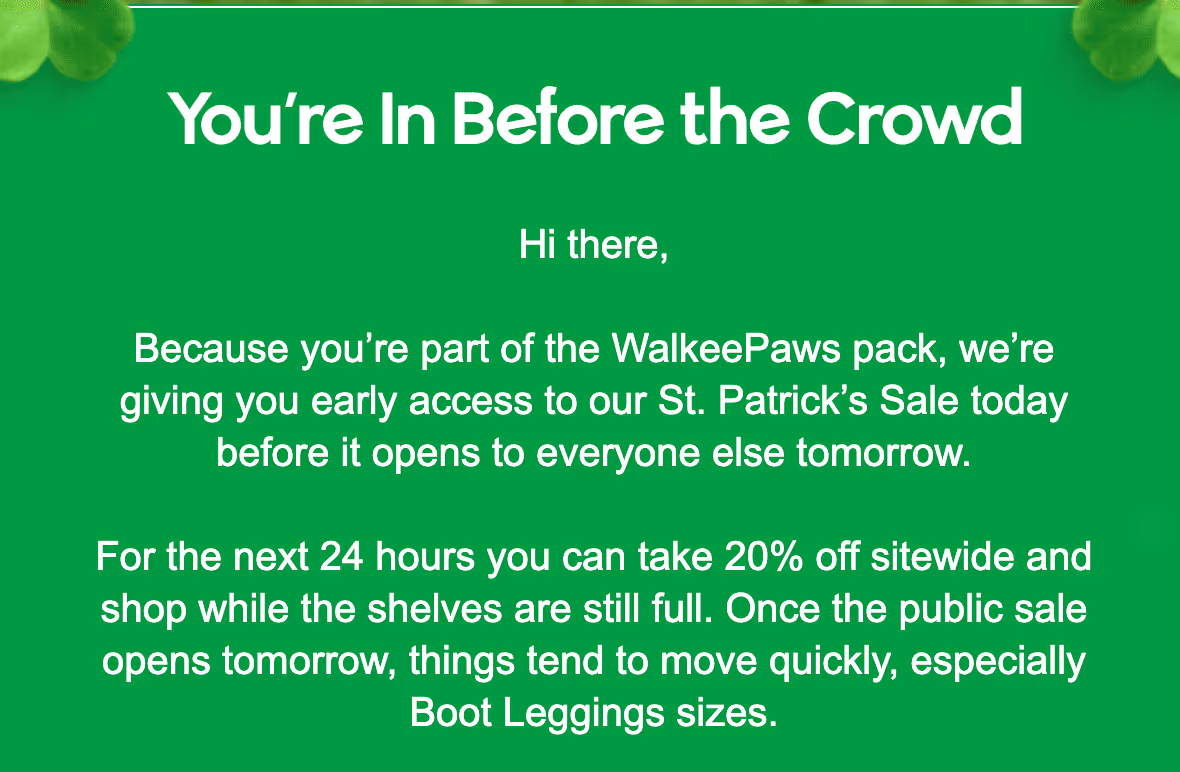
This is where most growth-stage Shopify brands should operate before focusing on advanced personalization.
Steps you can take under this tier include:
Your segments cannot be too broad (which will lead to generic messaging) or too narrow (which will result in too many segments, making scaling difficult). You need to:
- Create separate Shopify email automations for new subscribers, repeat customers, VIPs, and inactive subscribers
- Send loyalty rewards and early-access launches to high-LTV customers
- Build win-back campaigns for customers inactive for 60-90+ days
- Segment campaigns by product category interest or purchase history
- Create location-based campaigns for regional launches or seasonal relevance
- Exclude converted customers from promotional blasts
You can extend your segmentation to post-purchase emails as well. Here is how XYZ used geographic segmentation:
“We added weather-based recommendations based on the shipping zip code that we sent to customers who didn't buy the product that they left in their cart. Sending this weather-based recommendation out was more effective than sending the product back to the customer. This small change resulted in 15% more repeat purchases. Customers do not care about general references, but they will pay attention to you when you make a local reference.”
- Jason William Rogers, Writer at PepThrive
Revenue impact:
Segmented campaigns consistently outperform broadcast emails because the messaging aligns more closely with customer intent and lifecycle stage. Emails based on segmented lists get 54.79% more clicks than non-segmented campaigns or generic email blasts.
stakes to avoid in Tier 2:
When to move to Tier 3: If segmentation improves revenue per email, but campaigns still require manually adjusting email copy based on audience variation, you are ready for Tier 3.
Tier 3: Dynamic Content Blocks (Mid-Stage Personalization)
What is it: Now you have the audience segments and details about each customer.
At this stage, you can personalize the experience further using dynamic content blocks. Different subscriber groups will see different content blocks based on the segmentation you did in the previous step.
Instead of building a separate campaign for each segment, you can create a single adaptable email template that adjusts based on customer behavior.
The core campaign stays the same, but the following adjust dynamically for each subscriber:
- Product blocks
- Banners
- CTAs
Steps you can take under this tier include:
Personalize their content blocks by:
- Showing “New Arrivals” to first-time buyers and “Buy It Again” recommendations to repeat customers
- Displaying VIP loyalty messaging to high-LTV subscribers while showing non-members a progress bar to unlock rewards
- Including different discount structures for bargain hunters
- Personalizing hero banners based on geography and browsing behavior
- Dynamically changing CTAs based on lifecycle stage
- Updating cross-sell recommendations based on recent purchases instead of static bestsellers
You can also customize content blocks based on what the customer has purchased.
When someone buys floral wallpaper, the next email they receive has suggestions similar to that. Patterns that go well together, colors that are in the same family, and themes that work well with what they have already chosen. Revenue per email in those sequences is about 2.3x that of our standard campaigns.
- Reilly Renwick, Chief Marketing Officer at State of the Wall, an e-commerce brand
Your email marketing tool should ensure that it doesn’t recommend products the customer has already bought.
Revenue impact:
Dynamic personalization improves efficiency because e-commerce brands can deliver more relevant experiences without increasing campaign production workload.
It also improves conversion rates because subscribers see content that is more closely aligned with their current intent or customer status.
If you get this tier right, e-commerce metrics like conversion rate, repeat purchase rate, and AOV increase.
Mistakes to avoid in Tier 3:
When to move to Tier 4: If your campaigns are already dynamically personalized but still rely on scheduled sends instead of real-time customer behavior, you are ready for Tier 4.
Tier 4: Behavioral Trigger Personalization
What is it: Tier 4 personalization goes one step beyond the lifecycle stage and focuses on individual customer actions.
The timing, content, and personalized product recommendations are all tied to the intent the subscriber has already demonstrated. Your personalization efforts are effective because the Shopify email campaigns respond to behavior in real time rather than predicting interest in advance.
Steps you can take under this tier include:
You can use behavioral triggers for the following:
- Sending browse abandonment emails featuring the exact product a customer viewed
- Triggering price-drop alerts for wishlisted or recently viewed items
- Sending back-in-stock notifications with urgency indicators for waitlisted products
- Building replenishment reminders based on average reorder timing
- Triggering cross-sell recommendations immediately after a purchase
For example, Mushfiq Sarker, the managing partner of Inventige, a company that acquires Shopify stores, described the impact of layering behavioral triggers into an existing email program:
“Last year, I reviewed a mid-sized outdoor company that sent all their emails as blasts with first name personalization and earned 11% opens and $0.04 per email. We knew it was a problem because of the 500+ e-commerce transactions my team has analyzed: stores with even basic behavioral triggers average $0.11 to $0.18 per email.”
The strategy? Sarker focused on cart abandonment, post-purchase, and browse-based product category triggers.
“In 90 days, their revenue per email increased to $0.13, and their 30-day email-attributed revenue increased by 38%. There were no new subject lines and templates. It was all about the behavioral layer,” he explains.
With replenishment reminders, timing is key, Sarker adds:
“The tactic that most Shopify stores overlook is replenishment cadence. Stores that sell consumables, supplements, skincare, or pet food have the purchase date and the average reorder date in their data. A replenishment email sent 3-5 days ahead of that date triggers repeat purchases without a discount. This flow alone adds 8% to 14% to the total email-attributed revenue with no additional cost in stores we've seen.”
When you personalize each step of the buying process, your customers are more likely to engage.
Revenue impact: Behavioral personalization is not a nice-to-have element.
Customers expect it. 71% of consumers expect companies to deliver personalized interactions, while 76% get frustrated when this expectation is not met. Browse abandonment, replenishment reminders, and price-drop automations are often amongst the highest-ROI workflows and contribute to customer retention.
Behavioral trigger emails tend to convert at significantly higher rates than scheduled campaigns because they arrive in response to customer activity.
Mistakes to avoid in Tier 4:
When to move to Tier 5: If your behavioral automations are performing well but still rely on fixed rules and predefined logic, you are ready for Tier 5.
Tier 5: AI-Driven Advanced Personalization
What is it: At this stage, you have a solid strategy, and you can use AI to dial up the personalization and automate every aspect of the campaign in real time, including the offer, subject line, send time, and more. You can individualize at scale.
Use AI powered personalization in under minutes
Instead of relying entirely on fixed segments and predefined triggers, AI analyzes each subscriber’s behavioral history to personalize the experience in real time.
Steps you can take under this tier include:
Incorporate these steps gradually:
- Using AI-powered send-time optimization for each subscriber
- Showing predictive product recommendations based on browsing and purchase history
- Adjusting discounts dynamically based on churn risk or likelihood to convert
- Prioritizing different product categories based on historical affinity
- Building predictive replenishment flows using reorder behavior patterns
- Using AI-generated subject line variants optimized for engagement behavior
When you incorporate the above steps, your customers receive hyperpersonalized buying experiences.
For example, a subscriber who consistently opens emails late at night and purchases premium skincare products may receive a nighttime email featuring the higher-end products in bundles.
This campaign can be compared to a discount-hunting subscriber who scrolls throughout the day and receives flash-sale notifications for entry-level products.
Revenue impact: 35% of email marketing teams prioritize AI and machine learning for campaigns because the biggest advantage is overall campaign efficiency. AI systems can optimize recommendations and timing without constantly rebuilding workflows manually.
Mistakes to avoid in Tier 5:
Tier 5 works best when the segmentation and automation from earlier tiers are already performing consistently.
Email Personalization by Campaign Type: Quick Checklist
Most Shopify stores start at Tier 1 with simple merge tags like first names or product names.
Growth-stage brands move into Tier 2 and Tier 3 by segmenting audiences and using dynamic content blocks.
Shopify brands focusing on advanced retention operate at Tier 4 or Tier 5, where emails adapt automatically based on real-time behavioral segmentation and AI-driven predictive models.
As your customer data becomes more relevant and segmented, you can access higher tiers.
How PushOwl Enables All 5 Tiers of Email Personalization
Shopify stores working with PushOwl have access to all five tiers of email personalization.
They do not need to constantly sync data between a CDP, segmentation tool, recommendation engine, and email platform. The same customer data serves as the foundation for targeting and personalization and, at the final stage, AI optimization.
Tier 1: Plug-and-Play Basic Customer Personalization
Brands can personalize customer fields using Liquid merge tags inside the email editor.
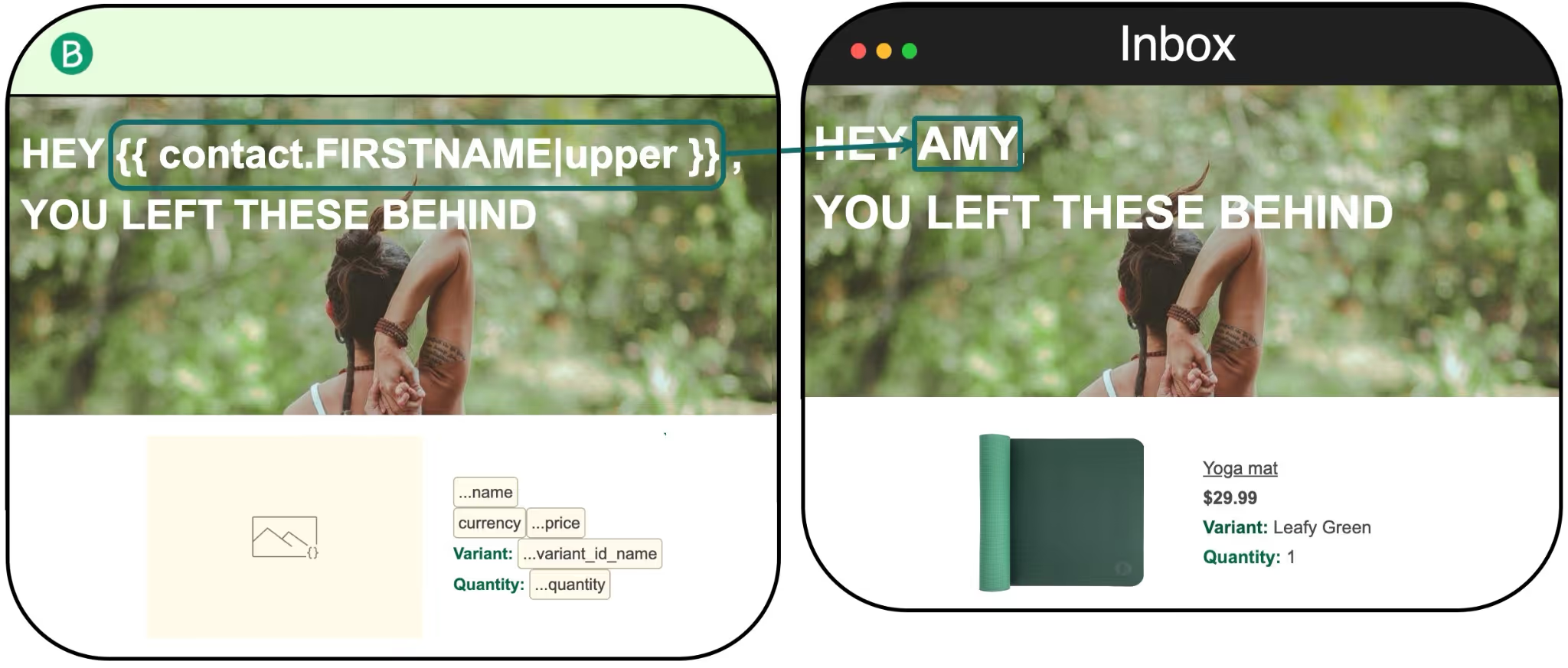
You can customize names, products, locations, order details, CTA buttons, and more based on what the customer has been browsing or what they left in the cart.
In terms of customer attributes, you can include:
- First name personalization
- Last name personalization
- Customer contact details (email, phone number, etc.)
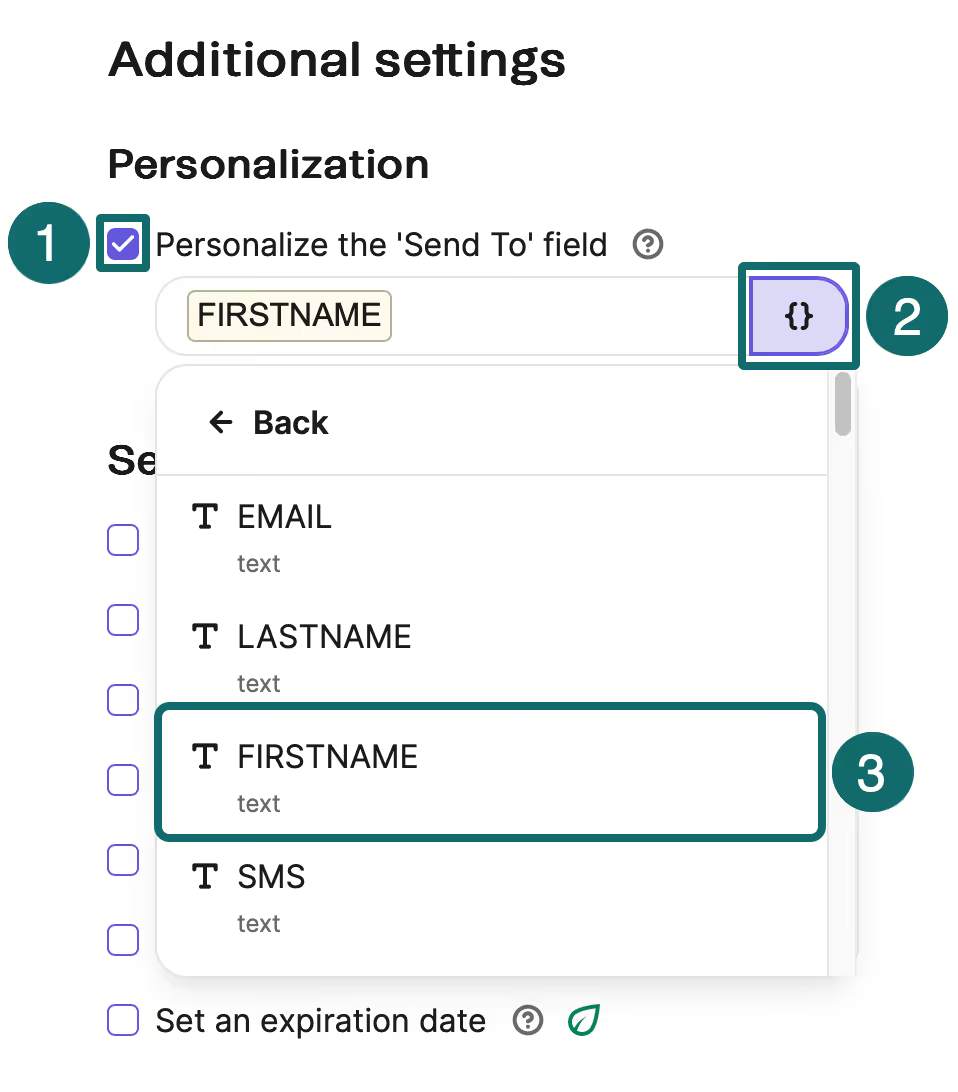
You can use these customer attributes in the email subject line, preview text, and email body.
Tier 2: Automated Lifecycle Segments
The PushOwl CDP, when connected to your Shopify account, can access your Shopify customer data and update segments based on behavioral and purchase data.
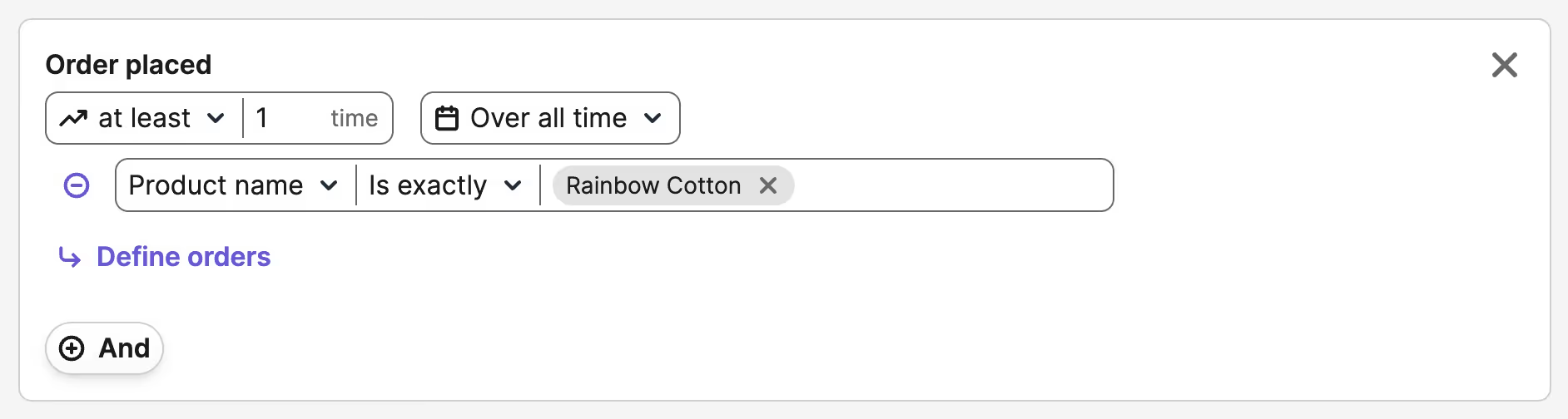
That means merchants can target the following:
Instead of manually rebuilding lists every week, customer movement between segments happens dynamically as behavior changes.
Tier 3: Easy-To-Insert Conditional Dynamic Content Blocks
PushOwl’s email editor supports conditional content blocks that update based on customer attributes and segments. That means a single campaign can show VIP banners to high-LTV customers and display different offers to inactive subscribers.
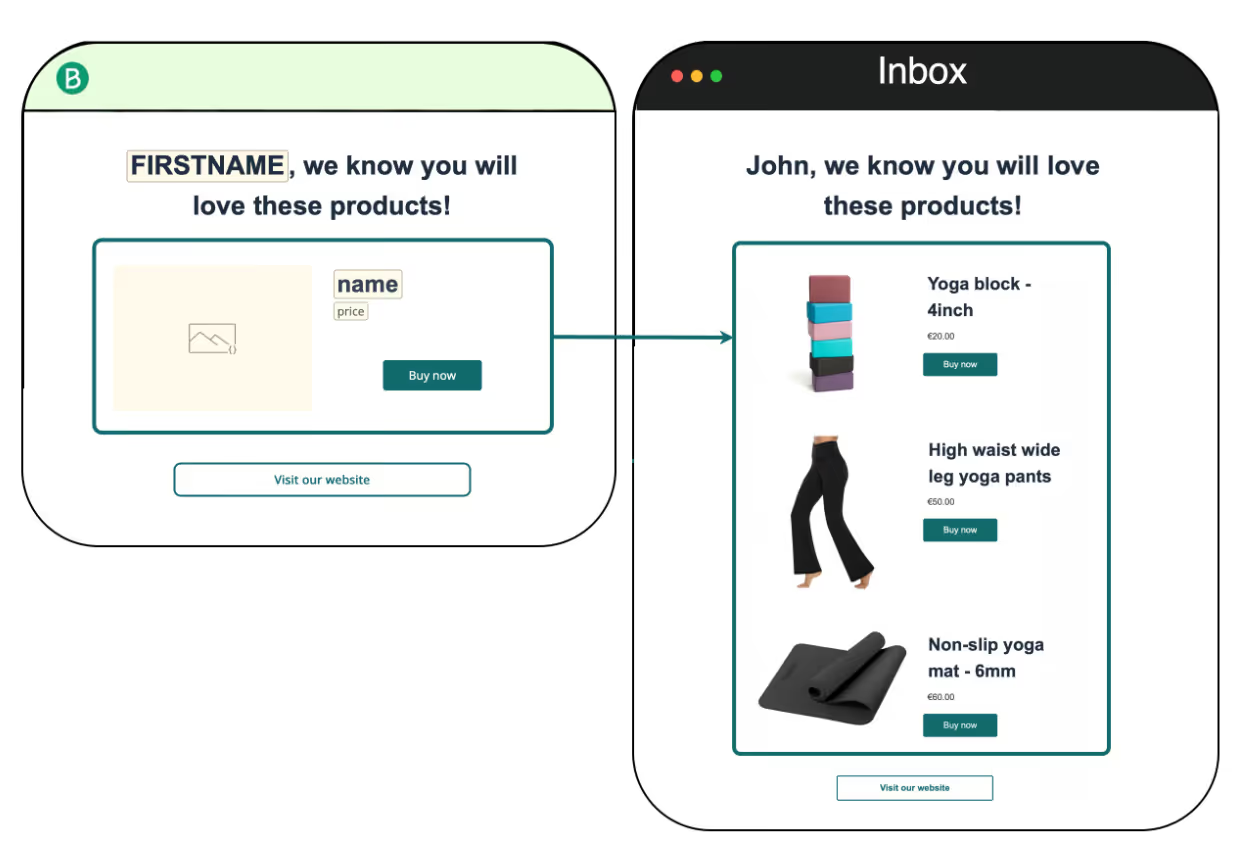
You can personalize CTAs based on lifecycle stage and update product recommendation blocks based on purchase history.
Tier 4: Pre-Built Behavioral Automation Triggers
PushOwl includes ready-made behavioral automations. You just have to add the filters, and they are ready to go.
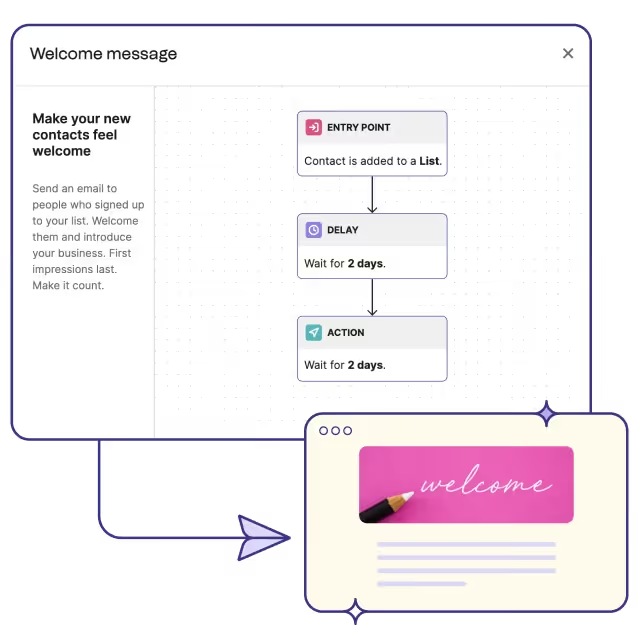
They are tied directly to customer actions, such as:
- Browse abandonment
- Price-drop alerts
- Back-in-stock notifications
- Replenishment reminders
The email content automatically adapts to the behavior that triggered the workflow.
Tier 5: AI Email Marketing
PushOwl also supports more advanced personalization through:
- AI-powered segmentation
- Smart delivery timing
- AI product recommendation blocks
These tools help Shopify stores personalize campaigns at the subscriber level instead of relying entirely on fixed rules.
With PushOwl’s AI functionalities, your email campaigns automatically tailor send timing for individual subscribers and identify high-intent subscribers based on behavioral signals.
You can prioritize different offers for different customer types and recommend products based on purchase patterns.
Common Email Personalization Mistakes Shopify Merchants Make
Other than the tier-specific mistakes outlined earlier, here are some general email personalization mistakes Shopify stores need to avoid:
Mistake 1: Calling First-Name Insertion a Personalization Tactic
You know what’s worse than an email that doesn’t contain a customer’s name in the subject line? An email that contains the customer’s first name but no useful content. As Rogers elaborates:
“Using someone's name with no reason behind it does not give merchants a sale. Merchants who continue to send these types of subject lines to their non-engaged subscriber base hurt their metrics, and because of this, their metrics have more complaints because they do not have meaningful content to say.”
Your personalization needs to go beyond this, because you are competing with every other brand in your subscribers’ inboxes for the same attention.
A generic email with useful content will usually outperform a “personalized” email that says nothing meaningful. Actual personalization goes way beyond the “Dear [Customer Name]” greeting.
Mistake 2: Segmenting Too Narrowly or Too Early
If your email list has 100 subscribers, do not aim for 20 audience segments. Your segments need to be specific, but not so narrow that they are difficult to maintain.
Tiny segments create noisy behavior signals and inconsistent automation performance.
Start with 3-5 meaningful lifecycle segments, and then gradually segment further as your list increases and your customer data expands.
The other aspect of this is that when you segment too early, when customer data is limited, your segments are generic.
Mistake 3: Using Stale Data for Dynamic Content
Showing customers products they have already purchased, recommending out-of-stock products, sending ill-timed replenishment reminders, or sending back-in-stock notifications for product categories the customer does not buy for…
…all of these are signs of poorly synced or outdated customer data.
A product block that shows irrelevant or wrong products is worse than no recommendation block.
Stale data causes poor personalization and signals to the customer that you do not understand them.
Mistake 4: Not Personalizing Email Timing
Timing is part of personalization, too. A highly relevant email sent when the subscriber is working or asleep will underperform because it will get lost among the sea of emails they will see when they actually check their inbox.
Pair the effort you put into the ideal subject line or relevant email copy with tailored timing.
Use our smart delivery tool to reach your customers at the right time
Timing also means not just when you send it, but also how frequently customers hear from your brand. Some customers engage with a brand’s emails each time they receive one, and others prefer to hear from their brands only a few times a month.
Your send-time behavior should adapt to engagement patterns.
Mistake 5: No Testing/No Control Group
Most Shopify brands personalize every campaign but never measure whether the personalization is actually improving performance.
Without testing, it becomes difficult to separate genuine personalization gains from:
- Seasonal demand
- Discounts
- Product launches
- General retention improvements
The easiest way to measure impact is by maintaining a small control group that receives a less personalized version of the campaign.
One group receives dynamic product recommendations while another sees static bestsellers.
Then one segment receives AI-optimized send timing, while another receives the standard campaign send timing.
This helps merchants see whether personalization is improving:
- Click-through rate
- Conversion rate
- Revenue per recipient
- Repeat purchases
- Long-term engagement
Without a control group, many brands end up attributing performance improvements to personalization when the actual driver was timing, discounting, or seasonality.
Make Personalization Easy With PushOwl to Land More Sales
When you stop treating email personalization like a subject-line tactic, you might end up jumping to advanced tactics before the fundamentals are working. So remember to take it one tier at a time.
AI recommendations will not fix weak segmentation.
Dynamic content will not matter if your lifecycle flows are generic.
And behavioral triggers will underperform if your customer data is messy or disconnected.
That is why the strongest retention programs usually evolve in layers. The goal is not to reach Tier 5 as quickly as possible.
Instead, focus on making each email contextually relevant to the last one. For more Shopify stores, that alone creates a significant competitive advantage because most inboxes are still full of campaigns that feel mass-sent.
PushOwl helps merchants manage every stage of that progression through lifecycle segmentation, behavioral automation, and AI-powered personalization, all powered by the same customer data profile.