Brands you are competing with are constantly giving you clues about what’s working for them.
And what’s not.
All you need to do is follow the crumbs scattered across their marketing materials to decipher parts of their email strategy. One way to do this is to study your competitor’s emails and see what they did right, what they did wrong, and what was just okay.
That is why we created this email marketing competitor analysis guide to help you study your Shopify rivals.
Follow these 7 steps to unpack their emails and download our free template for competitor analysis.
Is Email Marketing Competitor Analysis Important?
Only if you know what you are looking for.
Competitor email analysis does not mean going through email after email to “see what’s trending"; you will end up with a swipe file that will not see the light of day. It becomes worth it only when you have a particular goal in mind, such as:
- Increasing average order value (AOV)
- Improving flow depth
- Fixing revenue volatility
But beyond these macro goals, here are some micro-goals you can accomplish with competitor email analysis:
Benchmarking Your E-Commerce Strategy Against the Market
When you create a marketing strategy, you need to make some tactical decisions, like:
- How many emails should a welcome automation contain?
- Does abandoned cart recovery include SMS and push notifications?
- After how many emails should you send discounts?
- Is this subject line causing my marketing emails to go to spam?
If you are sending one welcome email while competitors are sending four, it may be time to pivot. But you will not find out unless you do competitor analysis.
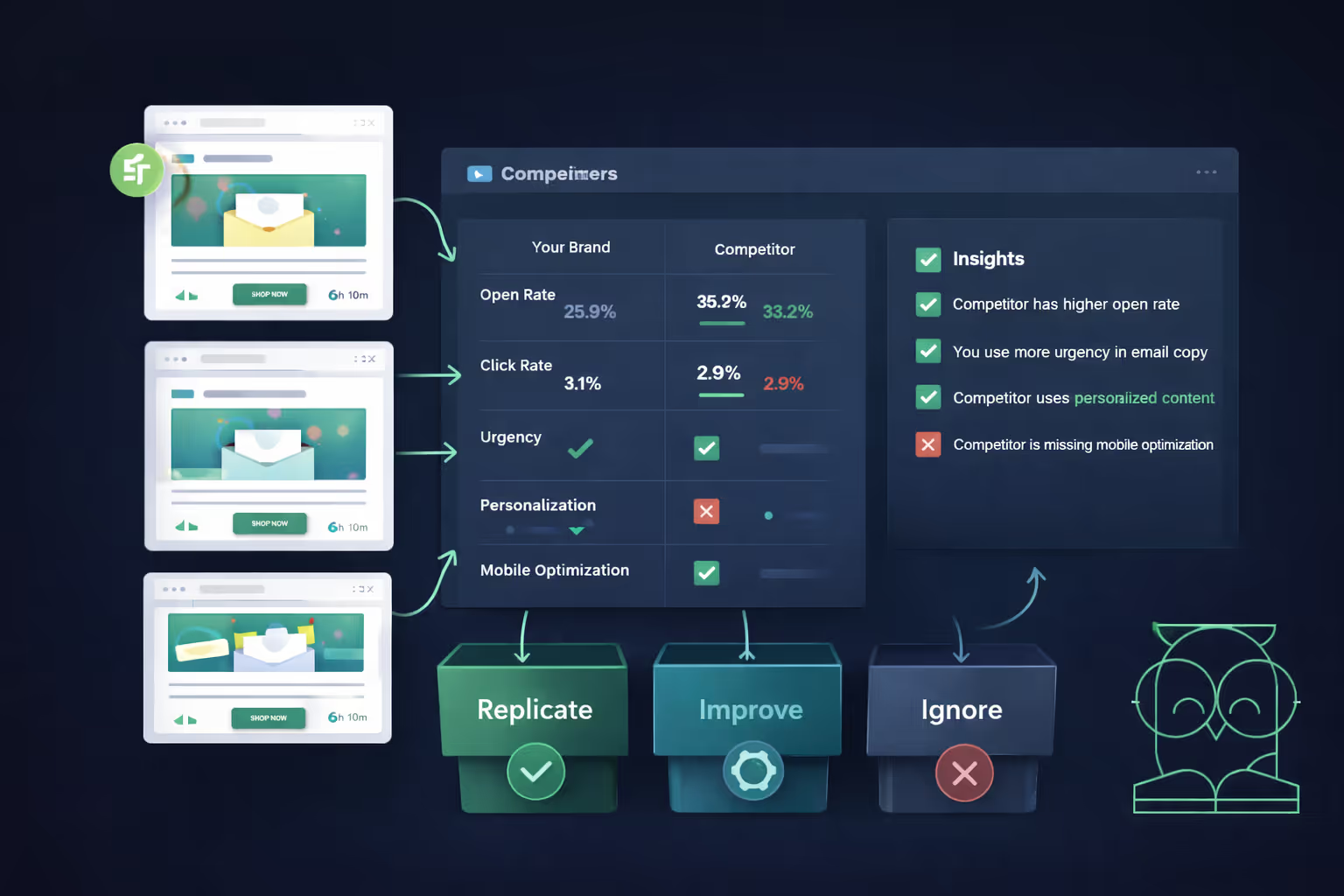
Benchmarking gives context about your competitors’ approach related to:
- Lifecycle depth
- Promotional intensity
- Discount dependence
- Content-to-revenue ratio
Without benchmarking your e-commerce efforts against the market, a Shopify brand will consistently fall behind.
Finding Ideas You Wouldn’t Test on Your Own
When you look at the emails of other Shopify brands working in your industry, you may notice they are doing some things that you want to try out but cannot test due to budget constraints or stakeholder approval.
Half of the ideas that could drive revenue often die in Slack threads. Reasons?
“Too risky.”
“Too long.”
“Too salesy.”
“Not on brand.”
Then you see a competing Shopify brand executing these ideas. And suddenly, you have a reference point and case study. You are seeing the ideas being tested, and that is sometimes sufficient to discard the idea or get stakeholder approval.
Seeing those ideas in action can help you gather more support for them or flesh them out further.
Spotting Gaps Your Competitors Missed
When you analyze competitor campaigns at a micro-level, you may discover that they commit some fundamental mistakes:
Noticing these gaps in competitor emails will help you tweak your strategy.
Steal our email marketing competitive analysis template
With these goals in mind, here is exactly how to analyze competitors’ email campaigns:
Step 1: Sign Up for Competitor Lists Like a Customer
Signing up does not stop at subscribing to a random competitor.
You need to behave like an actual email subscriber and customer to analyze competitor campaigns.
The goal is to trigger the systems they have built as part of their email strategy:
Choose 10–15 Direct and Adjacent Brands
Start with:
- 3-5 direct competitors (same product, similar price point)
- 3-4 premium or aspirational brands in your niche
- 3-4 adjacent brands with strong lifecycle reputations
- 1-2 brands with a vibe and tonality in their emails that you would want to emulate, even if they are not competitors
With these 10-15 brands on your list, you have full coverage of what other e-commerce brands are doing right (and wrong). This will help with email marketing strategy analysis.
Trigger Real Behaviors To Unlock Every Automation
Once you have chosen competitor brands to track, create separate email IDs to sign up for each brand’s newsletters, marketing emails, and more.
Subscribing just to the brand newsletter will help you see only top-of-funnel emails. The more entry points you subscribe to, the more campaigns you unlock.
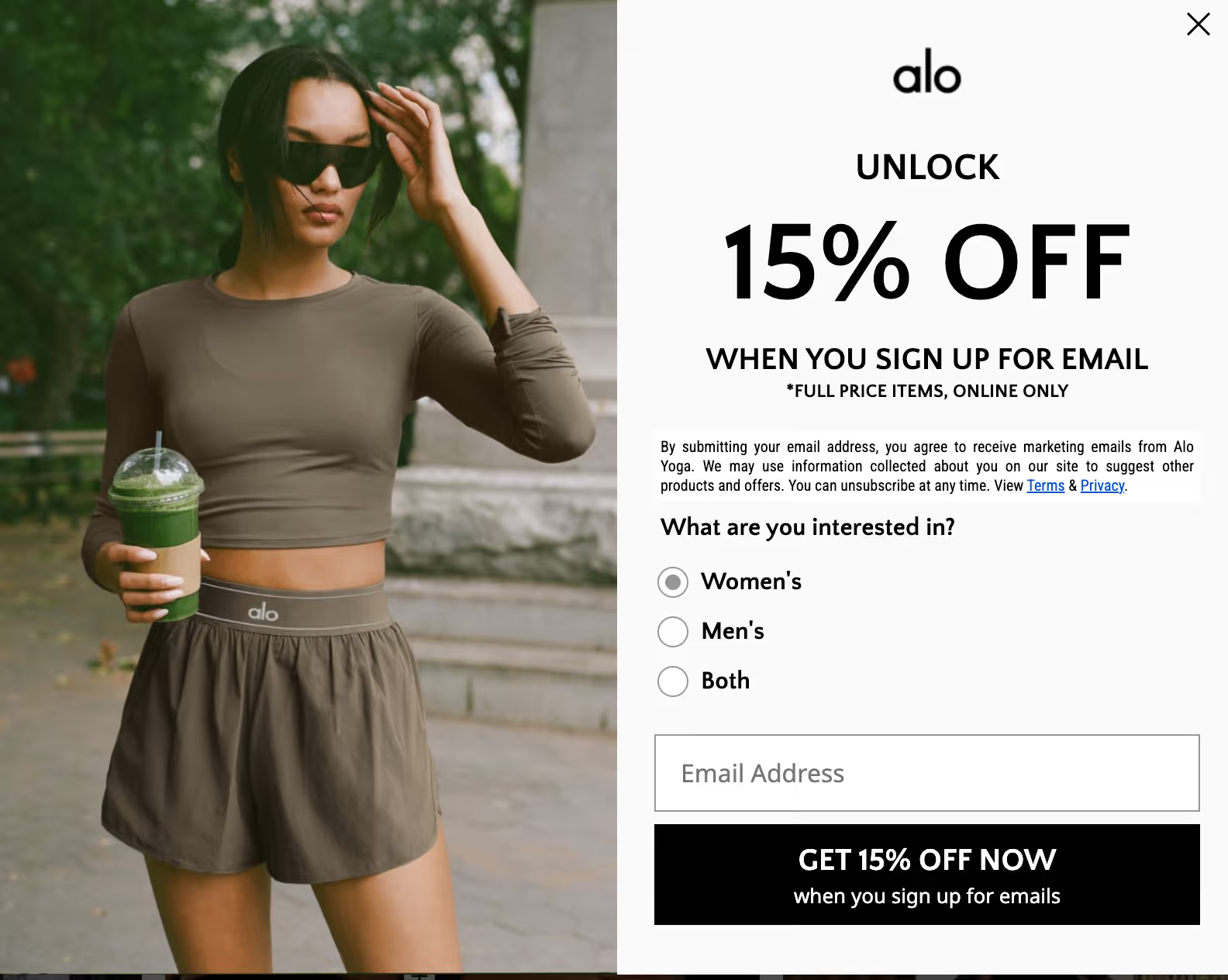
For example, when you scroll on Alo Yoga’s website, you will get this pop-up box to sign up for a discount:
And then at the bottom of the page, you can sign up for their newsletter:
Karina Tymchenko, the founder of Brandualist, a renowned Canada-based digital marketing agency, recommends the following checklist of behaviors to generate after sign-up:
“I always browse key categories, abandon the shopping cart, and make at least one low-cost purchase. Doing so allows me to get welcome emails, cart recovery emails, post-purchase emails, and win-back emails, thus giving a full view of the competitor’s retention potential.”
In addition to the above, you can click on various sales banners, take a quiz (if the brand has one), or opt for a lead magnet.
Does the brand offer a loyalty program? Sign up.
Is the price range quite significant? Abandon a high AOV cart but also a low AOV one.
Triggering behavior across different customer segments helps you unlock campaigns for those segments.
Himanshu Agarwal, a Shopify-oriented marketer with over a decade of experience with competitor email research, also recommends one more behavior:
“We intentionally trigger unsubscribe attempts and select different unsubscription reasons. It helps us understand what competitors assume their biggest churn drivers are and also triggers last-ditch automations to retain the subscriber.”
But what happens when all the competitor emails start coming in?
Step 2: Categorize (and Analyze) the Emails They Send
It is time to identify some patterns and map commercial intent. Every e-commerce email fits into a larger revenue structure and email marketing campaign.
You will be able to see how the brand balances acquisition, trust-building, conversion, and retention.
Start grouping the emails you receive into three broad buckets:
Category 1: Promotional Campaigns
Pool all the revenue-first emails you receive under this category:
- Product launches
- Flash sales
- Limited-time discounts
- Seasonal drops
- Bundle pushes
Pinpoint basic parameters like the following as part of your email marketing strategy analysis:
- Frequency
- Discount depth
- Urgency language
- CTA clarity
- Offer repetition
Some brands run aggressive weekly promotions, while others protect margins and sell only during key moments.
“Competitor monthly promotion emails are a great way to find out which products and brands your competitors are focusing on when they run promos.” - Lou Haverty, the owner of Skid Retailer, an e-commerce brand
Tracing the volume and intensity of these emails (we will get to this step later) tells you how dependent they are on discount-led conversions.
Category 2: Relationship-Building and Educational Content Emails
Content-heavy emails focus on trust and education. Email categories to include here:
- Founder letters
- Educational guides
- How-to content
- UGC highlights
- Brand values
These emails have softer CTAs. They won’t sell directly (or at all), but they keep the conversation going by providing more context about their brand or the product you bought.
Category 3: Transactional and Automated Flows
Your competitors’ e-commerce automations are where the gold lies.
Why?
These are the emails that run in the background across various stages of the buyer’s journey and do a lot of the heavy lifting.
Do not stop at looking only at the automations your brand runs. Look at the ones you do not include in your email marketing automations.
“The post-purchase flow provides the most insight. I evaluate how well a brand extends its relationship with customers after the sale. For example, do they provide education, cross-sell intentionally, or simply continue discounting to retain the customer?” - Karina Tymchenko, founder of Brandualist
When you look at the automated emails, consider the following elements:
- How many emails exist per automation?
- Timing gaps?
- Do discounts escalate?
- Whether messaging shifts based on behavior?
Time to Analyze
By the end of this step, you should be able to answer specific questions like:
- Does the competitor brand offer an instant discount?
- Do they delay the offer?
- Do full-price buyers get fewer promos later?
- Does cart value change urgency?
…and so much more. And then you can map these questions across the intents, examples, and goals.
When you dissect emails, you will find systems that make and break marketing strategies.
Step 3: Analyze Subject Lines Competitors Use
Another aspect of emails you need to consider is the subject line.
It’s the first thing customers see in their inbox, so it has to be persuasive enough for them to click.
Even though a subject line consists of just a few characters, a lot is going on: price, urgency, curiosity, value, and more.
Steal our subject line scoring matrix + competitive analysis template
When you analyze enough of these together, patterns emerge.
Identify Dominant Angles
Look across the email buckets and categorize according to intent:
Most brands switch across these angles. When you see one angle being repeated more than the others, it’s probably because that is the angle that converts.
Once you do this exercise, you can also gauge the extent of personalization injected into subject lines.
For example, which competitor only uses the customer name, and which one mentions the exact item the customer has been browsing rather than just “Check out your cart”?
While you won’t be able to access e-commerce metrics like open rates for your competitors, you can gain contextual clues about how competitor brands use their behavioral data (if at all) in their subject lines.
Evaluate Subject Line Variations Across a Single Campaign
If you study subject lines across a single automation or campaign, you will notice that there is a progressive sequence based on buying psychology.
For example, this is what an abandoned cart recovery automation can look like:
Reminder → Social proof → Incentive → Urgency
Study enough subject lines from a brand, and you will be able to create similar sequences.
Step 4: Email Send Cadence Benchmarking and Urgency
Once you understand what competitors are saying, the next layer of email strategy analysis is to understand how often they say it.
“I look at how often offers are sent to see if the brand is aggressively pushing sales and where the revenue pressure is.” - Karina Tymchenko, the founder of Brandualist
Some brands preserve attention carefully, sending emails only during key moments, while others push aggressively, prioritizing short-term revenue spikes even at the risk of their emails being marked as spam.
Send Frequency and Cadence Patterns
Start by tracking how often emails arrive and whether they follow predictable rhythms. You will typically notice differences such as:
- Batch campaign sends vs behavior-based automation triggers
- Heavy weekend promotions vs weekday sends
- Consistent weekly cadence vs irregular bursts
- Increased frequency during launches or seasonal events
Understanding how often your competitors send campaigns (and therefore how much space they take up in the inbox) will help you determine whether they are burning subscriber attention or leaving revenue opportunities untapped.
Offer Strategy and Urgency Tactics
Urgency cues show up in both cadence and marketing copy. You can track how often competitors apply pressure and in what form.
One example is countdowns, as you can see in this email from Cocokind, a skincare brand:
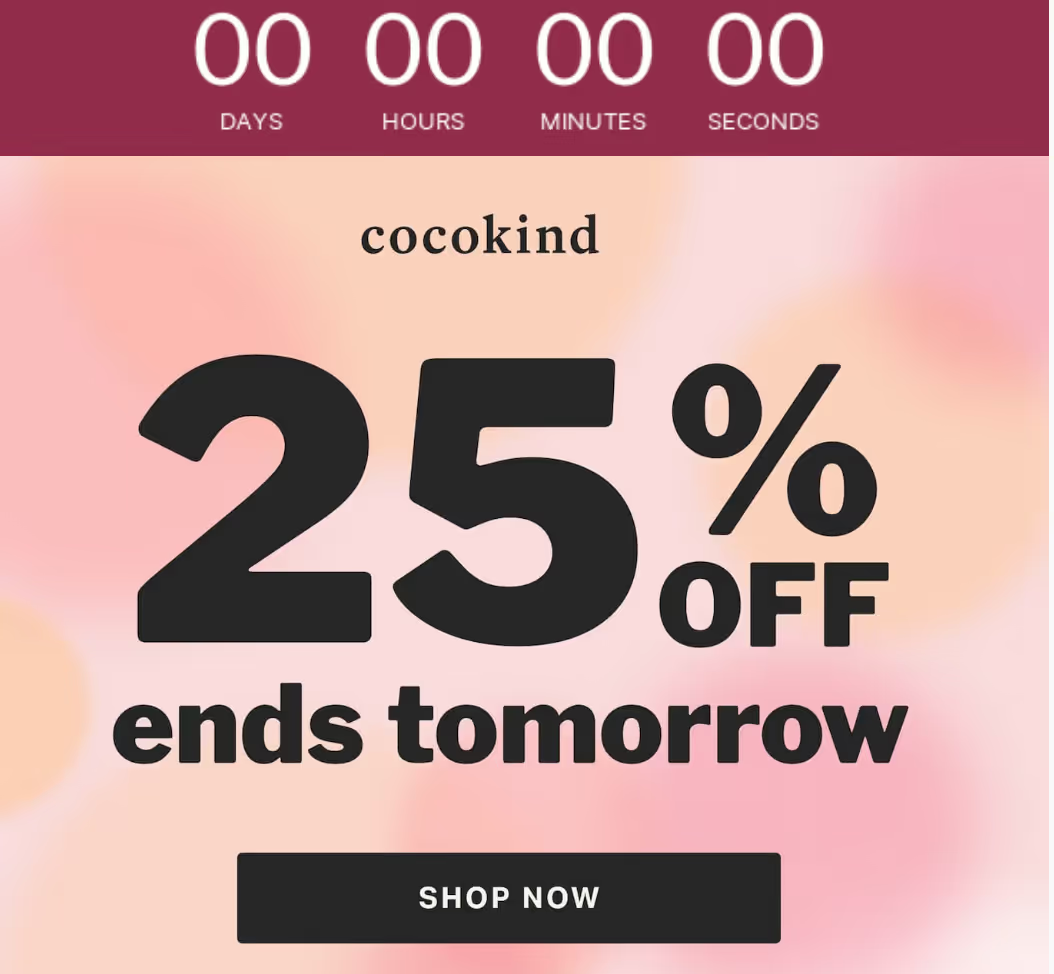
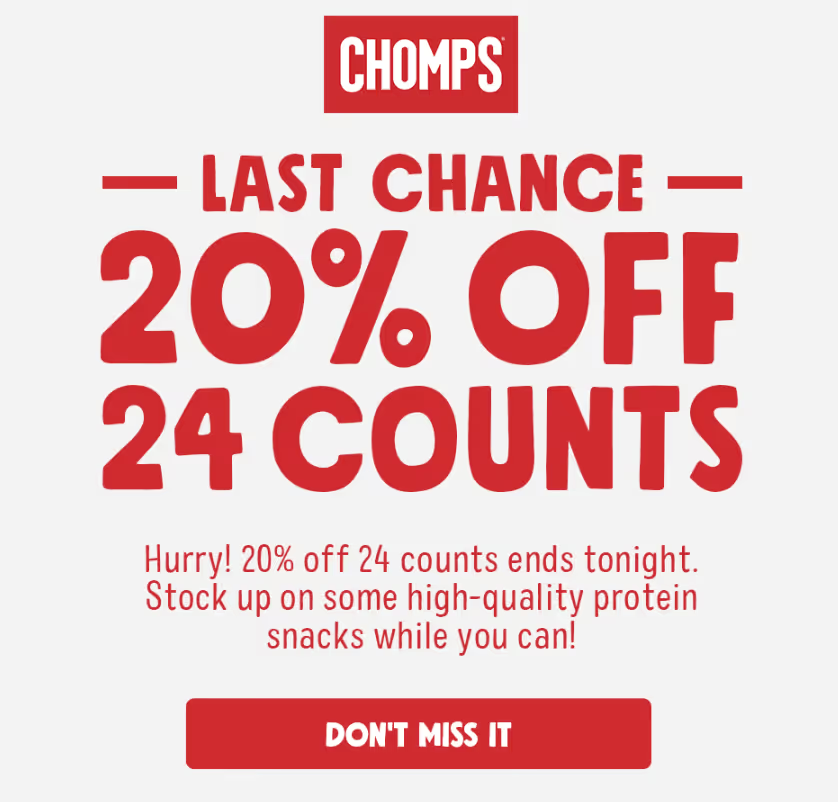
The ticking countdown adds visual urgency and can be considered “high” on the intensity scale. You can also introduce a deadline without the countdown, like Chomps, a healthy snack brand:
Another way to induce urgency is to add a final reminder. Here is an example by Road iD, a brand that sells specialized ID tags that help hikers and cyclists with easy medical assistance:
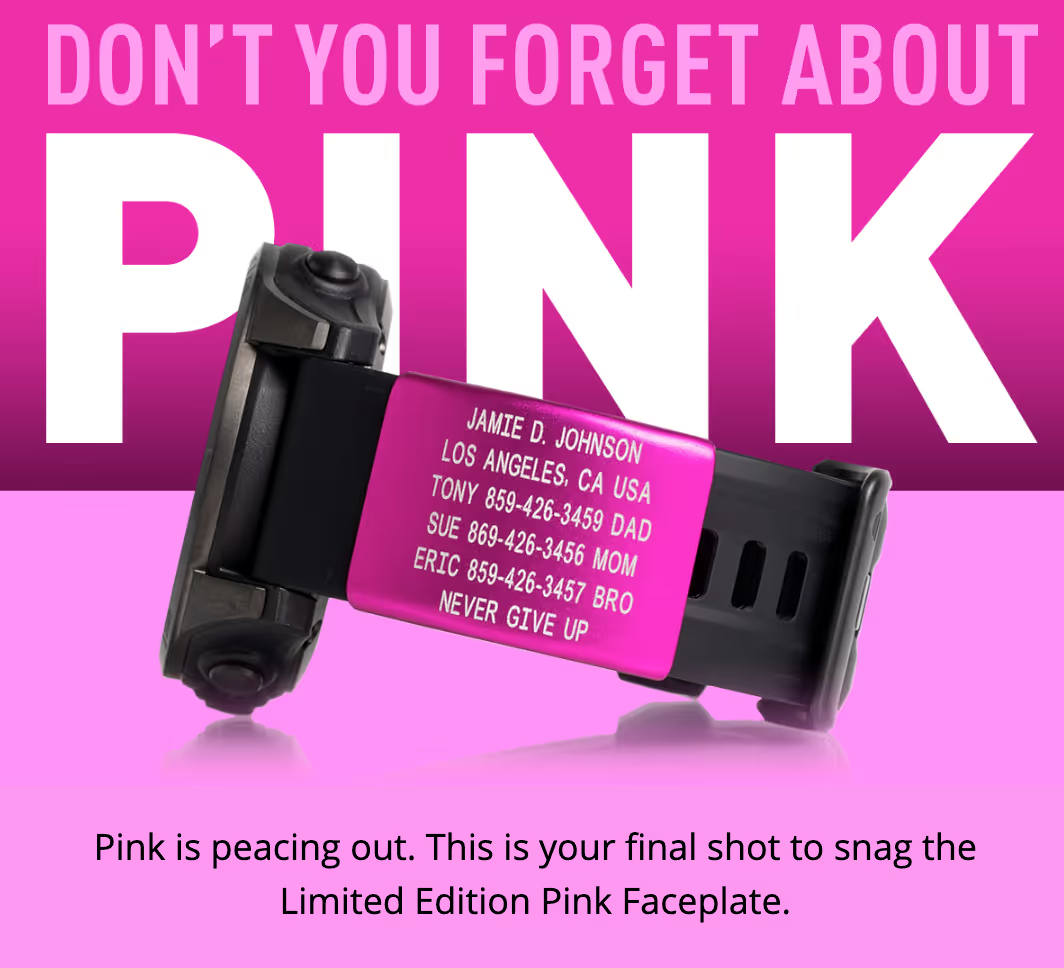
The urgency is medium level in this case, as there is no fixed deadline.
Time-bound urgency is not the only strategy. Some brands quantify how limited their stock is to push customers to buy quickly.
Hiut Denim Co. ramps it up by also adding, “When they’re gone, that’s it.”

Mapping urgency frequency helps you understand where competitors sit on the spectrum. Manual tracking works, but tools can speed up pattern recognition.
We suggest using platforms like MailCharts and EmailAnalytics to monitor competitors' send frequency and other parameters.
Step 5: Reverse-Engineer The Competitor’s E-Commerce Automations
Now that you have all this marketing intel, it is time to deconstruct beyond simple patterns.
When you map competitor flows, you start seeing patterns, but you need more than that. You need systems to reproduce these patterns. Here’s how you can do that:
Welcome and Onboarding Sequences
Start by reconstructing the welcome automation. Look at factors such as:
- Total number of emails
- Time gaps between each send
- When the incentive appears
- How messaging evolves across the sequence
Identify whether the sequence shifts after purchase. If messaging in the welcome automation changes the moment you buy, there is a behavioral split in the automation.
Cart Recovery and Post-Purchase Flows
Abandoned cart recovery automations are easier to reverse-engineer. You need to focus on two elements: timing and cart value.
For timing, abandon the cart at different times of the day. For cart value, experiment across low and high AOVs.
If you receive reminders every hour, it means the trigger is set to a fixed delay. If timing varies, they may be using behavior-based optimization or batching.
Dissect ACR automations with our competitor analysis Shopify template
With post-purchase flows, also consider when follow-ups arrive after order confirmation. If a cross-sell appears after shipping confirmation, the trigger is likely fulfillment-based rather than purchase-based.
Winback and Retention Campaigns
Track inactivity windows with timing-related behavior. You need to look at three key questions:
- When emails stop after purchase
- When emails resume
- Whether incentives appear immediately or later
If you receive a winback exactly 60 days after purchase across multiple tests, that is a defined inactivity trigger. If it varies, you know it may be based on your browsing behavior or the segment you belong to.
With replenishment reminders, you can again check whether they align with expected product usage cycles or fixed delays:
Doing the above across various automations will help you reverse engineer:
- Triggers
- Delays
- Escalation logic
- Behavior splits
Related Reading: Check out these 10+ Shopify Email Templates
Once you understand these components, you can rebuild your e-commerce automations from scratch.
Step 6: Evaluate Email Design and CTAs
Beyond the marketing copy, subject lines, cadence, and automations, you also need to consider how competitors package their messaging.
Email design elements your competitors rely on are worth analyzing:
Layout and CTA Hierarchy
As under step 2, scan the same category of emails, but this time focus on design elements. Look for patterns in promo blocks, image-heavy layouts, and above-the-fold elements.
Product density is one of the biggest tells as to what the brand values, as is seen by this email from Fashion Nova:
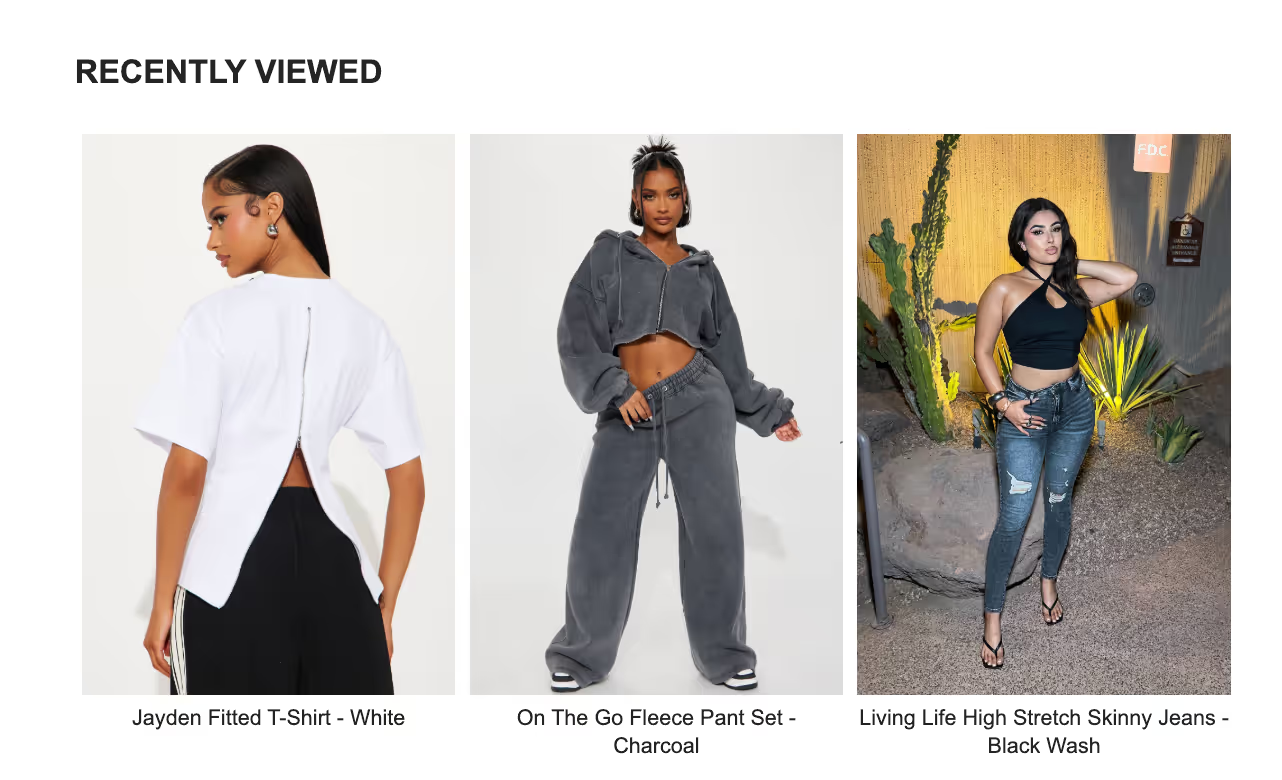
Their email focuses more on visually communicated product highlights and offers rather than marketing copy.
Another thing to consider is the CTA hierarchy.
If your competitors stick to a specific type of hierarchy, it means that’s working for them.
So look out for whether they stick to one primary CTA throughout, add only one CTA at the bottom or top, or place a single CTA at the bottom of the email.
“I always look for CTA sequencing while reviewing competitors' emails. This shows me what the first thing they ask their recipients to do is, and how quickly they escalate. You can observe whether the business actually values activation, revenue, or referrals as opposed to what they claim to value.” - Himanshu Agarwal, expert e-commerce marketer and co-founder of Zenius, a remote hiring company
Studying the CTA copy will also help you find inspiration to go beyond generic “Buy now” CTA buttons.
Personalization and Dynamic Elements
Personalization through image elements is a key factor in tailoring your emails.
Competitors who understand this will leave customer segmentation clues throughout their emails, and it is worth studying.
In this email by Magic Spoon, a cereal store, there is no mention of the specific product left in the cart, so you can gauge that it is not based on specific behavioral cues beyond cart abandonment.
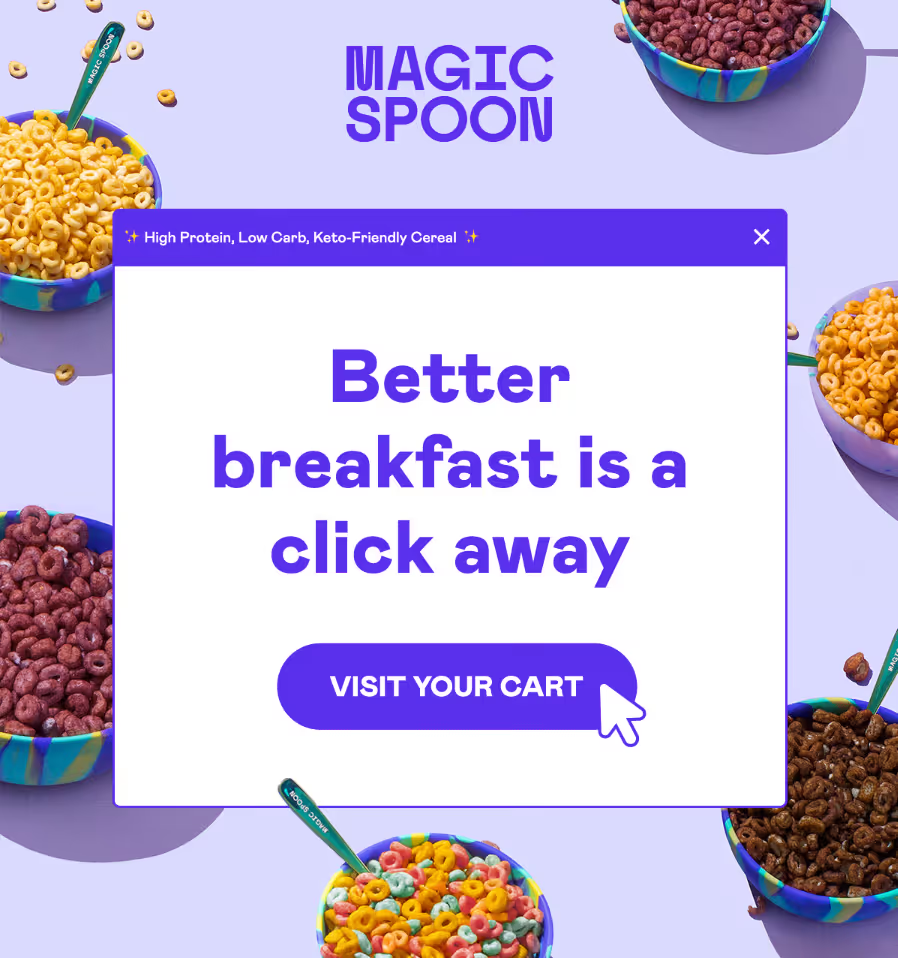
Regardless, the email itself is visually catchy and does the job. The headline is also strong.
In contrast, this email by Hiya, a kids’ supplement brand, is less colorful, but it identifies the exact products (and prices) in the cart:
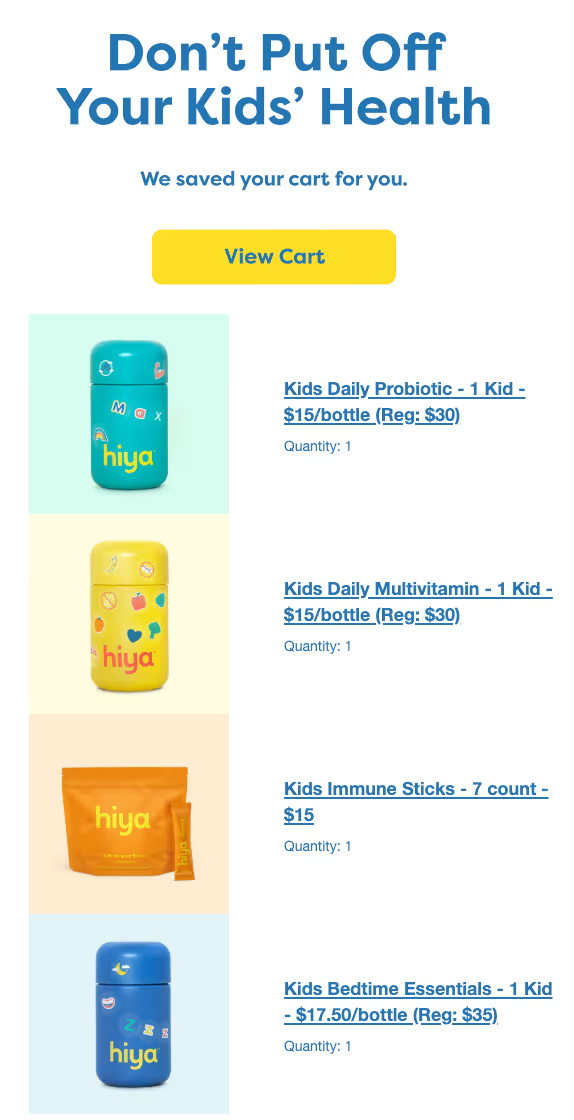
If your competitors’ emails include cart images, dynamic product blocks based on browsing behavior (and not a random selection of products), and references to recently viewed products with UGC blocks, you know that the competitor’s personalization goes beyond using the first name of the customer.
Compare design elements with our Shopify template for competitor analysis
Neither approach is wrong; you can replicate and test what works for your brand.
Email Norms for Mobile Optimization
Currently, 47% of email views come from mobile devices.
So mobile compatibility is key. These are the things you should be looking for in your competitors’ emails to gauge whether they focus on mobile readability:
- Font size and spacing
- Button size and tap comfort
- Scroll length
- Text-to-image balance and white space
While reading a competitor’s email on another device, you should be able to tell what the email is about, why you should be reading it, and what the email expects you to do. If you can answer these questions, you can file the email as high on the readability scale.
Step 7: Proxy Email Marketing Metrics To Track
You will not have access to private dashboards.
That does not mean you cannot analyze the email marketing performance of competitors. You can form reasonable assumptions about what is working by using proxy signals or observable indicators that suggest engagement.
Engagement Signals From Subject Lines and Sends
These will give you a rough idea of the open rates the competitor is seeing for their email campaigns.
Look for variation in subject lines versus repetition. E-commerce brands that frequently resend emails with modified subject lines are actively optimizing for opens. Minimal variation signals lower testing.
Same for email marketing campaigns.
If a brand pushes similar campaigns repeatedly, it probably means they are generating acceptable returns. Why? Brands rarely sustain strategies that underperform.
Link Tracking and Click Behavior Clues
Links in marketing emails leave clues, too.
Sometimes, with link-tracking tools, you can analyze UTM parameters and campaign identifiers. While some emails will include shortened links that reveal very little, it is worth a try.
How do you do this? Hover over the CTA button or link, right-click, and choose “copy link address”:
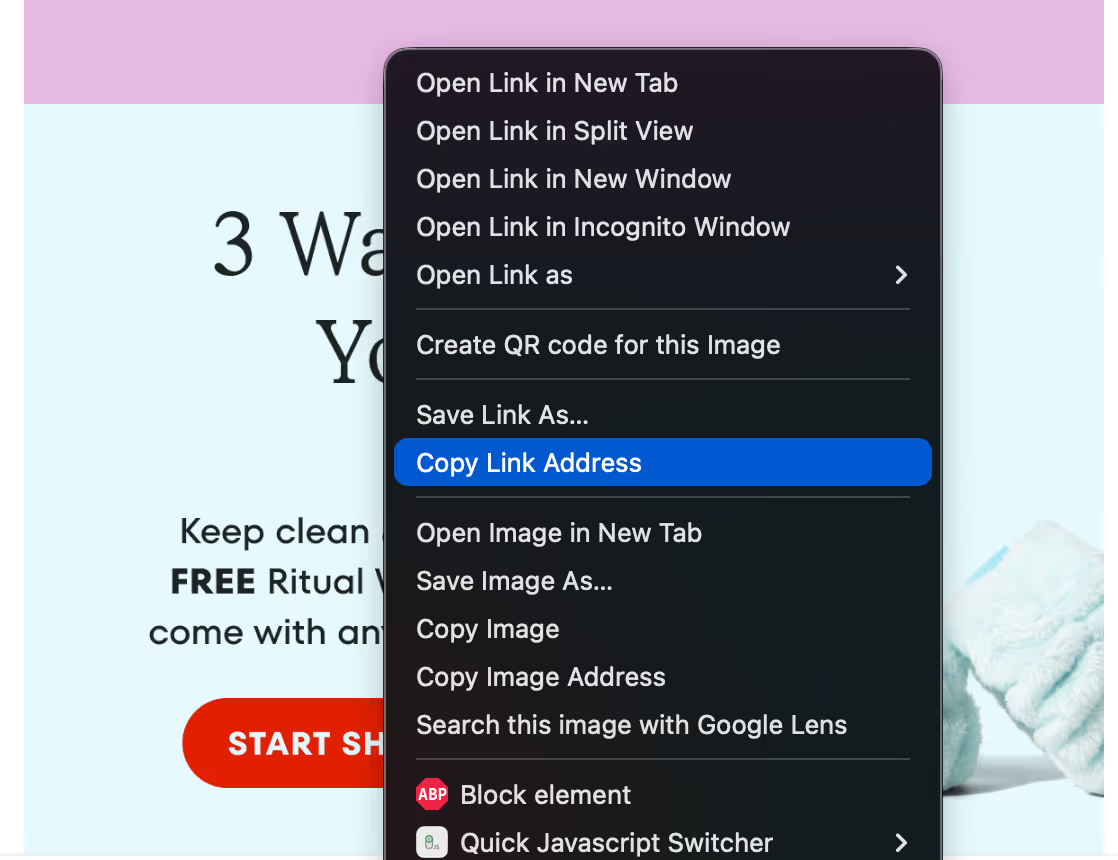
Link inspection can help you determine whether competitors use direct product links or homepage links, whether their CTA buttons point to a single destination or multiple pages on the e-commerce website, and other signals.
Step 8: Turn Competitor Insights Into Action
Break your insights down into the following:
What To Replicate
Whatever works for you as a customer. If you see well-defined automations from a competitor that would persuade you, they are worth replicating.
Tymchenko picked an email format to replicate while observing the performance of educational emails:
“At Brandualist, we did competitor email research and learned that the best-performing Shopify brands are very heavy on educating their customer base prior to using discounting. When we shifted one of our clients’ welcome flows from primarily promotional to value-based, his repeat-purchase rates increased. His customers trusted him sooner in the process.”
While studying discount frequencies, do you see a well-performing competitor repeatedly running similar promotions or reducing promotions during a particular window?
Do not automatically consider that a good sign.
Only if the promos are persuasive, or if you know their overall performance remains consistent with publicly available email marketing metrics and industry benchmarks, can you mimic that strategy too.
Burkan Bur, who has worked with Amazon, Hilton, DoorDash, and other global brands, increased margins with competitor research:
“Research shows rivals change discount ladders during slow months to protect bottom lines. Cutting welcome offers out for active browsers saved us six figures in margin over the last year.”
Replicating the approach but adapting it to your brand’s unique goals and tonality is the best way to use all the marketing intel you have collected.
You can replicate a competitor’s structural elements, subject line angles, and lifecycle touchpoints if you see they are working for them.
Where To Differentiate
With direct competitors, there are two ways to differentiate. The first one is obvious: avoid the mistakes your competitors are committing and fill in the gaps they are creating.
These gaps could be any of the following:
- Weak/overused offers
- Generic messaging
- Surface-level personalization
But there is one more way to go about it.
When you track the length of automations, the depth of a discount ladder, and other such elements, you will be able to “beat the competitor at their own game.”
Haverty followed this strategy with a competitor’s abandoned cart sequence for his business:
“I watch how many emails are sent before a discount is offered on the abandoned cart sequence. That’s most important because your customers may frequently decide to buy from whichever source provides a discount first. So you want to make sure you offer the discount before your competitor.”
When you notice these finer details, you can tweak your email strategy to acknowledge a competitor’s goalpost…and then beat them to it.
What To Ignore
While dissecting your competitors’ email marketing, you will find certain strategies that are doing well, but perhaps you need to give them a pass.
Why?
Just because a strategy works for your competitor doesn’t mean that it will work for you. When you are shortlisting tactics you want to replicate, ask yourself the following questions:
- Does the tactic conflict with your brand’s positioning?
- Will the discount ladder/promo tactic support your margin?
- Will the design elements you want to replicate add friction?
- Can that storytelling tactic translate for your brand’s voice?
The answer to these questions will determine whether the email patterns you have identified are worth replicating. Analyze your competitors' email marketing performance, not to replicate everything, but to see what fits your brand.
Steal This Competitor Analysis Checklist
Do not try to implement all the insights all at once. You have a lot of observations, and knowing what to improve on or copy (and what to ignore) can be overwhelming:
Execute What You Learn From Your Competitors With PushOwl
Competitor email marketing will set the foundation for your omnichannel marketing efforts.
Once you are done reviewing your competitors’ emails, you can replicate the exercise for their push notifications and SMS alerts by identifying cadence, subject line variations, urgency tactics, and discount ladders.
With PushOwl, you can turn those insights into action using behavior-based automations, personalized send times, and coordinated omnichannel email marketing campaigns.