One of the largest and most purchase-repeat-dependent industries on Shopify is supplements and wellness brands. After all, a customer who has started taking a magnesium pill will require reordering every 30-45 days; a customer following a protein powder regimen will order every 3-4 weeks, while a customer on collagen will reorder for years after seeing positive results 6 weeks after purchasing a product.
The one variable that all companies selling supplements live and die by is customers reordering their supplements before they have depleted their product or before they switch competitors or lose habit. Both email and web push are the perfect avenues through which this repurchase cycle is established.
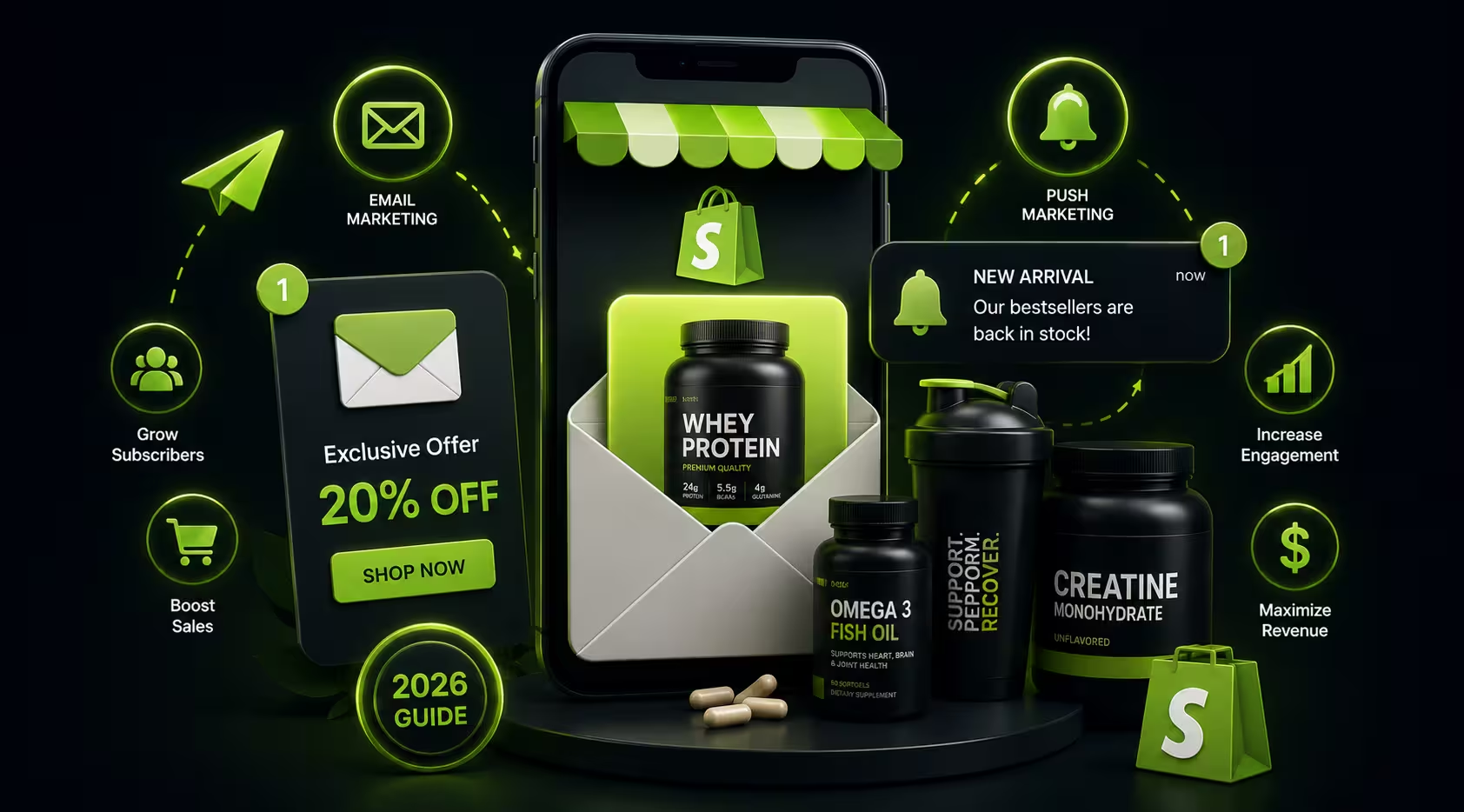
On Shopify, supplements and wellness brands generate repeatable revenue by pairing email for education, trust, and ingredient storytelling with web push for in-time reorder nudges, flash sale notifications, and abandoned cart reminders. PushOwl Email handles welcome emails, post-purchase routines, and replenishment automations, whereas PushOwl Web Push delivers the real-time notifications that strike while customers are active and available to engage. Working together, the two channels more effectively capture recaptured revenue.
Below, we thoroughly break down how Shopify supplements and wellness brands should structure the combination of email and web push, their associated flows, campaigns, appropriate timing, necessary segmentation, and preferred messaging styles, so they may begin to build customer segments with predictable repurchase routines.
How are Supplements and Wellness Email Marketing Efforts on Shopify Different from Others?
A fundamental divergence separates supplements email marketing on Shopify from nearly every other industry: the decision that motivates the purchase of supplements is rooted in trust, rather than outward appearance.
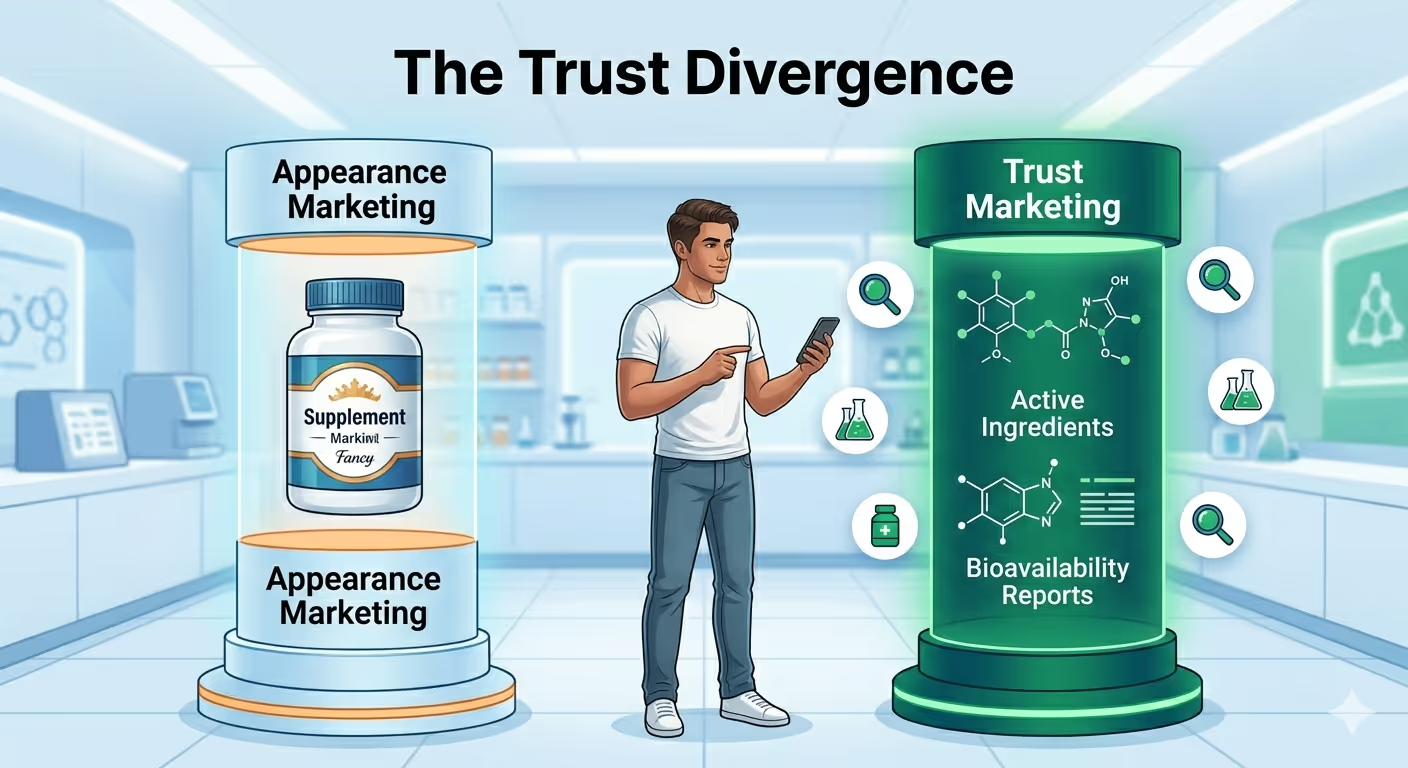
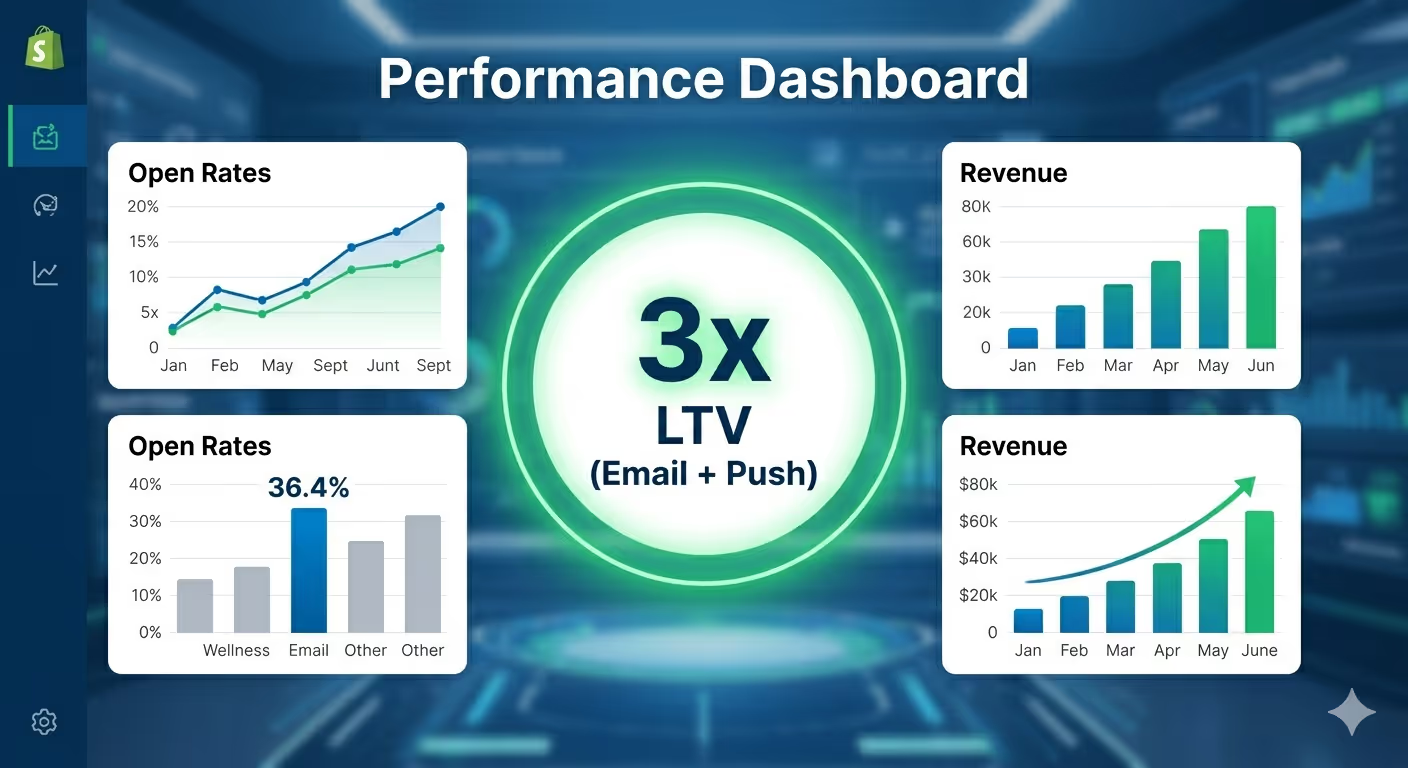
Consumers who purchase protein powder do not spend money on packaging; their core priority is paying for product efficacy, and they need to master four categories of information: supplement ingredients, active ingredients, the optimal intake dosage, and guarantees of stable quality. The email open rate for the health and wellness product category is 36.4%, ranking among the highest across all product categories.
This average email open rate stems from the genuine curiosity customers possess when making such purchases. You can find customers regularly scanning ingredient labels, researching supplement comparisons via YouTube videos, and participating in subreddits that explore the topic of bioavailability. A brand that regularly appears in customers' inboxes with truly valuable information, not solely focusing on discount offers, cultivates trust more rapidly than any advertising campaign might achieve.
In essence, supplements email marketing either thrives or collapses due to education. Companies treating their email marketing solely as an advertising broadcast tool will quickly see a decline in email open rates within 3 months of commencement. Businesses that use email for its informational potential, educating customers about active mechanisms, presenting clinical data supporting various formulations, providing clarity to supplement ingredient labels, and offering guidance through stack layering and usage, will notice email open rates remain high for years on end.
PushOwl Email gives supplement brands on Shopify access to comprehensive segmentation and automation tools, allowing for the execution of an education-focused email marketing approach without needing to rely on a dedicated content team to manually manage each send.
Why Repeat Purchase Timing is Critical in the Supplements Sector
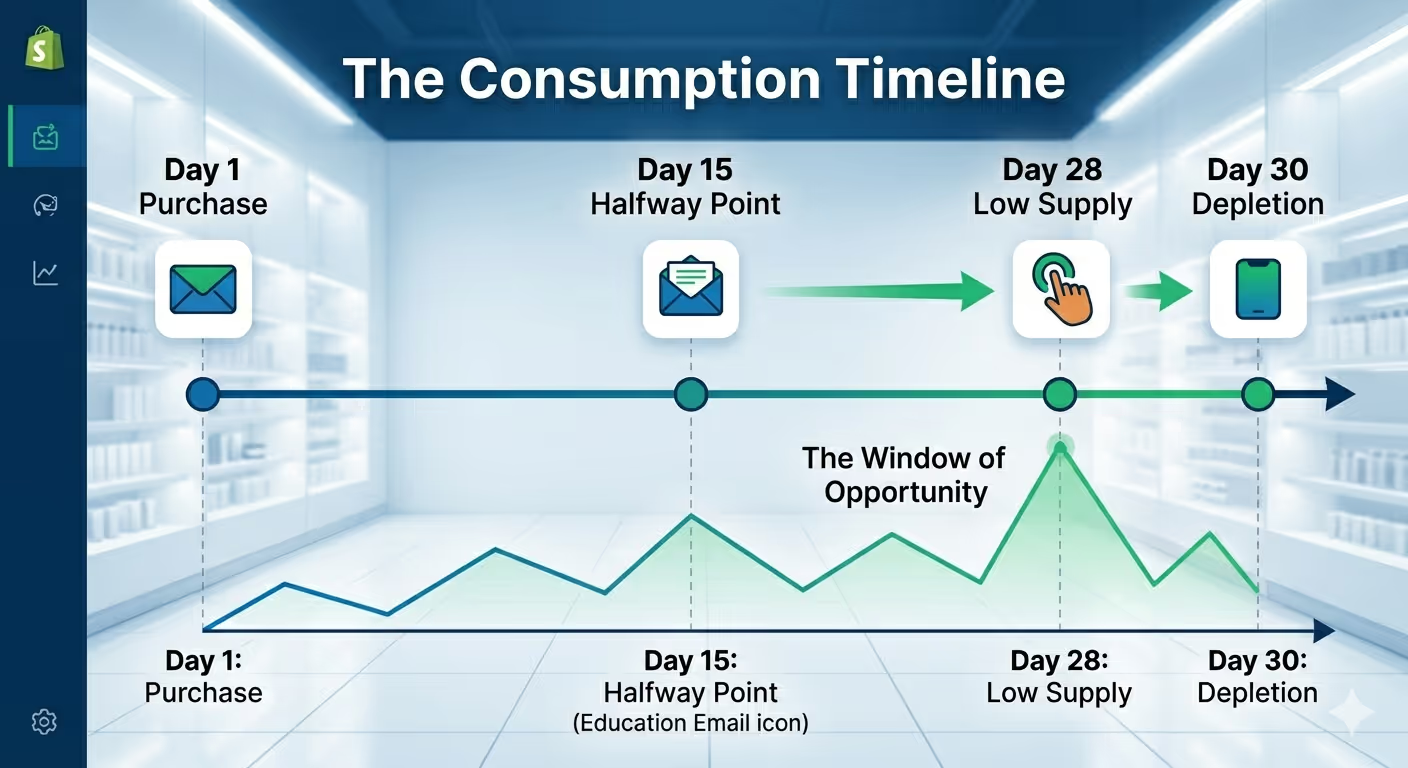
Within the supplements market exists a significant advantage inherent to the category, a benefit that few other segments on Shopify enjoy: a consistent reorder timetable. An order of 30-serving creatine monohydrate, if consumed once daily, should be finished on the 30th day of usage. An order of 60-capsule omega-3 fish oil, if consumed twice per day, also lasts for one month. An order of 45-serving protein powder, typically consumed on 5 out of 7 days per week, will suffice for 9 weeks.
These periods of usage are unwavering. Supplement companies must be able to log the initial purchase date, record the designated serving size, map the expected consumption period, and strategically send an email or web push at the appropriate moment. Sending it too soon is counterproductive, as the customer is still well supplied for two weeks or longer, which may reduce their sense of urgency. Too late and you risk your customer already running out of their supplement, seeking assistance from a competing brand while awaiting your communication.
As McKinsey & Company pointed out in a 2023 report, using Personalized Replenishment Triggers driven by consumer habits leads to purchase rep rates 10-15% higher than generic email sendings based on an arbitrary, fixed schedule in the wellness and health market.
What Are the Top 10 Email Flows for Shopify Supplement Brands?
Most supplement brands only run two or three email flows and ignore the rest of their potential automations. But the fastest-growing brands in this Shopify vertical (AG1, Ritual, Huel, Gainful) operate fully automated systems covering every single customer interaction touchpoint. Here are the 10 email flows every supplement brand needs active:

1. Welcome flow (3 emails over 7 days):
Introduce your sourcing philosophy, third-party testing credentials, and the hero product mechanism of action. Email 1 (at 10 mins) focuses on the brand story and sets expectations. Email 2 (at 48 hours) simplifies the science behind your main ingredient. Email 3 (at day 7) delivers social proof, clinical study links, actual results from your users, or highlights your NSF or Informed Sport certifications.
2. Post-purchase education flow (5 emails over 30 days):
By far the single highest-impact flow for supplement brands, it is also the one most commonly missing. Email 1 (at day 2) educates on exactly when and how to use your product for optimal results. Email 2 (at day 7) manages customer expectations by telling them exactly what to expect from results in the first two weeks of taking the product, which prevents future refund claims. Email 3 (at day 14) explains the underlying science behind your formulation - what makes it work. Email 4 (at day 21) introduces a secondary, logical product that aligns with the customer's original health goal. Email 5 (at day 28) is a proactive, early nudge for replenishment, sent 2-3 days before the estimated product exhaustion date.
3. Replenishment flow (2 emails + 1 push):
Sent based on your prediction of the exact date a customer will reorder their last purchase, considering their daily dosage and product quantity. Email 1 (sent at day 27-28 for a 30-day product) gives a simple, one-tap reorder reminder. Email 2 (sent at day 31) includes an offer or a little perk - free shipping, an extra few loyalty points, or a bundle deal. PushOwl Web Push (at day 30) fills in the gap between the two emails with a short message: "Running low? "
4. Bundle upsells flow (2 emails):
Sent when a customer is 21 days into their first purchase (after completing the post-purchase flow and demonstrating a level of engagement) and proposes an up-sell for a companion product logically tied to the original. Your protein should go to creatine, collagen to vitamin C, magnesium to zinc.
5. Subscription conversion flow (3 emails):
Targeted at one-time customers over 7, 21 and 45 days, this flow pitches a subscribe-and-save option from four perspectives: money savings, non-stop product availability and exclusive subscriber offers (formulas, flavours, etc. )
6. Back-in-stock alert flow (1 email + 1 push):
When a hot product goes out of stock and comes back into inventory, you can alert your audience with an email that recaps the product benefits and creates excitement over the wait finally being over. Two hours later, PushOwl Web Push blast shouts, "Your [Product Name] is back and flying off shelves”. The combination strategy reliably drives higher conversion rates than an email-only back-in-stock notice.
7. Goal check-in flow (2 emails at 30 and 60 days):
As one of the few marketing flows uniquely tied to a customer's overall health and wellness journey rather than the product itself, your goal check-ins can deliver high open rates. Emails might look like, "How have your energy levels been in the last month? " or "Are you getting closer to hitting your protein macros? "
8. Win-back flow (3 emails over 30 days):
Target customers who have not reordered in 60-90 days - less than in most product verticals due to their predictable replenishment cycle. Email 1 checks in on the status of their supplies: "Notice you have not restocked. Everything okay?” Email 2 (at day 14) updates on a product addition or new flavour. Email 3 (at day 30) tries a special discount to win them back before eventually cycling them out of your active segment.
9. Loyalty and rewards milestone flow:
Triggered by a loyalty tier upgrade, a points milestone, or a specific order frequency. PushOwl Web Push nudges them in real time ("You need only 150 points to reach gold status"), while the email explains their reward options in detail.
10. Educational nurture flow for non-buyers (4 emails over 14 days):
Targeted at subscribers who have not purchased after engaging with your initial welcome flow. Email 1 dives deeper into a specific aspect of your product's science. Email 2 highlights a trusted third-party review or unbiased research data. Email 3 directly addresses your most significant selling objection (price, suspicion over ingredients, dosage complexity, etc. ). Email 4 prompts them to purchase with a time-limited incentive.
How Top 10 Supplements Brands on Shopify Use Email Marketing?

The leading supplement and wellness brands in DTC commerce know a thing or two about building robust email and push marketing funnels worth dissecting. Here is a breakdown of what the market leaders are doing and what you as a Shopify brand can learn from them.
- AG1 (Athletic Greens) follows a deeply educational email path where each message in the Welcome series focuses on a distinct micronutrient category found in its blend. Instead of offering discounts, it champions its ingredients. Unsubscribe rates are purportedly low because the content remains useful whether subscribers eventually purchase or not.
- Ritual uses complete honesty to fuel its marketing. Each email not only details the product's ingredients but also explains why those particular components were selected, where they originated, and the scientific research underpinning them. Its Post-Purchase flow clearly tells customers the exact week when they can anticipate seeing results, effectively cutting churn.
- Huel employs rigorous segmentation based on customer goals, directing weight management customers down a separate path from those building muscle or prioritizing nutrition convenience. Communication styles, product suggestions, and educational resources are completely customized to each specific objective.
- Gainful Integrates a quiz feature that gathers a customer's goals before the first purchase, then uses that information to personalize every email, from onboarding to restocking reminders. The personalized emails feel like genuine conversations, as its segmentation capabilities kick in right from the start.
- Momentous emphasizes scientific authority in its marketing, including a reference to a relevant study or a quote from their scientific committee in nearly every email. Email marketing builds the level of trust needed to convert a $40 customer into a $200 multi-product subscriber.
- Transparent Labs highlights third-party test certificates in post-purchase emails, leveraging the fact that supplement buyers are inherently skeptical and the quickest way to achieve loyal, repeat purchasing behavior is by providing concrete proof that the product contains precisely what is on the label.
- OLLY Frames emotional wellness as opposed to clinical language, creating warm, approachable, and routine-oriented emails. Subjects like "How is your stress-less daily regimen coming along? " result in high open rates, as they touch upon the customer's everyday experiences rather than the formulation science.
- Four Sigmatic creates community around functional mushroom education through its email campaigns, teaching subscribers about ingredients like lion's mane, chaga, and reishi. This expertise-building strategy cultivates loyalty more effectively than any discount promotion could.
- Onnit Blends product education with engaging lifestyle content, offering workout tips, nutritional guidance, and mindset content alongside product recommendations. As a result, its subscriber base sees Onnit not just as a shop but as a wellness partner.
- Cymbiotika Embeds high-quality educational videos in its emails. Its Post-Purchase sequence includes a short video that clarifies bioavailability for its liposomal formulas, directly addressing the common customer skepticism of whether the supplements are actually absorbed. Campaign Monitor reports suggest that embedded videos in emails typically enhance click-through rates by 65-300%.
How Does Web Push Marketing Work for Shopify Supplement Brands?
PushOwl web push notifications, built for Shopify supplement brands, are only sent to users who have voluntarily subscribed to receive them. Compatible with both desktop and mobile devices, these notifications can be delivered even when recipients are not accessing the brand’s official website.

Their delivery takes less than 5 seconds, which is far faster than the 2 to 8-hour delivery window for emails. Additionally, the cost per single notification is only one-quarter to one-eighth of the cost of a standard SMS message. For supplement brands, the speed of web push marketing makes it valuable for replenishment notifications.
For instance, when a customer's 30-serving product is used up on a Tuesday morning, seeing a quick, to-the-point notification that states, "Your Creatine is nearly gone-reorder instantly! " is far more likely to lead to a conversion than a Thursday afternoon email. PushOwl users across Shopify achieve web push open rates ranging from 15-25%, versus the 1-3% open rate typically seen with email.
Given the high intent to reorder in the supplements sector and the fact that the customer has already made one purchasing decision, these high open rates translate into impressive conversion rates because customers are not being persuaded-they are merely being prompted at a crucial moment.
The 6 Web Push Campaigns That Drive the Most Revenue for Supplements Brands
- Replenishment reminder push: This notification is dispatched at the predicted time of product depletion. It is concise and to the point: "You might be low on [Product Name], reorder today in one tap. It includes a direct link to the product or a one-click reorder URL.
- Abandoned cart recovery push: These notifications are sent at the 1-hour, 6-hour, and 24-hour mark following cart abandonment. The 1-hour notification features the product name, the 6-hour message adds a touch of social proof ("14,000 satisfied subscribers love this"), and the 24-hour notification incorporates an element of urgency ("Only 12 items remaining").
- Flash sale or promotional launch push: This notification goes out the instant a promotion goes live. Because PushOwl sends its notifications in less than five seconds, an online customer will see it immediately when the sale begins. The typical two to eight-hour delivery lag of email can cause a time-sensitive offer to lose its urgency.
- New product or new flavor launch push: When supplement brands release new flavors or seasonal formulas, PushOwl Web Push notifies opted-in subscribers faster than any other channel. Speed is crucial when limited-edition flavors are in high demand and can sell out quickly.
- Back-in-stock alert push: This push follows an email back-in-stock notification by two hours, adding pressure: "The waitlisted [Product Name] is back and selling out fast!” These two-channel sequences consistently produce better results than solely relying on email alerts.
- Loyalty tier-upgrade nudge push: A concise notification triggered when a customer is one purchase away from the next loyalty tier. "Get closer to gold status: just 200 points remaining. Your next purchase takes you there." This is an example of the kind of personalized, immediate interaction that PushOwl Web Push offers natively without any need for customization.
Email vs. Web Push for Supplements Brands: What Each Channel Does Best?

Repeat purchase is vital for the success of supplement brands. The channel that convinces a customer to make their second, third, or subscription renewal is more valuable than the one that initially brought them in. Email and web push do not compete for these roles; they divide them.
The point of this table is not that one email channel or another is better than email overall. It is that each channel has a role at a different stage of the customer relationship. We have also noticed that brands that use both consistently perform better than those that stick only to email.
How to segment your Shopify supplements brand's email list
Segmentation distinguishes a supplements email program from pharmacy-newsletter fluff or helpful, actionable advice from someone who genuinely understands your individual wants and aspirations.
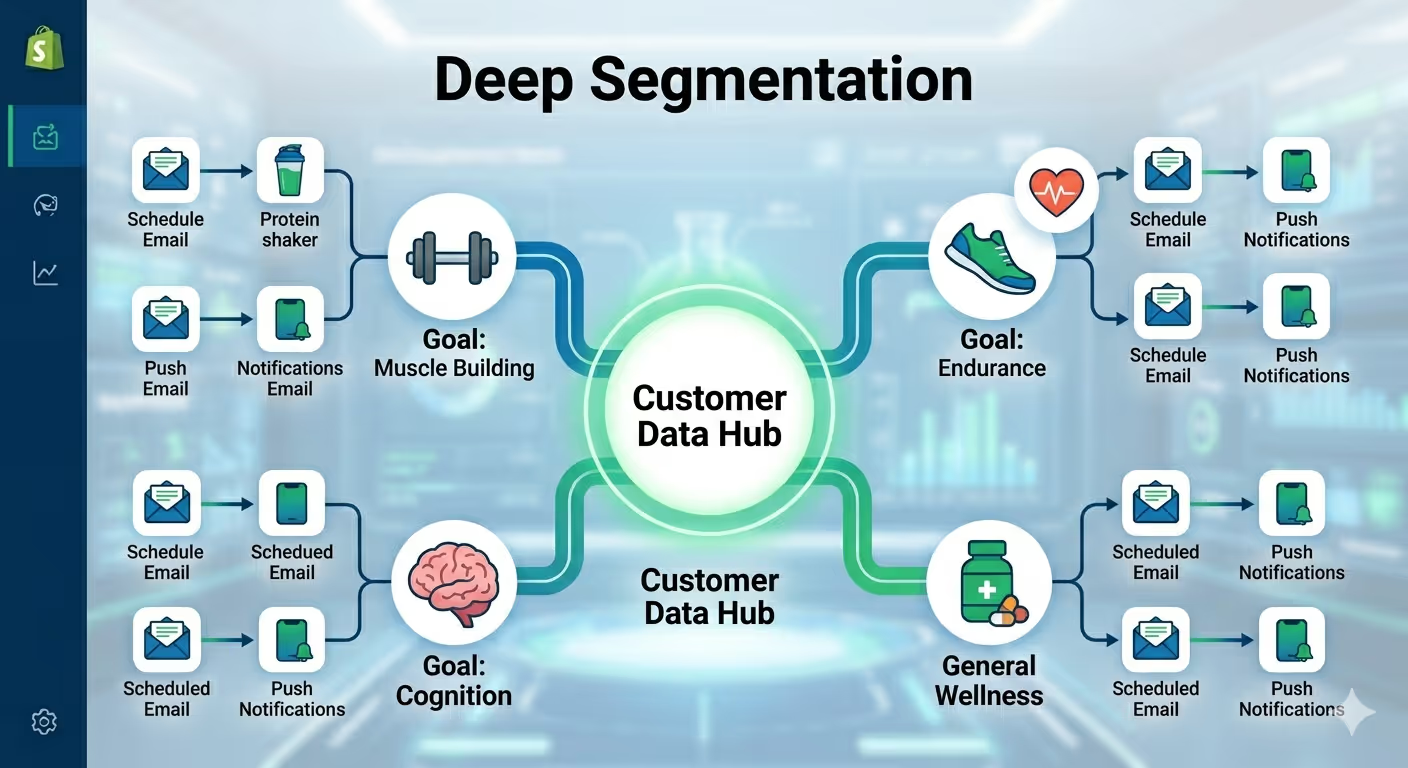
Top performers for revenue per subscriber in health and wellness, like Ritual and AG1, carry out deep segmentation right from the first opt-in moment.
Five segments to focus on:
- By health goal: Whether it is building muscle, losing weight, boosting energy, improving sleep, enhancing cognition, or general wellness, segment on health goal from the get-go with a quiz/pop-up. Emails, product recommendations, and sales should align with the goal set.
- By category purchased: Protein, vitamins, nootropics, gut health customers need different educational content, have different repurchase intervals, and present different upsell opportunities. You do not want to email a creatine explainer to someone who only buys magnesium glycinate.
- By frequency of purchases: Break apart first-time buyers, 2-4 purchase buyers, and your 5-plus purchase loyalists/subscribers. These groups will have different motivations and appreciate different messaging; cross-sending loyalty tier promotions may be annoying to first-timers testing the waters.
- By recency of last order: A customer who purchased last week is on a different relationship journey than someone who last purchased two months ago and still has not made a second buy. This is the single most important framework for a supplement brand using Shopify.
- By opted-in channel: If a customer opted into PushOwl Email, it is crucial to send them a sequence. Not the duplicate same replenishment reminders all at once through the PushOwl Email, PushOwl Push, and via SMS. Instead, sequence: Email sent Day 27, then Push notification Day 30, then another email Day 32, and no, not simultaneous.
PushOwl Email supports all these segments out of the box without any additional customization.
What is the correct email frequency for a Shopify supplements brand?
The optimal email frequency for a Shopify supplements brand lies between 2 and 4 emails monthly for your general subscriber list, augmented by behaviour-triggered automated flows.
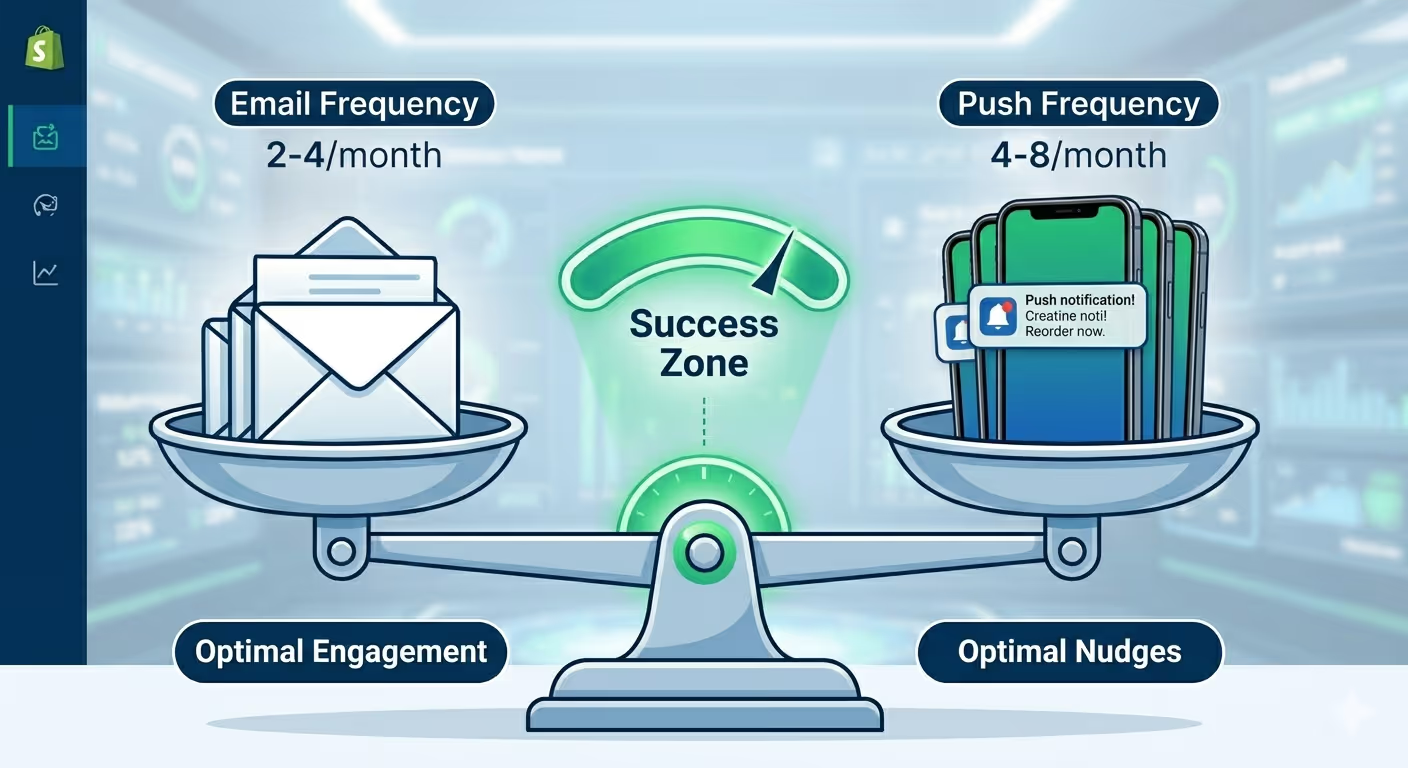
Brands sending over six emails per month in this segment experience notable increases in unsubscribe rates, from education-focused subscribers who did not sign up for a high volume of promotional material. Conversely, those sending fewer than two emails monthly will see steady open rates but a decline in revenue per recipient due to missed replenishment opportunities.
Web push, however, allows for a higher frequency. Customers who have opted into PushOwl Web Push tend to respond positively to four to eight pushes per month because each push is a quick 2-second read with a single action (tap or dismiss), making the cognitive effort lower than opening and reading an email. Supplements brands sending well-timed, specific pushes tied to replenishment cycles, new product launches, and sales do not witness a rise in opt-out rates until they exceed ten pushes per month.
How do you build an email and push subscriber list for a supplements brand?
A supplements brand's email and push subscriber list experiences its most rapid growth when the opt-in method is tied to the customer's specific goals, rather than a generalized discount. While a "Get 10% off" pop-up attracts bargain shoppers, a "Tell us your health goal and receive a personalized supplement recommendation" pop-up captures genuinely interested customers who are likely to engage with your brand long-term.

These are the four most successful list-building approaches for Shopify supplements brands:
• The Goal Quiz Popup:
This pop-up collects health goal details, lifestyle habits, and possibly age range or dietary restrictions before presenting either the discount or a recommendation.
PushOwl Popup facilitates multi-step quizzes that segment the subscriber at the moment they sign up. This single tool serves the dual purpose of growing your subscriber base and structuring your initial email segmentation.
• The Ingredient Education Opt-In:
Phrases like "Want to know if creatine is right for your goals? Download our free guide" filter customers who are in the research phase of their buying journey and convert them into engaged subscribers. They may purchase slower, but they will consistently buy more.
• The Early Access or Waitlist Opt-In:
"Join the waitlist for our new Sleep Stack formulation" creates both email and push subscribers around a particular product launch and builds a captive audience ready for the launch day announcement.
• The Post-Purchase Push Prompt:
Displayed on the order confirmation page, messages such as "Never run out - get a reorder reminder before you run low" capitalize on the highest point of intent in the customer's relationship with your brand. Capturing a push opt-in at this crucial moment results in the highest-quality replenishment push subscribers.
For PushOwl Web Push specifically, displaying the browser opt-in prompt on product pages after 15 to 20 seconds of active reading (when the customer is likely researching and then quickly leaving) can convert 5 to 12% of eligible visitors. A supplements store with 6,000 monthly unique visitors to product pages can anticipate acquiring between 300 and 720 new push subscribers each month with this placement.
What compliance and messaging rules do supplements brands need to follow in email?
One section that a ton of supplement brand guidelines often omit is one of the most important ones for those in the industry (Please Note: the information below serves as a general guideline for US-based brands. The exact requirements may vary by country and are subject to change, so it is always recommended to have any specific claim copy reviewed by legal or regulatory counsel before publishing or sending).
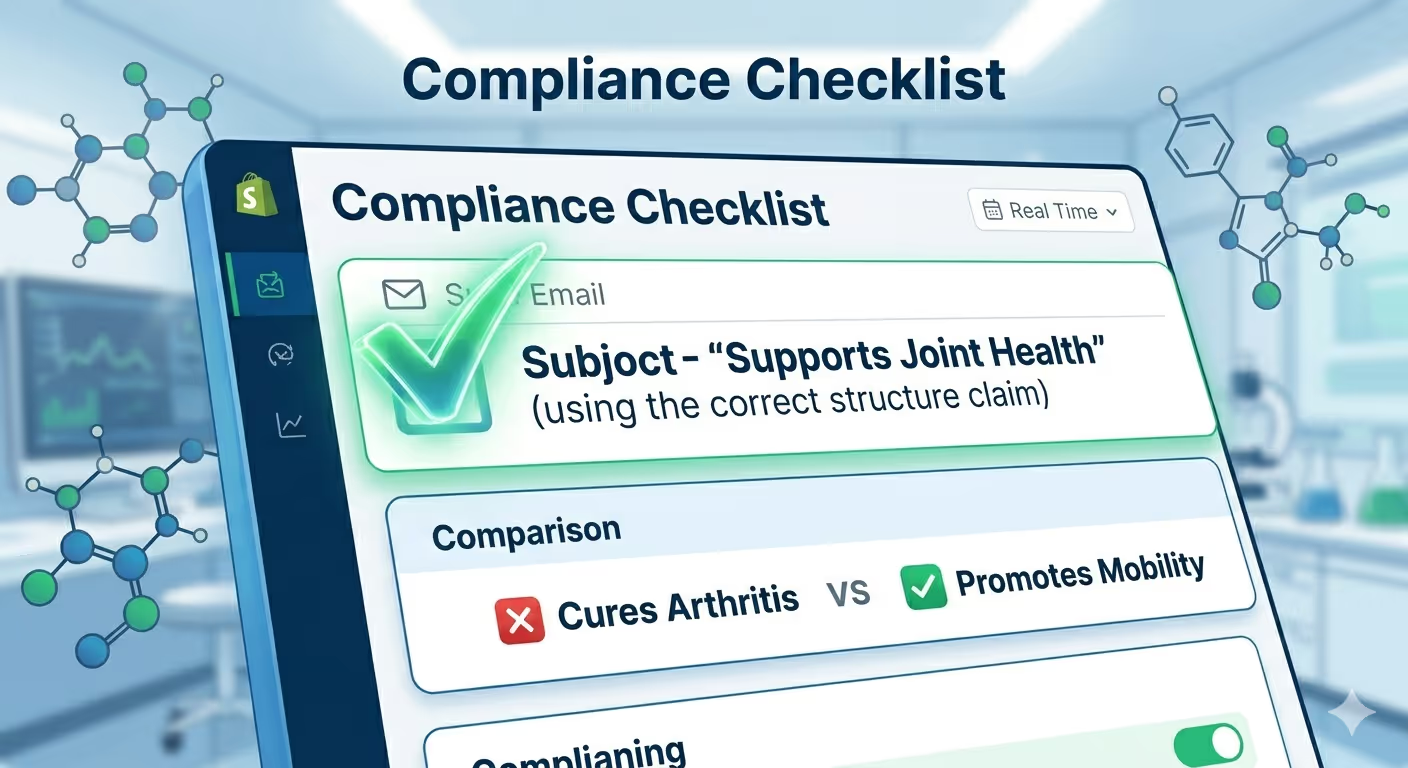
According to the US Food and Drug Administration (FDA) and the Federal Trade Commission (FTC), supplement brands cannot include claims like diagnosing, curing, treating, or preventing a disease.
For example, the FDA rules out a statement that says: "Our Vitamin D supplement prevents osteoporosis. In contrast, this statement may be considered an acceptable structure claim: "Our Vitamin D supplement supports bone health.
Furthermore, FTC regulations dictate that testimonials used in emails accurately represent the typical results of consumers, not outlier cases. In essence, the FTC requires supplement brands to have scientific substantiation for a claim, but with testimonials, the brand must provide scientific substantiation that the particular case represents typical customer experience or include a clear disclaimer with the testimonial.
These limits apply to your email subject line, your email body copy, your web push notification message, and messages in popups. We suggest that if you run a supplement brand on Shopify and are currently using PushOwl Email and PushOwl Web Push, take the time now to carry out compliant claim wording in all your relevant templates as soon as possible and treat this task with the attention it deserves instead of tacking it on later.
How does PushOwl Email work for Shopify supplements brands?
PushOwl Email is an email marketing tool built for Shopify that handles extensive automation, goal-based segmentation, and seamless multi-channel coordination with PushOwl Web Push, all without the need for an external CRM or additional developer resources.
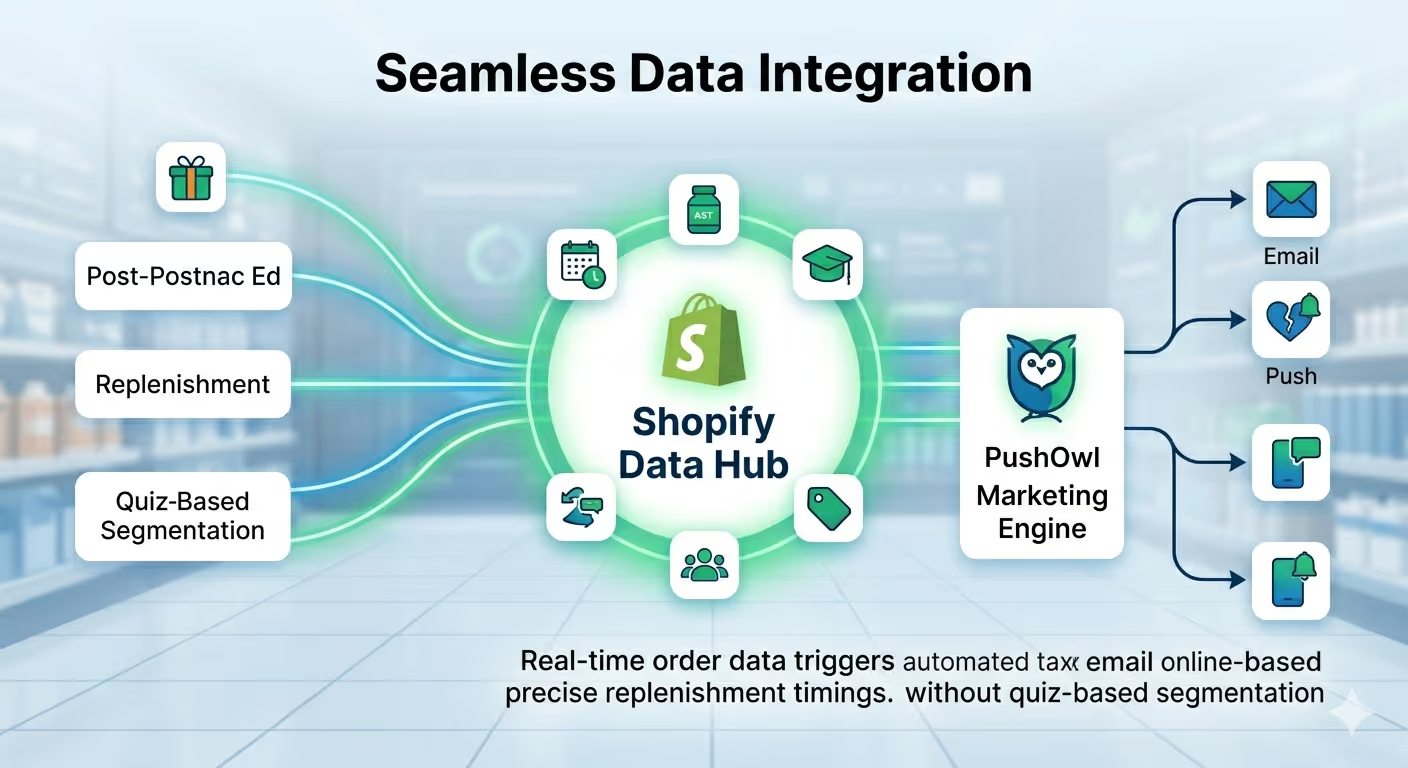
For supplements brands, PushOwl Email manages the 10 automated flows outlined earlier, connects directly to Shopify's order data for precise replenishment timing, and integrates with PushOwl Web Push, ensuring that email and push notifications function in coordinated sequences rather than operating as independent, unsynchronized channels.
A specific advantage for supplements brands is the accuracy of replenishment timing. By linking to Shopify's order data, PushOwl Email knows precisely when a customer made a purchase, which product they bought, and the number of servings contained in that product.
This enables replenishment flows to be triggered at the appropriate day-day 27 for a 30-serving product taken daily or day 55 for a 60-serving product-without requiring manual configuration for each SKU.
The Bottom Line
Supplements and wellness brands on Shopify possess a built-in marketing advantage over most other categories, namely predictable reorder cycles, a significant demand for educational content, and a customer base that actively seeks communication from brands they trust.
The brands maximizing this advantage-such as Ritual, AG1, Transparent Labs, and Momentous are not simply sending more emails than their competitors. Instead, they are sending more relevant emails, timed to the customer's consumption rhythm, segmented by the customer's specific objectives, and coordinated between PushOwl Email and PushOwl Web Push to ensure each touchpoint reaches the customer at the optimal moment with the most pertinent message.
The 10 automated email flows and 6 web push campaigns outlined in this guide address every aspect of the supplements customer lifecycle. Setting up all 10 flows in PushOwl Email will take three to four weeks of dedicated effort. However, the revenue these flows generate, through replenishment automation, subscription conversions, and win-back sequences, will continue to accrue indefinitely.