.png)


Shopify SMS segmentation is more than just splitting your customer list based on various parameters. It determines which customers receive a message that appears instantly on their lock screen and which don’t.
In this comprehensive SMS segmentation guide, you will learn which rules, segments, data sources, and metrics turn SMS into a high-performing retention channel. We also spoke with e-commerce founders and marketers for insider tips on executing SMS campaigns.
What Is SMS Segmentation?
SMS segmentation is the process of dividing your text message subscriber list into smaller groups based on customer behavior, purchase activity, engagement level, or lifecycle stage so you can send more relevant messages.
When done correctly, SMS segmentation helps brands:
- Increase conversion rates
- Improve revenue per message
- Reduce unsubscribe rates
- Send fewer but more effective campaigns
Sending the same message to your entire list leads to lower conversions and higher opt-outs, which is why SMS segmentation is important.
When to Use Email Segmentation vs SMS Segmentation
Calling SMS a “shorter version of email” does your omnichannel marketing strategy a disservice and hurts your marketing ROI.
Each marketing channel comes with distinct psychological expectations and performance dynamics. SMS is no different. Customers treat text messages as more personal and immediate. It’s more interruptive than email.
Emails are not…
Mixed with notifications from your loved ones.
Competing for attention among endless messages in the work group chat.
Taking up space among key alerts related to bill payments and the rent that is due.
But SMS does.
It is a part of a private digital space where the threshold for spam is extremely low.
That is why your approach to SMS segmentation should differ from your approach to email segmentation. Here are some key differences in email segmentation and SMS segmentation:
3 Rules for SMS Segmentation You Need To Know
Now that we have differentiated between email segmentation and SMS segmentation, it is important to understand the strategic rules that make SMS perform.
SMS operates inside a high-attention personal environment. Successful SMS strategies, therefore, need to tick these boxes:
If the above factors are respected, SMS can become a high-converting channel that supports your email marketing efforts. Add push notifications to the mix, and you have a formidable omnichannel strategy that pulls its weight.
Why Is Frequency Tolerance Lower for SMS Campaigns?
SMS has a much shorter patience window than email.
Subscribers do not evaluate text messages the same way they evaluate inbox promotions. Each SMS creates a moment of interruption, and customers quickly decide whether that interruption was justified. When it is not, the reaction is straightforward: "mark as spam" or hit STOP.
This creates a direct relationship between customer expectations, send frequency, segmentation precision, and list health.
Brands that send too often to broad audiences typically see:
- Faster opt-out acceleration
- Declining revenue per message
- Higher complaint risk
- Reduced long-term subscriber value
Because of this, the segmentation strategy in SMS is less about maximizing reach and more about controlling exposure. Smaller audiences with stronger purchase signals allow you to maintain frequency without damaging subscriber trust.
What Are the Primary Targeting Signals for SMS Campaigns?
SMS performance depends far more on behavioral proximity to purchase: signals that indicate consideration and readiness. These include:
- Recent browsing sessions
- Repeat product views
- Cart activity
- Purchase recency
- Replenishment timing
- Engagement with previous messages
Behavior matters because SMS is a timing-sensitive channel.
A message sent when the intent is already being built feels helpful. The same message sent without context feels intrusive.
Why Are Customer Expectations Higher for SMS Campaigns?
SMS reaches customers in a space they associate with personal communication. Because of this, the relevance threshold is significantly higher than email.
Customers typically share their phone numbers in exchange for something meaningful, such as exclusive access, better offers, faster updates, or greater convenience. When messages don’t deliver that value, trust drops quickly, and opt-outs follow.
For segmentation, this means broad targeting rarely performs well. Messages need to align closely with customer behavior or interests to feel justified.
The stronger the perceived value, the more durable your subscriber base becomes.
Therefore, your SMS segmentation analysis should be rooted in the following principles:
- Messages tied to customer actions and recency rather than demographic segmentation will perform better because they align with active intent.
- Smaller, high-intent segments based on customer expectations generate better performance while protecting subscriber retention.
Precision, rather than increasing the bulk of Shopify customer data, increases revenues.
Shopify SMS Sources To Collect Data From
Now that you know how to approach SMS segments, the next question is, where does the data come from? High-intent SMS segments are built by combining Shopify customer data with behavioral signals and SMS engagement insights.
You also need subscriber data and channel interaction data.
Understanding these sources (and knowing where to locate them) makes it easier to design precise SMS customer segments.
Shopify Data (Customer Data and Purchase Information)
These data points live directly inside Shopify and form the foundation of your SMS segments.
Shopify customer tags are flexible labels you can apply manually or automatically.
You can use tags to mark meaningful customer milestones/segments, such as repeat buyers, high AOV, VIP purchases, and so on. Milestone tags create reusable high-intent segments.
You can also use Shopify metafields to store custom attributes, such as preferences and sizing. These come in handy when you want to send personalized SMS alerts based on the categories the customer has browsed or already bought from.
Other than Shopify tags and metafields, the following data is available on the Shopify platform for customer segmentation:
- Order history and purchase frequency: number of orders, last purchase date, and total spend
- Product categories purchased
- Average order value (AOV)
- Loyalty/VIP indicators: including whether they have signed up for programs, and how many points the customers have collected
Behavioral and Intent Signals
These are signals you need to gather and sync before turning into raw data:
When you combine browsing segments with engagement recency (for example, a customer viewing your product twice in 24 hours), you can improve the efficiency of your segments.
Channel-Specific Behavior
Here is the checklist of channel-related behavior you can keep an eye on:
Suppressing low-engagement subscribers protects deliverability, so collecting this data is important.
Subscriber and Consent Data (SMS-Specific)
The following data sources will help you add more context to your SMS segments and customer profiles:
You can find this data on the SMS platform under the Shopify customer profile.
Top 10 SMS Segments for Shopify Stores
Your SMS segments should be aligned with profitable purchase behavior. Here is how you can segment SMS subscribers:
Cart Abandoners
This SMS segment pulls in the highest ROI:
- Who belongs in this segment? Customers who added products to the cart but did not complete checkout
- Trigger logic: Cart created, but no purchase
- Ideal timing/automation: You can send the first message 30-60 minutes after abandonment, and a second message about 12-24 hours later
If you had to target only three segments, this one should be one of them. Katie Breaker (Sales Director at BirdieBall Golf) explains why, based on her experience with executing sales strategies for their Shopify store:
“Cart abandoners generate more revenue than any other segment because they have already built an intent to purchase from you. Further, they do not need the same amount of persuasion as someone who has never purchased from you.”
Time is of the essence here, as Breaker points out: “Re-engage abandoned cart customers with appropriate messaging within 24 hours while the purchase decision is still fresh.”
Keep the SMS short with a clear product reminder and a direct link to the cart.
New Subscribers/First-Purchase Prospects
Strong welcome automations can generate a large share of SMS-attributed revenue early in the lifecycle:
- Who belongs in this segment? Customers who recently opted into SMS + Subscribers who have not made their first purchase yet
- Trigger logic: SMS opt-in captured, but no purchase recorded
- Ideal timing/automation: Immediate welcome email + SMS with a follow-up within 24-48 hours if no purchase
This is another must-have SMS segment, as Himanshu Agarwal, a marketer with over a decade of experience, observes:
“An audience that has engaged in the past 30-60 days is the primary profit center because it has the highest revenue-per-send rate. They have a relatively higher click intent and are less sensitive to opt-outs.”
Your SMS should welcome them and thank them for subscribing, while highlighting your best-sellers to get them started on their customer journey.
Win-Back Customers (Inactive 3–4+ Months)
Your dormant customers already know you, so do not forget them:
- Who belongs in this segment? Customers who have purchased before, but it has been a while
- Trigger logic: No recent engagement as per defined timelines
- Ideal timing/automation: Single reactivation message with a follow-up message containing a strong incentive if needed
Who qualifies as an inactive customer depends on the nature of your products.
Let your SMS campaigns run in the background with PushOwl
If you have a skincare store, then you can expect repeat purchases every 3-4 months, when it is time to restock. So, any customer who hasn't purchased in the past 3-4 months can be considered inactive.
For furniture and home decor brands, customers are likely to buy only once a year, so sending them win-back campaigns every 4 months might be considered spammy.
VIP Customers
VIP customers or purchasers who have enrolled in your loyalty program have higher brand affinity, making them ideal for exclusive access campaigns via SMS:
- Who belongs in this segment? High-spending customers, repeat purchasers, and loyalty tier members
- Trigger logic: Total spend is above a defined threshold and/or loyalty status/tier reached
- Ideal timing/automation: Early access to launches, exclusive promos, and secret seasonal campaigns
Pro tip: Remember to layer in other parameters like product preferences on top of VIP status. A loyal customer who frequently buys women’s footwear should not receive early access to a men’s apparel drop.
VIP customers are margin stabilizers, so you should always make them feel special with perks.
Back-in-Stock Subscribers
For those who have requested restock alerts, their intent and pre-existing demand are present, so the chances of conversion are high.
- Who belongs in this segment? Customers who clicked on “notify when the product is available” and browsers of out-of-stock products
- Trigger logic: Inventory replenishment leads to a notification trigger
- Ideal timing/automation: Back-in-stock notification immediately when product restocks (no repeated alerts needed)
Keep your SMS alert limited to the restocked product name, a direct link to the relevant product page, and an urgency trigger if you expect stocks to run out fast.
Birthday Customers
Celebrating milestones is a great way to ensure customer retention and high engagement. Genuine wishes, without an incentive, will be more memorable than transactional SMS alerts offering a discount.
- Who belongs in this segment? Customers who provide birthday information
- Trigger logic: First day of birthday month
- Ideal timing/automation: Three messages (pre-birthday reminder at the start of the birthday month, morning of birthday, followed by a reminder later in the week if unused)
Add only those customers to this segment from whom you have explicitly collected birthday details. You can send a short birthday SMS message and a more elaborate birthday email.
High AOV Purchasers
High-spend customers are less price-sensitive and more motivated by exclusivity and quality:
- Who belongs in this segment? Customers whose average order value exceeds your store’s baseline and who consistently purchase premium or bundled products
- Trigger logic: AOV above the defined threshold + total spend above the milestone level
- Ideal timing/automation: Premium product launches, limited collections, early access campaigns, and bundle promotions
SMS performs well with this segment when positioned around access rather than discounts.
“We helped a store reorient itself to focus on buyers who spent more than five hundred dollars in the last year, and high-value buyers were given early access to a sofa launch, and click-through rates went from two percent to almost twenty percent in two weeks.” - Richie David, CEO and President of Totally Home Furniture
Remember to send high-AOV purchasers SMS alerts about products they have purchased, not every exclusive promotional campaign.
Recent Purchasers
Recent purchasers have already crossed the biggest psychological barrier, i.e., buying for the first time.
- Who belongs in this segment? Customers who placed an order within the last 7-30 days
- Trigger logic: Order placed
- Ideal timing/automation: Post-purchase communication, including order updates, cross-sell product suggestions, and product usage tips (or review requests!)
The segment should automatically exclude customers once they move beyond the defined timeframe or make another purchase that moves them into a new lifecycle stage.
Repeat Purchasers
Customer retention is cheaper than customer acquisition, so forgetting this segment is not the best use of your marketing campaigns:
- Who belongs in this segment? Customers who have completed 3-4 orders or have purchased more than once within a defined time window
- Trigger logic: Order count is more than the defined threshold
- Ideal timing/automation: Early access to product launches, referral incentives, introduction of loyalty program within a week of most recent purchase
Repeat purchasers are easy to target, as Ilija Sekulov, SEO Manager at Craftberry, a boutique Shopify Plus agency, points out: “Former purchasers who bought twice before are almost always your most valuable segment because they already trust you enough to buy again; you just have to show up at the right time.”
Your SMS alert can include product suggestions in categories similar to those in their past orders, restock reminders if relevant, or an introduction to your loyalty program.
High-Intent Browsers
Do not forget your website visitors who do not buy but show interest in the product.
- Who belongs in this segment: Visitors who spend significant time on a product page or who return to the same collection multiple times
- Trigger logic: Product viewed a defined number of times with no addition to cart or purchase (does not include cart abandoners or recent purchasers)
- Ideal timing/automation: First nudge within 12-24 hours of repeated product page engagement with an optional follow-up 24 hours later if no purchase/add-to-cart action
Your SMS alerts can include social proof and product category highlights to nudge these potential customers.
“Window shoppers who viewed a product three times but did not add it to their cart also represent a massive opportunity when they are reached with limited-stock alerts.” - Richie David, CEO and President of Totally Home Furniture
High-intent browsers are not a must-have segment, but they are definitely worth considering.
SMS Segmentation in Action: 5 Steps To Take
Once you understand which segments drive revenue, you should use them in your SMS marketing campaigns.
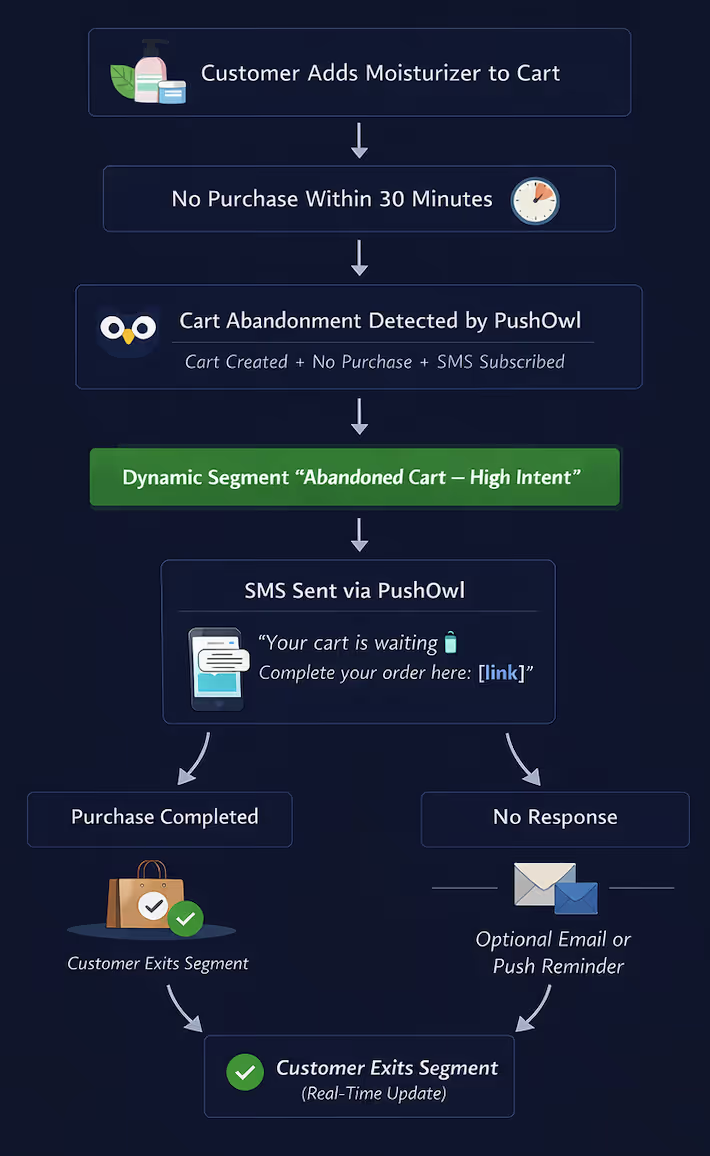
This is how you would do it:
Step 1: Create Segments Based on Behavioral Filters
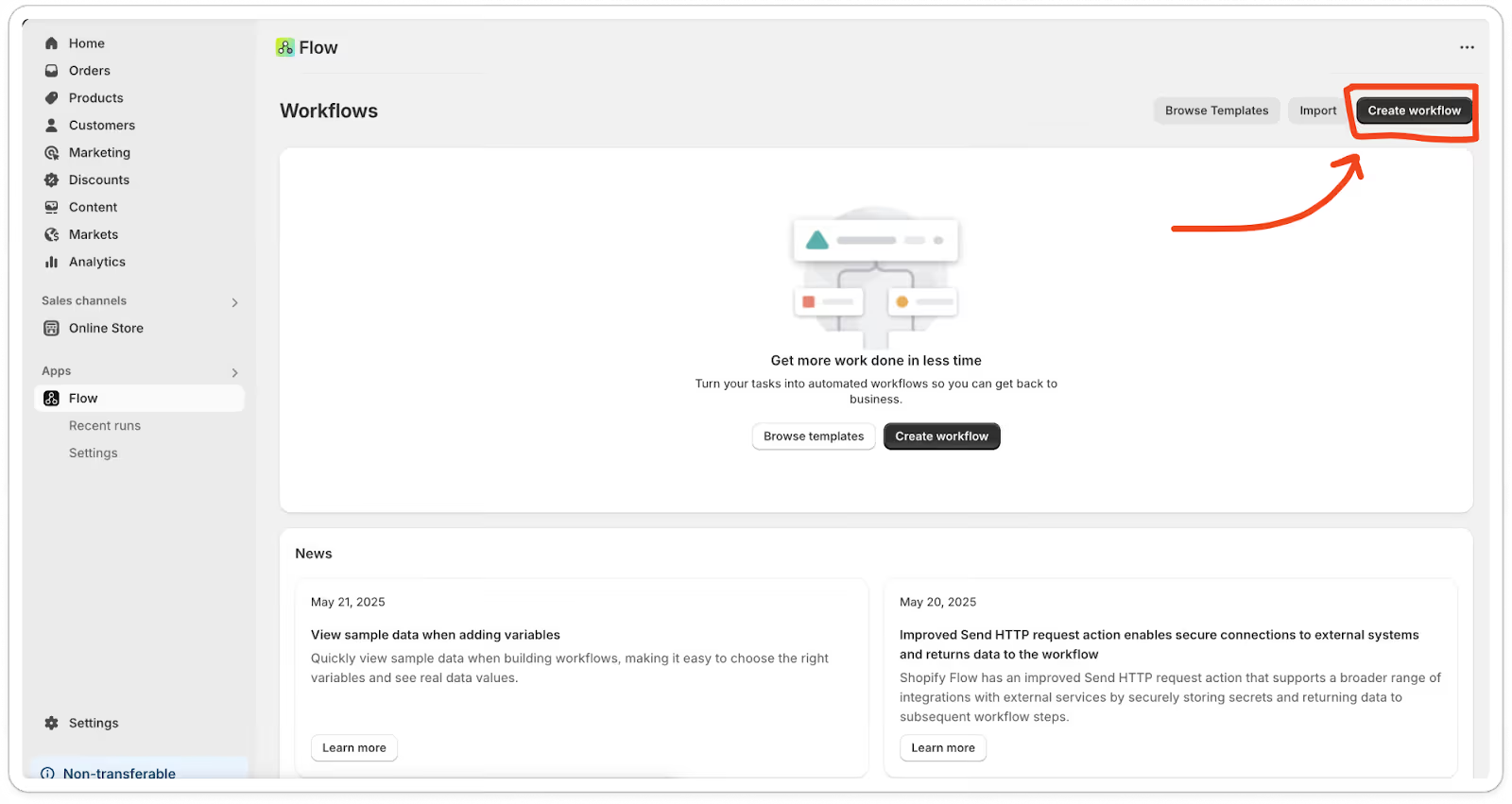
Use the Shopify Flow app to create a workflow
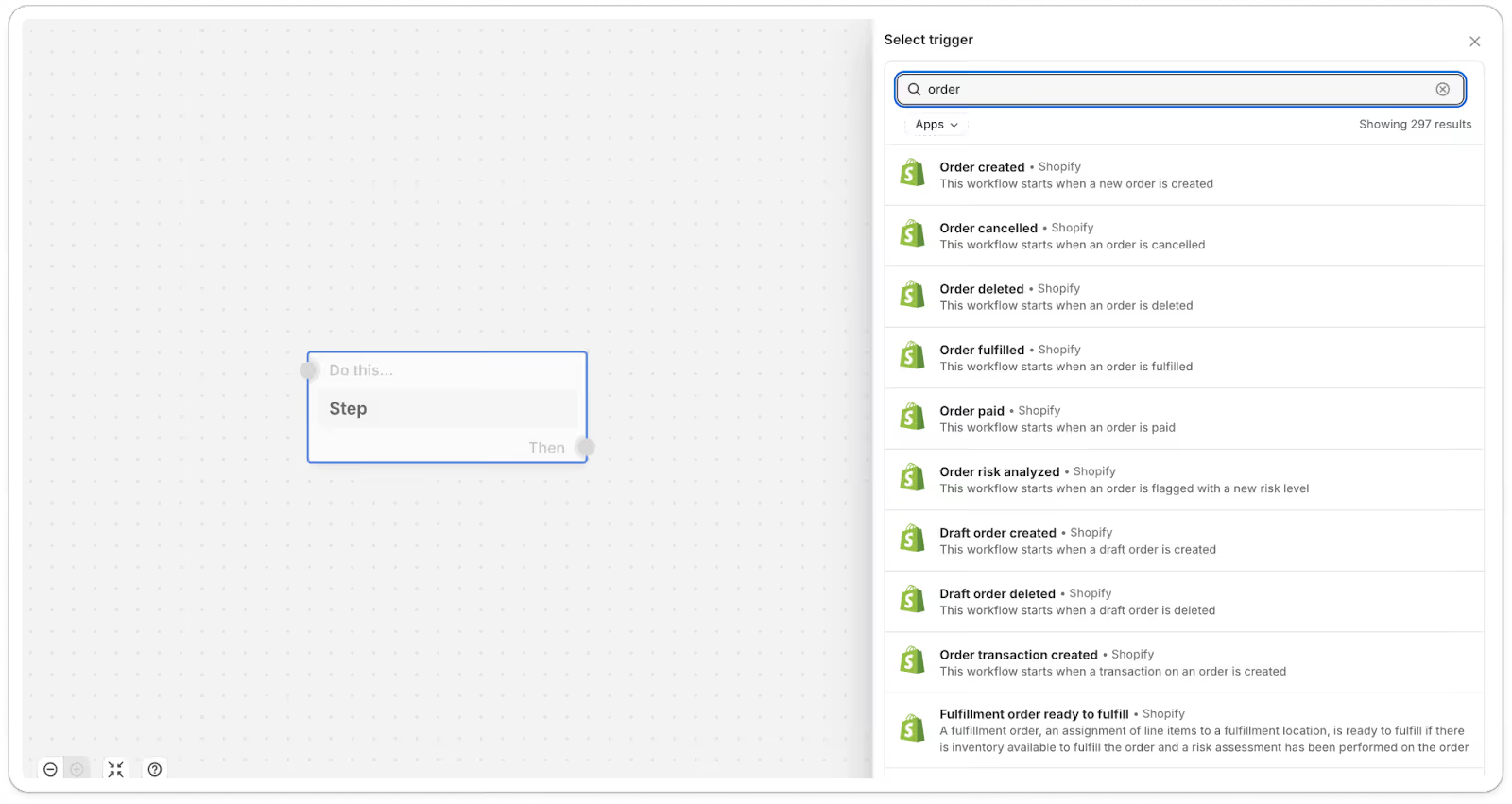
...and select triggers based on your required segmentation (such as order creation, cart abandonment, etc.)
PushOwl allows you to filter customers based on behaviors such as:
- Product viewed
- Cart created
- Checkout started
- Purchase completed
- Website activity
The above can help with your SMS segmentation criteria.
Step 2: Refine With Demographic Data + Customer Data + Behavioral Cues
Narrow the audience using Shopify data synced into PushOwl. For a skincare store, you might refine by:
- Location (countries you ship to)
- Customer tags (VIP, repeat buyers)
- Total spend
- Order count
- Product categories purchased
Layering customer attributes improves targeting quality and prevents sending messages to low-probability customers.
PushOwl integrates directly with Shopify, so segmentation can pull from store data automatically, including:
- Purchase history
- Product activity
- Customer tags
- Order value
- Lifecycle stage
This eliminates the need for manual data syncing and keeps segments accurate.
Step 3: Use Real-Time Segment Updates
One of the biggest advantages of PushOwl segmentation is that audiences are automatically updated.
For example:
- A new customer abandons checkout and enters the segment instantly
- A customer completes a purchase and exits the segment automatically
This ensures your automation always targets the correct audience without manual maintenance. Real-time updates are especially important for timing-sensitive channels like SMS.
Step 4: Set Automation Triggers Based on Customer Behavior
Once the segment is defined, you can connect it to an automation flow.
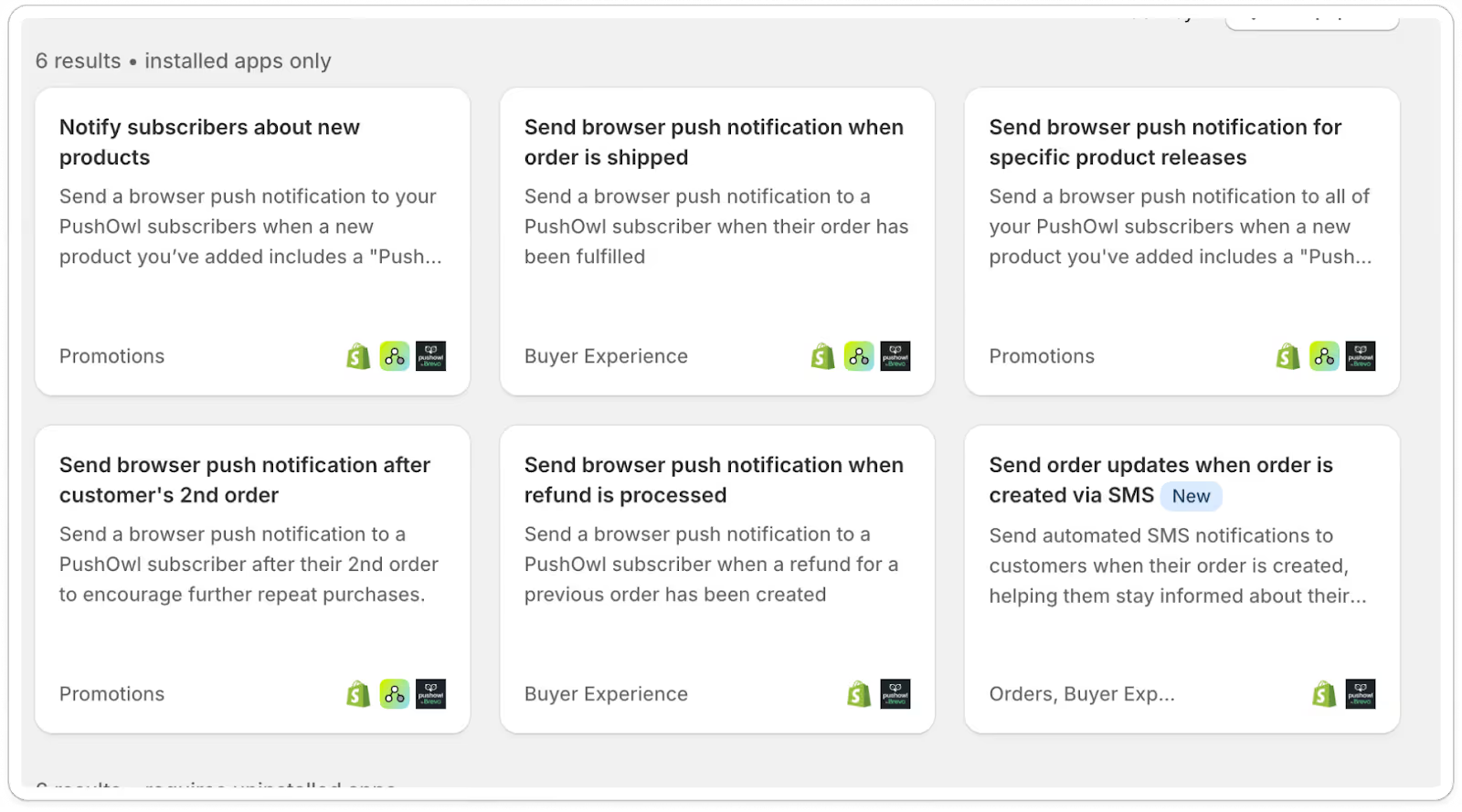
PushOwl allows behavior-based triggers such as:
- Abandoned cart reminders
- Browse abandonment
- Post-purchase follow-ups
- Win-back campaigns
- Replenishment reminders
This creates a strong Shopify automation workflow.
Step 5: Configure your SMS
Add recipients from your SMS segment and add the segment name and message body. Use our push notification templates as a base for SMS personalization.
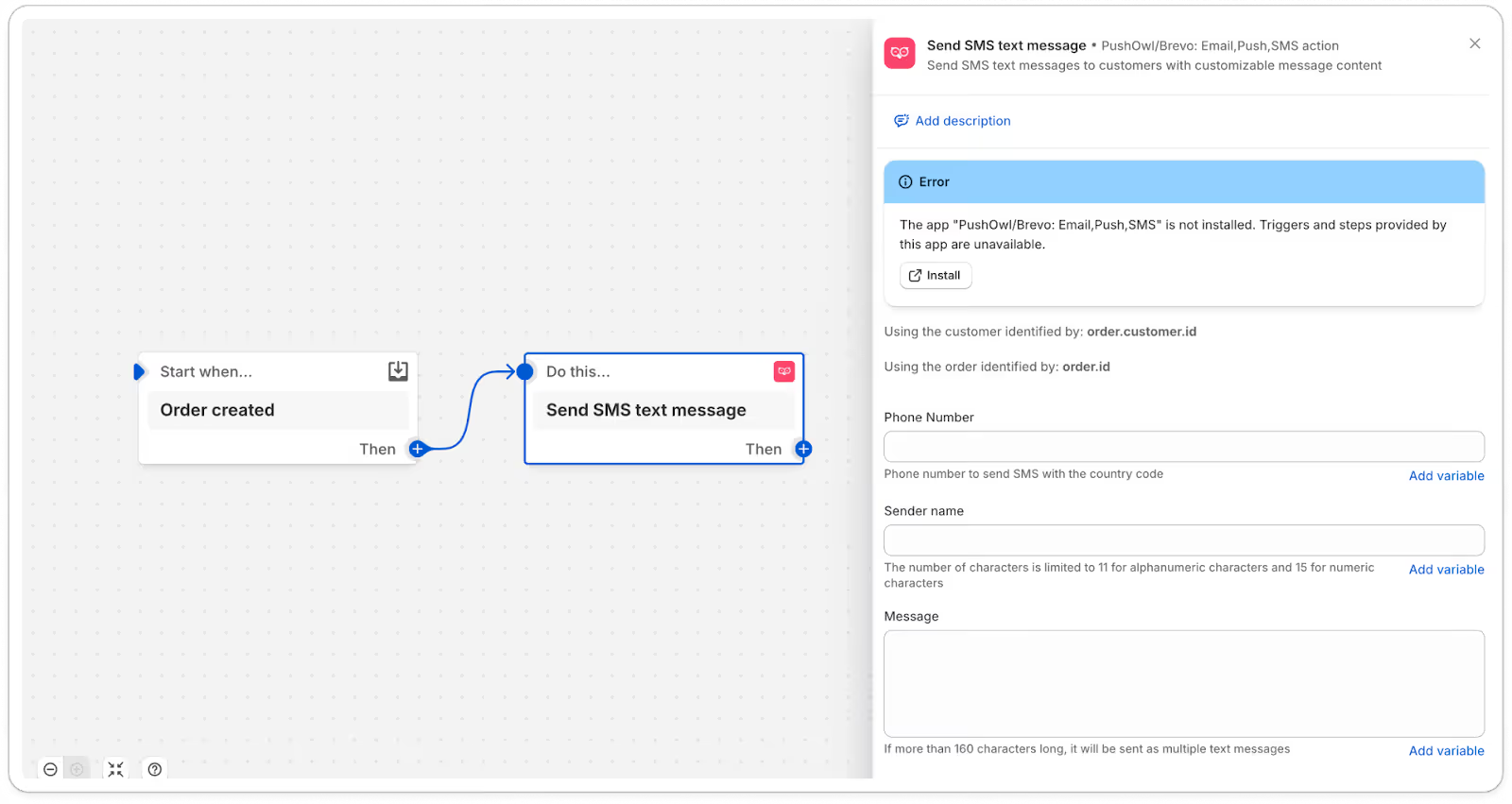
…and then save the workflow.
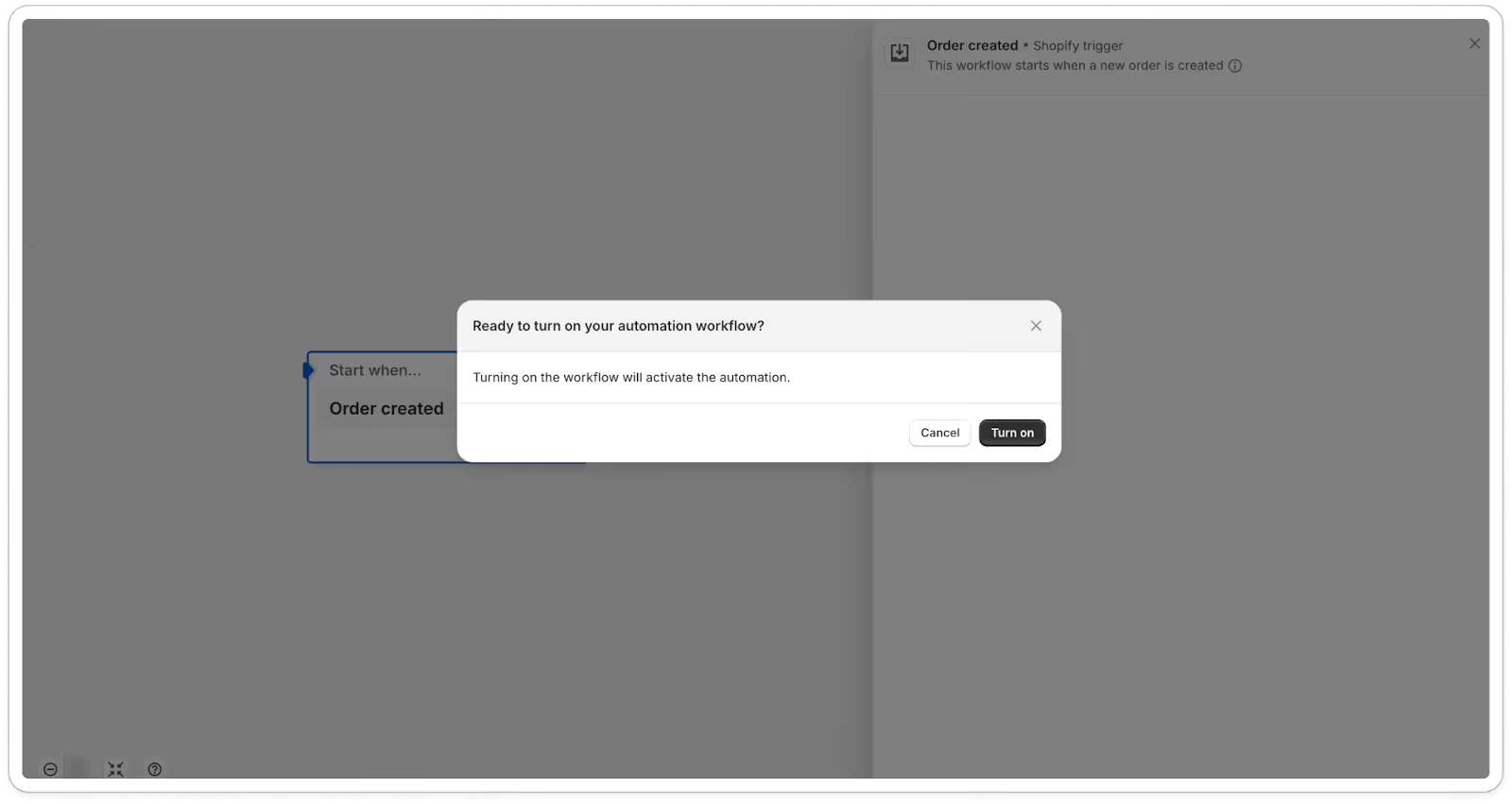
Every time a customer does the act that triggers the text, your SMS platform should send an SMS to that customer.
Elements of a Text: Anatomy of an E-Commerce SMS
SMS is a constrained channel. You have limited space and an even more limited attention span available.
Create segments under minutes with PushOwl
Focus on these six elements to ensure your SMS campaigns feel intentional and not spammy:
Character Limit
The standard SMS limit is 160 characters, including letters, spaces, numbers, and punctuation. If you exceed the SMS limit, the message gets split.
You should aim for 150 characters and test messages before sending them to the entire SMS list.
SMS Frequency
Since there is no one-size-fits-all, you need to test the right frequency for your customers.
Different SMS segments will have different expectations related to how often they want to hear from you.
Sekulov advises against applying a strict universal rule:
“Capping SMS sends at four times a month sounds responsible, but it completely ignores the fact that some segments actually want to hear from you more often, especially around sales.”
Customer behaviors to consider include purchase behavior, lifecycle stage, engagement, unsubscribe rate, CTR, and revenue/send.
For Sekulov’s client, this brought in positive results. “Splitting a skincare brand list by purchase frequency and personalized cadence increased their revenue 35% per message in 2 months.”
A VIP customer who opted for early access drops will tolerate (and even expect) a higher frequency before launches or around their points right before expiry. A first-time buyer, on the other hand, is likely not to appreciate that frequency.
CTA Placement
Since the CTA will make up a large portion of the SMS text, you do not have time to build long narratives before asking the customer to take action.
Subscribers are scanning quickly, often from lock screens or notification previews.
If your CTA is buried at the end or unclear, you lose the moment. Keep the CTA language specific and in line with the tone of your brand:
- Restock your shelfie (if you run a skincare brand)
- Get early access to this summer’s top picks (apparel brand)
- Claim your pet’s freebies (pet accessories brand)
A good rule for your CTA is that if that is the only thing your customer reads, they should know what the SMS is about.
Tone and Personalization
Customers associate text messages with conversations. This can often mean that overly corporate or promotional texts get ignored.
Conversational language increases engagement because it feels more natural and human.
And no, personalization does not end at inserting a first name, even for SMS alerts. Instead, you should:
- Reference a recent purchase
- Mention browsing activity (with images!)
- Acknowledge loyalty status
- Highlight relevant product categories
The test? If you could send the same message to anyone on your SMS list and it would fit, it is not personalized enough.
Urgency Triggers
Give your customers a reason to act quickly.
Campaigns tied to limited-time offers, low inventory alerts, flash sales with a 24-hour deadline, or discount codes with a countdown will outperform generic promos.
4 Mistakes to Avoid While Using SMS Segments
Creating SMS segments is easy, but you still need to take some precautions. Here are some SMS segmentation mistakes to steer clear of:
H3: Not Considering Omnichannel Alignment
Many brands segment SMS and email separately.
So a customer might receive an abandoned cart recovery email, an SMS promotion, and a discount reminder as a push notification, none of which are connected.
Segmentation should be channel-aware.
If they have already received an email, the SMS should mirror the same messaging, with slightly greater urgency. It should neither repeat the same email nor talk about something completely different.
Reach customers through email, SMS, and push for free with PushOwl
When SMS operates independently instead of as part of an omnichannel marketing strategy, you are siloing your communication.
The solution?
Do not let your SMS segments and email/push segmentations exist in isolation from each other. If your messaging needs to work together, so do your segments.
Sending the Same Seasonal SMS to Everyone
Seasonal campaigns demand both speed and a disciplined approach to segmentation. Customers enter seasonal periods with different contexts.
Some customers want discounts; others are loyal customers.
Some shop only during these high-traffic windows, while others have just bought recently.
“I would say the most outdated advice given to Shopify merchants is to blast their entire subscriber list around key holidays like Black Friday in order to drive the most sales. Many merchants take this advice at face value and send SMS alerts to all their subscribers, resulting in many cold subscribers opting out because the message they are receiving is not relevant to where they are in terms of purchasing from you.” - Katie Breaker, Sales Director at BirdieBall Golf
Customer intent is not uniform, so your messaging should reflect that. Seasonal campaigns perform best when segmentation reflects customer readiness.
Including Recent Buyers in Promotional Flows
Sending promotions to someone who just purchased is one of the fastest ways to come across as spammy.
From the customer’s perspective, it feels like, "I just paid full price, and now you are offering a discount?” So it is about both margin protection and customer experience management.
“A big error occurs by not suppressing recent buyers from promotional flows, which accounts for fifteen percent immediate opt-outs.” - Richie David, CEO and President of Totally Home Furniture
Recent buyers should almost never receive first-purchase incentives, storewide promotions, or other urgency-based campaigns. They should be moved to the post-purchase communication automation instead (usage tips, cross-sells, loyalty nudges, and so on).
Treating SMS Segments As Static
Customers do not stay in one behavioral category for long. Nor do two customers stay in the same category for the same number of days. One could take days to make the first purchase, for example, while the other could take months.
“The biggest mistake Shopify merchants make is creating their SMS segments once and never going back to make changes to them again.” - Katie Breaker, Sales Director at BirdieBall Golf
Your customers’ lifecycle journey should be reflected in your SMS segments. If SMS segments are not updating automatically, you create an overlap:
- Customers receive conflicting messages
- People stuck in the wrong lifecycle stage
- Campaign fatigue from over-messaging
Real-time SMS segmentation creates dynamic segments based on the customer journey.
You can move customers in real time based on their purchase patterns, not just on demographics. Only then will your SMS alerts become relevant rather than salesy.
Legal Requirements for Your SMS Segmentation Strategy
Shopify SMS marketing campaigns, like email, are permission-based.
Before you add a customer to an SMS segment, ensure you have their consent to send marketing alerts via text. Non-compliance can damage deliverability and reduce long-term SMS performance.
And of course, attract heavy monetary fines depending on which laws apply to you.
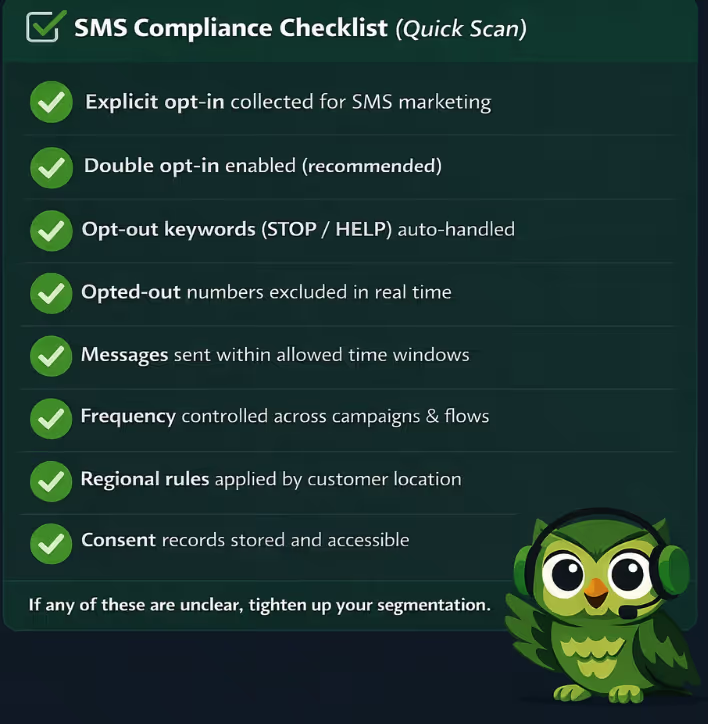
Here are the core requirements for Shopify brands when building SMS customer segments:
Regional Considerations
The first step is to look at which regulations apply to you. SMS laws vary by country and region.
For example:
- The United States operates under TCPA regulations
- The European Union follows GDPR and ePrivacy Rules
- Other regions have their own telecom and consumer protection frameworks, but it is also good practice to keep the USA and EU regulations in mind if your customers are spread across the world
Segmentation by customer location helps ensure you follow the correct rules for each market.
Active/Opt-In Consent
Customers must explicitly agree to receive marketing text messages before you send them promotional SMS alerts.
Pro tip: Double opt-in is not legally required in every region, but it is a common SMS opt-in best practice to maintain high list quality.
This consent needs to be:
- Clear and unambiguous
- Separate from the general terms and conditions
- Revokable with clear unsubscribe mechanisms
Pre-checked boxes, hidden disclosures, implied consent mechanisms, and other forms of hidden consent create compliance issues. Using these to add to your SMS subscriber list will create segments that will be mostly unresponsive.
“A misconception is that a purchase means consent. It does not. You still have to ask for consent to send marketing SMS alerts even if a customer has made a purchase." - PushOwl Sales Team
For brands scaling SMS, checking local consent requirements is the first step toward compliance.
Opt-Out Handling (STOP and HELP keywords)
Customers must be able to opt out at any time without jumping through hoops.
Most regulations require the following:
- Recognized opt-out keywords, such as STOP
- Support keywords, such as HELP
- Immediate removal from marketing messages after opt-out
Your segmentation logic should automatically and immediately exclude opted-out customers. If your customer has opted out and still receives marketing SMS alerts, you are exposing yourself to legal risk.
SMS Timing: Quiet Hours?
Many regions restrict when marketing messages can be sent. Common guidelines include:
- Avoiding late-night or early-morning messages
- Respecting customer time zones
- Following country-specific sending windows
Segmentation based on geography or time zone helps maintain compliance while ensuring relevance.
Sending a customer based in Europe and one based in the USA a Christmas message at the same time within your SMS platform means that they are actually receiving it at two different times, so that is something you have to consider.
Timing violations that disturb customers are among the most common causes of complaints and opt-outs.
With PushOwl, you can personalize the sending time for each customer, so not only will you comply with quiet hour rules, but you will also target them at the most ideal time.
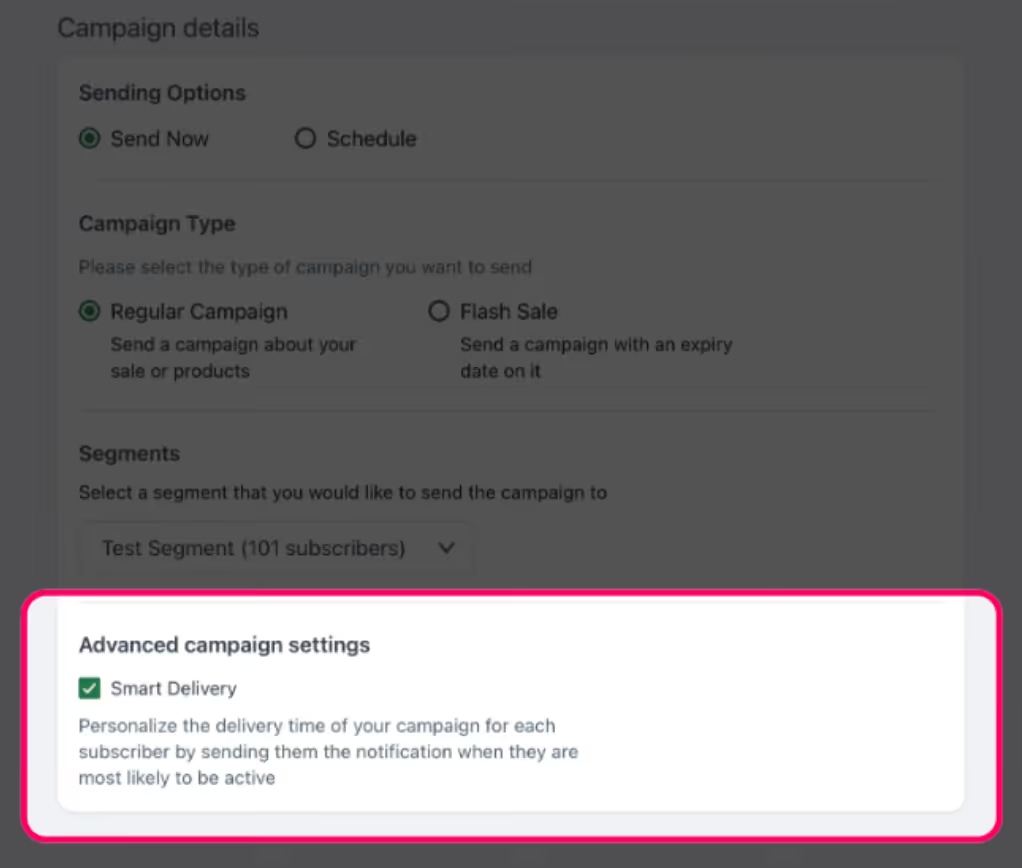
The tool looks at when your subscribers have been active in the past and uses this data to identify when they are most likely to engage with your notifications.
Reach your customers at the most relevant time with Smart Delivery SMS
For example, a school student may receive a message about a sale post 3 pm (when they are scrolling after classes). In contrast, an office-going professional can be targeted around 1 pm, when most corporate employees take their lunch breaks.
Frequency Limits
While there is no universal legal limit on the number of messages you can send, excessive frequency can trigger compliance issues. High send volume leads to opt-out rates and increased spam reports.
This, in turn, can lead to carrier scrutiny and deliverability issues.
When sending multiple campaigns across SMS segments, ensure that the same customer is not receiving multiple messages. Segmentation should support controlled frequency.
7 SMS Metrics To Track for Your E-Commerce Store
Because SMS is a high-intent channel, you need to ensure you are looking at e-commerce metrics that actually matter.
These are the 7 SMS metrics you should monitor:
Click-Through Rate (CTR)
CTR tells you whether your message and offer are compelling enough to drive action. A low CTR usually signals weak positioning or poor timing.
CTR = (Total clicks/Messages Delivered) X 100
A high CTA indicates your call to action is working well.
Conversion Rate
Tracking the percentage of subscribers who complete a purchase after clicking helps you evaluate the quality of your traffic.
Conversion Rate = (Total purchases from SMS / Total clicks) X 100
A poor conversion rate suggests your SMS may not be the problem; something on the website or the overall product journey needs fixing.
Revenue per Subscriber (RPS)
Revenue per subscriber measures the value each subscriber generates over time.
Revenue per subscriber = Total SMS Revenue / Total SMS Subscribers
RPS helps justify acquisition costs for SMS opt-ins.
Campaign ROI
SMS has direct costs, such as platform credits and carrier fees. You need to know that your SMS campaigns are worth all the
SMS Campaign ROI = [(Revenue from SMS - Total SMS Cost) / Total SMS Cost] X 100
With PushOwl, you get 1000 SMS credits for $10/month, so you can make them count.
Reply Rate
Replies indicate engagement and relationship strength.
Reply rate = (Total replies / Messages delivered) X 100
High reply rates correlate with strong customer retention and high loyalty.
Opt-out Rate
Unsubscribers are an early warning signal.
Opt-out Rate = (Total unsubscribes / Messages delivered) X 100
Spikes in the opt-out rate point to over-messaging and poor segmentation.
Segment Performance Comparison
To gauge the success of your SMS segmentation strategy, this is one of the most important metrics to track.
Comparing VIPs, new customers, repeat buyers, and the rest of your SMS customer segments reveals where SMS drives the most impact.
3 Overrated SMS Metrics You Can Skip
Some SMS metrics give you a false sense of success. Brands end up optimizing for activity that does not mean much, which can render your SMS segments useless.
Here are three SMS metrics that are commonly valued:
Delivery Rate
A high delivery rate rarely tells you anything useful about performance.
"A 98% delivery rate looks great on a report, but if your revenue per recipient is still terrible, it just means you got really good at sending messages nobody cared about." - Ilija Sekulov
Most legitimate SMS campaigns already have strong deliverability unless there is a technical issue or compliance problem.
Once messages are successfully delivered, the real question becomes: did customers act?
Open Rate
Both SMS open rates and email open rates are often quoted as extremely high, but they are difficult to measure because many platforms infer opens from device behavior. A message can be opened and ignored within seconds.
Even when the numbers are directionally correct, they do not help improve performance.
SMS List Size
A bigger subscriber list feels like progress, doesn’t it? But it might not be.
“Many subscribers on an SMS list will never purchase from your business, will not contribute to revenue growth, and should not be viewed as an accomplishment. The most objective measure of success is the average revenue generated per SMS.” - Katie Breaker, Sales Director at BirdieBall Golf
An engaged list of 5,000 subscribers can outperform an inactive list of 50,000. When brands prioritize list growth over engagement, they see a decline in core SMS metrics.
Automate Your SMS Segmentation Strategy With PushOwl
Manual segmentation quickly becomes unsustainable as your Shopify store grows. Customer behavior changes by the second, as do purchase frequency, browsing patterns, engagement levels, and buying trends.
With PushOwl, you can automatically segment customers based on real-time behavior.
Every high-converting SMS campaign reaches the audience most likely to convert.Instead of guessing targeting rules, you can rely on performance data to guide decisions.If you want your SMS marketing performance to scale, build a strong foundation with our free plan.