
When you drive inbound traffic with helpful content and social media posts, how do you translate that into consistent revenue? Email marketing can close that gap.
By capturing inbound visitors as subscribers and engaging with them through campaigns and automations, email ensures the relationship continues beyond the first website visit.
Otherwise, the customer will find your website, browse, buy once, and then never look back.
Email marketing serves as an amplifier for your inbound strategy: you distribute content, collect leads, and engage them further via email, thereby improving the repeat purchase rate.
But why put in all that effort when paid campaigns are available? In a world where ads are invading every surface (yes, even billboard boats floating near beaches), brands that focus on value-first communication stand out.
In this inbound marketing strategy guide, we will show you how email campaigns fuel every stage of the customer lifecycle and how to use them to convert inbound attention into qualified leads and purchases.
What Is Inbound Marketing and Where Does Email Fit?
Inbound marketing is a customer growth strategy that attracts potential leads by circulating helpful and relevant content across marketing channels. This content should address customer pain points and educate them about the product you sell.
With inbound marketing, you do not use paid ads to attract customers; your content brings them in organically.
Email marketing fuels the inbound strategy by establishing brand authority among potential leads, turning them into customers, and sustaining their loyalty beyond the first purchase.
4 Stages of Inbound Marketing
Inbound strategies follow these four stages of customer interaction:
The Attract stage is about discovery and drawing in the right audience.
Blog articles, how-to guides, educational videos, and other resources will attract potential customers to your Shopify website and encourage them to learn more about your products.
Once they hit the website, the Convert stage focuses on turning that anonymous visitor into a legitimate lead. This transition usually happens through newsletter or email signups, lead magnets, and account creation.
Gated content, a sign-up discount, or a newsletter preview can help you get them on your email list.
At the Close stage, you can roll out more targeted campaigns or specific user education related to the products the customer has browsed through emails. This is where your email marketing does the heavy lifting. Personalized campaigns go a long way toward convincing customers to buy.
And finally, at the Delight stage, you can turn first-time purchasers into brand advocates. Post-purchase communication and loyalty programs encourage customers to buy again and also talk about your brand on social media or among friends.
How Does Email Marketing Help With Inbound Marketing?
Where do emails fit into the four stages?
- Your email marketing campaigns nurture prospects after they discover your brand and guide them toward a purchase or keep customers engaged long after the first purchase.
- When visitors subscribe to newsletters or create accounts, email becomes the primary channel for communicating with leads.
- Content, SEO, and social media may attract traffic, but email marketing campaigns ensure that the relationship with potential customers continues after they leave the website/social media page. Revenue comes from these ongoing customer relationships.
- Emails allow for long-form content (newsletters, mini-blogs, founder’s letters, story-style narratives), which can serve as the foundation for other marketing channels that do not allow for this much depth, such as SMS and push notifications.
Email Campaigns: Inbound Marketing vs. Outbound Marketing
Is email marketing inbound or outbound?
Email marketing qualifies as inbound marketing when recipients have opted in (voluntarily signing up or consented to receiving marketing communications). It becomes outbound marketing when you send emails to purchased lists of cold leads who did not sign up for these emails.
Simply put, when your email marketing is permission-based, it’s inbound.
Shopify Inbound Marketing Email Flywheel Model
With this flywheel model, you can center your email marketing platform at each stage of your inbound strategy (attract, convert, close, and delight).
At each stage of the flywheel, email performs a different role. It captures visitors' interest when they discover your brand, converts that interest into subscribers, nurtures subscribers toward a purchase, and continues to engage customers long after checkout.
Over time, this cycle creates a compounding growth loop:
Inbound → Subscriber → Customer → Repeat Buyer → Advocate → More inbound
A website visitor who discovers your products and content today may subscribe to your email list tomorrow. A subscriber who receives helpful campaigns and product education may become a customer.
And a satisfied customer who continues to hear from your brand via email is far more likely to return, recommend your store, or share your products with others, which is why retention channels play such a critical role in inbound growth.
Acquisition brings people in, but retention multiplies the value of every person you acquire.
Email is what makes that multiplication possible at scale.
Stage 1: Attract Visitors and Drive Traffic to Your Content
Ads are a great avenue, but your owned channels should also be able to generate leads.
“The ability to retain customers via owned channels (i.e., social media, email, customer service) provides brands with the opportunity to grow with more control.
When owned channels perform well, brands require less reliance on paid acquisitions and are better positioned to absorb the impact of rising ad costs or changes in ad platform performance.”
- Michael Ryan, CEO & Digital Marketing Expert at Ink Digital, a digital marketing agency
Email is an owned channel that does not rely on algorithms or too many variables beyond your control.
Using your owned channels, you can circulate the following marketing assets (remember to focus on communicating helpful information in the most digestible way possible):
- Newsletters: Share product education, industry updates, curated content, and other newsletter formats to keep subscribers excited about hearing from your brand.
- Blogs: Focus on answering real customer questions and search queries to attract high-intent organic traffic. You can also repurpose your blogs in your newsletters.
- Guides: Create detailed resources that solve a specific problem your customers may face when using your product.
- Videos: Tutorials, product demos, or behind-the-scenes content can make your brand more accessible.
- UGC: User-generated content helps build trust and social proof more than sanitized written reviews.
All the above can be plugged into your email campaigns and repurposed across different formats (for example, converting a guide into a blog or newsletters into a blog roundup).
Stage 2: Convert Visitors Into Inbound Leads and Subscribers
The next step is to get these visitors to sign up for your marketing campaigns. You need to grow your email list steadily by providing a combination of information and incentives.
One way to do that is with pop-ups. When a customer is browsing your website and about to leave, an exit pop-up can prompt them to subscribe to your email list in exchange for a discount, free shipping, or a gift.
This is Alo Yoga’s exit pop-up, featuring a clear discount offer and a disclaimer outlining what the customer can expect after sharing their email ID. They take it a step further by asking the customer which product category they are interested in.
Based on this response, the brand can send tailored email campaigns:

Another method is to embed a form on your Shopify website at the top or bottom of the page. These static forms allow you to collect a visitor’s email address for email campaigns and other contact information for SMS segmentation.
You will find the following in the footer copy of Alo Yoga’s website:

You can customize the form to include fields such as country/city, age, and other details to help with demographic segmentation as well.
Then there are checkout opt-ins, where you ask the customer for their email address when they are completing the purchase on the checkout page. Since they show high purchase intent, this is the most opportune time to ask them to subscribe to your email marketing campaigns.
Magic Spoon also asks its customers for their mobile numbers for SMS campaigns:

Another great strategy is lead magnets.
Visitors who do not need to buy from you right away or who are unsure if they can trust you need a nudge. A lead magnet that offers them free advice and resources will help build trust and get them on your email list.
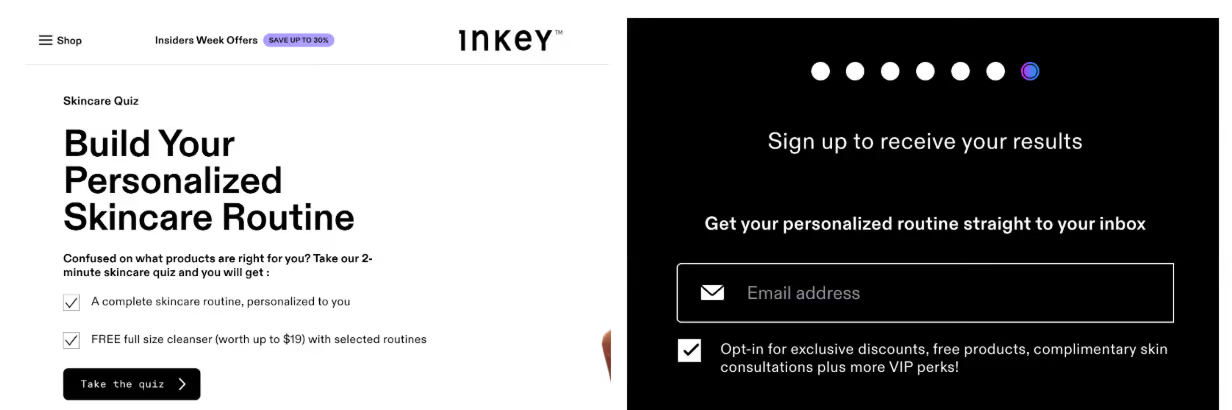
The Inkey List has one of the most popular lead magnets on its website: the skincare quiz. Answering seven questions helps them learn more about your skin, and in addition to a routine, they provide a gift with your first purchase.
Depending on the industry, here are some lead magnet ideas you can choose from:
- Fashion and footwear: Styling checklists, sizing guides, lookbooks
- Home decor: Downloadable moodboards, room styling guides, home organization checklists, furniture maintenance guides
- Food and beverages: Recipe collections, meal planning guides, cooking tutorials
In your website’s pop-up boxes and embedded forms, you can mention that customers will receive a discount, free shipping, or a gift for providing their email addresses. A simple incentive will turn your traffic into inbound leads.
Consider this: 10,000 visitors browse your website; 20% respond to a pop-up with their email address; and 5% use the discount code you email them as an incentive.
You capture 2,000 subscribers and 100 new customers solely through your inbound strategy and email marketing.
Stage 3: Close By Turning Leads into Customers
Now, what about the other leads who visit your website and provide their email addresses but do not purchase, even with an incentive?
Use email segmentation and automated sequences to push them closer to making a purchase. Your automated sequences include welcome emails and browse abandonment and cart abandonment recovery flows, along with newsletters if they have specifically signed up for those.
“If you experience low open rates, you should focus on high-quality welcome flows and abandoned cart reminders that solve a particular problem for the user.” - Loris Petro, Marketing Manager, Kratom Earth
These automated sequences can position your brand as one that understands its customers and their pain points.
Your welcome emails can take the form of founder letters that share a personal story about the brand’s creation or simply highlight the USP of your products.

For browse/cart abandonment flows, include the product's name, image, and price. In one of the emails in the automation, you can add relevant social proof, and if that doesn’t work, offer a discount.
Here is an ACR email from Taza Chocolate:

For all e-commerce automations, timing will be key.
“Many Shopify retailers ignore the disconnect between their email marketing and how customers behave on their site.
Emails are typically sent regardless of where the customer has been on the site, whether they have viewed certain products, browsed specific product categories, or interacted with the brand since making a purchase.
Instead, the content of the email must match exactly how a customer has behaved on their site.”
- Michael Ryan, CEO & Digital Marketing Expert at Ink Digital
How do you apply this advice? Behavioral targeting and advanced segmentation.
Your automations should not be sent as email blasts; instead, you need to study the customer’s behavior and purchase journey.
For example, if you are running a skincare brand and a visitor signs up for your emails in exchange for a summer skincare routine checklist, it means that they are looking for products for hot weather.
Your initial automation can recommend bestsellers in this specific category.
Did your form ask for a location? Then you can give personalized recommendations based on specific weather (summer products that help keep sweat away in humid regions, for example).
Their browsing patterns may show that they are looking for no-cast sunscreens.
You can send them tutorial videos showing the correct way to apply sunscreen, as well as UGC videos demonstrating that your products do not leave a white cast.
With advanced segmentation, you also avoid alienating your recent purchasers by not relying on email blasts. Adam Yong, Founder of BrandPeek, explains:
“You know how annoying it is to receive a 'buy now' discount for a product that you just paid full price for yesterday. Most brands send generic "we miss you" emails every thirty days, no matter what the person bought. In my experience, having the emails match the product's actual lifespan makes for a much more natural buying cycle.”
When you send targeted emails based on customer behavior, the automations generate higher revenue than fixed batch campaigns sent to the entire email list.
Stage 4: Delight To Retain Customers and Create Brand Advocates
If your subscriber has become your customer, now you can leverage their trust in your brand to convert them into long-term loyal customers. This portion of the strategy is based on customer retention.
But why is inbound marketing retention important?
“Repeat revenue results in a clean profit margin. Inaction kills margins. One-time buyers are more expensive than repeat purchasers. In our cases, emails account for 40% of repeat sales. Profits soar without additional advertising. Businesses breathe easier.”
- Syeda Sultana, COO of Vettted, an SEO agency
Customer retention involves less selling and more relationship-building. You are not necessarily pushing a customer toward a specific product, as you do with ACR flows and browse-abandonment automations.
Post-purchase communication can fetch you an RPR of $2.77 RPR. It is one of the most effective automations for customer retention.
“You have to remember that a Shopify store is not a vending machine.
Many brands neglect their customers once the first transaction is complete. I see founders chase new traffic while letting their existing list go cold. Post-purchase silence results in a disconnect that kills future brand loyalty.
Email marketing helps to bridge the gap.”
- Denise Murray, Marketing Manager at Microdose Mushrooms, a Canada-based brand
So what should your post-purchase communication include, apart from timely order updates?
Murray recommends product education as a component of post-purchase communication. She explains: “People will stay subscribed if you teach them something new. We send in-depth guides on how to incorporate our products into a daily wellness routine. That value-first approach makes one purchase a habit for our customers that lasts a lifetime.”
Sometimes, product education is not just usage tips; it can also provide more context about your product, especially if it involves sustainability or artisanship, as Patricia Curts, managing director of The Mexican Collection, a UK-based jewelry brand, notes:
“Within 48 hours of a purchase, our customers receive the first of three emails about the silversmith who made their specific piece, how long they've been working with silver, and what techniques they learned.”
After this change in strategy, as Curts notes, customers would engage in conversations and also come back for full-priced purchases.
You can also use discounts in some cases, as Karina Tymchenko, the founder of the digital marketing agency Brandualist, notes:
“We were able to help one beauty company increase repeat purchases by 22% through a discount on complementary products sent via a follow-up flow to its customers. These flows create a relationship between the customer and the store and therefore will result in a higher rate of customers returning to make additional purchases.”
But the caveat is that training your customers to expect discounts can backfire and it's not the only way to get customers to come back.
“It is an outdated belief that discounting is a retention strategy.
Brands get hooked on it because it works in the short term; throw 20% off in the subject line and watch the clicks roll in. But what you're actually doing is selecting for the worst kind of repeat buyer.”
- Melvin Brooks, Founder at DAMP (Data Analytics and Marketing Protocol)
To ensure you retain customers that are not just bargain hunters, go beyond discounts.
Other than product usage tips and educational content, your post-purchase emails can include:
- Customer loyalty programs
- Review requests
- Referral programs
And what if your customers do not come back after the first purchase?
“Around 70% of shoppers never come back after making their first purchase. Anyone who has worked with high acquisition costs knows how painful that number looks on a balance sheet.”
- Denise Murray, Marketing Manager at Microdose Mushrooms
In that case, add a win-back campaign automation to your inbound email marketing strategy, and if they do not engage, send a final message stating that you will be removing them from your list. This is the final nudge that Delani Jewelry sends:

Some customers will come back, and once you remove the ones that have gone dormant, you can remove them from the email list, which will improve your email deliverability.
When you are constantly “delighting” your customers with knowledge, perks, incentives, and opportunities to engage, you are restarting the process that they need to go through, i.e., attracting them to another product, and then closing the deal on a second purchase.
The only difference is that you do not have to start from scratch.
5 Ways To Integrate Email With Other Inbound Channels
Inbound marketing works best when channels reinforce each other instead of operating in isolation. Email plays a central role in this marketing ecosystem. It maximizes the performance of other inbound channels by distributing long-form content.
Email + Content Marketing
Content attracts visitors, but it can get lost in the online abyss. A strong email list and well-timed personalized emails ensure that this content reaches the people most likely to engage with it.
Every time you publish a new blog post or guide, your email marketing campaigns provide a direct way to distribute the content to subscribers.
That way, you will not rely on organic search traffic from search results but instead create your own organic reach.
You can also use email to create content exclusivity. Only those who sign up (rather than every visitor) get early access to sales or downloadable checklists. Curated resource roundups build long-term trust and authority.
Another way to combine your content marketing and email campaigns is to recycle and repurpose content.
Did a blog perform well on search? Repurpose it into a newsletter with exclusive add-ons for your email subscribers.
Email + SEO Inbound Marketing
Email engagement and SEO do not have to work in isolation. The former can help shape your SEO and, as an extension, your content marketing efforts.
Here is a three-step checklist to combine email and search engine optimization:
All of the above improve dwell time and build a consistent content pipeline for both visitors and subscribers.
Email + Social Media
Social media can extend your email marketing efforts. And email campaigns can highlight your social media presence. As Petro notes, “Modern buyers appreciate community over merely getting a good price on a product.” Combining email marketing with social media can magnify this feeling of community.
Use this three-step checklist to allow your social media and email marketing campaigns to work together:
You can also increase your reach among non-followers by using features like trial reels, collaborations with influencers who make content in your niche, and other social media partnerships.
Email + Paid Ads
Email can help reduce reliance on paid ads, yes, but it can also significantly improve ad performance when you do choose to run paid campaigns.
Follow these strategies:

Build Custom Audiences
Upload your email subscriber list to ad platforms such as Meta Ads or Google Ads to create custom audiences. This allows you to retarget people who already know your brand but may not have purchased yet.
For example, you can run ads specifically for subscribers who clicked a product email but did not complete a purchase. These users are already familiar with your brand, so retargeting them often produces higher conversion rates than targeting completely new audiences.
Custom audiences can also be segmented. Create separate audiences for newsletter subscribers, recent website visitors, or customers who purchased more than six months ago.
Create Lookalikes
Once you have a strong email list, you can use it to find new customers through lookalike audiences.
Advertising platforms analyze the characteristics of your subscribers, such as demographics and online behavior, and identify new users who resemble them. Instead of targeting a broad audience, you are reaching people who statistically behave like your existing subscribers or customers.
For better results, create lookalikes based on high-value segments, such as repeat buyers or customers with high lifetime value.
Focus on CAC Optimization
Email data can also help control customer acquisition cost (CAC) by preventing unnecessary ad spend.
For example, you can exclude recent purchasers from acquisition campaigns so they are not shown ads for products they just bought. Similarly, subscribers who recently engaged with a campaign may not need aggressive retargeting.
Using email data to refine ad targeting ensures that paid campaigns focus on acquiring new customers rather than repeatedly advertising to existing ones. This improves efficiency while allowing email to handle much of the nurturing and retention.
“If a customer makes another purchase within 60 days, you can recover the cost of acquiring them much faster. This has been a trend among Shopify clients: a well-organized after-sales email follow-up reduced the average payback time for CAC by weeks, not months.”
- Caleb Johnstone, Director of SEO at Paperstack, an Australian SEO agency
Johnstone further explains, “Since paid acquisition is unstable, email retention provides you with a revenue floor that you can rely on each month over another without raising ad buys, and thus, you are not always at the mercy of the algorithm determining how to spend your budget.”
So do not just replace paid ads with email marketing; use the latter as a security blanket for ads, and let them perform together.
CAC optimization is also important for customer retention.
“Strong retention rates shorten your payback period for total acquisition costs, and you pay for the buyer once but profit from them three or four times. The consistent revenue from email gives stability, which is why they say money from existing fans is more predictable than money from cold ads.”
- Richie David, CEO and President of Totally Home Furniture
Retention emails help brands recover paid acquisition costs faster by driving repeat purchases earlier in the inbound marketing lifecycle.
Email + Push + SMS (Omnichannel Marketing)
Combining email with other marketing channels lets you communicate with customers in various formats and at different levels of urgency and detail.
With an omnichannel marketing strategy, you increase the likelihood that your inbound traffic becomes engaged subscribers and, eventually, repeat customers.
“The most successful e-commerce brands treat retention as a connected system. For example, email is most effective when it is used in conjunction with SMS, customer service, and the overall on-site experience.
When the messages being delivered across these different touch points are timely, consistent, and supported by the same customer data, retention is predictable and scalable versus reactive.’’
- Michael Ryan, CEO & Digital Marketing Expert at Ink Digital
But an omnichannel marketing strategy does not mean pasting the same message across each platform. The goal shapes how you craft the messaging. With emails, you can go into depth about your promos and products.
More context, more imagery, and more copy.
For example, push notifications appear on a lead’s phone and are perfect for quick, real-time updates, such as flash sales or reminders right before a limited-edition drop. If the customer has asked to be notified when an out-of-stock item is available, a push notification is the perfect medium for a back-in-stock alert.

SMS is also great for time-sensitive campaigns where immediate attention matters, such as limited-time discounts or cart recovery reminders.
When you layer your inbound strategy with multiple platforms, you reduce dependency on paid ads.
How PushOwl Manages Your Inbound Marketing Flywheel
Inbound marketing brings visitors to your Shopify store through SEO, content, social profiles, and other marketing channels.
Turn your inbound traffic into revenue across channels with PushOwl
PushOwl helps convert that traffic into subscribers, customers, and repeat buyers by providing a solid communication infrastructure for email, push, and SMS.
Email Platform With Automated Flows
With PushOwl, you can send newsletters, email marketing automations, and general promotional campaigns from a single dashboard.
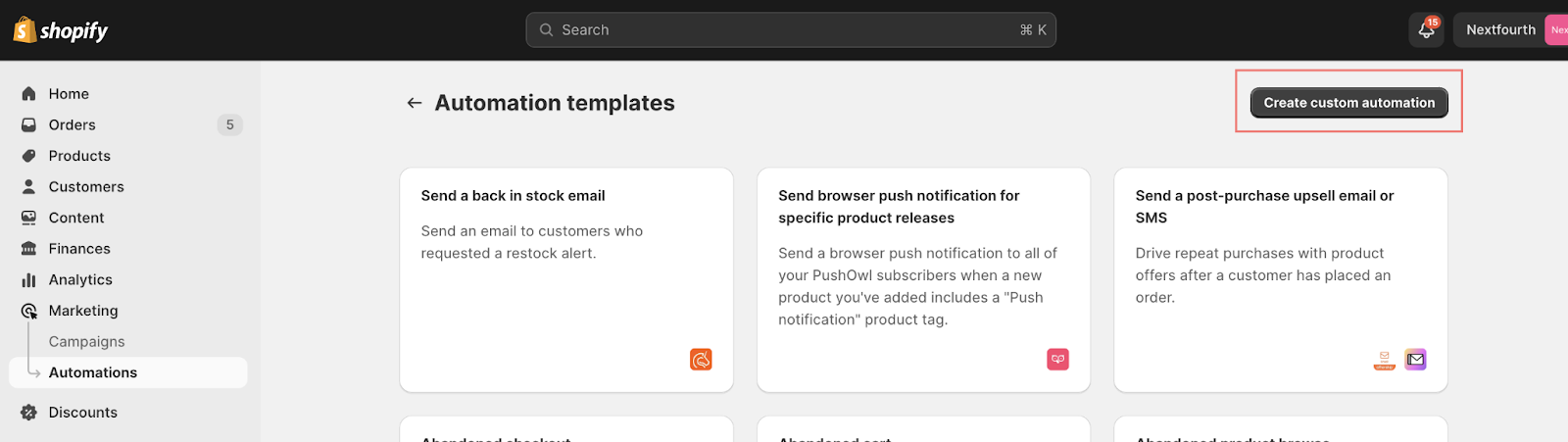
Your welcome series, abandoned cart reminders, post-purchase flows, and win-back campaigns will work in tandem with your inbound lifecycle.
Layer in automated push notifications as part of your campaigns
PushOwl can help you set up over 10 email automations to cover all stages of the customer journey.
Pop-Up Editor
PushOwl helps you capture subscribers directly from inbound traffic using website pop-ups and embedded signup forms. These pop-ups appear as newsletter signups or exit-intent prompts, helping convert anonymous visitors into email subscribers.
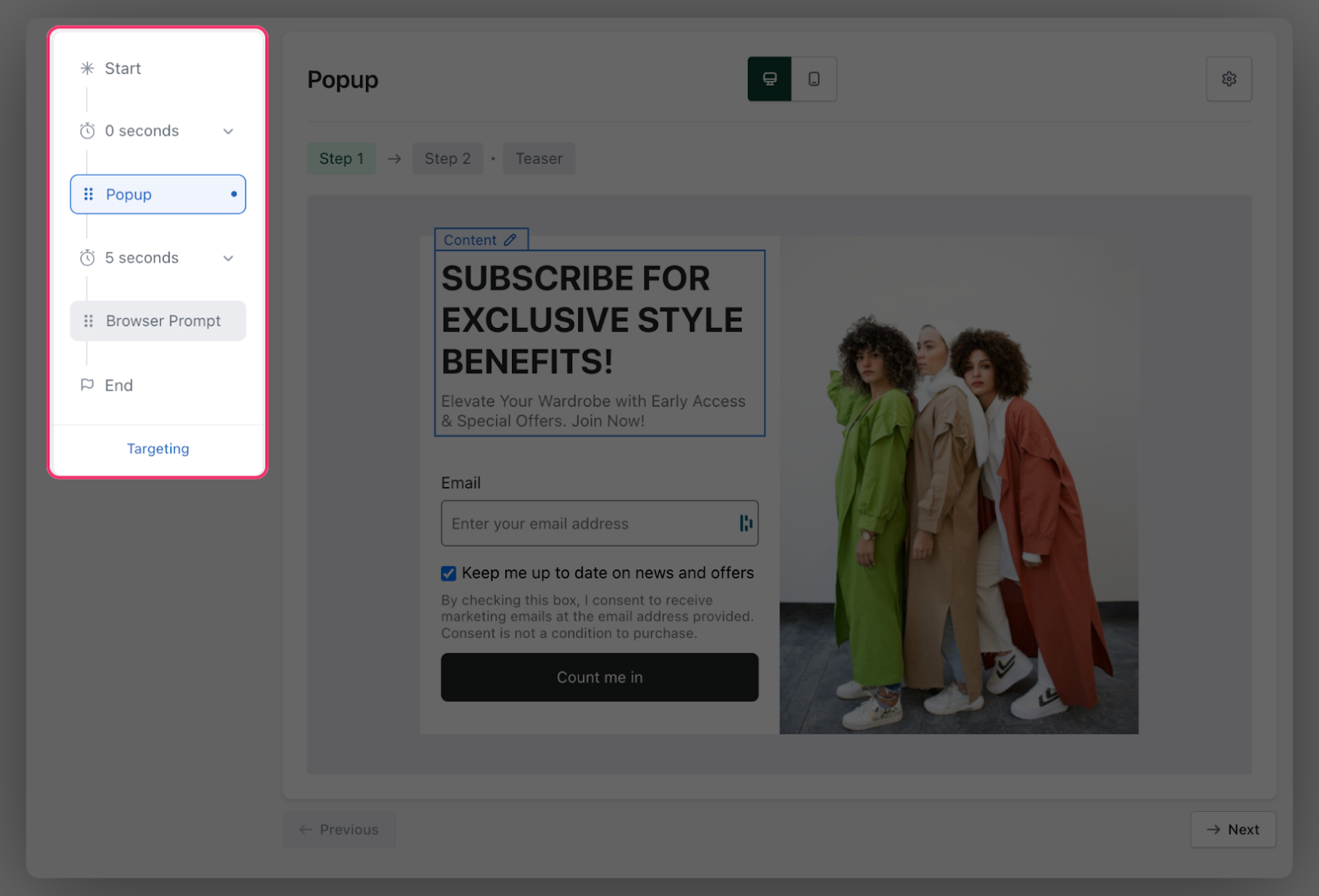
You do not need to know how to code to build these pop-ups; the drag-and-drop option helps you design the pop-up box to match your brand’s aesthetics.
The pop-up editor also allows you to make the design mobile-compatible.
It is not just about what the pop-up looks like, but also when the customer sees it. Advanced triggers allow you to schedule the pop-up to appear after a specific browsing duration or when exit intent is detected.
Omnichannel Marketing
Since you will be able to plan your email campaigns, web push notifications, and SMS marketing on the same platform, they will all work in a coordinated manner, rather than in silos.
You will be able to plan a campaign across channels from one dashboard.
Unlock unlimited SMS contacts with PushOwl
For example, you can announce a new product and the story behind it through email, send an SMS right before the launch, and follow up with a push reminder. Using multiple channels together helps ensure that messages reach customers at the right time. Knowing when to use which channel will be imperative here.
Behavioral Segmentation
PushOwl’s segmentation builders will allow you to segment subscribers based on more than just demographics.
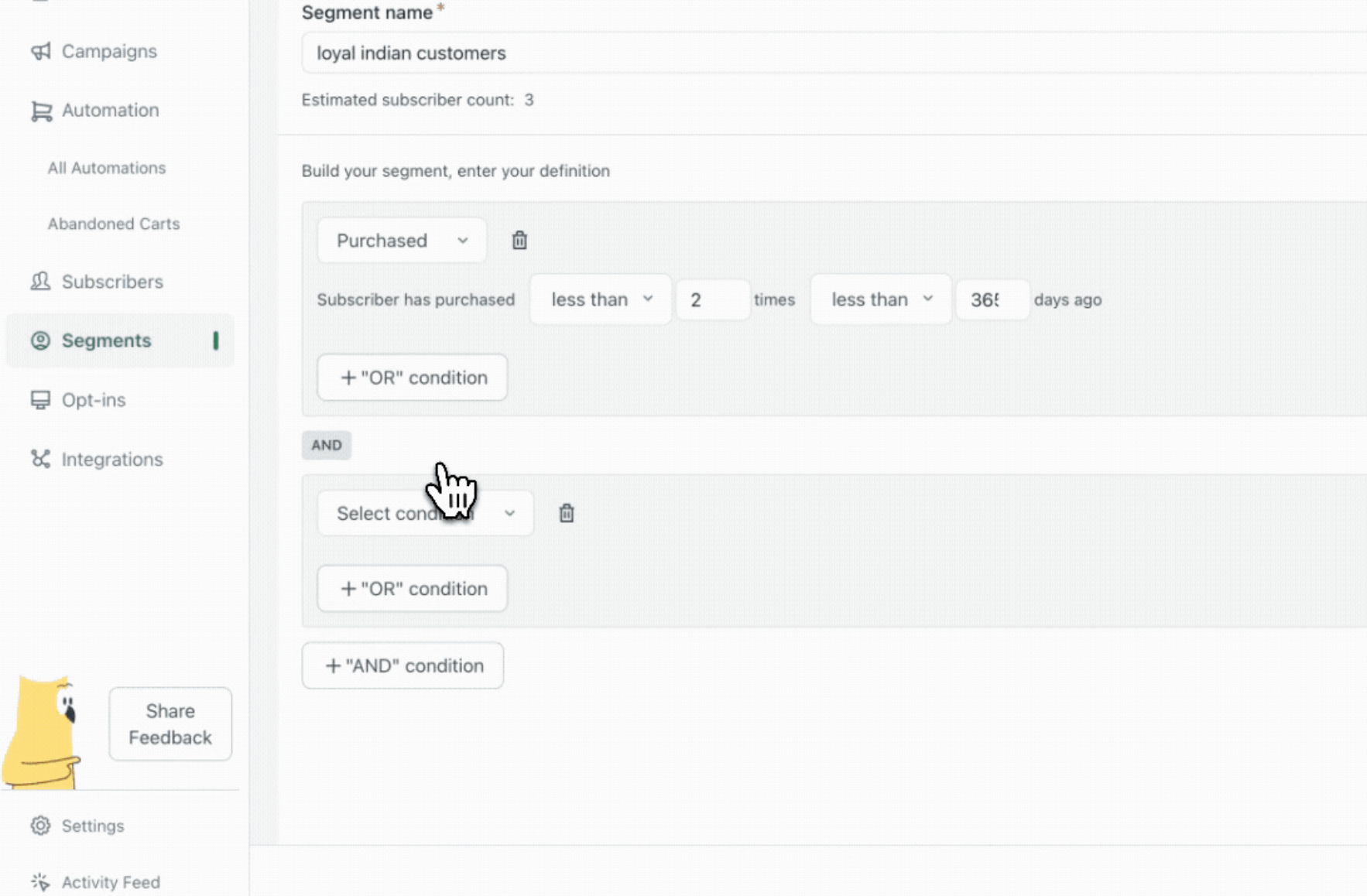
You will be able to track dynamic variables like purchase history, browsing behavior, location, and other store data.
This data makes it possible to send tailored behavior-triggered email campaigns at precise times, such as when a customer views a product or abandons a cart.
Revenue Attribution
PushOwl also provides analytics that track campaign performance and customer behavior. You will be able to see the revenue generated from marketing campaigns.
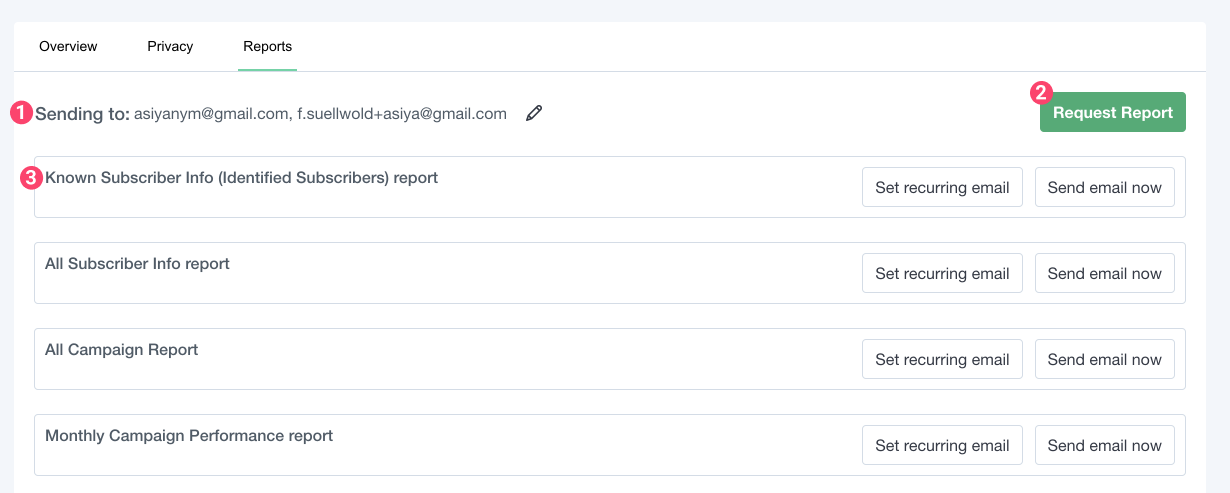
Instead of relying solely on e-commerce metrics like opens or clicks, you can see how much revenue their campaigns generate and the specific attribution. This level of lifecycle management through a single platform allows you to execute your inbound strategy easily.
Win Over Leads With Your Inbound Strategy Using PushOwl
Inbound marketing helps people discover your brand and then eventually trust it enough to purchase. Visitors who arrive through various avenues need multiple touchpoints and interactions before they are ready to buy.
Without a pipeline in place, most inbound traffic remains just that: traffic with no conversions.
Suppose you want to give your social media efforts and content marketing a chance to deliver ROI. Use our inbound marketing flywheel to strengthen both customer acquisition and retention. Try our free plan to fuel your inbound strategy.